
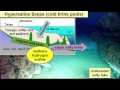
Deep-Sea Ecosystems and Seep Types

Interactive Video
•
Biology, Science, Geography
•
9th - 10th Grade
•
Practice Problem
•
Hard

Patricia Brown
FREE Resource
Read more
10 questions
Show all answers
1.
MULTIPLE CHOICE QUESTION
30 sec • 1 pt
What is the primary energy transfer mechanism in deep-sea ecosystems where light is absent?
Fermentation
Respiration
Photosynthesis
Chemosynthesis
2.
MULTIPLE CHOICE QUESTION
30 sec • 1 pt
Which type of vent is associated with seafloor spreading centers and high temperatures?
Hot vents
Cold seeps
Hypersaline seeps
Subduction zone seeps
3.
MULTIPLE CHOICE QUESTION
30 sec • 1 pt
What type of organism is commonly found near hot vents and relies on chemosynthetic bacteria?
Sea turtles
Jellyfish
Tube worms
Coral
4.
MULTIPLE CHOICE QUESTION
30 sec • 1 pt
Which of the following is NOT typically found in cold seep communities?
Clams
Shrimp
Extremophiles
Microbial mats
5.
MULTIPLE CHOICE QUESTION
30 sec • 1 pt
What is the primary energy source for organisms in cold seeps?
Nitrogen
Methane
Sulfur
Sunlight
6.
MULTIPLE CHOICE QUESTION
30 sec • 1 pt
What unique feature do hypersaline seeps create on the ocean floor?
Sand dunes
Underwater lakes
Coral reefs
Volcanic islands
7.
MULTIPLE CHOICE QUESTION
30 sec • 1 pt
What causes the high salinity in hypersaline seeps?
Glacial melting
River inflow
Buried salt beds
Evaporation
Access all questions and much more by creating a free account
Create resources
Host any resource
Get auto-graded reports

Continue with Google

Continue with Email

Continue with Classlink

Continue with Clever
or continue with

Microsoft
%20(1).png)
Apple

Others
Already have an account?

