
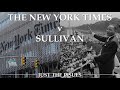
Defamation and the Actual Malice Standard

Interactive Video
•
Journalism, History, Social Studies
•
9th - 12th Grade
•
Practice Problem
•
Hard

Patricia Brown
FREE Resource
Read more
10 questions
Show all answers
1.
MULTIPLE CHOICE QUESTION
30 sec • 1 pt
What was the purpose of the full-page ad taken out in the New York Times in 1960?
To announce a civil rights march
To promote a new civil rights law
To raise money for Martin Luther King Jr.'s defense fund
To advertise a new book by Martin Luther King Jr.
2.
MULTIPLE CHOICE QUESTION
30 sec • 1 pt
Who filed the lawsuit against the New York Times, claiming defamation?
Martin Luther King Jr.
The Supreme Court
Montgomery police commissioner Sullivan
The Alabama state government
3.
MULTIPLE CHOICE QUESTION
30 sec • 1 pt
What was the outcome of the New York Times' appeal to the Supreme Court?
The Times was found guilty of defamation
The Supreme Court upheld the Alabama court's decision
The Times' First Amendment rights were upheld
The case was dismissed without a ruling
4.
MULTIPLE CHOICE QUESTION
30 sec • 1 pt
What was the impact of the Supreme Court's ruling on news organizations during the civil rights era?
It restricted their ability to report
It allowed them to report with fewer restrictions
It had no impact on their reporting
It led to more lawsuits against them
5.
MULTIPLE CHOICE QUESTION
30 sec • 1 pt
What does the 'actual malice' standard require to prove defamation?
The defendant had a personal vendetta against the plaintiff
The defendant published false information unknowingly
The defendant was a public figure
The defendant published false information with knowledge of its falsity
6.
MULTIPLE CHOICE QUESTION
30 sec • 1 pt
How did the 'actual malice' standard affect the ability of public figures to win defamation suits?
It made it nearly impossible for public figures to win
It had no impact on defamation suits
It only affected private individuals
It made it easier for public figures to win
7.
MULTIPLE CHOICE QUESTION
30 sec • 1 pt
Why is it difficult for public figures to stop tabloids from publishing outlandish claims?
The 'actual malice' standard is hard to meet
Public figures cannot afford legal fees
Tabloids are protected by international law
Tabloids have special legal privileges
Access all questions and much more by creating a free account
Create resources
Host any resource
Get auto-graded reports

Continue with Google

Continue with Email

Continue with Classlink

Continue with Clever
or continue with

Microsoft
%20(1).png)
Apple

Others
Already have an account?


