
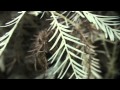
Albino Redwoods: Physiology and Ecology

Interactive Video
•
Biology, Science, Other
•
9th - 10th Grade
•
Practice Problem
•
Hard

Patricia Brown
FREE Resource
Read more
10 questions
Show all answers
1.
MULTIPLE CHOICE QUESTION
30 sec • 1 pt
What makes albino redwoods particularly difficult to spot in their natural habitat?
They are smaller than other trees.
Their white foliage blends with the snow.
They grow only in remote areas.
They can disappear with changes in lighting and angle.
2.
MULTIPLE CHOICE QUESTION
30 sec • 1 pt
Why are redwoods considered unique among conifers?
They have the largest leaves among conifers.
They are the only conifers with documented albinism.
They are the tallest trees in the world.
They are the only conifers that grow in California.
3.
MULTIPLE CHOICE QUESTION
30 sec • 1 pt
What is the primary research interest of Yarmilla Peterman regarding albino redwoods?
To discover new species of redwoods.
To understand the physiological consequences of albinism.
To study the impact of redwoods on local wildlife.
To find ways to increase the growth rate of redwoods.
4.
MULTIPLE CHOICE QUESTION
30 sec • 1 pt
How does albinism in redwoods affect their water loss?
It causes the leaves to absorb more water.
It affects the regulation of water loss due to lack of photosynthesis.
It has no effect on water loss.
It increases water retention.
5.
MULTIPLE CHOICE QUESTION
30 sec • 1 pt
What is one of the methods used to study albino redwoods?
Cutting down the trees for analysis.
Planting new albino redwoods in controlled environments.
Observing the trees from a distance.
Using non-destructive instruments to measure water loss.
6.
MULTIPLE CHOICE QUESTION
30 sec • 1 pt
What is a noticeable physical characteristic of albino redwood leaves?
They are rougher than green leaves.
They are softer and more brittle.
They are thicker and more rigid.
They are darker in color.
7.
MULTIPLE CHOICE QUESTION
30 sec • 1 pt
How do albino sprouts affect the host redwood tree?
They improve the tree's resistance to drought.
They protect the tree from pests.
They act as parasites, taking carbon without giving back.
They enhance the tree's growth.
Access all questions and much more by creating a free account
Create resources
Host any resource
Get auto-graded reports

Continue with Google

Continue with Email

Continue with Classlink

Continue with Clever
or continue with

Microsoft
%20(1).png)
Apple

Others
Already have an account?

