
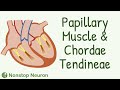
Heart Valves and Their Functions

Interactive Video
•
Biology, Science, Other
•
9th - 10th Grade
•
Practice Problem
•
Hard

Patricia Brown
FREE Resource
Read more
10 questions
Show all answers
1.
MULTIPLE CHOICE QUESTION
30 sec • 1 pt
What is the primary role of papillary muscles and chordae tendineae in the heart?
To regulate blood pressure
To pump blood into the ventricles
To increase the heart rate
To prevent backflow of blood into the atria
2.
MULTIPLE CHOICE QUESTION
30 sec • 1 pt
Where do papillary muscles originate from?
Atria walls
Ventricle walls
Atrioventricular valves
Chordae tendineae
3.
MULTIPLE CHOICE QUESTION
30 sec • 1 pt
What are chordae tendineae primarily composed of?
Nerve tissues
Muscle fibers
Blood vessels
Fibrous cords
4.
MULTIPLE CHOICE QUESTION
30 sec • 1 pt
During which phase of the cardiac cycle do papillary muscles contract?
Ventricular filling
Diastole
Systole
Atrial contraction
5.
MULTIPLE CHOICE QUESTION
30 sec • 1 pt
What could happen if the chordae tendineae rupture?
Increased heart rate
Valve prolapse
Decreased blood pressure
Enhanced blood flow
6.
MULTIPLE CHOICE QUESTION
30 sec • 1 pt
How do papillary muscles and chordae tendineae prevent valve prolapse?
By maintaining tension on valve cusps
By increasing blood pressure
By relaxing during systole
By closing the semilunar valves
7.
MULTIPLE CHOICE QUESTION
30 sec • 1 pt
What is the consequence of valve prolapse in the heart?
Increased heart efficiency
Backflow of blood
Improved circulation
Decreased heart rate
Access all questions and much more by creating a free account
Create resources
Host any resource
Get auto-graded reports

Continue with Google

Continue with Email

Continue with Classlink

Continue with Clever
or continue with

Microsoft
%20(1).png)
Apple

Others
Already have an account?


