
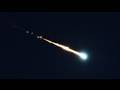
Understanding Meteor Showers and Meteors

Interactive Video
•
Science, Physics, Other
•
6th - 8th Grade
•
Practice Problem
•
Hard

Patricia Brown
FREE Resource
Read more
10 questions
Show all answers
1.
MULTIPLE CHOICE QUESTION
30 sec • 1 pt
What are shooting stars actually?
Stars moving rapidly across the sky
Satellites reflecting sunlight
Meteors entering Earth's atmosphere
Comets passing by Earth
2.
MULTIPLE CHOICE QUESTION
30 sec • 1 pt
What is the main difference between a shooting star and a meteor shower?
Meteor showers are a group of shooting stars
Meteor showers occur only in winter
Meteor showers are larger meteors
Shooting stars are visible only during the day
3.
MULTIPLE CHOICE QUESTION
30 sec • 1 pt
What typically causes meteor showers?
Solar flares
Volcanic eruptions
Lunar eclipses
Earth passing through a cloud of dust
4.
MULTIPLE CHOICE QUESTION
30 sec • 1 pt
Do most meteors hit the Earth?
No, they usually vaporize in the atmosphere
No, they are deflected by Earth's magnetic field
Yes, they often cause craters
Yes, but they are too small to notice
5.
MULTIPLE CHOICE QUESTION
30 sec • 1 pt
What was significant about the Tunguska event in 1908?
It flattened trees over a large area
It was the first recorded meteor shower
It was visible from the moon
It created a large crater
6.
MULTIPLE CHOICE QUESTION
30 sec • 1 pt
When is the best time during the night to observe meteors?
At dawn
After midnight
Around midnight
Just after sunset
7.
MULTIPLE CHOICE QUESTION
30 sec • 1 pt
Which annual meteor shower is considered the most famous?
Orionids
Geminids
Perseids
Leonids
Access all questions and much more by creating a free account
Create resources
Host any resource
Get auto-graded reports

Continue with Google

Continue with Email

Continue with Microsoft
or continue with

%20(1).png)
Apple

Others
By signing up, you agree to our Terms of Service & Privacy Policy
Already have an account?

