
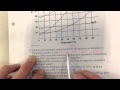
Solubility and Saturation Concepts

Interactive Video
•
Chemistry, Science, Mathematics
•
10th - 12th Grade
•
Practice Problem
•
Hard

Patricia Brown
FREE Resource
Read more
10 questions
Show all answers
1.
MULTIPLE CHOICE QUESTION
30 sec • 1 pt
What prior knowledge is essential for understanding solubility curves?
Familiarity with nuclear reactions
Understanding ionic compound formulas
Experience with chemical engineering
Knowledge of organic chemistry
2.
MULTIPLE CHOICE QUESTION
30 sec • 1 pt
Which type of solution contains a large amount of solute compared to the solvent?
Dilute solution
Saturated solution
Concentrated solution
Unsaturated solution
3.
MULTIPLE CHOICE QUESTION
30 sec • 1 pt
What happens to a solution when it reaches its saturation point?
No more solute can be dissolved
It becomes unstable
It can dissolve more solute
It changes color
4.
MULTIPLE CHOICE QUESTION
30 sec • 1 pt
How is a supersaturated solution typically formed?
By adding more solvent
By cooling a saturated solution
By stirring vigorously
By heating a saturated solution
5.
MULTIPLE CHOICE QUESTION
30 sec • 1 pt
What does a solubility curve illustrate?
The pH level of a solution
The change in solubility with temperature
The freezing point of a solution
The boiling point of a solution
6.
MULTIPLE CHOICE QUESTION
30 sec • 1 pt
In a solubility curve, what does the y-axis typically represent?
Volume of solvent
Pressure
Solubility in grams per 100 grams of water
Temperature
7.
MULTIPLE CHOICE QUESTION
30 sec • 1 pt
What is the maximum amount of silver nitrate that can dissolve in 250 grams of water at 10°C?
160 grams
250 grams
400 grams
100 grams
Access all questions and much more by creating a free account
Create resources
Host any resource
Get auto-graded reports

Continue with Google

Continue with Email

Continue with Classlink

Continue with Clever
or continue with

Microsoft
%20(1).png)
Apple

Others
Already have an account?
Similar Resources on Wayground

8 questions
Solving a word problem using substitution and elimination
Interactive video
•
11th Grade - University
6 questions
Ice Melting in Water: Does the Water Level Change?
Interactive video
•
11th Grade - University
6 questions
Eliminate the parameter to obtain a radical function
Interactive video
•
11th Grade - University
8 questions
GCSE Secondary Maths Age 13-17 - Graphs: Quadratic Graphs - Explained
Interactive video
•
10th - 12th Grade
8 questions
GCSE Secondary Maths Age 13-17 - Algebra: Algebraic Fractions - Explained
Interactive video
•
10th - 12th Grade
6 questions
TED-Ed: What is Zeno's Dichotomy Paradox? - Colm Kelleher
Interactive video
•
KG - University
6 questions
Equilibrium Constant Expression
Interactive video
•
10th Grade - University
8 questions
How do I graph a line using slope intercept form
Interactive video
•
11th Grade - University
Popular Resources on Wayground
15 questions
Fractions on a Number Line

Quiz
•
3rd Grade
10 questions
Probability Practice
Quiz
•
4th Grade
15 questions
Probability on Number LIne
Quiz
•
4th Grade
20 questions
Equivalent Fractions
Quiz
•
3rd Grade
25 questions
Multiplication Facts
Quiz
•
5th Grade
22 questions
fractions
Quiz
•
3rd Grade
6 questions
Appropriate Chromebook Usage

Lesson
•
7th Grade
10 questions
Greek Bases tele and phon
Quiz
•
6th - 8th Grade
Discover more resources for Chemistry
20 questions
Predicting Products
Quiz
•
9th - 12th Grade
10 questions
Exploring Types of Chemical Reactions
Interactive video
•
6th - 10th Grade
19 questions
Stoichiometry, % yield, Limiting Reactants
Quiz
•
10th Grade
20 questions
Types of Chemical Reactions
Quiz
•
9th - 12th Grade
10 questions
Exploring Ionic and Covalent Bonding Concepts
Interactive video
•
6th - 10th Grade
7 questions
GCSE Chemistry - Balancing Chemical Equations #4
Interactive video
•
9th - 10th Grade
24 questions
Unit 2 (Part 1) Bonding Review
Quiz
•
12th Grade
12 questions
Percent Yield
Quiz
•
10th Grade