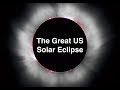
Understanding Solar Eclipse Safety and Effects

Interactive Video
•
Science, Physics, Biology
•
9th - 10th Grade
•
Practice Problem
•
Hard

Patricia Brown
FREE Resource
Read more
10 questions
Show all answers
1.
MULTIPLE CHOICE QUESTION
30 sec • 1 pt
What makes the Great American Solar Eclipse particularly significant?
It is the first solar eclipse visible from every continent.
It is the longest solar eclipse in history.
It is the first solar eclipse to occur on a weekend.
It is the first solar eclipse visible from the USA in 100 years.
2.
MULTIPLE CHOICE QUESTION
30 sec • 1 pt
What is a common misconception about how the sun damages the eyes?
The sun's rays are harmless to the eyes.
The sun's light causes immediate blindness.
The sun's heat directly burns the retina.
The sun's light can only damage the eyes during an eclipse.
3.
MULTIPLE CHOICE QUESTION
30 sec • 1 pt
How do photochemical reactions damage the eye?
By creating loud noises that damage the ear.
By causing the eye to dry out completely.
By triggering chemical changes in eye molecules.
By causing thermal burns on the retina.
4.
MULTIPLE CHOICE QUESTION
30 sec • 1 pt
What is retinal bleaching?
A temporary reduction in sensitivity after seeing bright light.
A process where the retina regenerates new cells.
A condition where the eye turns completely white.
A permanent loss of vision due to sun exposure.
5.
MULTIPLE CHOICE QUESTION
30 sec • 1 pt
What is photoacoustic damage?
Damage caused by loud sounds.
Damage caused by rapid heating from a laser.
Damage caused by chemical reactions in the eye.
Damage caused by prolonged exposure to sunlight.
6.
MULTIPLE CHOICE QUESTION
30 sec • 1 pt
What should you do during the totality of a solar eclipse?
Use a telescope to get a better view.
Keep your eclipse glasses on at all times.
Remove your eclipse glasses to view the corona.
Look directly at the sun without any protection.
7.
MULTIPLE CHOICE QUESTION
30 sec • 1 pt
Why is it important to put eclipse glasses back on after totality?
To prevent your eyes from adjusting to the dark.
To avoid missing the end of the eclipse.
To protect your eyes from the returning sunlight.
To enhance the view of the solar corona.
Access all questions and much more by creating a free account
Create resources
Host any resource
Get auto-graded reports

Continue with Google

Continue with Email

Continue with Classlink

Continue with Clever
or continue with

Microsoft
%20(1).png)
Apple

Others
Already have an account?
Popular Resources on Wayground

7 questions
History of Valentine's Day
Interactive video
•
4th Grade
15 questions
Fractions on a Number Line

Quiz
•
3rd Grade
20 questions
Equivalent Fractions
Quiz
•
3rd Grade
25 questions
Multiplication Facts
Quiz
•
5th Grade
22 questions
fractions
Quiz
•
3rd Grade
15 questions
Valentine's Day Trivia
Quiz
•
3rd Grade
20 questions
Main Idea and Details
Quiz
•
5th Grade
20 questions
Context Clues
Quiz
•
6th Grade
Discover more resources for Science
25 questions
Naming Ionic and Covalent Compounds
Quiz
•
9th Grade
20 questions
Mendelian Genetics Review
Quiz
•
9th Grade
10 questions
Exploring Weathering, Erosion, and Deposition Processes
Interactive video
•
6th - 10th Grade
10 questions
Exploring Mendelian Genetics and Punnett Squares
Interactive video
•
6th - 10th Grade
10 questions
Exploring Light and Waves Concepts
Interactive video
•
6th - 10th Grade
20 questions
The Cell Cycle and Mitosis
Quiz
•
9th Grade
35 questions
DNA Structure and Replication
Quiz
•
10th Grade
89 questions
Unit 1 (Ch 2 & 3) Test Review - Water/Ocean Currents
Quiz
•
9th - 12th Grade