
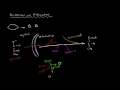
Cellular Respiration and Pyruvate Oxidation

Interactive Video
•
Biology, Science, Chemistry
•
9th - 10th Grade
•
Practice Problem
•
Hard

Patricia Brown
FREE Resource
Read more
10 questions
Show all answers
1.
MULTIPLE CHOICE QUESTION
30 sec • 1 pt
What is the initial molecule broken down during glycolysis?
Sucrose
Glucose
Lactose
Fructose
2.
MULTIPLE CHOICE QUESTION
30 sec • 1 pt
Where does the oxidation of pyruvate occur within the cell?
Endoplasmic Reticulum
Cytosol
Nucleus
Mitochondrion
3.
MULTIPLE CHOICE QUESTION
30 sec • 1 pt
What is the role of pyruvate dehydrogenase in cellular respiration?
It breaks down glucose.
It transports pyruvate into the mitochondrion.
It converts NADH to NAD+.
It synthesizes ATP.
4.
MULTIPLE CHOICE QUESTION
30 sec • 1 pt
Which of the following is NOT a product of pyruvate oxidation?
NADH
CO2
Acetyl CoA
FADH2
5.
MULTIPLE CHOICE QUESTION
30 sec • 1 pt
How many carbon atoms are present in acetyl CoA?
Three
Two
One
Four
6.
MULTIPLE CHOICE QUESTION
30 sec • 1 pt
What happens to NAD+ during the oxidation of pyruvate?
It is converted to FAD.
It is oxidized to form NADH.
It is reduced to form NADH.
It remains unchanged.
7.
MULTIPLE CHOICE QUESTION
30 sec • 1 pt
What is the fate of acetyl CoA after pyruvate oxidation?
It is used in glycolysis.
It enters the Krebs cycle.
It is stored as fat.
It is converted to glucose.
Access all questions and much more by creating a free account
Create resources
Host any resource
Get auto-graded reports

Continue with Google

Continue with Email

Continue with Classlink

Continue with Clever
or continue with

Microsoft
%20(1).png)
Apple

Others
Already have an account?

