
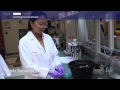
PCR Techniques and Best Practices

Interactive Video
•
Biology
•
10th - 12th Grade
•
Practice Problem
•
Hard

Patricia Brown
FREE Resource
Read more
10 questions
Show all answers
1.
MULTIPLE CHOICE QUESTION
30 sec • 1 pt
What is a downside of PCR's high sensitivity?
It requires more DNA samples.
It can amplify non-specific products due to contamination.
It is less accurate than other methods.
It takes longer to complete.
2.
MULTIPLE CHOICE QUESTION
30 sec • 1 pt
Which of the following is a source of cross-contamination in PCR?
Using expired reagents.
Incorrect DNA sequencing.
Cross-contamination with non-amplified material.
Using the wrong thermocycler settings.
3.
MULTIPLE CHOICE QUESTION
30 sec • 1 pt
What is a recommended practice to prevent cross-contamination during PCR?
Using the same pipets for all experiments.
Wearing a clean lab coat and gloves.
Mixing samples in the same area.
Skipping the decontamination process.
4.
MULTIPLE CHOICE QUESTION
30 sec • 1 pt
Why is it important to decontaminate surfaces before and after PCR experiments?
To improve the speed of the reaction.
To reduce the risk of contamination.
To prevent bacterial growth.
To ensure accurate temperature control.
5.
MULTIPLE CHOICE QUESTION
30 sec • 1 pt
What type of water should be used for PCR reactions?
Tap water
Distilled water
Mineral water
Sterile Ultra Pure Water
6.
MULTIPLE CHOICE QUESTION
30 sec • 1 pt
How can pipetting steps be minimized during PCR?
By using larger pipets.
By preparing Master mixes.
By reducing the number of samples.
By using non-sterile pipets.
7.
MULTIPLE CHOICE QUESTION
30 sec • 1 pt
What is an example of a negative control in PCR?
Using a known DNA template.
Increasing the reaction temperature.
Substituting water for the DNA template.
Using a different enzyme.
Access all questions and much more by creating a free account
Create resources
Host any resource
Get auto-graded reports

Continue with Google

Continue with Email

Continue with Microsoft
or continue with

%20(1).png)
Apple

Others
By signing up, you agree to our Terms of Service & Privacy Policy
Already have an account?


