
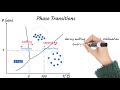
Kinetic and Potential Energy Concepts

Interactive Video
•
Chemistry
•
9th - 10th Grade
•
Practice Problem
•
Hard

Patricia Brown
FREE Resource
Read more
10 questions
Show all answers
1.
MULTIPLE CHOICE QUESTION
30 sec • 1 pt
What is the first assumption of the particulate model of matter?
Particles are constantly moving in random directions.
Particles do not interact with each other.
Particles are composed of large macroscopic samples.
Particles are always stationary.
2.
MULTIPLE CHOICE QUESTION
30 sec • 1 pt
In which phase do particles have the strongest interactions?
Plasma
Solid
Liquid
Gas
3.
MULTIPLE CHOICE QUESTION
30 sec • 1 pt
During which phase transition is energy absorbed by the system?
Deposition
Melting
Condensing
Freezing
4.
MULTIPLE CHOICE QUESTION
30 sec • 1 pt
What happens to the temperature during a phase change?
It decreases.
It increases.
It remains constant.
It fluctuates.
5.
MULTIPLE CHOICE QUESTION
30 sec • 1 pt
How does the average kinetic energy of a water sample change when heated?
It decreases.
It remains constant.
It increases.
It fluctuates.
6.
MULTIPLE CHOICE QUESTION
30 sec • 1 pt
What is the general nature of potential energy in the context of phase changes?
Positive
Negative
Neutral
Variable
7.
MULTIPLE CHOICE QUESTION
30 sec • 1 pt
What is the relationship between temperature and kinetic energy?
Temperature is unrelated to kinetic energy.
Temperature is a measure of the average kinetic energy.
Temperature is inversely proportional to kinetic energy.
Temperature is a measure of potential energy.
Access all questions and much more by creating a free account
Create resources
Host any resource
Get auto-graded reports

Continue with Google

Continue with Email

Continue with Classlink

Continue with Clever
or continue with

Microsoft
%20(1).png)
Apple

Others
Already have an account?

