
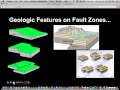
Geological Features and Faults

Interactive Video
•
Geography
•
9th - 10th Grade
•
Practice Problem
•
Medium

Patricia Brown
Used 1+ times
FREE Resource
Read more
10 questions
Show all answers
1.
MULTIPLE CHOICE QUESTION
30 sec • 1 pt
What type of stress is responsible for creating mid-ocean ridges?
Shearing
Tension
Compression
Bending
2.
MULTIPLE CHOICE QUESTION
30 sec • 1 pt
Which geological feature is typically formed by the subduction of an oceanic plate beneath a continental plate?
Deep Ocean Trench
Rift Valley
Mid-ocean Ridge
Plateau
3.
MULTIPLE CHOICE QUESTION
30 sec • 1 pt
In a normal fault, which direction does the hanging wall move?
It remains stationary
Sideways
Downward
Upward
4.
MULTIPLE CHOICE QUESTION
30 sec • 1 pt
What type of fault is the San Andreas Fault primarily considered?
Strike-slip Fault
Reverse Fault
Normal Fault
Oblique-slip Fault
5.
MULTIPLE CHOICE QUESTION
30 sec • 1 pt
Which type of fault involves horizontal movement along the fault line?
Strike-slip Fault
Reverse Fault
Oblique-slip Fault
Normal Fault
6.
MULTIPLE CHOICE QUESTION
30 sec • 1 pt
What is a Horst in geological terms?
A type of volcanic mountain
A valley formed by tension
An uplifted block between two normal faults
A fold in sedimentary layers
7.
MULTIPLE CHOICE QUESTION
30 sec • 1 pt
What type of stress leads to the formation of a Graben?
Shearing
Bending
Tension
Compression
Access all questions and much more by creating a free account
Create resources
Host any resource
Get auto-graded reports

Continue with Google

Continue with Email

Continue with Microsoft
or continue with

%20(1).png)
Apple

Others
By signing up, you agree to our Terms of Service & Privacy Policy
Already have an account?


