
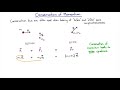
Analyzing Particle Motion and Collisions

Interactive Video
•
Physics
•
9th - 10th Grade
•
Practice Problem
•
Hard

Patricia Brown
FREE Resource
Read more
10 questions
Show all answers
1.
MULTIPLE CHOICE QUESTION
30 sec • 1 pt
What are the given properties of the two particles in the scenario?
Color and shape
Mass and velocity
Temperature and pressure
Charge and spin
2.
MULTIPLE CHOICE QUESTION
30 sec • 1 pt
What happens to the two particles when they collide?
They pass through each other
They bounce off each other
They stick together
They explode
3.
MULTIPLE CHOICE QUESTION
30 sec • 1 pt
Which law is used to analyze the motion of the particles after the collision?
Conservation of energy
Conservation of mass
Conservation of momentum
Conservation of charge
4.
MULTIPLE CHOICE QUESTION
30 sec • 1 pt
What is a key feature of vector equations in this context?
They are scalar quantities
They do not change over time
They can be broken down into components
They are always positive
5.
MULTIPLE CHOICE QUESTION
30 sec • 1 pt
How is the X component of velocity V1 described?
It is zero
It is equal to the magnitude of V2
It is negative
It is equal to the magnitude of V1
6.
MULTIPLE CHOICE QUESTION
30 sec • 1 pt
What is the Y component of velocity V2?
Equal to the magnitude of V1
Equal to the magnitude of V2
Zero
Negative
7.
MULTIPLE CHOICE QUESTION
30 sec • 1 pt
What is the result of adding the X components of the two vectors?
It equals the X component of the final vector
It equals the Y component of the final vector
It equals zero
It equals the sum of the masses
Access all questions and much more by creating a free account
Create resources
Host any resource
Get auto-graded reports

Continue with Google

Continue with Email

Continue with Classlink

Continue with Clever
or continue with

Microsoft
%20(1).png)
Apple

Others
Already have an account?


