
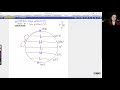
Global Wind Patterns and Cells

Interactive Video
•
Geography
•
6th - 8th Grade
•
Practice Problem
•
Hard

Patricia Brown
FREE Resource
Read more
10 questions
Show all answers
1.
MULTIPLE CHOICE QUESTION
30 sec • 1 pt
What is the main latitude that divides the Earth into northern and southern hemispheres?
90 degrees
60 degrees
30 degrees
Equator
2.
MULTIPLE CHOICE QUESTION
30 sec • 1 pt
Which type of pressure is associated with cold air?
Low pressure
High pressure
Medium pressure
No pressure
3.
MULTIPLE CHOICE QUESTION
30 sec • 1 pt
What is the name of the convection cell located between the equator and 30 degrees latitude?
Hadley cell
Ferrel cell
Polar cell
Equatorial cell
4.
MULTIPLE CHOICE QUESTION
30 sec • 1 pt
Which cell is also known as the mid-latitude cell?
Equatorial cell
Hadley cell
Ferrel cell
Polar cell
5.
MULTIPLE CHOICE QUESTION
30 sec • 1 pt
In which direction do trade winds move?
North to South
East to West
West to East
South to North
6.
MULTIPLE CHOICE QUESTION
30 sec • 1 pt
Between which latitudes do the trade winds occur?
0 to 60 degrees
60 to 90 degrees
30 to 60 degrees
0 to 30 degrees
7.
MULTIPLE CHOICE QUESTION
30 sec • 1 pt
What are the winds called that blow from west to east between 30 and 60 degrees latitude?
Westerlies
Polar easterlies
Trade winds
Equatorial winds
Access all questions and much more by creating a free account
Create resources
Host any resource
Get auto-graded reports

Continue with Google

Continue with Email

Continue with Classlink

Continue with Clever
or continue with

Microsoft
%20(1).png)
Apple

Others
Already have an account?

