
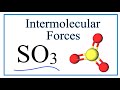
Intermolecular Forces in SO3

Interactive Video
•
Chemistry
•
9th - 10th Grade
•
Practice Problem
•
Hard

Sophia Harris
FREE Resource
Read more
9 questions
Show all answers
1.
MULTIPLE CHOICE QUESTION
30 sec • 1 pt
What is the first question to consider when determining the intermolecular forces in SO3?
Is SO3 a solid at room temperature?
Does SO3 have a high boiling point?
Is SO3 soluble in water?
Are there ions present in SO3?
2.
MULTIPLE CHOICE QUESTION
30 sec • 1 pt
What is the molecular geometry of SO3?
Bent
Trigonal planar
Linear
Tetrahedral
3.
MULTIPLE CHOICE QUESTION
30 sec • 1 pt
Why is SO3 considered a non-polar molecule?
It has a high electronegativity difference.
It has a symmetrical trigonal planar shape.
It contains ionic bonds.
It has a net dipole moment.
4.
MULTIPLE CHOICE QUESTION
30 sec • 1 pt
Which type of intermolecular force is present in SO3?
Hydrogen bonding
Ionic bonding
Dipole-dipole interactions
London dispersion forces
5.
MULTIPLE CHOICE QUESTION
30 sec • 1 pt
What causes London dispersion forces to occur in non-polar molecules like SO3?
Hydrogen bonds
Ionic charges
Permanent dipoles
Temporary dipoles
6.
MULTIPLE CHOICE QUESTION
30 sec • 1 pt
Why are London dispersion forces considered weak?
They are temporary and easily disrupted.
They involve strong ionic interactions.
They are only present in solids.
They require high temperatures to form.
7.
MULTIPLE CHOICE QUESTION
30 sec • 1 pt
What state of matter is SO3 usually found in due to its intermolecular forces?
Plasma
Solid
Liquid
Gas
Access all questions and much more by creating a free account
Create resources
Host any resource
Get auto-graded reports

Continue with Google

Continue with Email

Continue with Classlink

Continue with Clever
or continue with

Microsoft
%20(1).png)
Apple

Others
Already have an account?

