
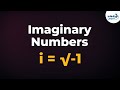
Imaginary Numbers and Their Properties

Interactive Video
•
Mathematics
•
9th - 10th Grade
•
Practice Problem
•
Hard

Thomas White
FREE Resource
Read more
20 questions
Show all answers
1.
MULTIPLE CHOICE QUESTION
30 sec • 1 pt
What are real numbers?
Numbers that are always negative
Numbers that cannot be represented on the number line
Numbers that can be represented on the number line
Numbers that are always positive
2.
MULTIPLE CHOICE QUESTION
30 sec • 1 pt
Which of the following is a rational number?
Square root of 3
Square root of 2
1/2
Pi
3.
MULTIPLE CHOICE QUESTION
30 sec • 1 pt
What is a characteristic of irrational numbers?
They are always negative
They have non-terminating, non-recurring decimals
They have terminating decimals
They can be expressed as a ratio of two integers
4.
MULTIPLE CHOICE QUESTION
30 sec • 1 pt
Can a real number squared result in a negative number?
Yes, always
Only if the number is positive
No, never
Only if the number is negative
5.
MULTIPLE CHOICE QUESTION
30 sec • 1 pt
What is the result of squaring a negative real number?
An imaginary number
Zero
A negative number
A positive number
6.
MULTIPLE CHOICE QUESTION
30 sec • 1 pt
What is the solution to the equation x^2 - 9 = 0?
x = 3 or x = -3
x = 9 or x = -9
x = 0
No solution
7.
MULTIPLE CHOICE QUESTION
30 sec • 1 pt
What happens if the discriminant of a quadratic equation is negative?
The equation has two real roots
The equation has one real root
The equation has no real roots
The equation has infinite solutions
Access all questions and much more by creating a free account
Create resources
Host any resource
Get auto-graded reports

Continue with Google

Continue with Email

Continue with Classlink

Continue with Clever
or continue with

Microsoft
%20(1).png)
Apple

Others
Already have an account?
Popular Resources on Wayground

8 questions
Spartan Way - Classroom Responsible

Quiz
•
9th - 12th Grade
15 questions
Fractions on a Number Line
Quiz
•
3rd Grade
14 questions
Boundaries & Healthy Relationships

Lesson
•
6th - 8th Grade
20 questions
Equivalent Fractions
Quiz
•
3rd Grade
3 questions
Integrity and Your Health
Lesson
•
6th - 8th Grade
25 questions
Multiplication Facts
Quiz
•
5th Grade
9 questions
FOREST Perception
Lesson
•
KG
20 questions
Main Idea and Details
Quiz
•
5th Grade
Discover more resources for Mathematics
20 questions
Graphing Inequalities on a Number Line
Quiz
•
6th - 9th Grade
11 questions
Adding and Subtracting Polynomials
Quiz
•
9th Grade
20 questions
Box and Whisker Plots
Quiz
•
9th Grade
18 questions
Exponential Growth and Decay
Quiz
•
9th Grade
12 questions
Equation of a Circle
Lesson
•
10th Grade
12 questions
Exponential Growth and Decay
Quiz
•
9th Grade
14 questions
Making Inferences From Samples
Quiz
•
7th - 12th Grade
24 questions
Solving Linear Equations with Variables on Both Sides
Quiz
•
9th Grade