
- Resource Library
- Math
- Probability And Statistics
- Relative Frequency
- Relative Frequency And Data Interpretation
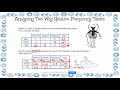
Relative Frequency and Data Interpretation

Interactive Video
•
Mathematics
•
6th - 8th Grade
•
Practice Problem
•
Hard

Thomas White
FREE Resource
Read more
10 questions
Show all answers
1.
MULTIPLE CHOICE QUESTION
30 sec • 1 pt
What is the main focus of today's lesson?
Understanding two-way frequency tables
Discussing beach activities
Learning about relative frequency
Reviewing Spring Break activities
2.
MULTIPLE CHOICE QUESTION
30 sec • 1 pt
How many people were surveyed at the beach?
50
30
40
60
3.
MULTIPLE CHOICE QUESTION
30 sec • 1 pt
What is the total number of males who like to swim and surf?
9
15
11
20
4.
MULTIPLE CHOICE QUESTION
30 sec • 1 pt
How do you calculate the total number of people who like to walk or run?
Add the number of males and females who like to walk or run
Subtract the number of males from females
Multiply the number of males by females
Divide the number of males by females
5.
MULTIPLE CHOICE QUESTION
30 sec • 1 pt
What is the difference between a regular frequency table and a relative frequency table?
Regular frequency tables are for males, relative frequency tables are for females
Regular frequency tables show counts, relative frequency tables show percentages
Regular frequency tables are for beach activities, relative frequency tables are for chores
Regular frequency tables use decimals, relative frequency tables use whole numbers
6.
MULTIPLE CHOICE QUESTION
30 sec • 1 pt
What is the relative frequency of males who swim and surf?
0.46
0.22
0.18
0.54
7.
MULTIPLE CHOICE QUESTION
30 sec • 1 pt
How do you convert a decimal to a percentage?
Divide by 100
Add 10
Subtract 10
Multiply by 100
Access all questions and much more by creating a free account
Create resources
Host any resource
Get auto-graded reports

Continue with Google

Continue with Email

Continue with Microsoft
or continue with

%20(1).png)
Apple

Others
By signing up, you agree to our Terms of Service & Privacy Policy
Already have an account?

