
Understanding Angles and Their Relationships

Interactive Video
•
Mathematics
•
6th - 7th Grade
•
Practice Problem
•
Hard

Thomas White
FREE Resource
Read more
14 questions
Show all answers
1.
MULTIPLE CHOICE QUESTION
30 sec • 1 pt
What are the four types of angle pairs introduced in this lesson?
Vertical, Adjacent, Complementary, Supplementary
Acute, Obtuse, Right, Straight
Parallel, Perpendicular, Skew, Intersecting
Reflex, Acute, Obtuse, Right
2.
MULTIPLE CHOICE QUESTION
30 sec • 1 pt
Which of the following best describes vertical angles?
Angles that add up to 90 degrees
Angles that share a common side
Angles that are opposite each other when two lines cross
Angles that form a straight line
3.
MULTIPLE CHOICE QUESTION
30 sec • 1 pt
In the context of vertical angles, what shape is often used to describe them?
Circle
V-shape
Square
Triangle
4.
MULTIPLE CHOICE QUESTION
30 sec • 1 pt
What is a key characteristic of adjacent angles?
They share a common vertex and side
They are opposite each other
They form a right angle
They add up to 180 degrees
5.
MULTIPLE CHOICE QUESTION
30 sec • 1 pt
Which of the following is true about complementary angles?
They add up to 90 degrees
They form a straight line
They are always adjacent
They add up to 180 degrees
6.
MULTIPLE CHOICE QUESTION
30 sec • 1 pt
How can you remember the difference between complementary and supplementary angles?
Complementary angles are larger
Supplementary angles are smaller
Complementary angles add to 90, supplementary to 180
Supplementary angles add to 90, complementary to 180
7.
MULTIPLE CHOICE QUESTION
30 sec • 1 pt
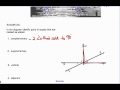
In the diagram, which angles are complementary?
Angles that form a straight line
Angles that add up to 90 degrees
Angles that are opposite each other
Angles that share a common side
Access all questions and much more by creating a free account
Create resources
Host any resource
Get auto-graded reports

Continue with Google

Continue with Email

Continue with Microsoft
or continue with

%20(1).png)
Apple

Others
By signing up, you agree to our Terms of Service & Privacy Policy
Already have an account?

