
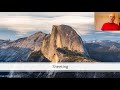
Understanding Mechanical Weathering

Interactive Video
•
Science
•
6th - 7th Grade
•
Practice Problem
•
Hard

Evelyn Hayes
FREE Resource
10 questions
Show all answers
1.
MULTIPLE CHOICE QUESTION
30 sec • 1 pt
What is the primary effect of weathering on rocks?
It makes rocks larger.
It makes rocks more dense.
It changes the color of rocks.
It breaks down rocks into smaller pieces.
2.
MULTIPLE CHOICE QUESTION
30 sec • 1 pt
Which type of weathering involves breaking rocks into smaller pieces without changing their composition?
Thermal weathering
Biological weathering
Mechanical weathering
Chemical weathering
3.
MULTIPLE CHOICE QUESTION
30 sec • 1 pt
How does mechanical weathering increase the surface area of rocks?
By breaking the rocks into smaller pieces
By melting the rocks
By compressing the rocks
By dissolving the rocks
4.
MULTIPLE CHOICE QUESTION
30 sec • 1 pt
What unique property of water contributes to frost wedging?
Water becomes acidic when it freezes.
Water expands when it freezes.
Water contracts when it freezes.
Water evaporates quickly.
5.
MULTIPLE CHOICE QUESTION
30 sec • 1 pt
In which climate is frost wedging most likely to occur?
Temperate
Tropical
Desert
Cold
6.
MULTIPLE CHOICE QUESTION
30 sec • 1 pt
What happens during salt crystal growth in rocks?
Salt dissolves the rock.
Salt crystals form and expand, causing cracks.
Salt makes the rock more dense.
Salt changes the color of the rock.
7.
MULTIPLE CHOICE QUESTION
30 sec • 1 pt
What is sheeting in the context of mechanical weathering?
The melting of rock surfaces
The growth of plants on rock surfaces
The formation of salt layers on rocks
The peeling off of rock layers due to pressure changes
Access all questions and much more by creating a free account
Create resources
Host any resource
Get auto-graded reports

Continue with Google

Continue with Email

Continue with Microsoft
or continue with

%20(1).png)
Apple

Others
By signing up, you agree to our Terms of Service & Privacy Policy
Already have an account?

