Free Printable Abbreviations Worksheets for Year 3
Help Year 3 students master abbreviations with Wayground's comprehensive collection of free worksheets and printables, featuring engaging practice problems and complete answer keys to build essential language skills.
Explore printable Abbreviations worksheets for Year 3
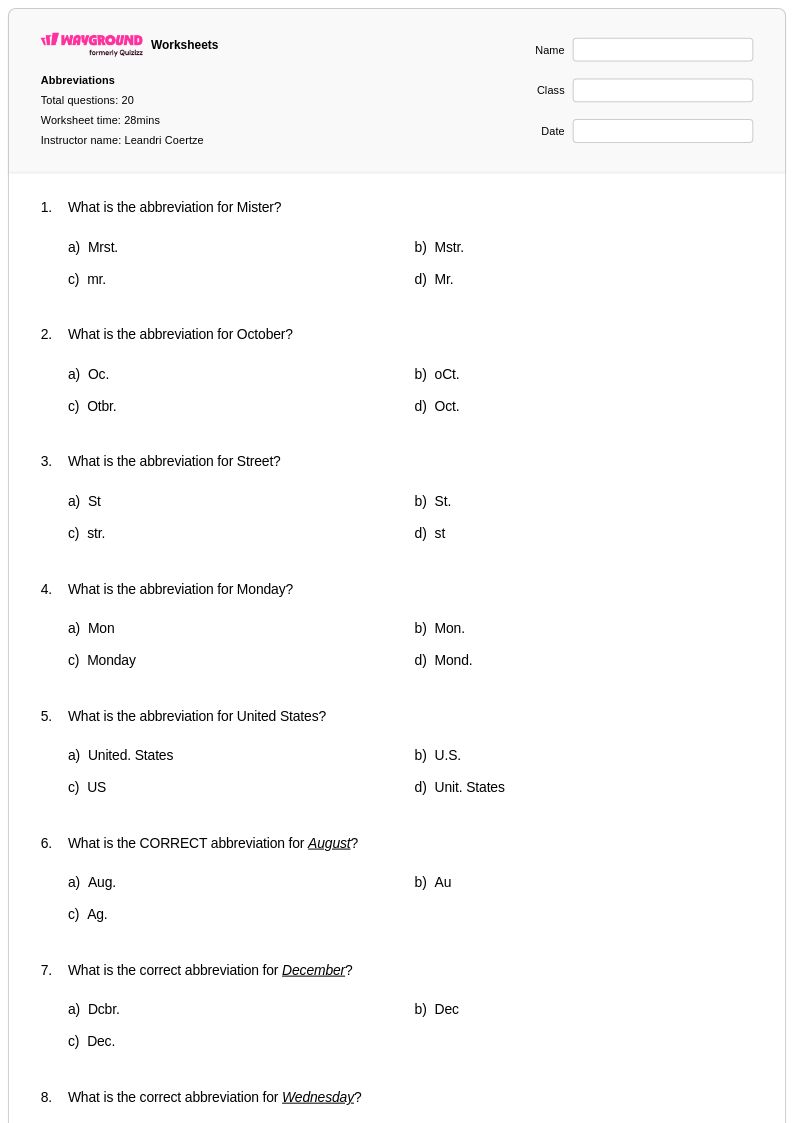
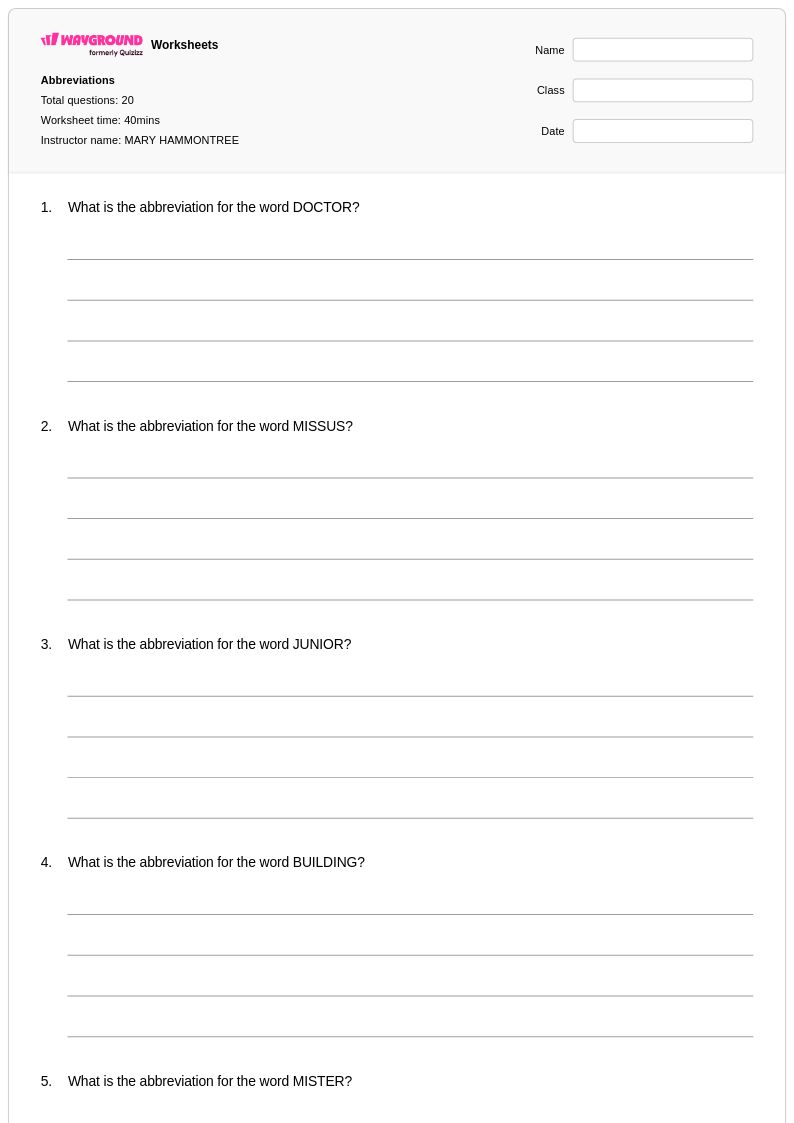
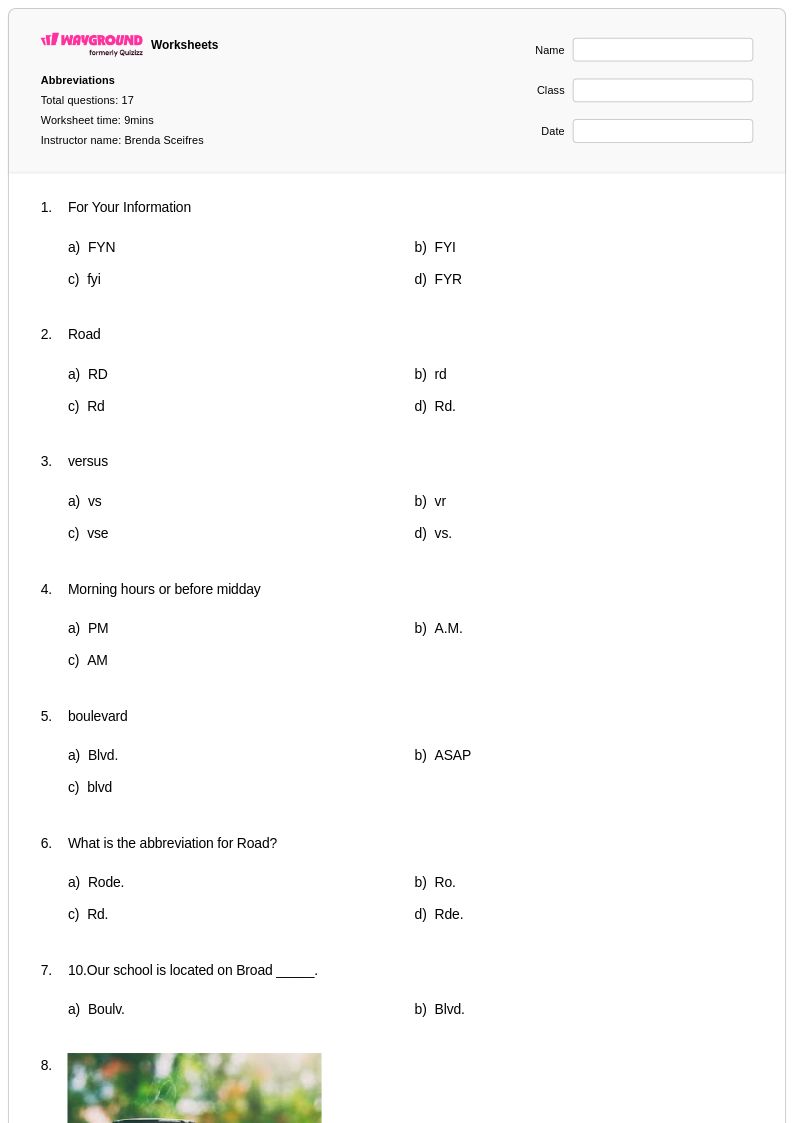
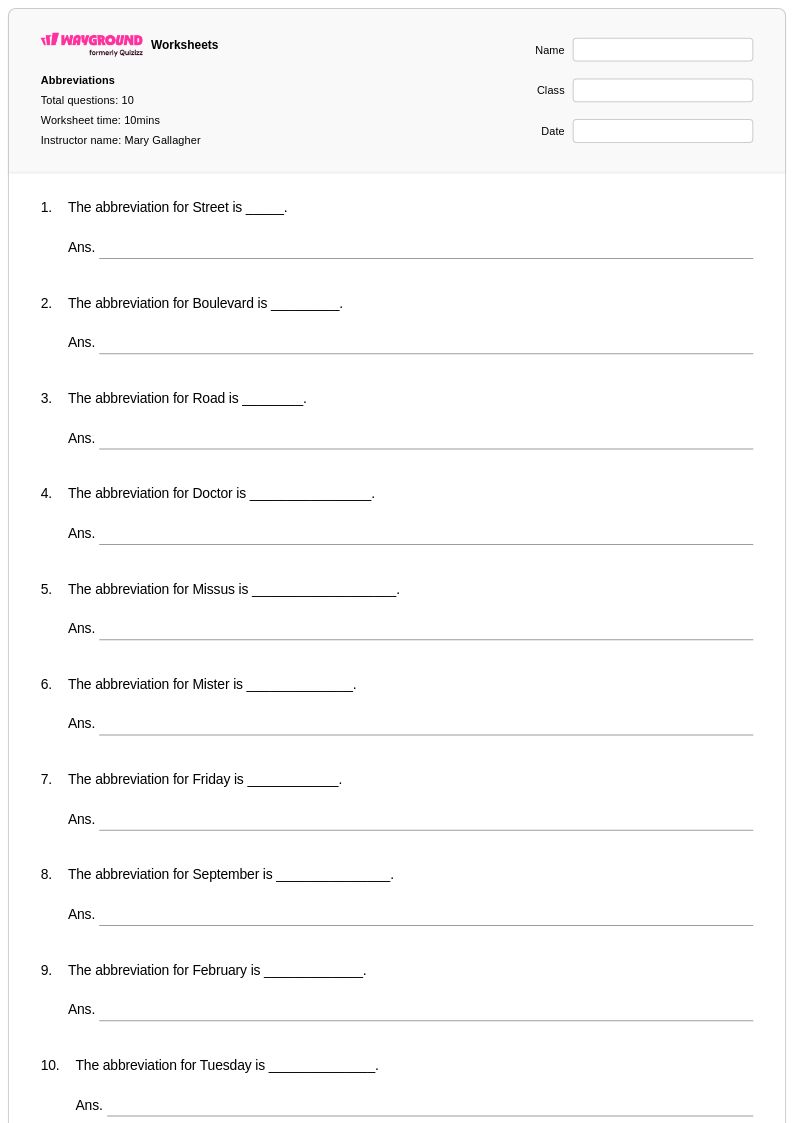
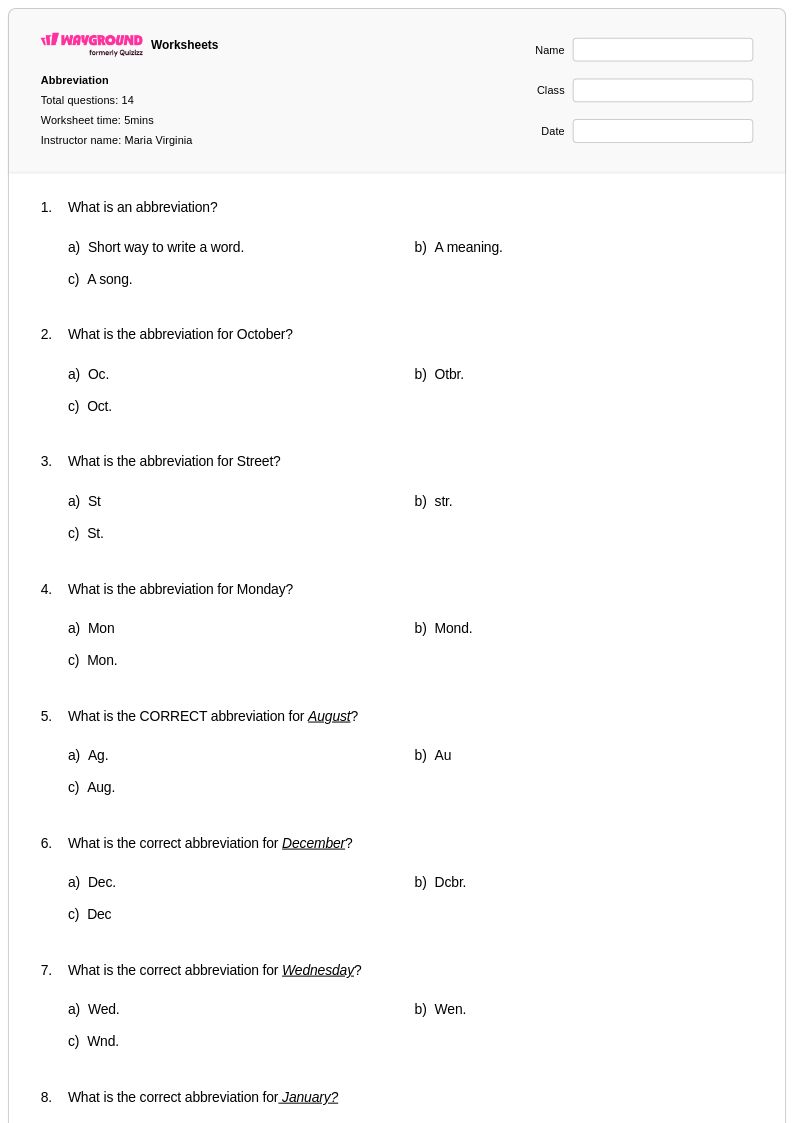
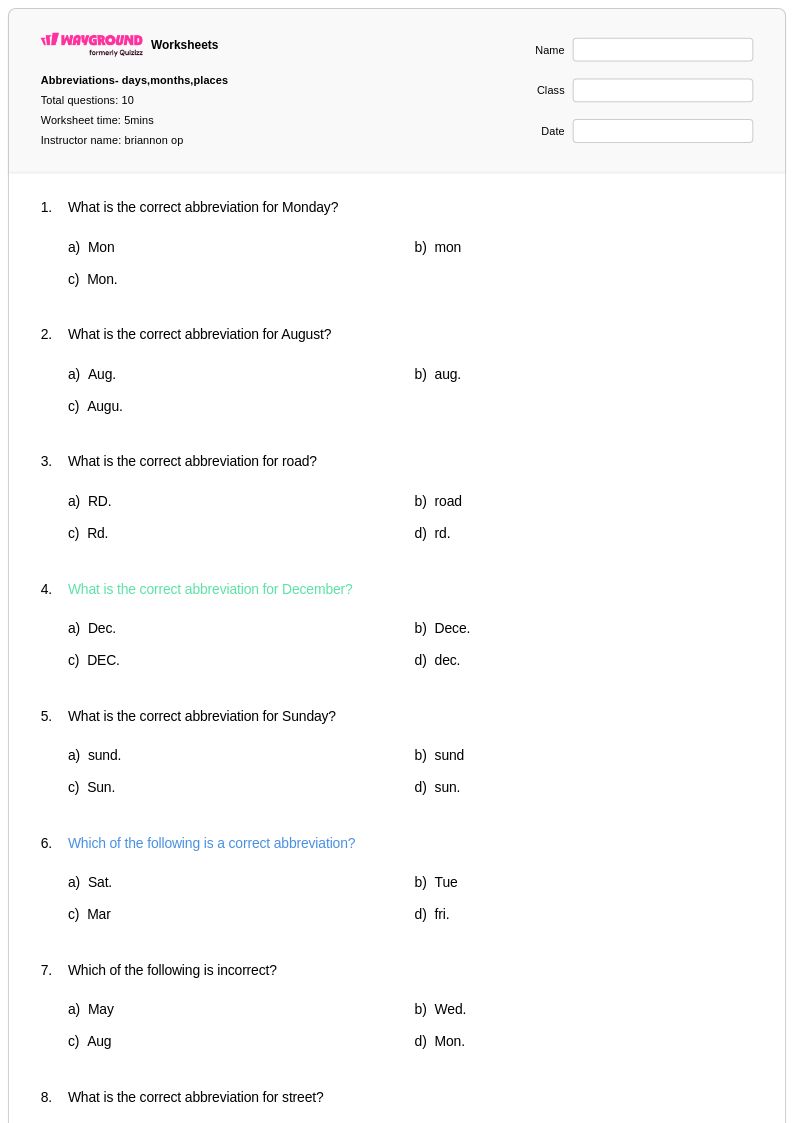
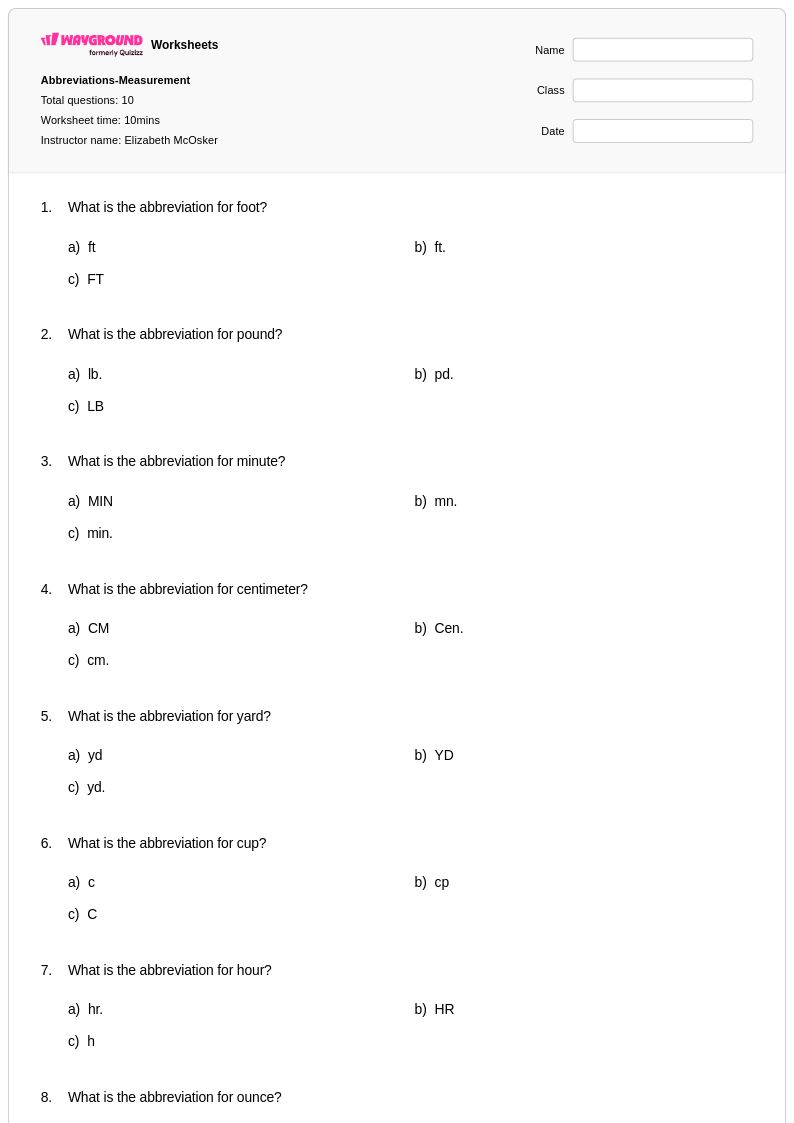
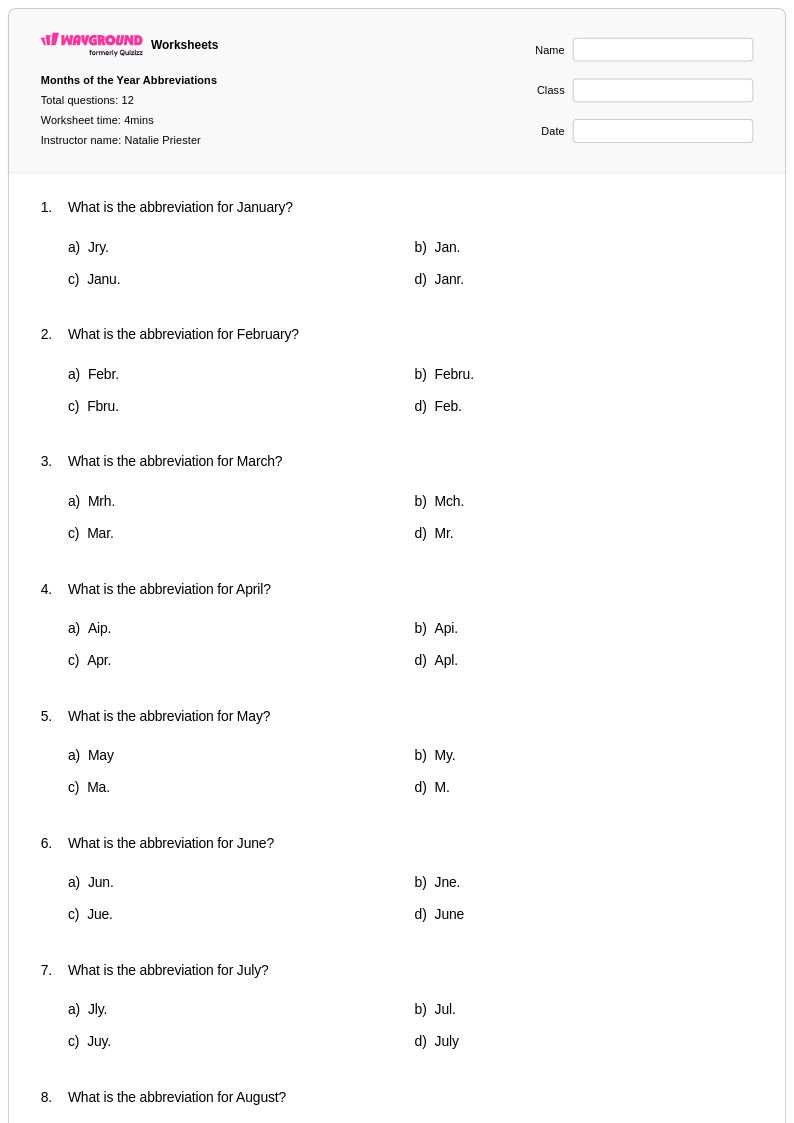
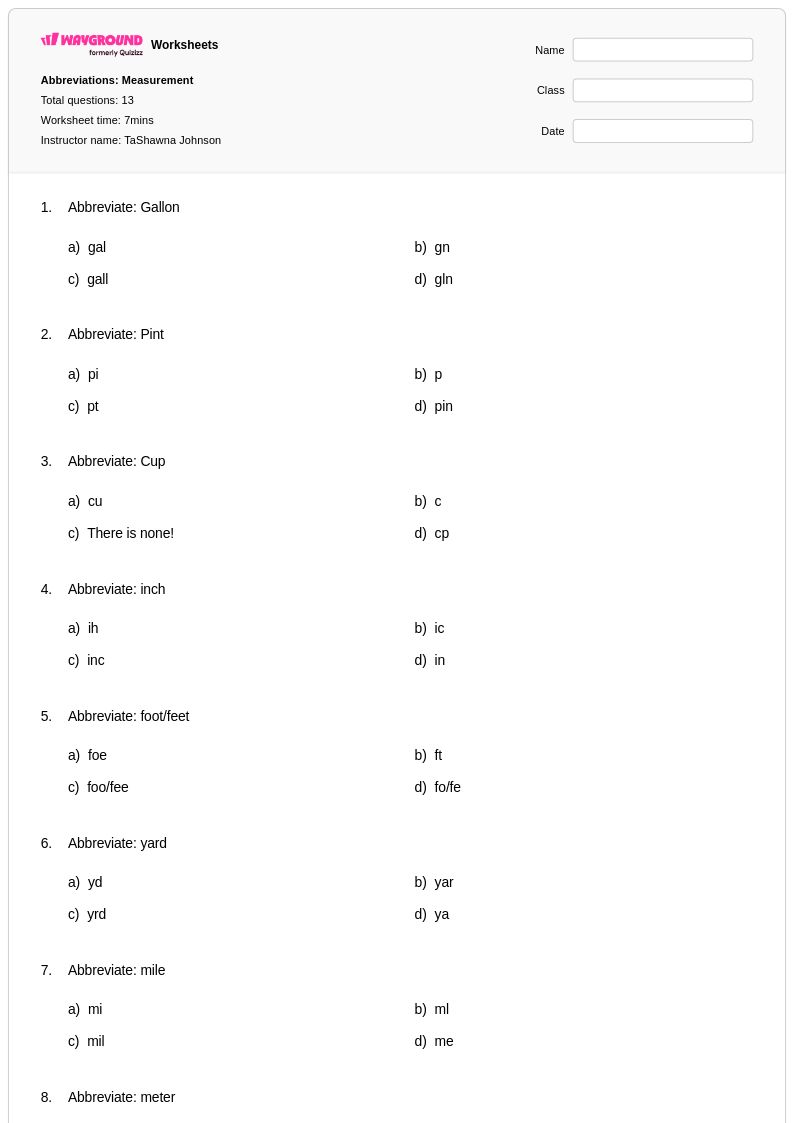
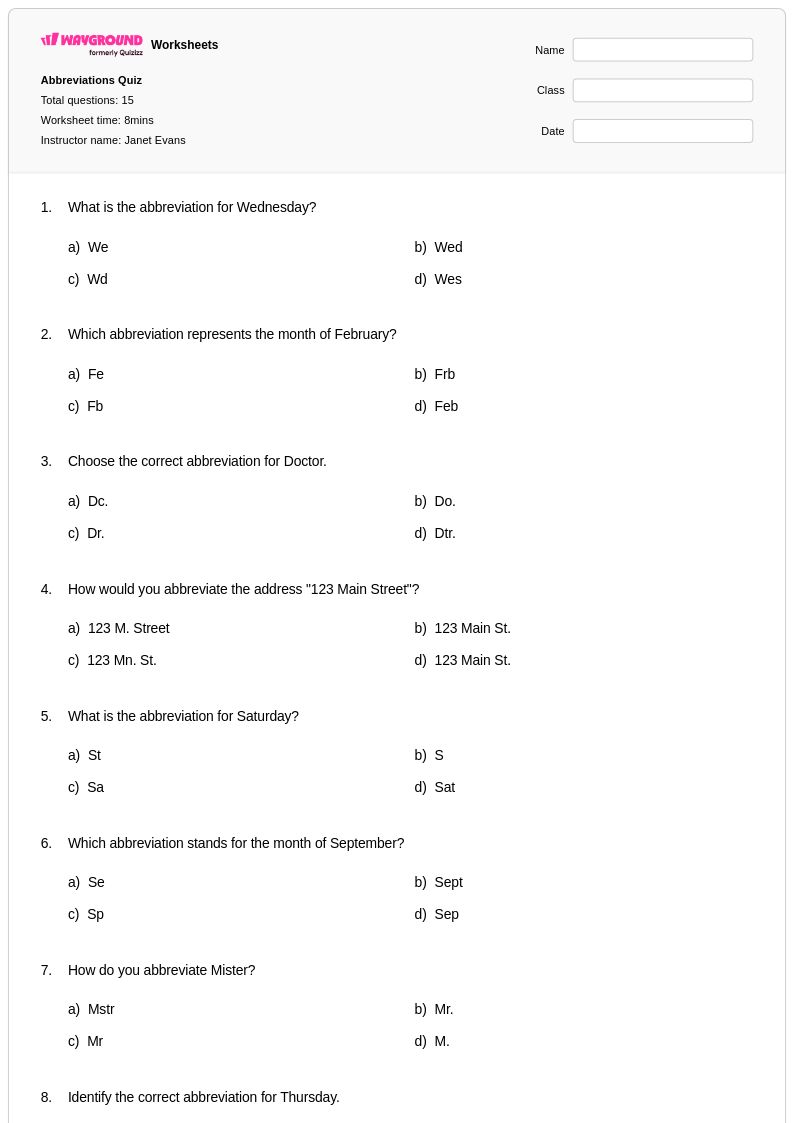
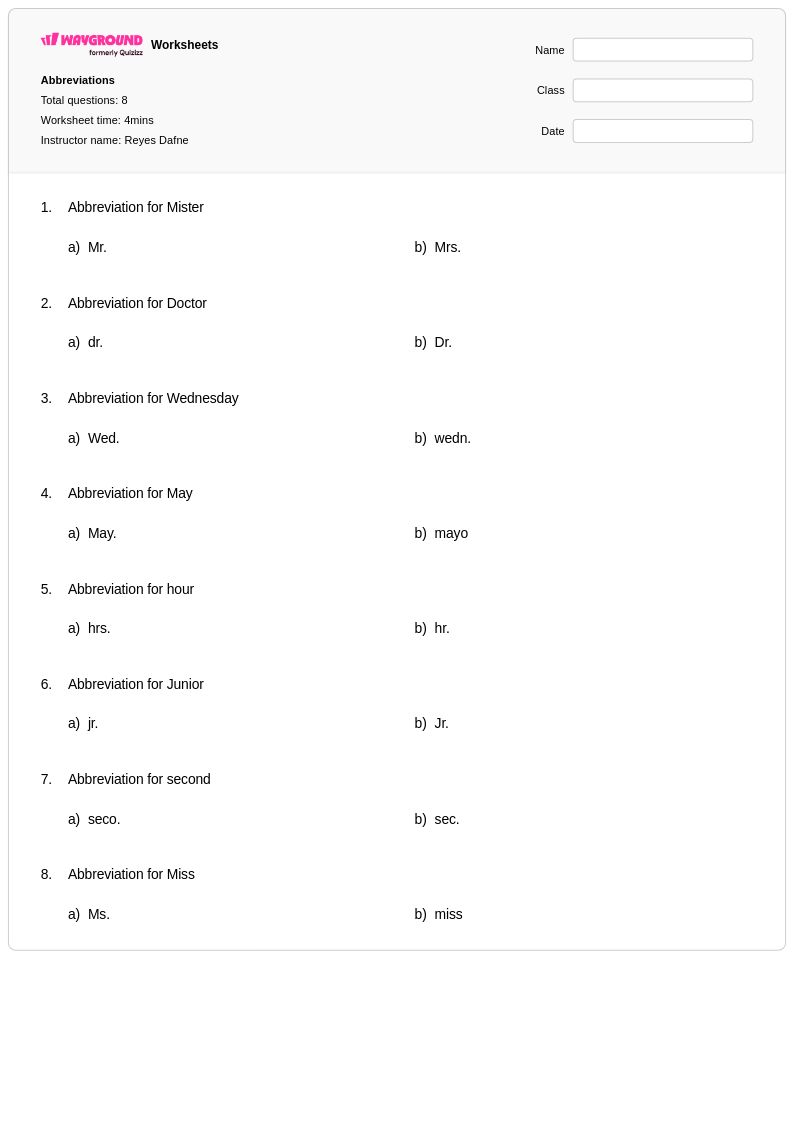
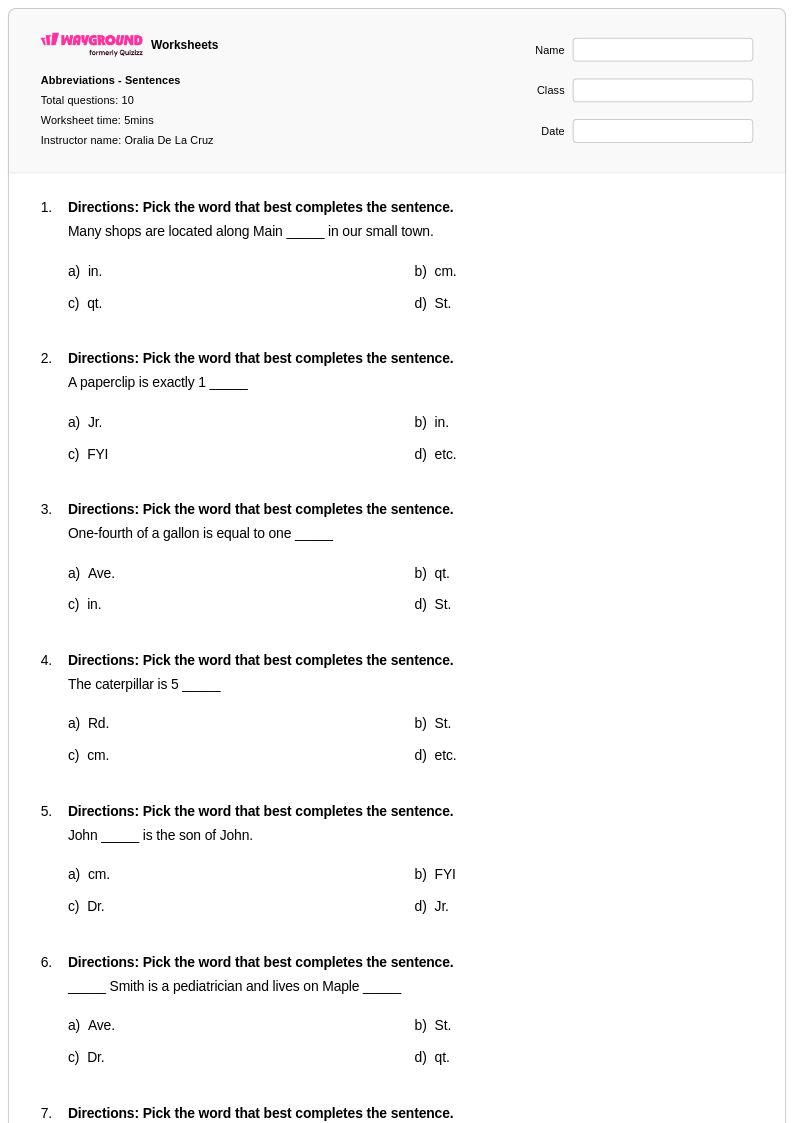
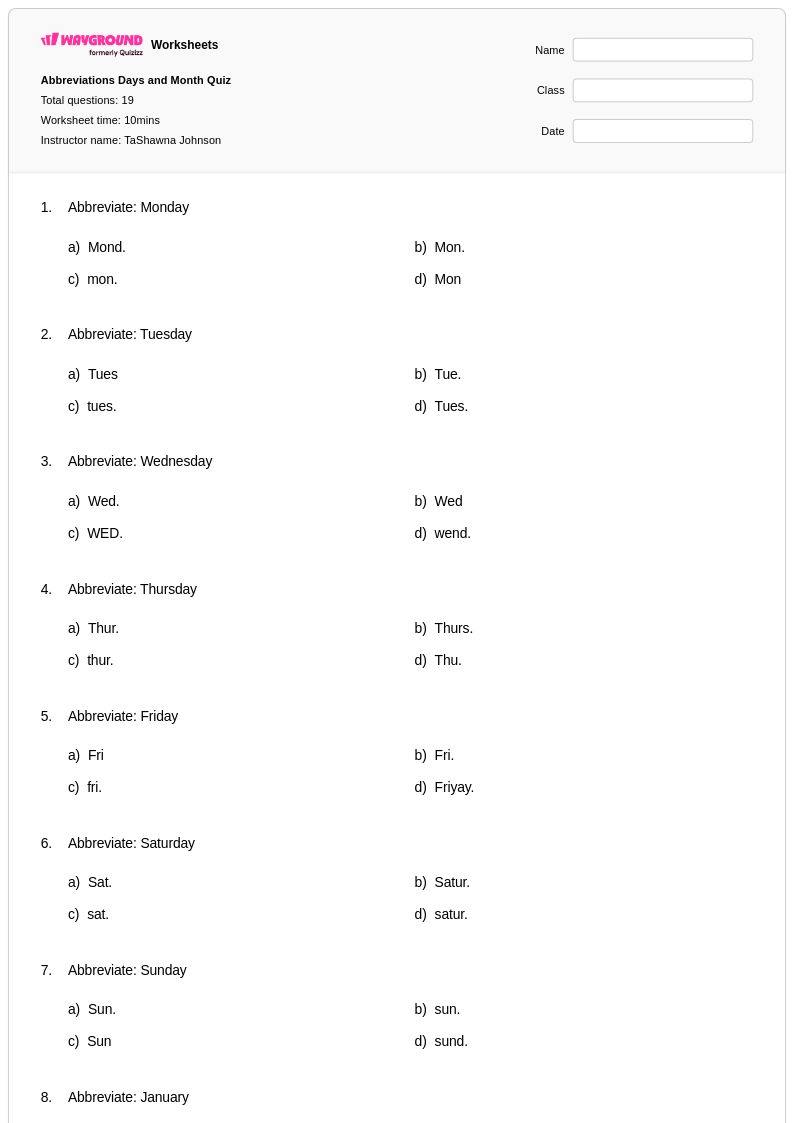
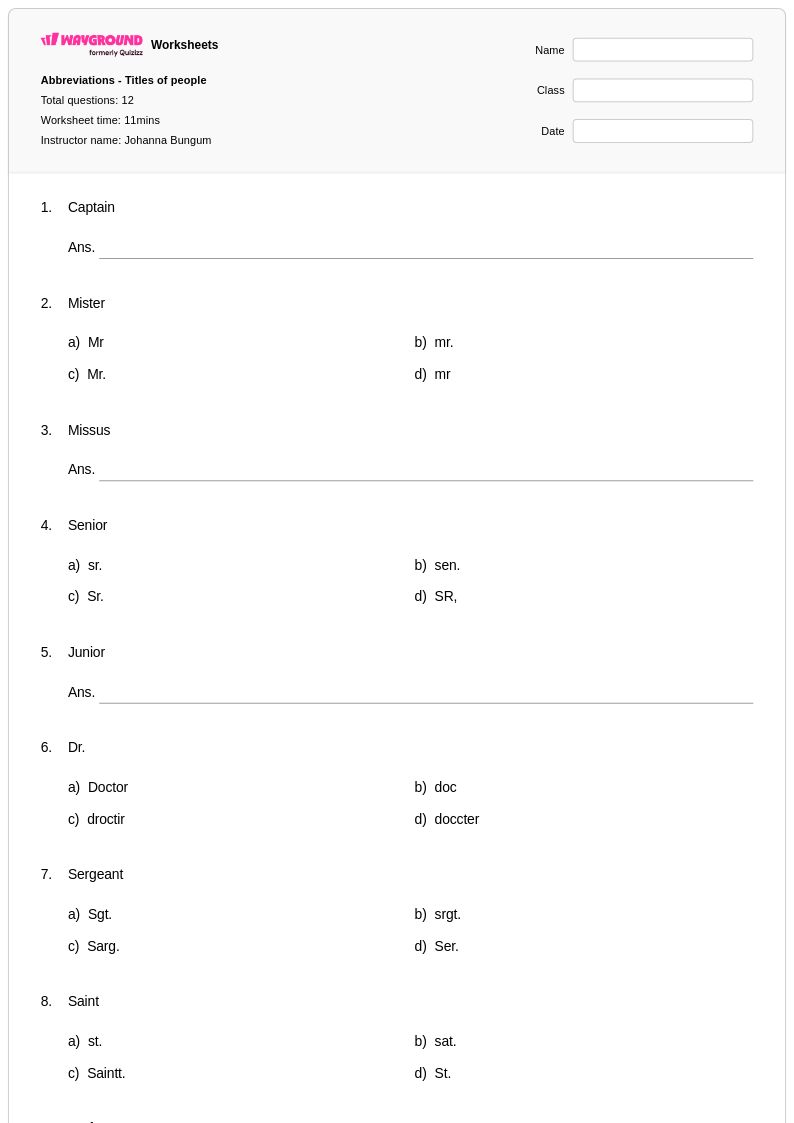
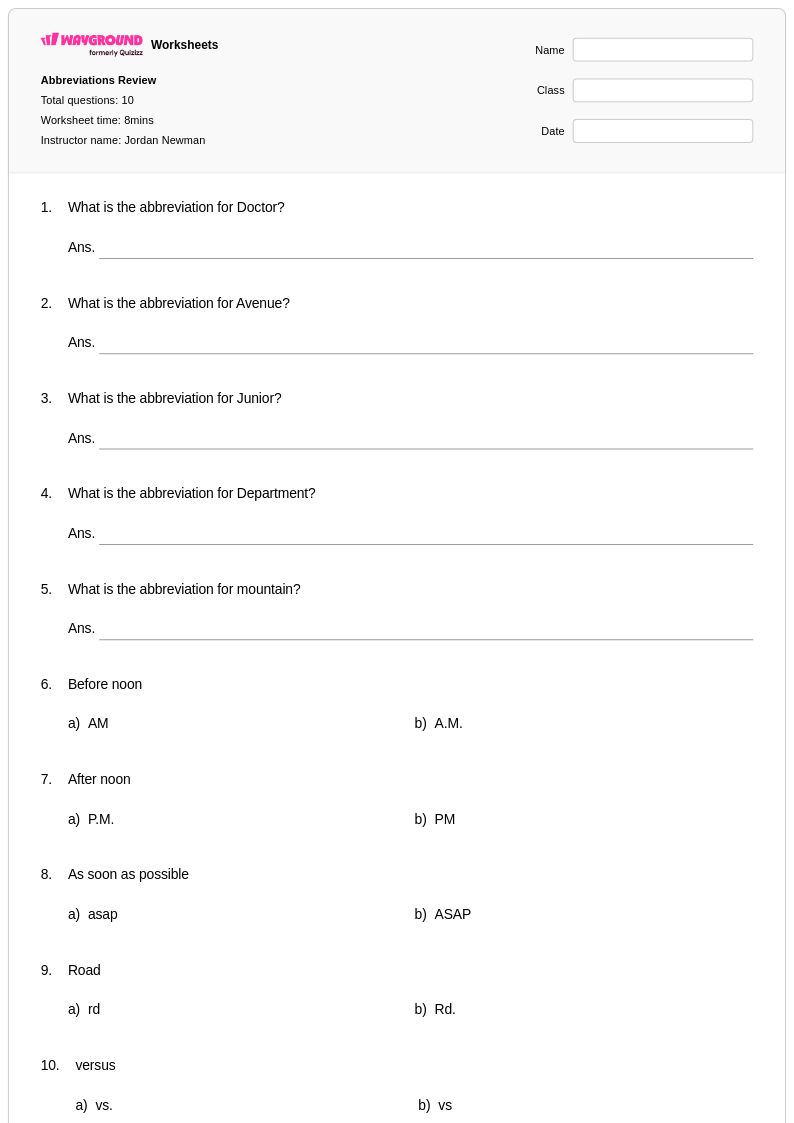
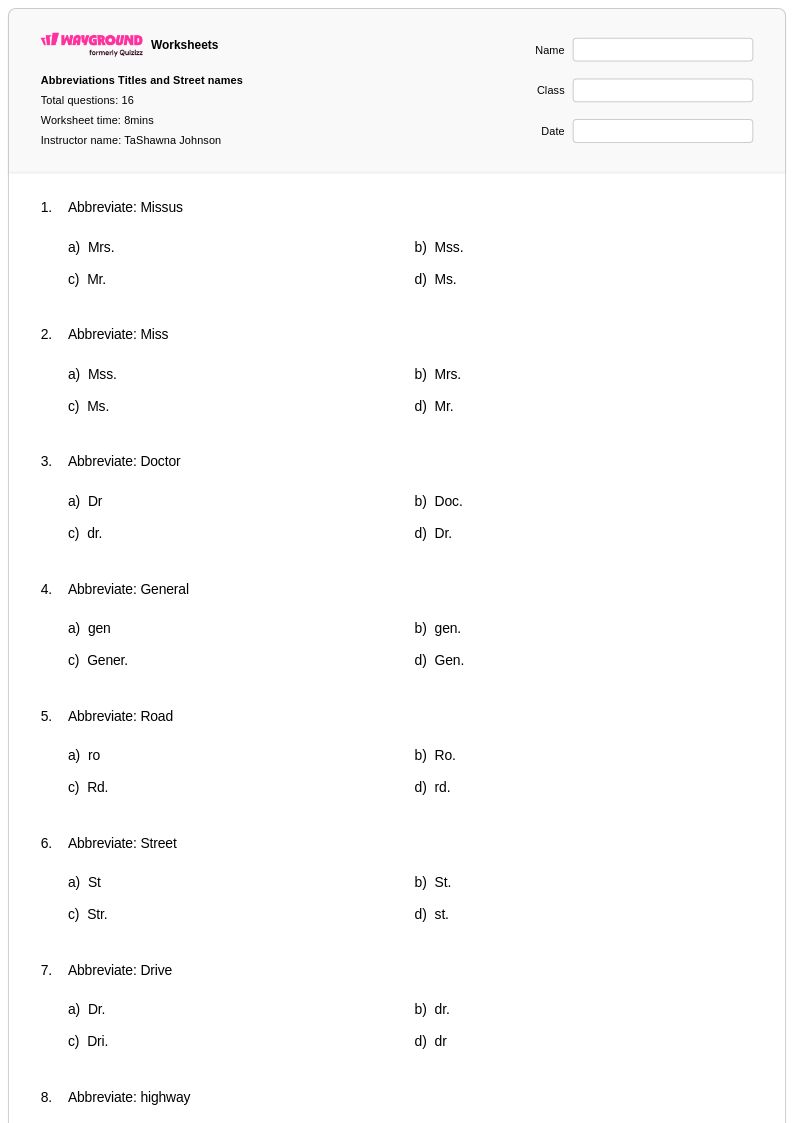
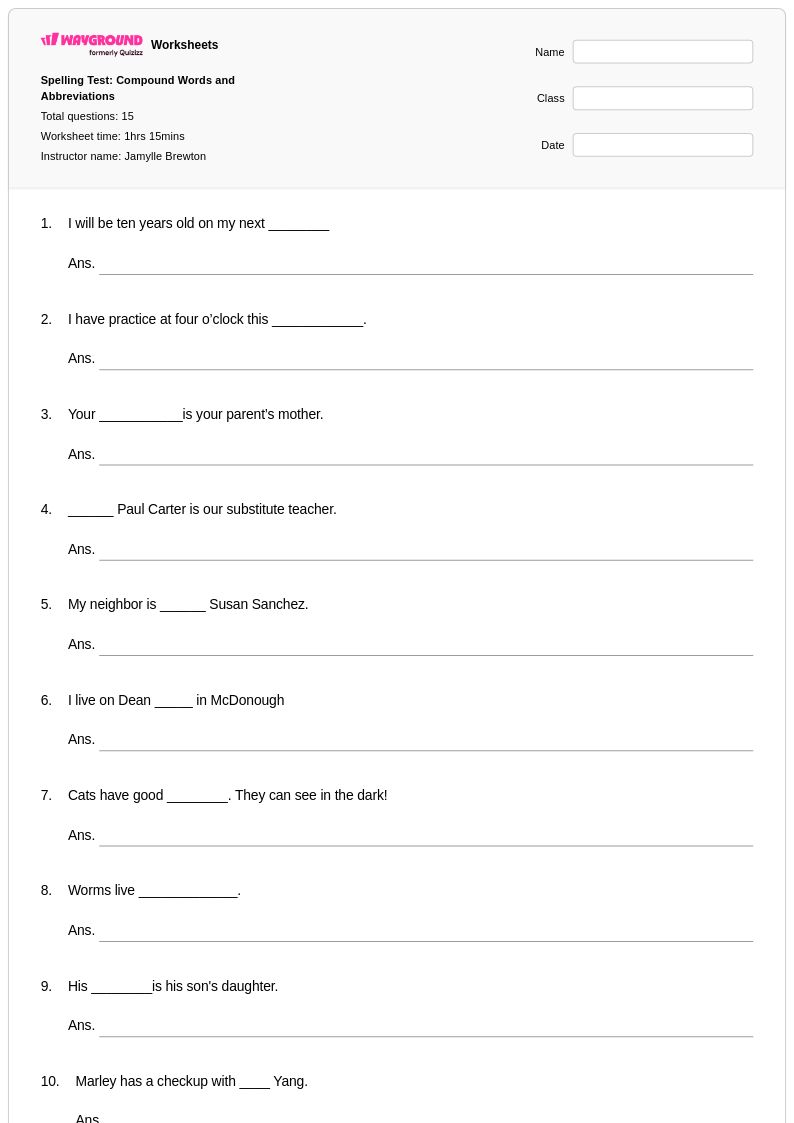
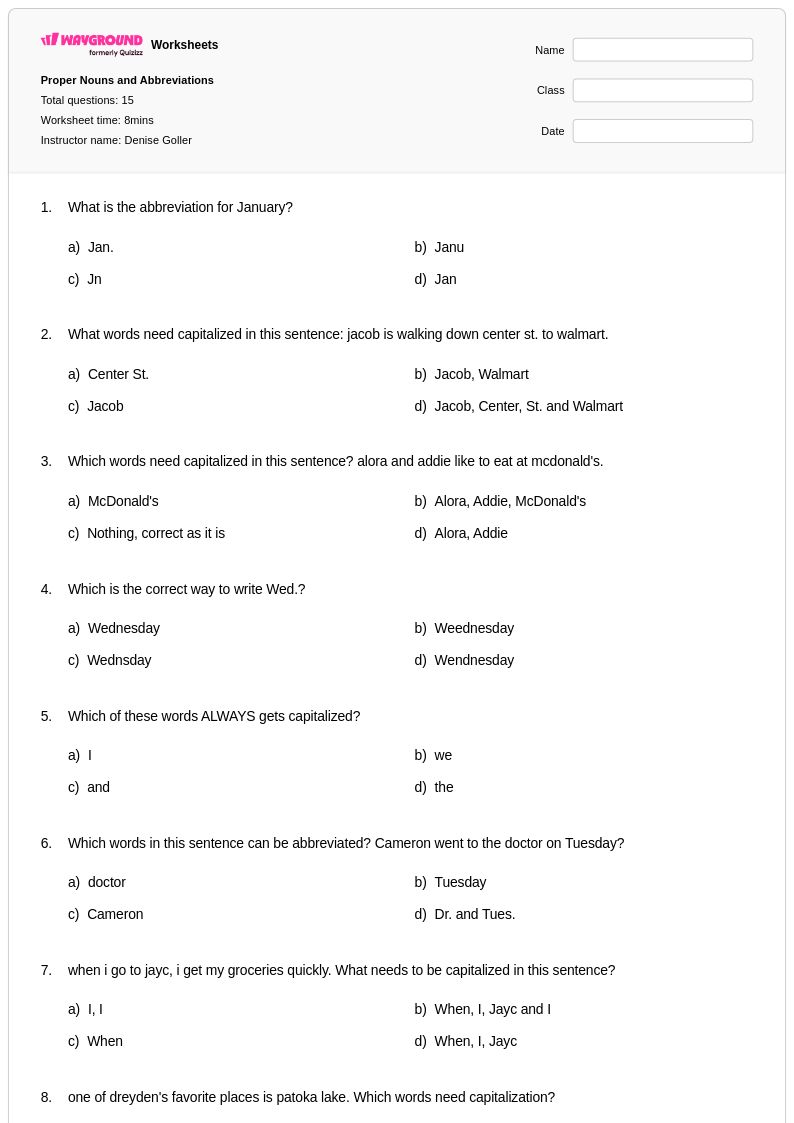
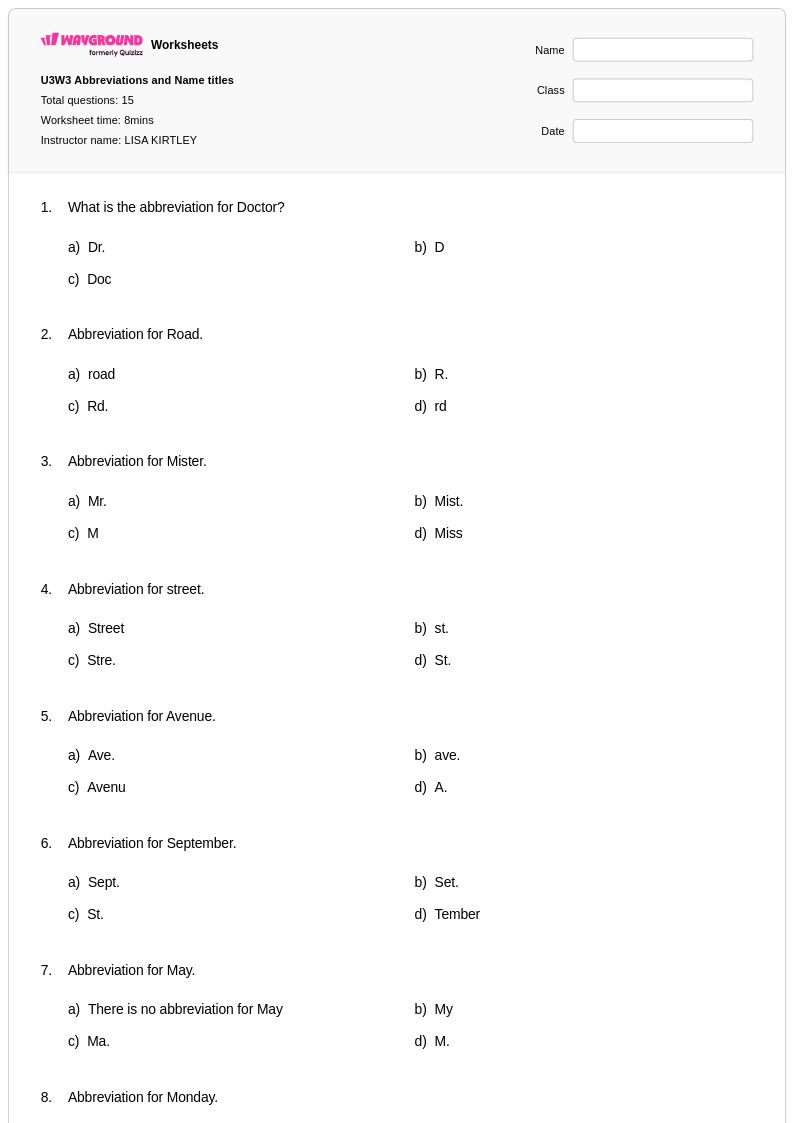
Abbreviations worksheets for Year 3 students available through Wayground (formerly Quizizz) provide essential practice for developing foundational language skills that support both reading comprehension and written communication. These carefully designed worksheets introduce young learners to common abbreviations used in everyday contexts, including days of the week, months of the year, titles like Mr. and Mrs., and basic measurement units. Students engage with practice problems that require them to match full words with their shortened forms, identify abbreviations in sentences, and apply proper capitalization and punctuation rules. Each worksheet comes with a comprehensive answer key, making it easy for teachers to assess student understanding and provide immediate feedback. These free printables strengthen students' ability to recognize patterns in language while building vocabulary and reading fluency skills essential for academic success.
Wayground (formerly Quizizz) supports educators with an extensive collection of teacher-created abbreviations worksheets, drawing from millions of high-quality resources specifically aligned with Year 3 language standards. The platform's robust search and filtering capabilities allow teachers to quickly locate worksheets that match their specific instructional needs, whether focusing on particular types of abbreviations or targeting different skill levels within the classroom. These differentiation tools enable seamless customization for remediation and enrichment activities, ensuring that all students receive appropriate challenge and support. Available in both printable pdf format and interactive digital versions, these worksheets integrate effortlessly into lesson planning and provide flexible options for in-class practice, homework assignments, and assessment preparation. Teachers can efficiently modify content, track student progress, and access related resources to create comprehensive learning experiences that reinforce abbreviation recognition and usage across multiple contexts.
FAQs
How do I teach abbreviations to elementary students?
Start by introducing abbreviations in context — show students how titles like Mr., Dr., and St. appear in texts they already read. Group abbreviations by category (titles, days, months, states, measurements) so students build a mental framework rather than memorizing a random list. Move from recognition to production: first have students match abbreviations to full forms, then ask them to write abbreviations from memory in sentence-level tasks.
What are the most common abbreviations students need to know?
Students most commonly encounter title abbreviations (Mr., Mrs., Dr., Jr.), day and month abbreviations (Mon., Jan.), U.S. state abbreviations (CA, TX, NY), measurement units (cm, kg, oz), and organizational acronyms (NASA, FBI, USA). Academic and professional contexts also require familiarity with initialisms like CEO or EST. Prioritizing these high-frequency categories ensures students can decode the abbreviated text they encounter most often in real reading and writing tasks.
What mistakes do students commonly make when learning abbreviations?
A frequent error is confusing acronyms, initialisms, and contractions — students often treat all shortened forms as interchangeable. Many students also omit periods where required (Dr vs. Dr.) or add them where they don't belong (NASA. instead of NASA). Another common mistake is overgeneralizing: students learn that abbreviations save space and then create non-standard shortenings in their own writing. Targeted practice that distinguishes these categories and reinforces standard conventions helps correct these patterns.
What exercises help students practice abbreviations effectively?
Matching exercises that pair abbreviations with their full forms build recognition, while fill-in-the-blank tasks reinforce correct usage in context. Sorting activities — grouping abbreviations by category such as titles, states, or measurements — deepen conceptual understanding beyond rote memorization. Editing tasks, where students identify incorrectly written abbreviations in a passage, push students toward applying conventions in realistic writing scenarios.
How do I use Wayground's abbreviations worksheets in my classroom?
Wayground's abbreviations worksheets are available as printable PDFs for traditional paper-and-pencil use and in digital formats for technology-integrated classrooms, making them flexible enough for independent practice, centers, or whole-class instruction. Teachers can also host worksheets as a quiz directly on Wayground, enabling real-time tracking of student responses. Each worksheet includes a complete answer key, so they can be used for guided lessons, self-paced review, or assigned as homework without additional prep.
How can I differentiate abbreviations instruction for students at different levels?
For students who are just beginning, limit practice to high-frequency, single-category sets such as title abbreviations or month abbreviations before introducing mixed formats. More advanced students can work with specialized terminology from science or social studies contexts. On Wayground, teachers can apply individual accommodations such as read-aloud support, reduced answer choices, or extended time to specific students, allowing the same worksheet to serve the full range of learners in a classroom without singling anyone out.