Free Printable Active Listening Worksheets for Year 2
Enhance Year 2 students' active listening skills with Wayground's comprehensive collection of free worksheets, printables, and practice problems that develop attentive communication abilities through engaging activities and detailed answer keys.
Explore printable Active Listening worksheets for Year 2
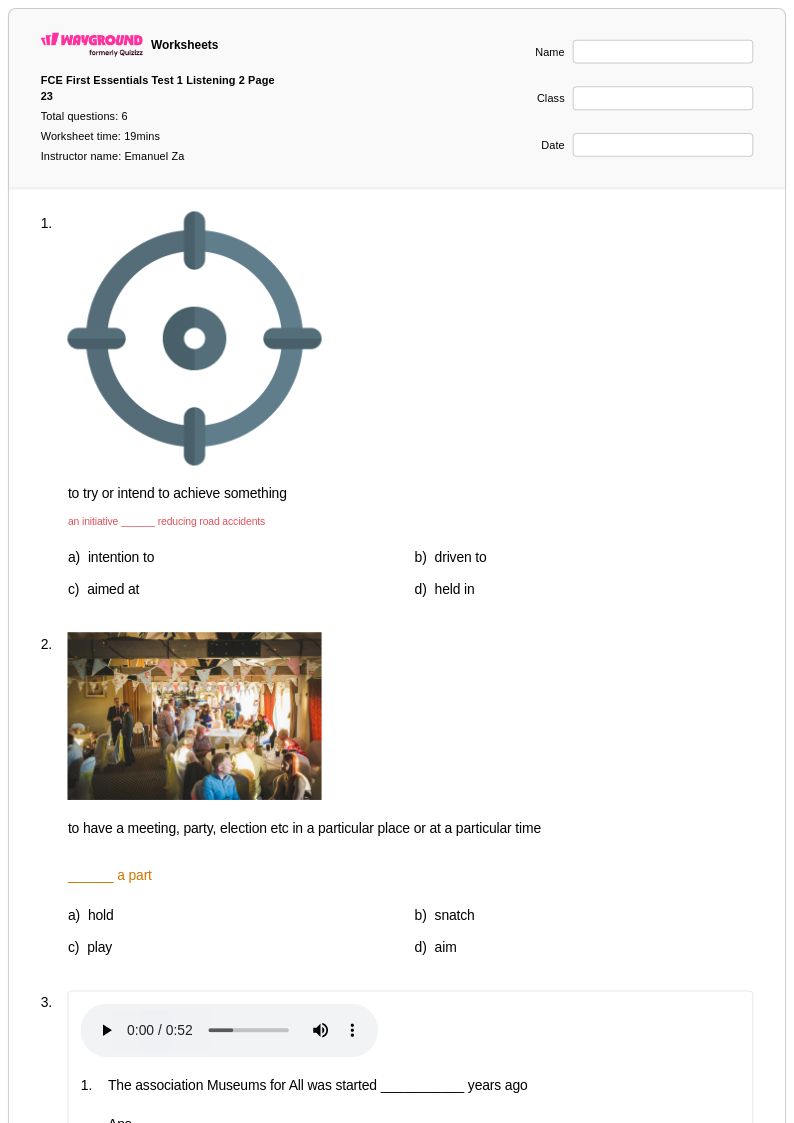
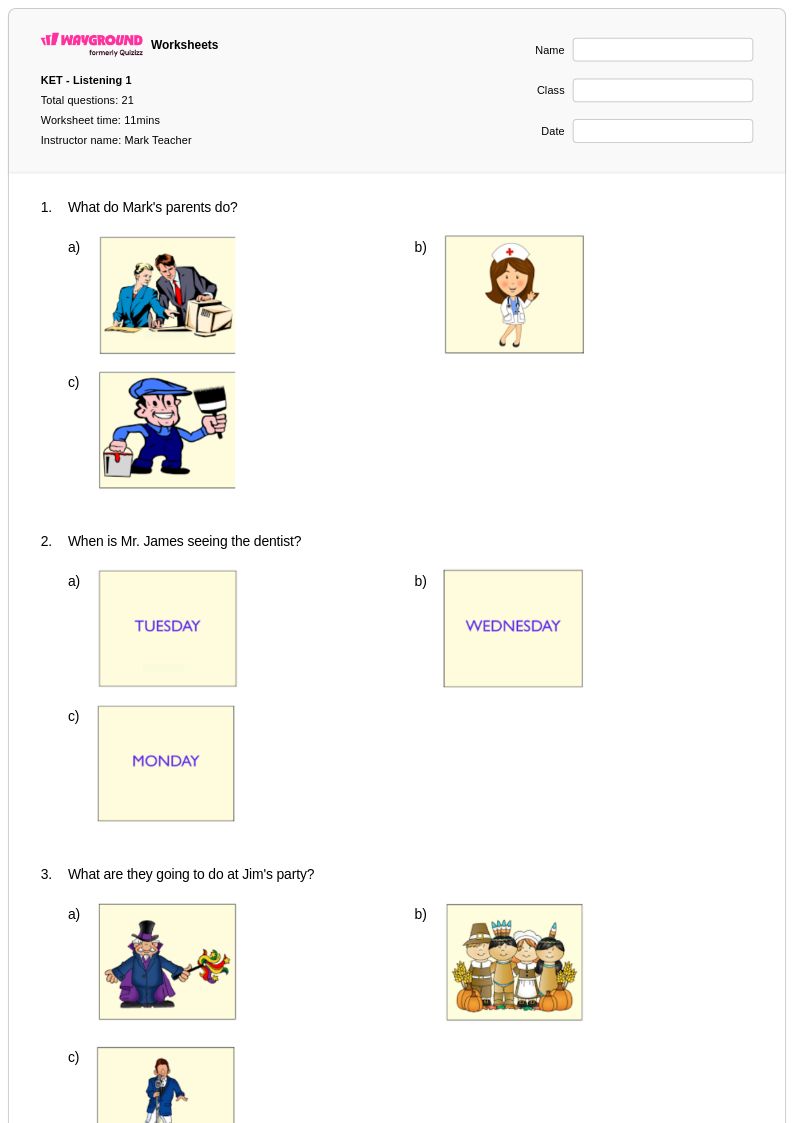
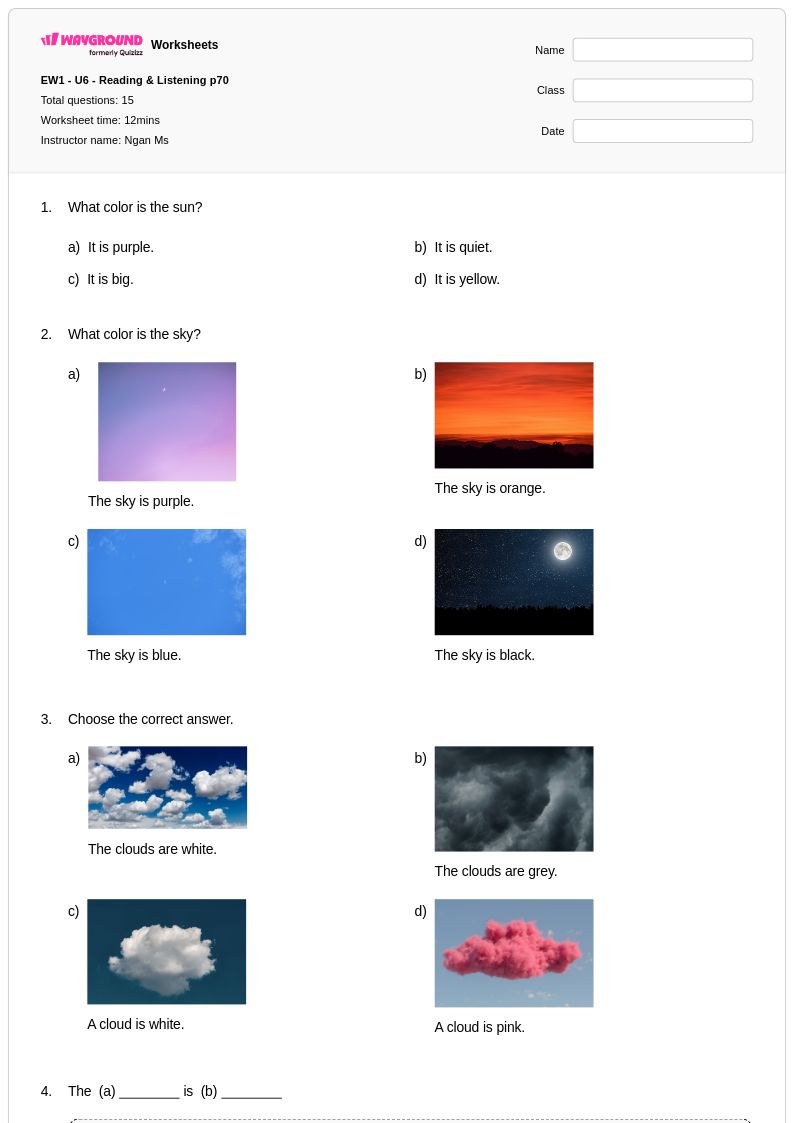
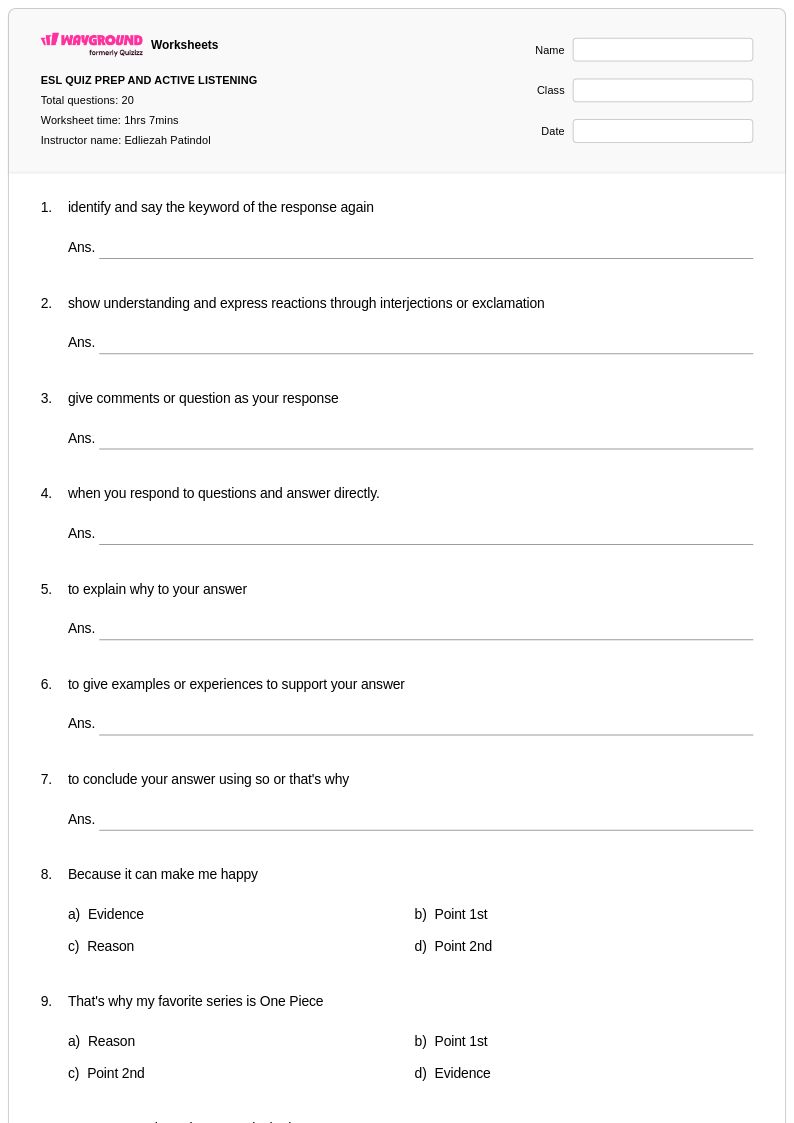
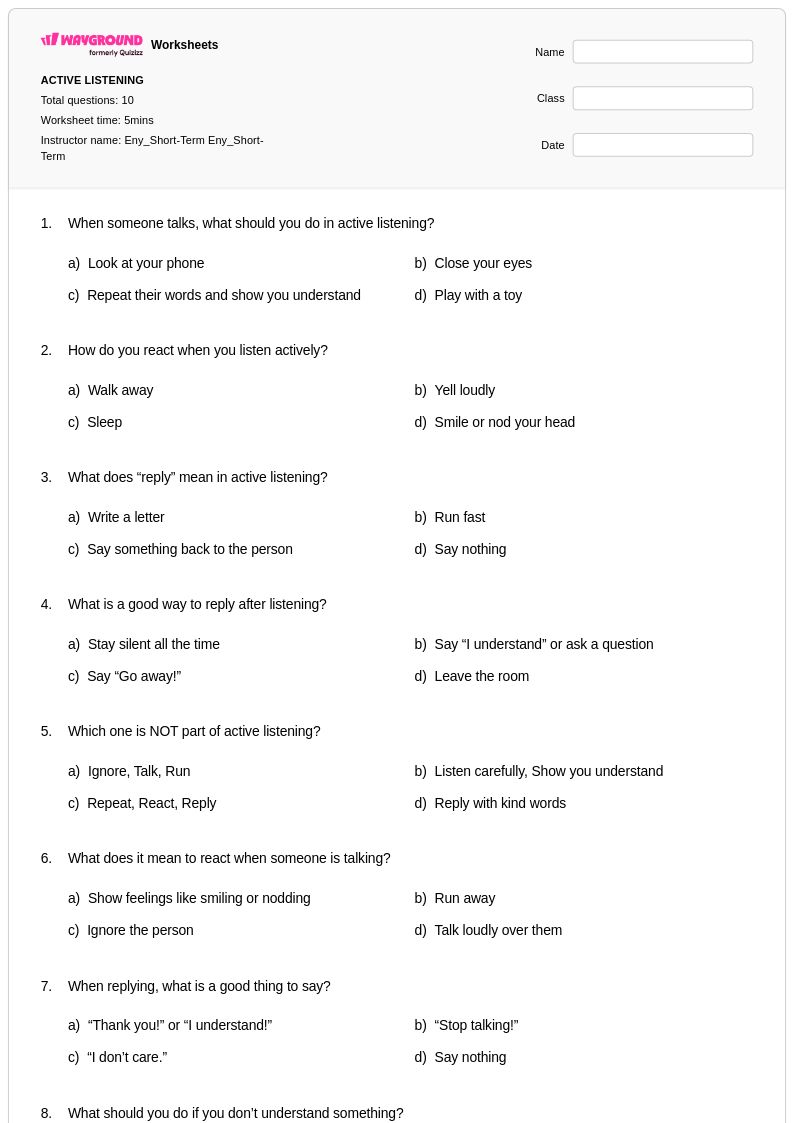
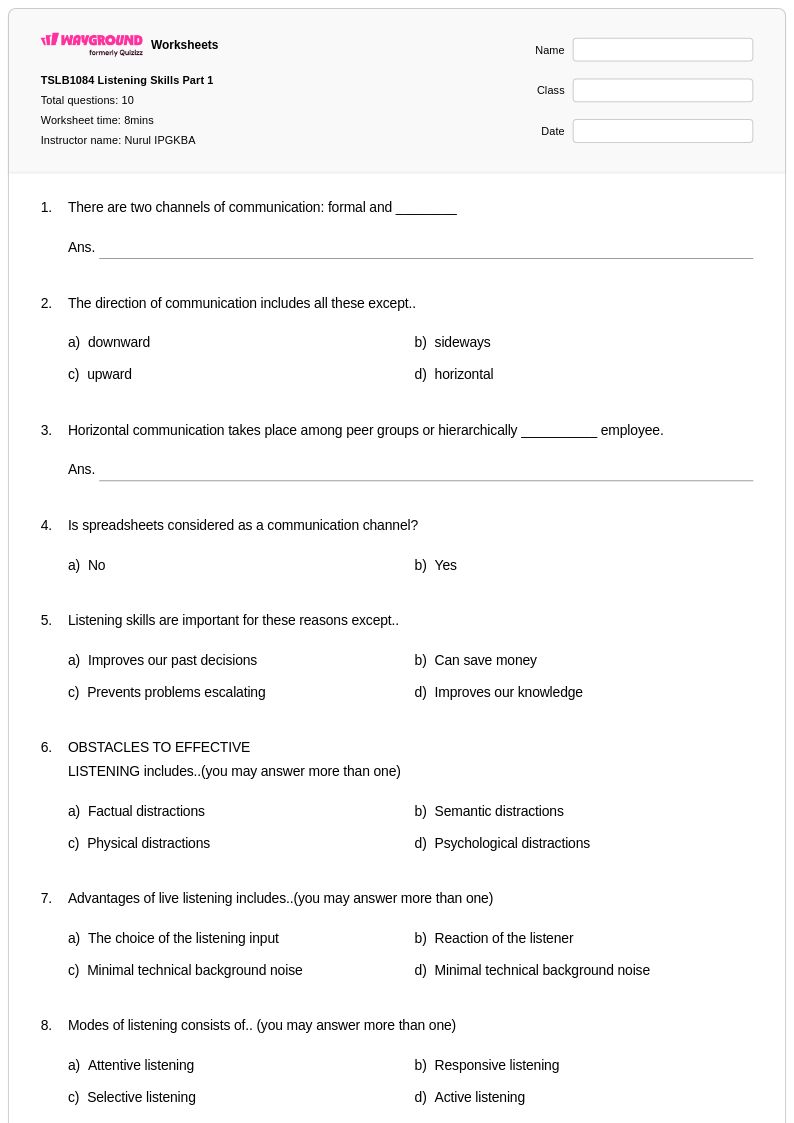
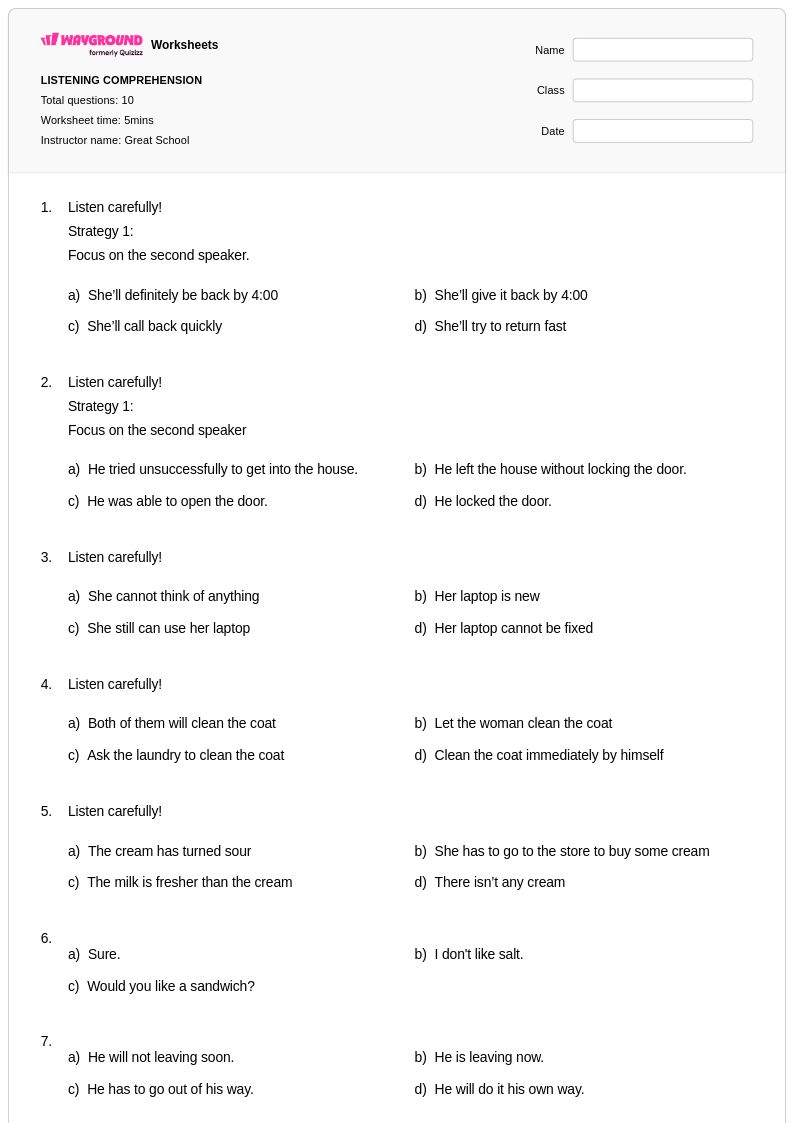
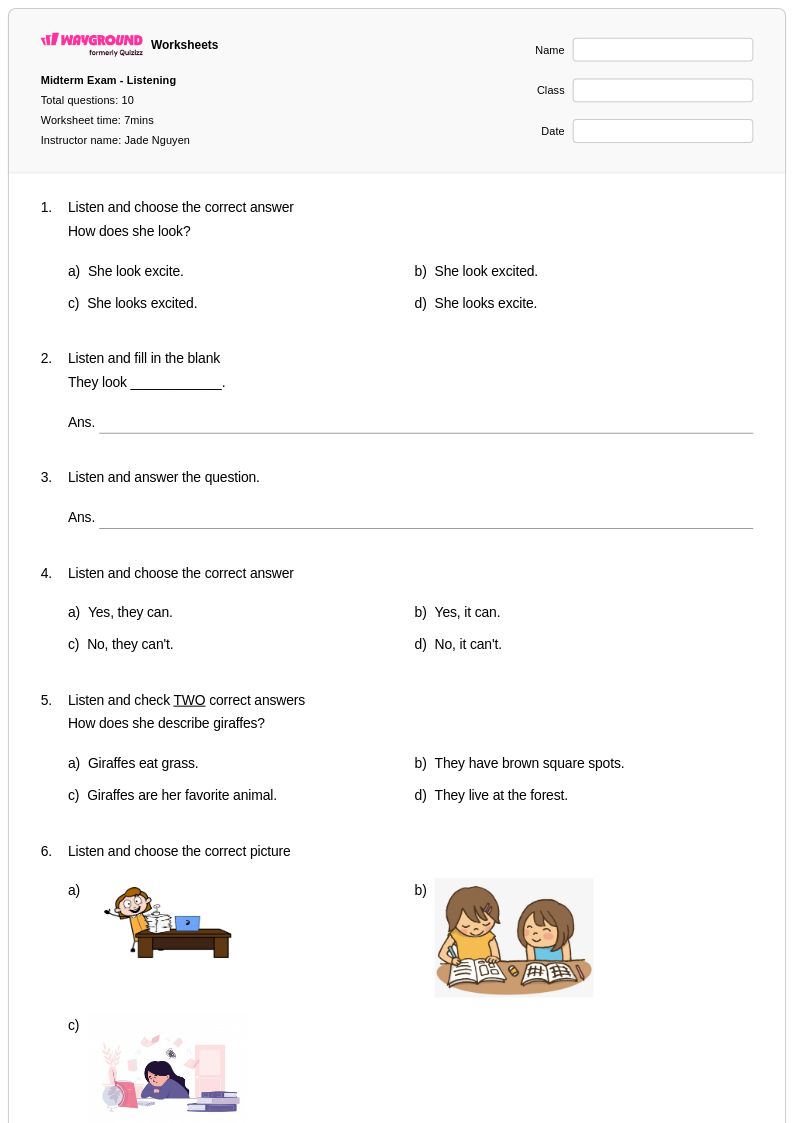
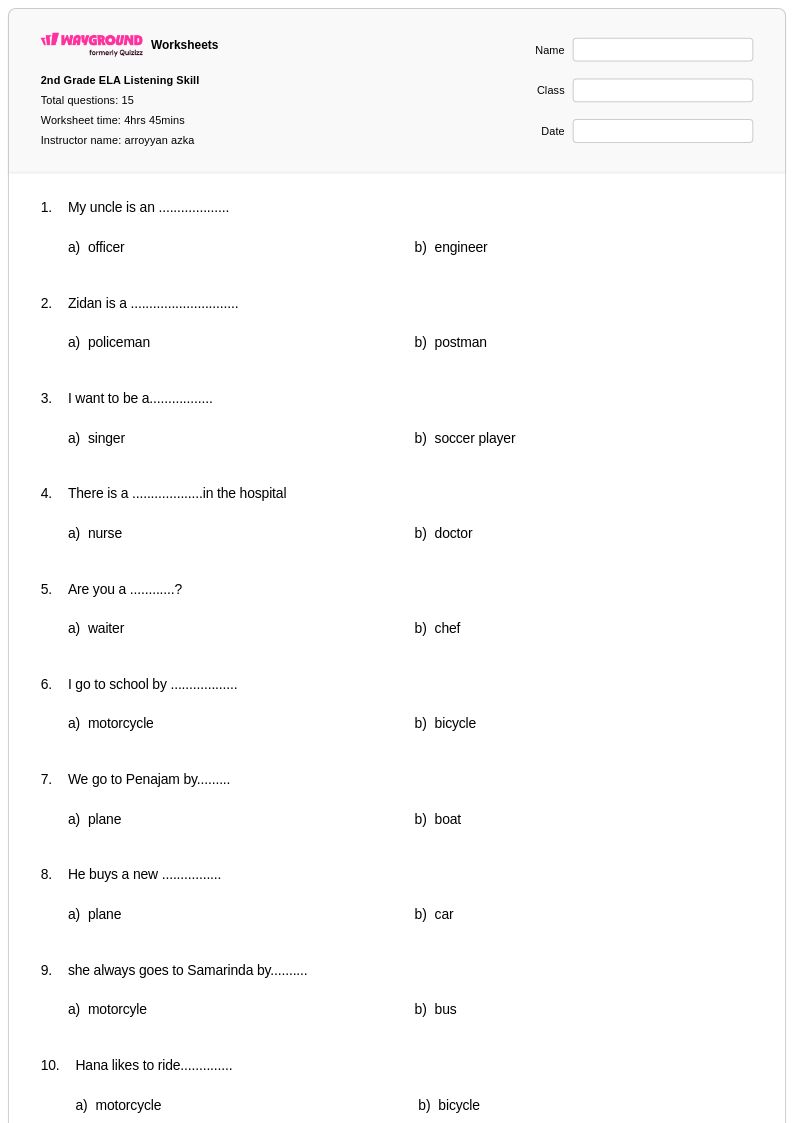
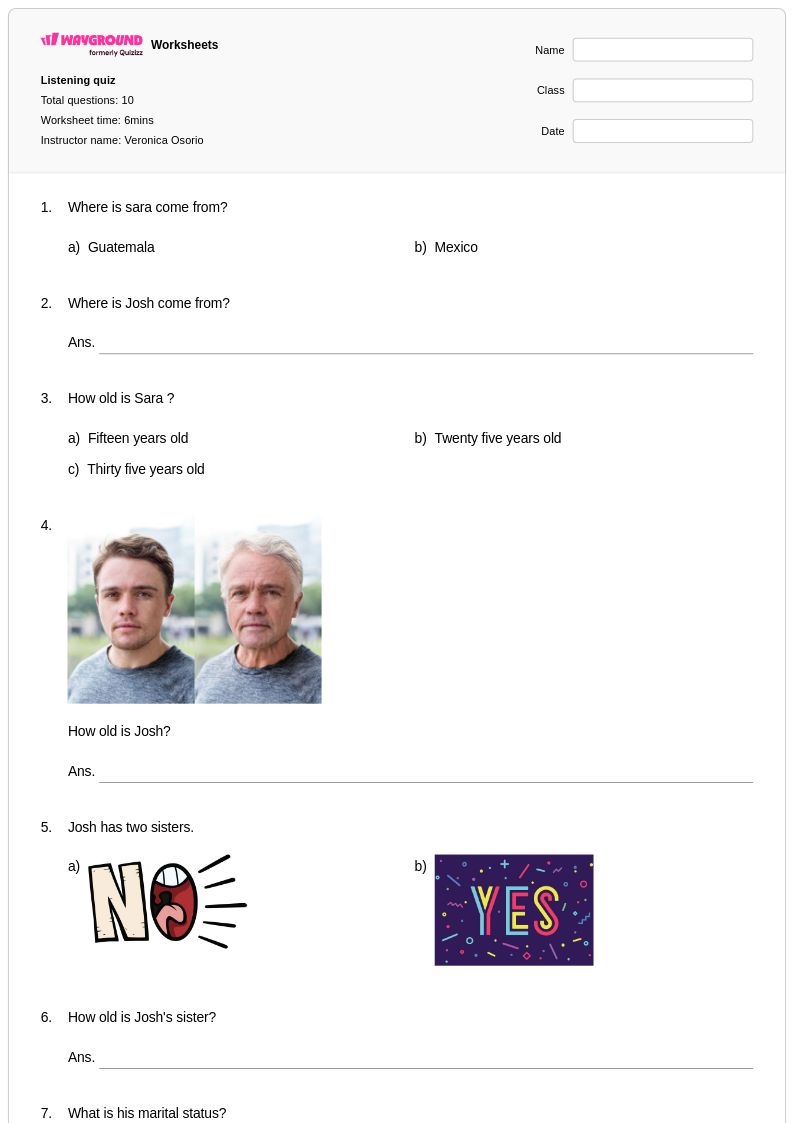
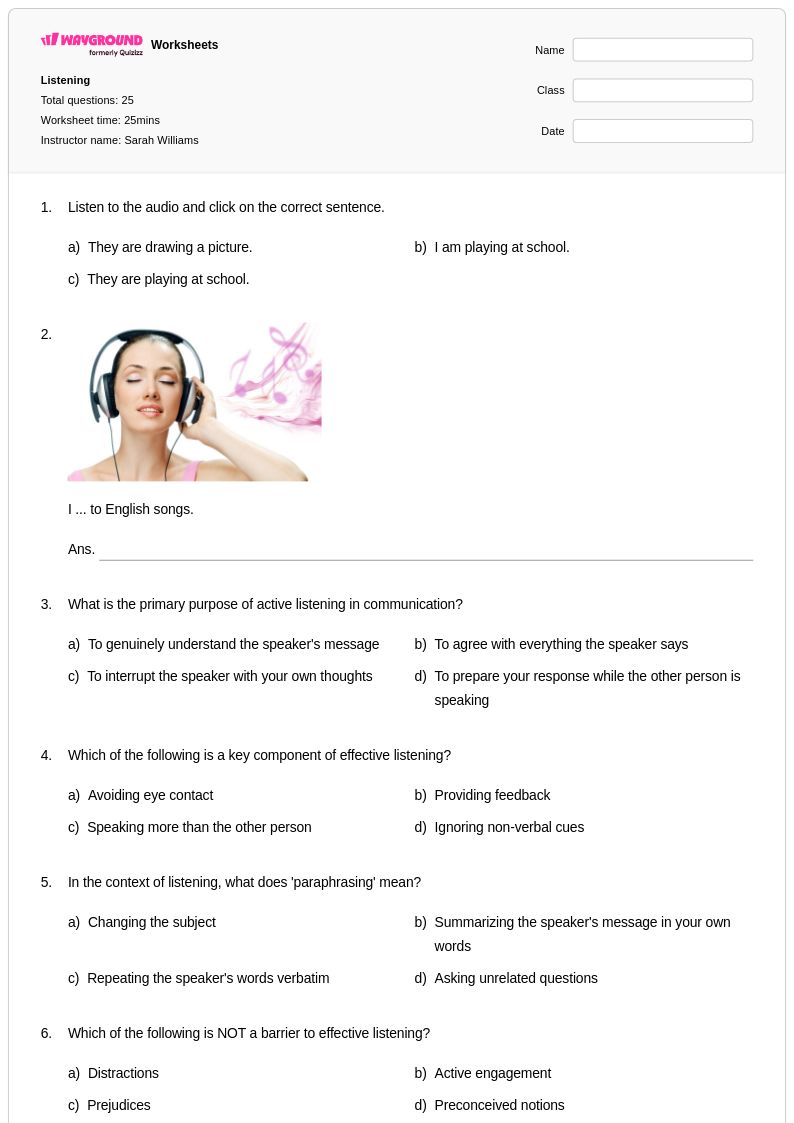
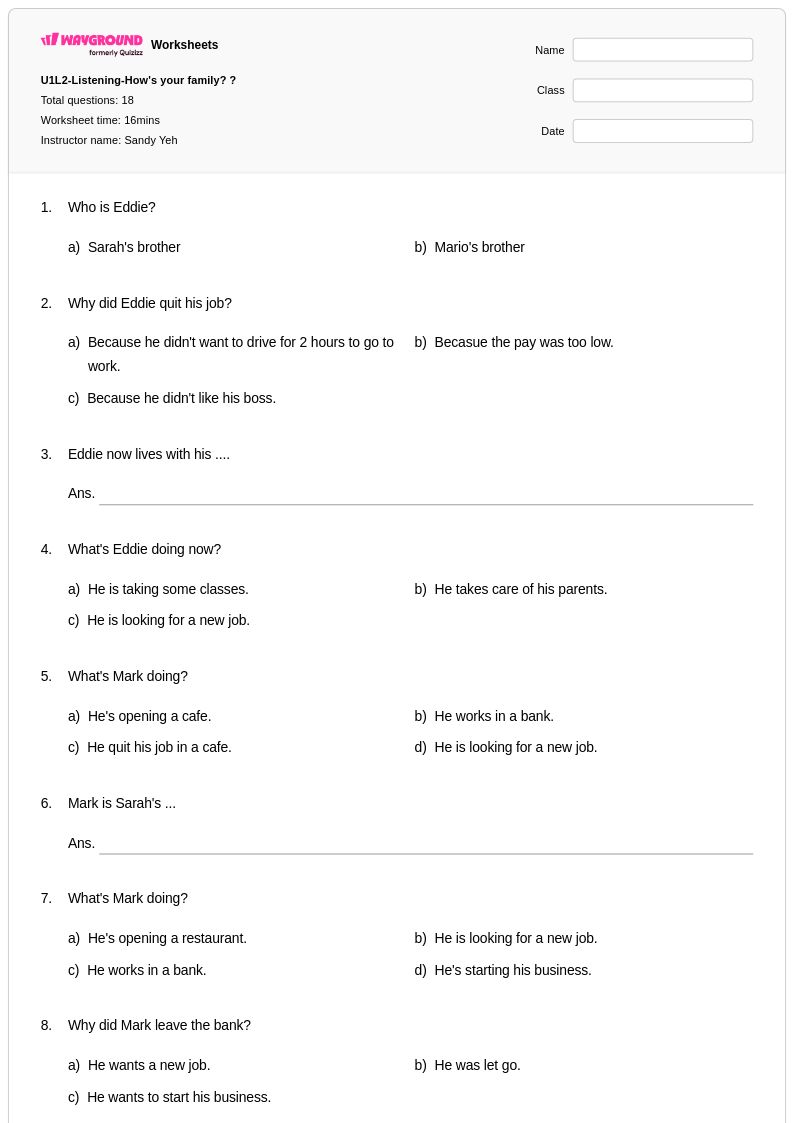
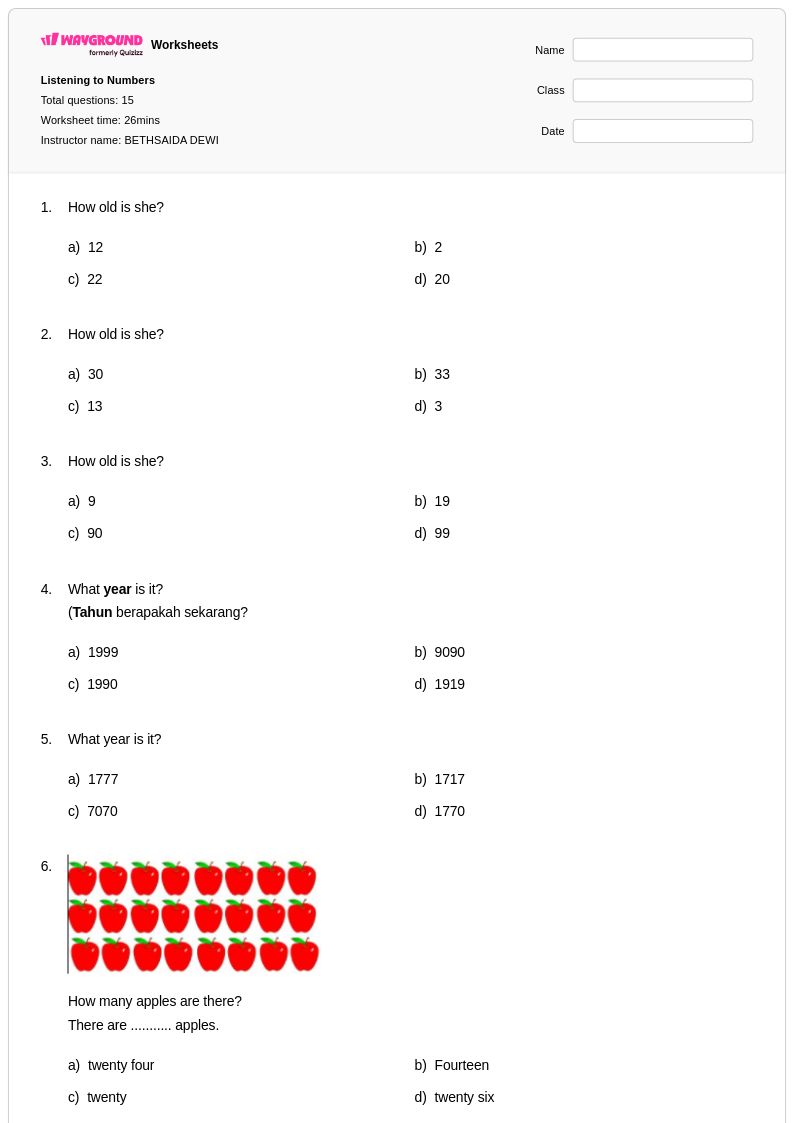
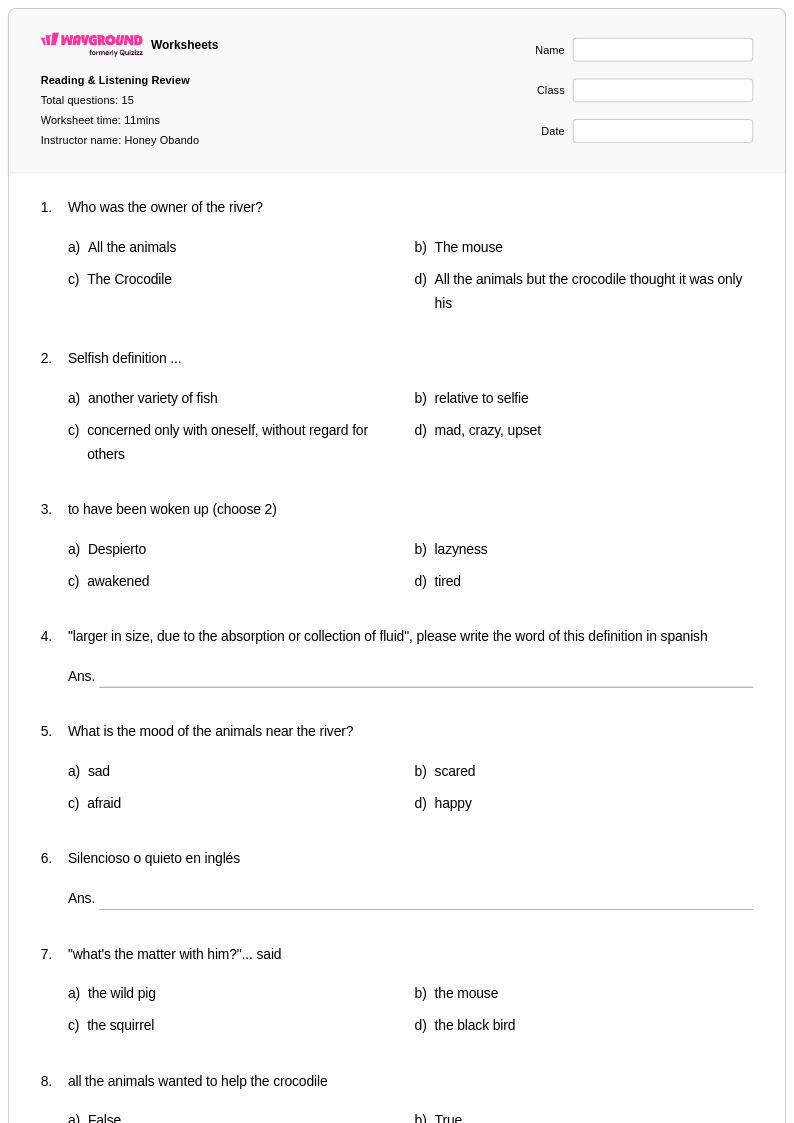
Active listening worksheets for Year 2 students available through Wayground (formerly Quizizz) provide essential practice in developing fundamental communication skills that form the foundation of effective learning. These carefully designed printables focus on teaching young learners how to pay attention, follow directions, recall important information, and respond appropriately to spoken instructions and stories. The worksheets include engaging activities such as drawing exercises based on verbal descriptions, sequencing tasks that require students to listen to multi-step directions, and comprehension questions that assess understanding of read-aloud passages. Each worksheet comes with a comprehensive answer key, making it easy for educators to evaluate student progress and identify areas where additional support may be needed. These free practice problems help second graders strengthen their concentration, memory retention, and ability to process auditory information effectively.
Wayground (formerly Quizizz) supports teachers with an extensive collection of active listening resources created by millions of educators worldwide, offering robust search and filtering capabilities that make finding grade-appropriate materials effortless. The platform's alignment with educational standards ensures that worksheets meet curriculum requirements while providing differentiation tools that allow teachers to customize content for diverse learning needs and abilities. These versatile resources are available in both printable pdf format for traditional classroom use and digital formats for interactive learning experiences, giving educators the flexibility to adapt their instruction based on available technology and student preferences. Teachers can efficiently plan lessons, provide targeted remediation for struggling learners, offer enrichment activities for advanced students, and create consistent skill practice opportunities that help all Year 2 students develop stronger active listening abilities essential for academic success.
FAQs
How do I teach active listening skills in the classroom?
Teaching active listening works best through explicit instruction followed by structured practice. Start by defining the components of active listening — attention management, note-taking, questioning, and reflective responding — then model each skill using real-world scenarios or audio clips. Gradually release responsibility to students through paired listening activities and class discussions where they practice summarizing and responding to what they hear.
What exercises help students practice active listening?
Effective active listening practice includes structured note-taking tasks, listen-and-respond prompts, and activities that ask students to paraphrase or summarize spoken information. Exercises that use real-world or multimedia scenarios are especially useful because they connect the skill to authentic communication contexts students encounter in and out of school. Progressive skill-building activities that start with shorter listening tasks and increase in complexity help students build confidence over time.
What mistakes do students commonly make when practicing active listening?
The most common error is passive hearing — students hear words but do not process meaning, so they struggle to summarize or respond accurately. Many students also interrupt or begin formulating a response before the speaker has finished, which prevents full comprehension. Another frequent issue is poor note-taking: students either write too much verbatim or too little, missing the key ideas they need to engage meaningfully with the content.
How can I differentiate active listening instruction for students with different needs?
Differentiation for active listening can include reducing the length or complexity of listening tasks for students who need more support, or providing graphic organizers to scaffold note-taking. On Wayground, teachers can enable individual accommodations such as Read Aloud support and extended time per question, which are particularly useful for students with processing differences or language needs. These settings can be assigned to specific students without alerting the rest of the class, keeping differentiation seamless.
How do I use active listening worksheets from Wayground in my classroom?
Wayground's active listening worksheets are available as printable PDFs for traditional classroom use and in digital formats for technology-integrated environments, including the option to host them as a quiz directly on Wayground. Teachers can use them for direct instruction, independent practice, small group work, or targeted remediation. The included answer keys and assessment rubrics make it straightforward to evaluate student responses and guide follow-up instruction.
At what grade level should active listening skills be formally taught?
Active listening is a foundational communication skill that can and should be taught across all grade levels, with instruction adapted to age and context. In early grades, the focus is typically on attention and basic comprehension, while middle and high school instruction shifts toward critical listening, questioning techniques, and reflective responding. Because active listening transfers across every subject area, it benefits students at any point in their K-12 education.

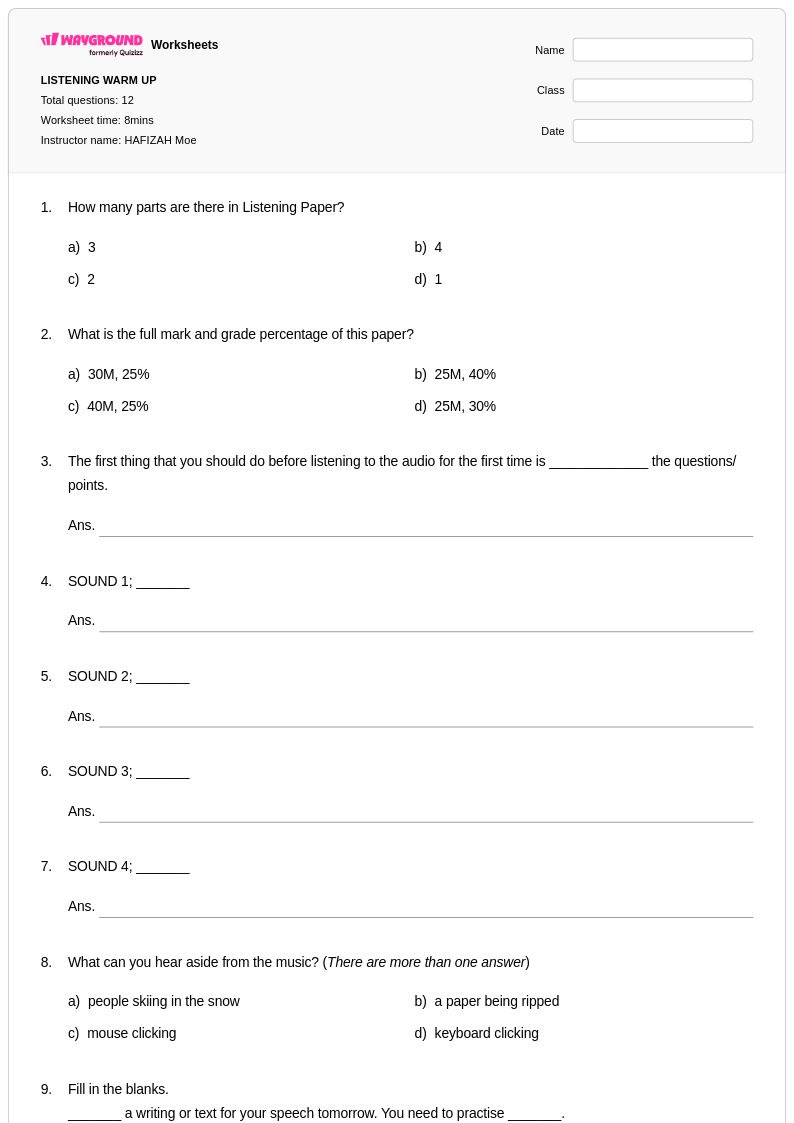
![[TECH] G2 Chapter 6 Quiz Listening - 1 - Printable Active-listening Worksheets Year 2 - Wayground](https://quizizz-static.s3.amazonaws.com/_media/worksheets-new/63b83f3324b5e3001d03fbc4-tech-g2-chapter-6-quiz-listening-1)
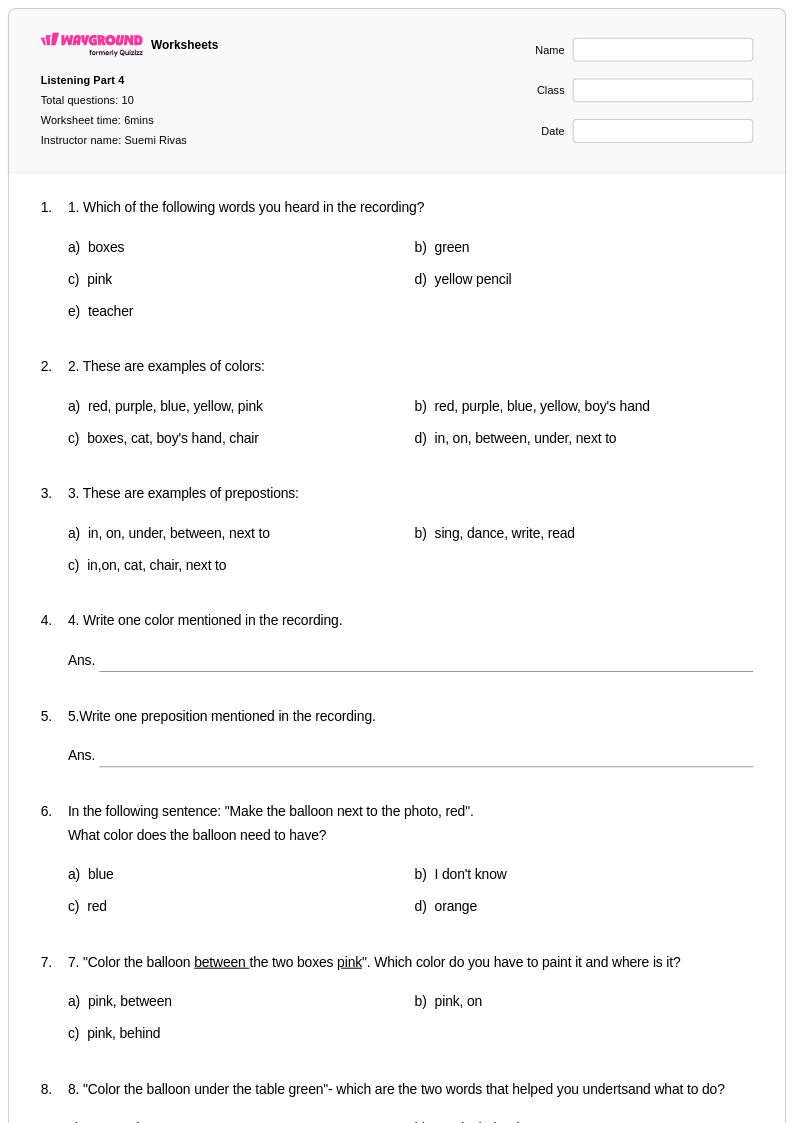
![[TECH] G2 Chapter 6 Quiz Listening - 2 - Printable Active-listening Worksheets Year 2 - Wayground](https://quizizz-static.s3.amazonaws.com/_media/worksheets-new/63b84ebd7137b3001d7bea1f-tech-g2-chapter-6-quiz-listening-2)