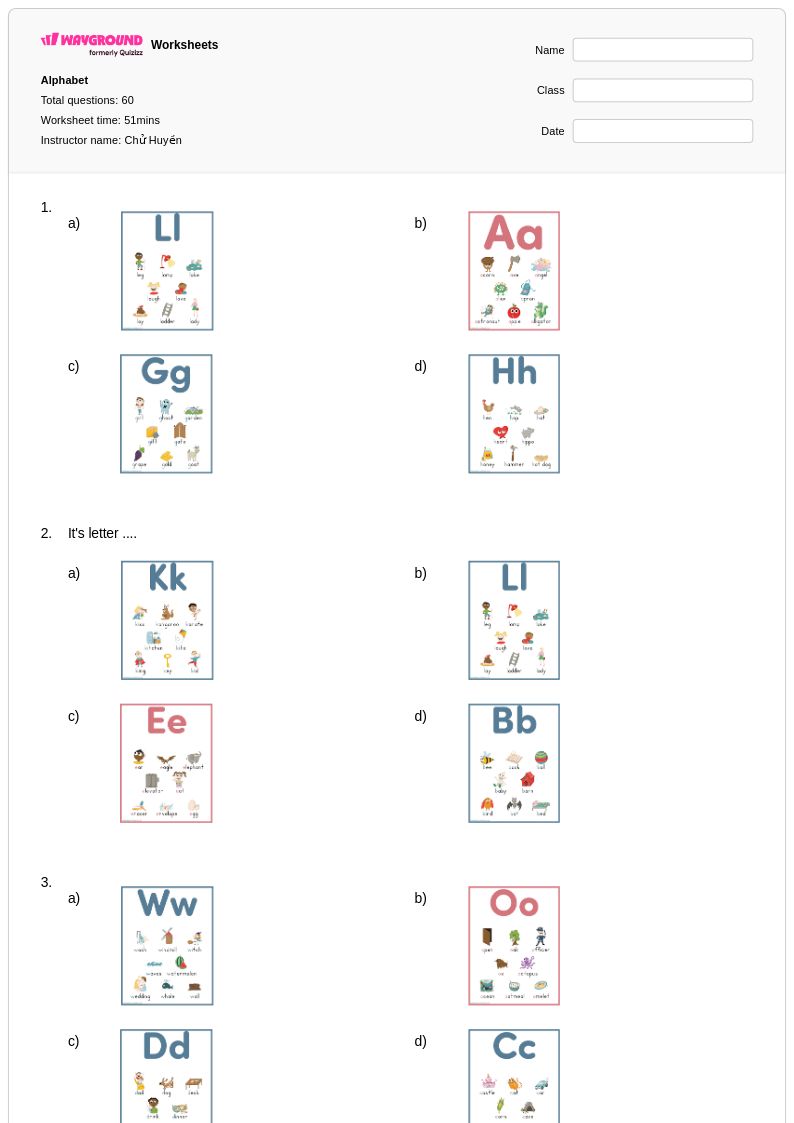
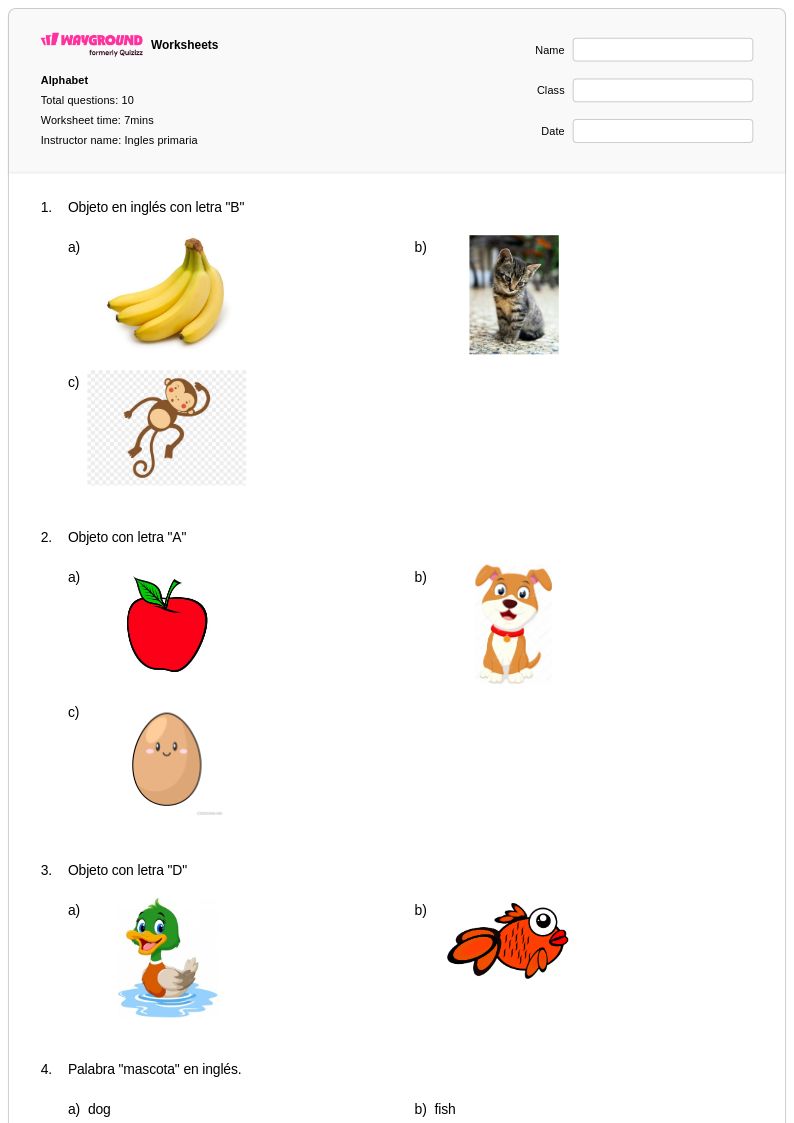
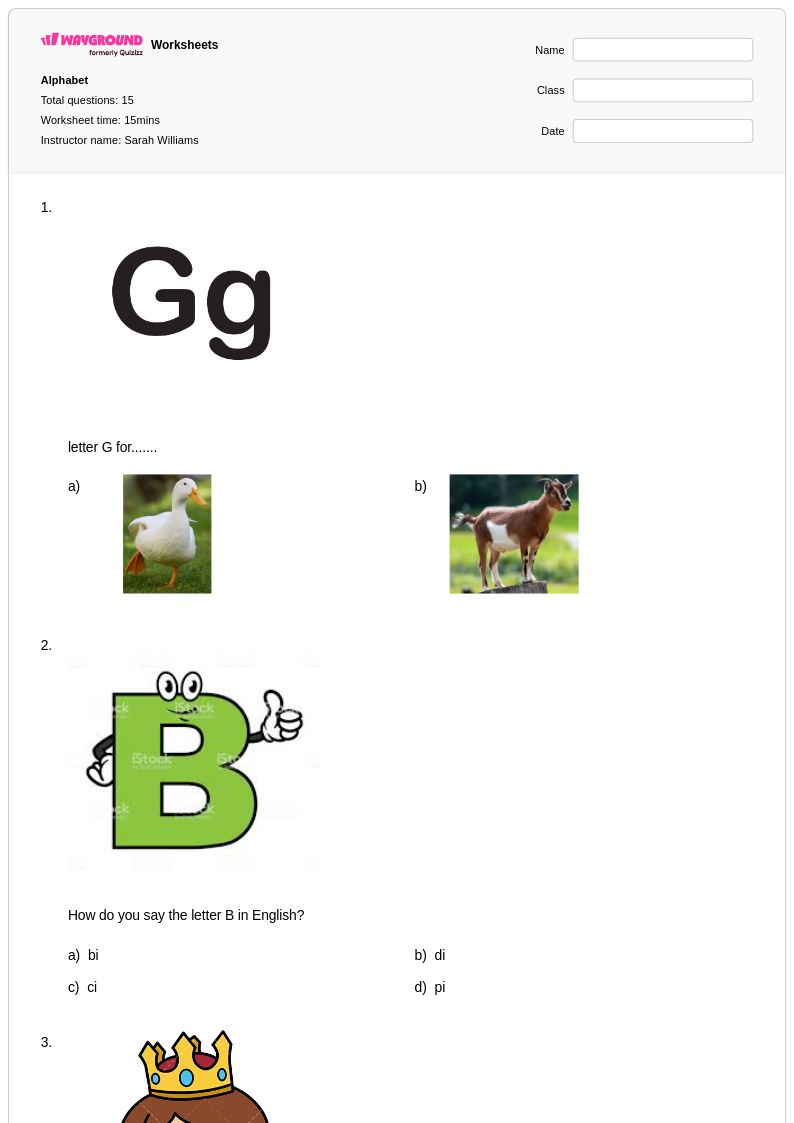
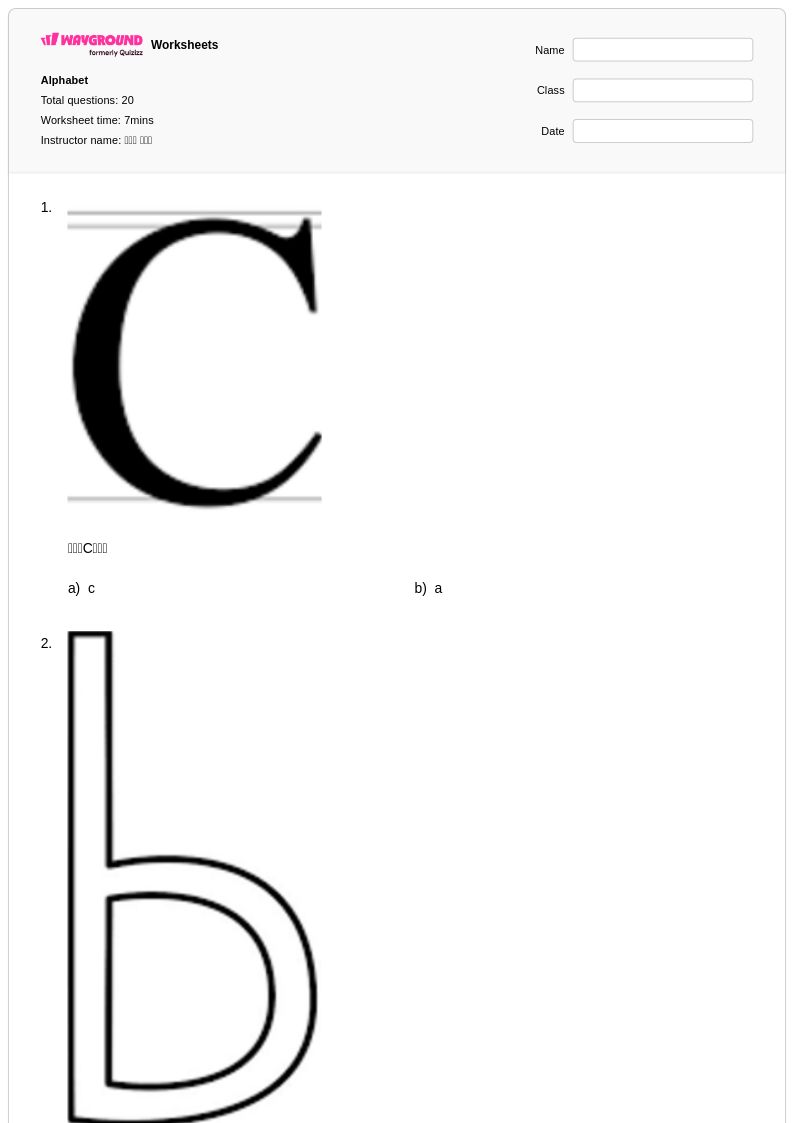
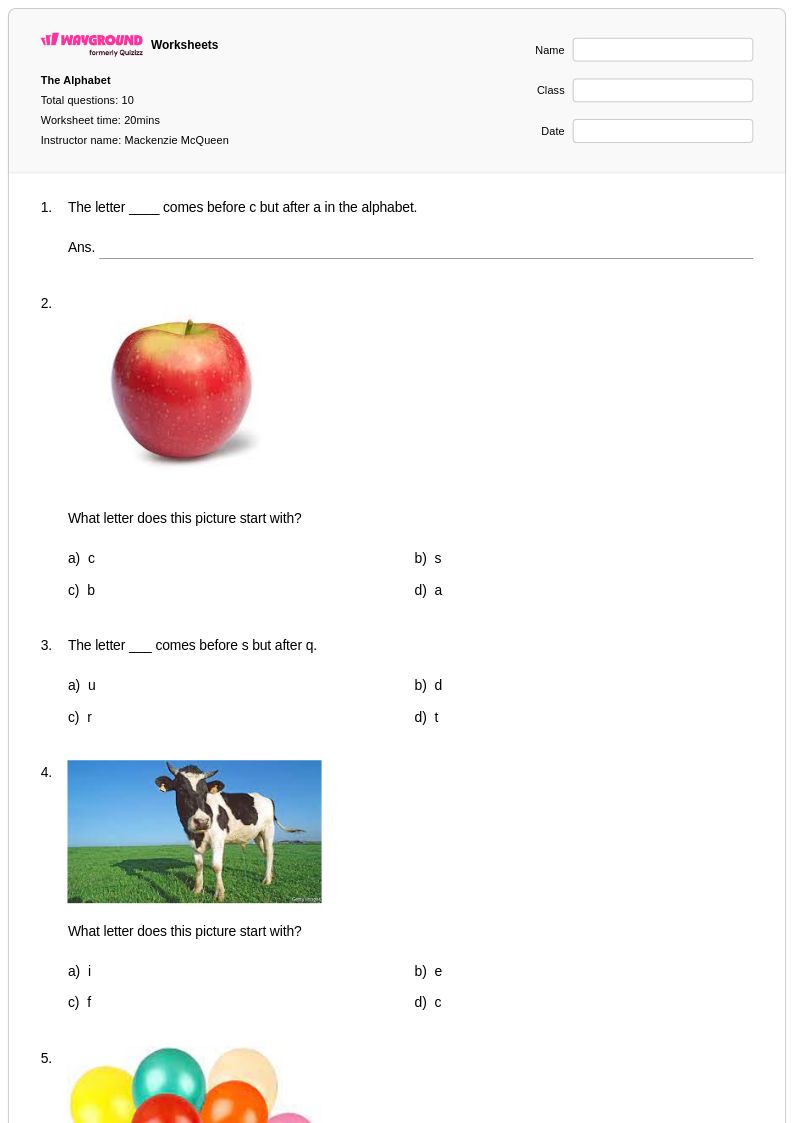
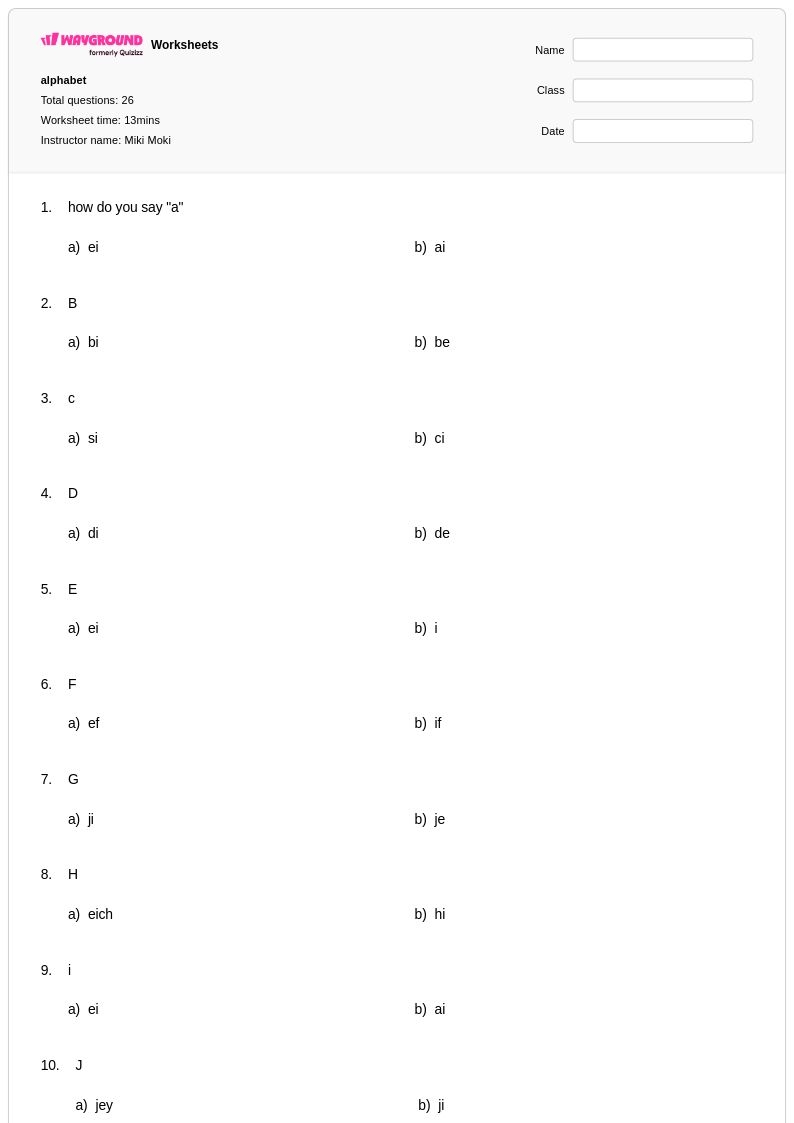
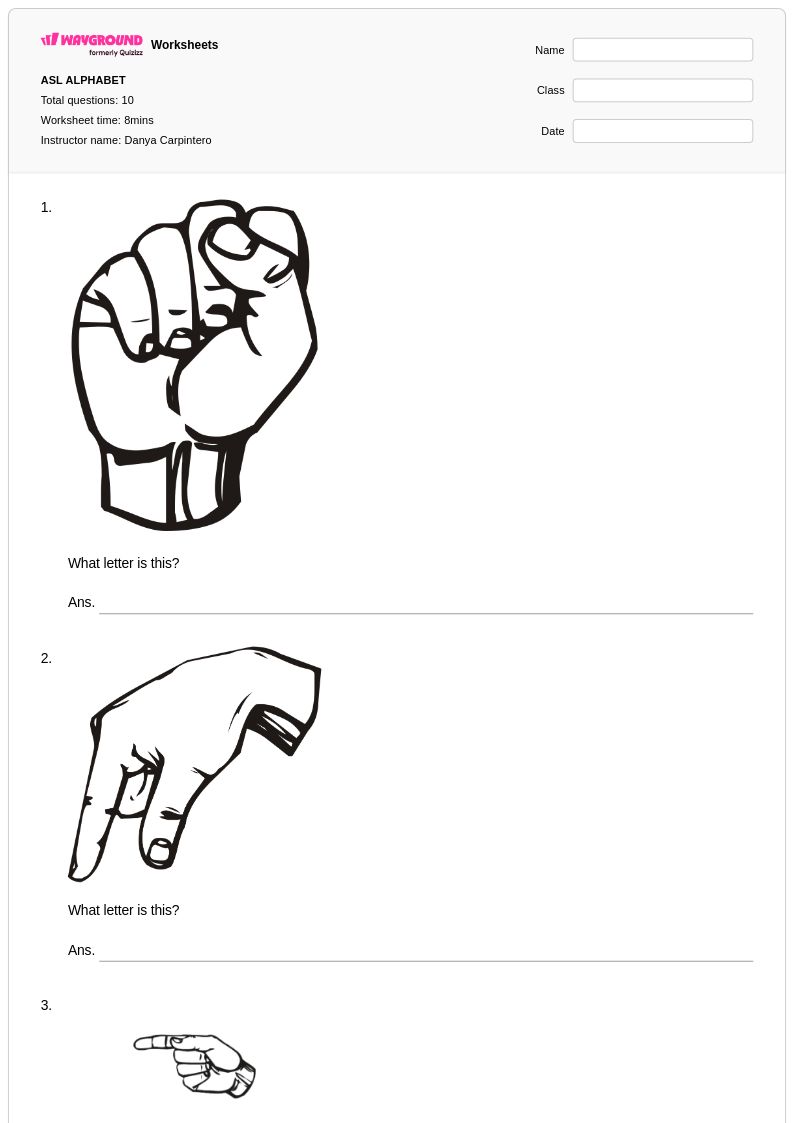
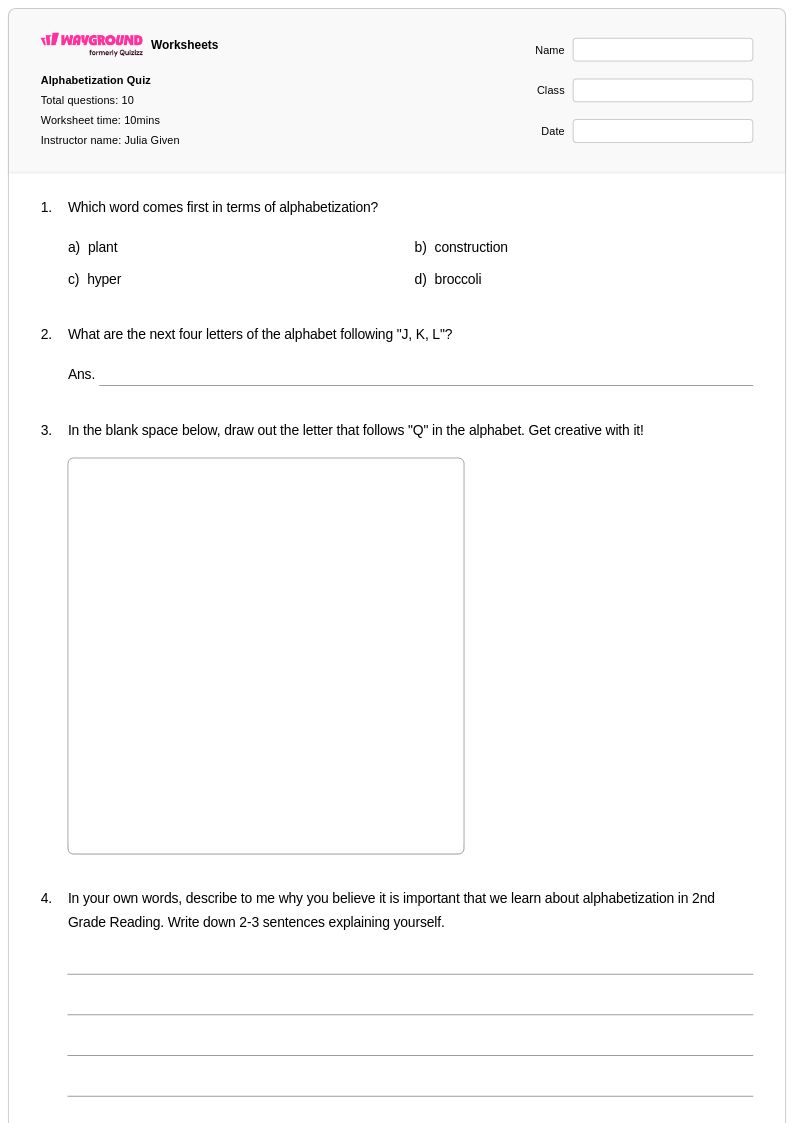
Enhance Year 2 students' alphabet recognition and letter formation skills with Wayground's comprehensive collection of free printable worksheets, featuring engaging practice problems and complete answer keys in convenient PDF format.
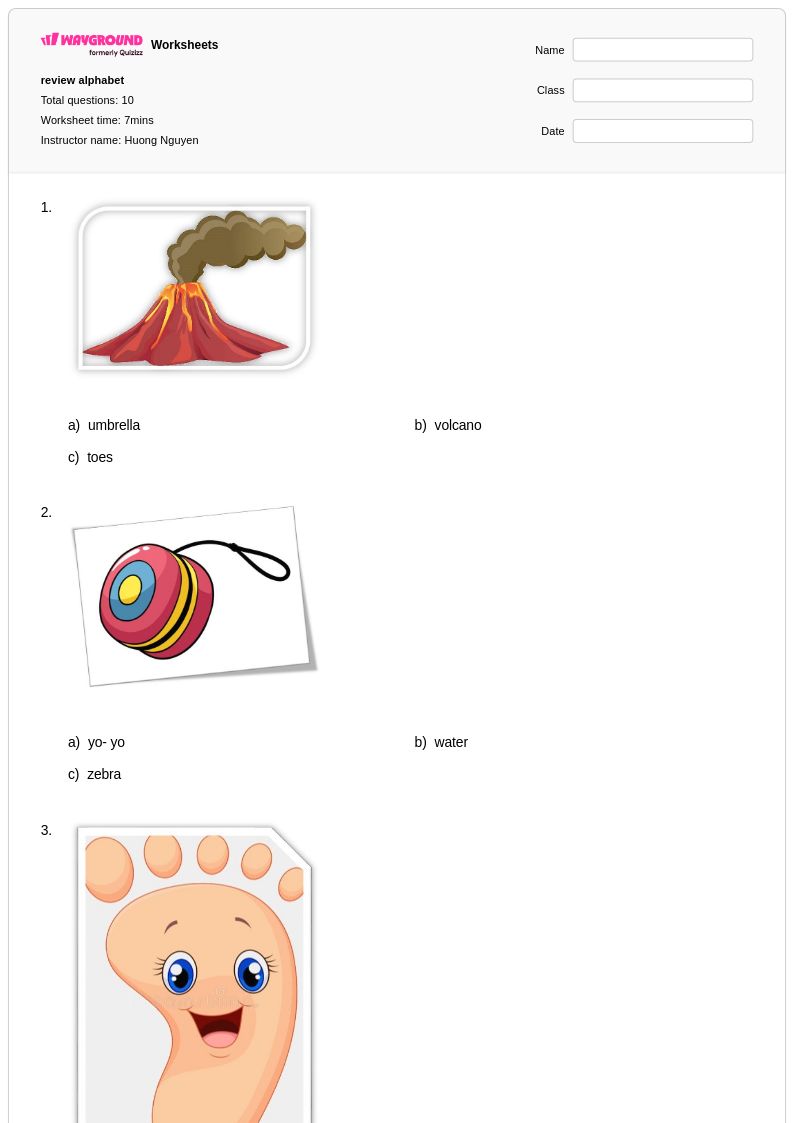
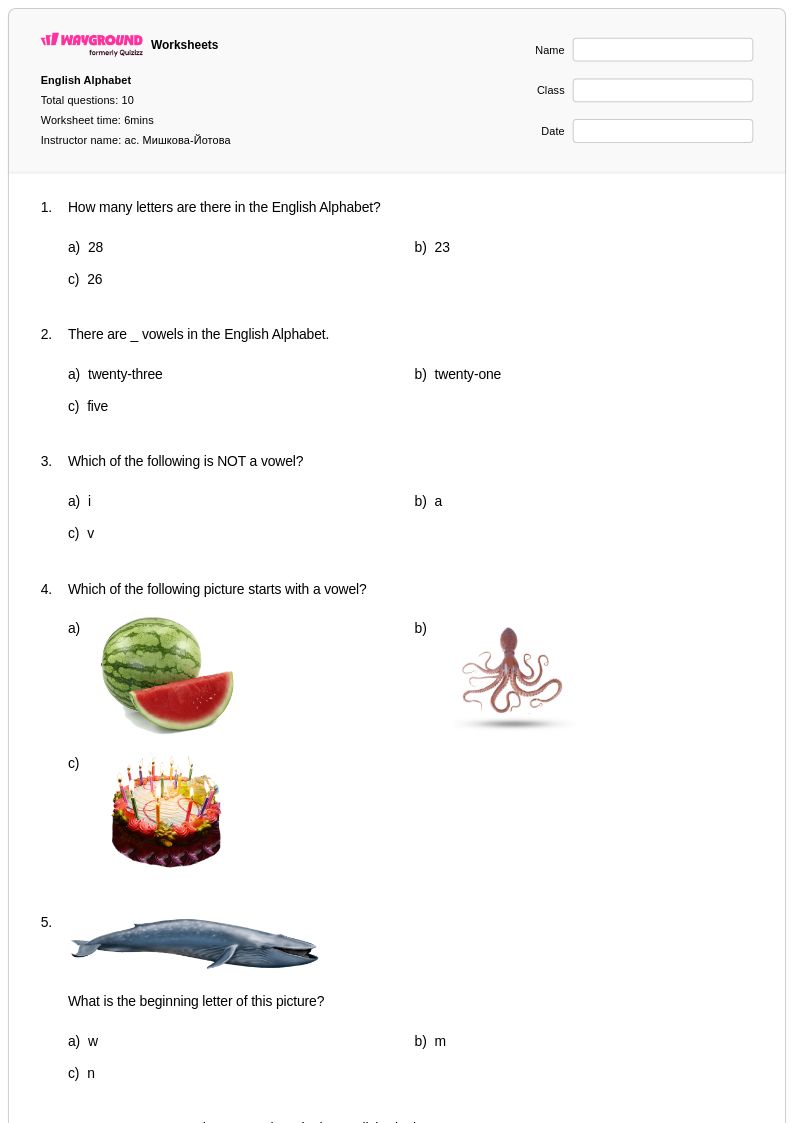
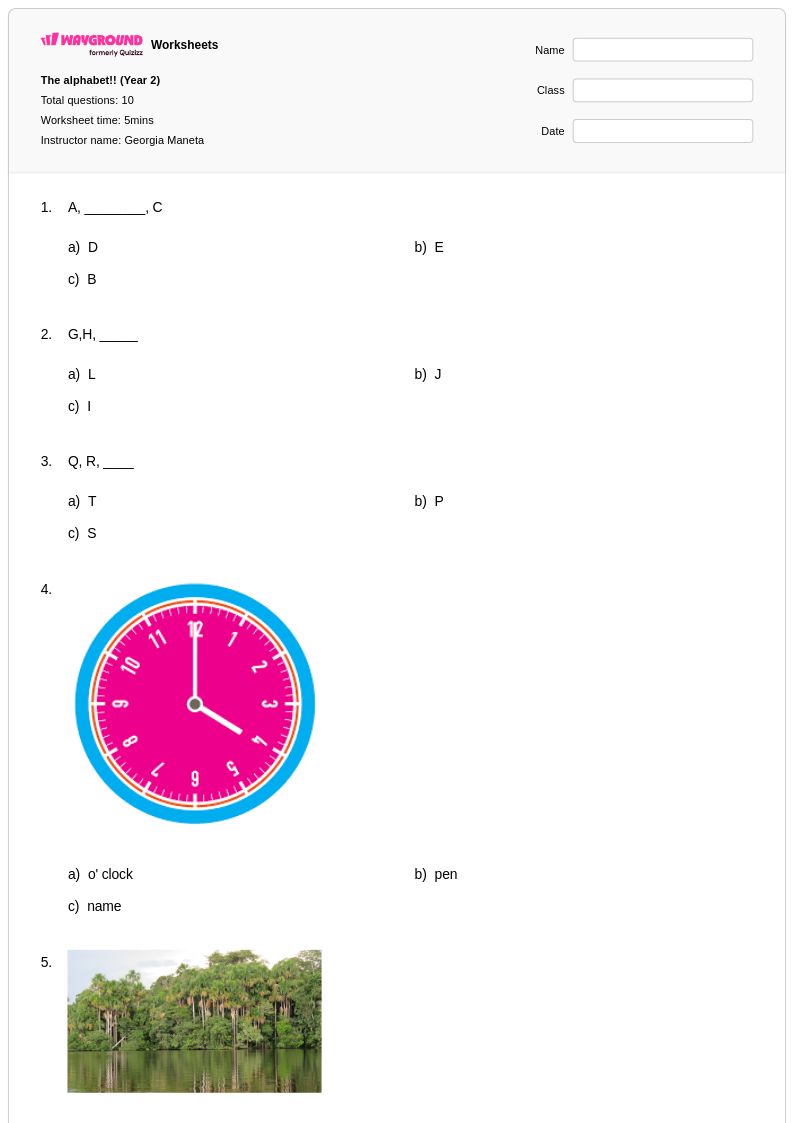
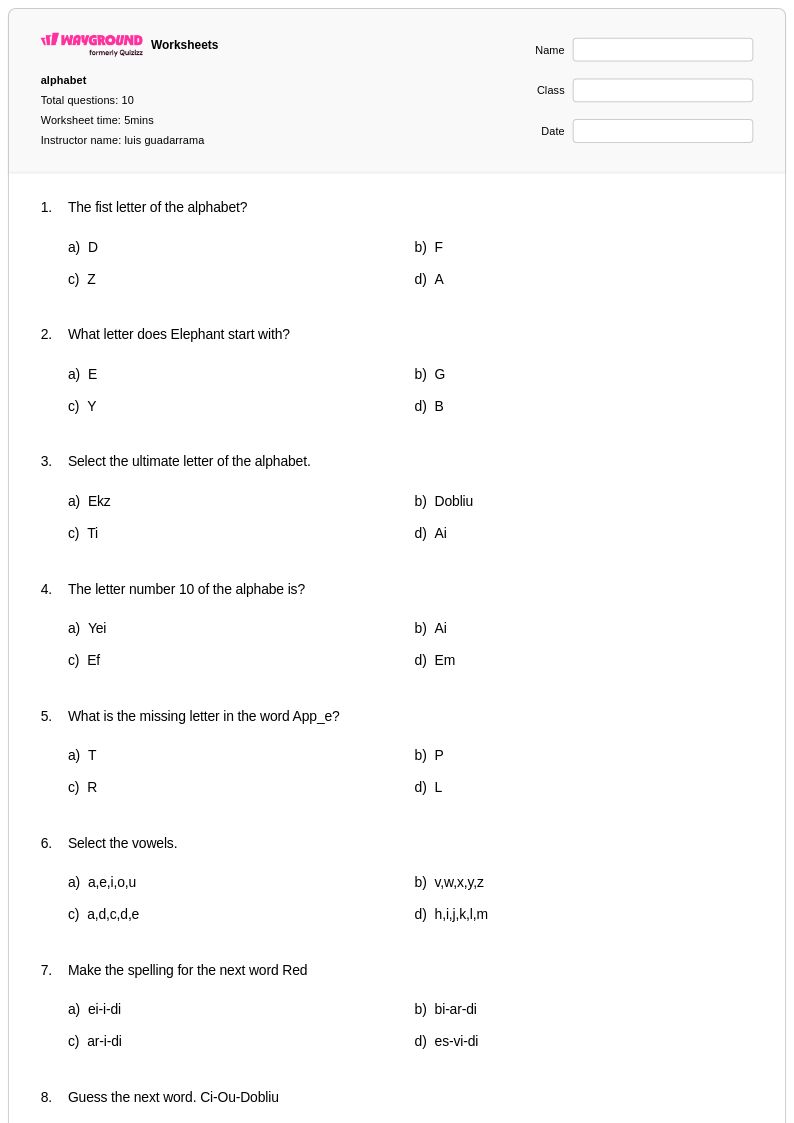
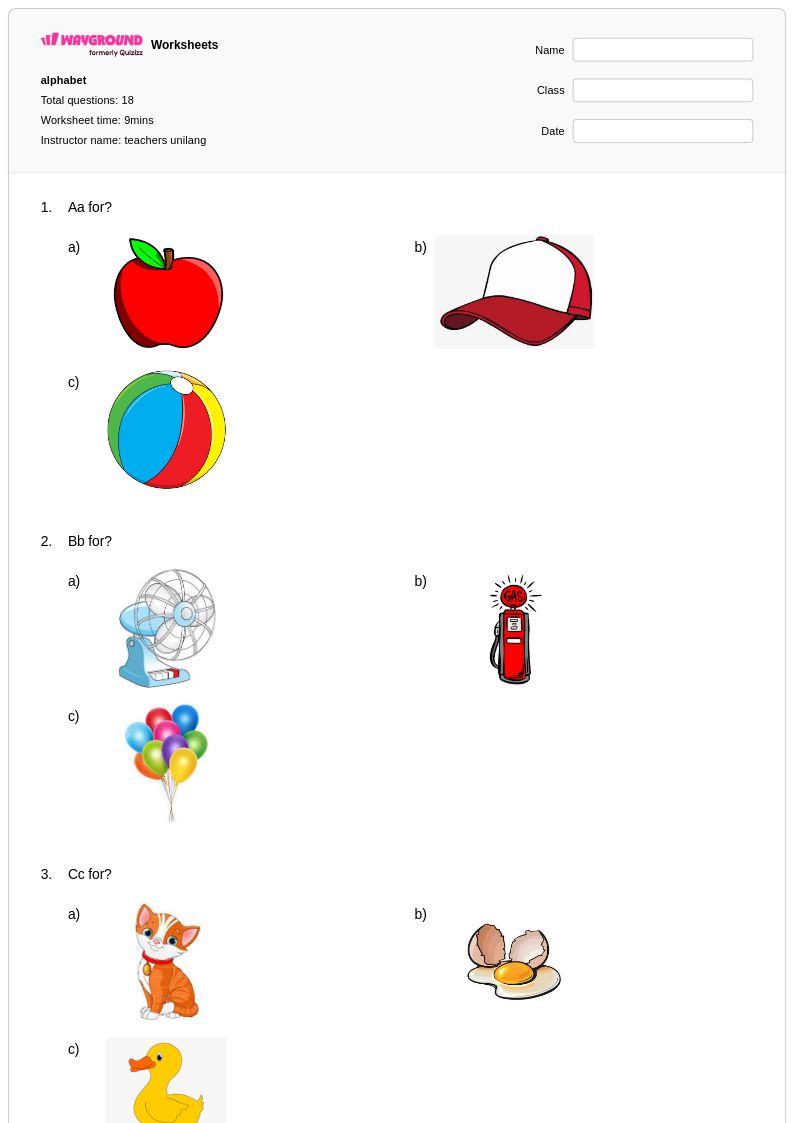
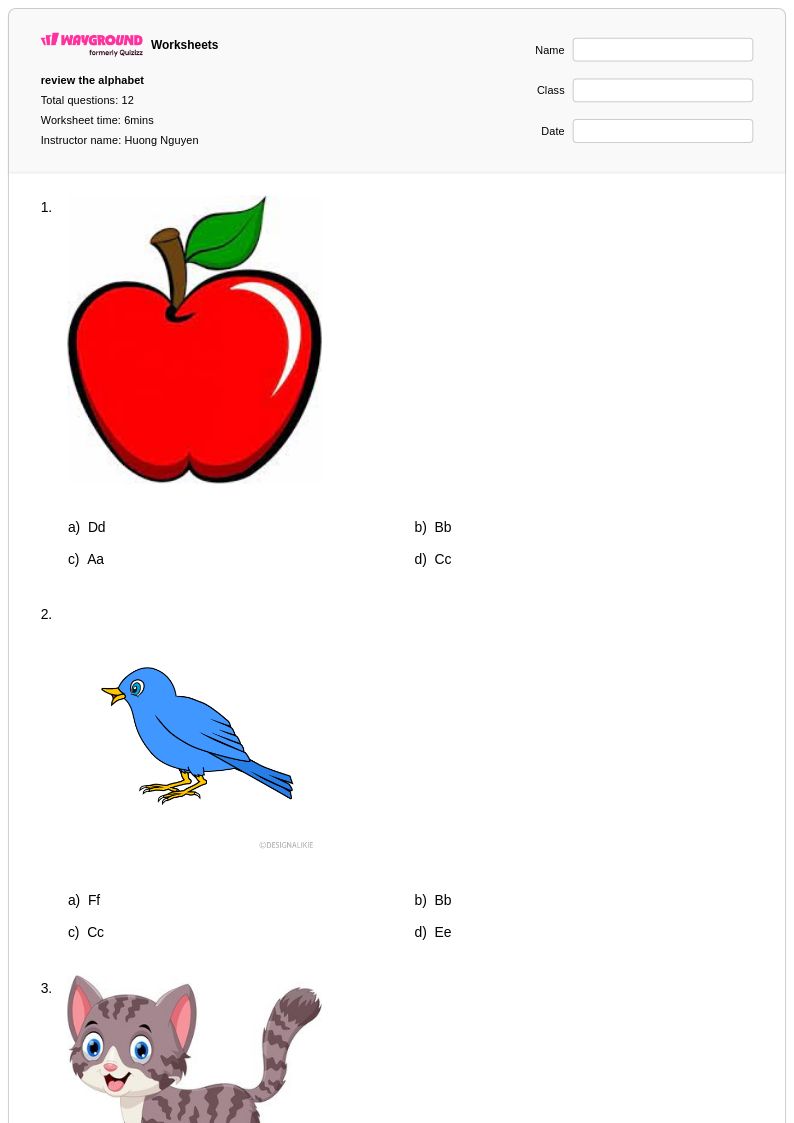
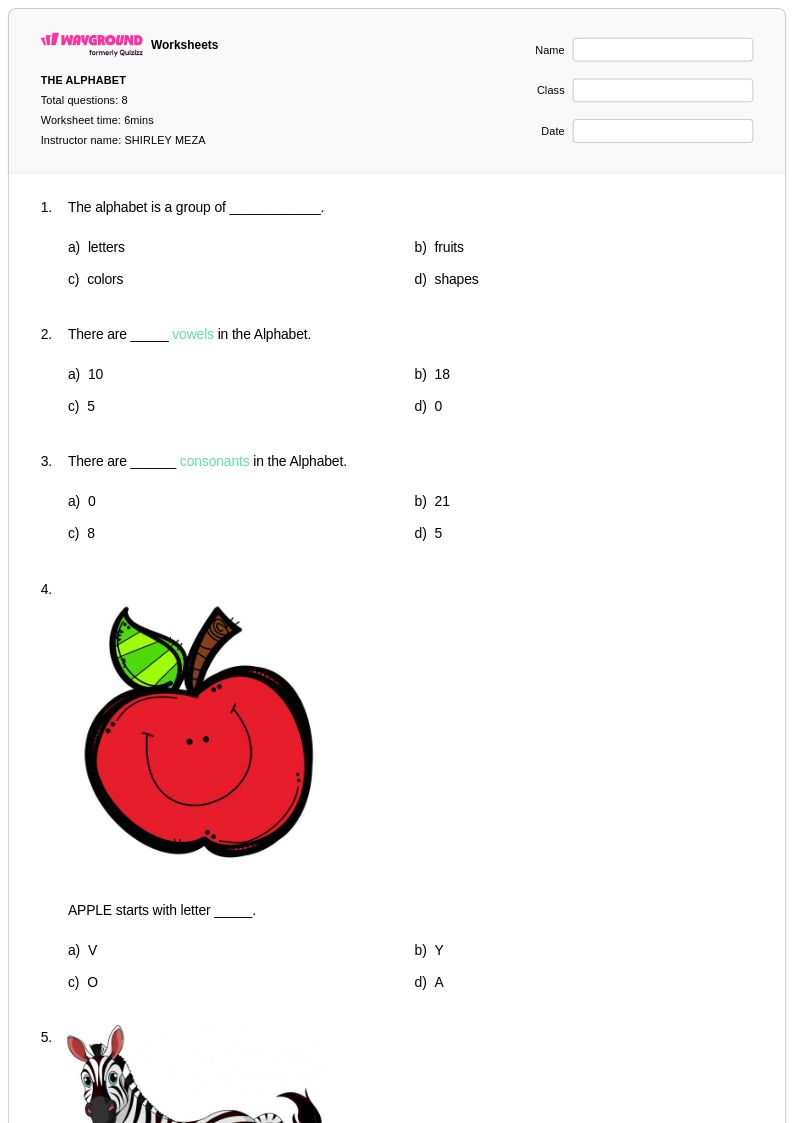
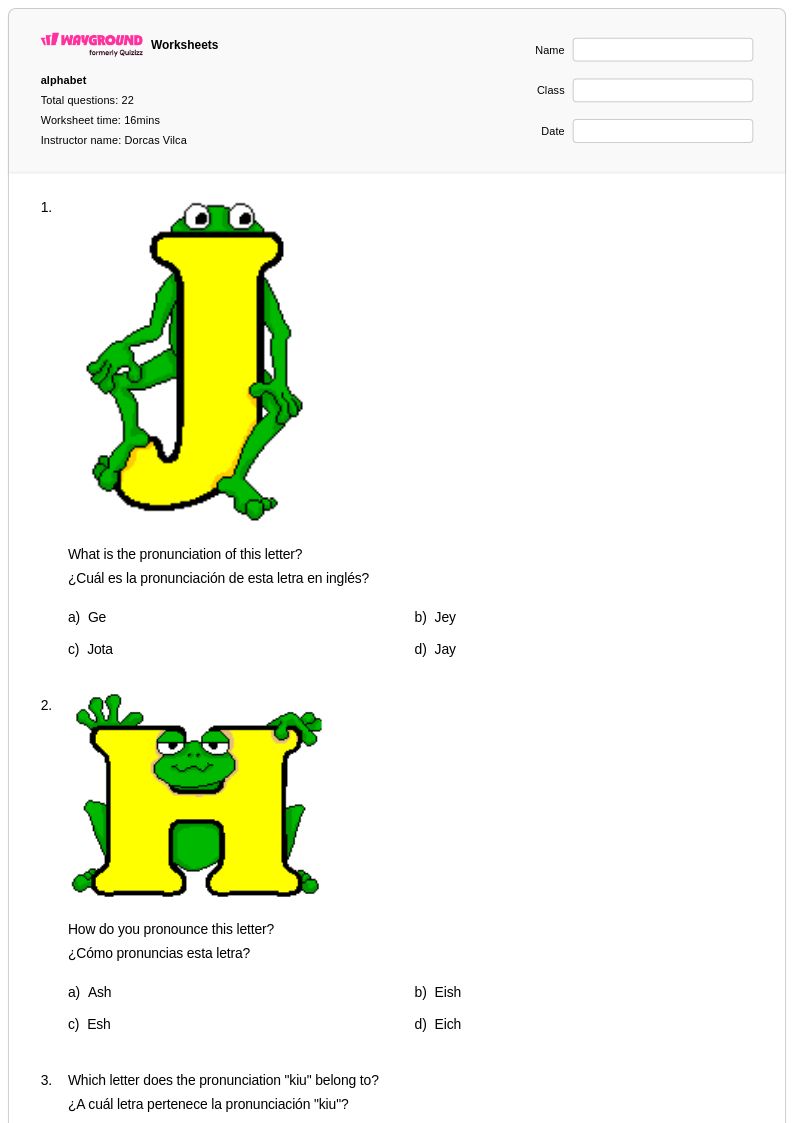
Year 2 alphabet worksheets available through Wayground (formerly Quizizz) provide essential foundational literacy practice that strengthens letter recognition, phonetic awareness, and early reading skills. These comprehensive printables focus on helping young learners master uppercase and lowercase letter identification, alphabetical order sequencing, and beginning sound associations that form the cornerstone of reading development. Each worksheet collection includes varied practice problems designed to reinforce letter-sound relationships through engaging activities like letter tracing, matching exercises, and phonemic awareness tasks. Teachers can access these free resources with complete answer keys, ensuring efficient grading and immediate feedback for students who need additional alphabet reinforcement or enrichment opportunities.
Wayground (formerly Quizizz) supports educators with millions of teacher-created alphabet worksheet resources specifically designed for Year 2 learners, offering robust search and filtering capabilities that allow instructors to locate materials aligned with their curriculum standards and individual student needs. The platform's differentiation tools enable teachers to customize worksheet difficulty levels, while flexible formatting options provide both printable pdf versions for traditional classroom use and digital formats for interactive learning experiences. These extensive alphabet collections facilitate seamless lesson planning by offering ready-to-use materials for daily practice, targeted remediation for struggling readers, and advanced skill-building opportunities for students ready to progress beyond basic letter recognition, ultimately supporting comprehensive literacy instruction that meets diverse learning requirements.
FAQs
How do I teach the alphabet to early learners?
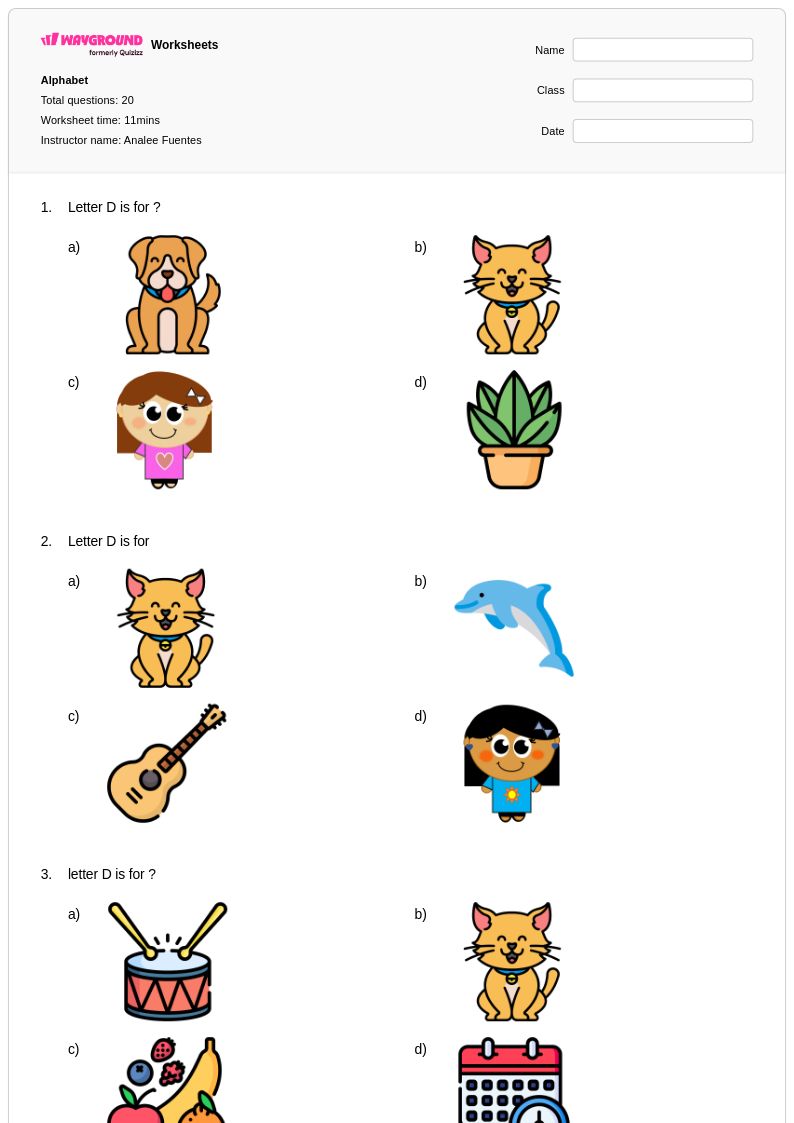
Effective alphabet instruction combines explicit, systematic teaching of each letter's name, shape, and sound with frequent, varied practice. Teachers should introduce letters in a purposeful sequence, connect each letter to a familiar keyword or image, and reinforce recognition through multisensory activities such as tracing, sorting, and matching. Pairing letter-name instruction with phonemic awareness activities helps students build the alphabetic principle, which is the understanding that letters represent sounds in spoken words.
What exercises help students practice letter recognition?
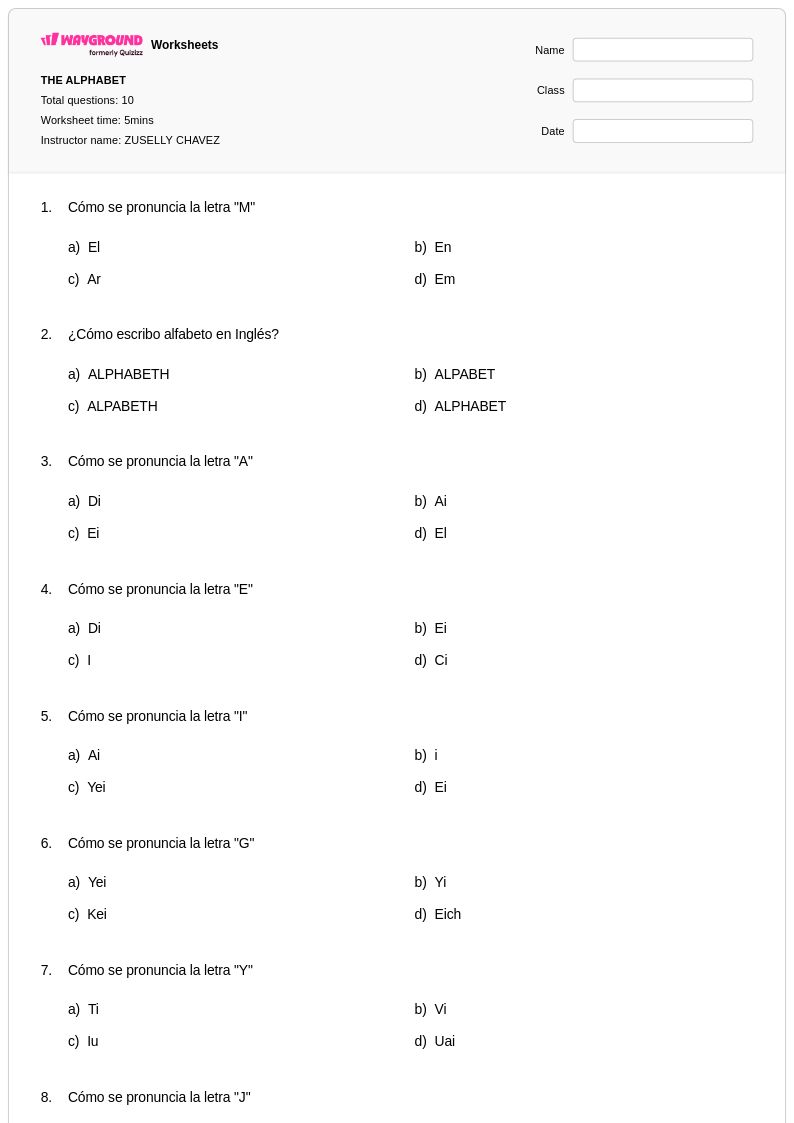
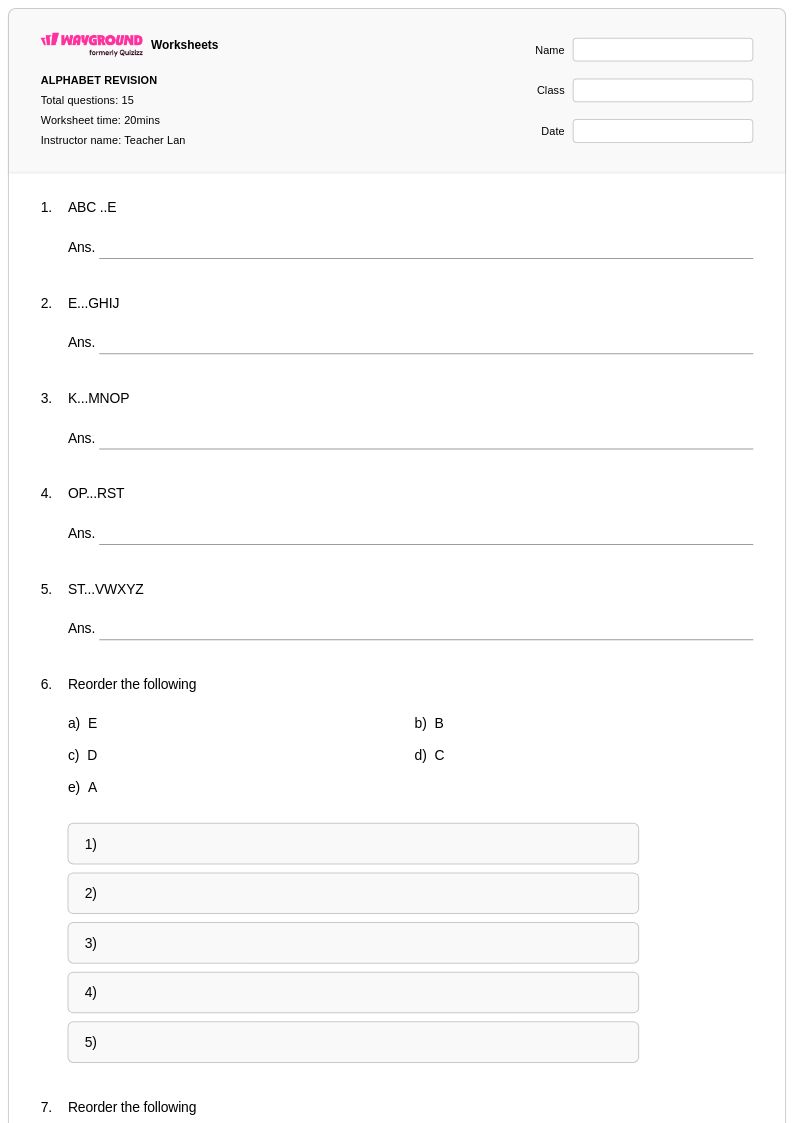
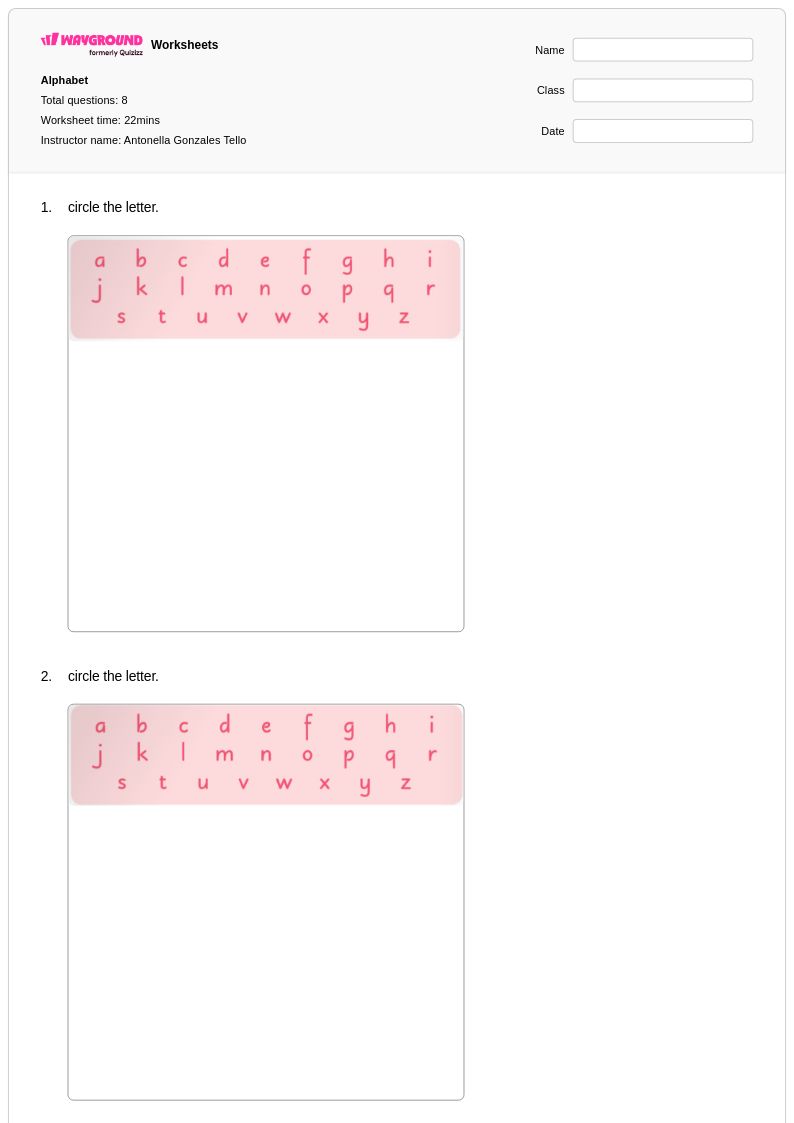
Letter recognition improves through repeated exposure across multiple activity types, including matching uppercase and lowercase letter pairs, identifying a target letter within a group of similar letters, and filling in missing letters in a sequence. Tracing exercises build visual memory of letter forms while reinforcing directionality and stroke order. Rotating through these exercise formats keeps practice engaging and ensures students encounter each letter in varied contexts.
What are common mistakes students make when learning the alphabet?
Students frequently confuse visually similar letters such as b/d, p/q, and m/n because they share the same basic shape in different orientations. Another common error is conflating letter names with letter sounds, particularly for vowels, which can interfere with early decoding. Teachers should directly address these confusion pairs with targeted comparison activities and consistent anchor cues, such as a keyword image, to help students distinguish between them.
How do I support struggling readers who can't yet identify all letters?
Students who struggle with letter identification benefit from reduced-scope practice that focuses on a small set of letters at a time rather than the full alphabet at once. Prioritizing high-frequency letters and those most common in the student's own name can increase engagement and early success. On Wayground, teachers can apply accommodations such as read aloud and reduced answer choices to individual students, lowering cognitive load without drawing attention to the differentiation.
How do I use Wayground's alphabet worksheets in my classroom?
Wayground's alphabet worksheets are available as printable PDFs for traditional classroom use and in digital formats for technology-integrated learning environments, including the option to host them as a quiz directly on Wayground. Teachers can assign specific letter worksheets to target individual student gaps or use the full collection for systematic whole-class instruction. Complete answer keys are included, making it straightforward to review and assess student work efficiently.
How do I differentiate alphabet instruction for students at different skill levels?
Differentiation in alphabet instruction means meeting students where they are, whether they are just learning letter names, working on uppercase and lowercase correspondence, or building phonemic awareness. Wayground allows teachers to assign different worksheets to different students and apply individual accommodations such as extended time, read aloud, or adjusted font sizes through reading mode. These settings can be saved per student and applied across future sessions without disrupting the rest of the class.