Free Printable Animal Classification Worksheets for Year 2
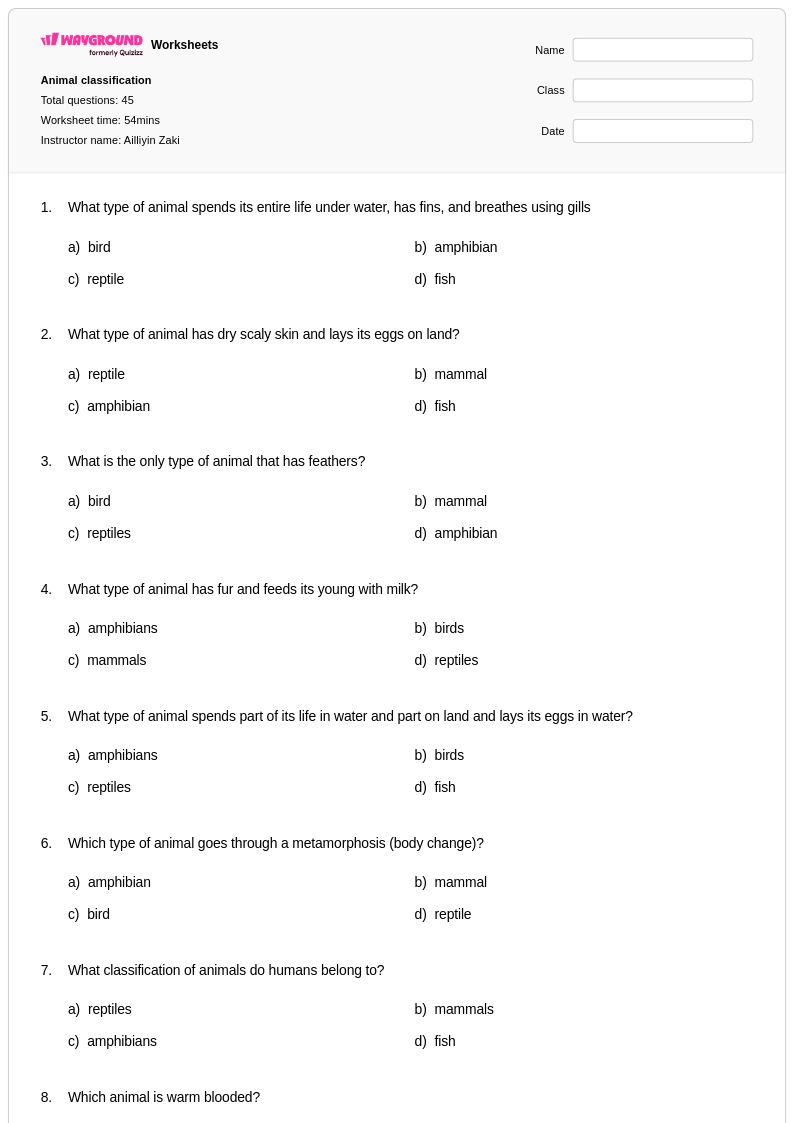
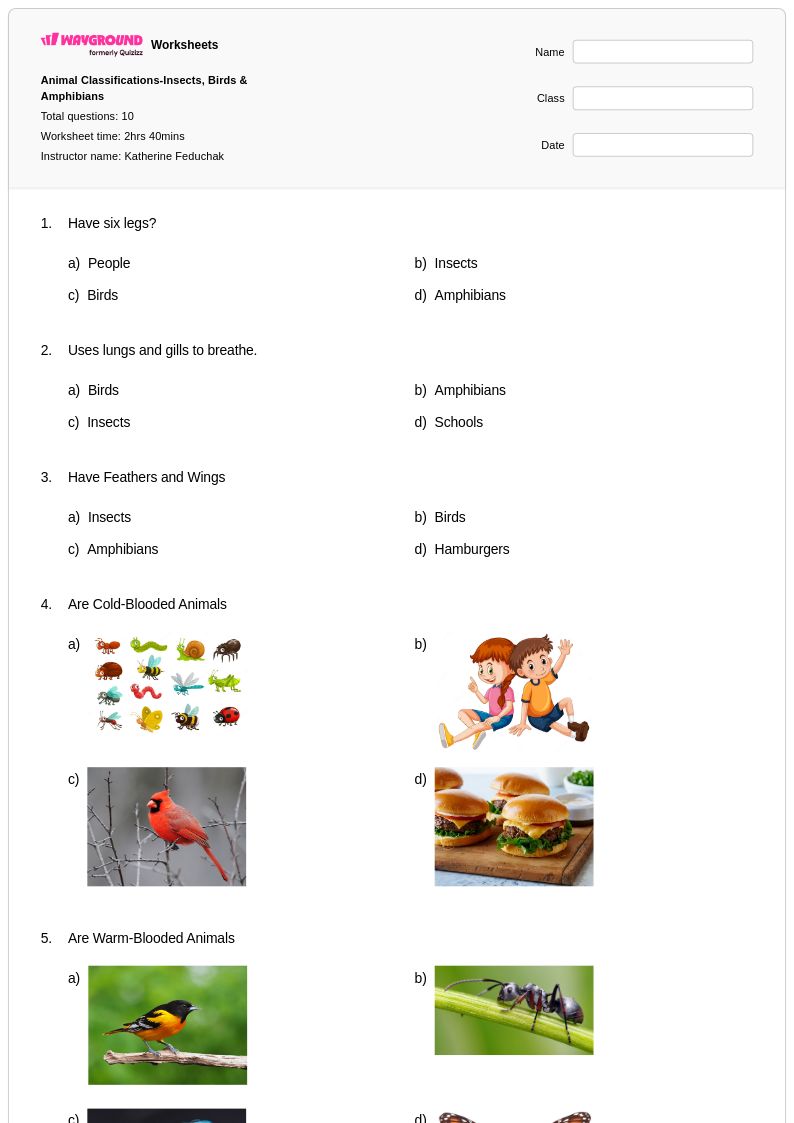
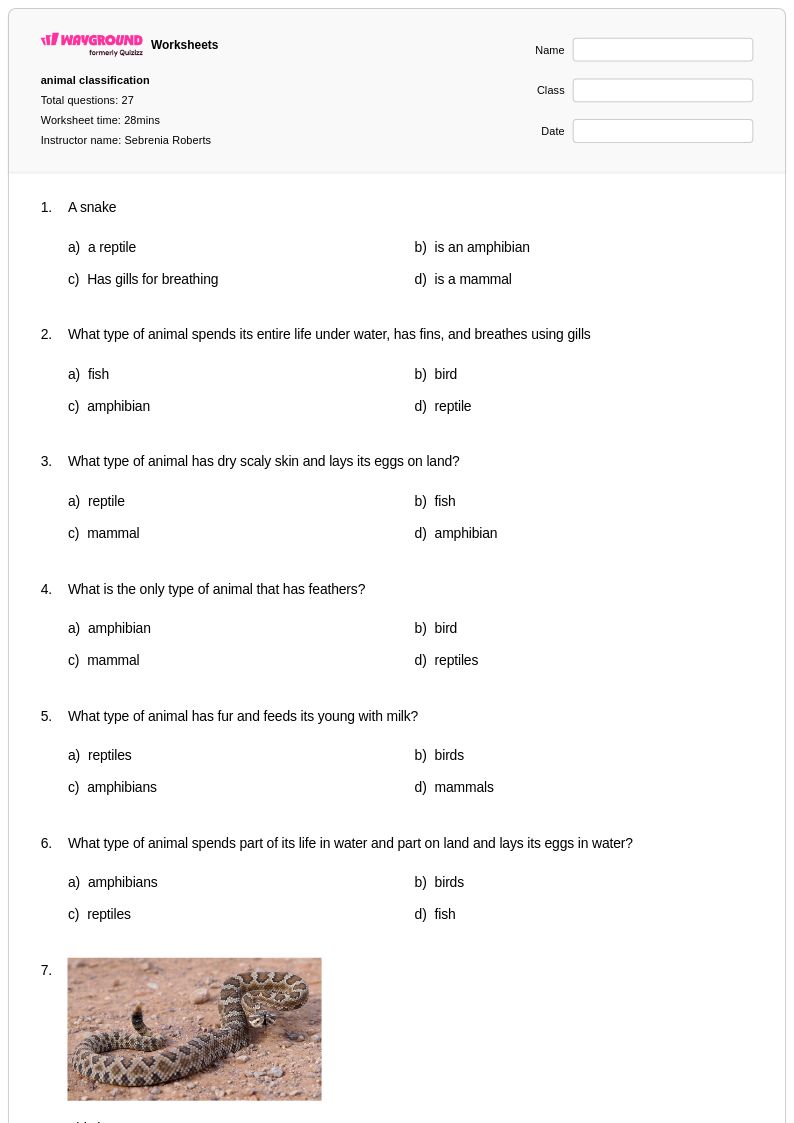
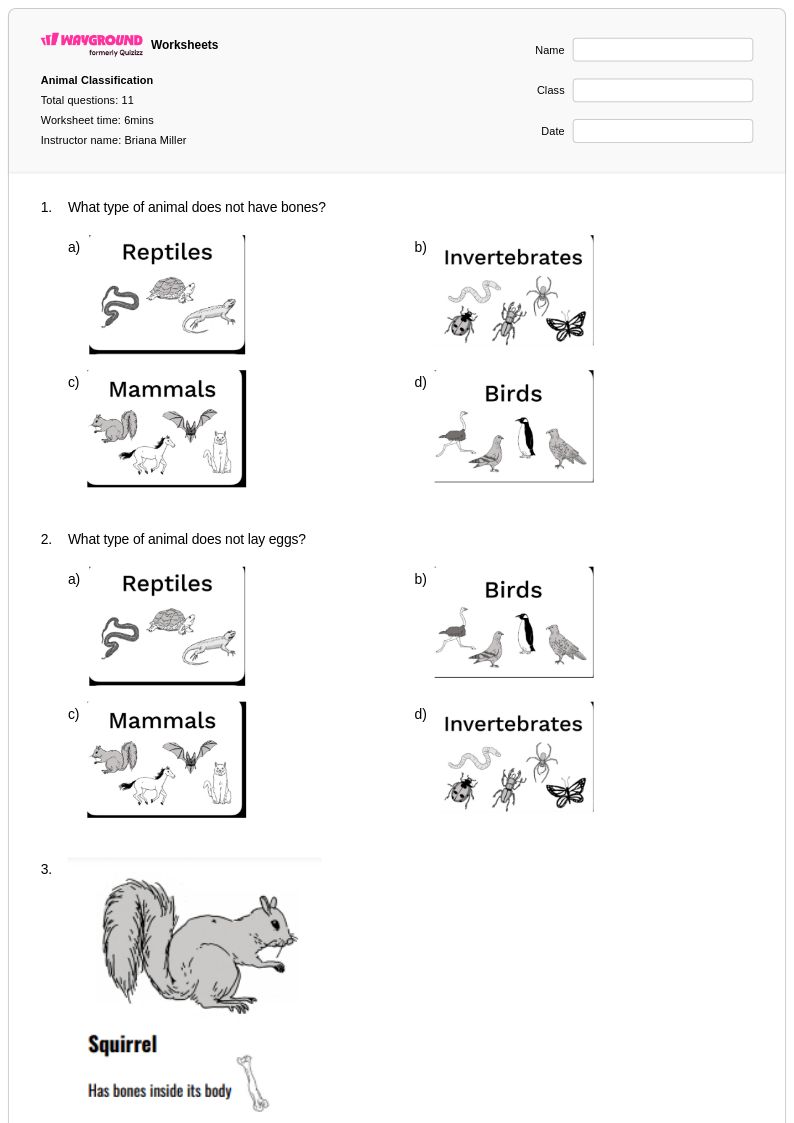
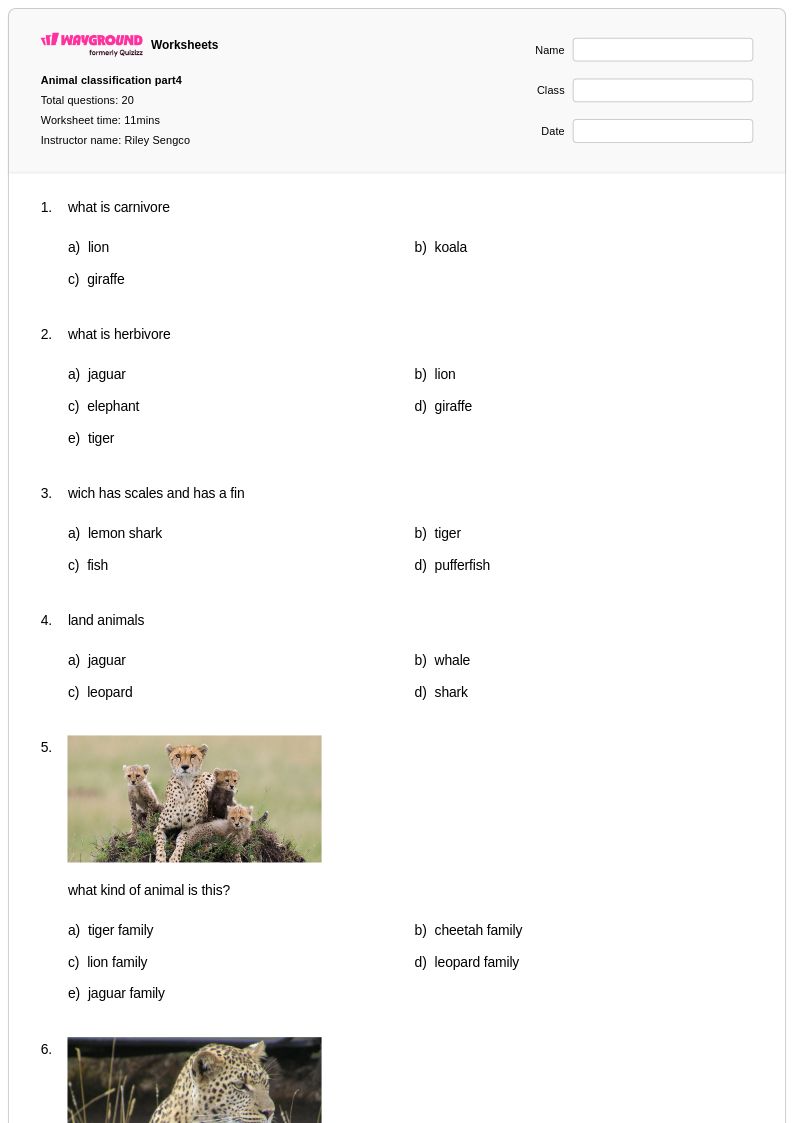
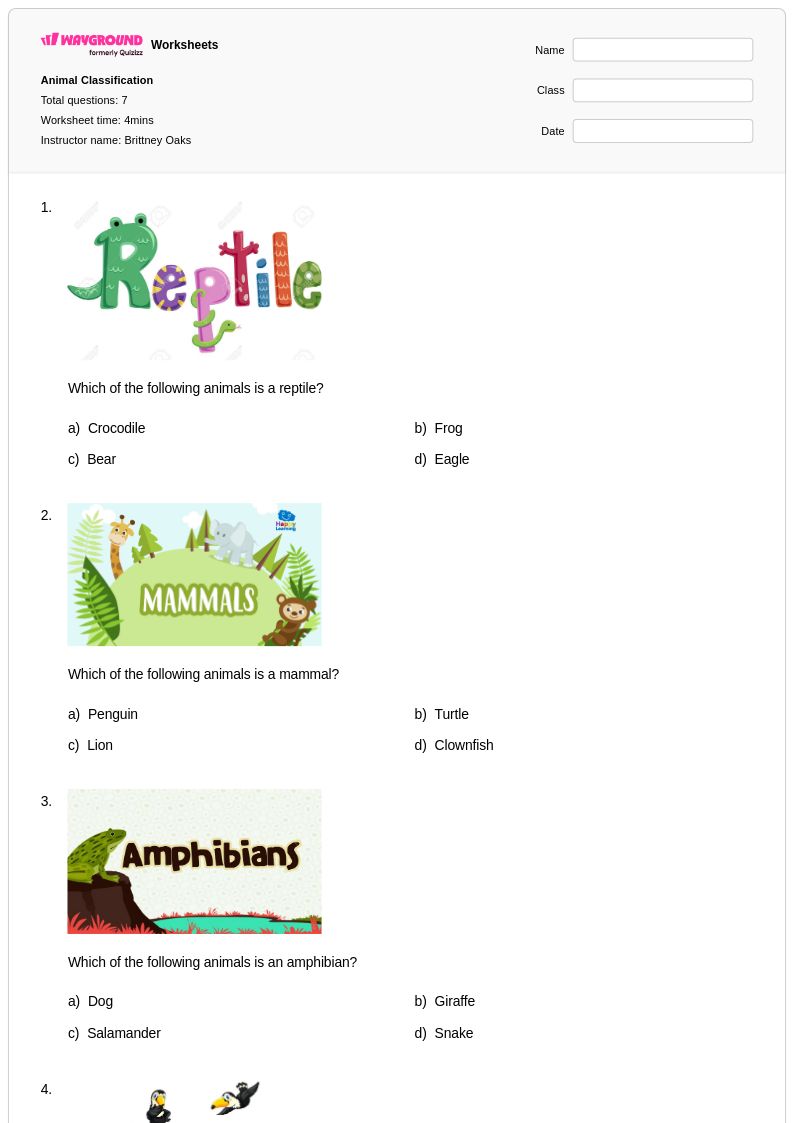
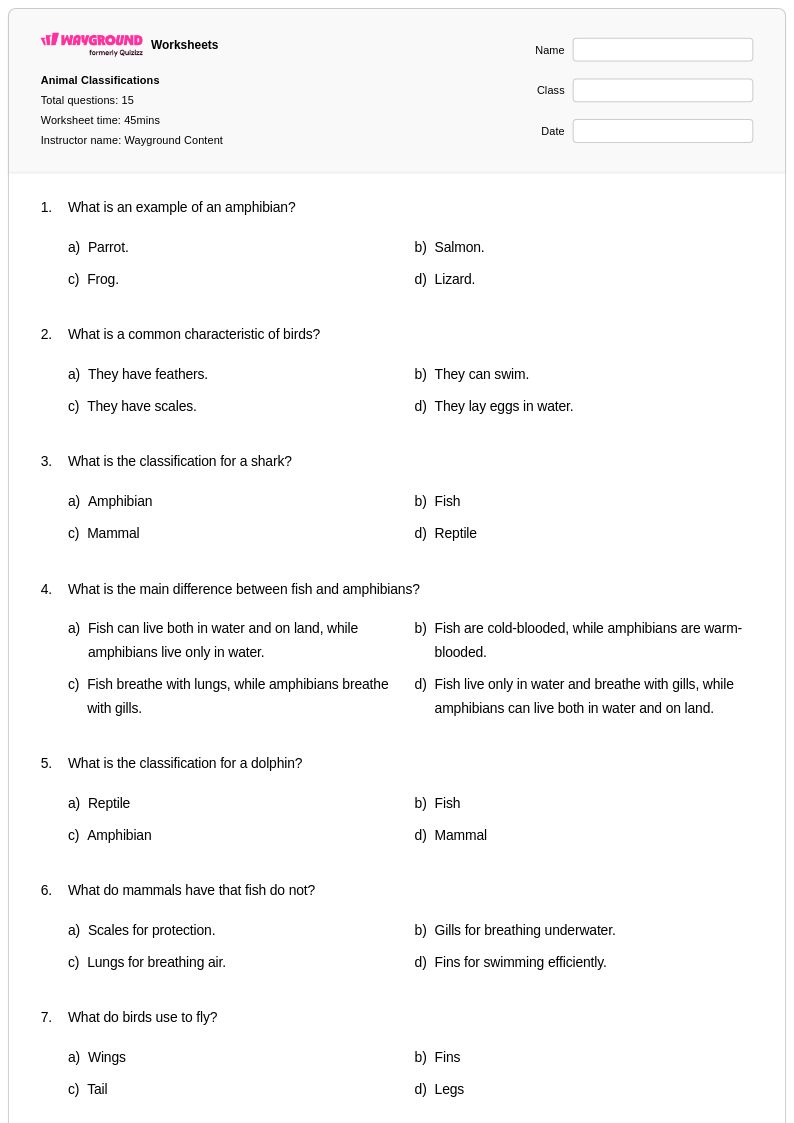
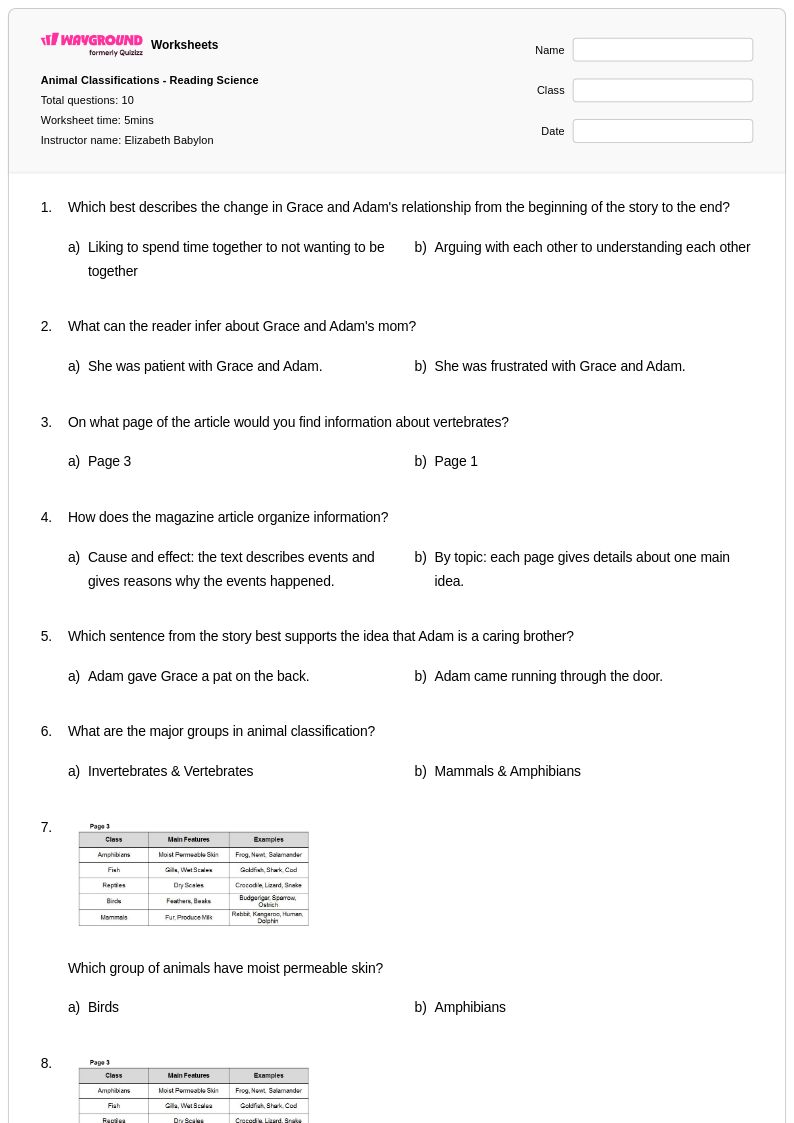
Explore Wayground's free Year 2 animal classification worksheets and printables that help young learners identify, sort, and categorize different animal groups through engaging practice problems with complete answer keys.
Explore printable Animal Classification worksheets for Year 2
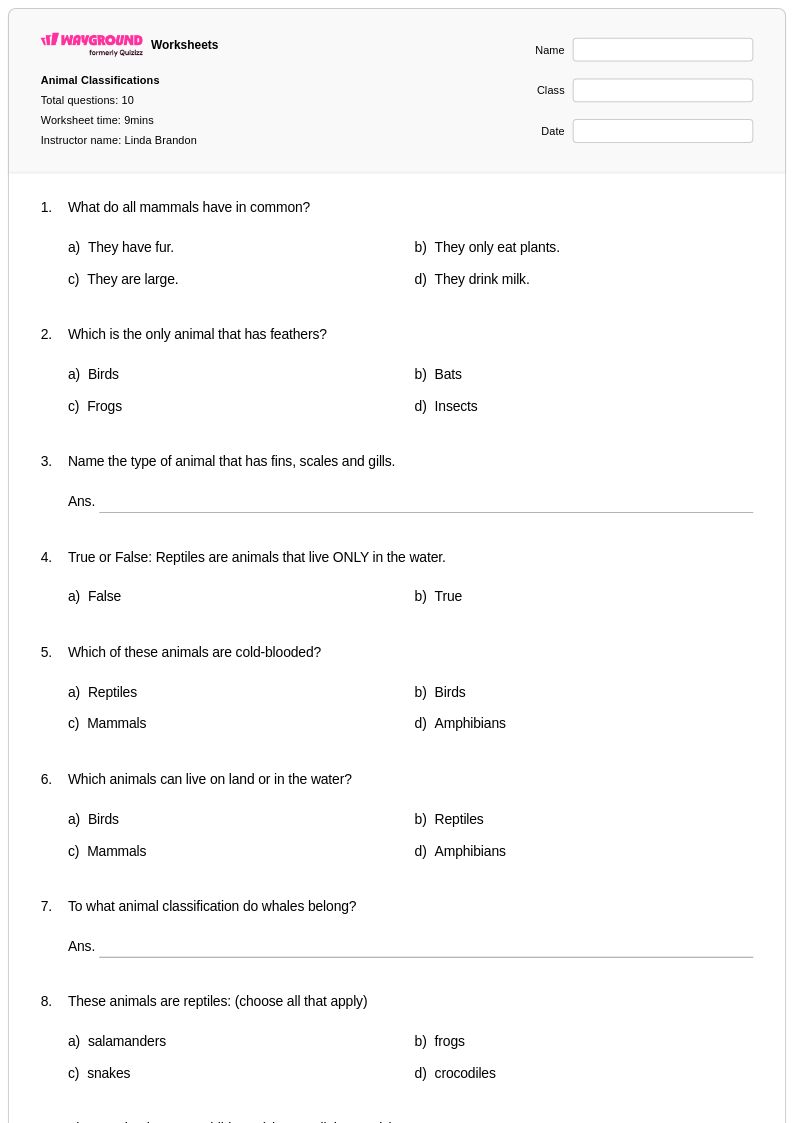
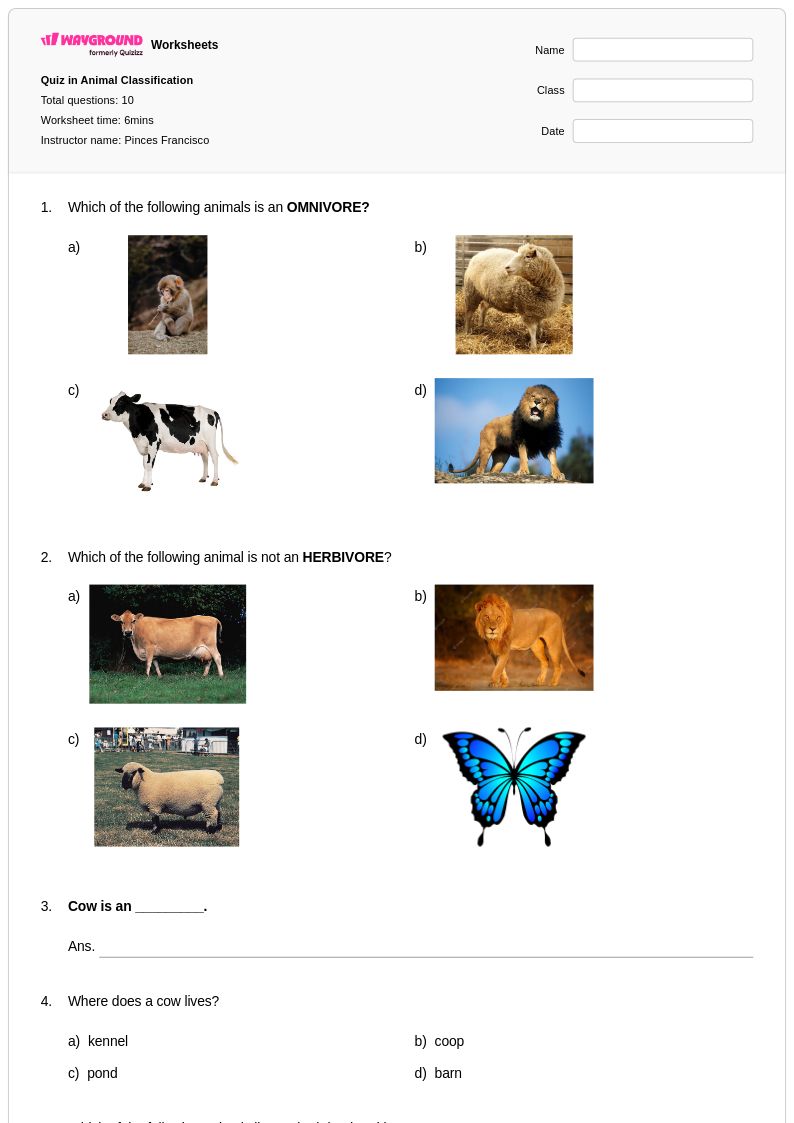
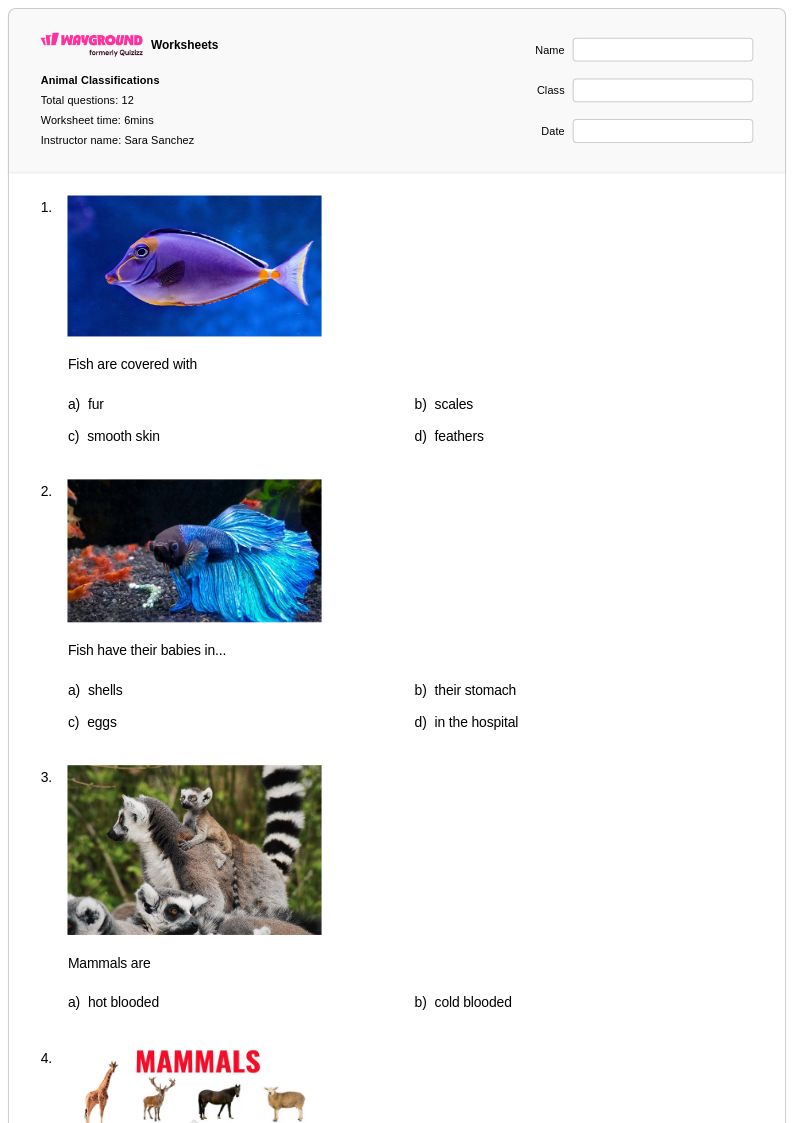
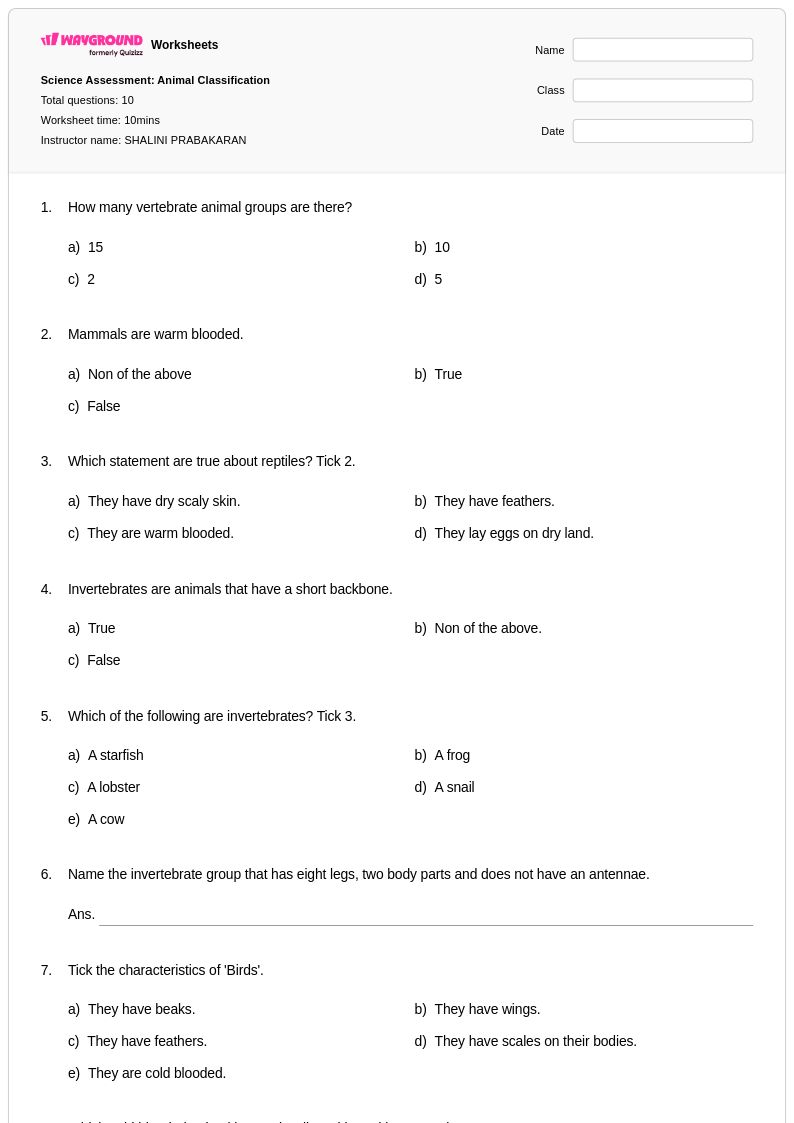
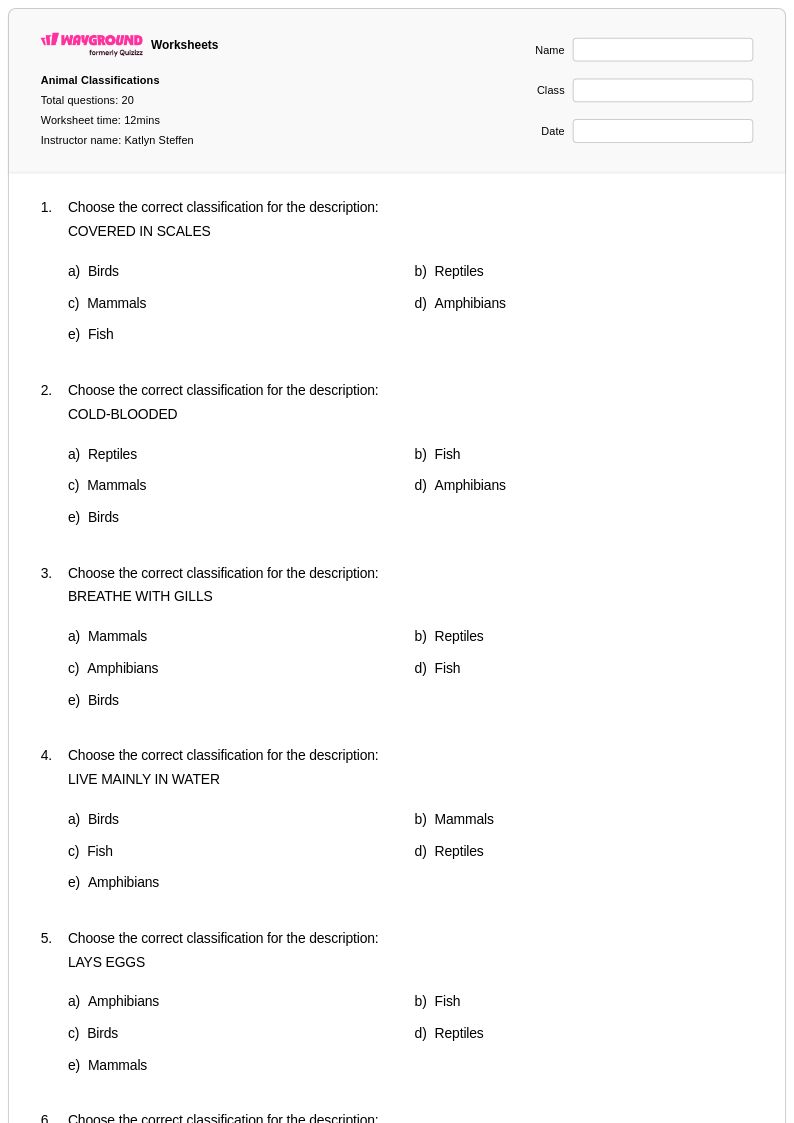
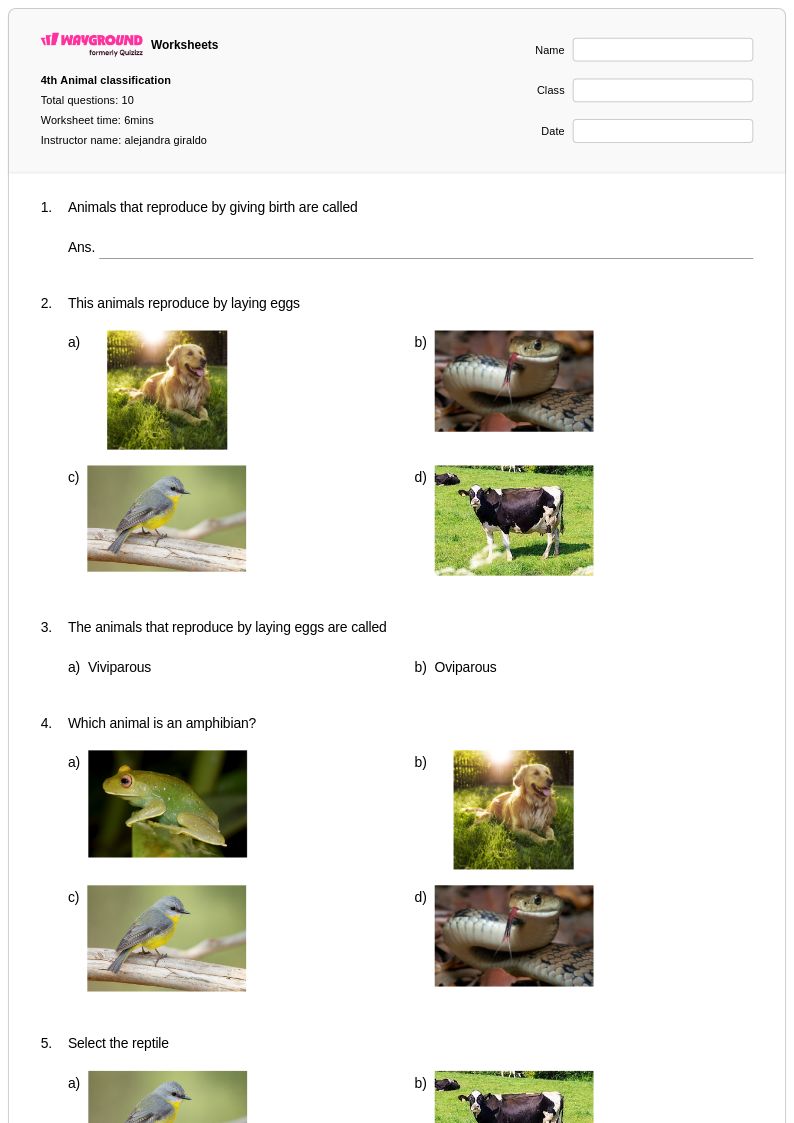
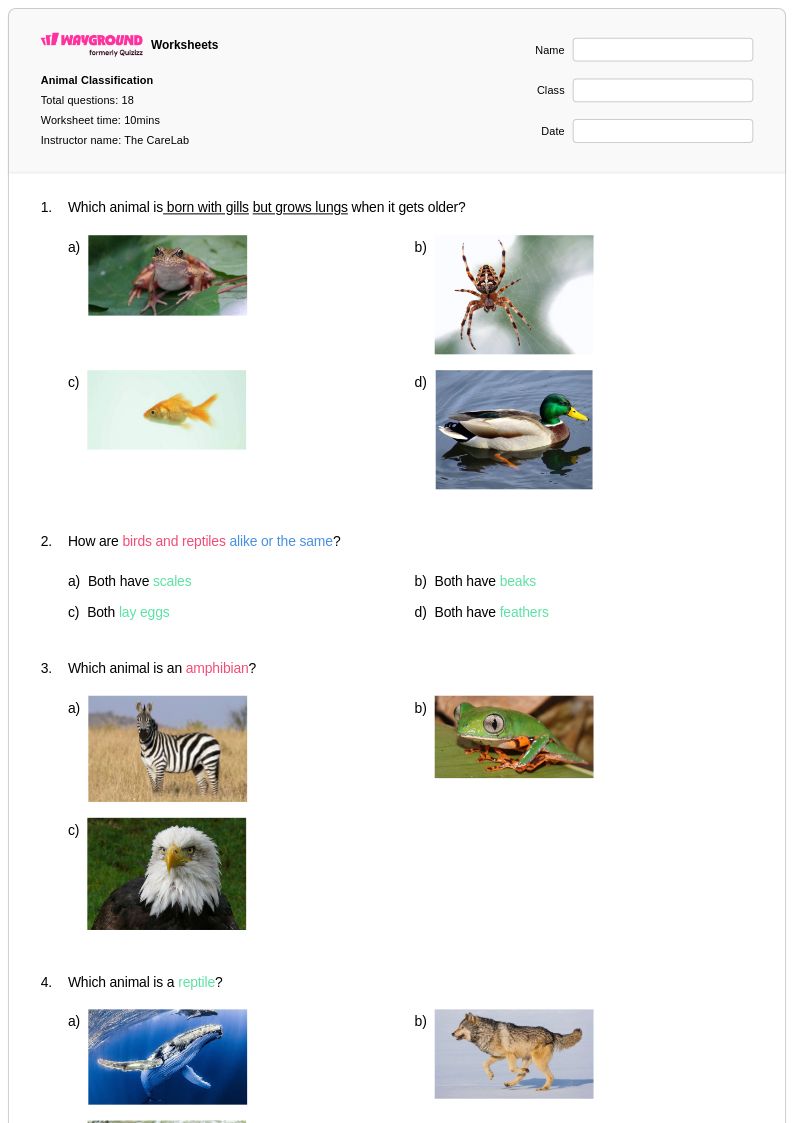
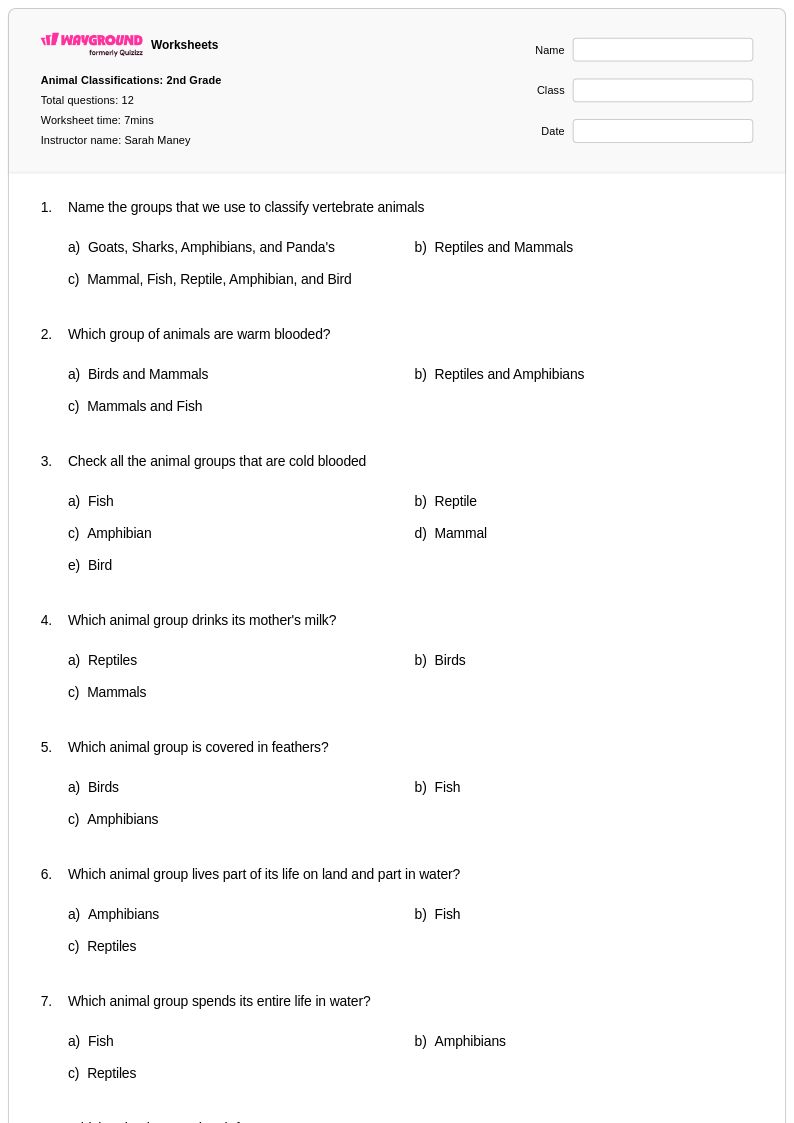
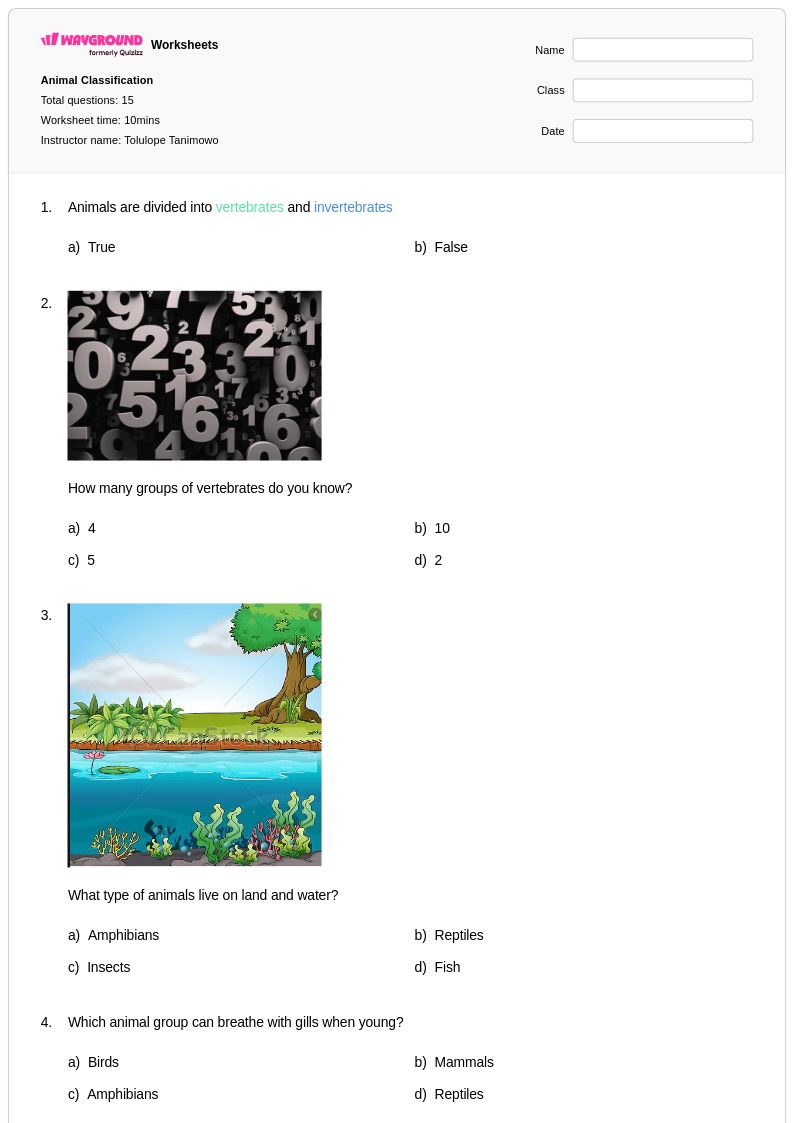
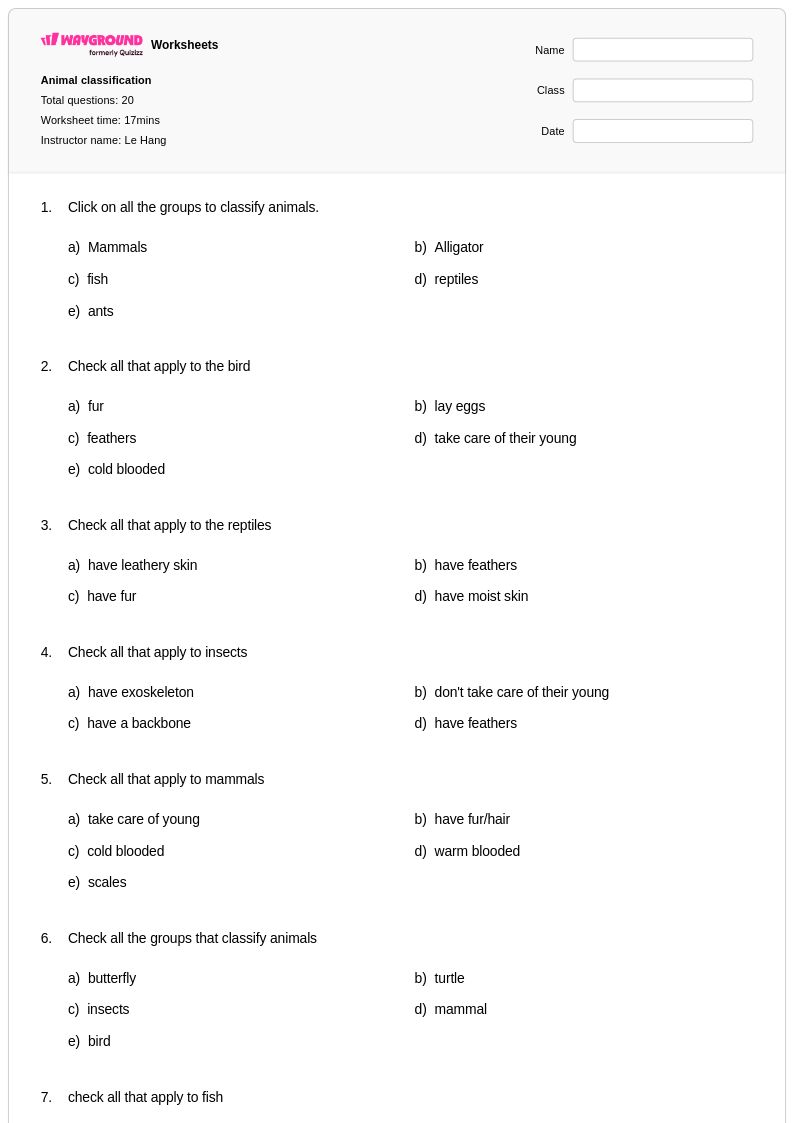
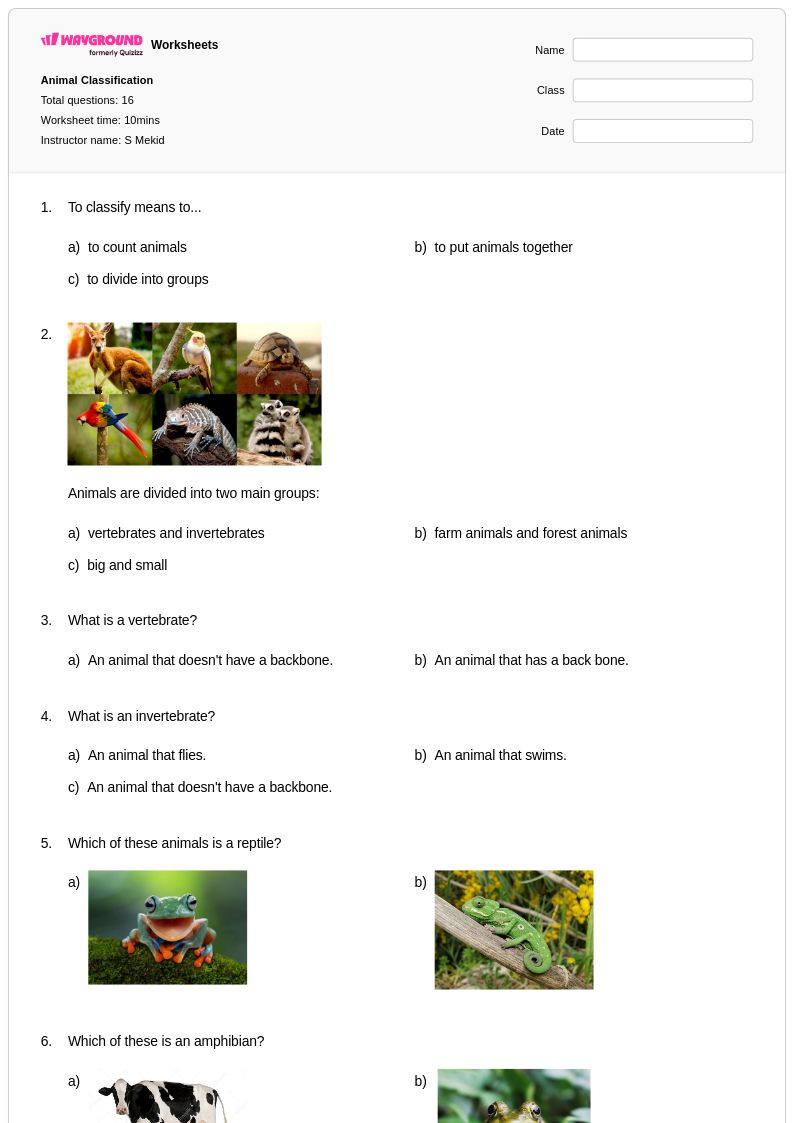
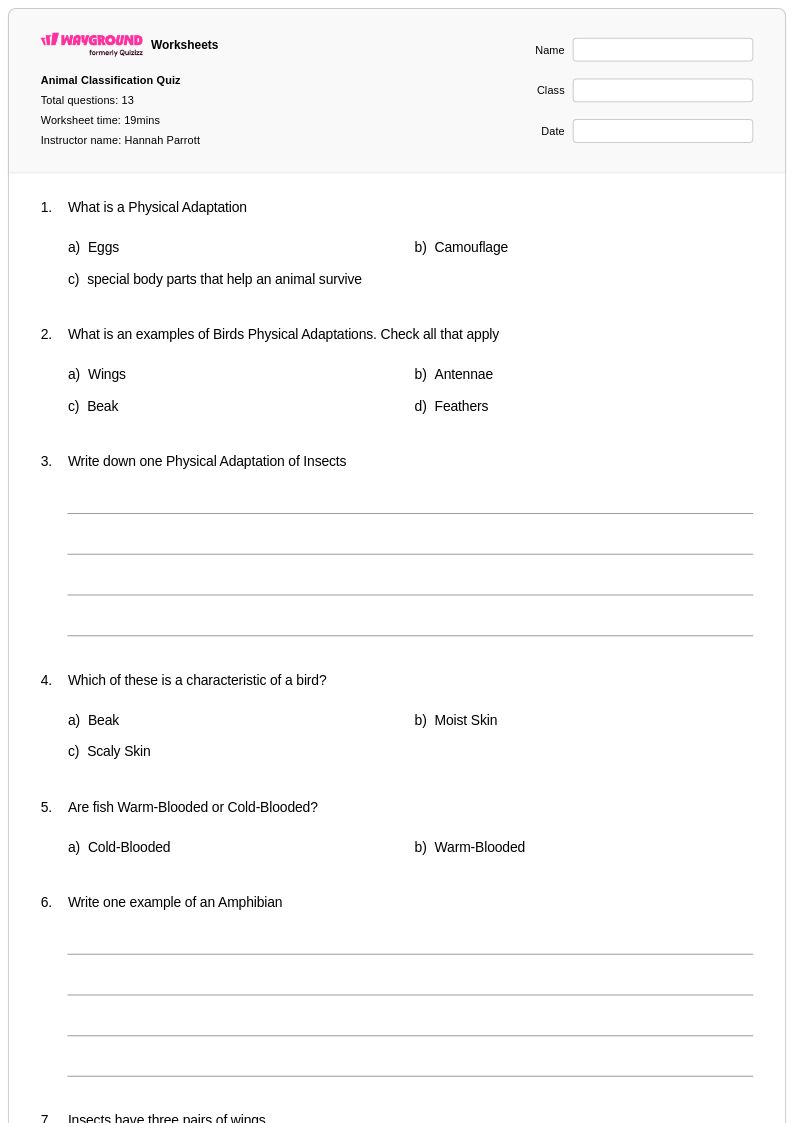
Animal classification worksheets for Year 2 students available through Wayground (formerly Quizizz) provide young learners with engaging opportunities to explore how scientists organize and categorize different types of animals. These educational resources strengthen foundational skills in observation, pattern recognition, and scientific thinking as students learn to group animals by shared characteristics such as body coverings, habitats, diet, and physical features. The comprehensive collection includes practice problems that guide students through sorting mammals, birds, reptiles, amphibians, and fish while building vocabulary essential for life science understanding. Each worksheet comes with a detailed answer key to support accurate assessment, and the free printables are available in convenient pdf format for immediate classroom or home use.
Wayground (formerly Quizizz) empowers educators with an extensive library of millions of teacher-created resources specifically designed to support animal classification instruction at the Year 2 level. The platform's robust search and filtering capabilities enable teachers to quickly locate worksheets that align with specific curriculum standards and match their students' diverse learning needs. Advanced differentiation tools allow for seamless customization of content difficulty and format, while the availability of both printable and digital materials, including downloadable pdf versions, provides maximum flexibility for various teaching environments. These comprehensive features streamline lesson planning while offering targeted resources for remediation, enrichment activities, and systematic skill practice that helps young scientists develop confidence in understanding how the natural world is organized and studied.
FAQs
How do I teach animal classification to students?
Start by introducing the hierarchical structure of taxonomy — kingdom, phylum, class, order, family, genus, and species — using familiar animals as anchors before moving to less familiar ones. Help students understand that classification is based on shared characteristics and evolutionary relationships, not just appearance. Sorting activities, graphic organizers, and dichotomous keys are effective tools for making abstract taxonomic concepts concrete and memorable.
What exercises help students practice animal classification?
Worksheets that ask students to sort animals into vertebrate and invertebrate categories, match organisms to their taxonomic groups, and apply scientific naming conventions are especially effective for building classification fluency. Practice problems that require students to distinguish animals by habitat, feeding behavior, and physical traits reinforce the idea that classification depends on multiple shared characteristics. Repeated exposure through varied problem types helps students internalize the logic of hierarchical taxonomic systems.
What common mistakes do students make when learning animal classification?
One of the most frequent misconceptions is that classification is based solely on physical appearance — for example, students often group dolphins with fish because both live in water. Students also struggle with the distinction between vertebrates and invertebrates, sometimes assuming all small animals are invertebrates. Another common error is confusing the levels of the taxonomic hierarchy, particularly conflating genus and species when interpreting binomial nomenclature.
How can I differentiate animal classification instruction for students at different levels?
For students who need additional support, reduce the number of classification categories introduced at once and use visual aids that pair animal images with key traits. Advanced learners can be challenged to explore phylogenetic relationships and biodiversity patterns beyond the standard vertebrate and invertebrate split. On Wayground, teachers can apply accommodations such as read aloud, reduced answer choices, and extended time to individual students, ensuring every learner engages with classification content at an appropriate level of challenge.
How do I use Wayground's animal classification worksheets in my classroom?
Wayground's animal classification worksheets are available as printable PDFs for traditional classroom use and in digital formats for technology-integrated or remote learning environments. Teachers can also host worksheets directly as a quiz on Wayground, allowing students to complete them interactively online. Each worksheet includes a detailed answer key, supporting independent student practice and making it straightforward for teachers to review and assess understanding after completion.