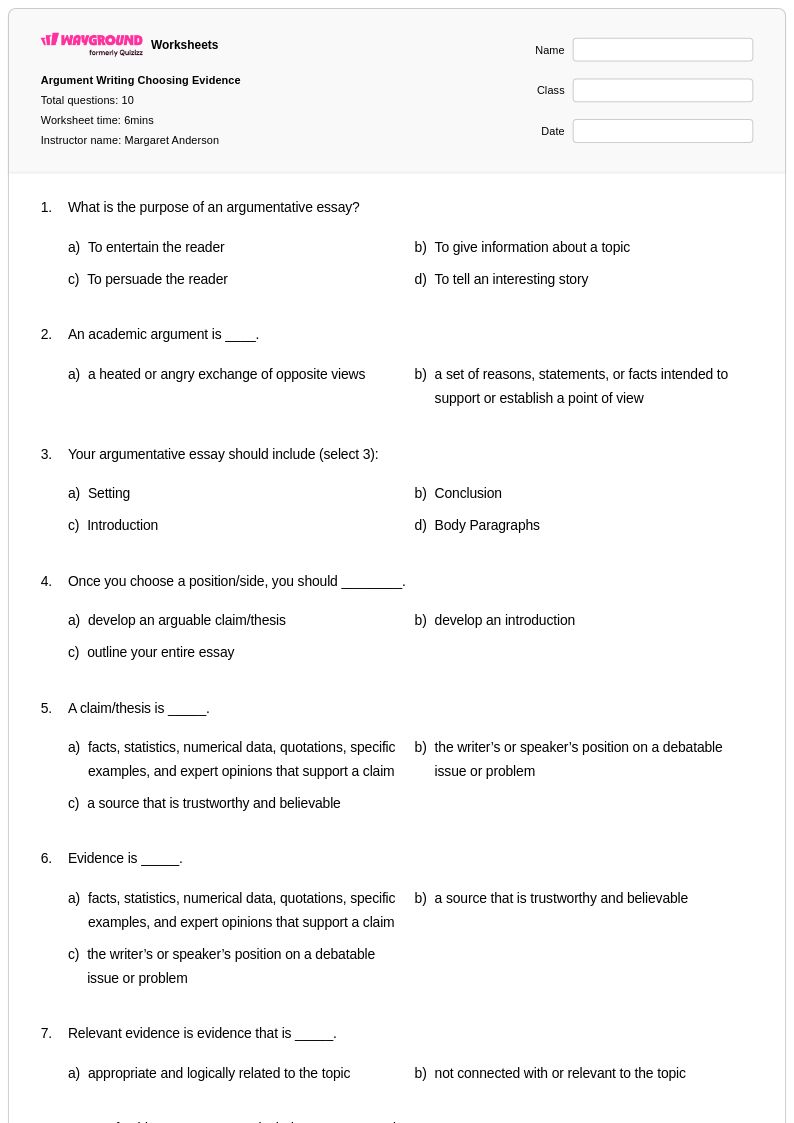
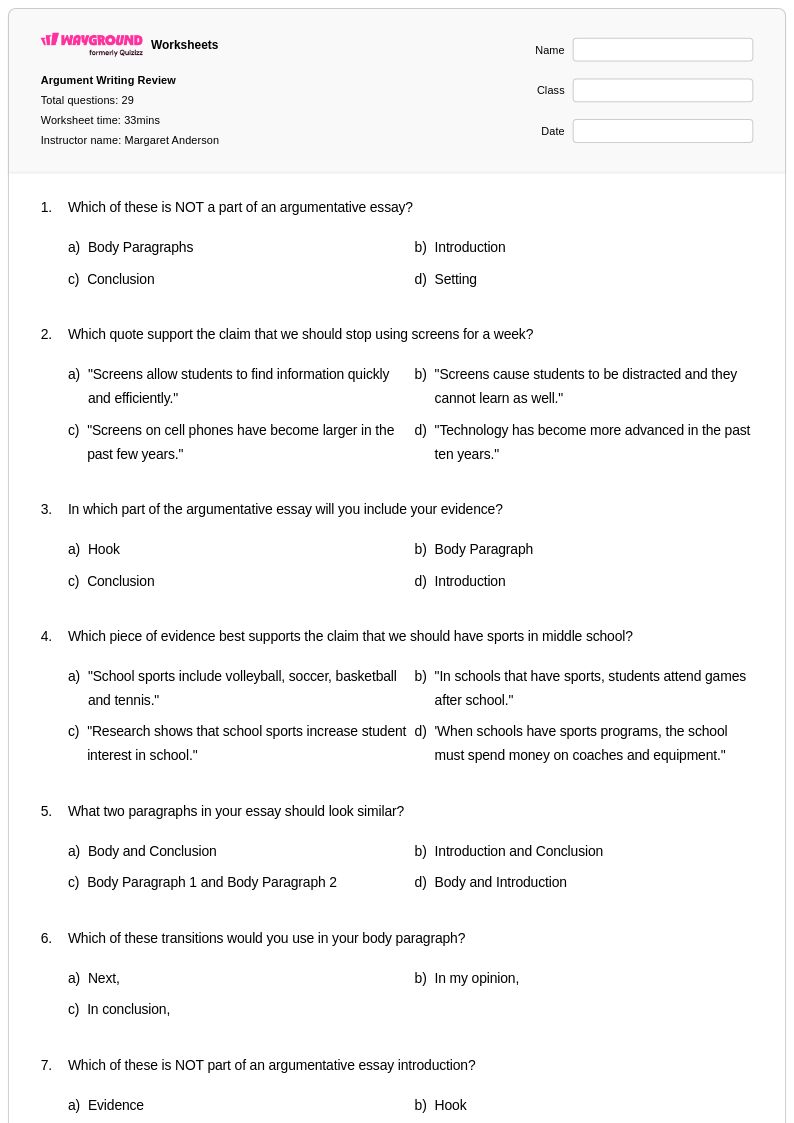
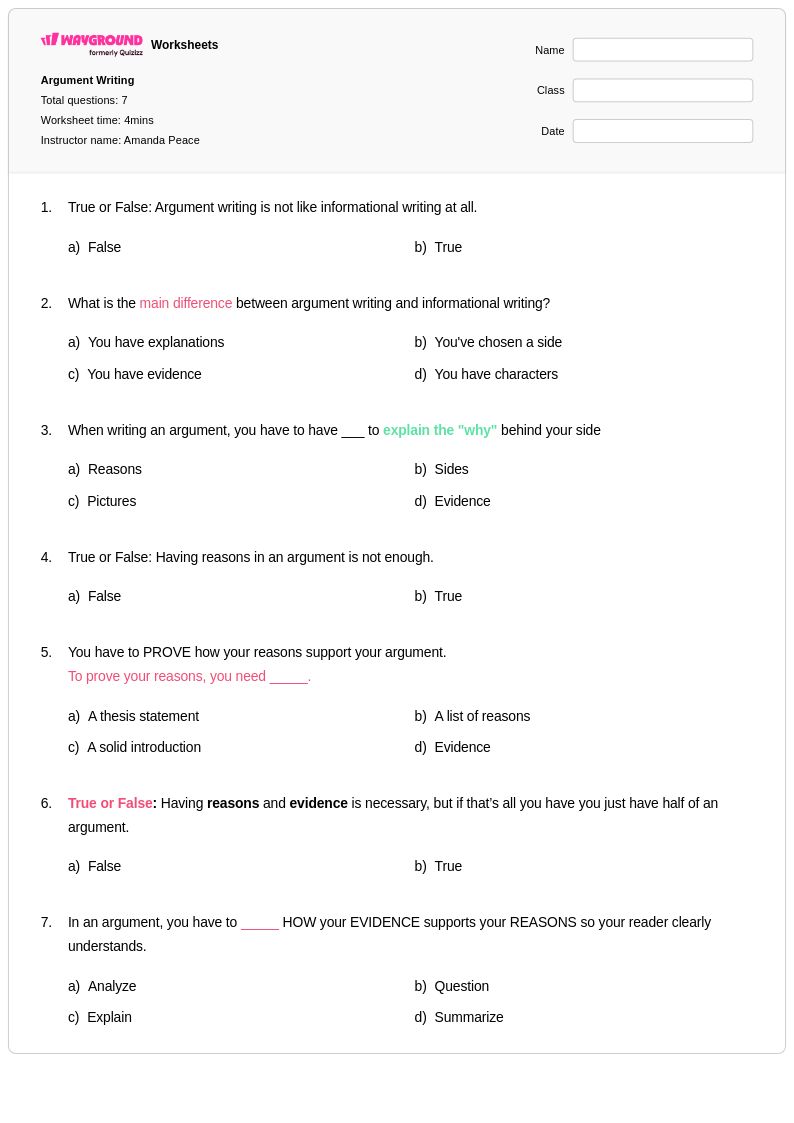
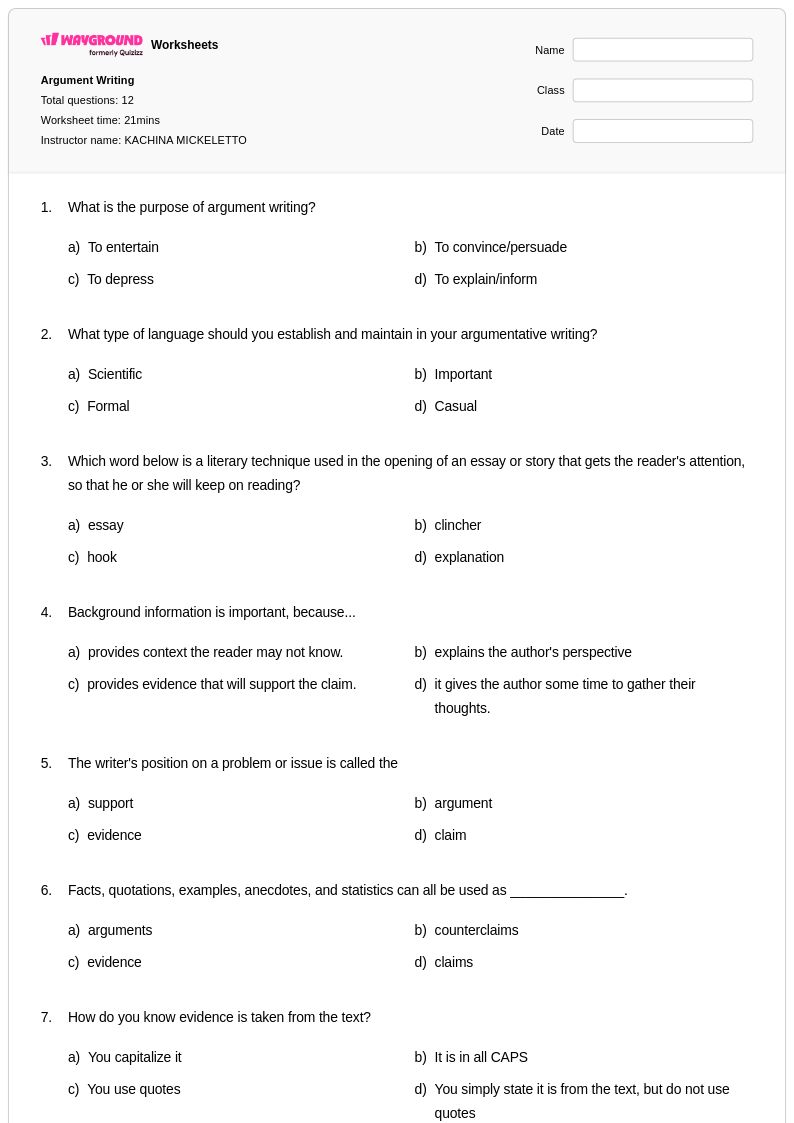
Free Printable Argument Writing Worksheets for Year 6
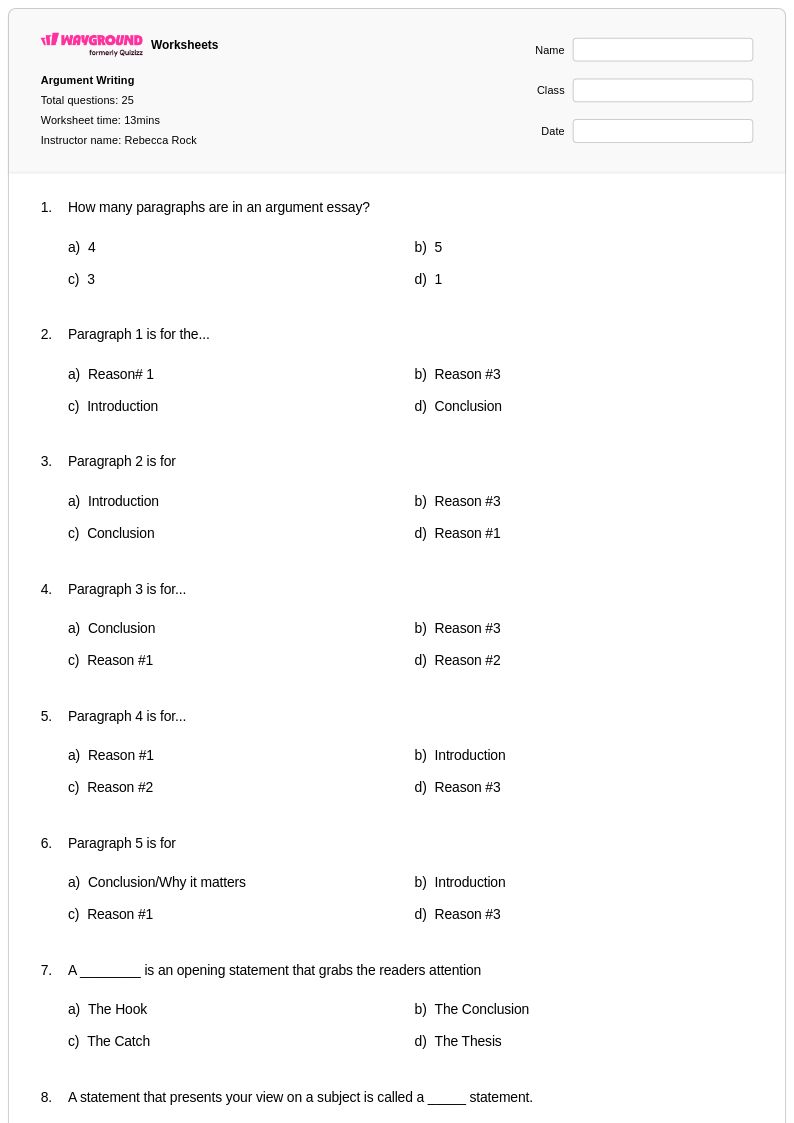
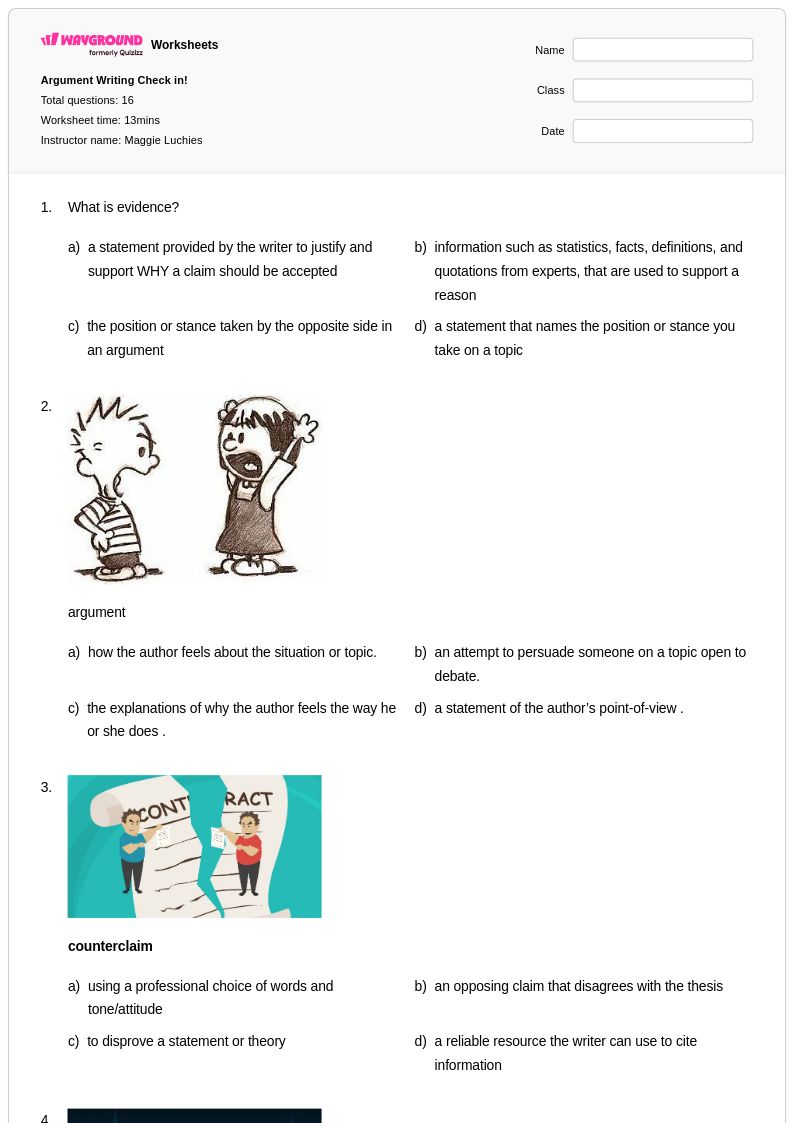
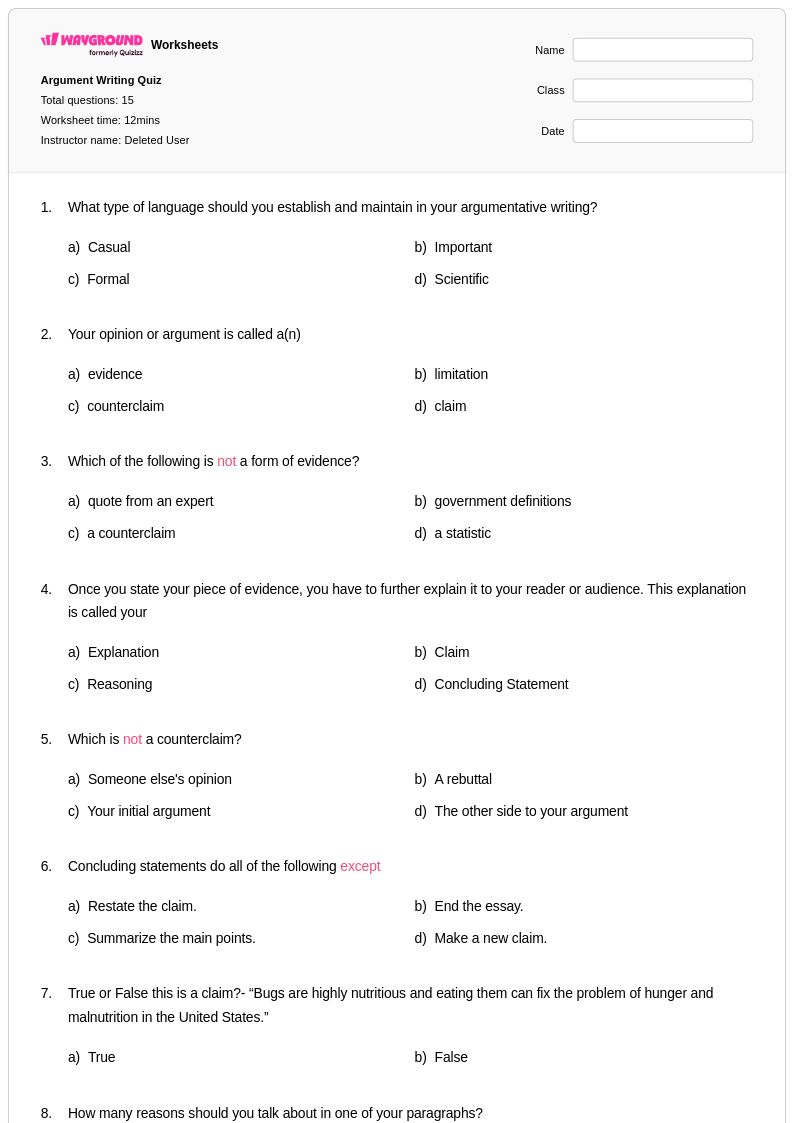
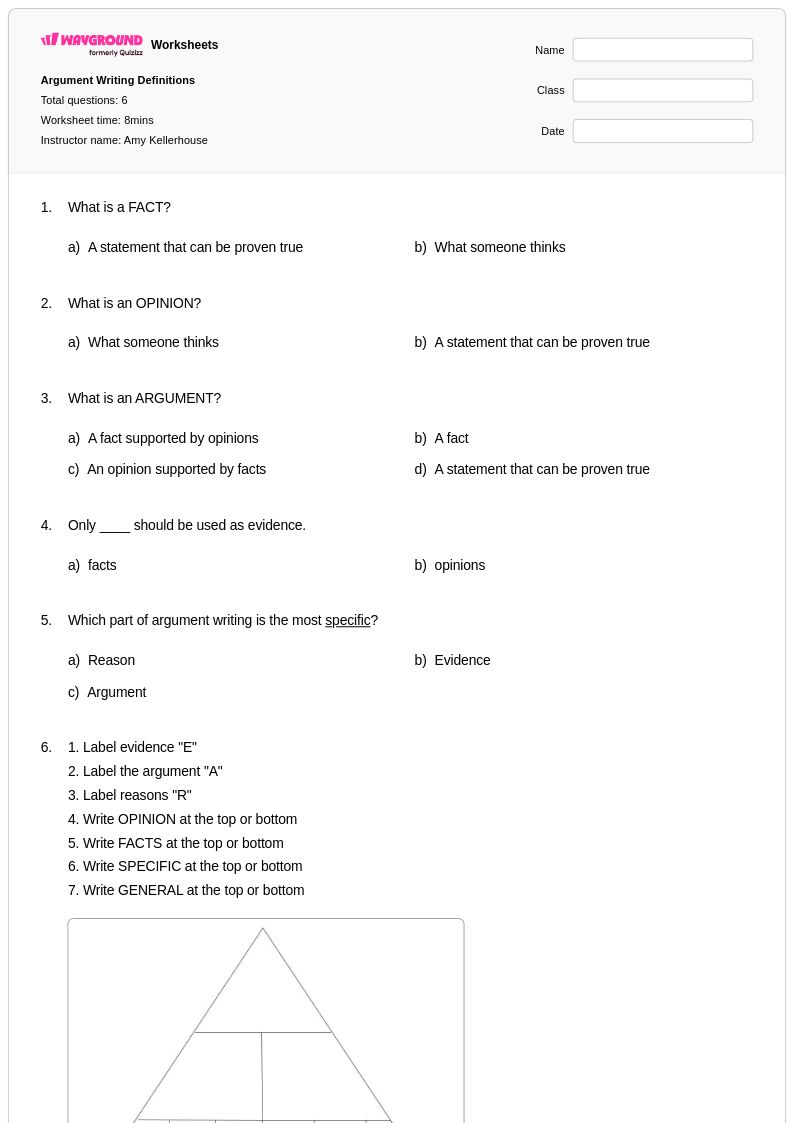
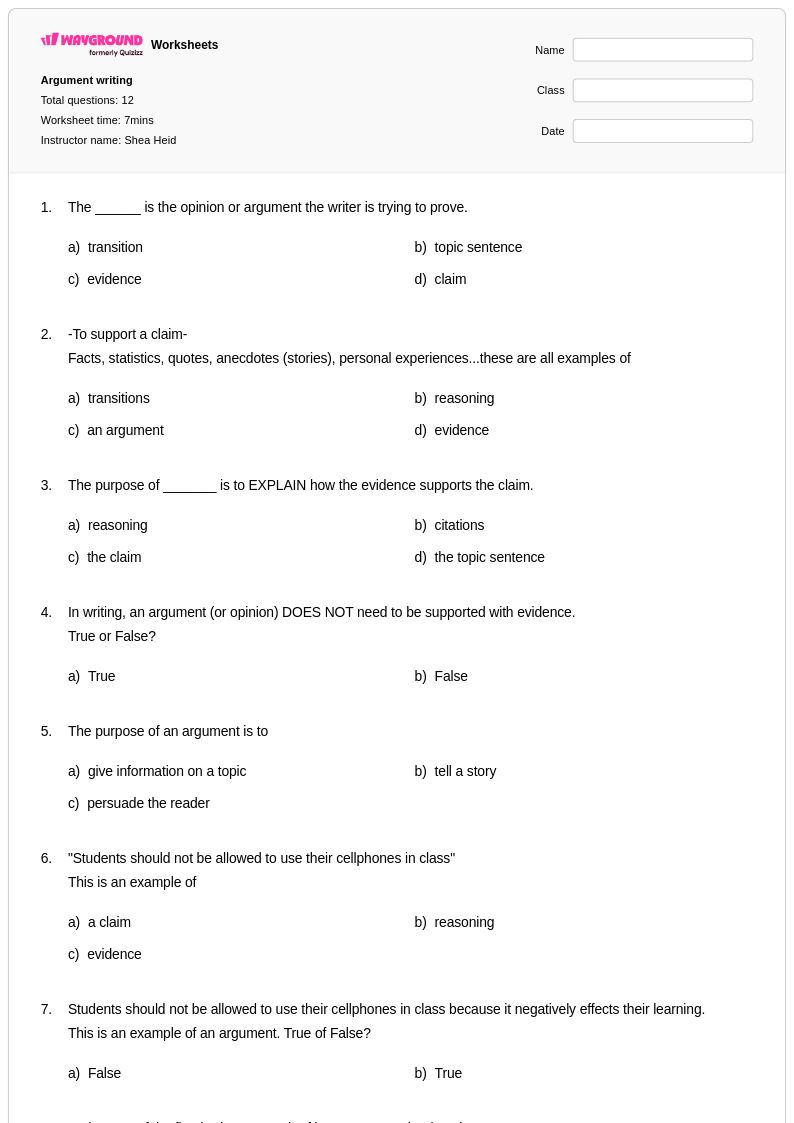
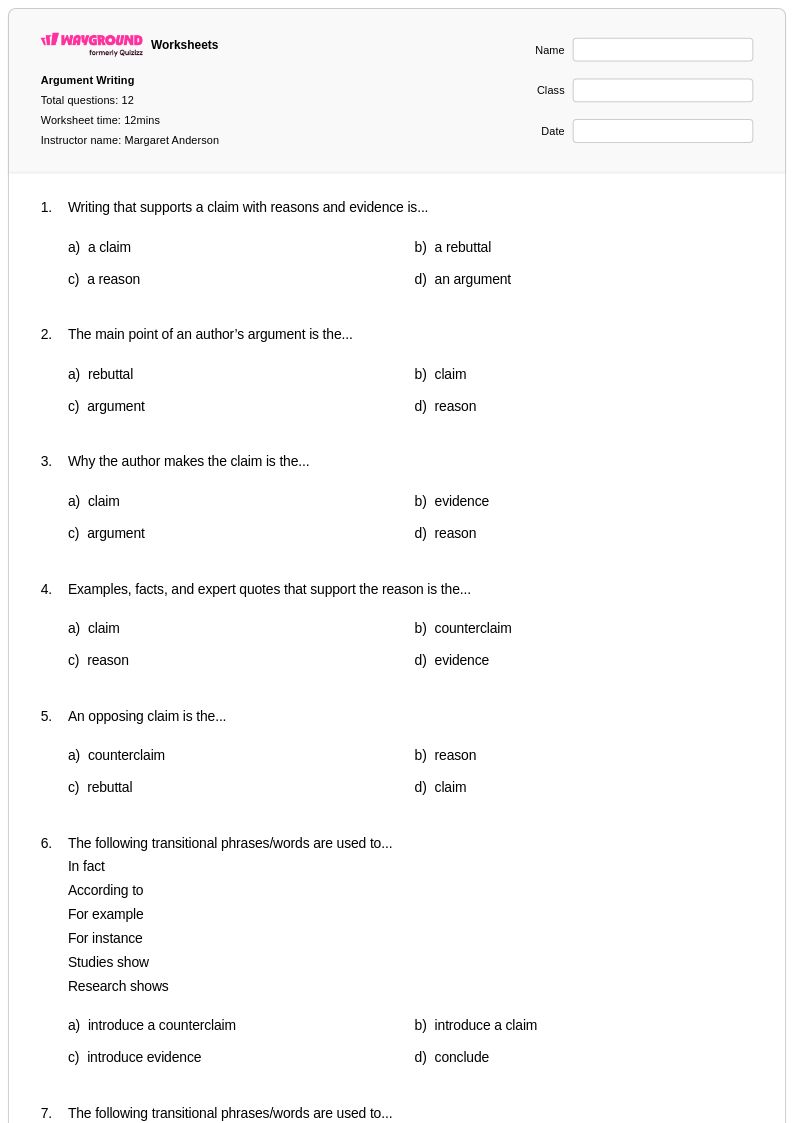
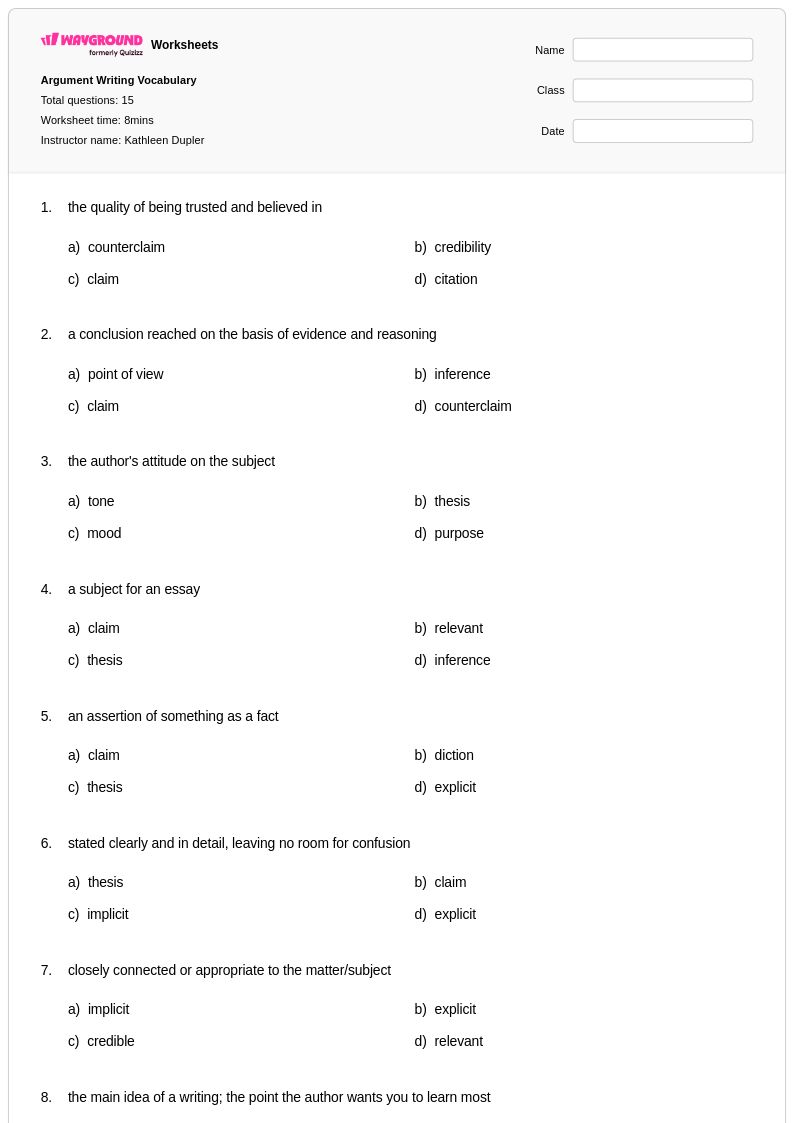
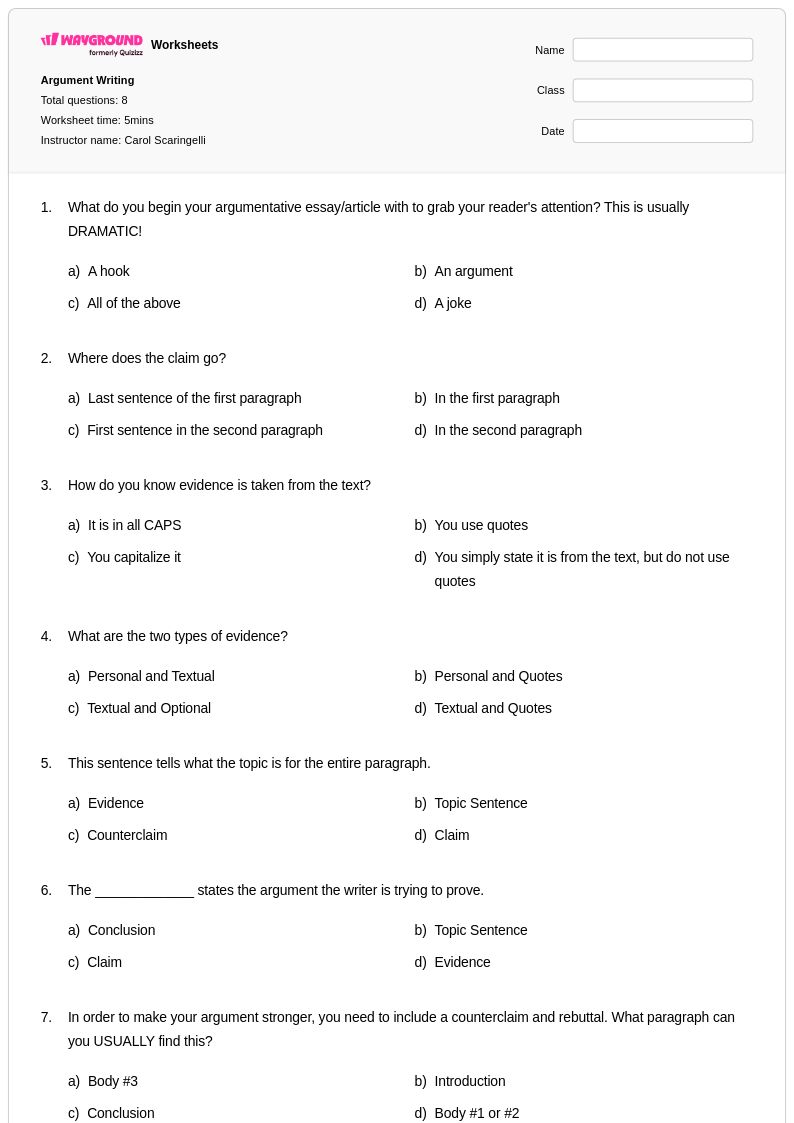
Year 6 argument writing worksheets from Wayground help students master persuasive techniques through engaging printables and practice problems, complete with answer keys for effective nonfiction writing development.
Explore printable Argument Writing worksheets for Year 6
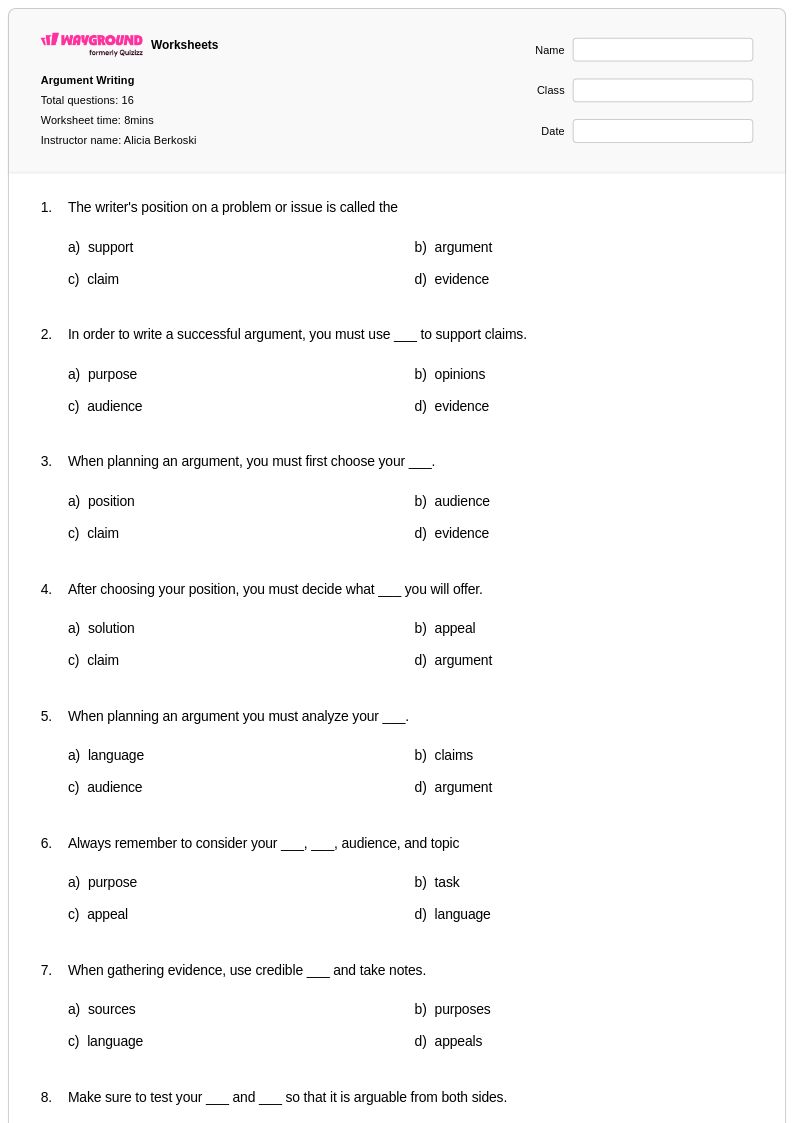
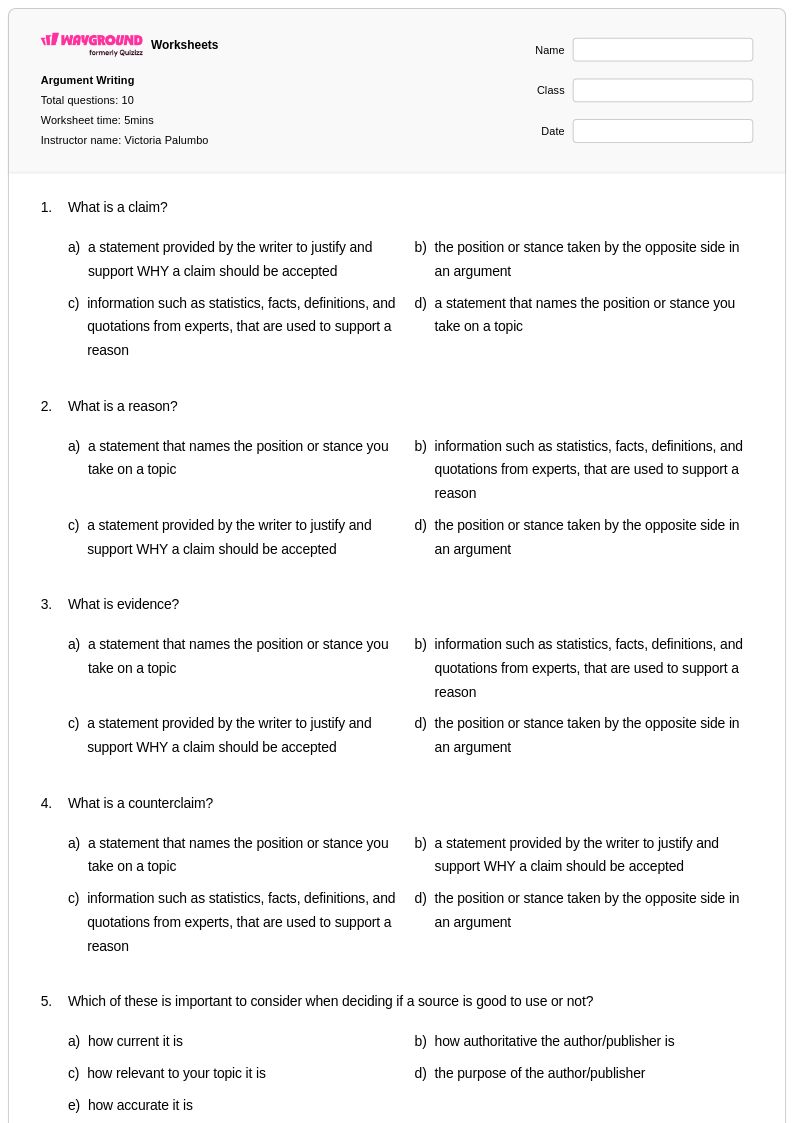
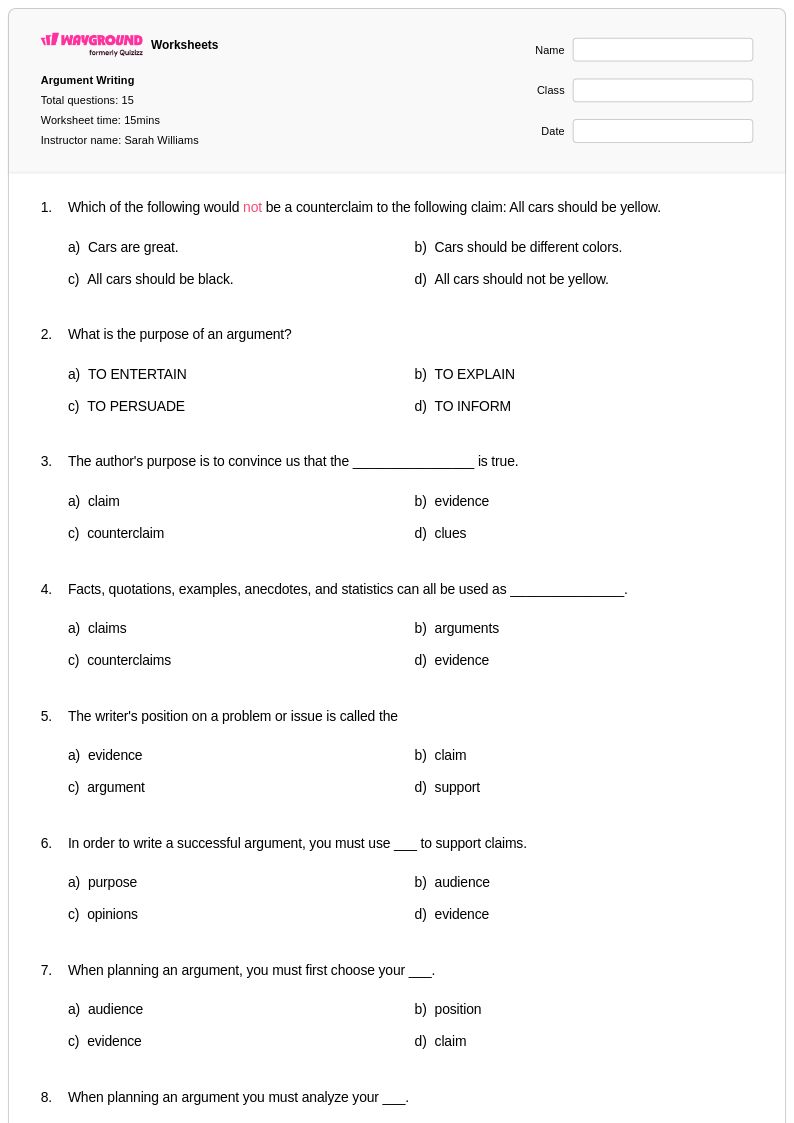
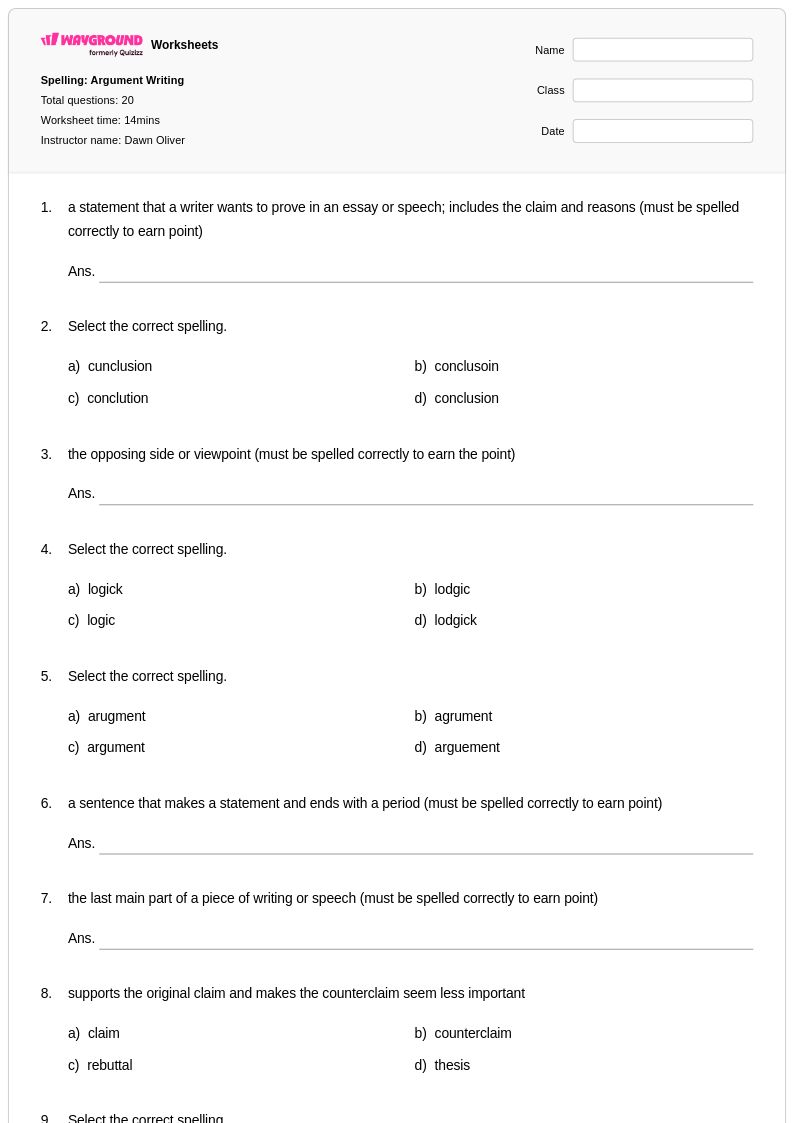
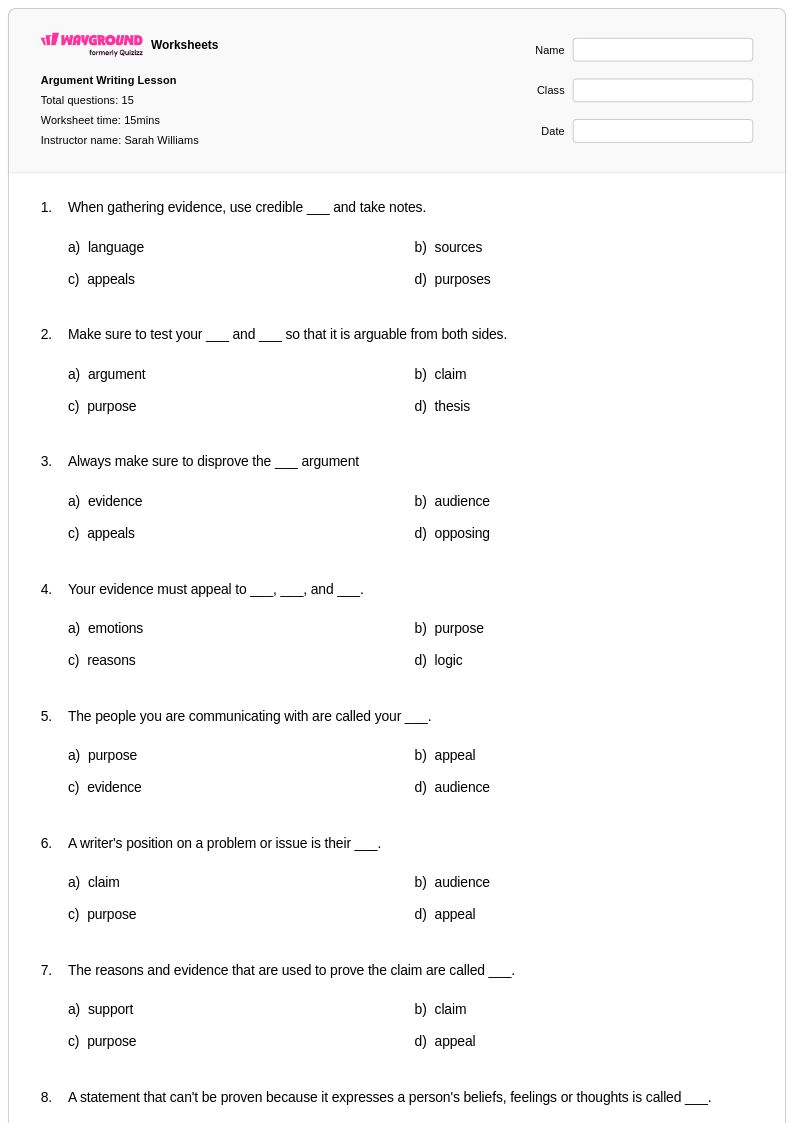
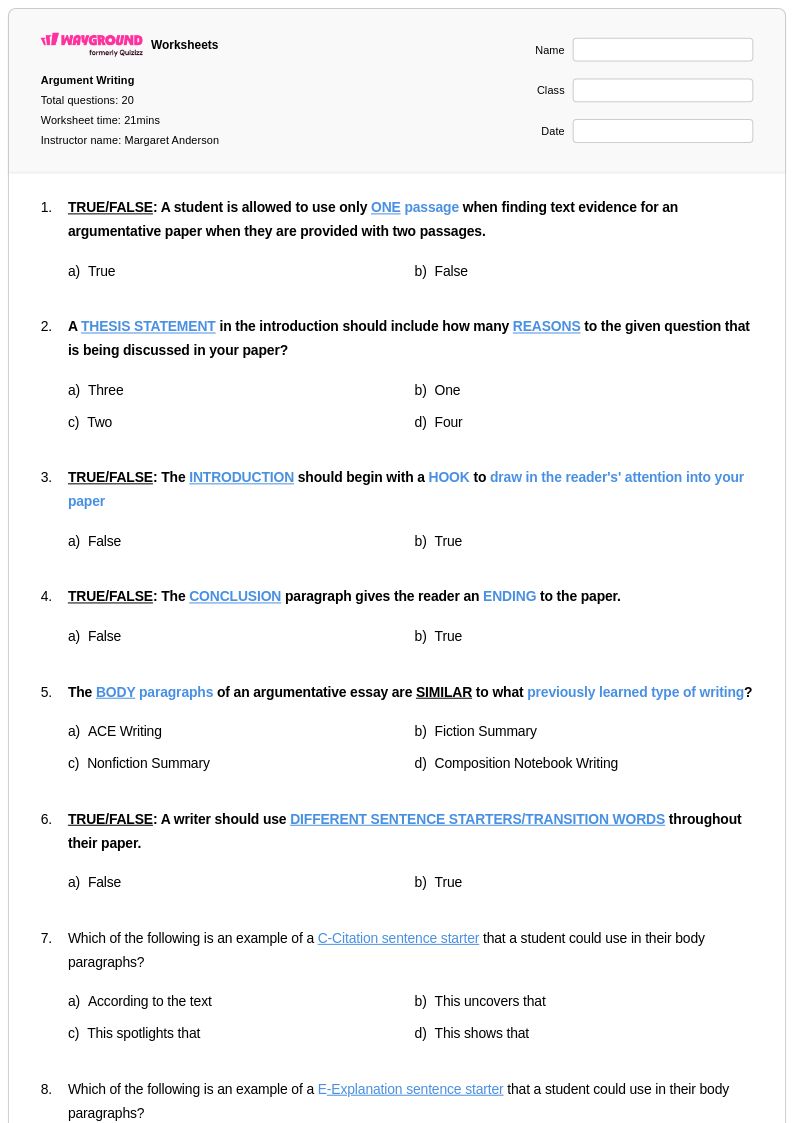
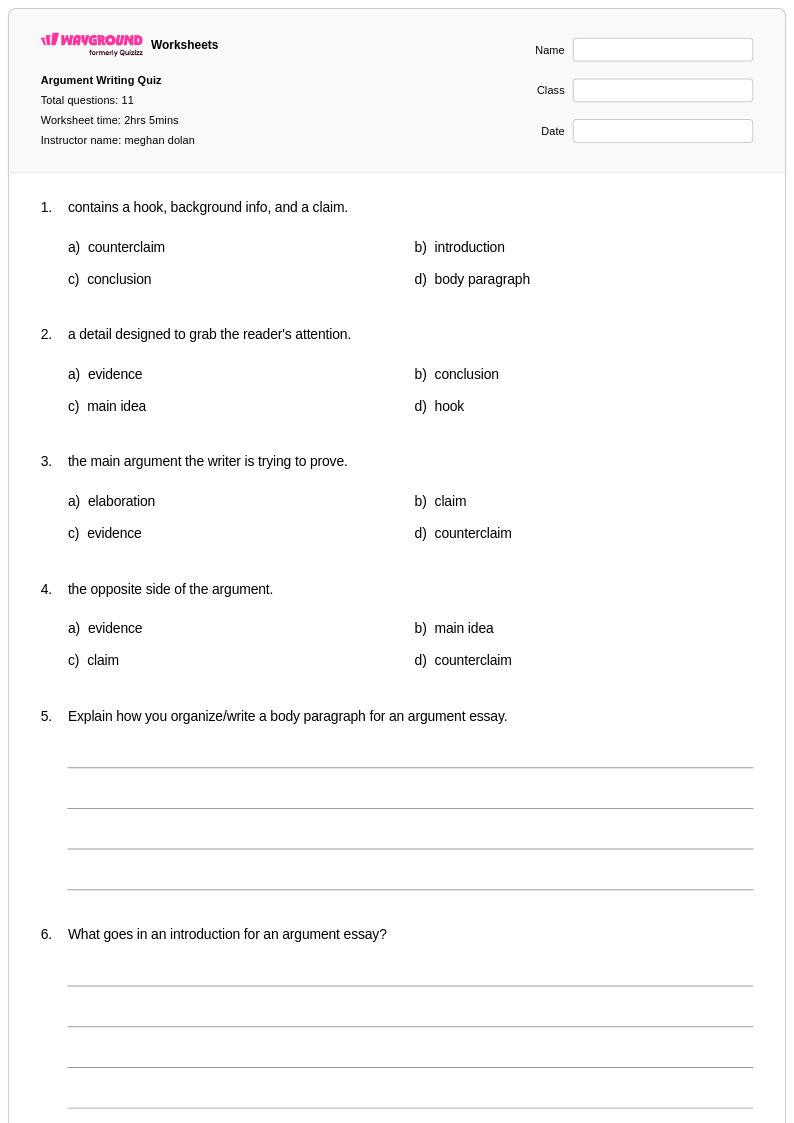
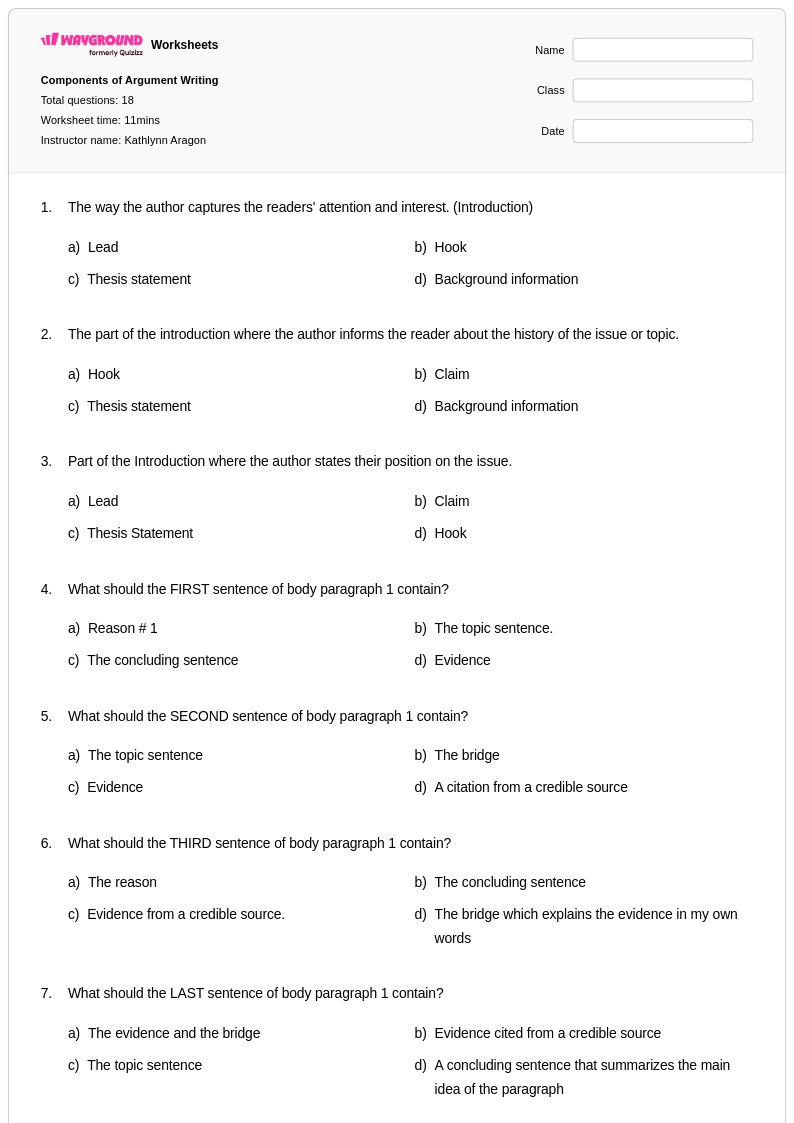
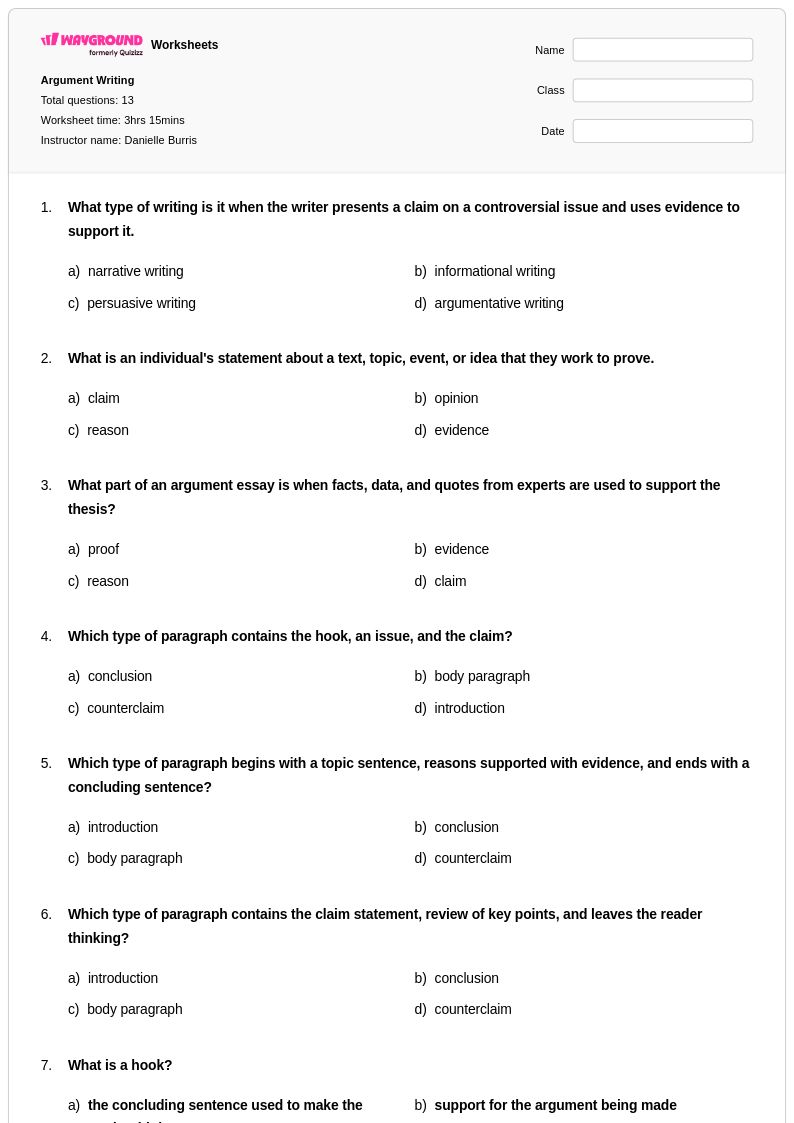
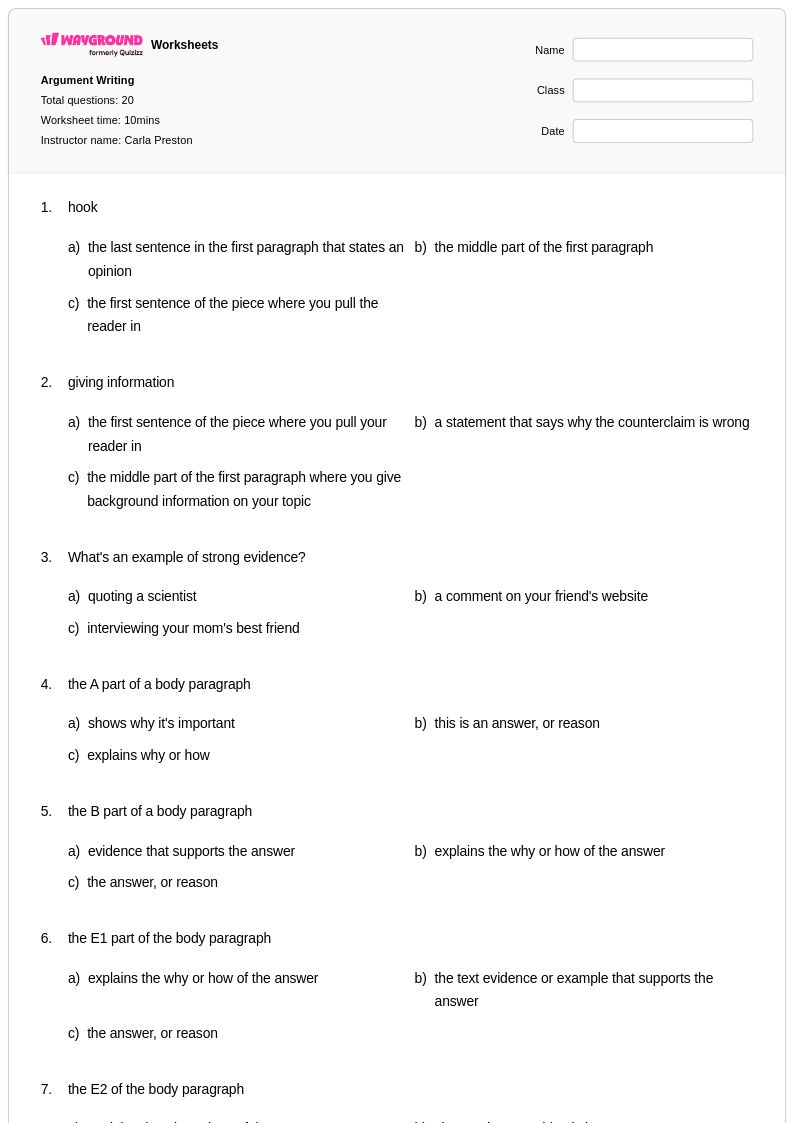
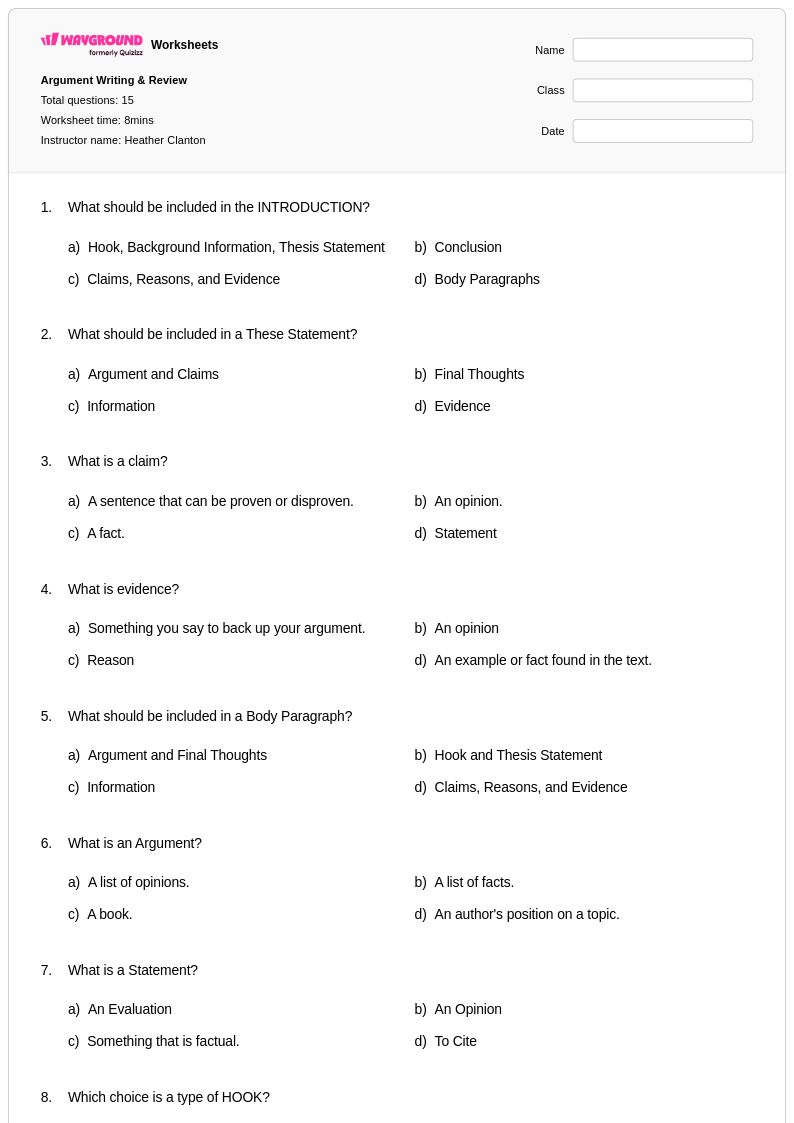
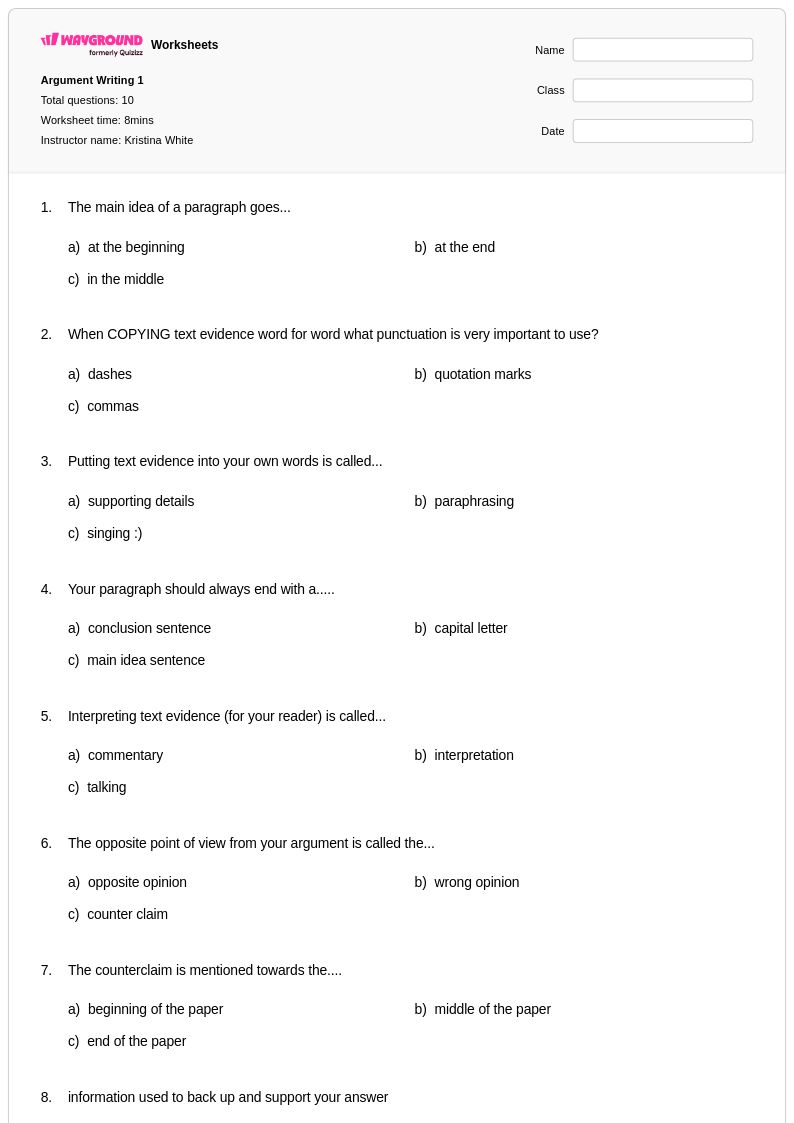
Argument writing worksheets for Year 6 students available through Wayground (formerly Quizizz) provide comprehensive practice in developing persuasive communication skills essential for academic success. These carefully designed resources help sixth-grade students master the fundamentals of constructing logical arguments, including identifying claims, gathering credible evidence, and organizing supporting details in a coherent structure. The worksheet collection strengthens critical thinking abilities as students learn to analyze opposing viewpoints, address counterarguments, and use persuasive language techniques effectively. Each printable resource includes detailed answer keys that allow students to self-assess their progress, while the free pdf format ensures easy access for both classroom instruction and independent practice problems at home.
Wayground (formerly Quizizz) supports educators with an extensive library of millions of teacher-created argument writing resources specifically designed for Year 6 instruction. The platform's advanced search and filtering capabilities enable teachers to quickly locate worksheets that align with specific standards and learning objectives, while built-in differentiation tools allow for seamless customization based on individual student needs and reading levels. These argument writing materials are available in both printable and digital formats, including downloadable pdf versions that facilitate flexible lesson planning and delivery. Teachers can effectively utilize these resources for targeted skill practice, remediation support for struggling writers, and enrichment opportunities for advanced students, ensuring that all sixth-graders develop strong foundational skills in persuasive writing and logical reasoning.
FAQs
How do I teach argument writing to students who struggle with organizing their ideas?
The most effective approach is to break argument writing into discrete, sequenced components: claim, evidence, reasoning, and counterargument. Teaching each element in isolation before asking students to combine them reduces cognitive overload and gives struggling writers a clear scaffold. Graphic organizers that mirror this structure are especially useful for making the logical flow visible before students draft full paragraphs.
What exercises help students practice building a strong argument with evidence?
Structured practice problems that require students to match claims with supporting evidence, rank evidence by relevance and credibility, and identify logical fallacies build the analytical muscles behind strong argumentation. Argument analysis tasks, where students evaluate an existing argument rather than constructing one from scratch, are particularly effective for developing evaluative judgment before students write independently.
What are the most common mistakes students make in argument writing?
The most frequent errors are confusing an opinion with a claim, using evidence without explaining how it supports the claim, and ignoring or dismissing counterarguments rather than addressing them substantively. Students also commonly write thesis statements that are too broad to defend with specific evidence. Targeted practice on each of these patterns, rather than general revision feedback, accelerates improvement.
How do I teach students to write a strong thesis statement for an argumentative essay?
A strong thesis must make a debatable claim and signal the reasoning that will support it. Teaching students to test their thesis by asking 'Could a reasonable person disagree with this?' filters out statements of fact masquerading as arguments. Having students revise weak thesis examples into defensible, specific claims is one of the most efficient practice formats for this skill.
How can I use argument writing worksheets to differentiate instruction for students at different skill levels?
Wayground supports student-level accommodations that allow teachers to customize the experience for individual learners without flagging differences to the rest of the class. For students who need additional support, teachers can enable Read Aloud so questions and content are read to them, reduce answer choices to lower cognitive load, or extend response time per question. These settings can be applied individually or to the whole class and are saved for reuse across future sessions, making differentiation manageable even in large classrooms.
How do I use Wayground's argument writing worksheets in my classroom?
Wayground's argument writing worksheets are available as printable PDFs for traditional classroom use and in digital formats for technology-integrated environments, so they fit into varied instructional setups without additional preparation. Teachers can also host worksheets directly as a quiz on Wayground, which adds interactivity and allows for real-time progress monitoring. Each worksheet includes a complete answer key, which streamlines grading and ensures students receive clear, consistent feedback on complex argumentation tasks.