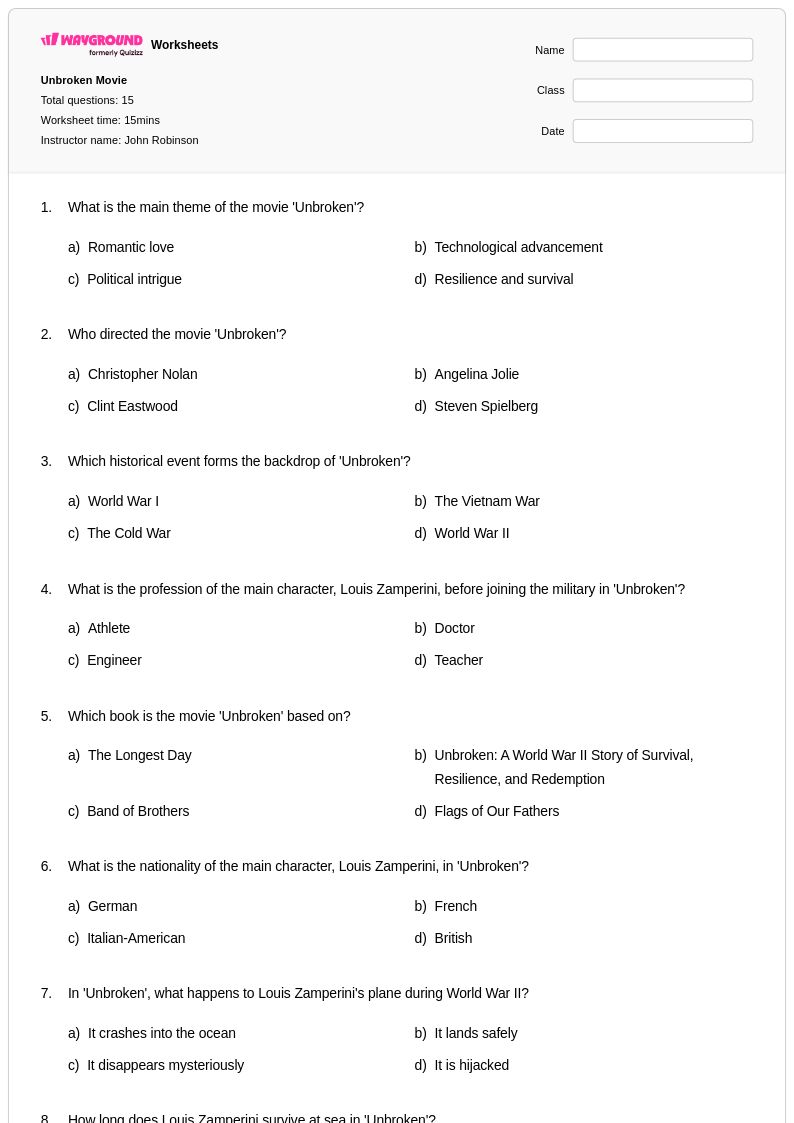
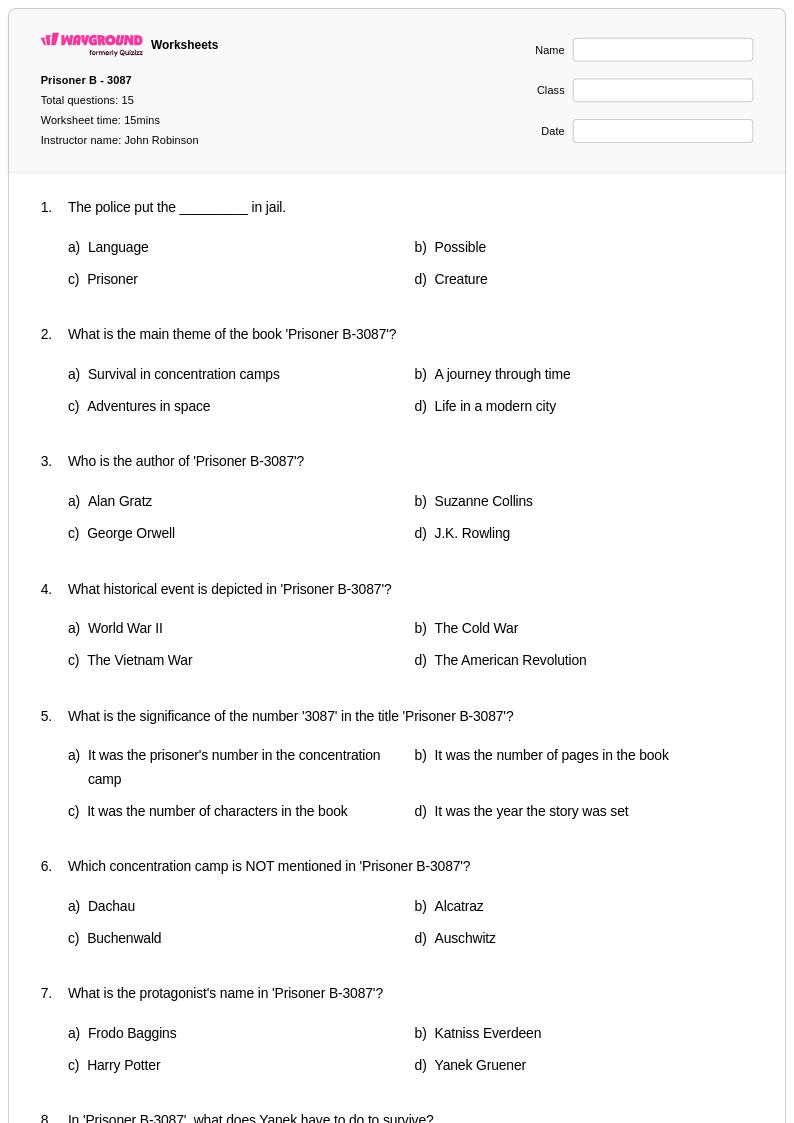
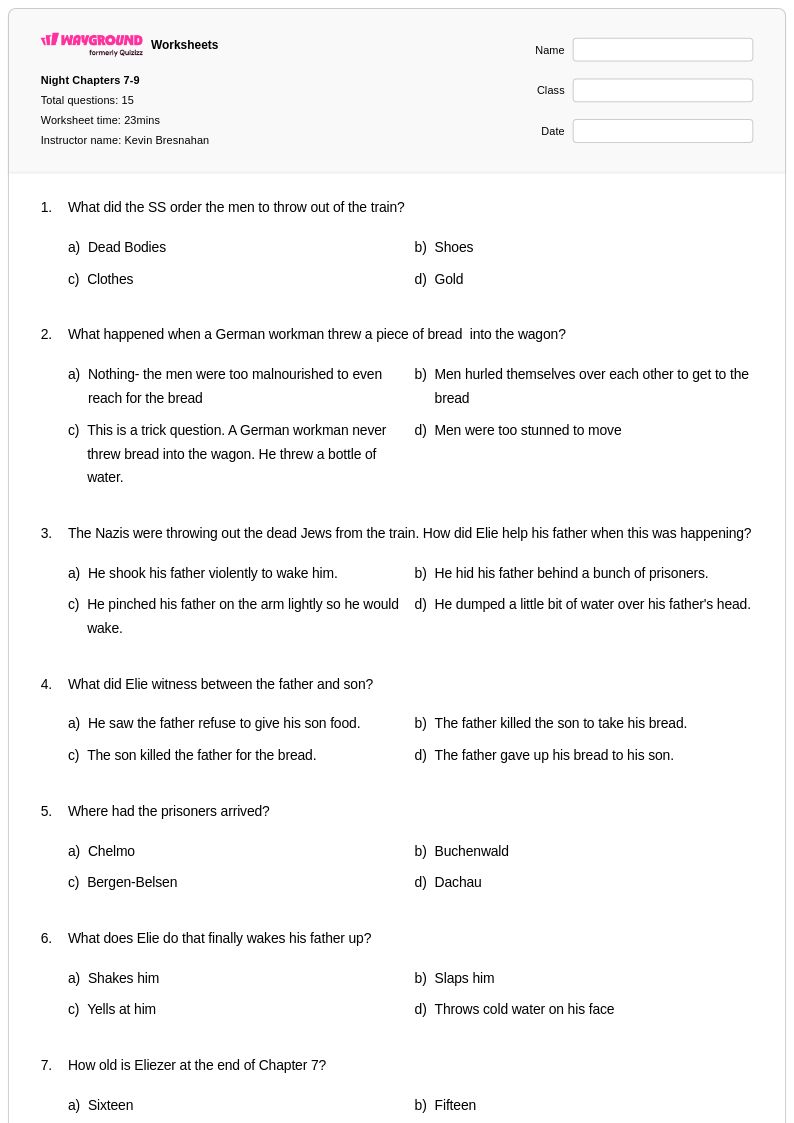
Explore Year 12 Auschwitz worksheets and printables from Wayground that help students examine this pivotal World History topic through comprehensive practice problems, free PDF resources, and detailed answer keys.
Explore printable Auschwitz worksheets for Year 12
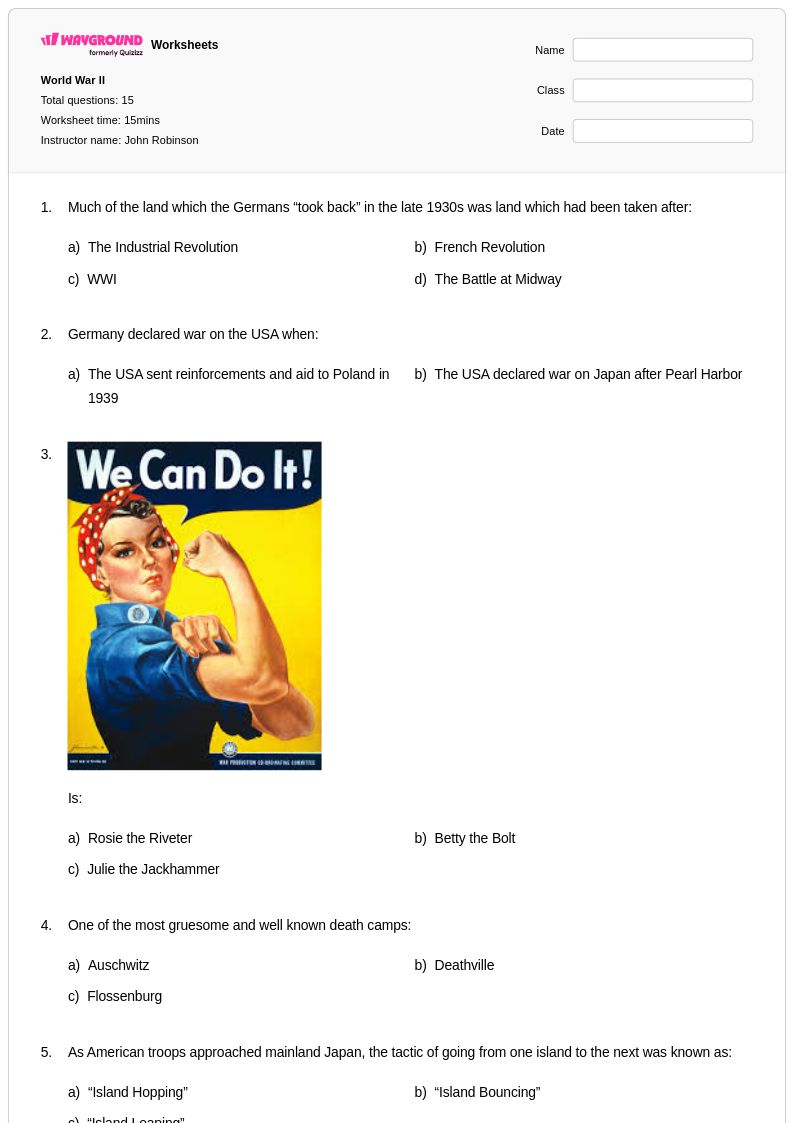
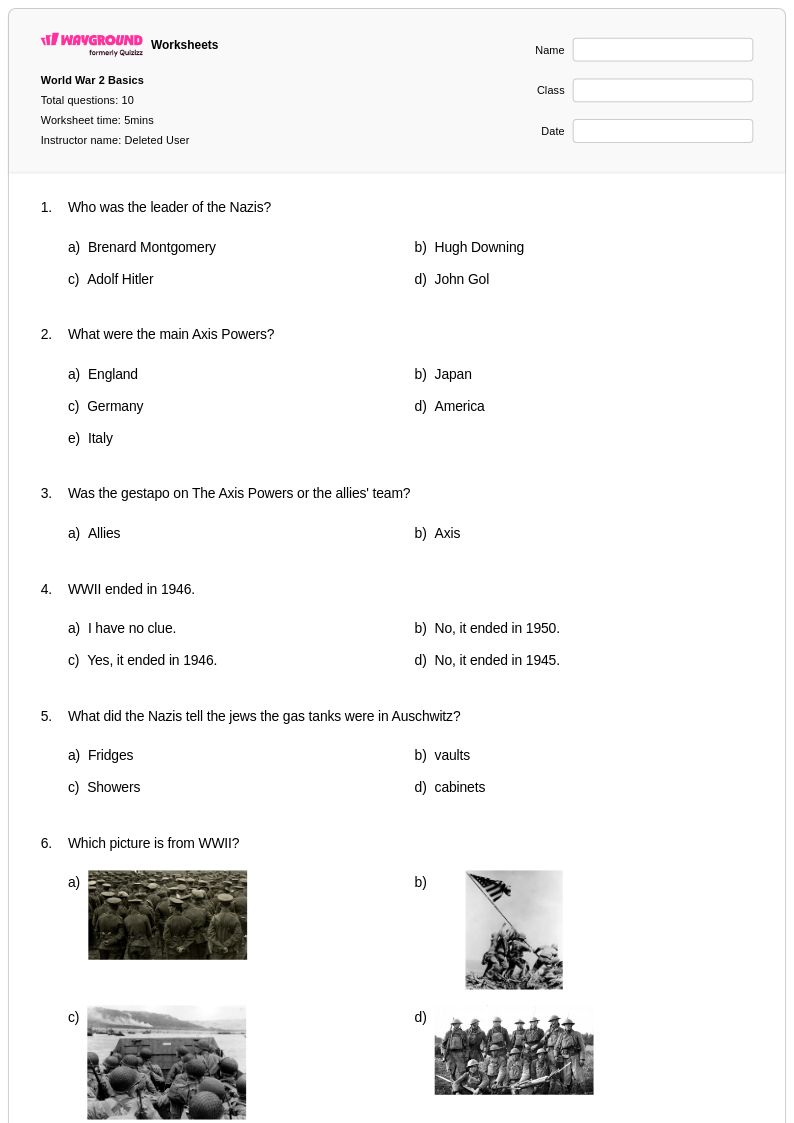
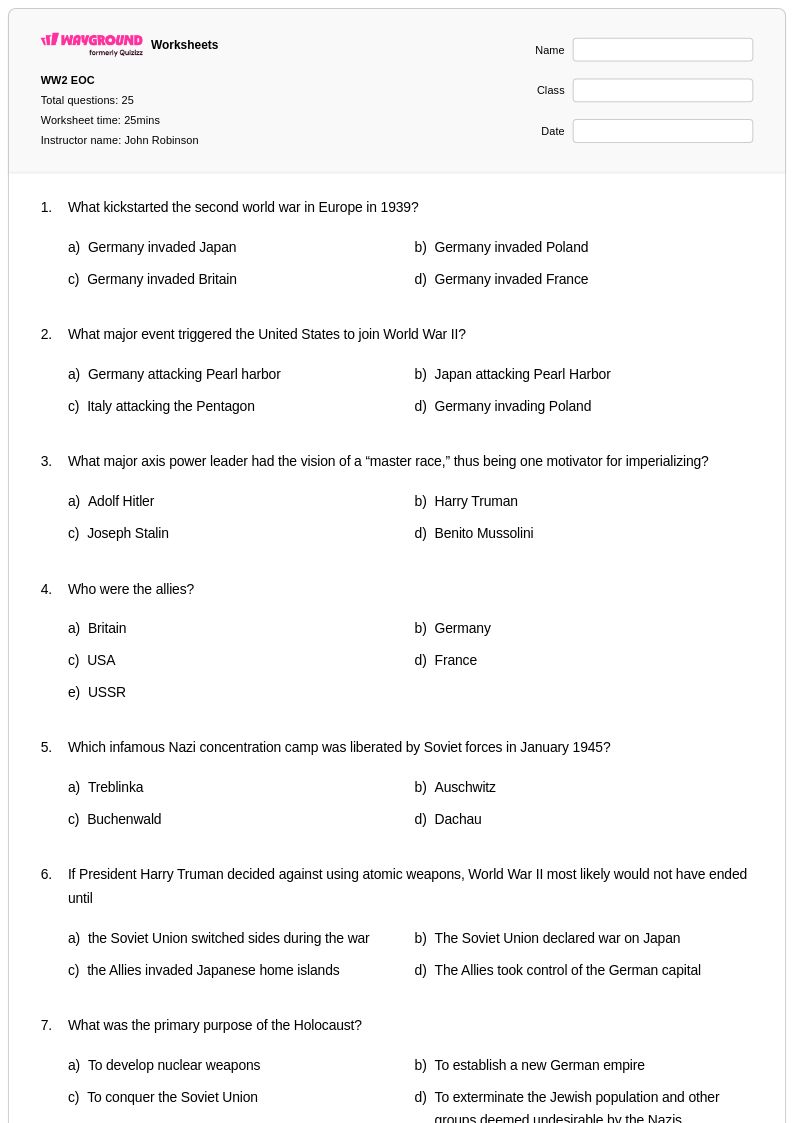
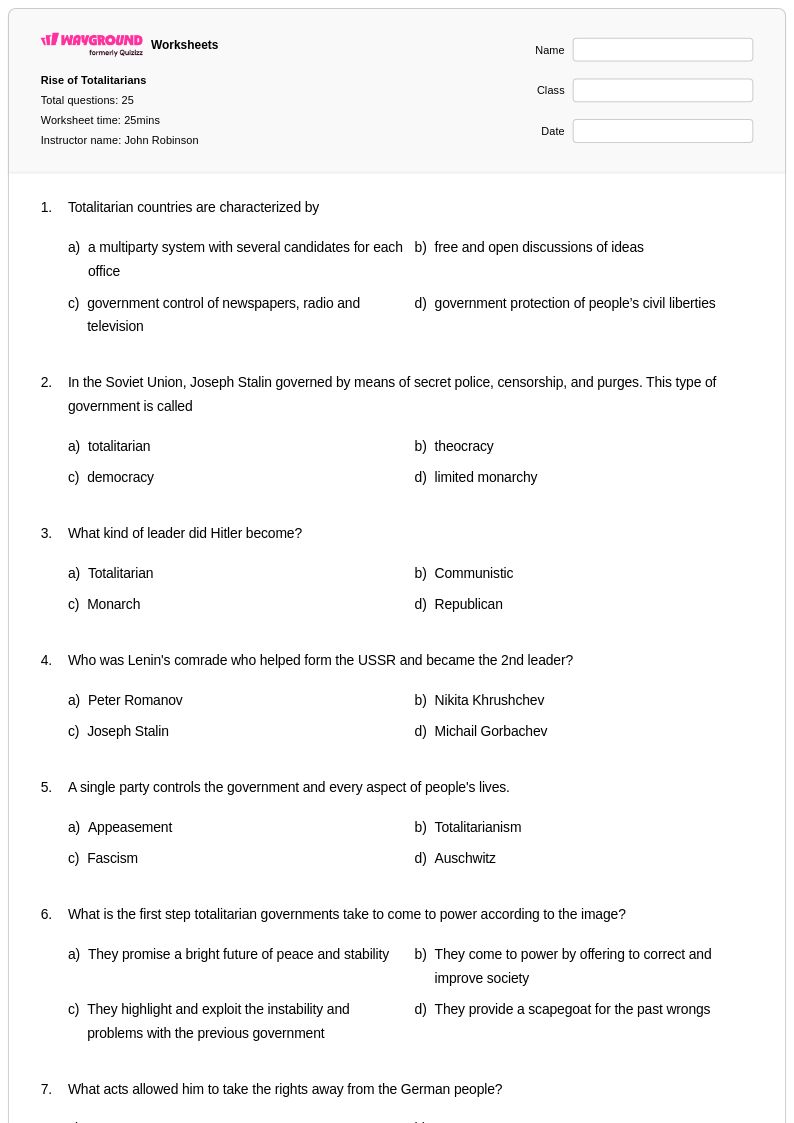
Auschwitz worksheets for Year 12 students available through Wayground (formerly Quizizz) provide comprehensive educational materials that examine one of history's most significant and tragic sites. These carefully curated resources help students develop critical thinking skills while analyzing primary sources, survivor testimonies, and historical documentation related to the largest Nazi concentration and extermination camp. The worksheets strengthen essential academic competencies including document analysis, chronological reasoning, and ethical reflection as students explore the complex factors that led to the Holocaust and its lasting impact on global society. Teachers can access free printables with accompanying answer keys, practice problems that encourage deep historical inquiry, and pdf resources that facilitate both individual study and collaborative learning environments.
Wayground (formerly Quizizz) supports educators with millions of teacher-created resources specifically designed for sensitive historical topics like Auschwitz, offering robust search and filtering capabilities that align with state and national social studies standards. The platform's differentiation tools allow teachers to customize materials for varying student needs and learning levels, while flexible formatting options provide both printable and digital accessibility including downloadable pdf versions. These comprehensive features streamline lesson planning by enabling educators to quickly locate age-appropriate content for remediation, enrichment, or targeted skill practice, ensuring that students engage with this critical historical subject matter through academically rigorous and pedagogically sound approaches that honor the memory of Holocaust victims while fostering historical understanding.
FAQs
How do I teach Auschwitz to middle or high school students sensitively and effectively?
Teaching Auschwitz requires establishing a safe, structured classroom environment before introducing primary sources, survivor testimony, or statistical data. Begin with historical context on Nazi ideology and the progression of antisemitic policy before focusing on the camp itself. Use scaffolded materials that build from factual comprehension toward cause-and-effect analysis and moral reasoning, helping students understand not just what happened but how and why it was allowed to occur.
What exercises help students analyze the history of Auschwitz?
Effective practice exercises include primary source analysis using Nazi documents, prisoner testimonies, or postwar trial records, alongside cause-and-effect mapping that connects Holocaust policy to broader patterns of persecution. Guided reading worksheets that ask students to identify the roles of perpetrators, victims, bystanders, and resisters help build structured analytical thinking. Comparing Auschwitz to other concentration and extermination camps also deepens students' understanding of the Holocaust's systematic scale.
What common misconceptions do students have about Auschwitz and the Holocaust?
A frequent misconception is that the Holocaust happened suddenly rather than through a gradual escalation of discriminatory laws and violence over years. Students also often conflate all Nazi camps, not distinguishing between concentration camps, labor camps, and extermination camps like Auschwitz-Birkenau. Another common error is viewing victims as a passive monolith rather than recognizing individual agency, resistance, and the diverse communities targeted.
How can I use Auschwitz worksheets to develop historical empathy without overwhelming students?
Structured worksheets that focus on individual narratives, such as prisoner testimonies or biographical profiles, help students connect emotionally to the history without losing analytical grounding. Building in reflection prompts that ask students to consider human rights principles or contemporary parallels channels emotional response into critical thinking. Pairing difficult content with clear learning objectives and debrief activities ensures students process the material in a supported, purposeful way.
How do I use Wayground's Auschwitz worksheets in my classroom?
Wayground's Auschwitz worksheets are available as printable PDFs for traditional classroom use and in digital formats for technology-integrated learning environments, including the option to host them as a quiz directly on Wayground. Each worksheet includes a complete answer key, supporting both independent student work and teacher-led instruction. Teachers can assign materials to individual students or the whole class and apply accommodations such as read aloud or extended time to meet diverse learner needs.
How do I align Auschwitz lessons to Holocaust education standards and curriculum requirements?
Most state social studies standards address the Holocaust within World History or 20th-century global studies units, typically framed around genocide, human rights, and the consequences of prejudice. Auschwitz lessons map naturally to standards requiring primary source analysis, historical causation, and civic understanding. Using worksheets that explicitly connect camp history to broader Holocaust policy and postwar accountability helps ensure coverage of both content and skill-based standards.