Free Printable Blending and Segmenting Worksheets for Year 1
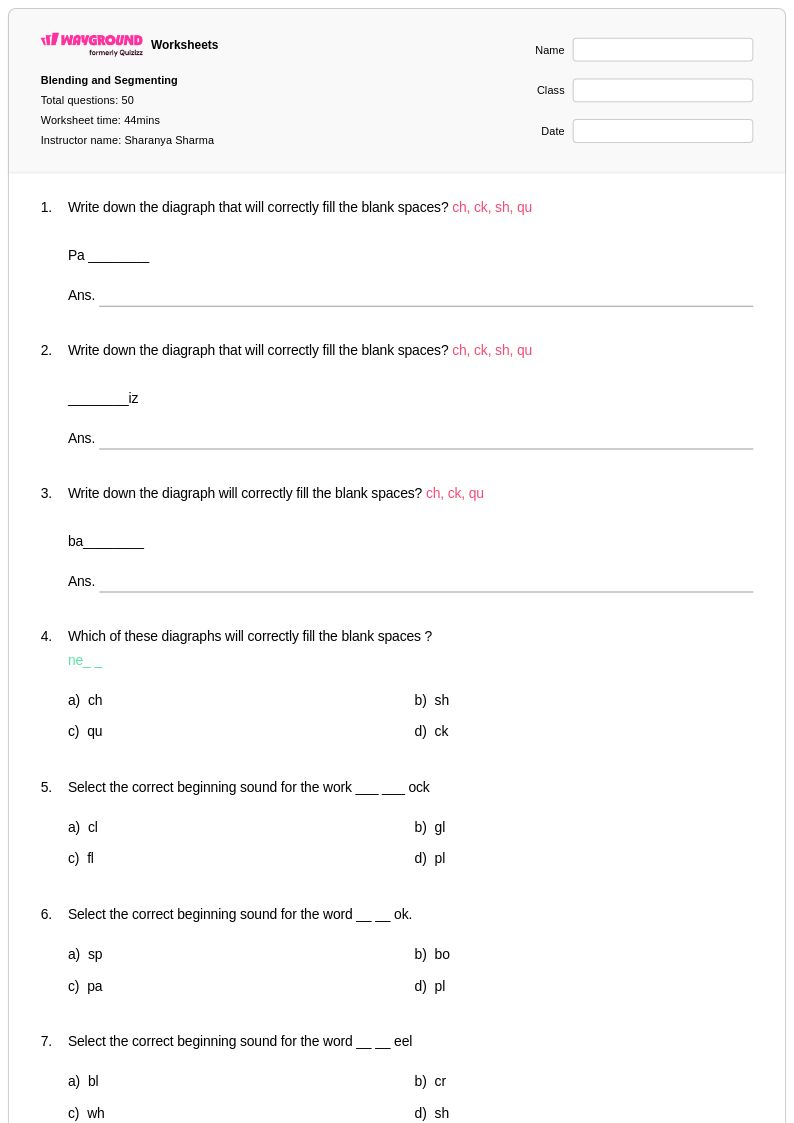
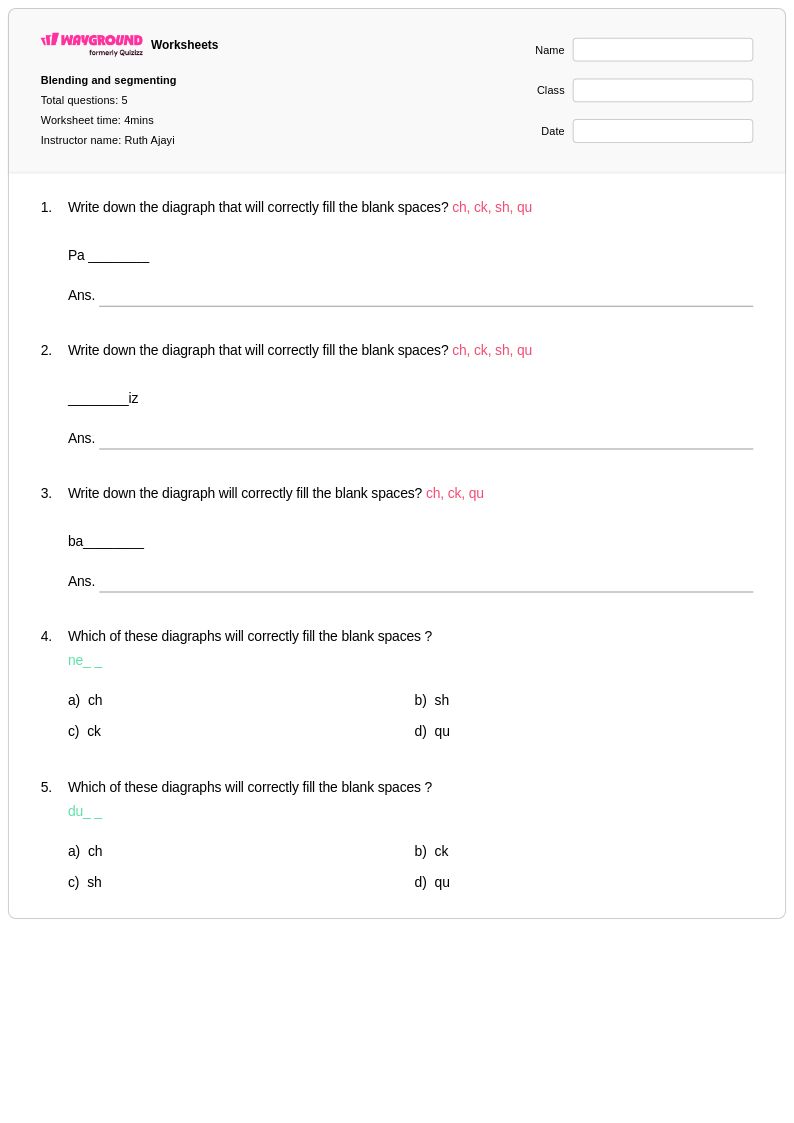
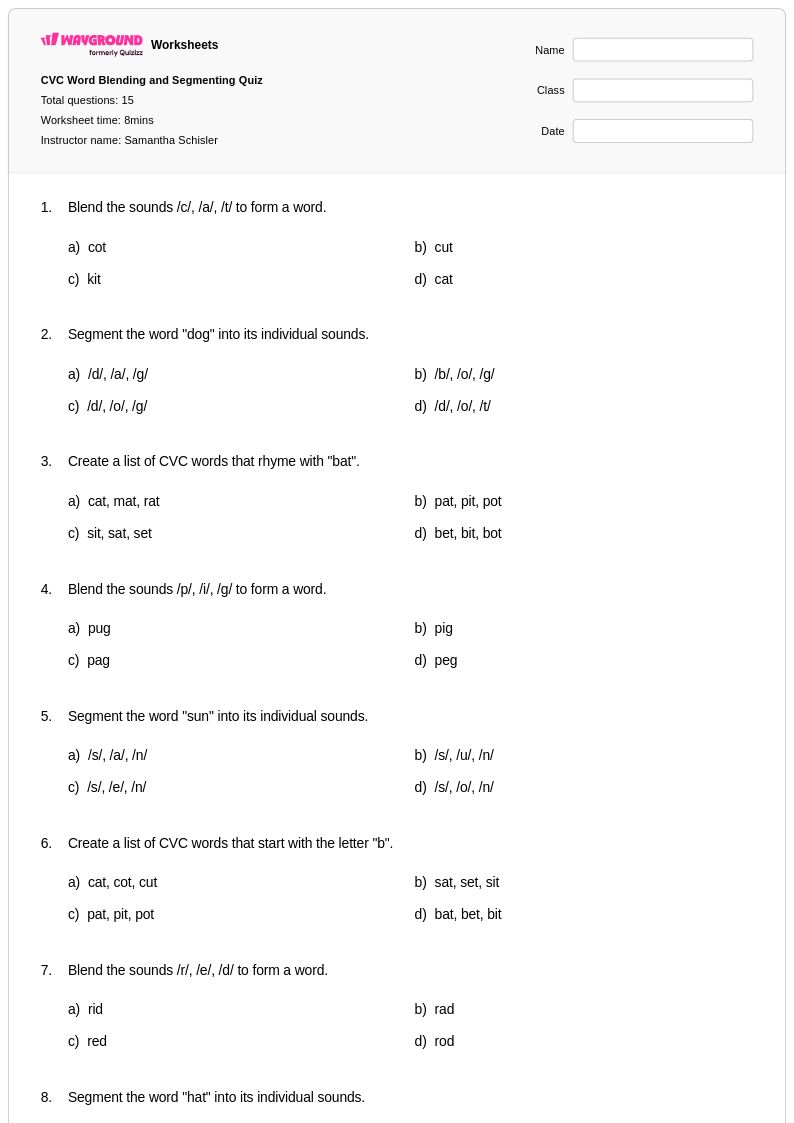
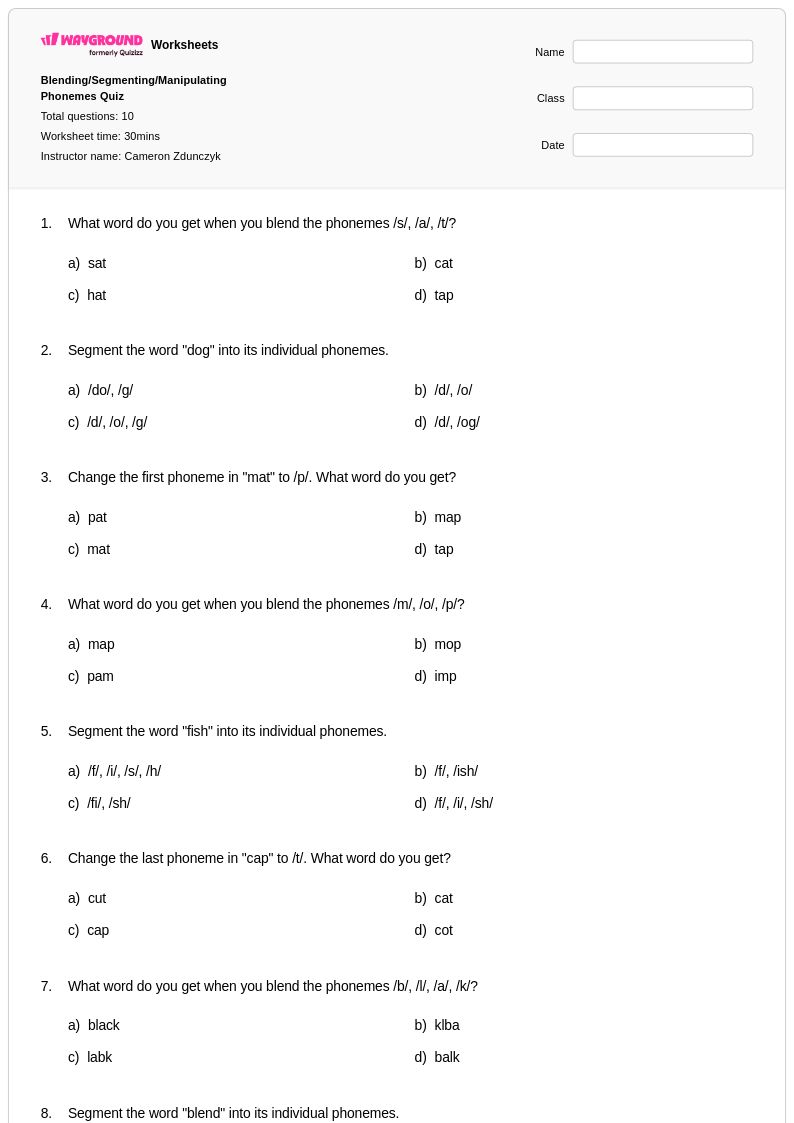
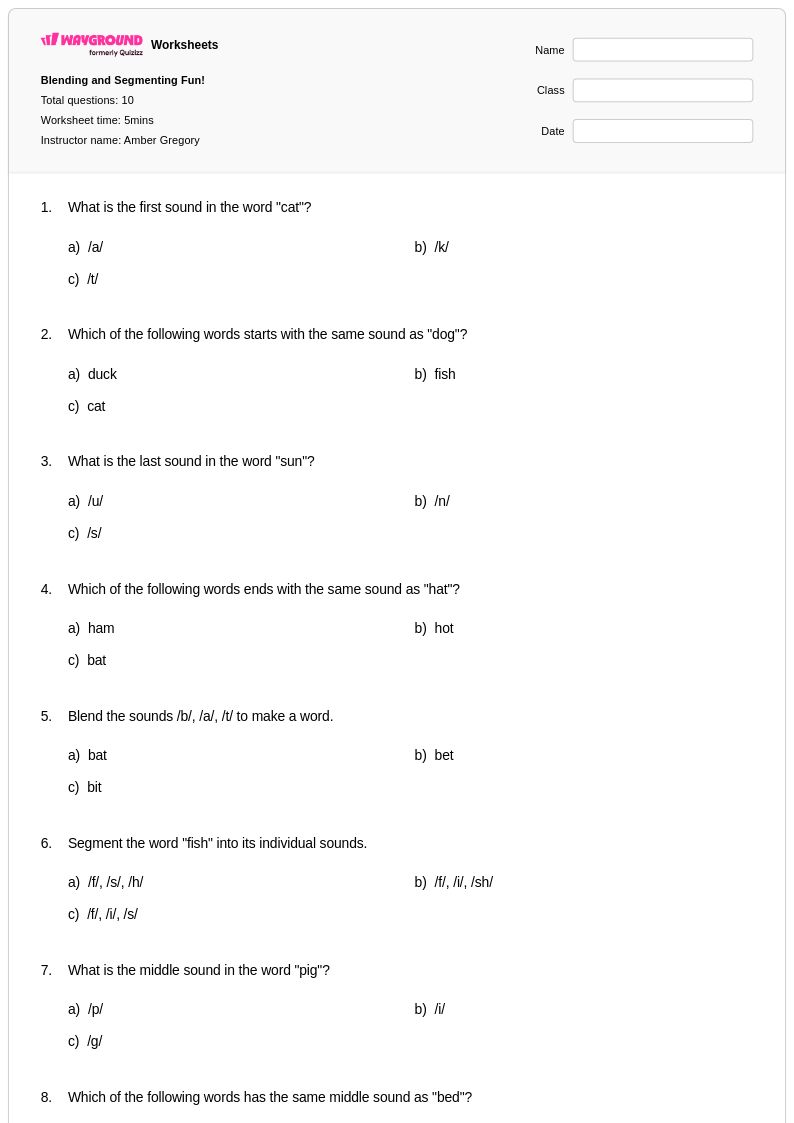
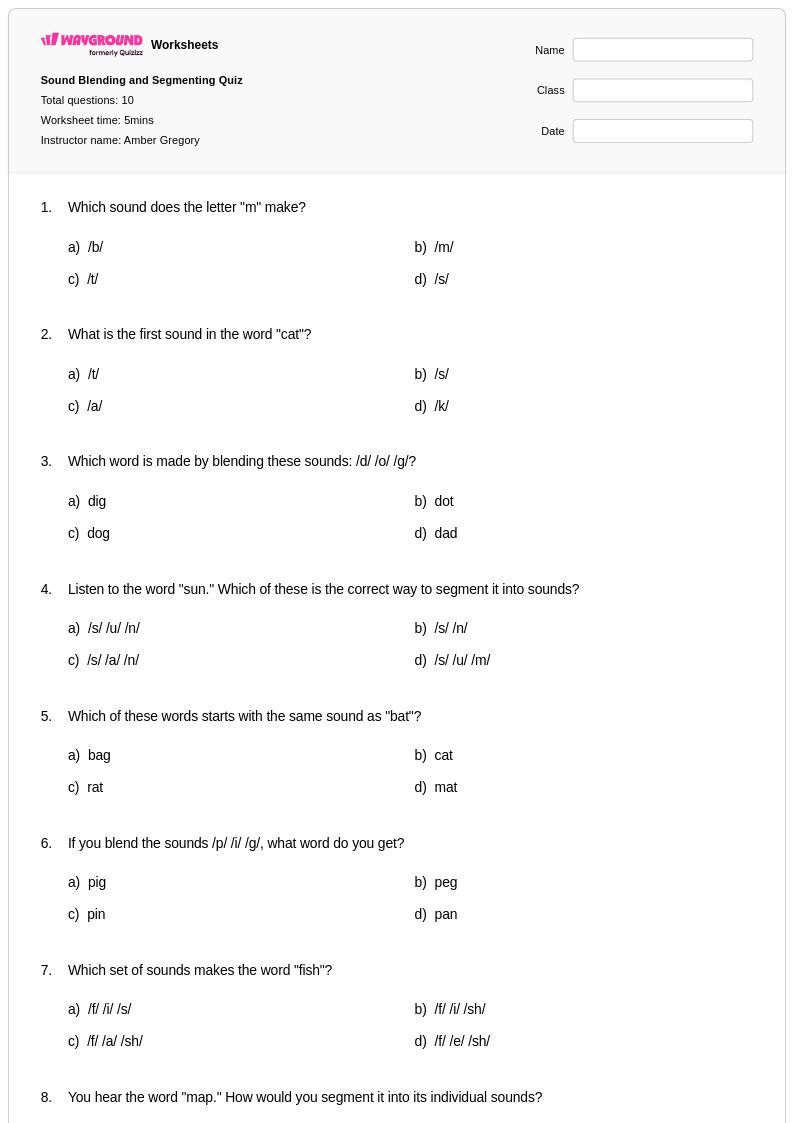
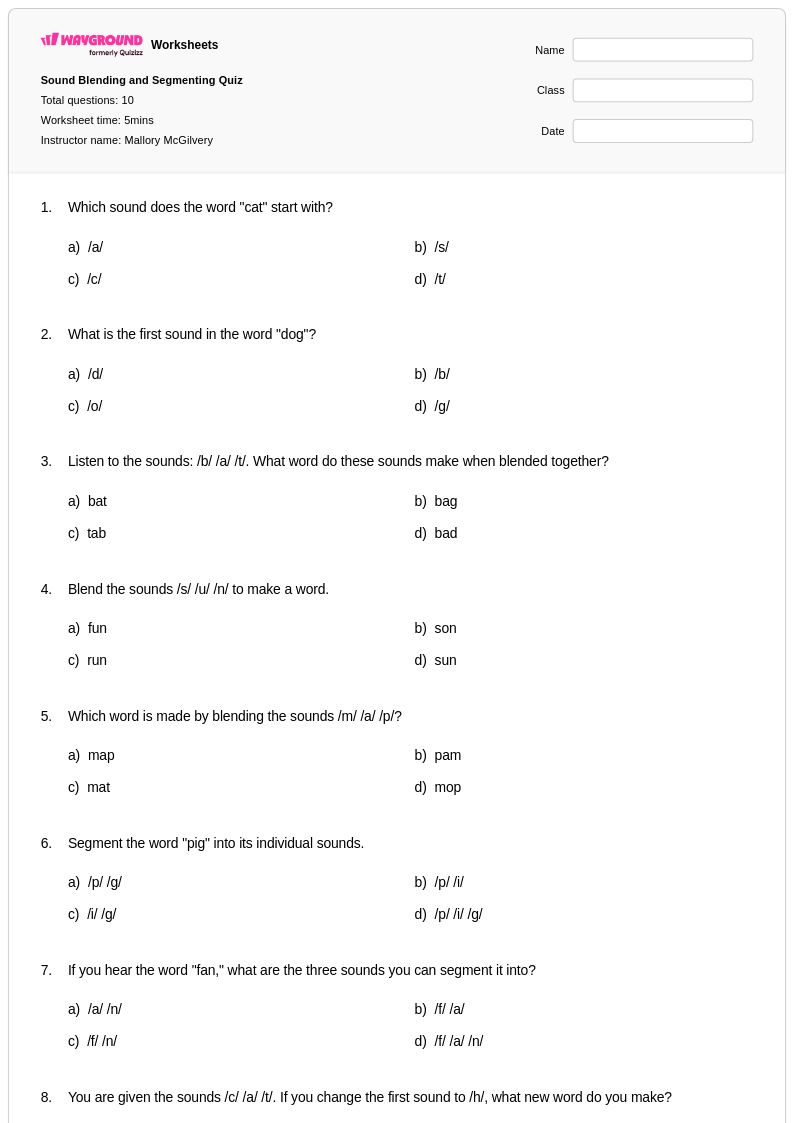
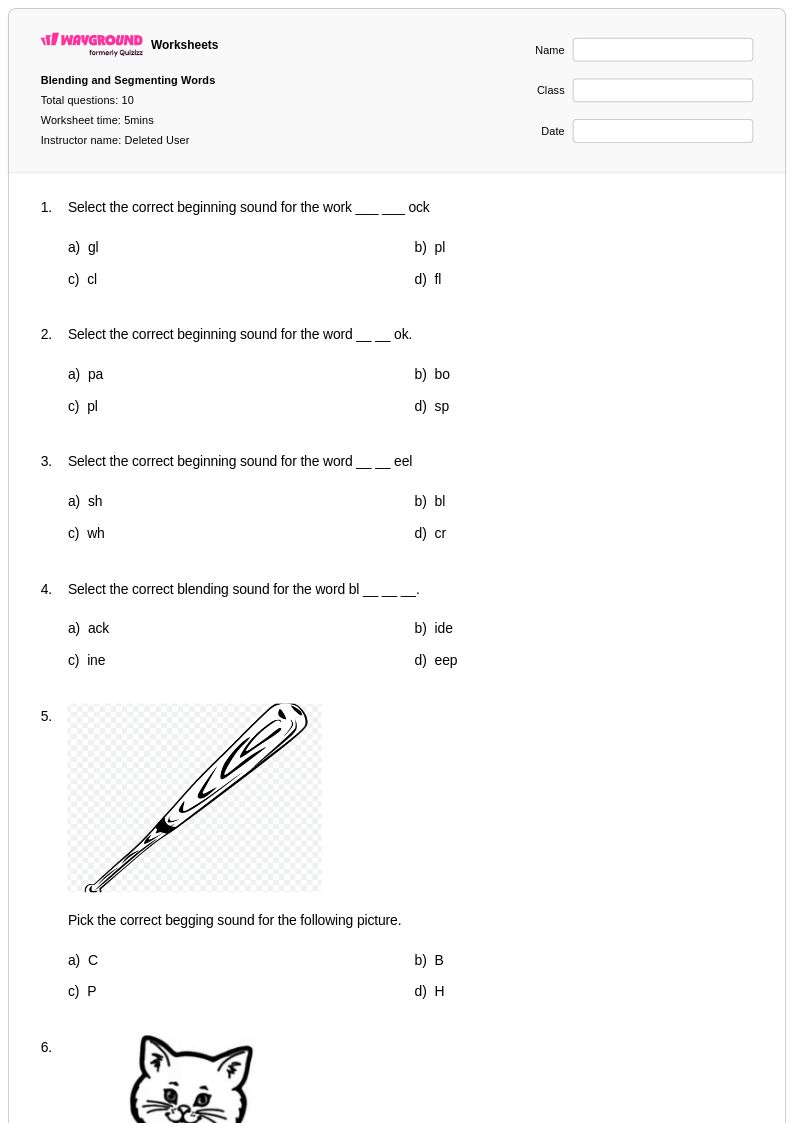
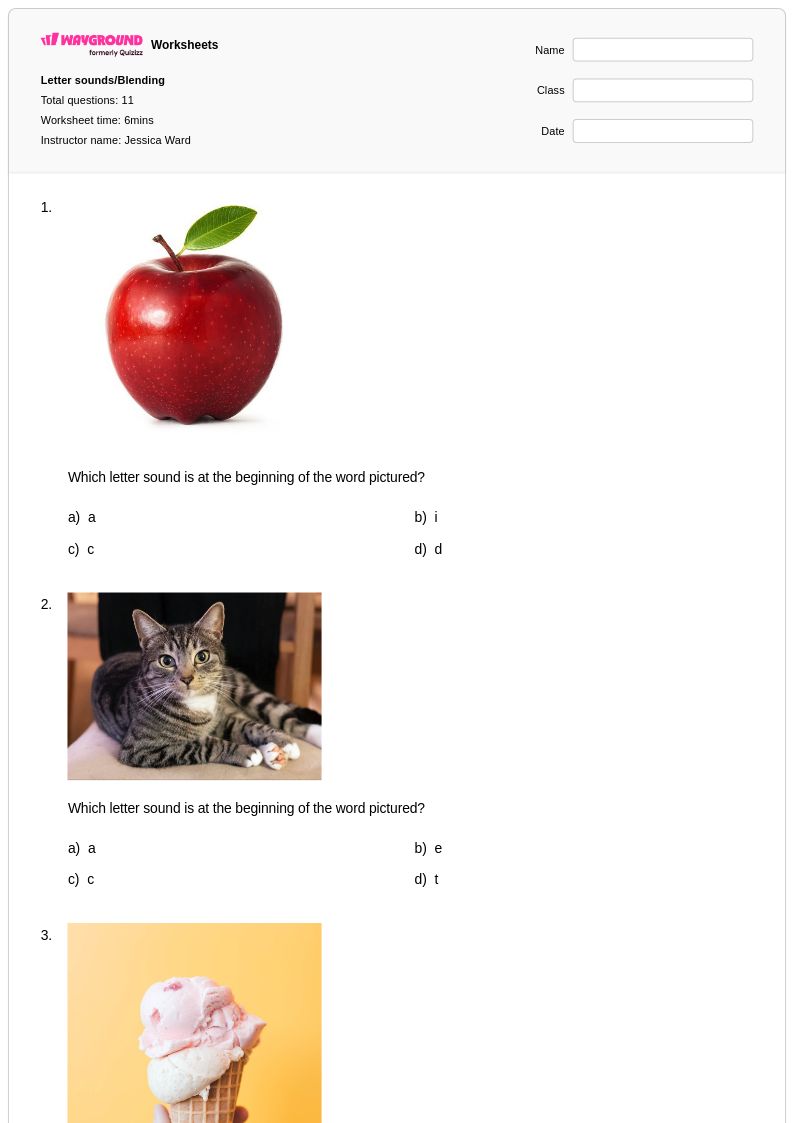
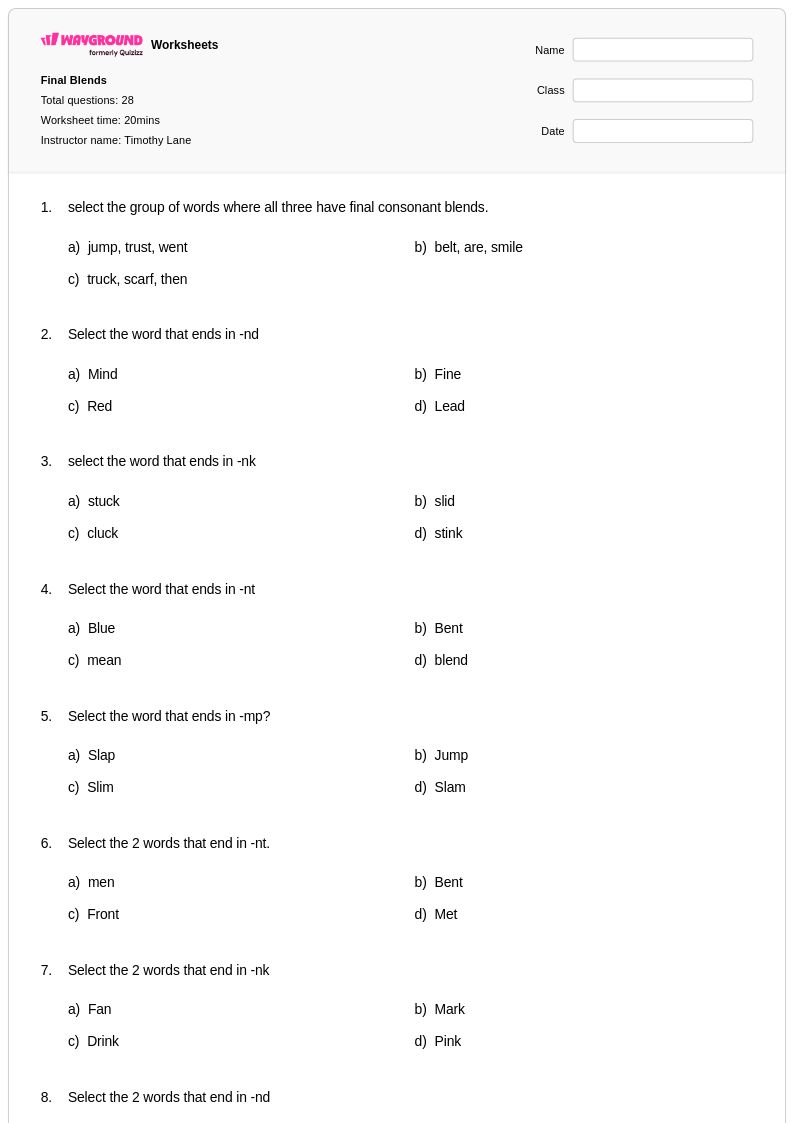
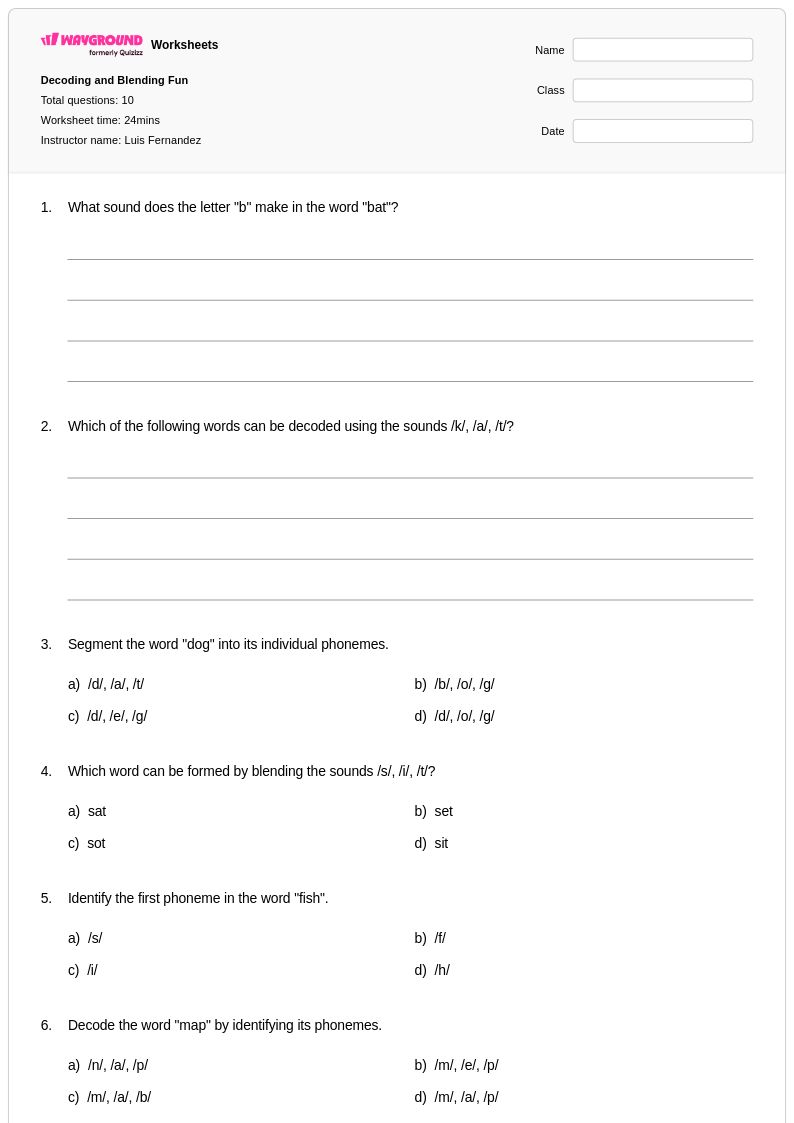
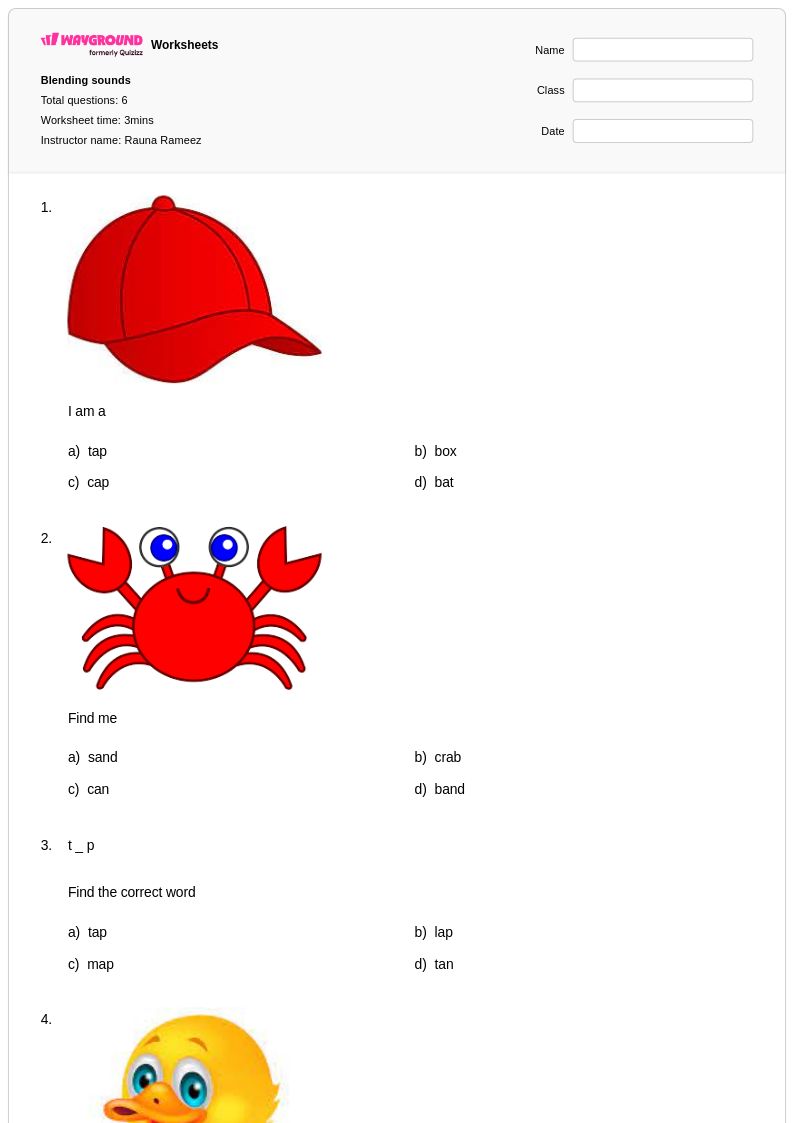
Wayground's free Year 1 phonics worksheets help students master blending and segmenting skills through engaging printable activities, practice problems, and comprehensive answer keys in downloadable PDF format.
Explore printable Blending and Segmenting worksheets for Year 1
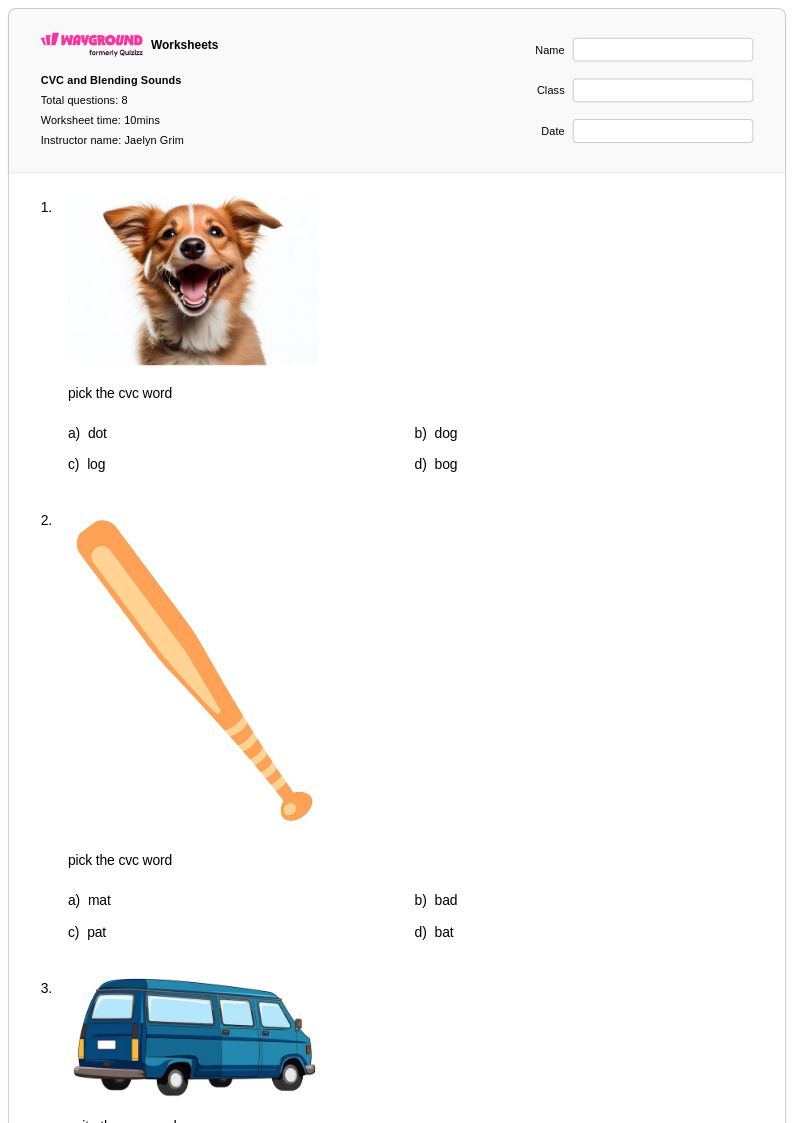
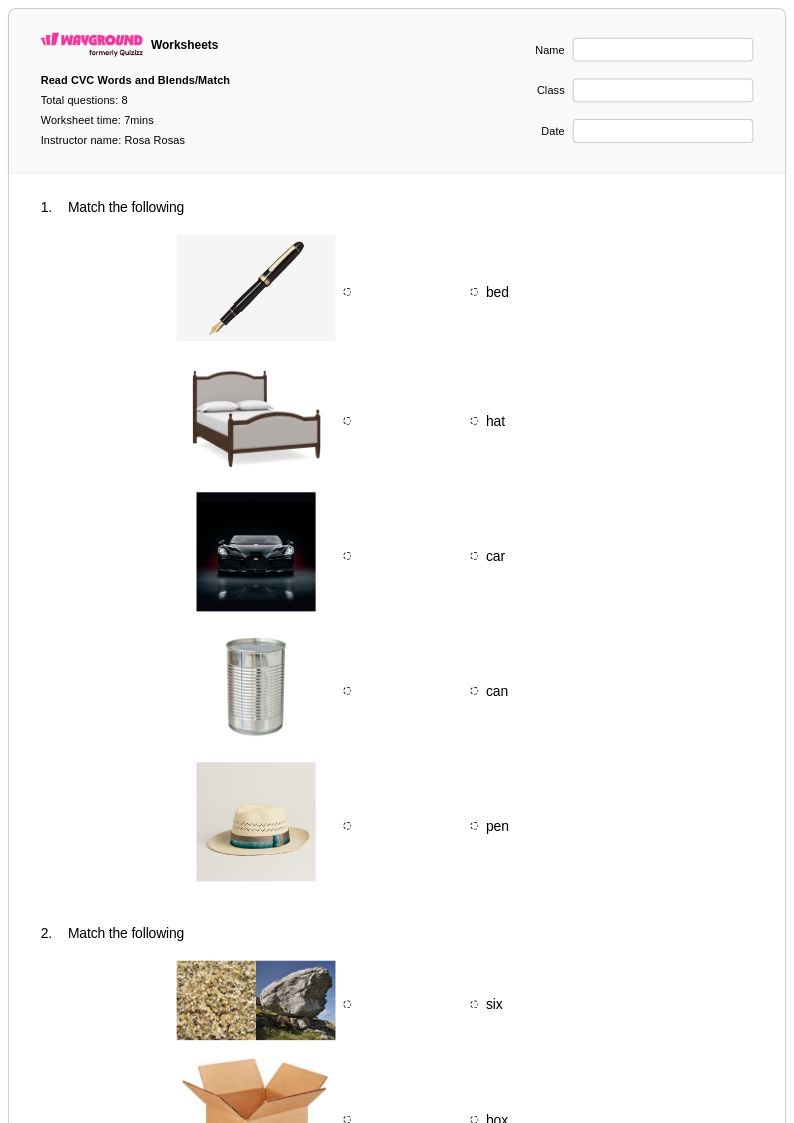
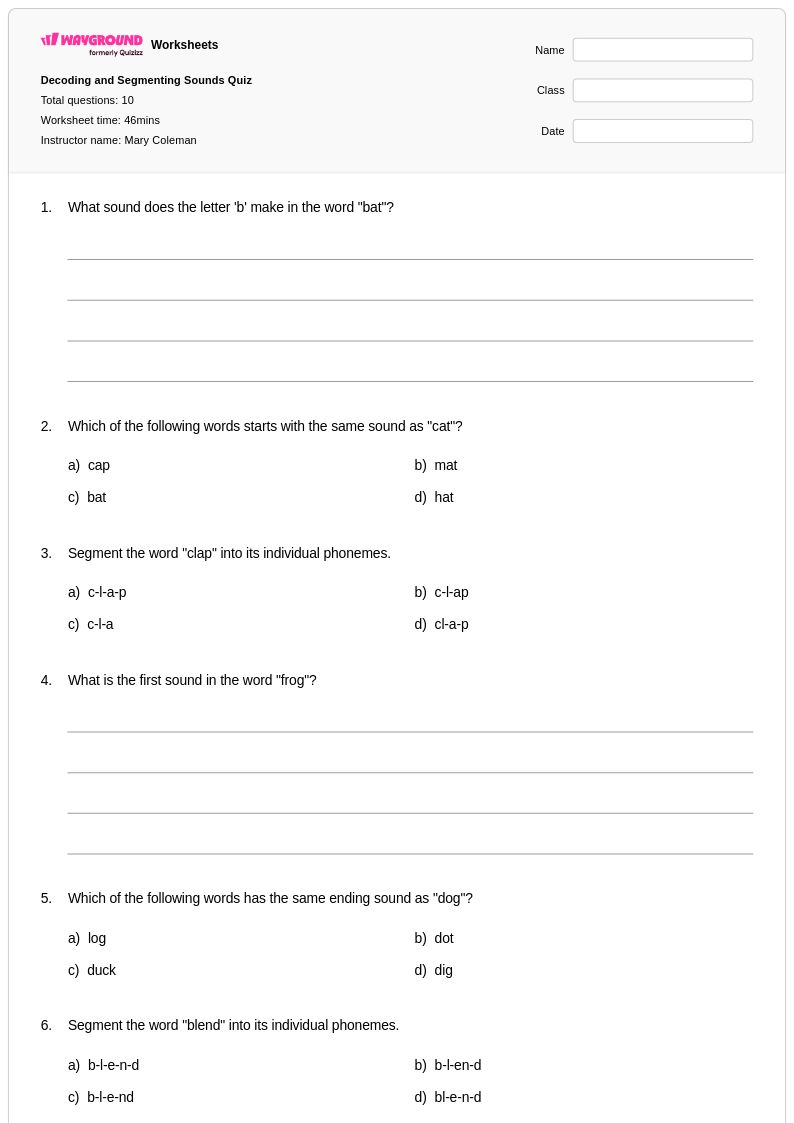
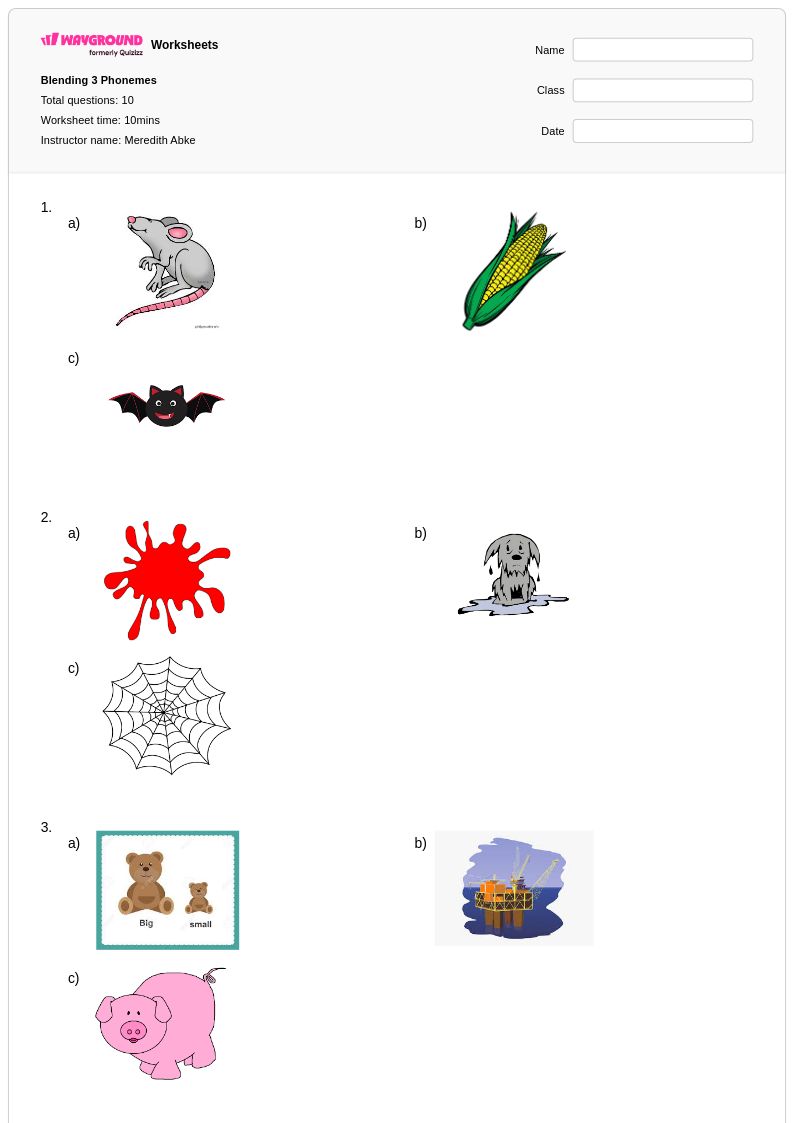
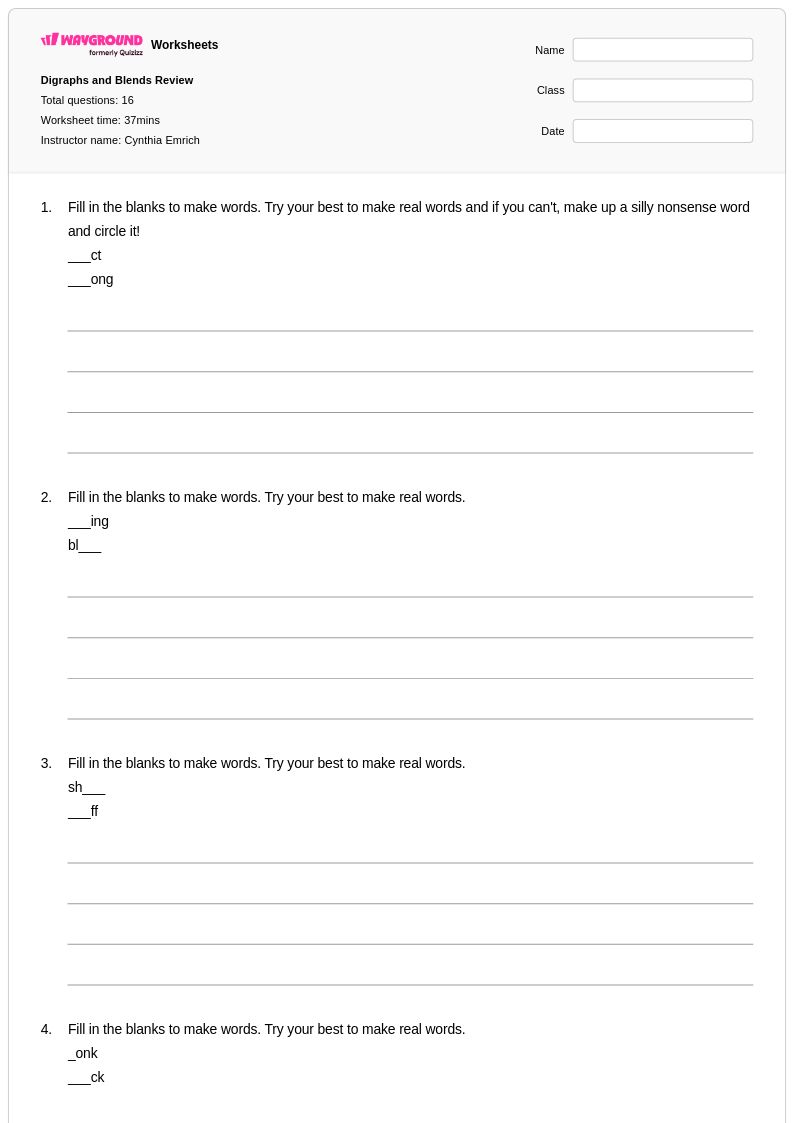
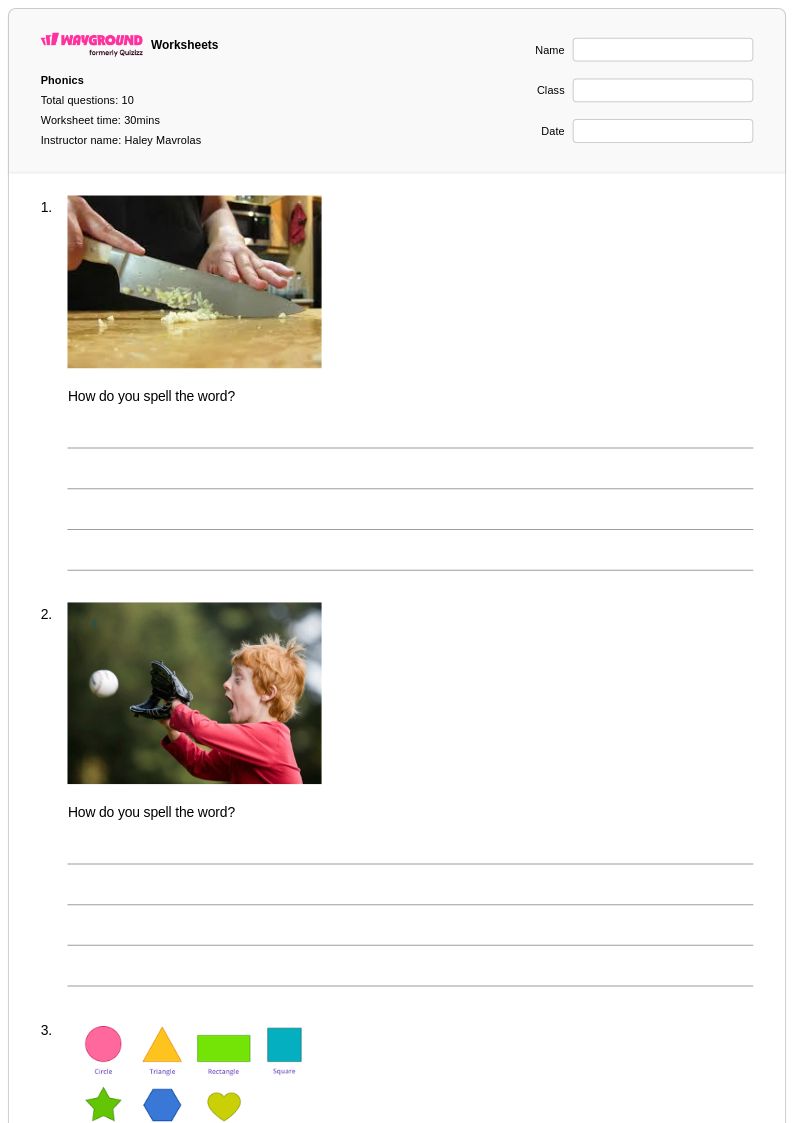
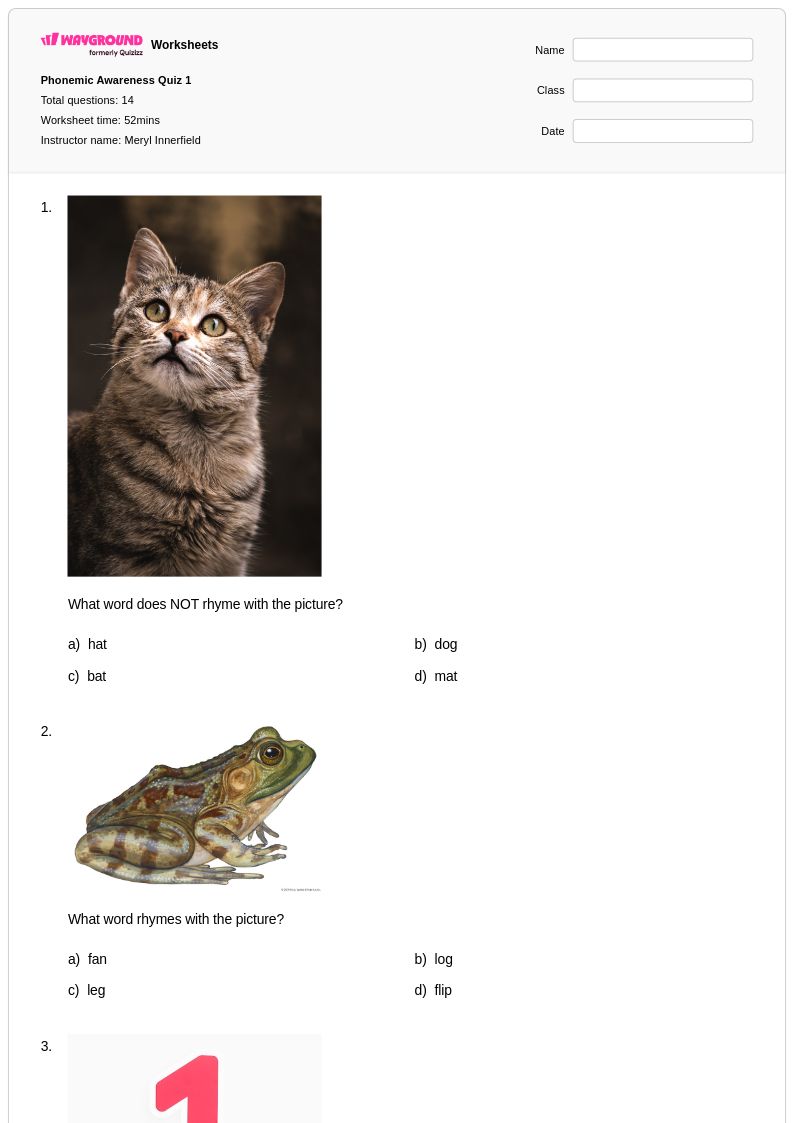
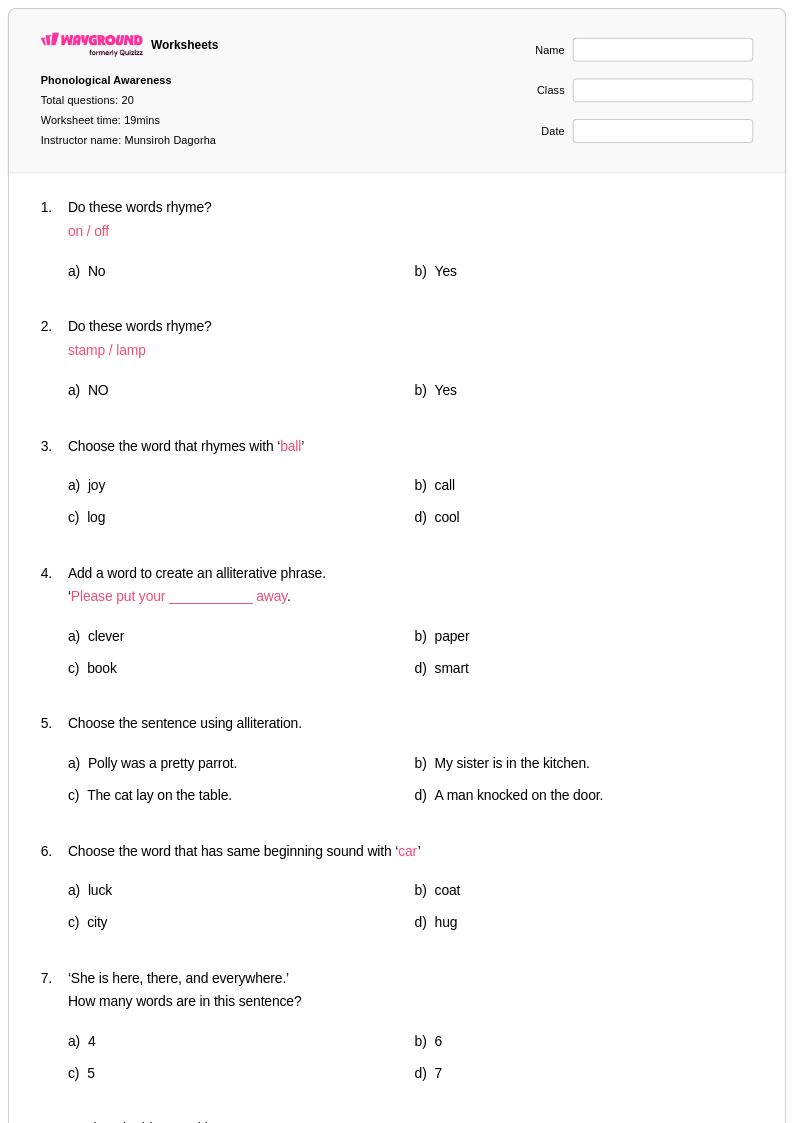
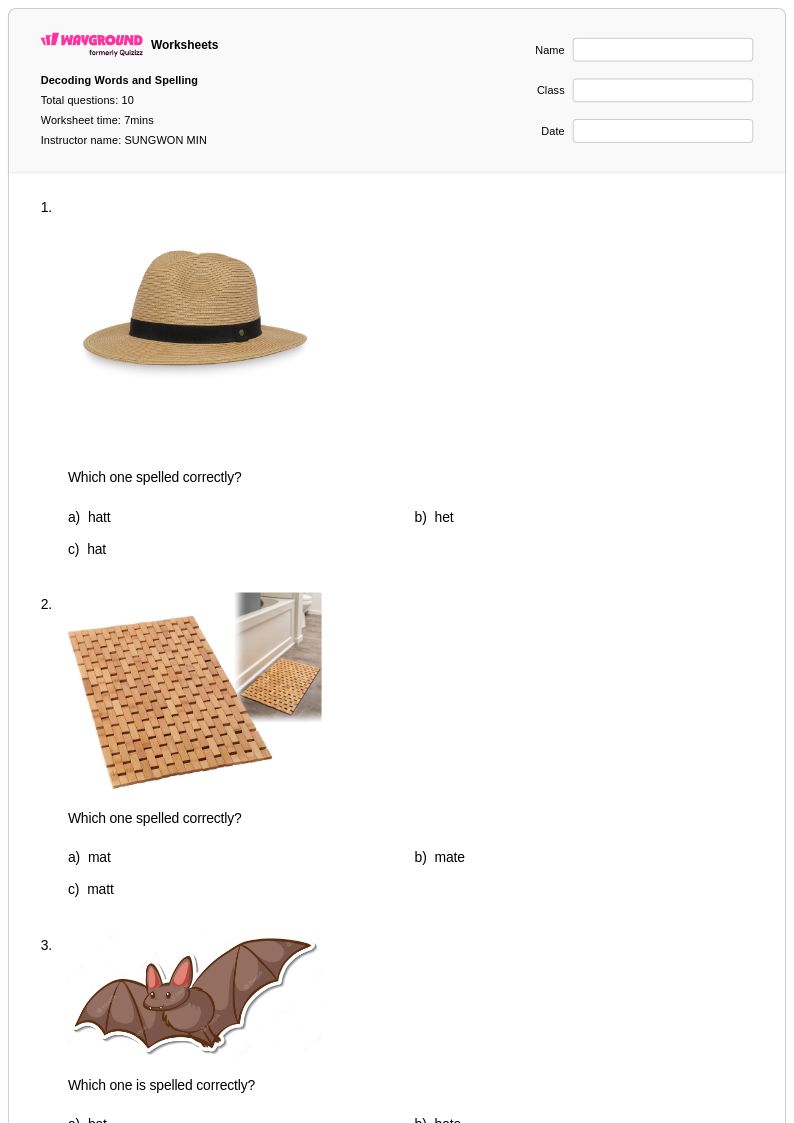
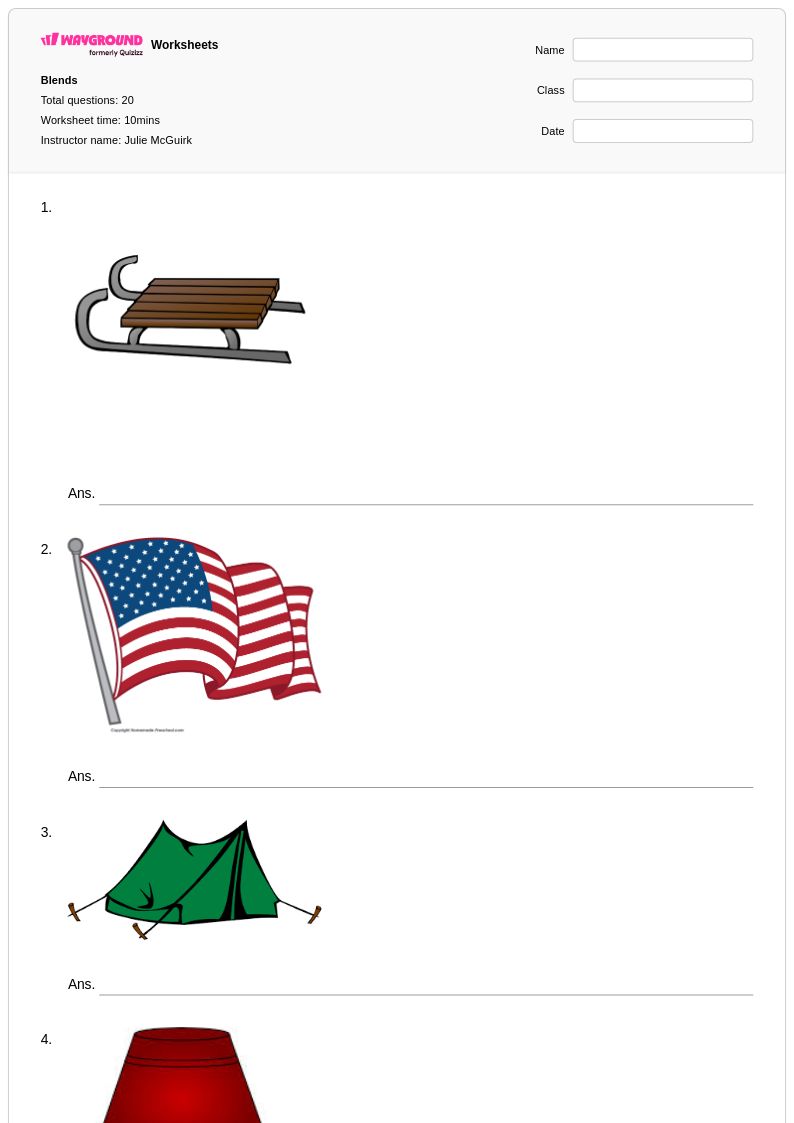
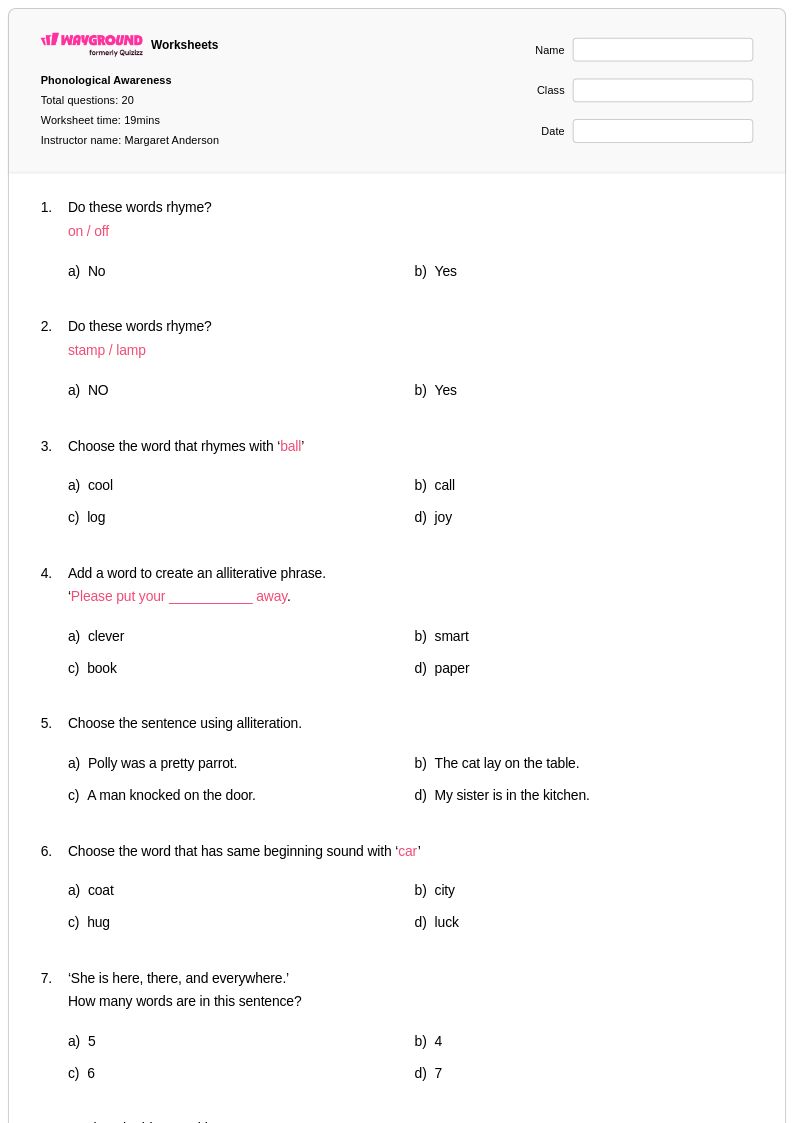
Blending and segmenting worksheets for Year 1 students through Wayground (formerly Quizizz) provide essential foundational practice in phonemic awareness and decoding skills. These comprehensive printables focus on helping young learners break words apart into individual sounds (segmenting) and combine separate phonemes to form complete words (blending). Each worksheet collection strengthens critical pre-reading and early reading abilities through systematic practice problems that guide students from simple consonant-vowel-consonant patterns to more complex phonetic structures. Teachers can access free pdf resources complete with answer keys, ensuring efficient grading and immediate feedback for student progress monitoring in these fundamental phonics skills.
Wayground (formerly Quizizz) empowers educators with millions of teacher-created blending and segmenting resources that support differentiated instruction across diverse Year 1 classrooms. The platform's robust search and filtering capabilities allow teachers to quickly locate worksheets aligned with specific phonics standards and customize content to match individual student needs and learning objectives. Available in both printable pdf formats and interactive digital versions, these resources facilitate flexible lesson planning for remediation, enrichment, and targeted skill practice. Teachers can seamlessly integrate these materials into literacy centers, guided reading groups, or whole-class instruction, while the extensive collection ensures continuous access to fresh, engaging content that builds phonemic awareness systematically throughout the academic year.
FAQs
How do I teach blending and segmenting to early readers?
Blending and segmenting are best taught through explicit, systematic phonics instruction that begins with simple consonant-vowel-consonant (CVC) words and gradually progresses to more complex phonetic patterns. Teachers typically model blending by slowly connecting individual phonemes aloud — for example, saying /k/ /æ/ /t/ and then merging them into 'cat' — before asking students to practice the same process independently. Segmenting is reinforced by having students break spoken words into their individual sounds, which directly strengthens spelling accuracy alongside decoding skills.
What exercises help students practice blending and segmenting?
Effective practice exercises include phoneme blending tasks where students hear isolated sounds and identify the complete word, and segmenting tasks where students break a spoken word into its individual phonemes using counters, tapping, or written notation. Worksheets that progress from simple CVC patterns to blends and digraphs give students the scaffolded repetition needed to internalize these skills. Regular, structured practice with both oral and written formats builds the automaticity that transfers directly to reading fluency and spelling.
What mistakes do students commonly make when blending and segmenting words?
A frequent blending error is students adding a schwa sound to consonants while sounding out — saying 'buh-ah-tuh' instead of /b/ /æ/ /t/ — which makes it harder to merge sounds smoothly into a recognizable word. When segmenting, students often conflate syllables with phonemes, breaking 'ship' into 'sh-ip' rather than /ʃ/ /ɪ/ /p/. Digraphs and blends are also common stumbling points, as students may treat a two-letter combination like 'ch' as two separate phonemes rather than one sound unit.
How do I differentiate blending and segmenting practice for students at different reading levels?
For struggling readers, limit initial blending tasks to two-phoneme words (e.g., 'at', 'up') and use manipulatives like sound boxes to make the segmenting process concrete before moving to print. On-grade students benefit from CVC word practice with systematic progression into blends and digraphs. Advanced students can be challenged with longer phoneme strings and multisyllabic words. On Wayground, teachers can apply accommodations such as read-aloud support and reduced answer choices to individual students without alerting the rest of the class, making it straightforward to run differentiated digital practice within a single session.
How do I use Wayground's blending and segmenting worksheets in my classroom?
Wayground's blending and segmenting worksheets are available as printable PDFs for use in traditional classroom settings and in digital formats for technology-integrated or remote learning environments, including the option to host them as an interactive quiz directly on Wayground. Each worksheet includes a complete answer key, so they work equally well for guided small-group instruction, independent practice stations, or homework. Teachers can use the digital format to assign targeted practice to individual students and apply built-in accommodations such as extended time or read-aloud support as needed.
At what age or grade level should students learn to blend and segment phonemes?
Phoneme blending and segmenting are foundational skills typically introduced in kindergarten and reinforced through first and second grade as part of a systematic phonics and phonemic awareness curriculum. Most students begin with onset-rime blending (e.g., /b/ + 'at') before progressing to full phoneme blending and segmenting of CVC words. Students who have not yet mastered these skills by the end of second grade often benefit from targeted intervention, as weak phonemic awareness is one of the strongest predictors of reading difficulty.