Free Printable Chinese Zodiac Worksheets for Year 1
Discover free Year 1 Chinese Zodiac worksheets and printables from Wayground that help students explore cultural traditions and animal symbols through engaging practice problems and activities with complete answer keys.
Explore printable Chinese Zodiac worksheets for Year 1
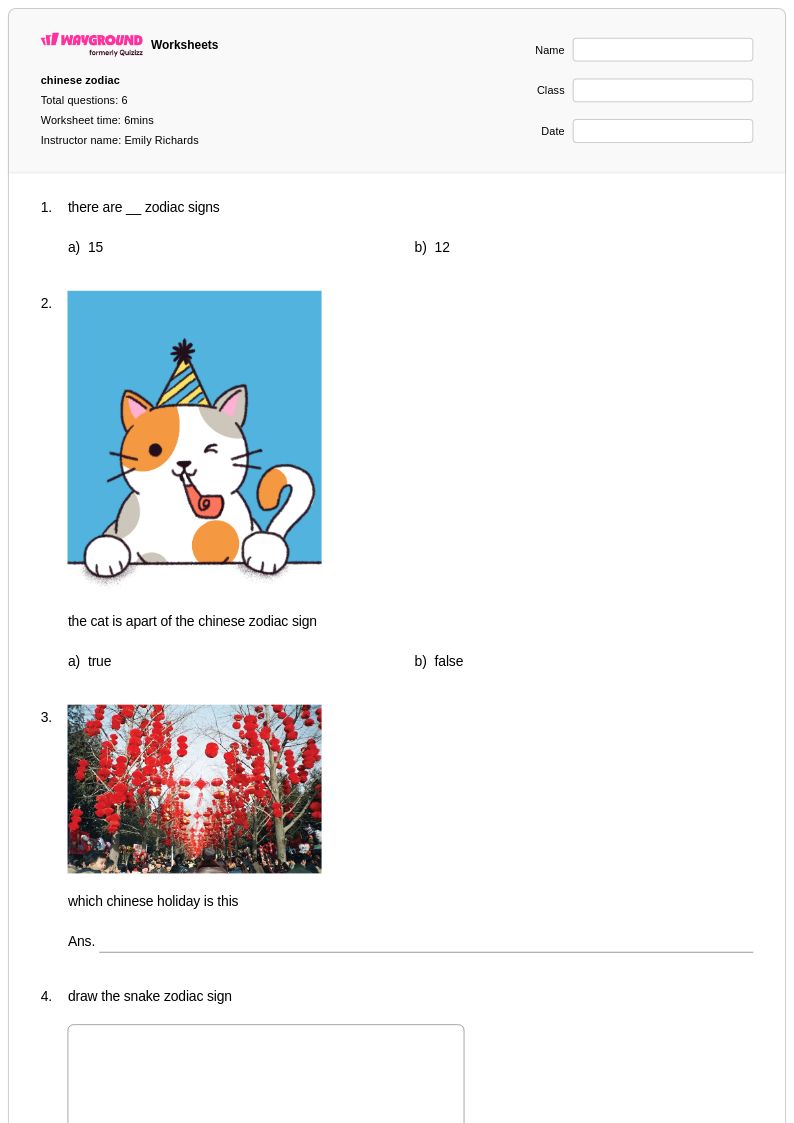
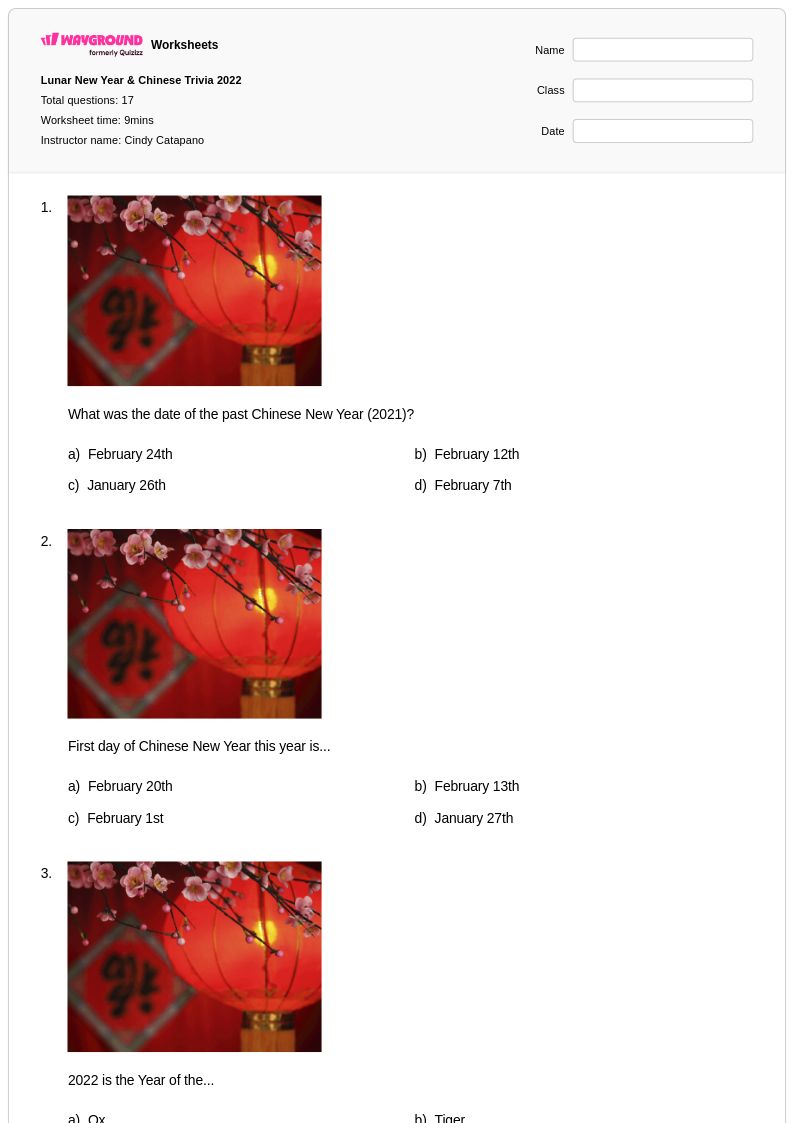
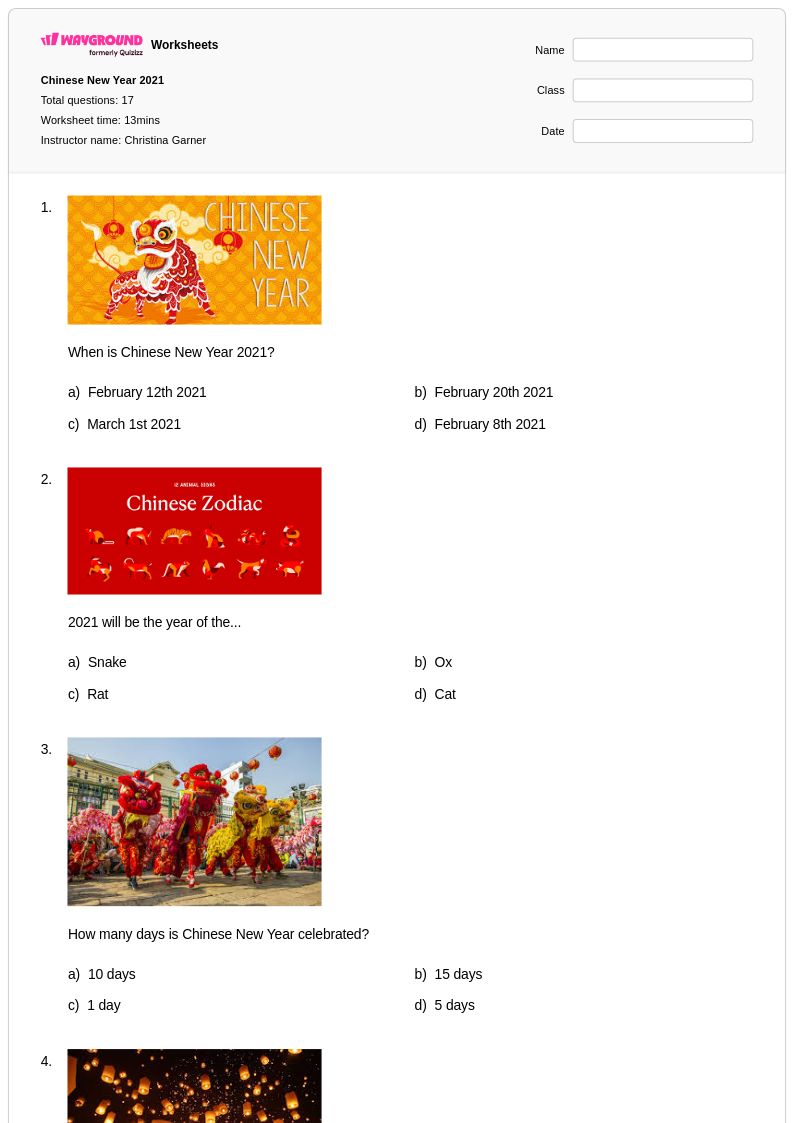
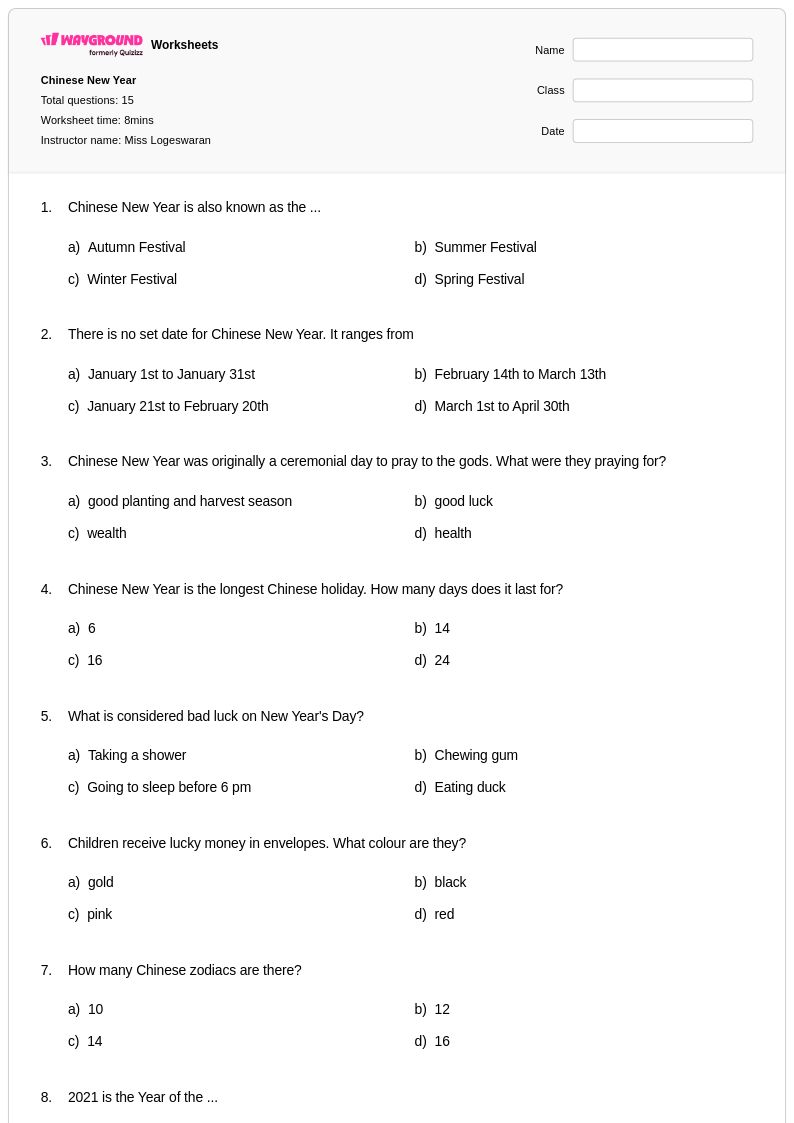
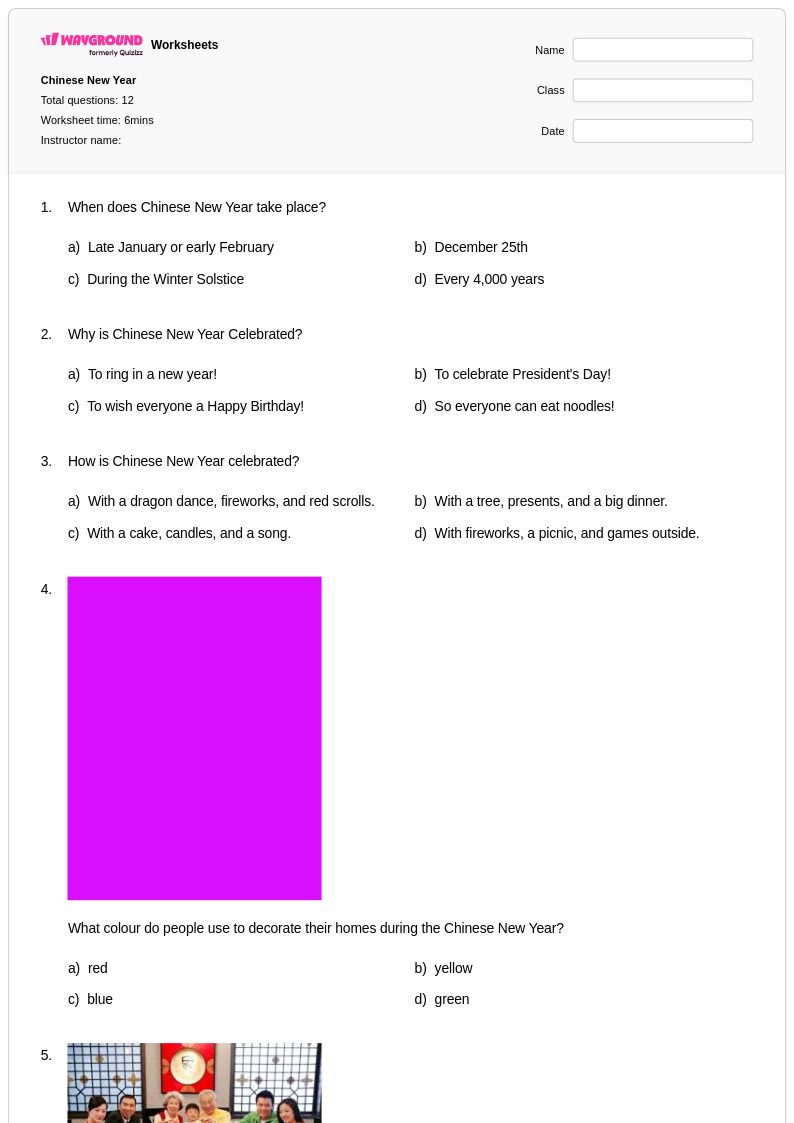
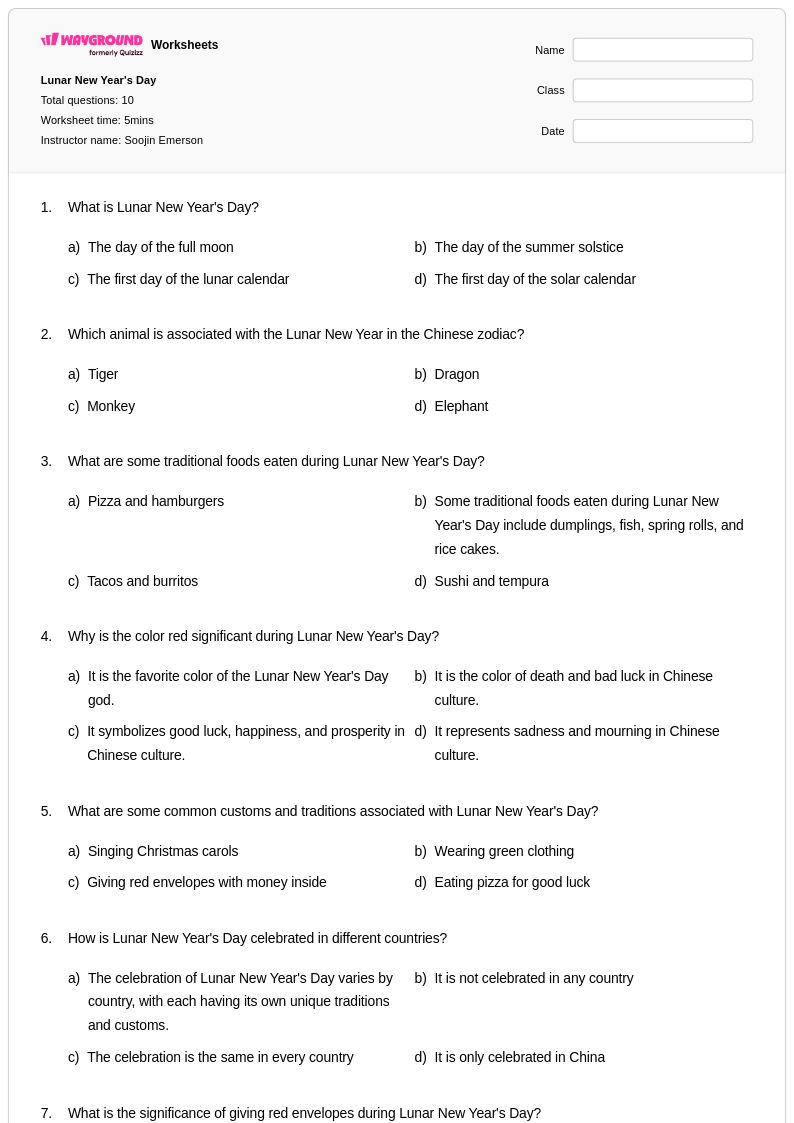
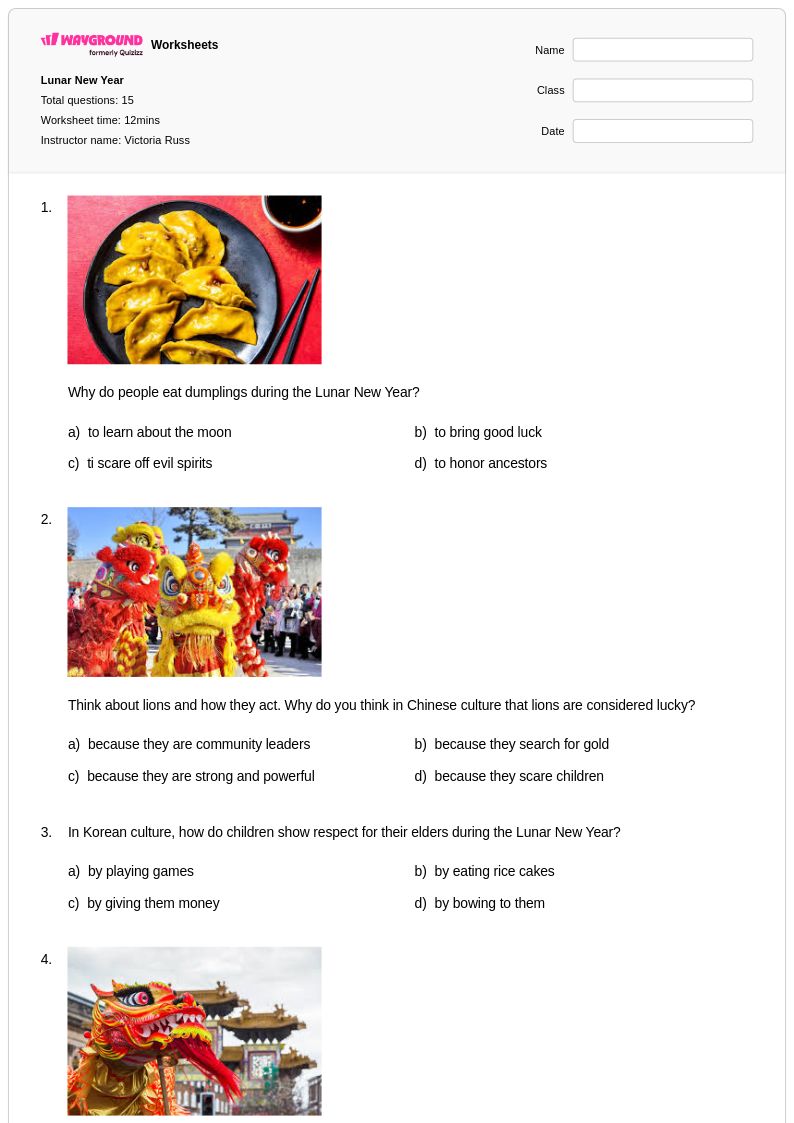
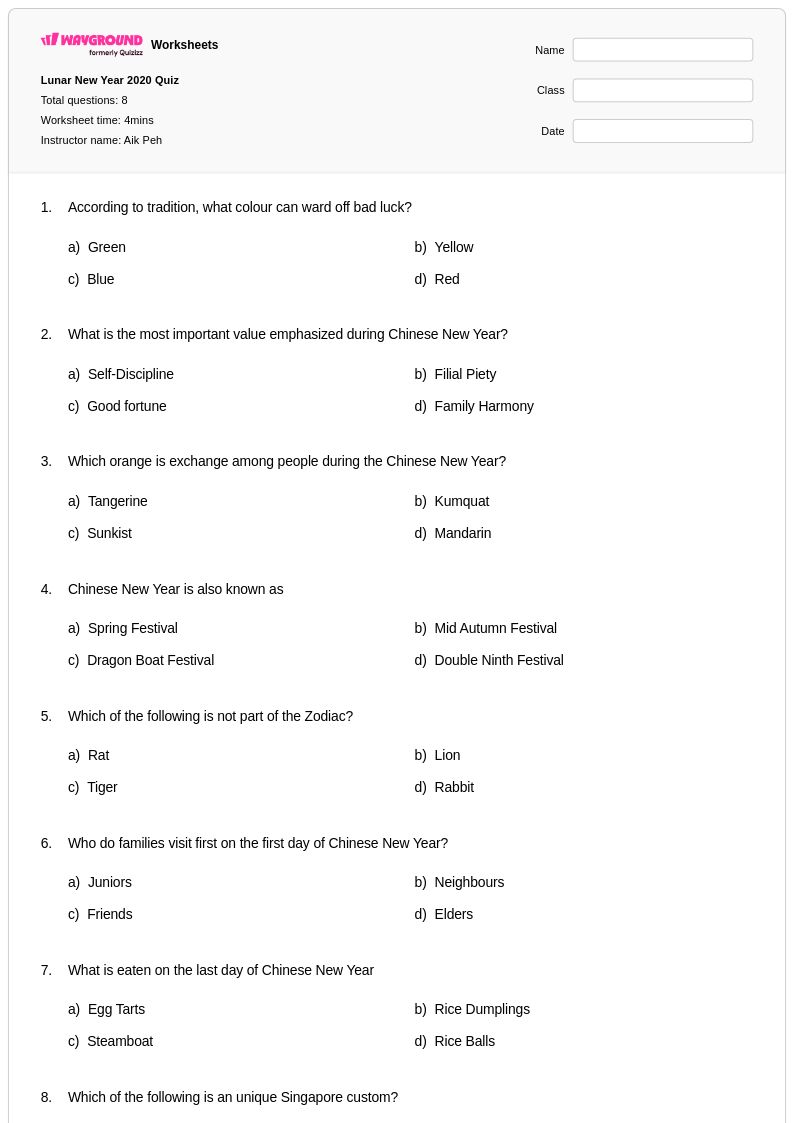
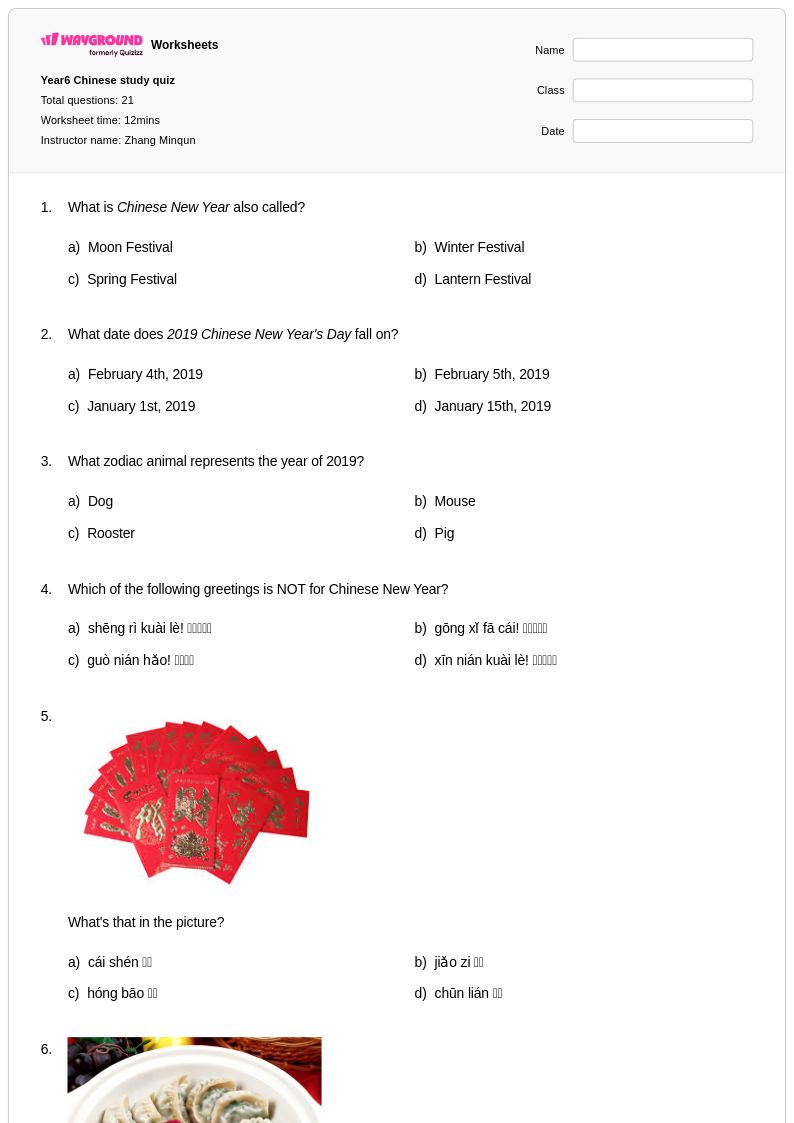
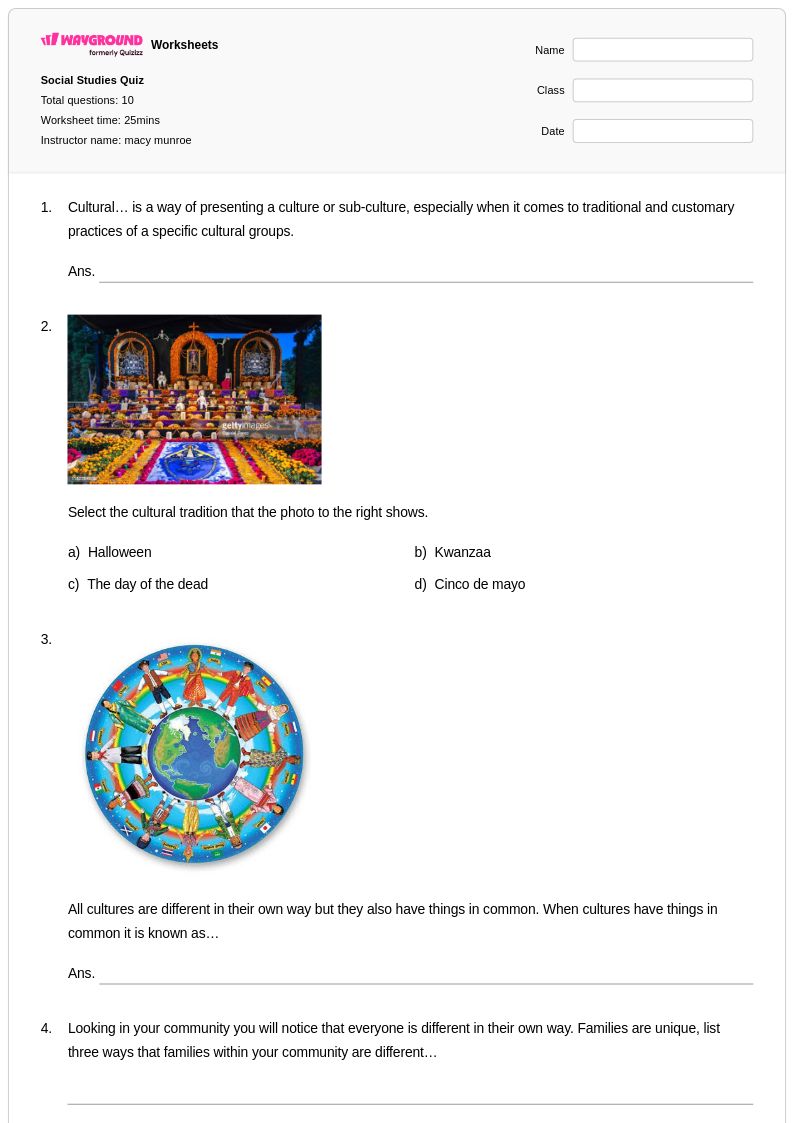
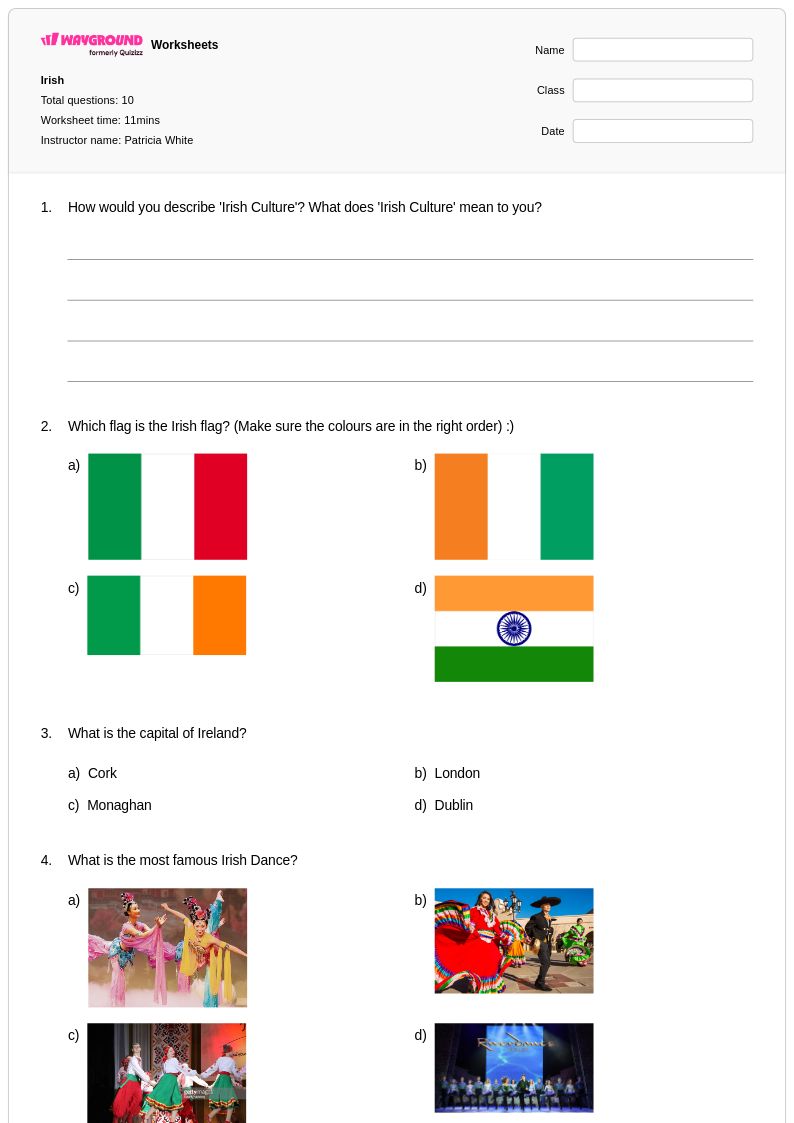
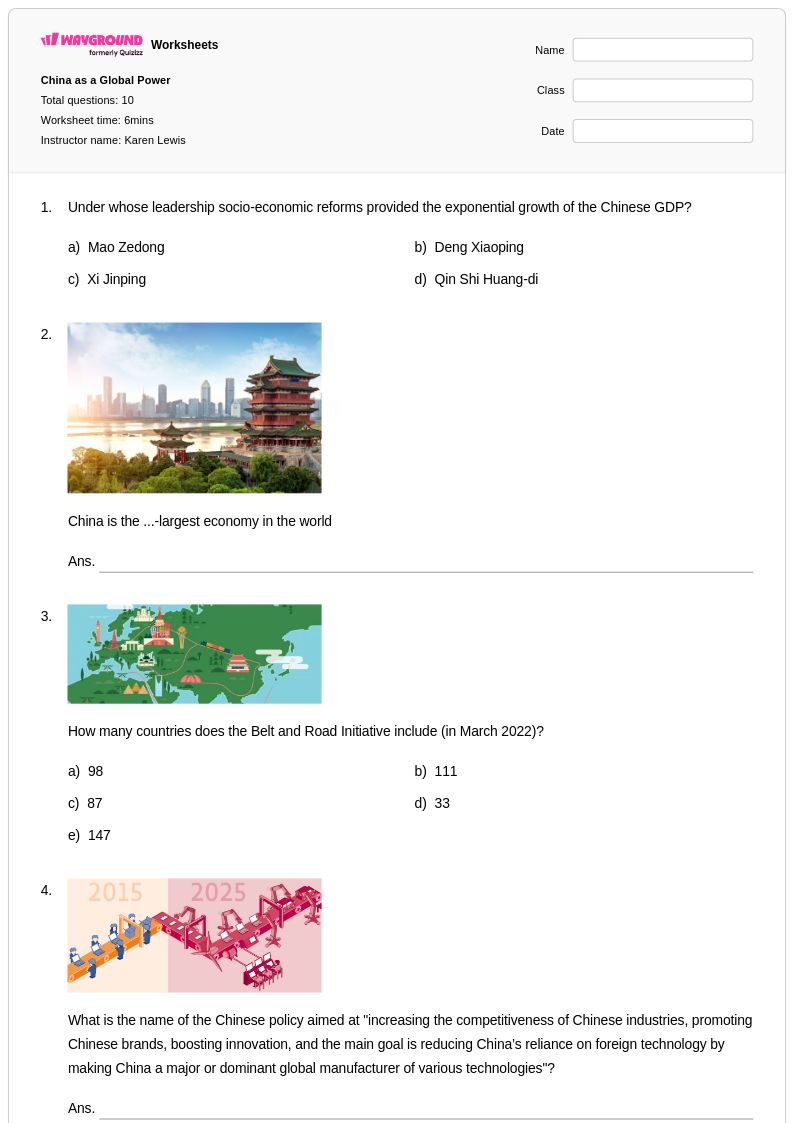
Chinese Zodiac worksheets for Year 1 students available through Wayground (formerly Quizizz) provide an engaging introduction to this foundational element of Chinese culture and tradition. These educational resources help young learners develop cultural awareness and understanding while strengthening their reading comprehension, pattern recognition, and basic research skills. The worksheets feature age-appropriate content that introduces the twelve zodiac animals, their characteristics, and the cyclical nature of the zodiac calendar through colorful illustrations and simple text. Students practice essential skills through various activities including matching exercises, sequencing tasks, and basic fact identification, with comprehensive answer keys provided to support both independent learning and teacher-guided instruction. These free printables offer structured practice problems that make learning about different cultures accessible and enjoyable for first-grade students, available in convenient PDF format for easy classroom integration.
Wayground (formerly Quizizz) empowers educators with an extensive collection of teacher-created Chinese Zodiac resources, drawing from millions of high-quality materials specifically designed for elementary social studies instruction. The platform's robust search and filtering capabilities enable teachers to quickly locate worksheets that align with their specific curriculum standards and learning objectives, while built-in differentiation tools allow for seamless adaptation to meet diverse student needs within the Year 1 classroom. Teachers can customize these resources to match their instructional goals, whether using them for initial concept introduction, skill reinforcement, or cultural enrichment activities. The flexible format options, including both printable and digital versions with PDF accessibility, support various teaching environments and learning preferences. These comprehensive tools facilitate effective lesson planning while providing reliable resources for remediation, independent practice, and assessment preparation, ensuring that students develop a solid foundation in understanding global cultures and communities.
FAQs
How do I teach the Chinese Zodiac in a social studies or cultural awareness unit?
Teaching the Chinese Zodiac works best when framed around cultural context rather than novelty. Start by situating the twelve-year animal cycle within the broader history of the lunar calendar, then connect each zodiac animal to its associated traits, stories, and cultural significance in China and other East Asian societies. From there, students can compare how the zodiac influences art, literature, and celebrations, building genuine cross-cultural understanding rather than surface-level familiarity.
What kinds of activities help students practice Chinese Zodiac concepts?
Effective practice activities for the Chinese Zodiac include matching exercises that pair each of the twelve animals with their defining characteristics, sequencing tasks that reinforce the twelve-year cycle, and analytical prompts asking students to examine how zodiac symbolism appears in art, storytelling, and cultural celebrations. Comparative reasoning tasks, such as contrasting zodiac traditions across different East Asian cultures, help students move beyond memorization toward deeper cultural analysis.
What common misconceptions do students have about the Chinese Zodiac?
A frequent misconception is that the Chinese Zodiac functions like Western astrology, with students assuming it makes personal predictions rather than reflecting a cultural calendar system with historical and social significance. Students also often conflate the Chinese Zodiac exclusively with China, missing that this lunar-based system is shared and adapted across multiple East Asian cultures including Vietnamese, Korean, and Japanese traditions. Addressing these gaps early helps students engage with the material analytically rather than superficially.
How can I use Chinese Zodiac worksheets to support students with different learning needs?
Chinese Zodiac worksheets on Wayground can be used alongside the platform's built-in accommodation tools to support diverse learners. The Read Aloud feature helps students who benefit from audio support access cultural content independently, while the Reduced Answer Choices setting lowers cognitive load for students who need scaffolding on matching or identification tasks. Extended time can be assigned per student for more reflective written responses, and all accommodations are saved and reusable across sessions without flagging other students.
How do I use Chinese Zodiac worksheets in my classroom, and are they available digitally?
Chinese Zodiac worksheets on Wayground are available as both printable PDFs and in digital formats, making them adaptable for traditional classroom instruction and technology-integrated learning environments. Teachers can distribute printed versions for independent or group work, or assign the digital versions for at-home learning or interactive class sessions. Wayground also allows teachers to host worksheets directly as a quiz on the platform, enabling real-time student responses and progress tracking.
How does learning about the Chinese Zodiac connect to broader social studies skills?
Studying the Chinese Zodiac builds cultural awareness, comparative reasoning, and analytical thinking skills that are central to social studies curricula. As students examine how a centuries-old calendar system continues to shape art, literature, and daily life across East Asian cultures, they practice evaluating primary cultural sources and drawing connections between historical traditions and contemporary global contexts. This makes the Chinese Zodiac a productive entry point into broader discussions of cultural identity, heritage, and intercultural understanding.