
20 Q
6th - Uni
19 Q
5th - Uni
13 Q
6th
10 Q
6th
12 Q
6th
18 Q
6th - 12th
20 Q
6th
5 Q
6th - Uni
5 Q
6th - Uni
20 Q
6th - Uni
15 Q
5th - 7th
20 Q
6th - 8th

15 Q
5th - Uni
12 Q
6th
15 Q
6th - 8th
20 Q
6th - Uni
10 Q
6th
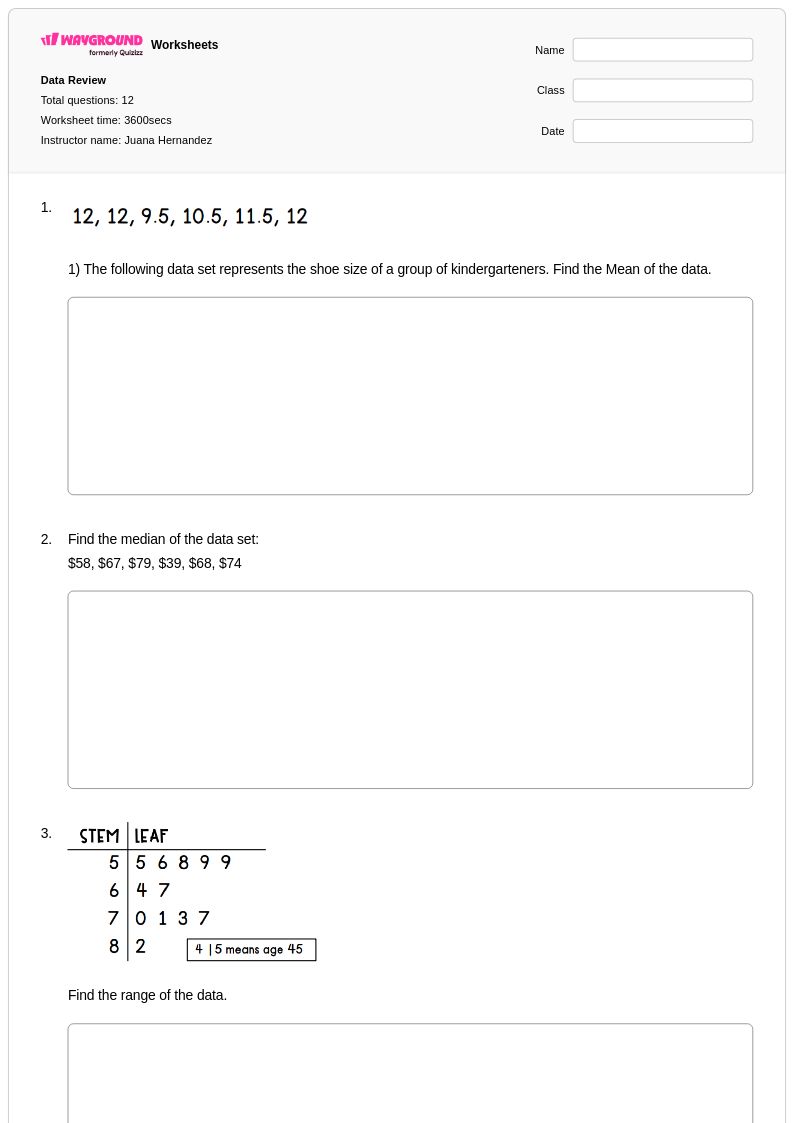
12 Q
6th
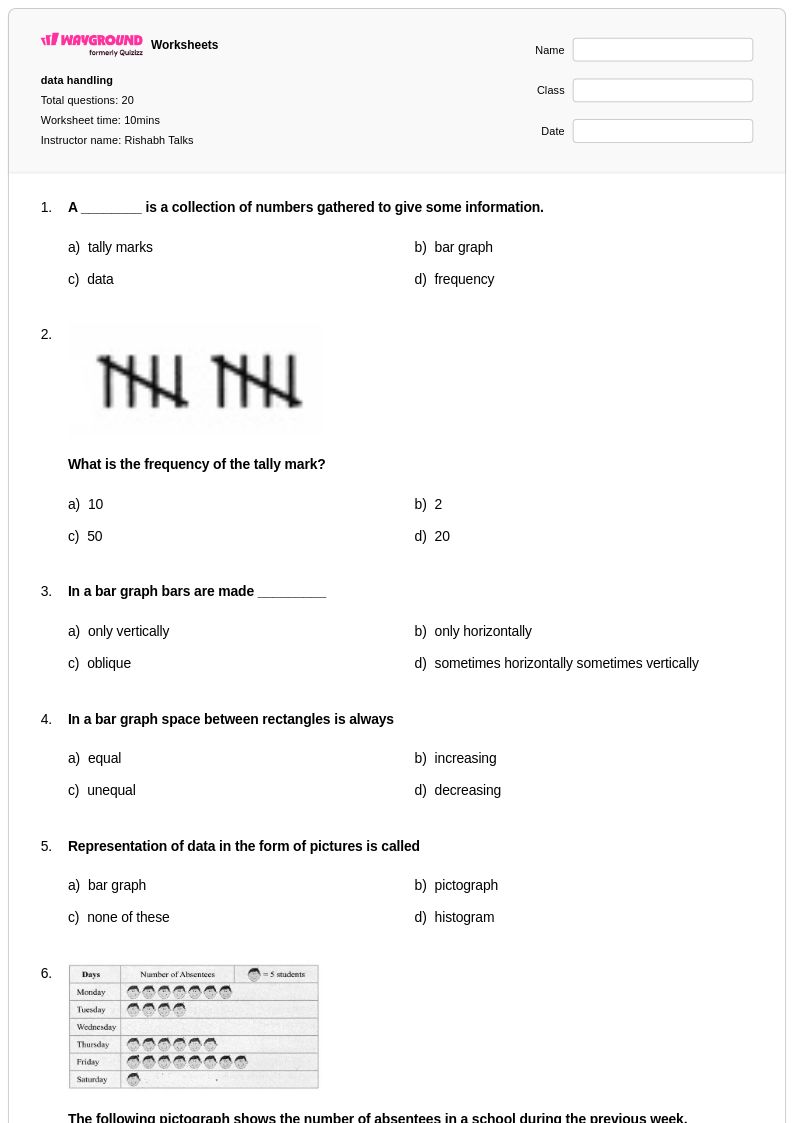
20 Q
6th
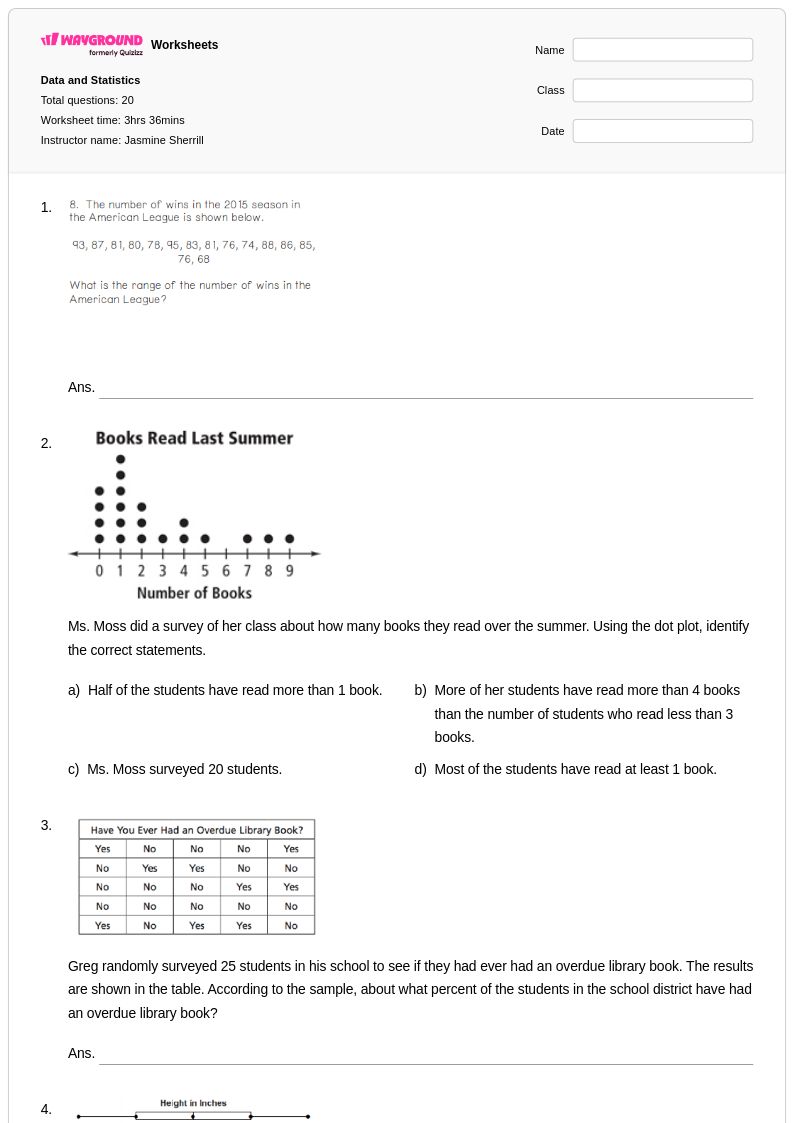
20 Q
6th
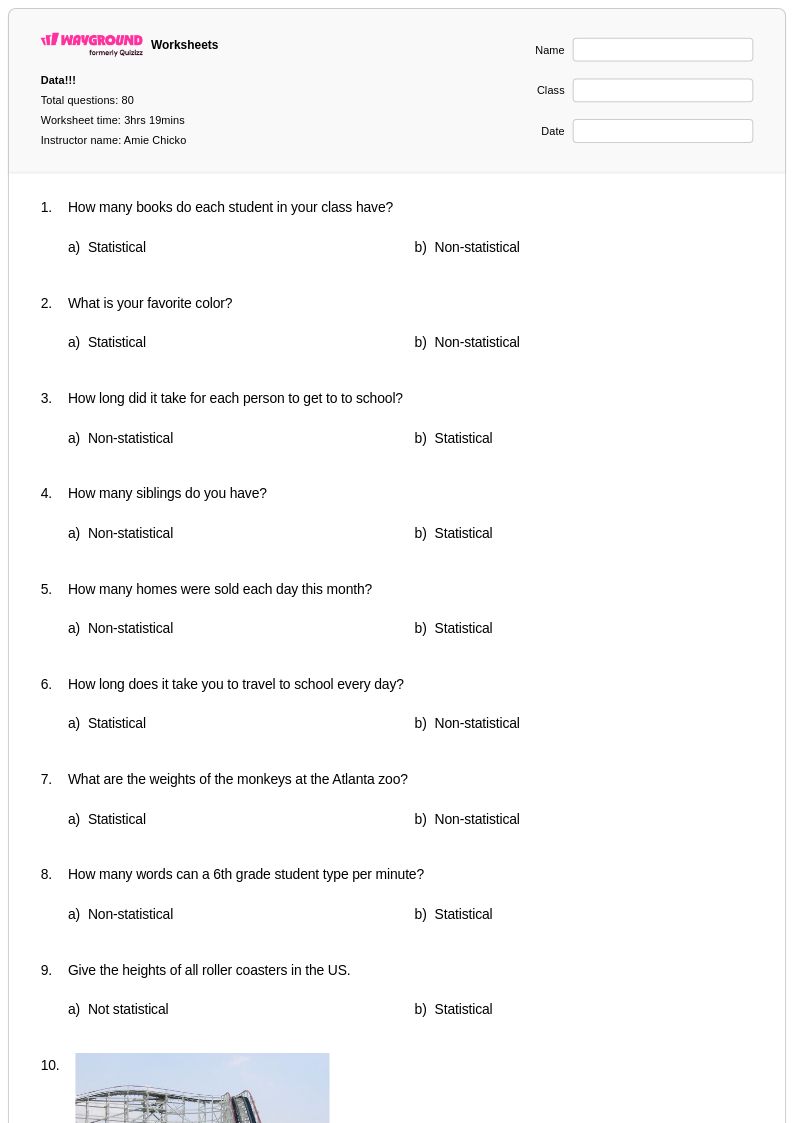
80 Q
6th
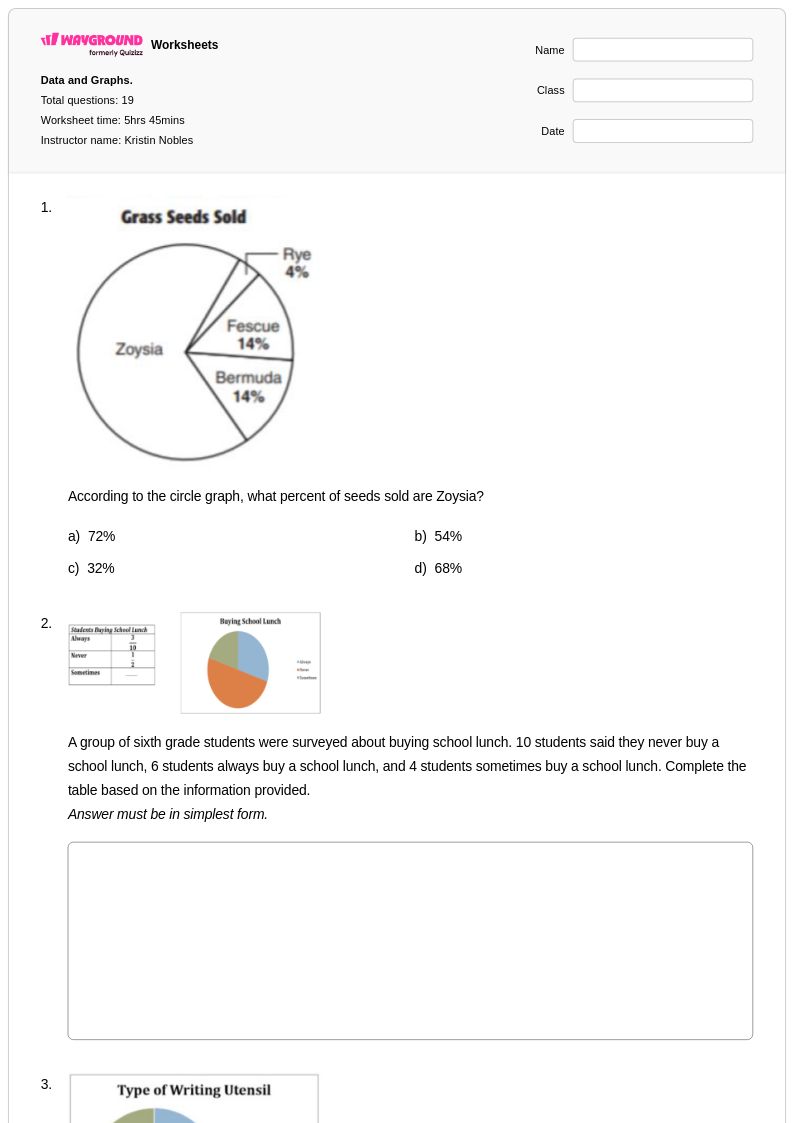
19 Q
6th

16 Q
6th
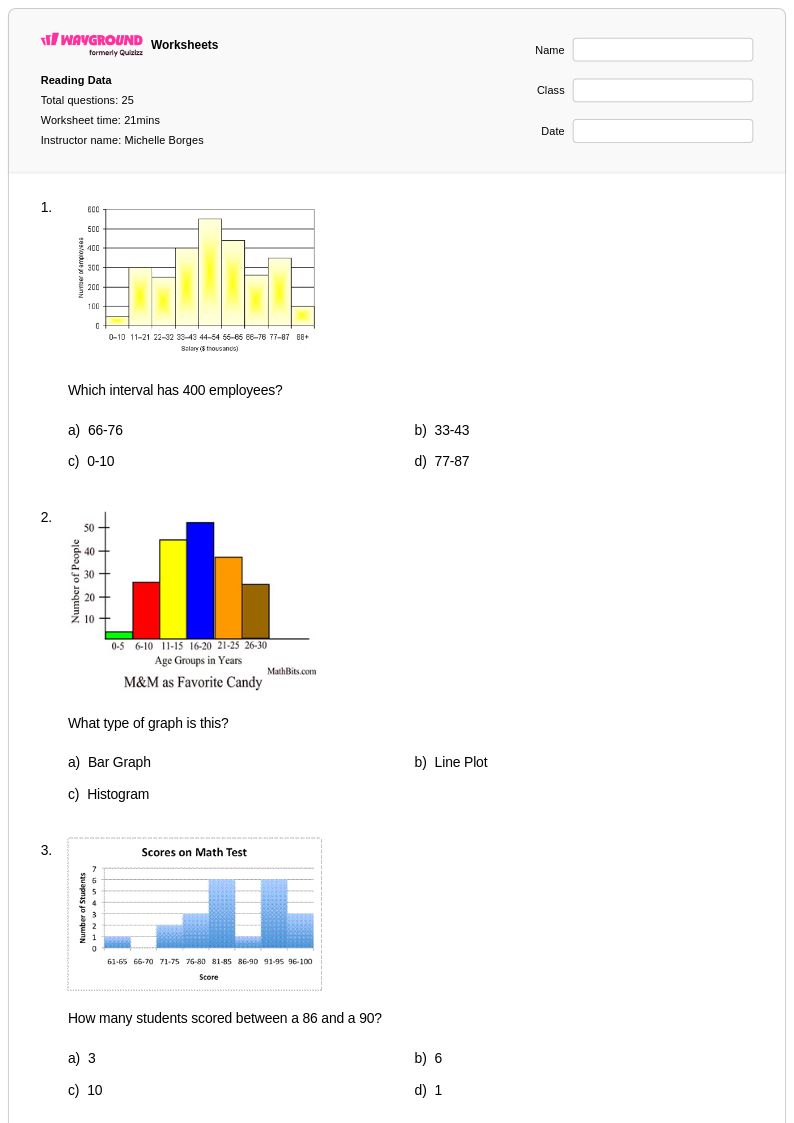
25 Q
6th
Explore Other Subject Worksheets for year 6
Explore printable Organizing Data worksheets for Year 6
Organizing Data worksheets for Year 6 students available through Wayground (formerly Quizizz) provide comprehensive practice in the fundamental skills of collecting, categorizing, and structuring information for mathematical analysis. These expertly designed printables help students master essential techniques such as creating frequency tables, sorting data sets by various attributes, and determining appropriate methods for organizing both numerical and categorical data. The worksheets feature diverse practice problems that challenge students to identify patterns, group information logically, and prepare data for graphical representation, with each resource including a detailed answer key to support independent learning and self-assessment. These free pdf resources strengthen critical thinking skills while building the foundational knowledge students need to progress to more advanced data analysis concepts.
Wayground (formerly Quizizz) supports educators with millions of teacher-created organizing data resources that streamline lesson planning and provide targeted skill practice for Year 6 mathematics instruction. The platform's robust search and filtering capabilities enable teachers to quickly locate worksheets aligned with specific standards and learning objectives, while built-in differentiation tools allow for seamless customization to meet diverse student needs. These flexible resources are available in both printable and digital formats, making them ideal for classroom instruction, homework assignments, remediation support, and enrichment activities. Teachers can efficiently adapt the difficulty level, modify problem types, and select specific organizational methods to focus on, ensuring that every student receives appropriate practice in structuring and categorizing data effectively.