
19 Q
4th - Uni
13 Q
4th
20 Q
4th - Uni
12 Q
4th - Uni
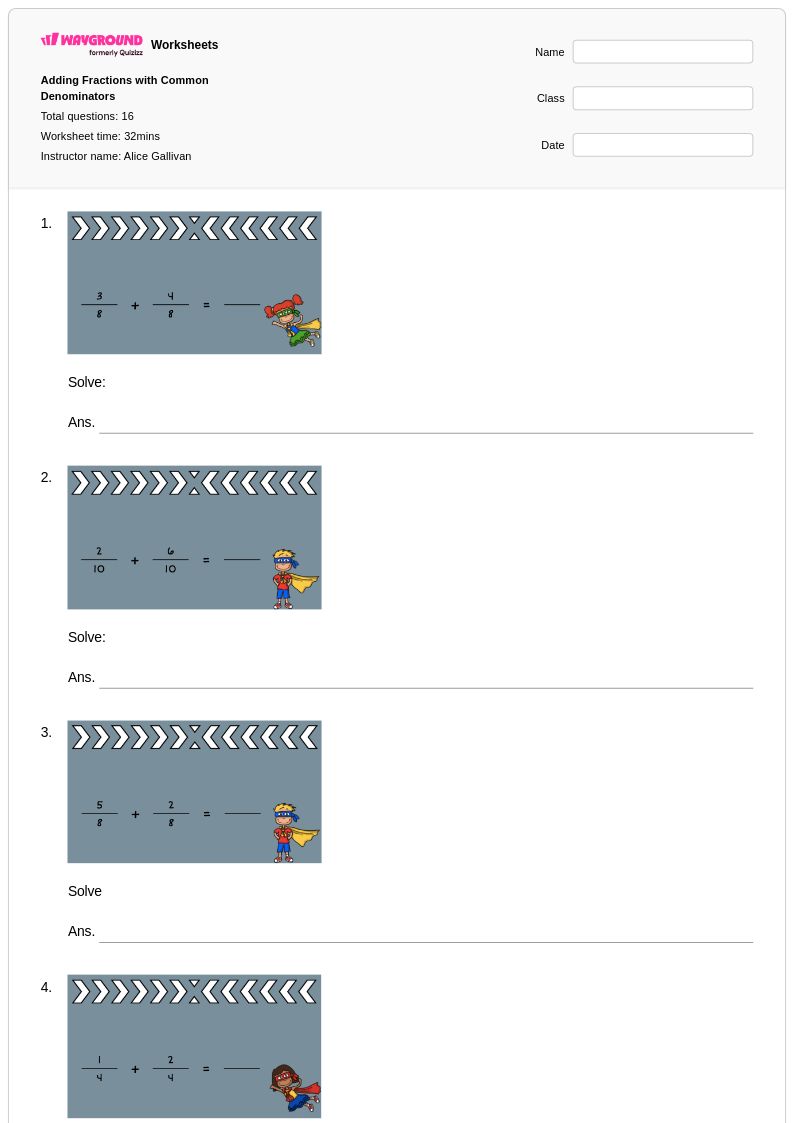
16 Q
3rd - 5th
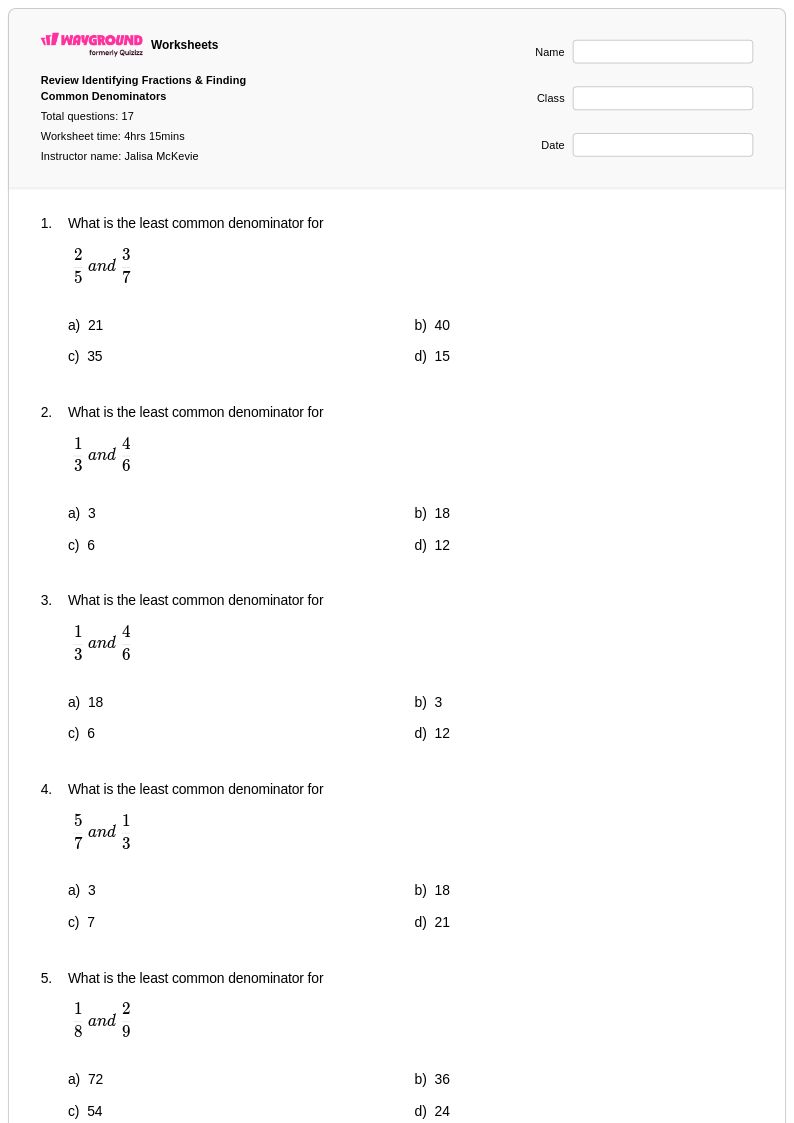
17 Q
4th - 5th
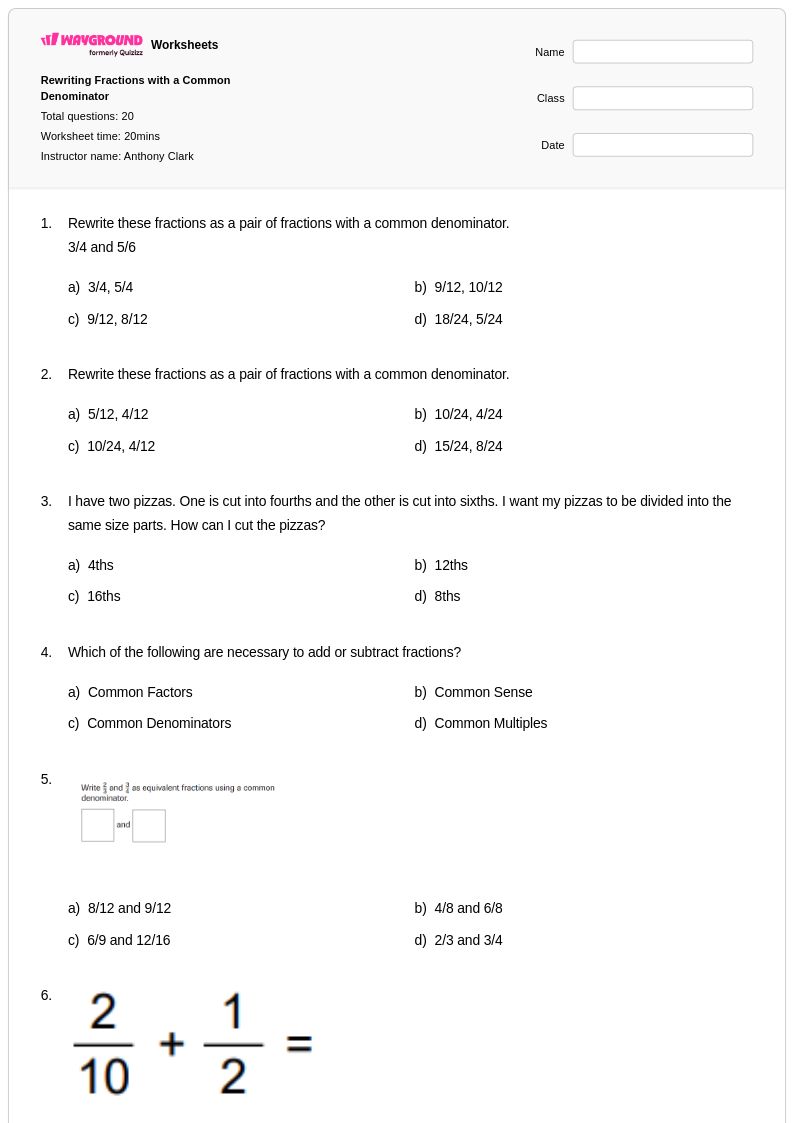
20 Q
4th - Uni
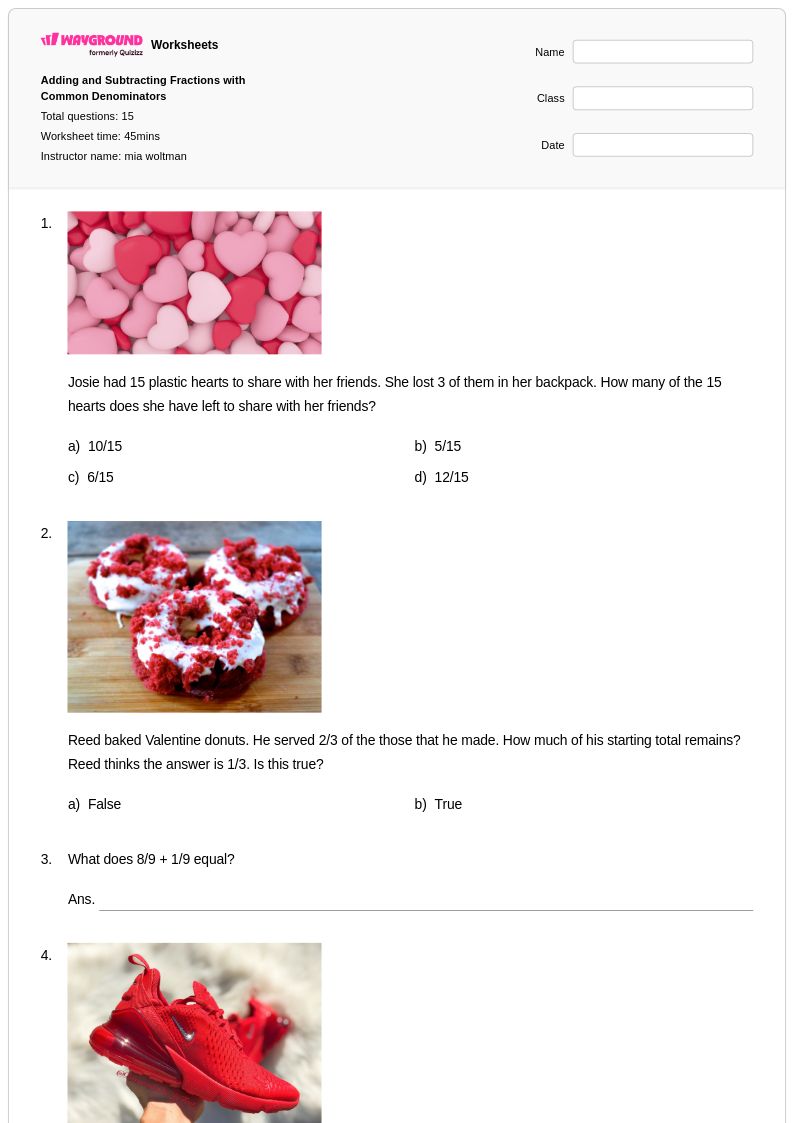
15 Q
4th - Uni
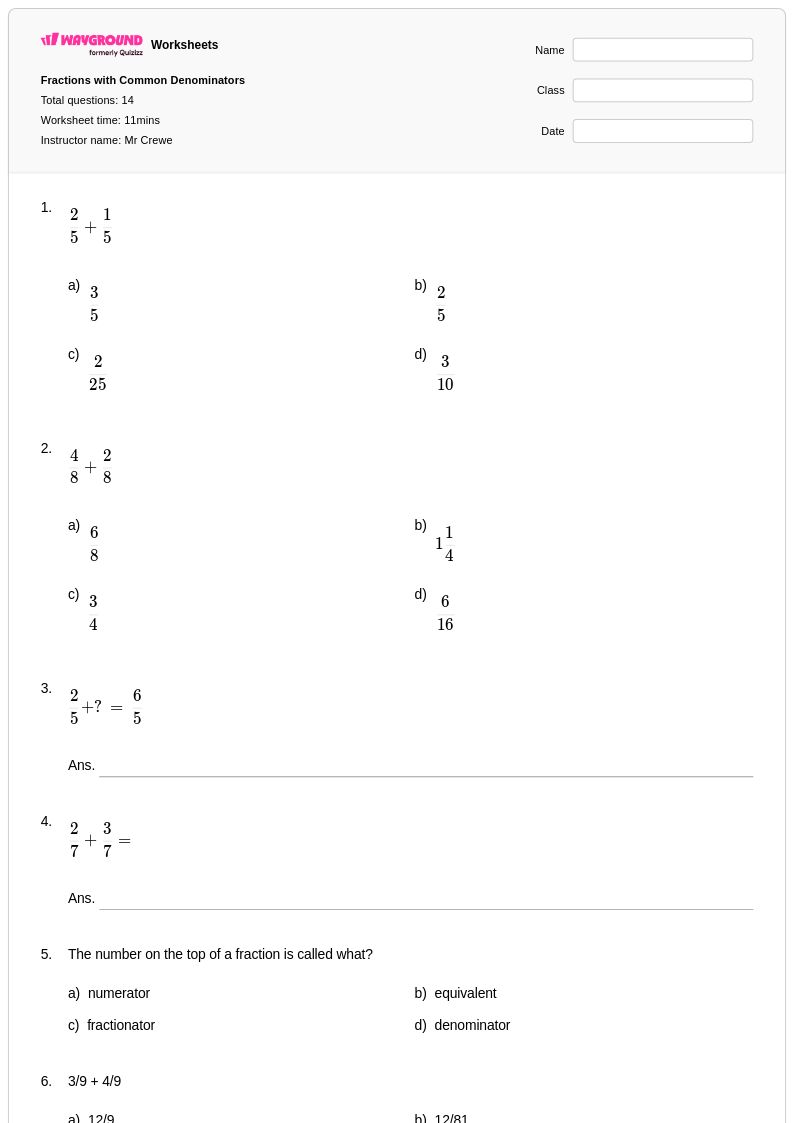
14 Q
4th - 7th
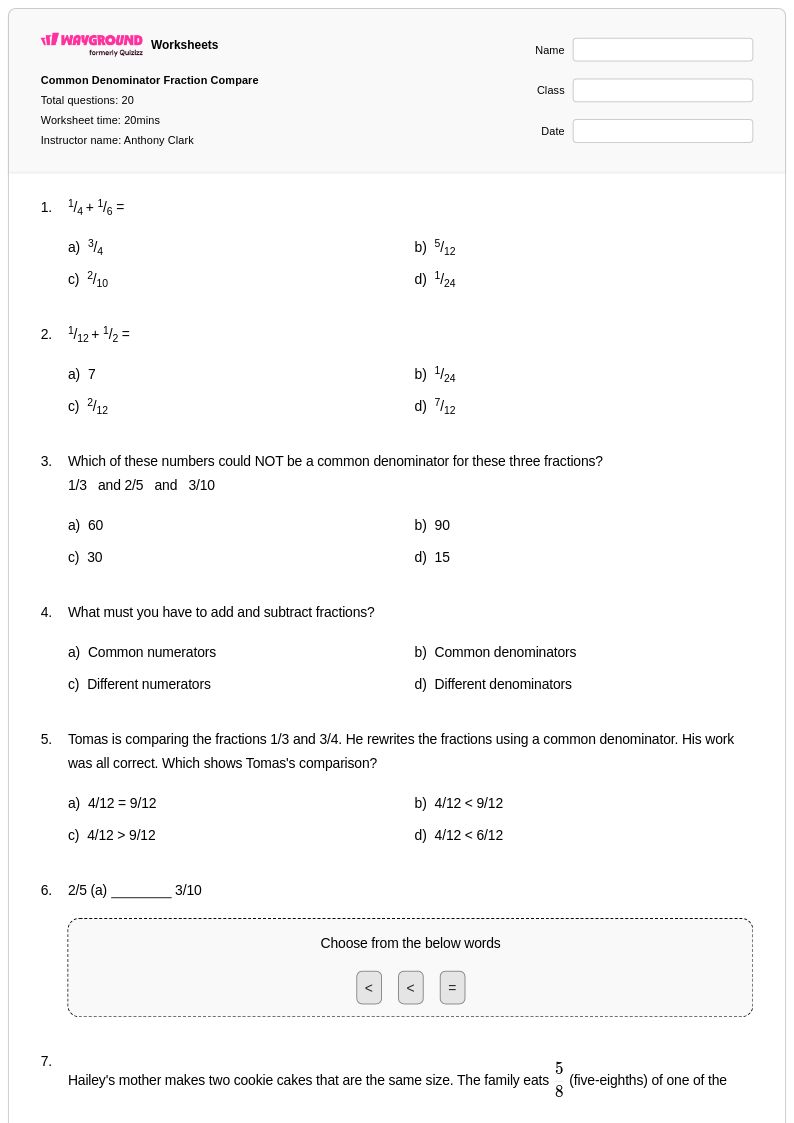
20 Q
4th - Uni
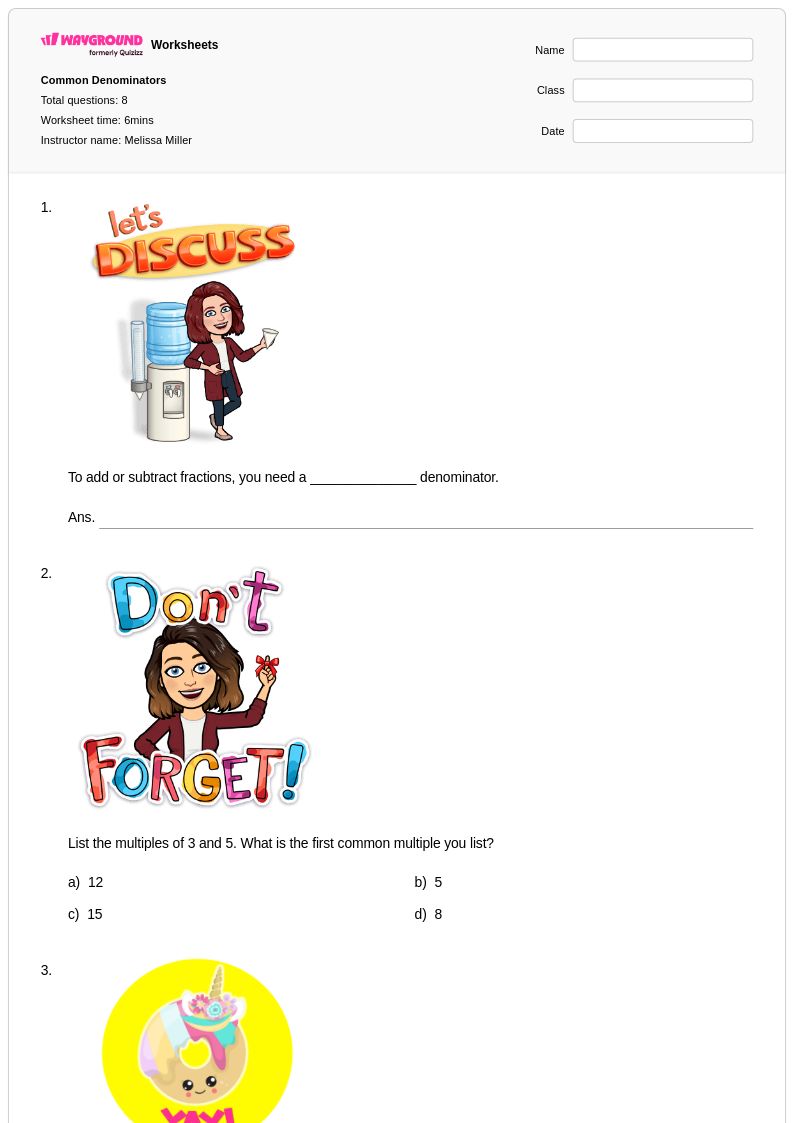
8 Q
4th - 5th
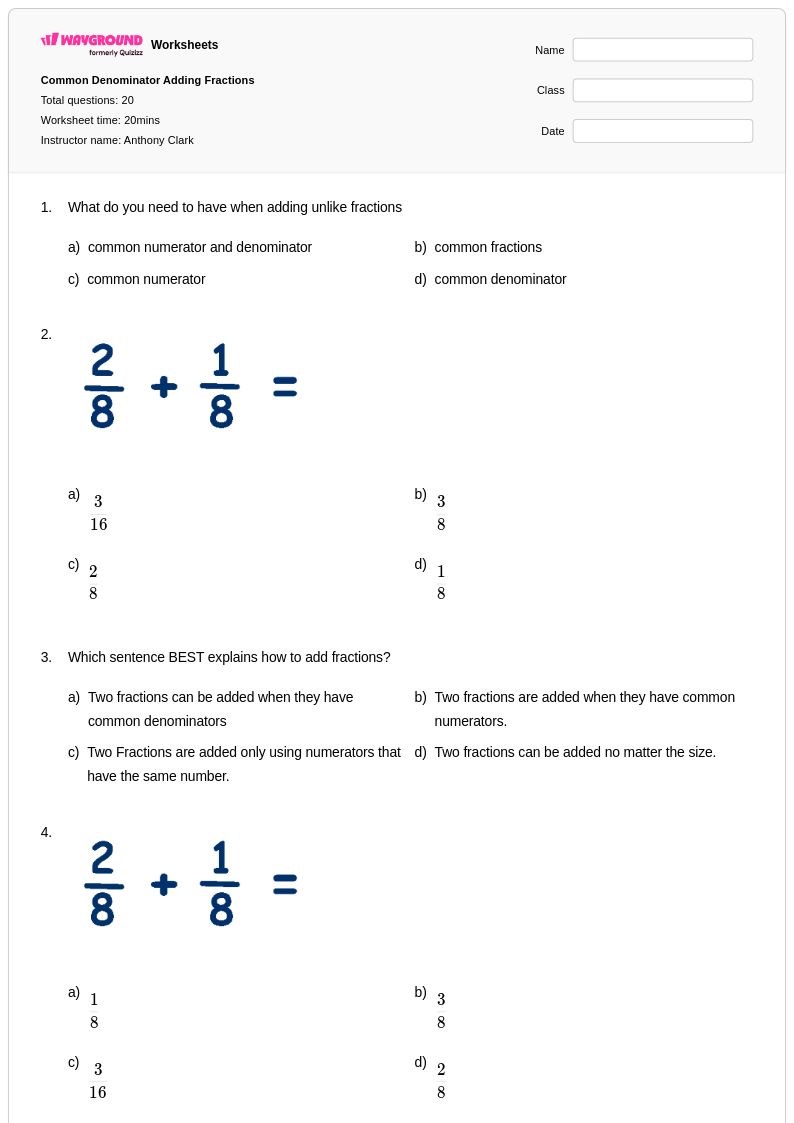
20 Q
4th - Uni
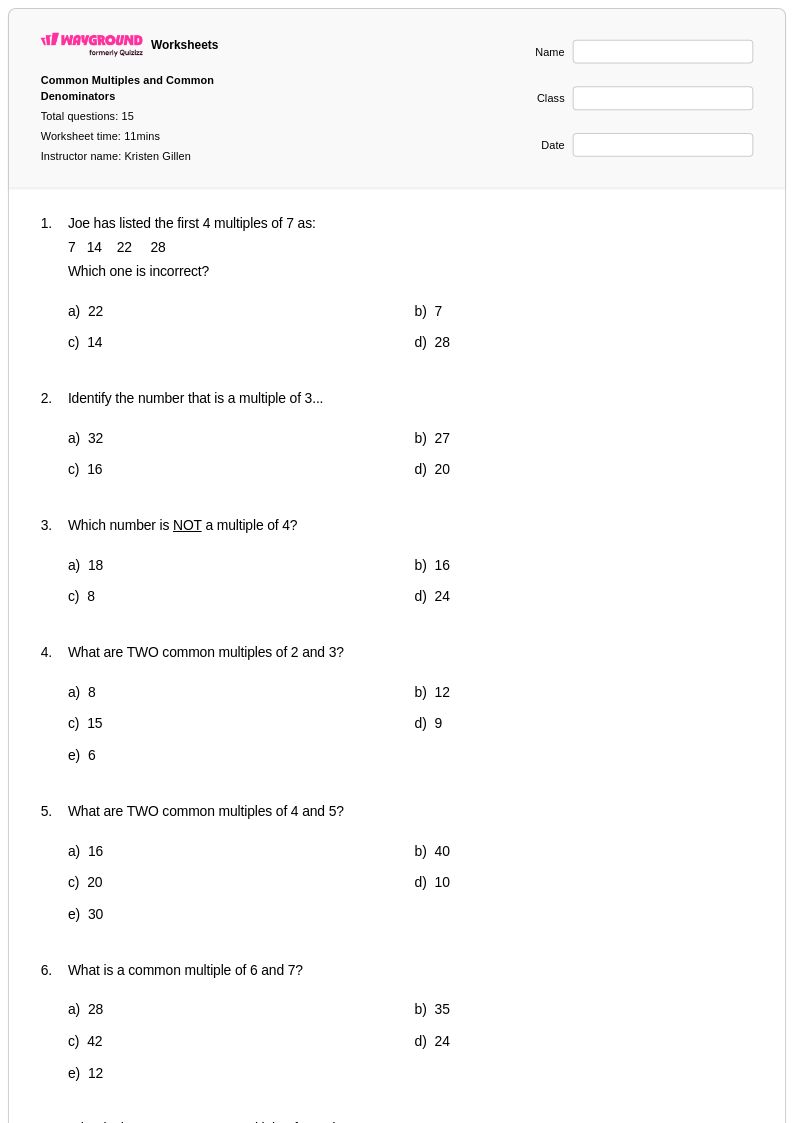
15 Q
1st - 5th
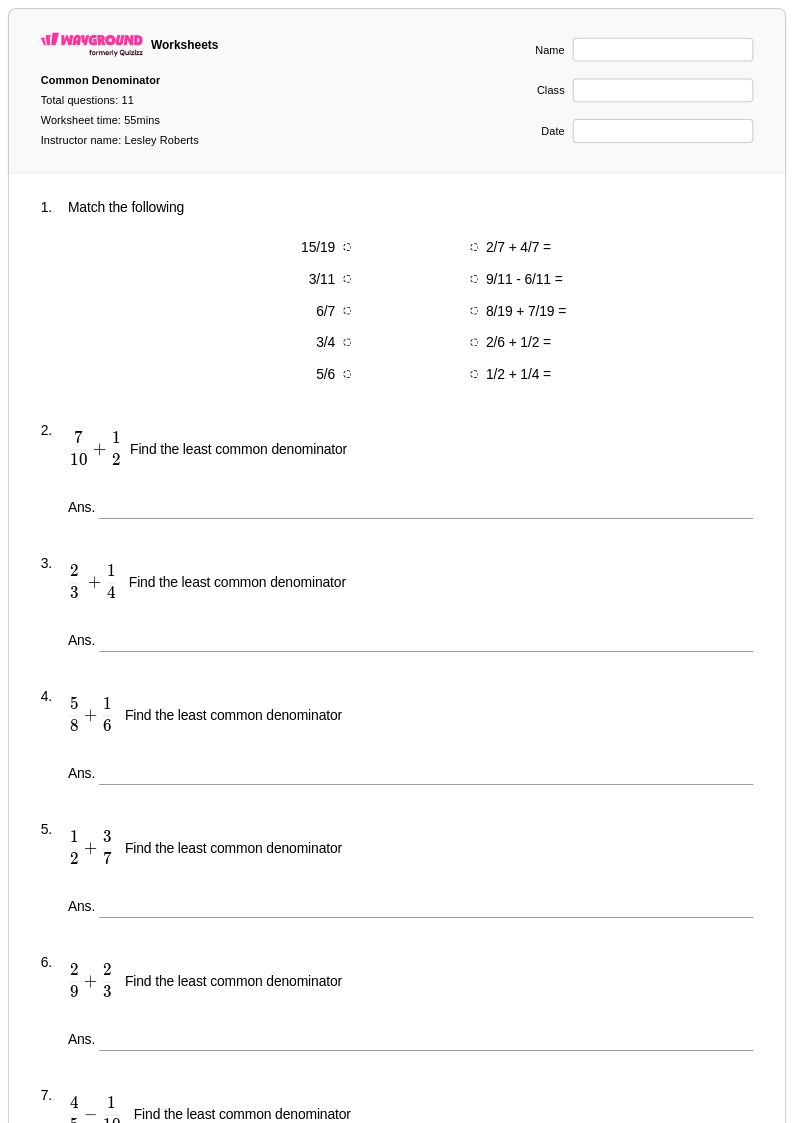
11 Q
3rd - 5th
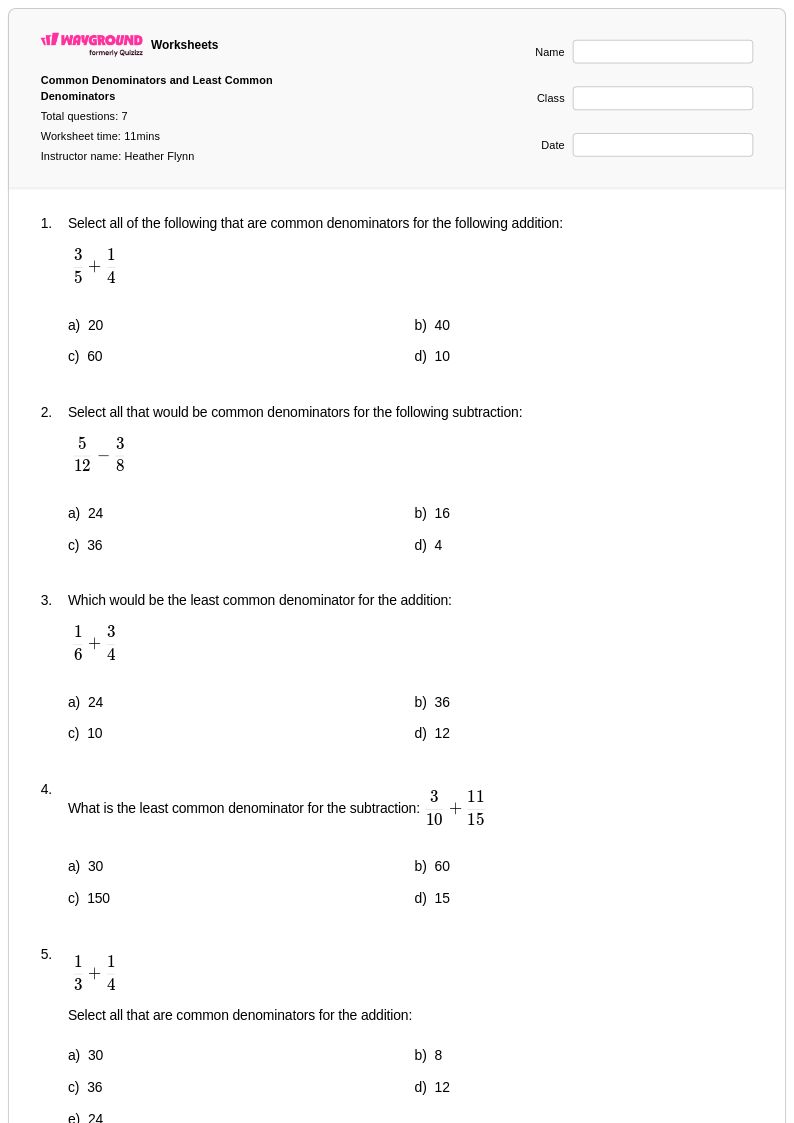
7 Q
4th - 8th
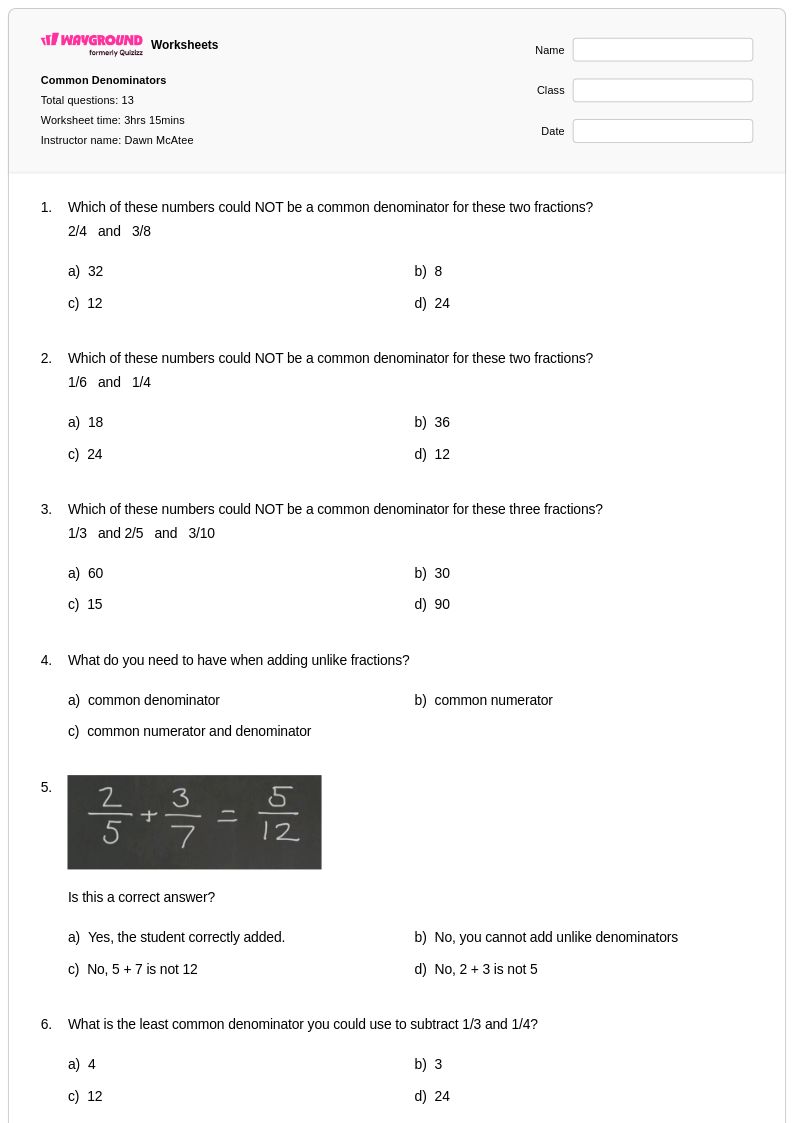
13 Q
4th - 6th
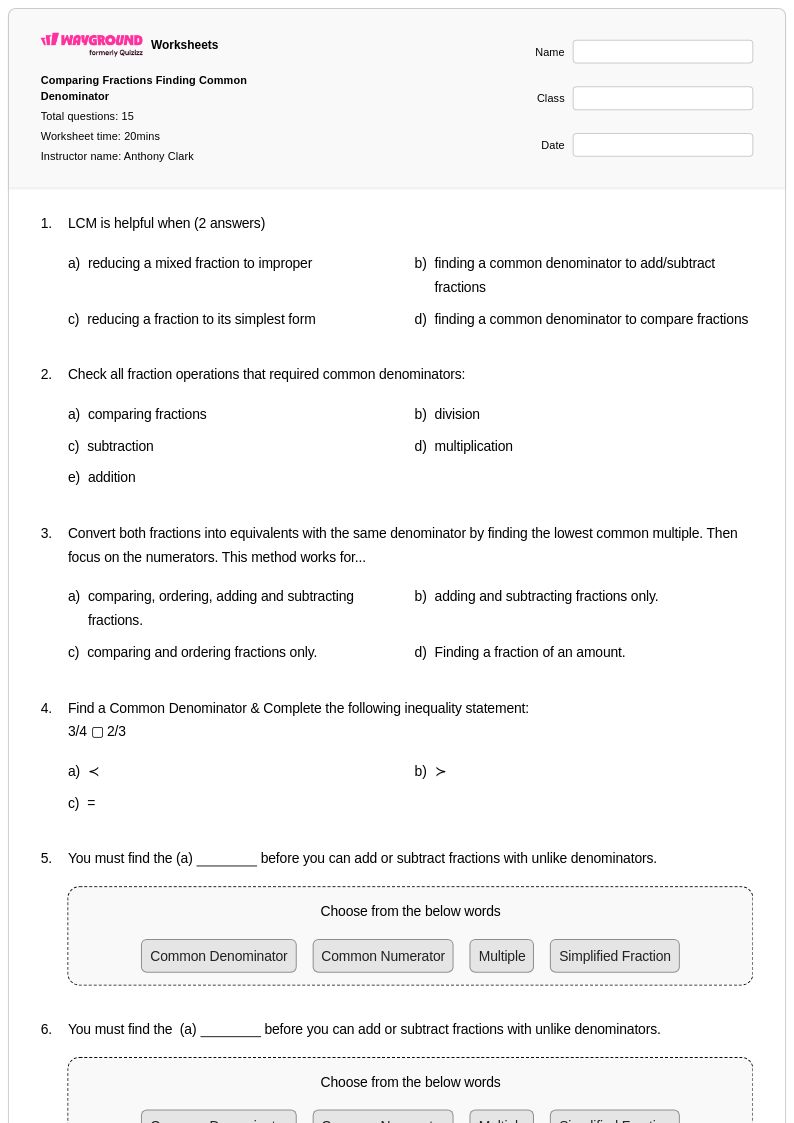
20 Q
4th - Uni
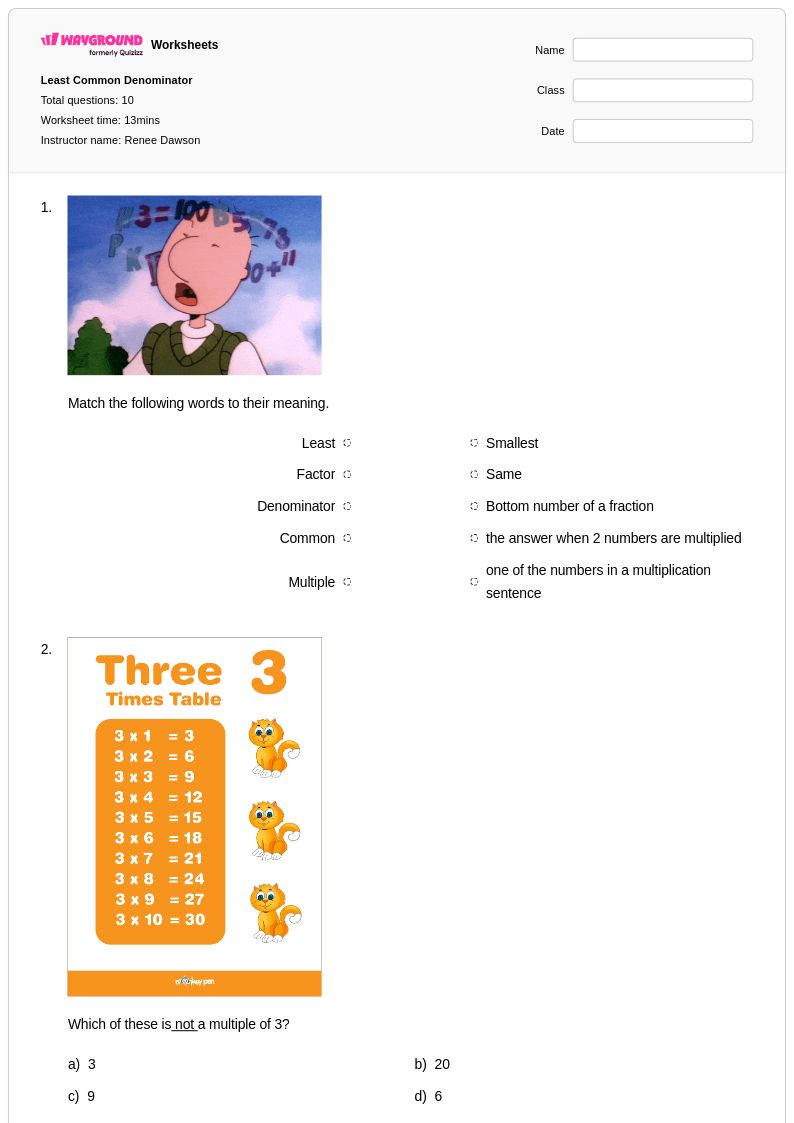
10 Q
3rd - 6th
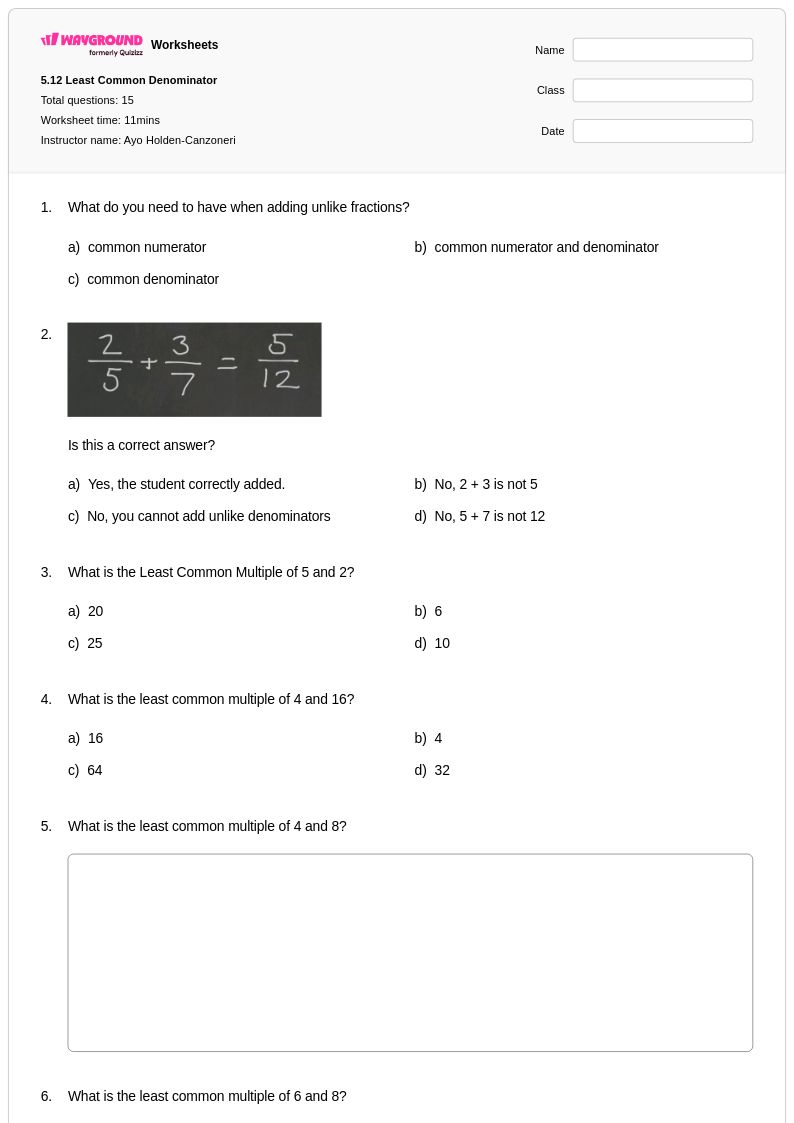
15 Q
4th
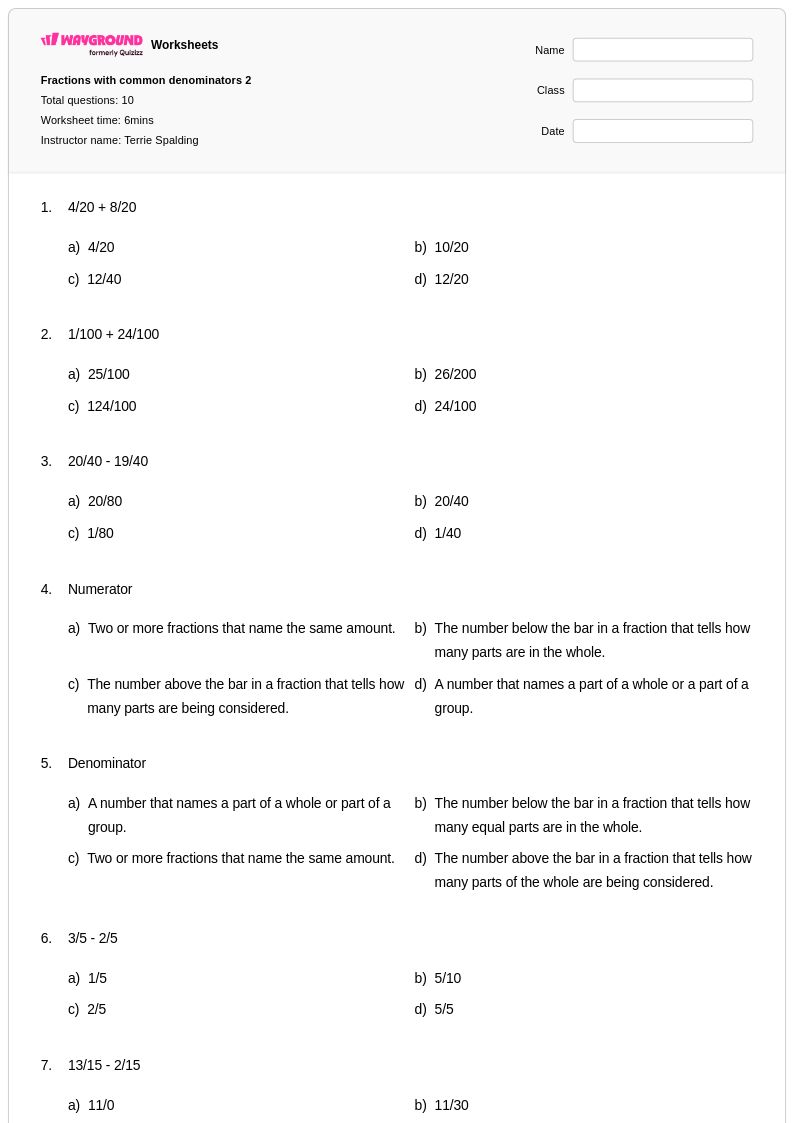
10 Q
3rd - 5th
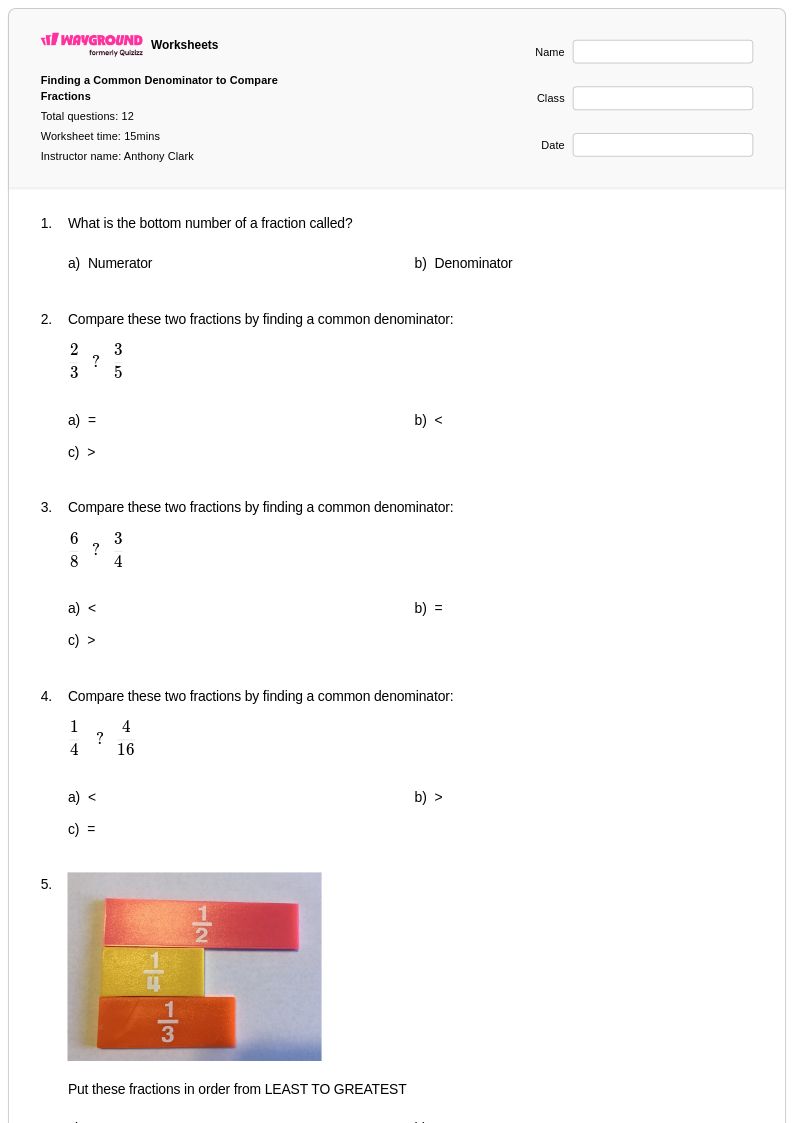
15 Q
4th - Uni
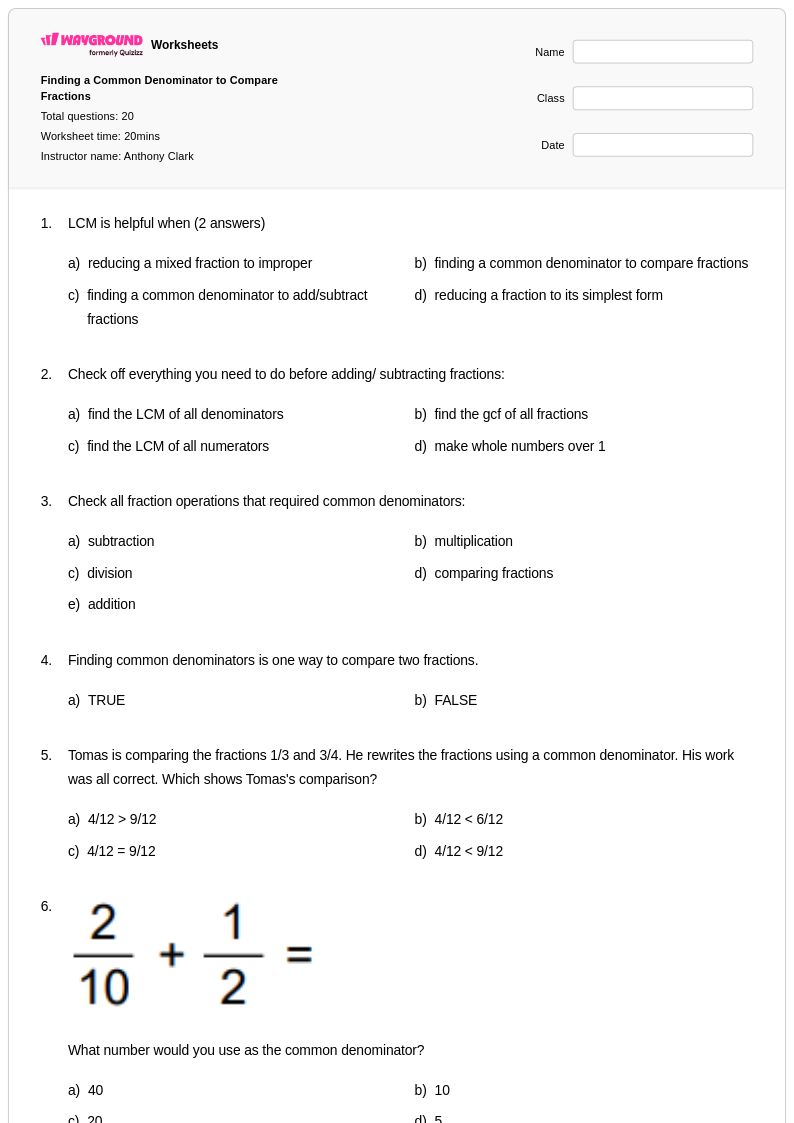
20 Q
4th - Uni
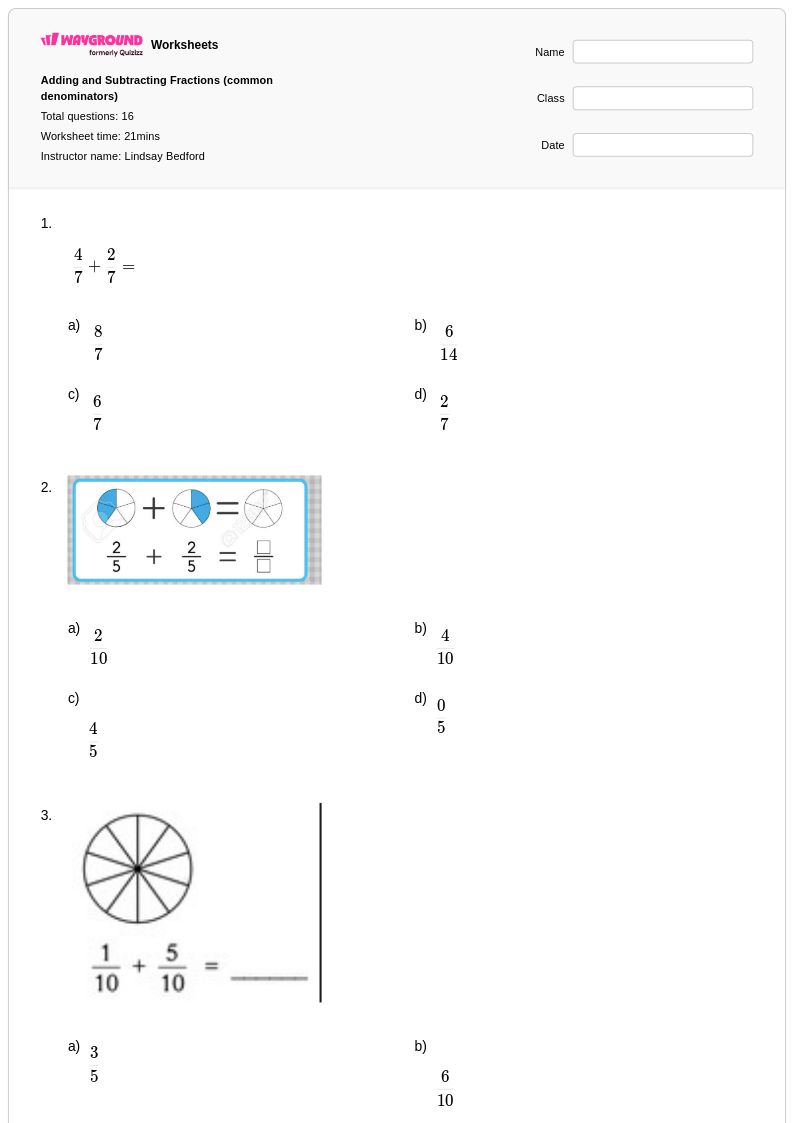
16 Q
4th
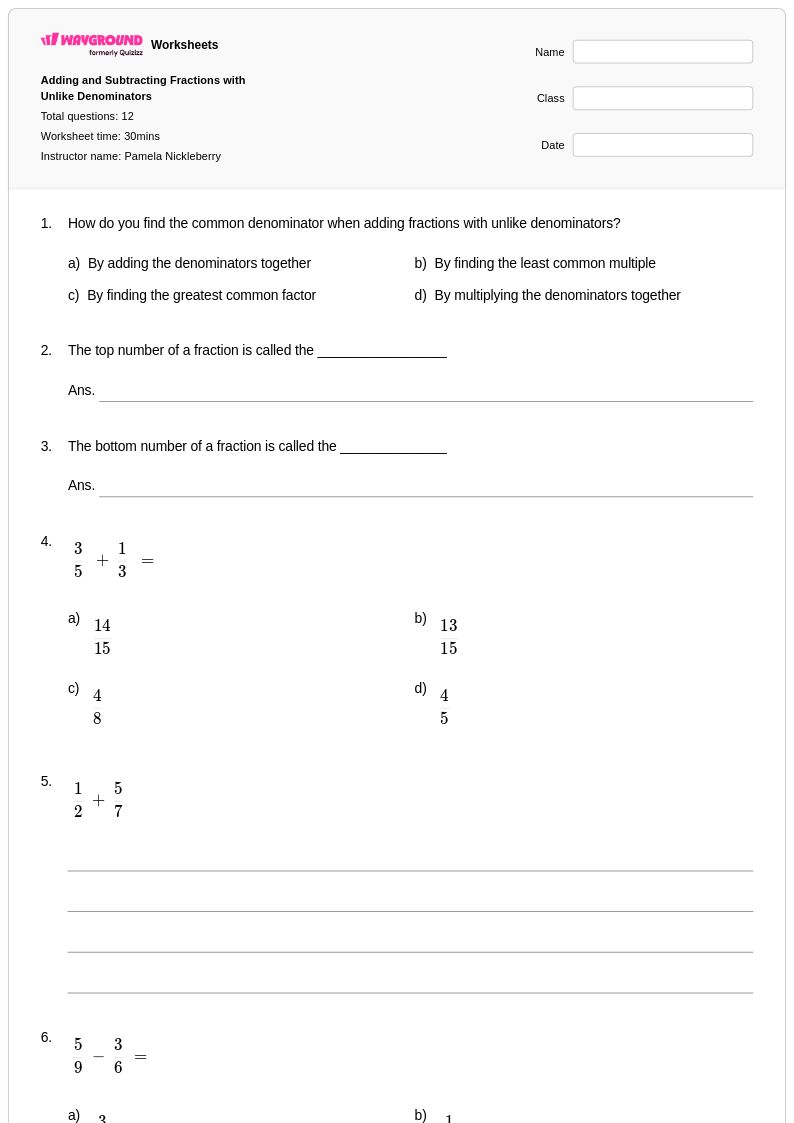
12 Q
4th - 5th
Explore Other Subject Worksheets for year 4
Explore printable Common Denominators worksheets for Year 4
Common denominators worksheets for grade 4 mathematics provide essential practice for students learning to compare, add, and subtract fractions with different denominators. These comprehensive printables available through Wayground help fourth graders master the fundamental skill of finding equivalent fractions by converting them to share the same denominator. The practice problems systematically guide students through identifying the least common multiple of denominators, creating equivalent fractions, and applying this knowledge to solve fraction operations. Each free worksheet includes varied exercises that strengthen students' understanding of fraction relationships, number sense, and mathematical reasoning, with accompanying answer keys that allow for immediate feedback and self-assessment. These pdf resources build crucial foundational skills that prepare students for more advanced fraction concepts in higher grade levels.
Wayground's extensive collection of teacher-created common denominators worksheets draws from millions of educational resources, offering educators powerful search and filtering capabilities to locate materials perfectly aligned with grade 4 mathematics standards and individual classroom needs. The platform's differentiation tools enable teachers to customize worksheet difficulty levels, ensuring appropriate challenges for students requiring remediation as well as those ready for enrichment activities. These flexible resources are available in both printable pdf format for traditional classroom use and digital formats for technology-integrated learning environments. Teachers can efficiently plan targeted skill practice sessions, create diagnostic assessments, and design intervention activities that address specific learning gaps in fraction understanding, making common denominators instruction more effective and responsive to diverse student needs.
FAQs
How do I teach common denominators to fourth graders?
What common denominator exercises are appropriate for grade 4?
What mistakes do fourth graders make with common denominators?
How can I use a grade 4 common denominators worksheet from Wayground?
Are grade 4 common denominator worksheets aligned with Common Core?
How can I differentiate grade 4 common denominator worksheets?
What grade do students learn common denominators?