Free Printable Complete Sentences Worksheets for Year 5
Master complete sentences with our Year 5 printable worksheets and practice problems that help students identify and construct proper sentence structure through engaging activities, free PDF downloads, and comprehensive answer keys.
Explore printable Complete Sentences worksheets for Year 5
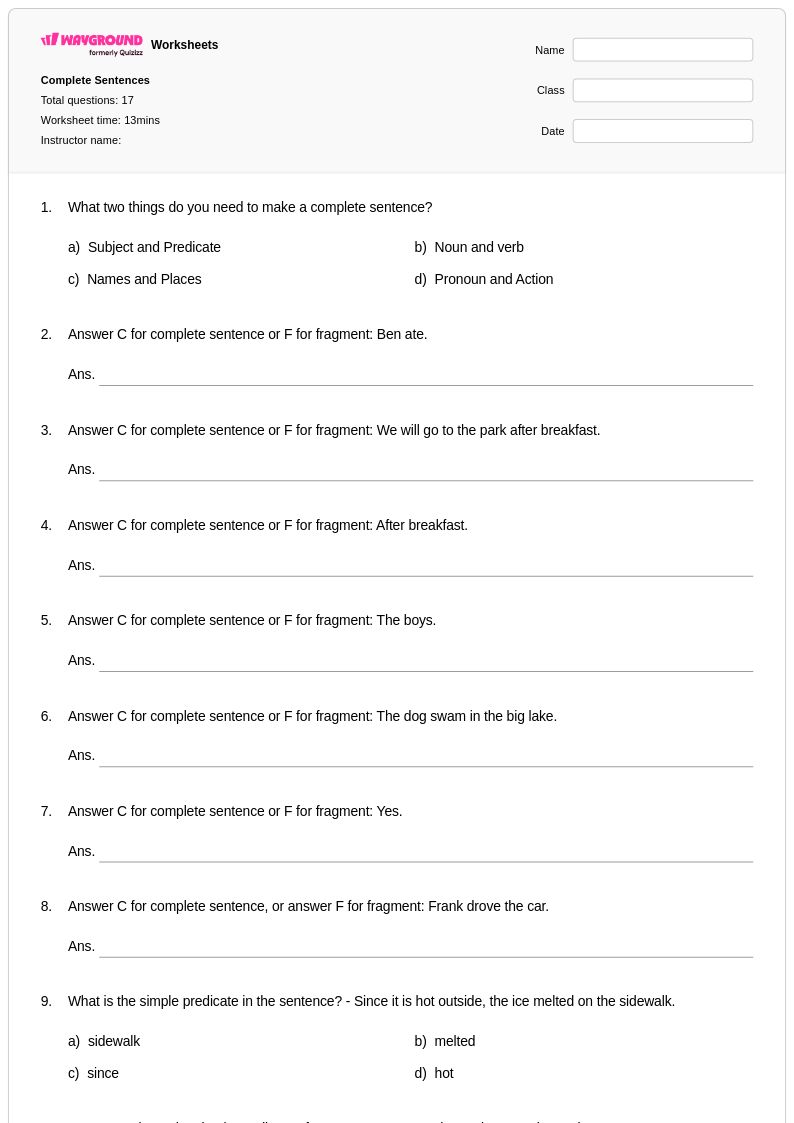
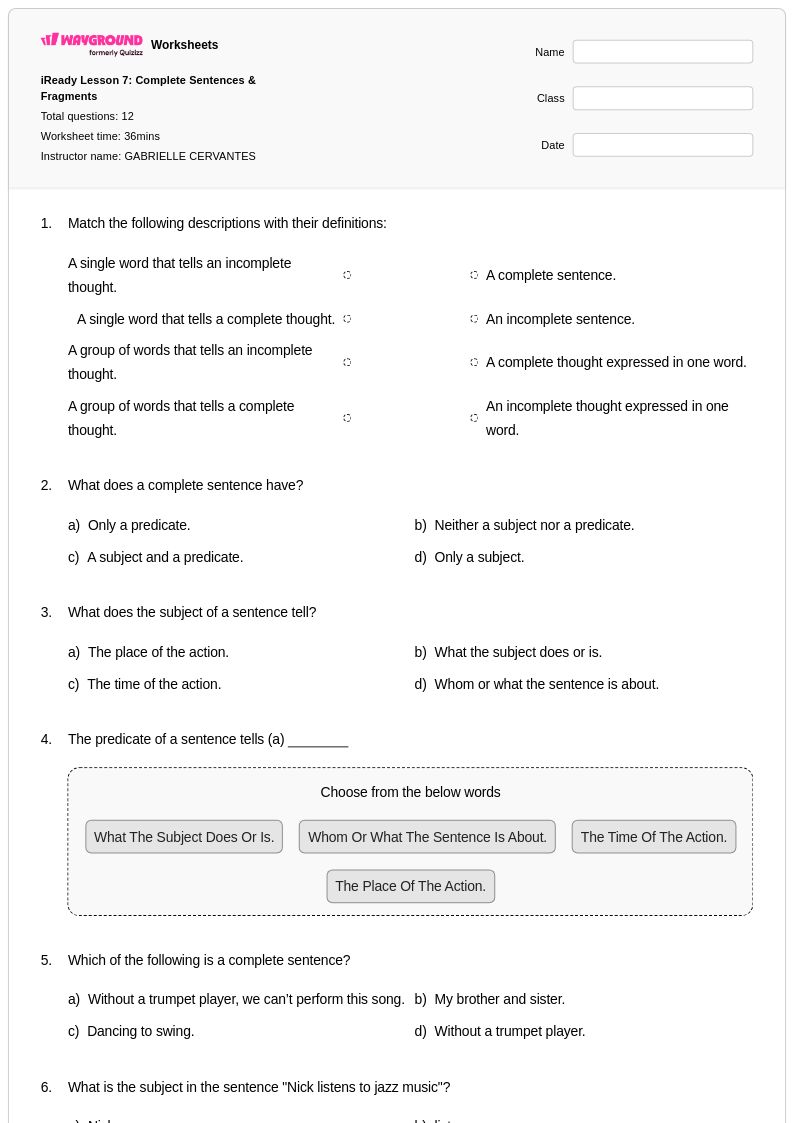
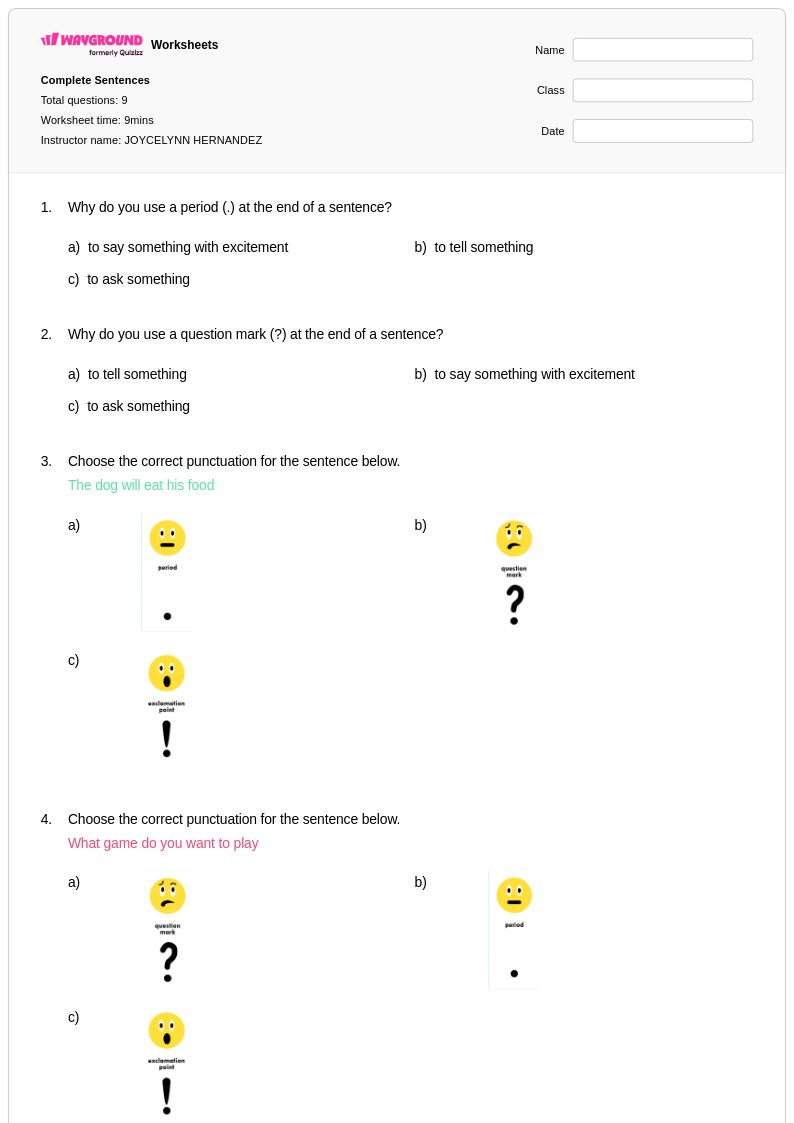
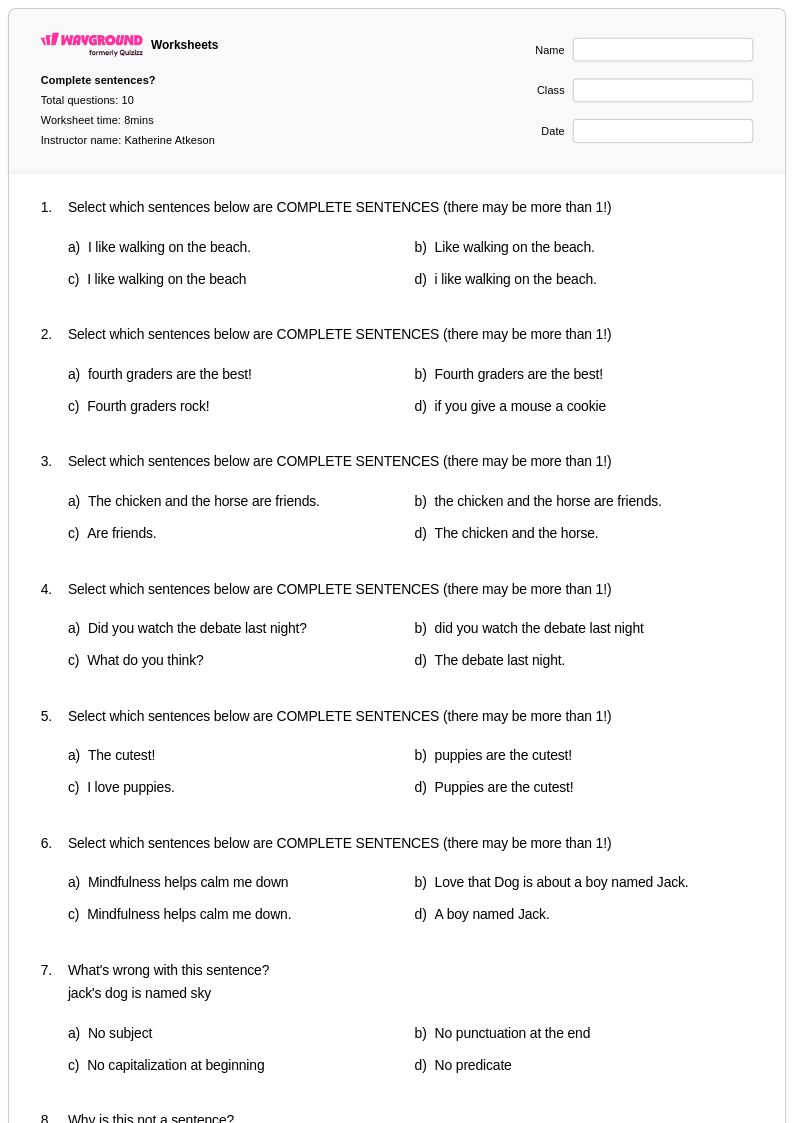
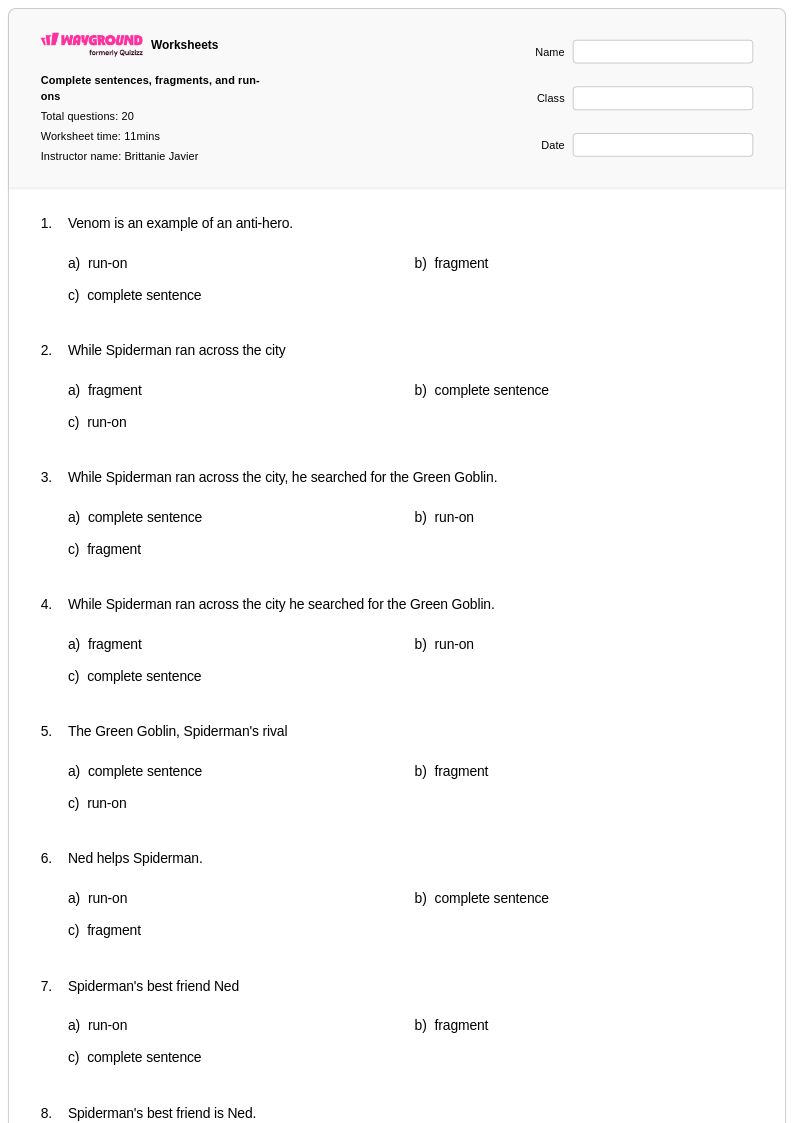
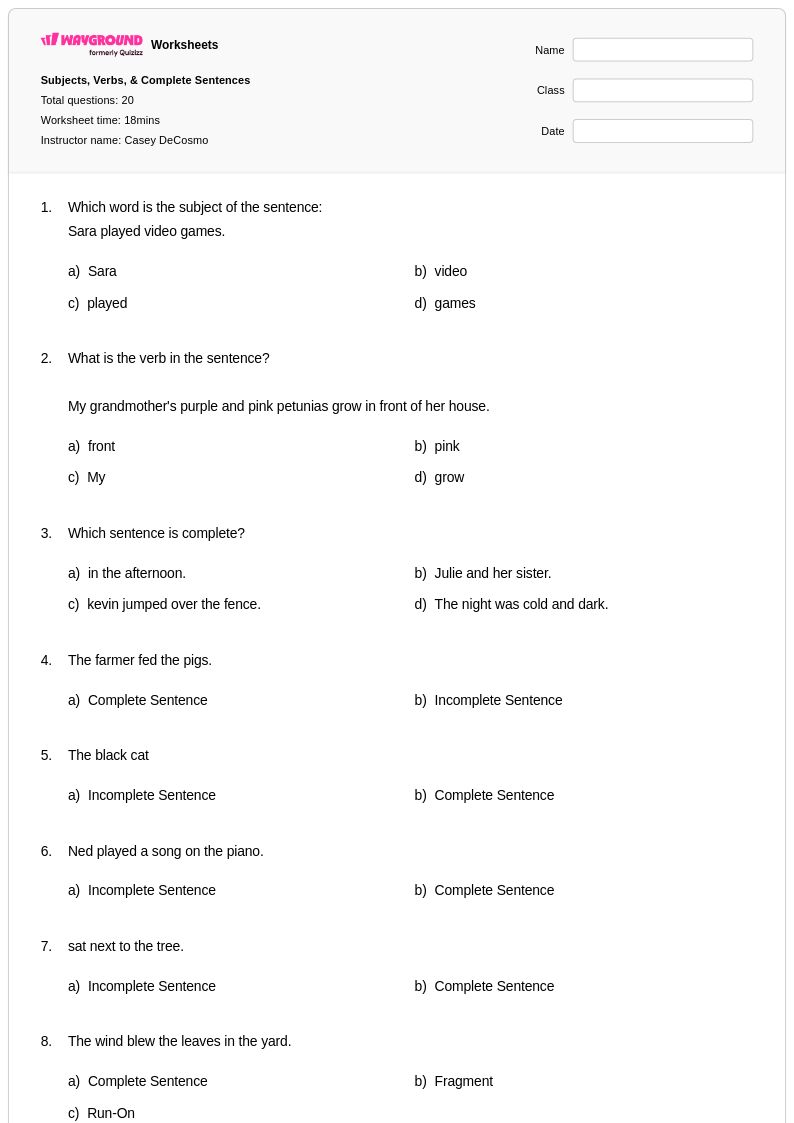
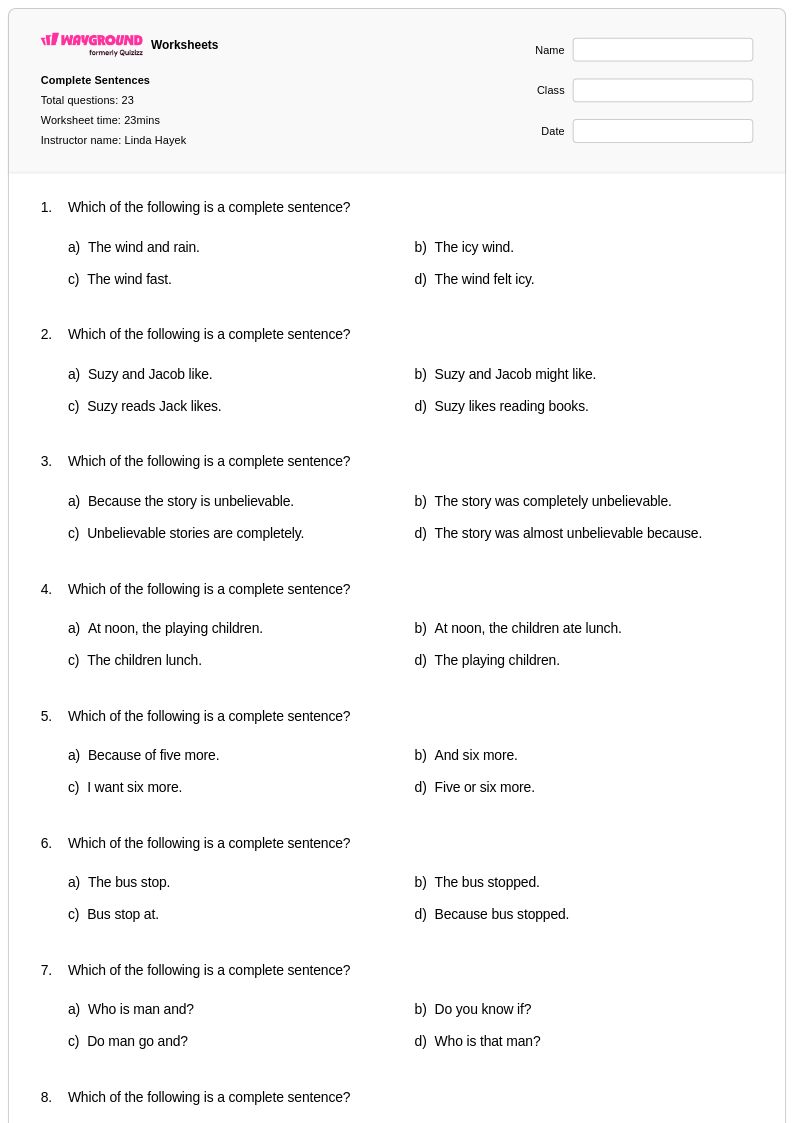
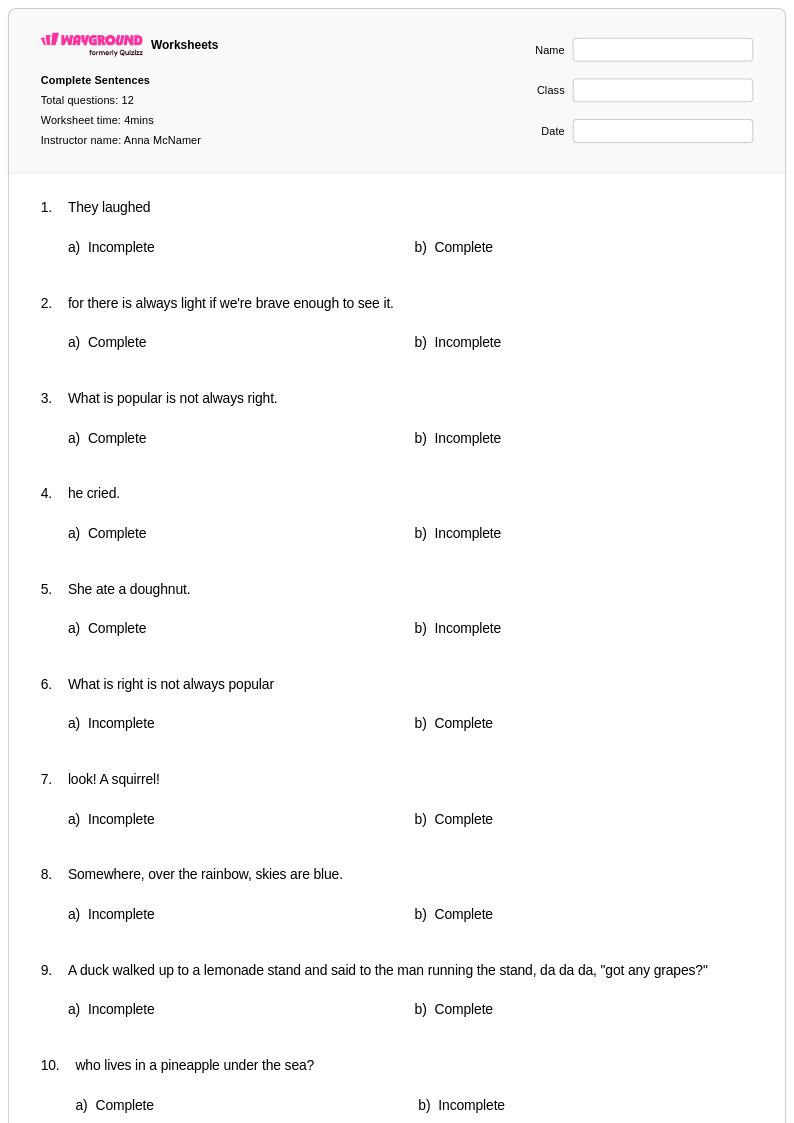
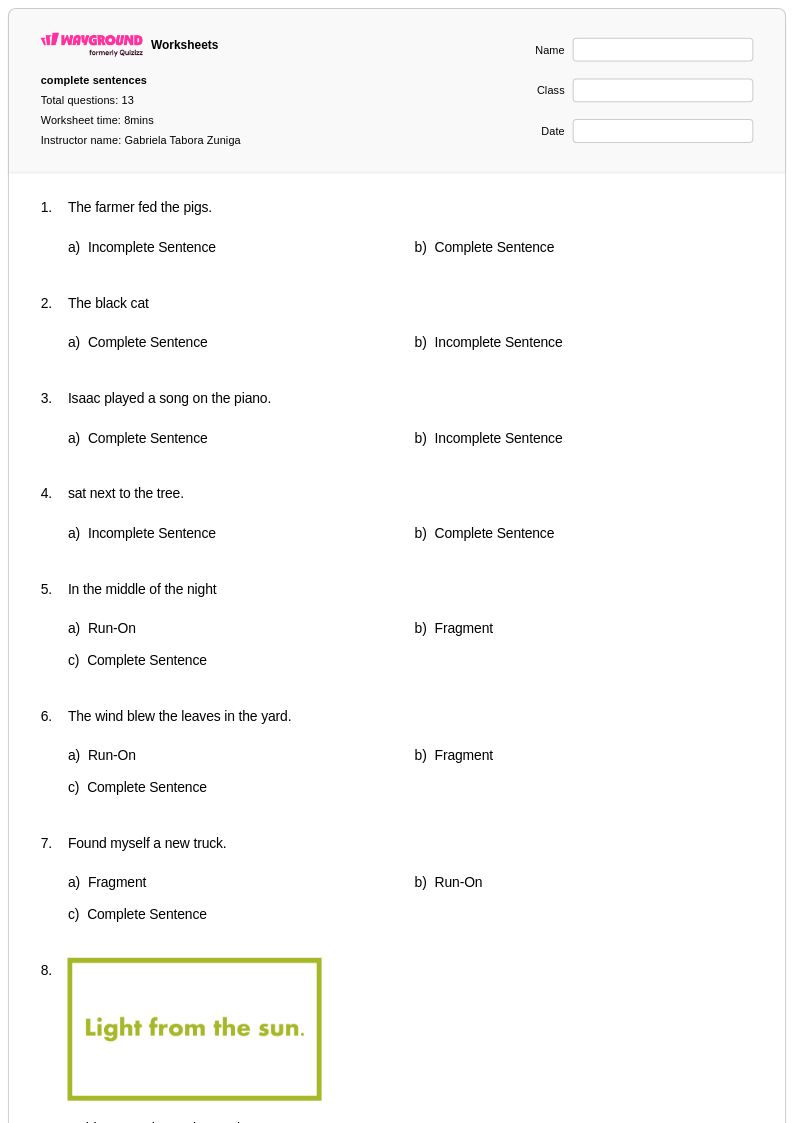
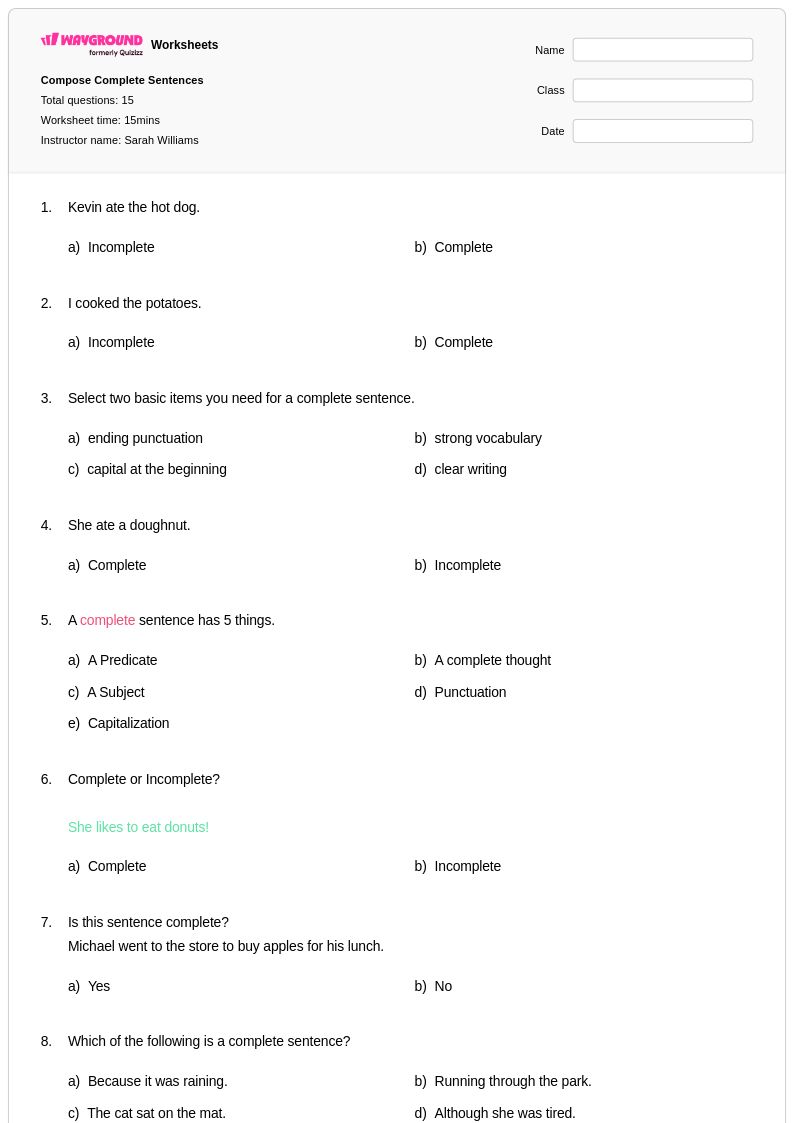
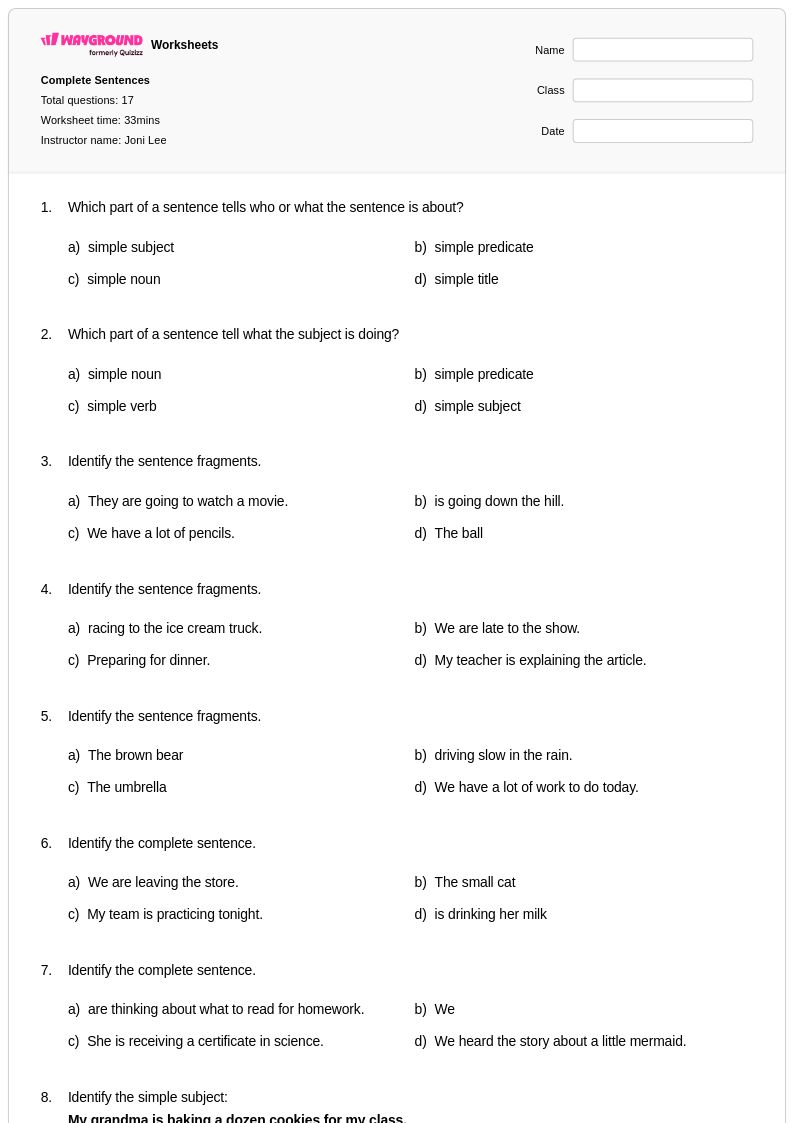
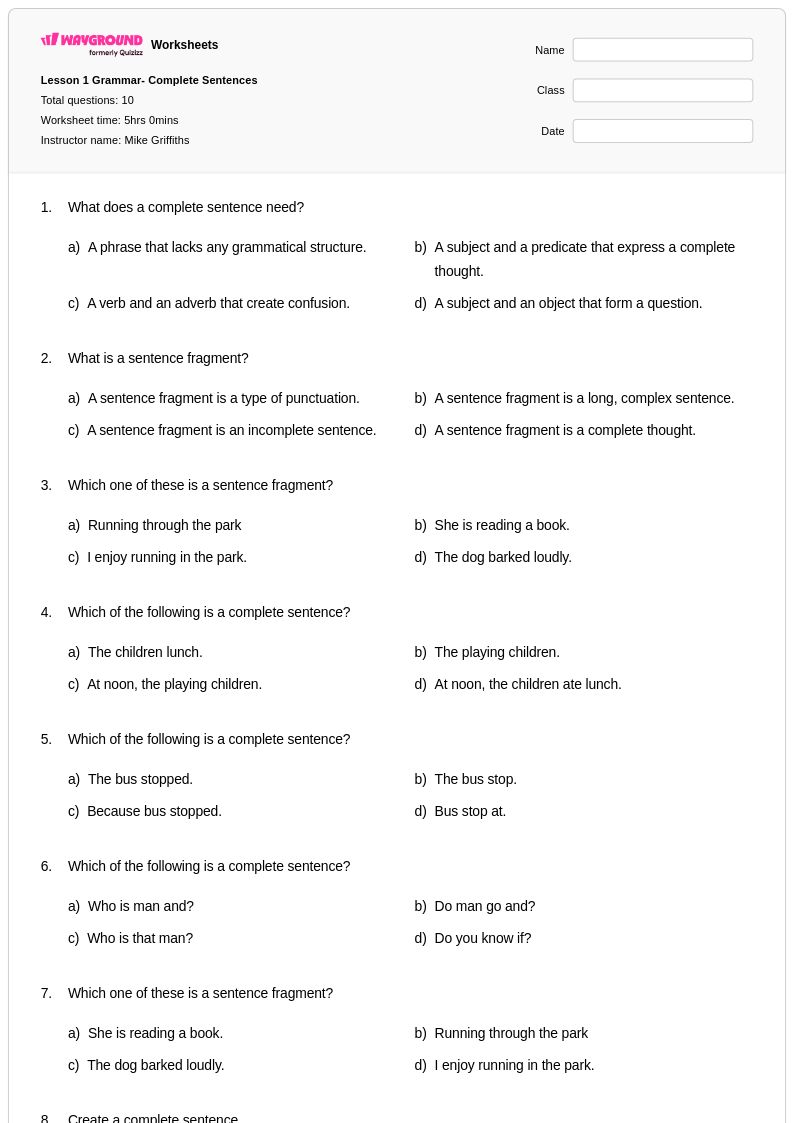
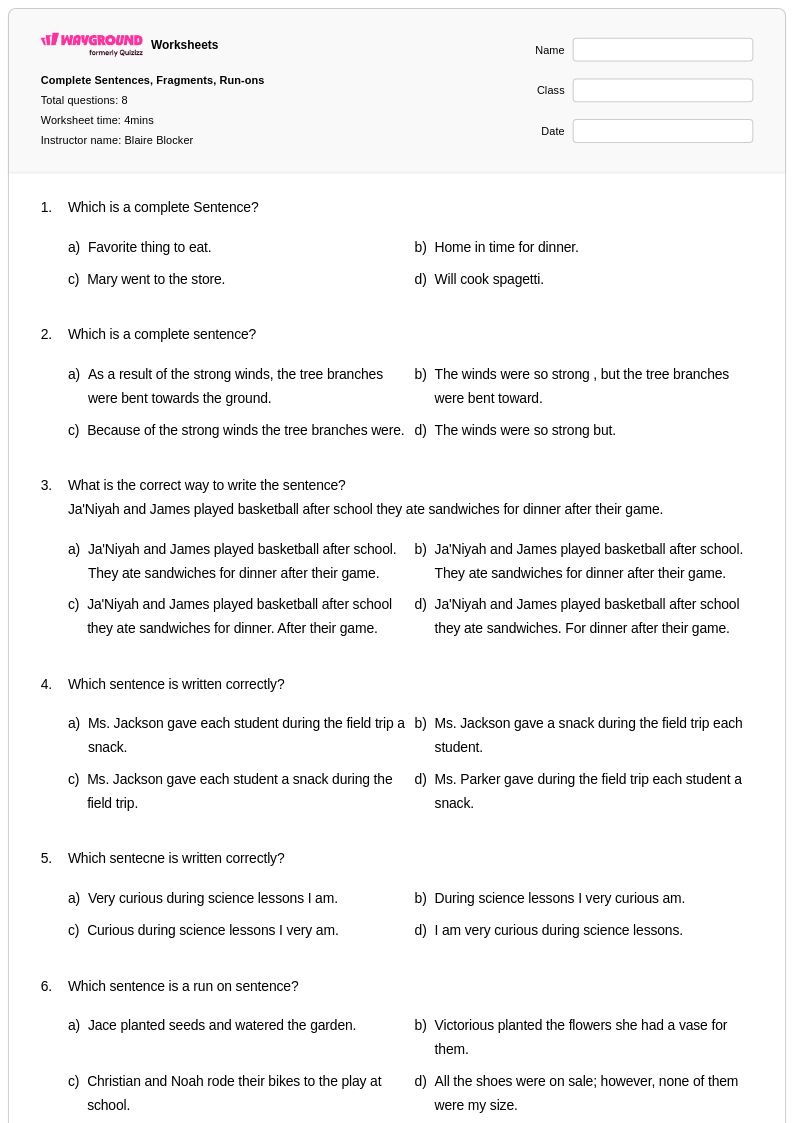
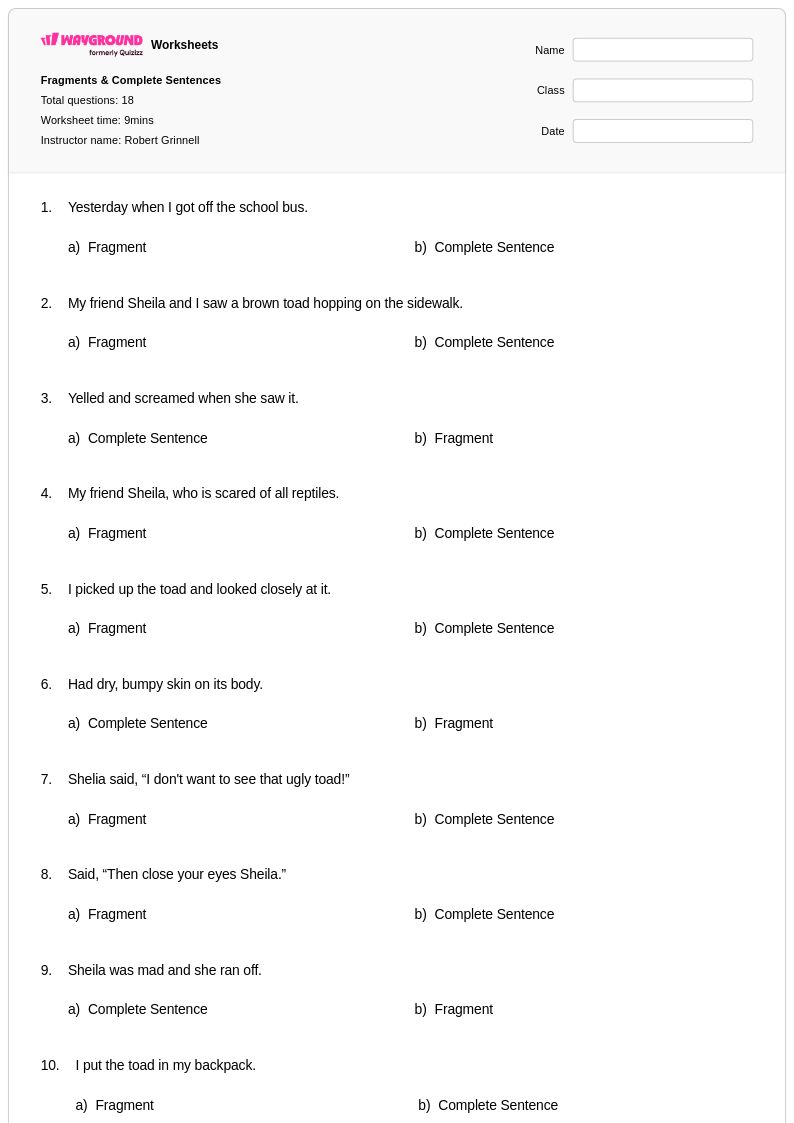
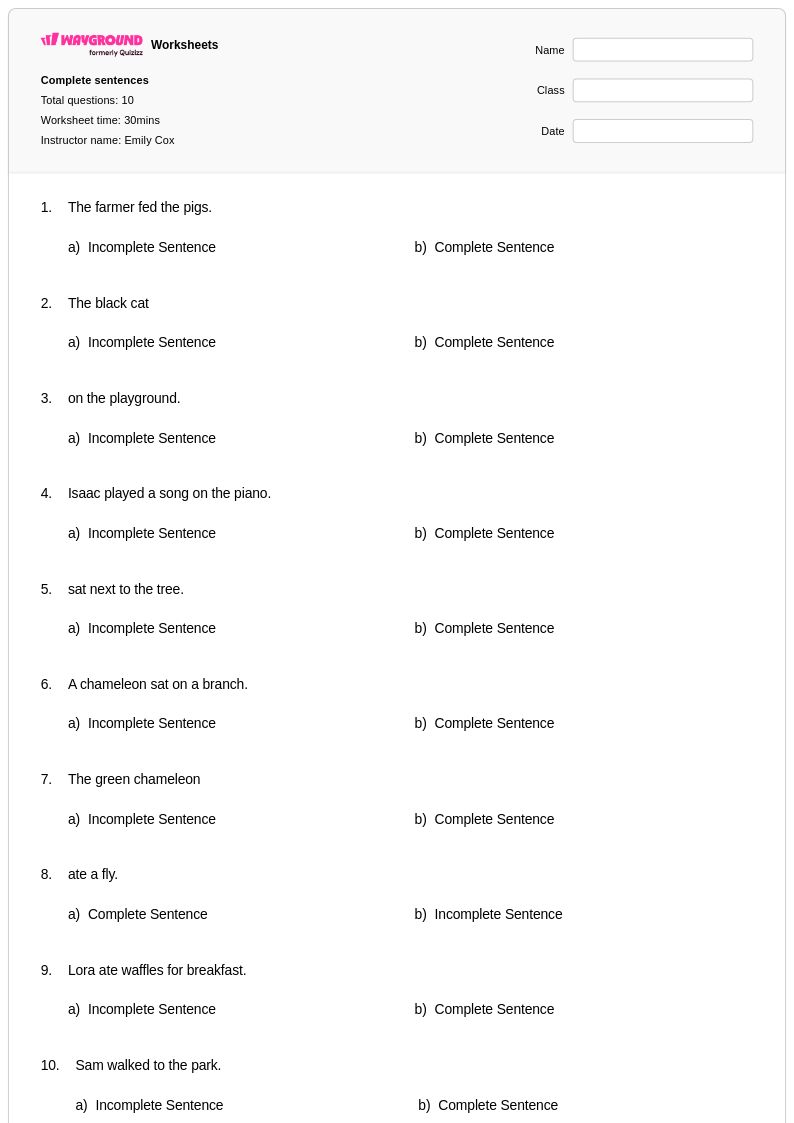
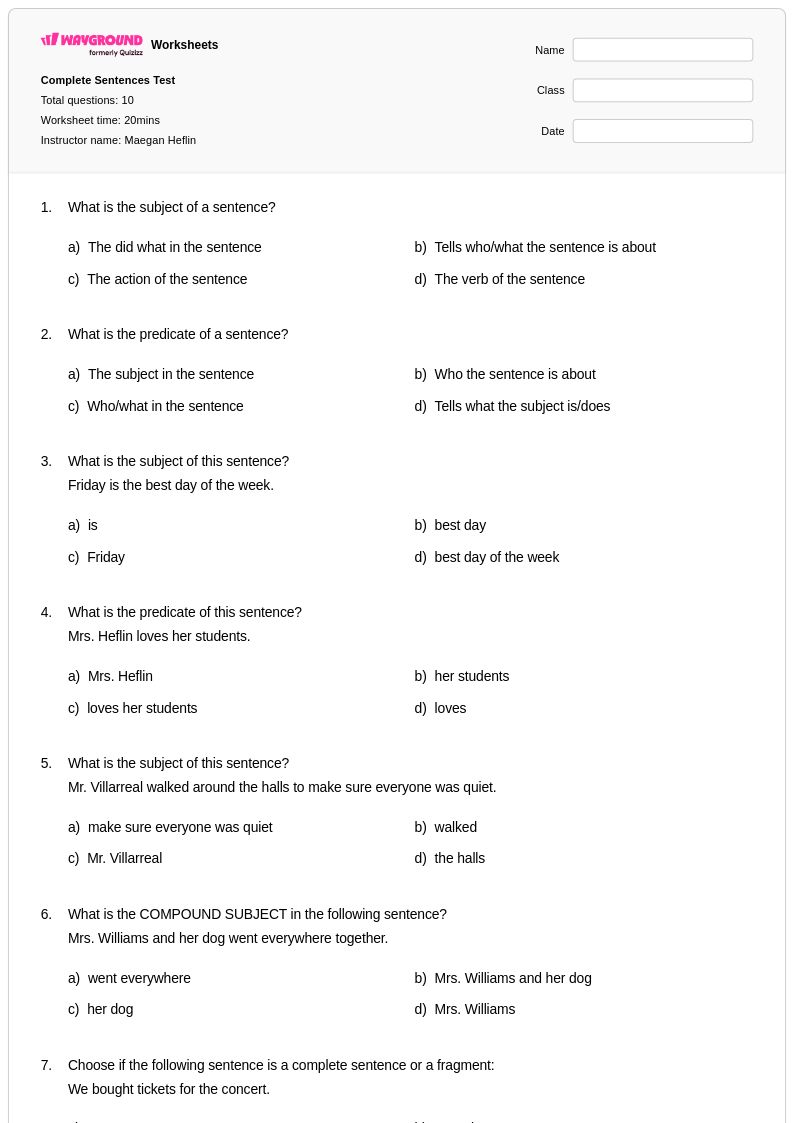
Complete sentences form the foundation of effective written communication, and Year 5 students benefit tremendously from focused practice with these essential building blocks. Wayground's comprehensive collection of complete sentence worksheets provides fifth-grade learners with systematic opportunities to identify, construct, and refine properly structured sentences that contain both subjects and predicates. These carefully designed practice problems guide students through recognizing sentence fragments and run-on sentences while strengthening their ability to write clear, grammatically correct complete sentences. Each worksheet includes detailed answer keys that support both independent learning and teacher-led instruction, and the free printable pdf format ensures easy access for classroom use and homework assignments.
Wayground, formerly Quizizz, empowers educators with millions of teacher-created resources specifically designed to support Year 5 complete sentence instruction and assessment. The platform's robust search and filtering capabilities allow teachers to quickly locate worksheets that align with specific standards and learning objectives, while built-in differentiation tools enable customization for diverse student needs and skill levels. Whether delivered in printable pdf format for traditional paper-and-pencil practice or accessed digitally for interactive learning experiences, these complete sentence worksheets serve multiple instructional purposes including initial skill introduction, targeted remediation for struggling learners, and enrichment activities for advanced students. Teachers can seamlessly integrate these resources into lesson planning, homework assignments, and assessment cycles to ensure students develop mastery of complete sentence construction and recognition.
FAQs
How do I teach students to identify complete sentences?
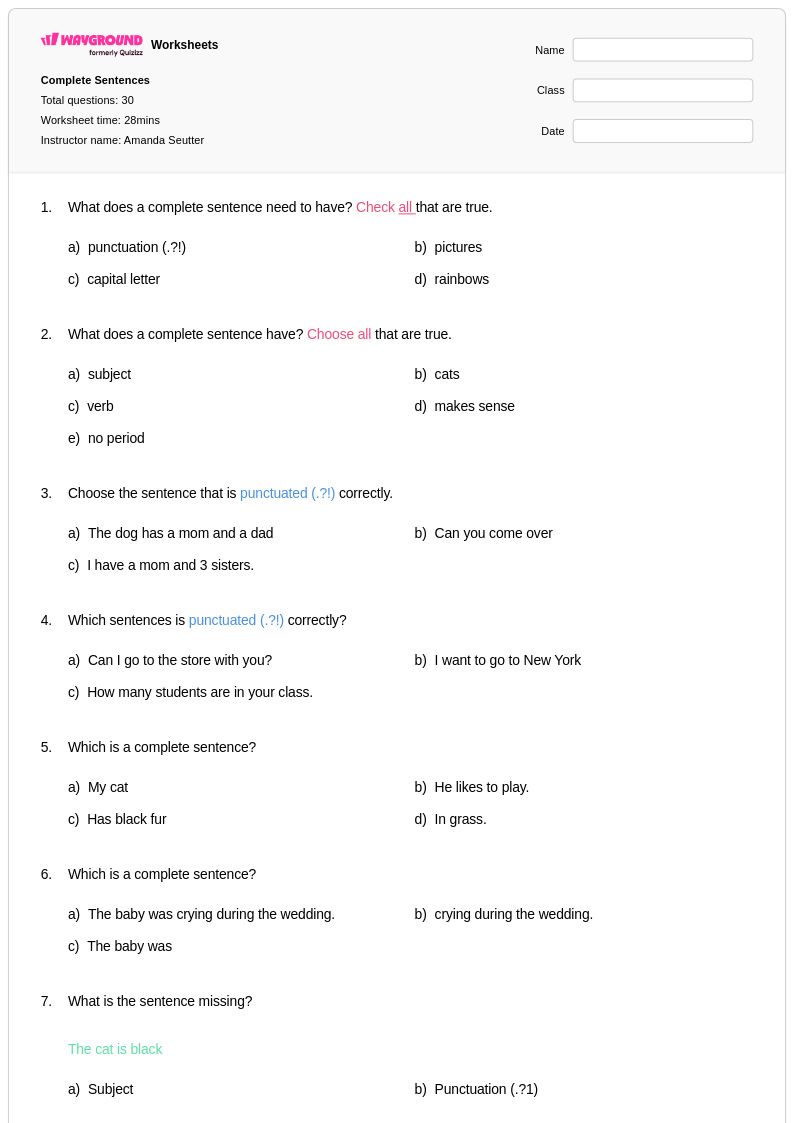
Start by teaching students the two essential components of a complete sentence: a subject (who or what the sentence is about) and a predicate (what the subject does or is). Use a simple checklist approach — students ask themselves 'Who or what is this sentence about?' and 'What does it do or say?' before deciding if a sentence is complete. Practicing with sentence fragments alongside complete sentences helps students recognize the difference through direct comparison.
What exercises help students practice writing and identifying complete sentences?
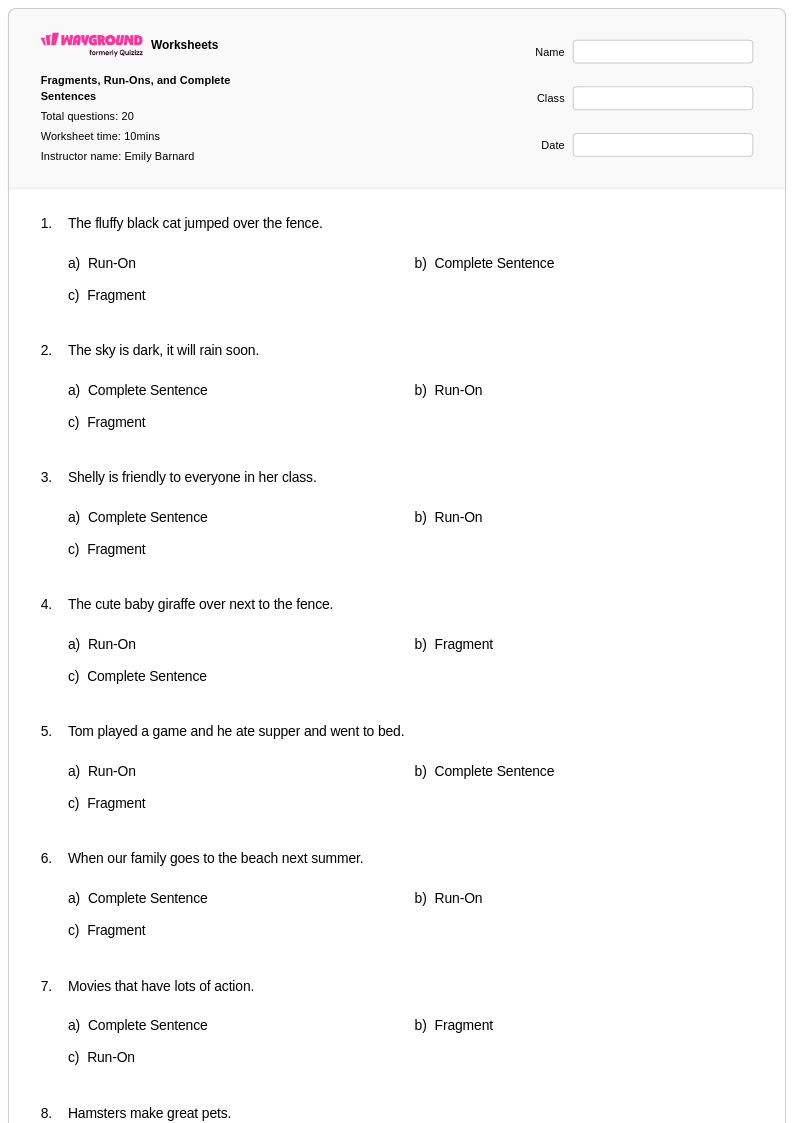
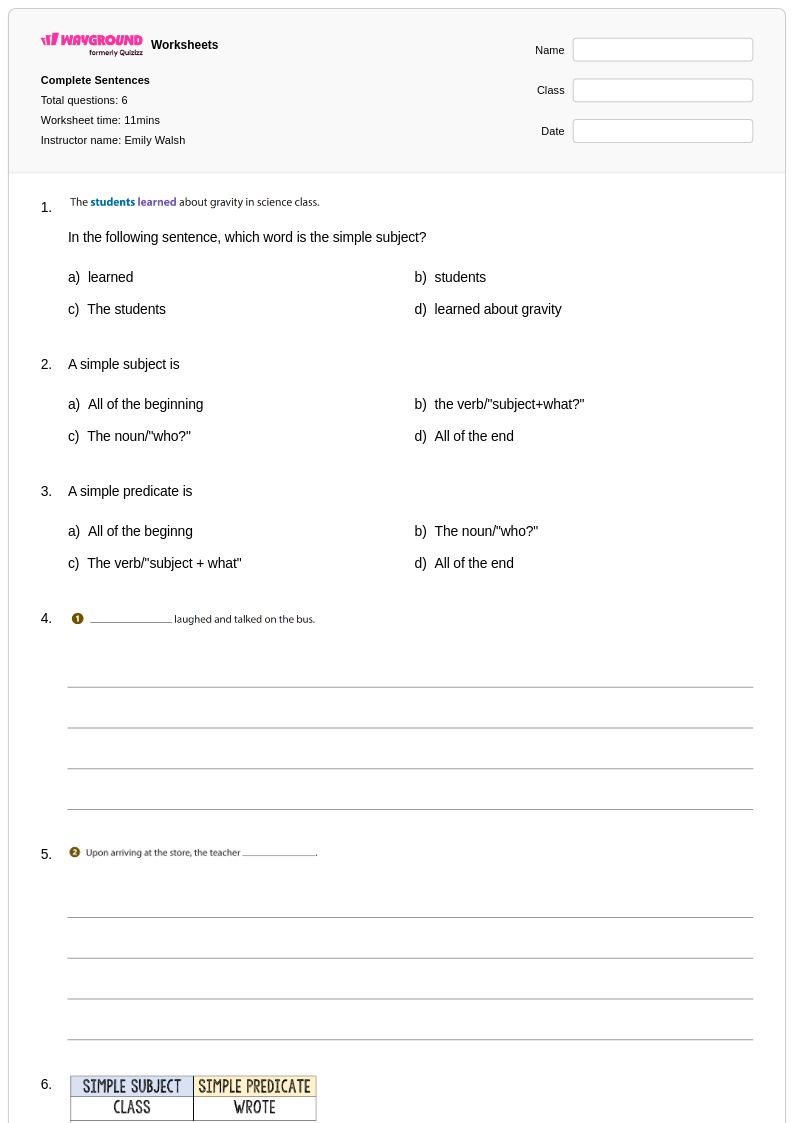
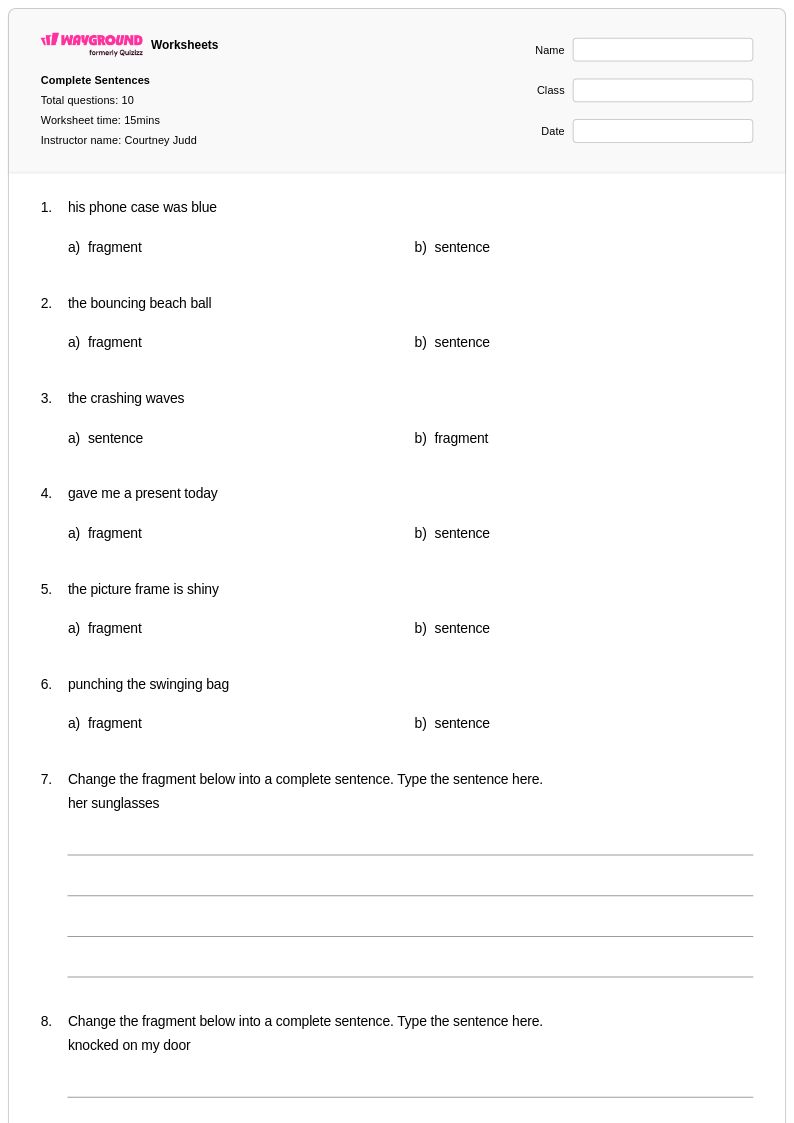
Effective practice exercises include fragment identification tasks, where students mark whether a group of words is a complete sentence or a fragment, and sentence completion tasks, where students supply the missing subject or predicate. Progressing from recognition to production — first identifying, then correcting, then writing original sentences — builds the skill systematically. Worksheets that combine multiple exercise types in a single session reinforce the concept from multiple angles.
What mistakes do students commonly make with complete sentences?
The most common error is treating a dependent clause or a long phrase as a complete sentence simply because it sounds finished or contains many words. Students frequently write fragments like 'Because she was tired.' or 'Running through the park every morning.' without recognizing the missing independent clause. Another frequent mistake is omitting the subject entirely in sentences, particularly in responses like 'Went to the store.' where students assume the subject is implied.
How can I differentiate complete sentences instruction for struggling learners?
For struggling learners, reduce the cognitive load by presenting shorter, clearer examples and focusing exclusively on subject-predicate identification before introducing punctuation and capitalization rules. On Wayground, teachers can enable accommodations such as Read Aloud so students hear questions read to them, and Reduced answer choices to limit the number of options displayed, making tasks more manageable. These settings can be assigned to individual students so the rest of the class continues with default settings unaffected.
How do I use Wayground's complete sentences worksheets in my classroom?
Wayground's complete sentences worksheets are available as printable PDFs for traditional paper-based instruction and in digital formats for technology-integrated classrooms and remote learning. Teachers can assign them as independent practice, guided group work, or homework, and can also host them as a quiz directly on Wayground for real-time student response tracking. Each worksheet includes a complete answer key, making them practical for both teacher-led lessons and independent student study.
How do I help students fix sentence fragments in their writing?
Teach students a two-step repair strategy: first, identify what is missing (a subject, a predicate, or both), then add the missing element to create a complete thought. Modeling the correction process aloud — reading a fragment, naming what's missing, and revising it — gives students a replicable routine they can apply independently. Regular editing practice using their own writing, rather than only worksheet examples, helps transfer the skill to authentic composition.