Free Printable Imperative Sentences Worksheets for Year 5
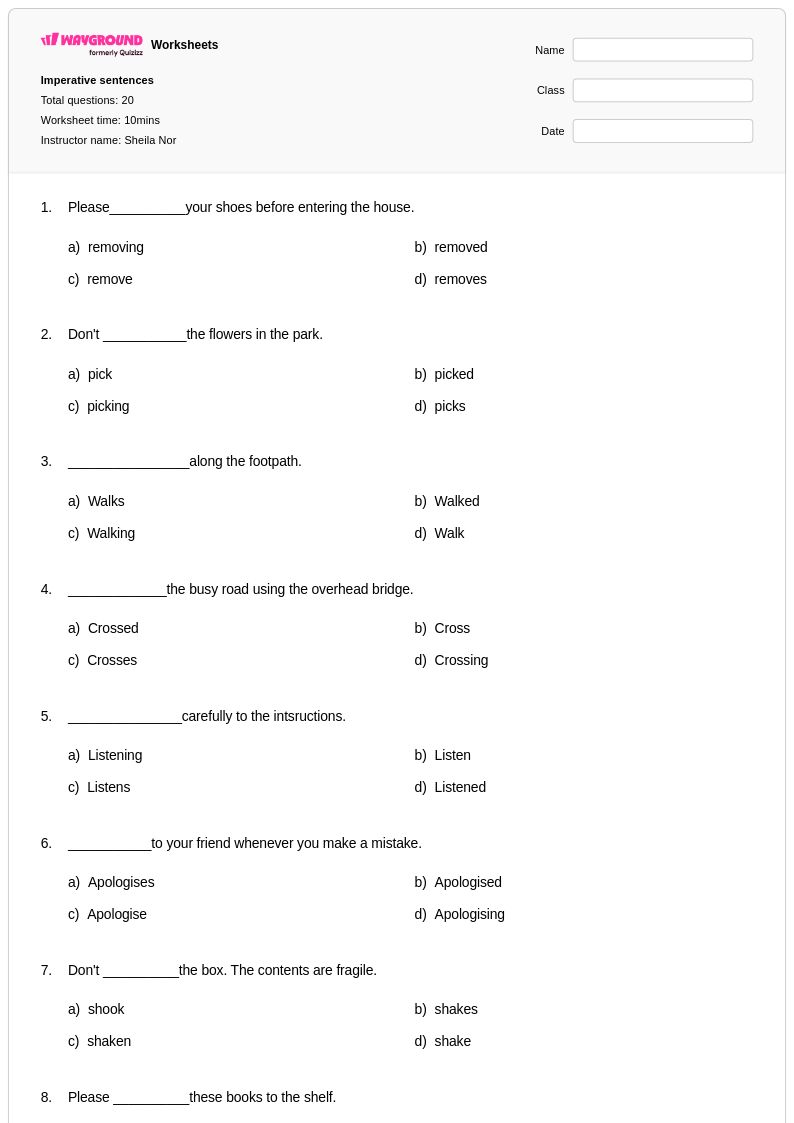
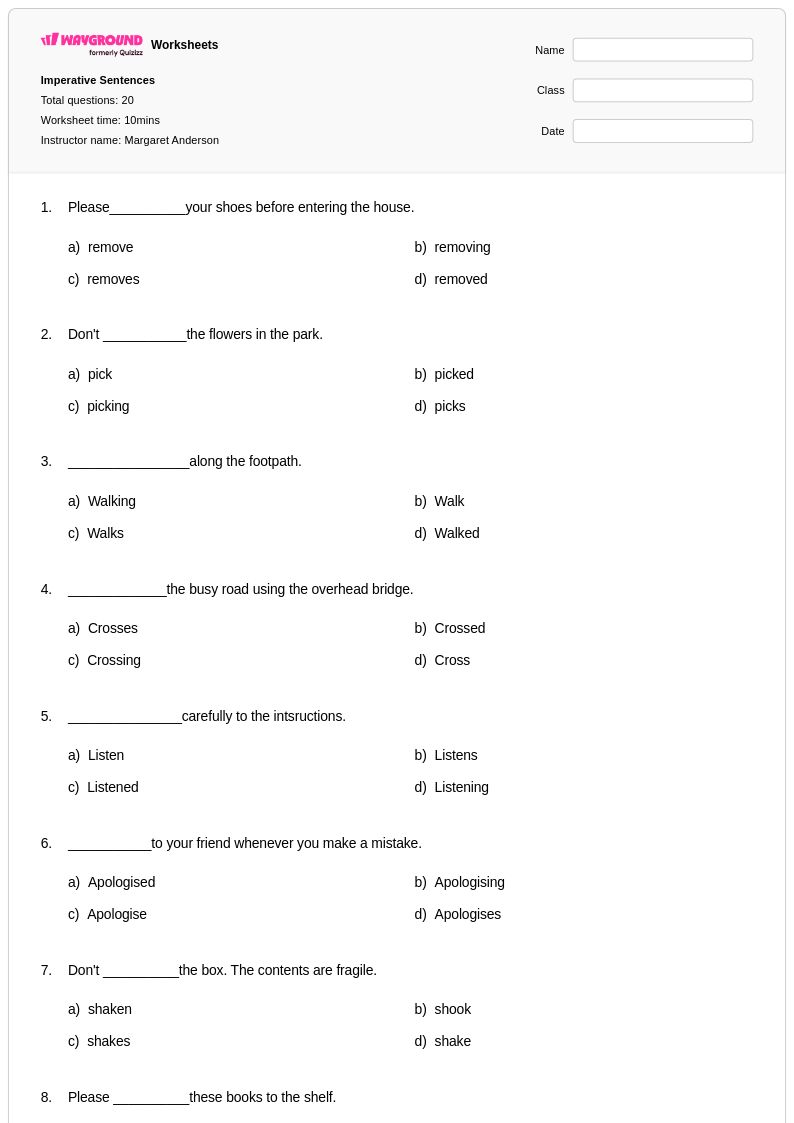
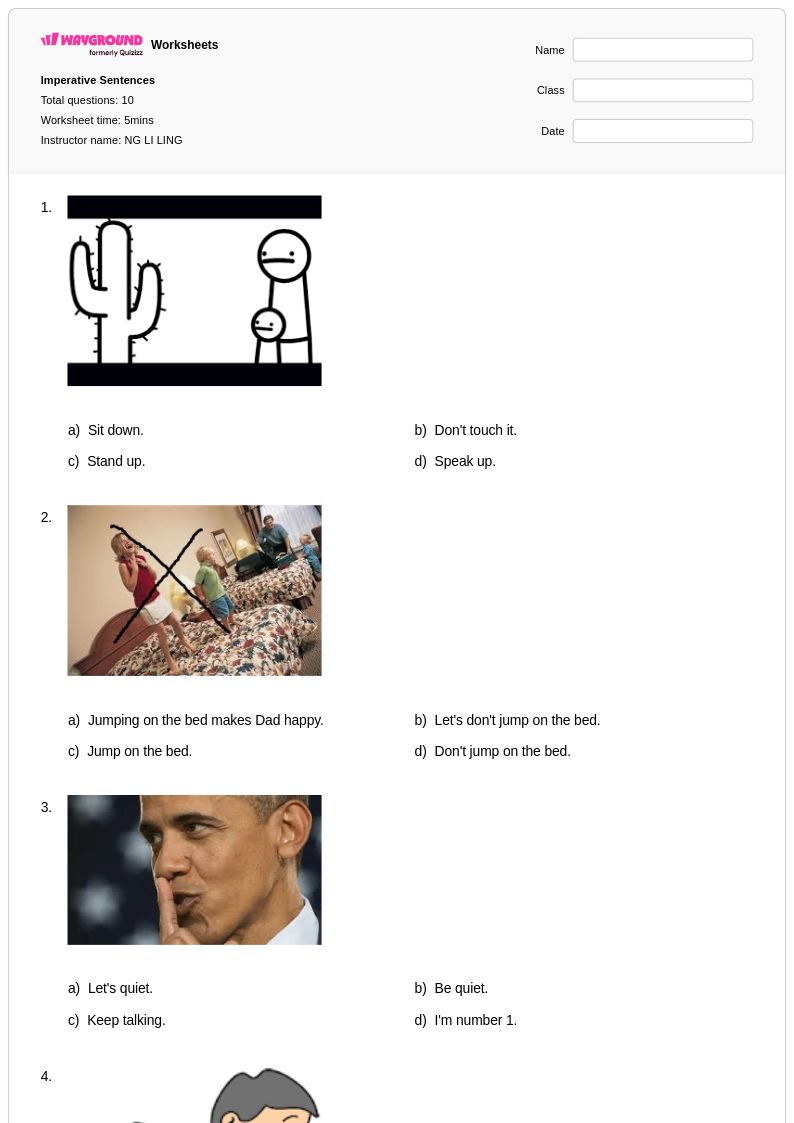
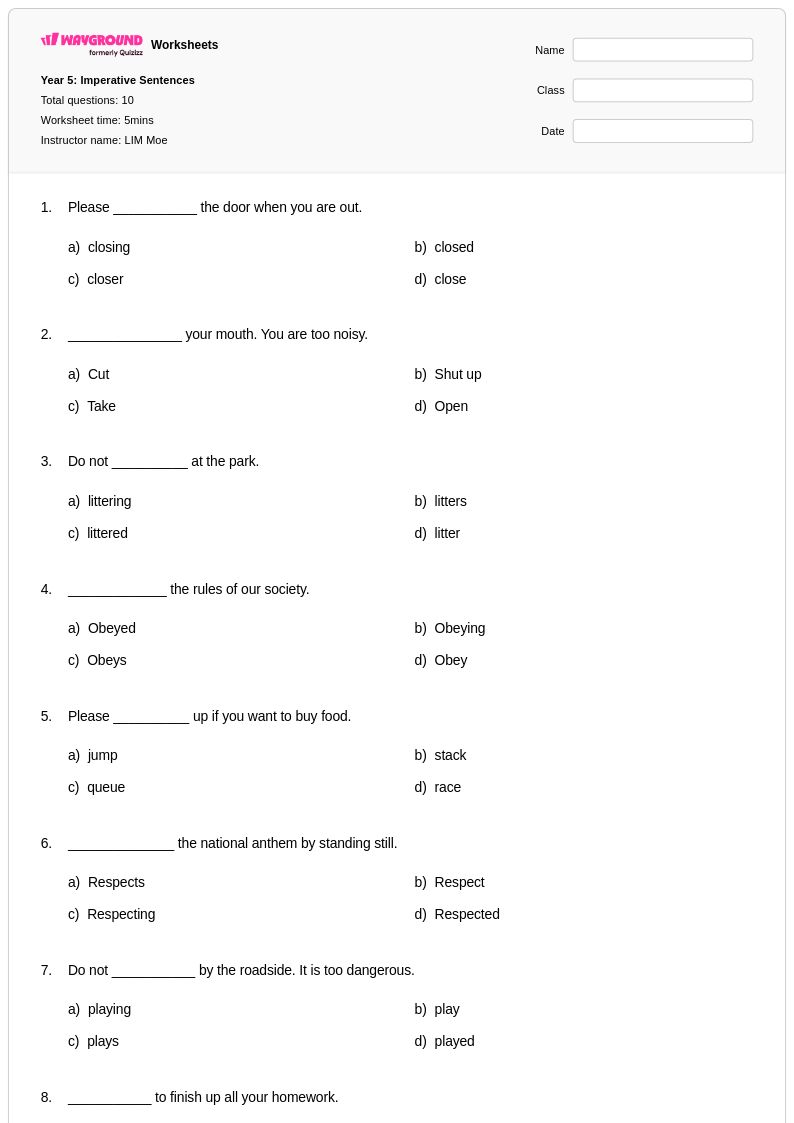
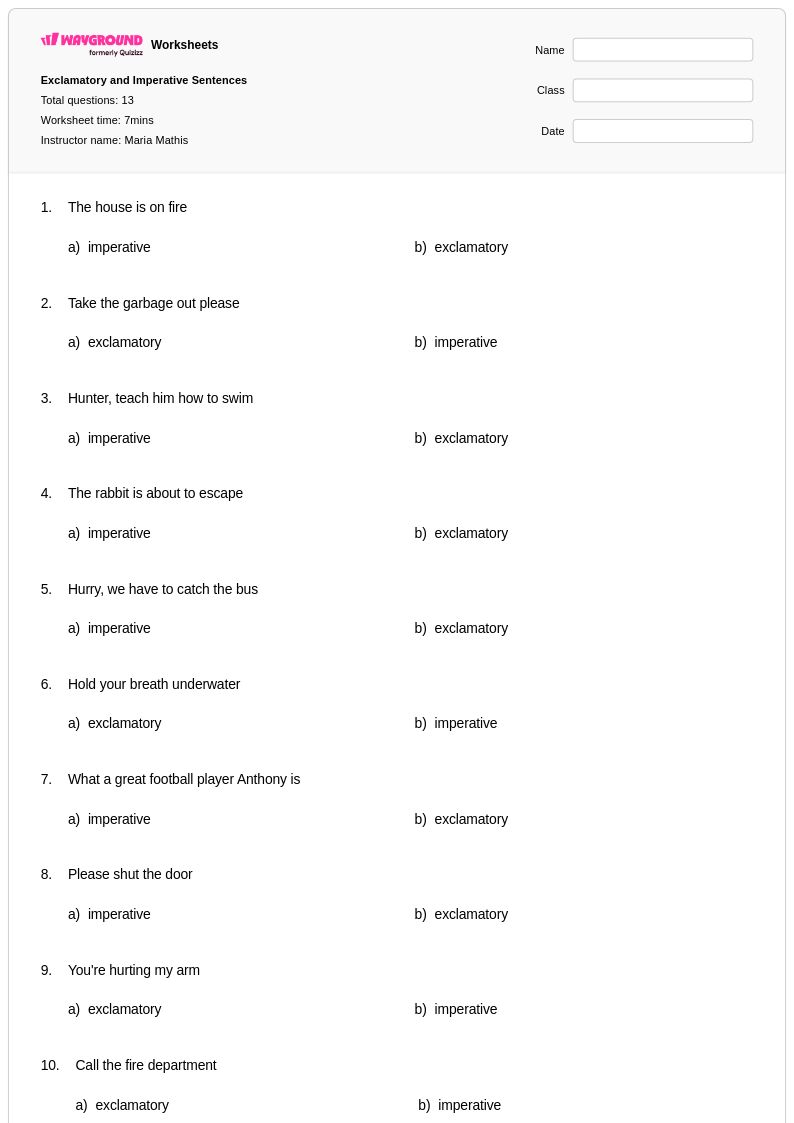
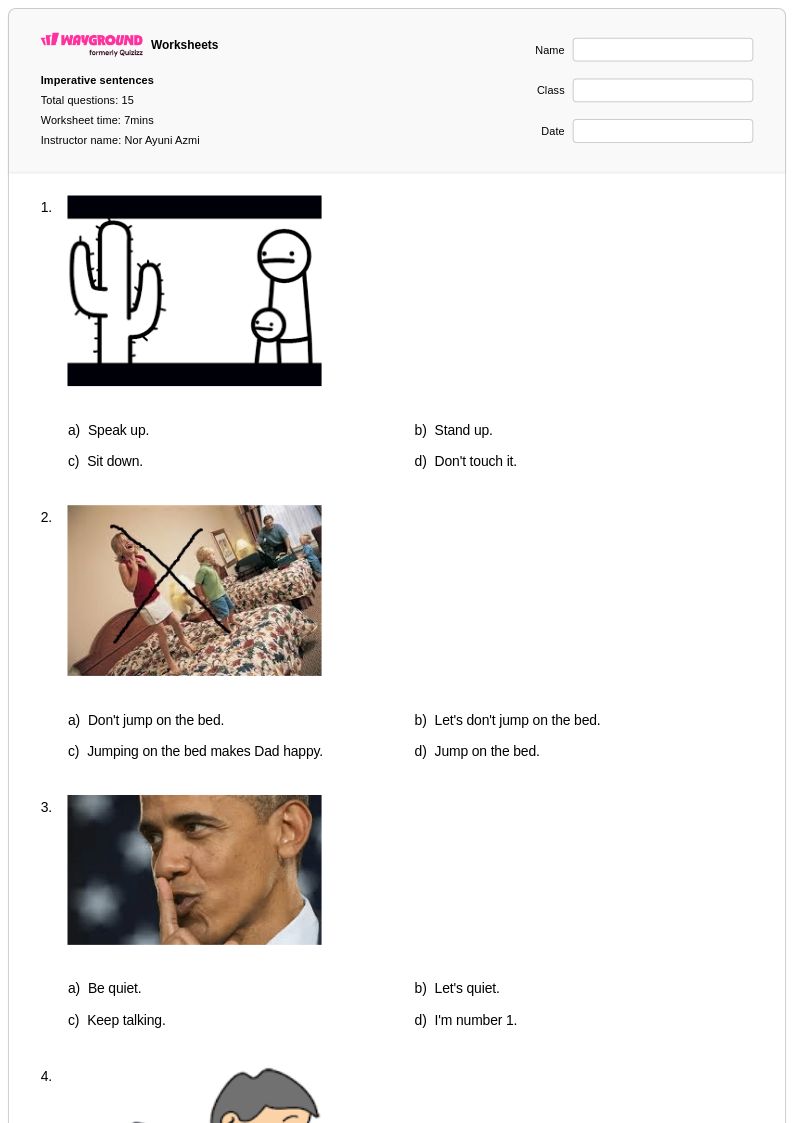
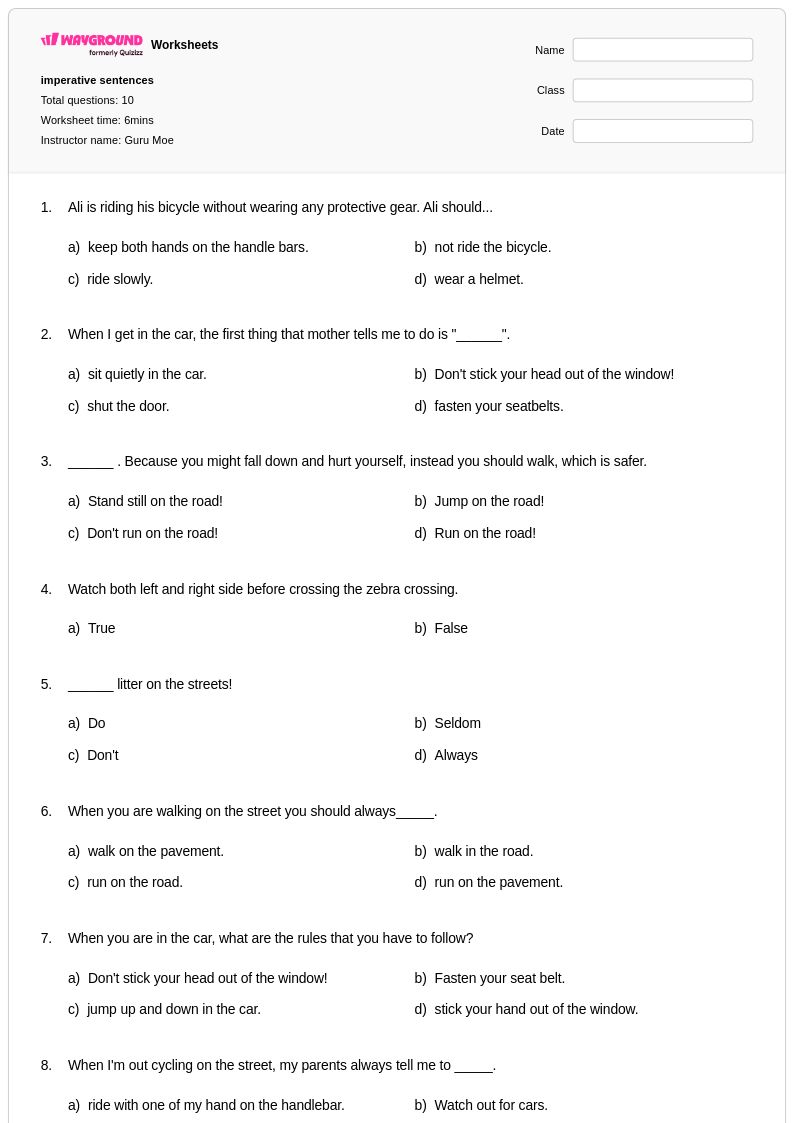
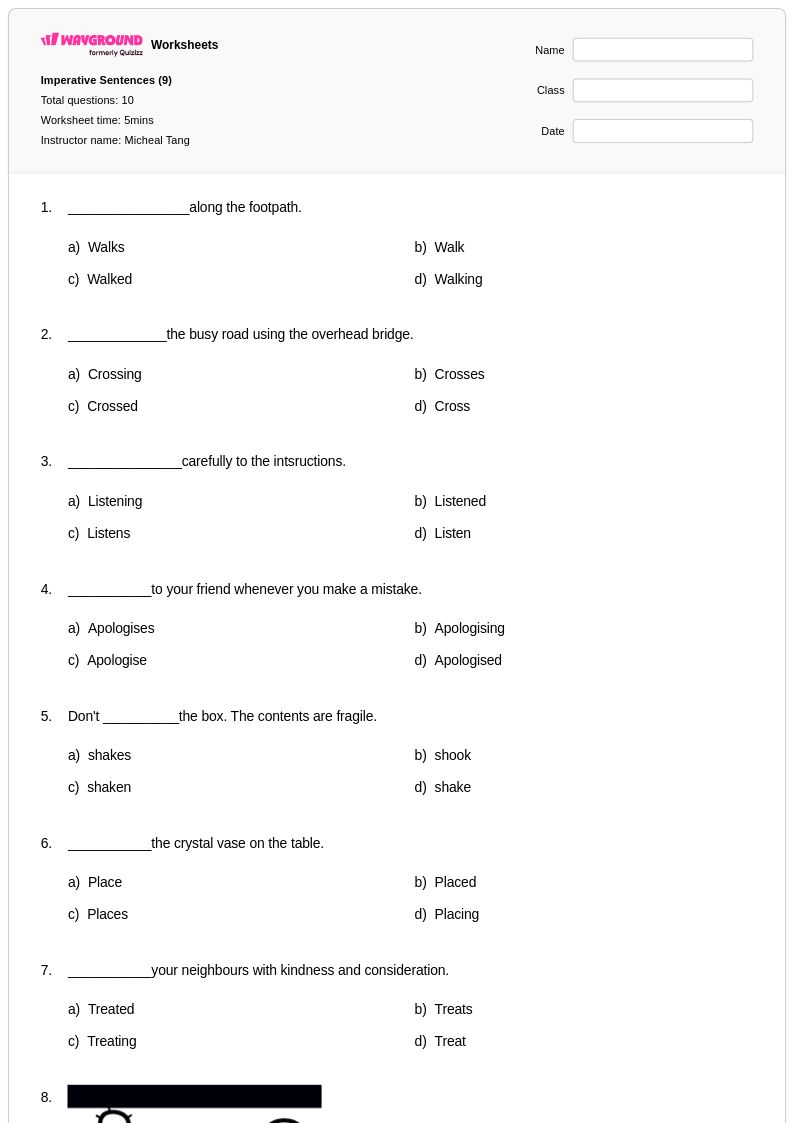
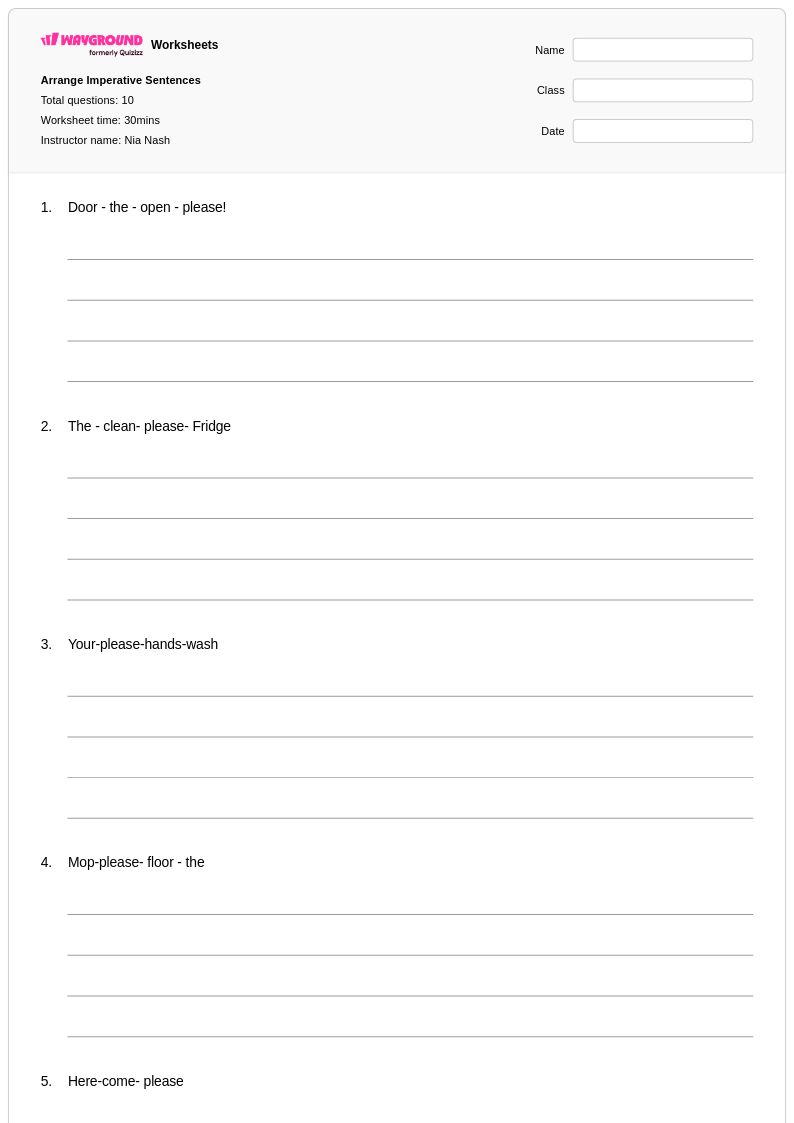
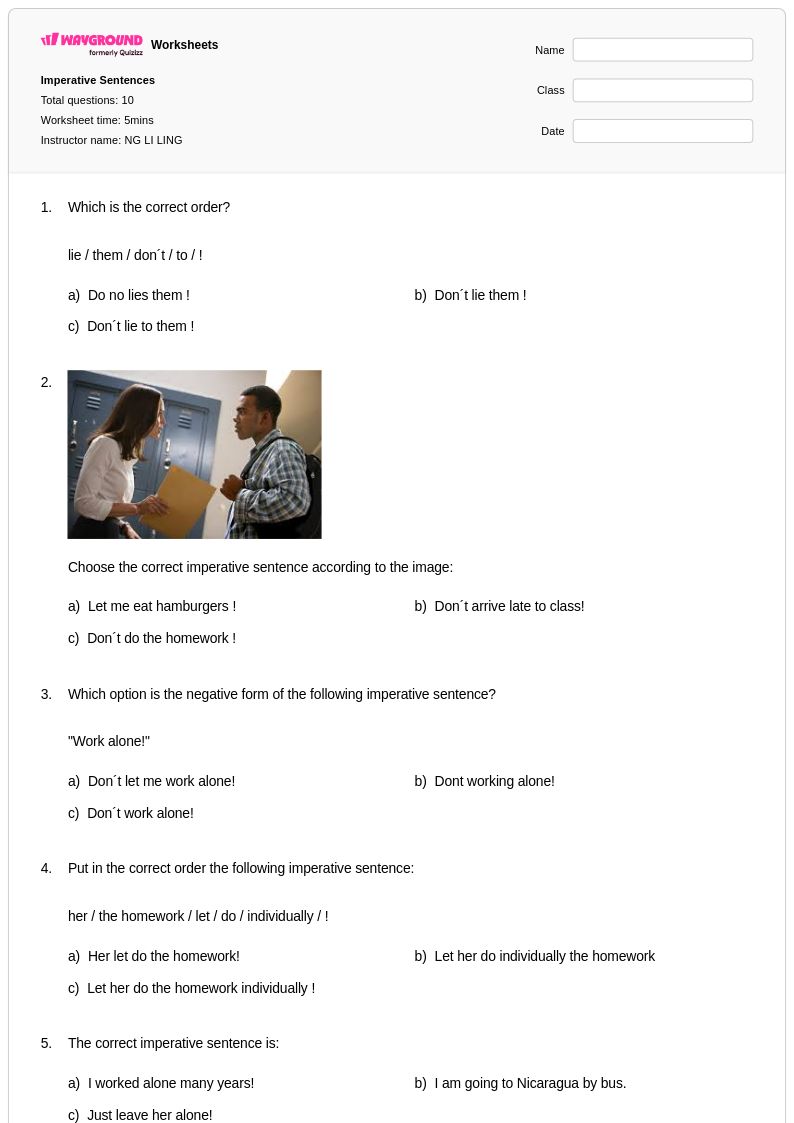
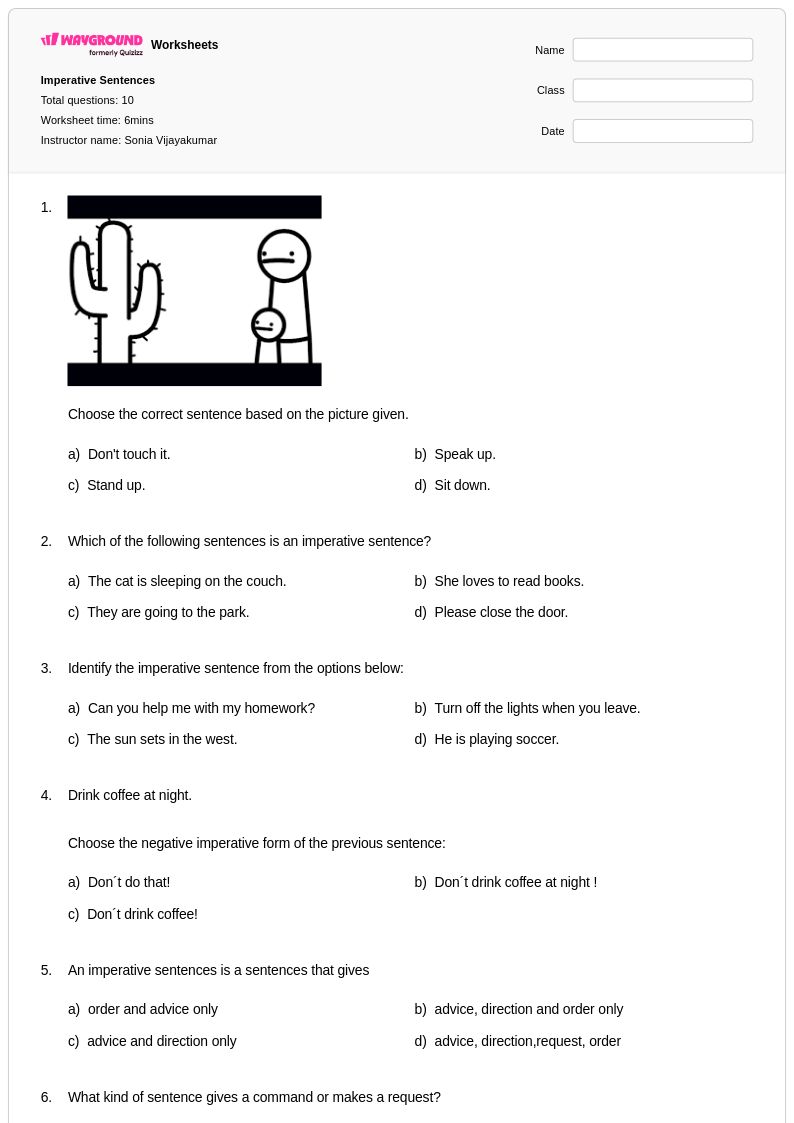
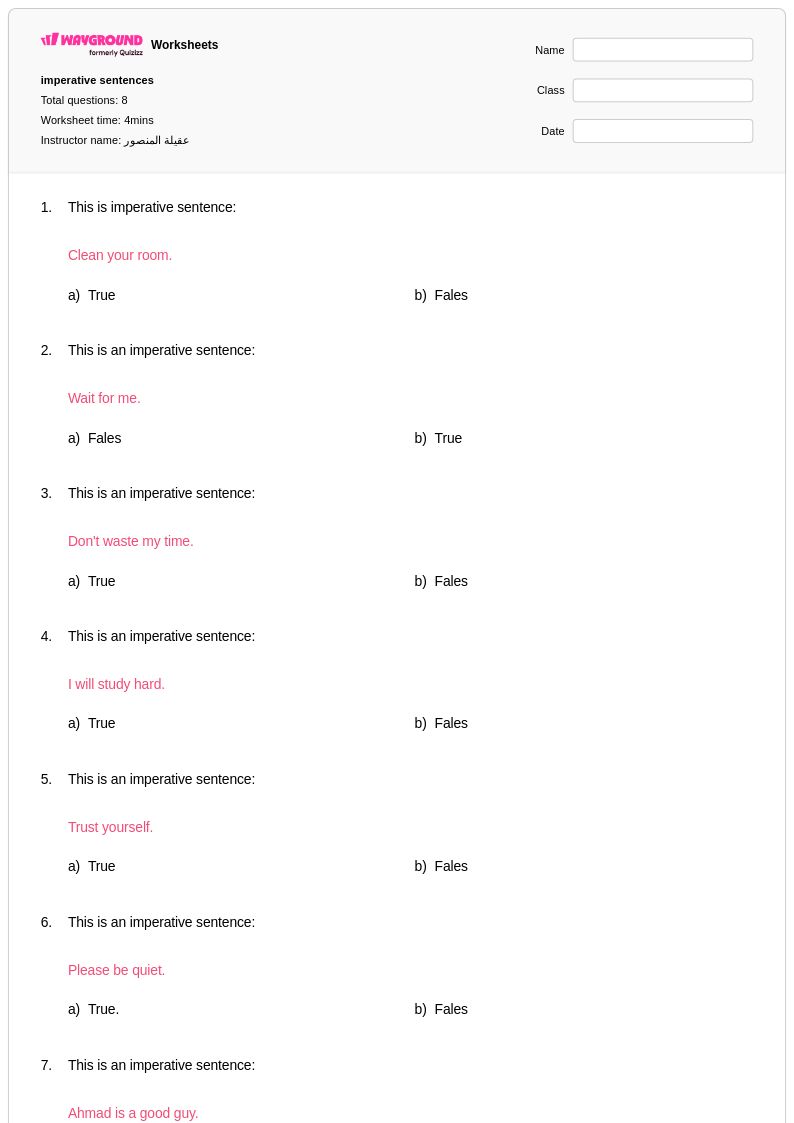
Year 5 imperative sentences worksheets from Wayground help students master command and request sentence structures through engaging printables, practice problems, and comprehensive answer keys for effective grammar learning.
Explore printable Imperative Sentences worksheets for Year 5
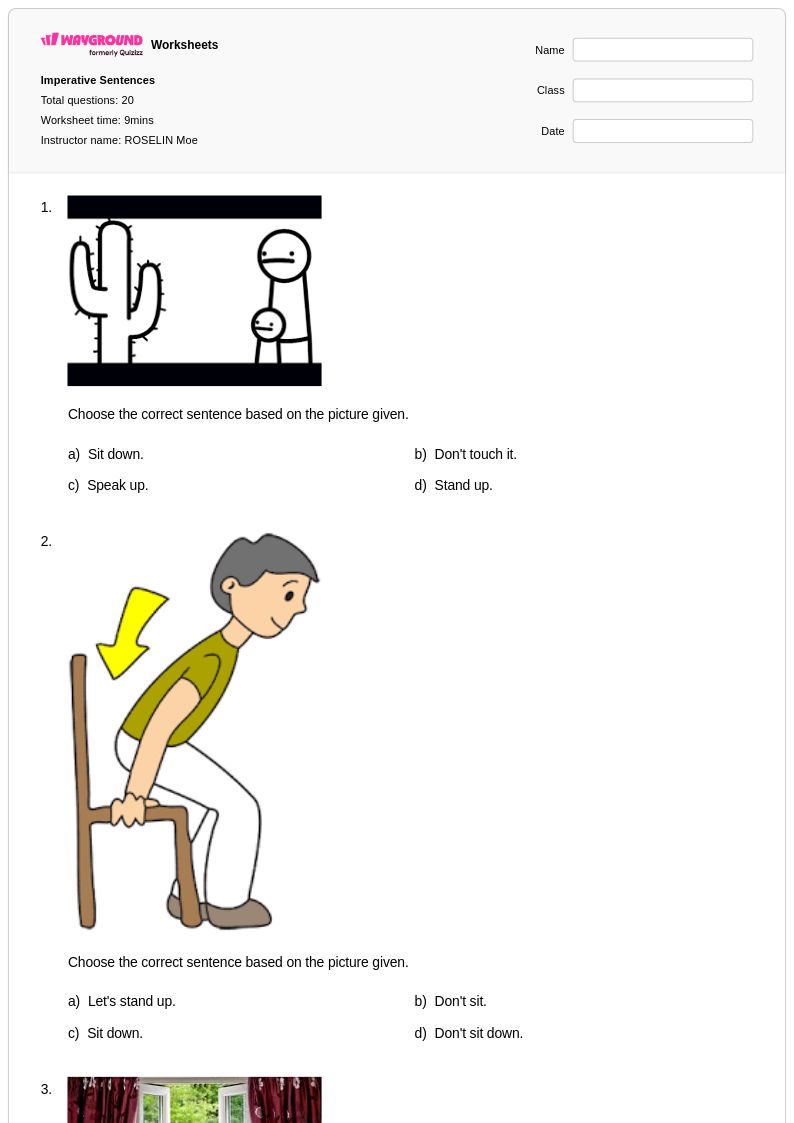
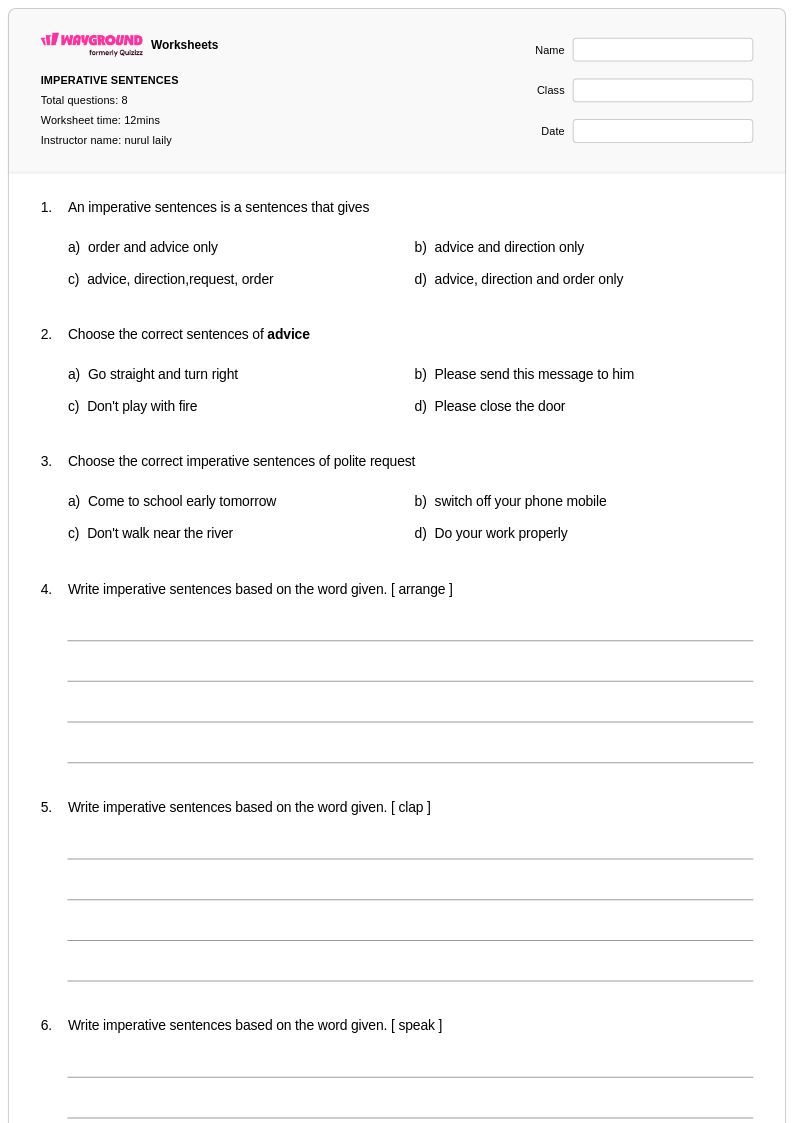
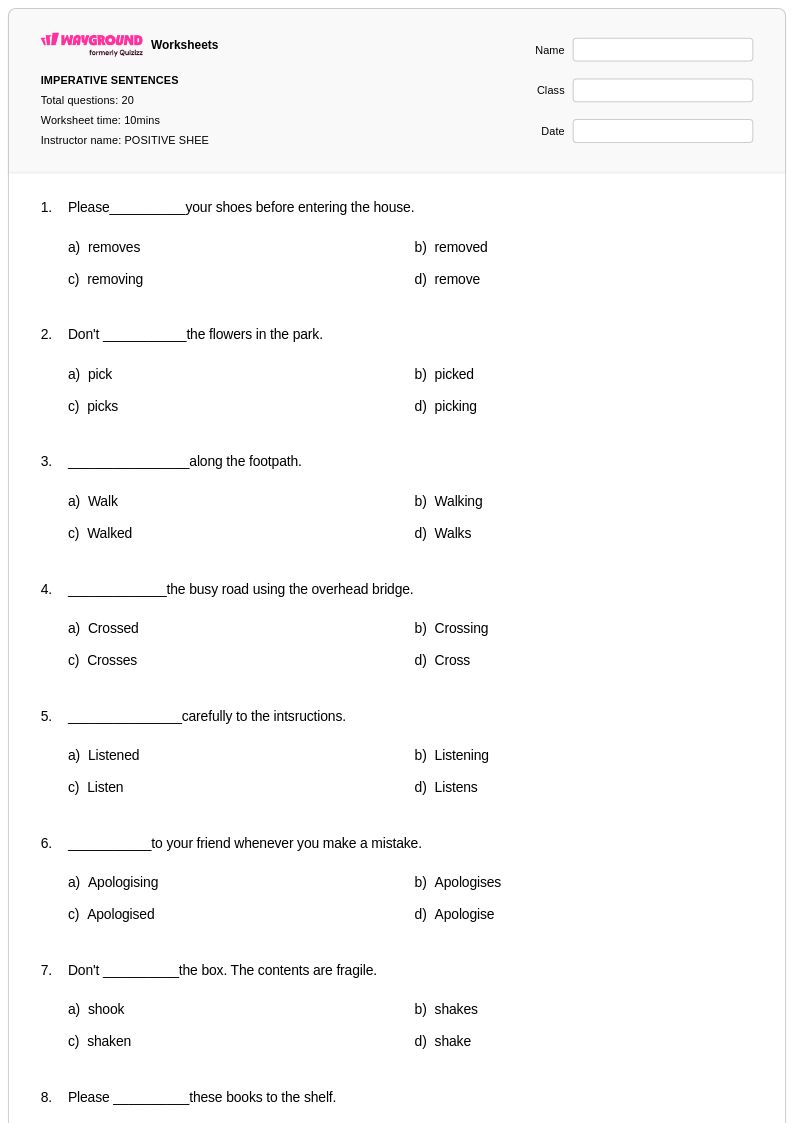
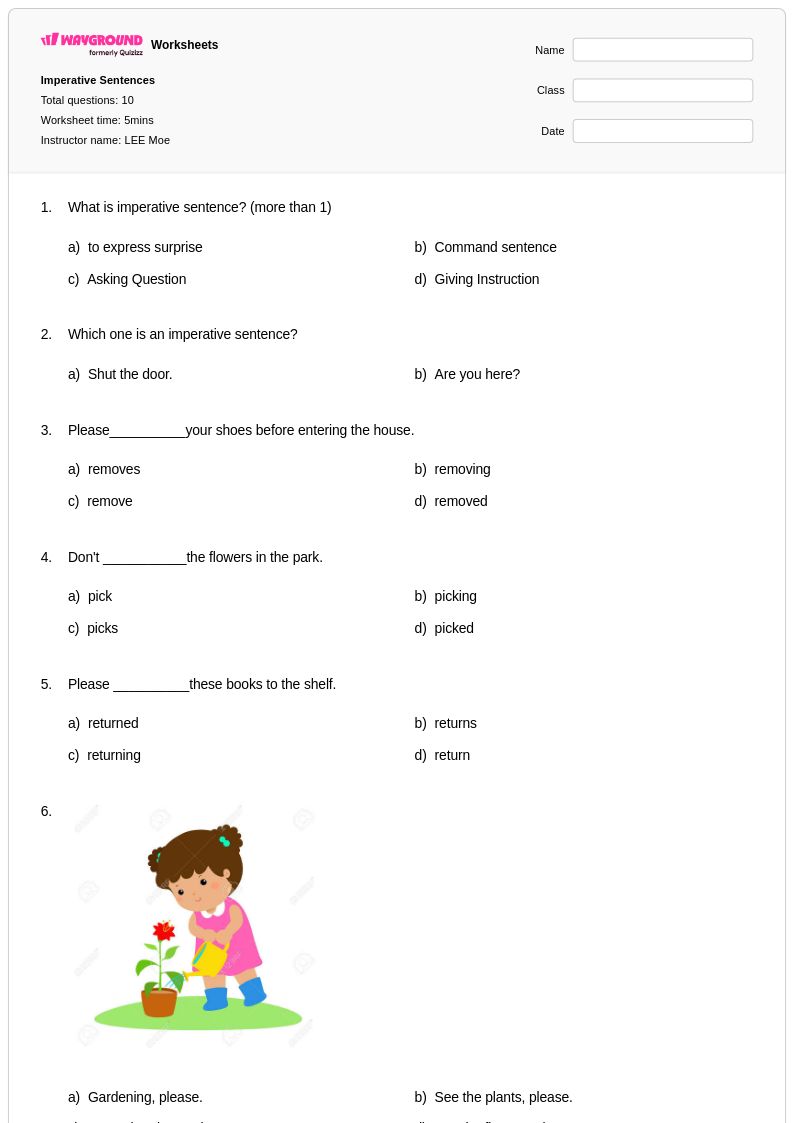
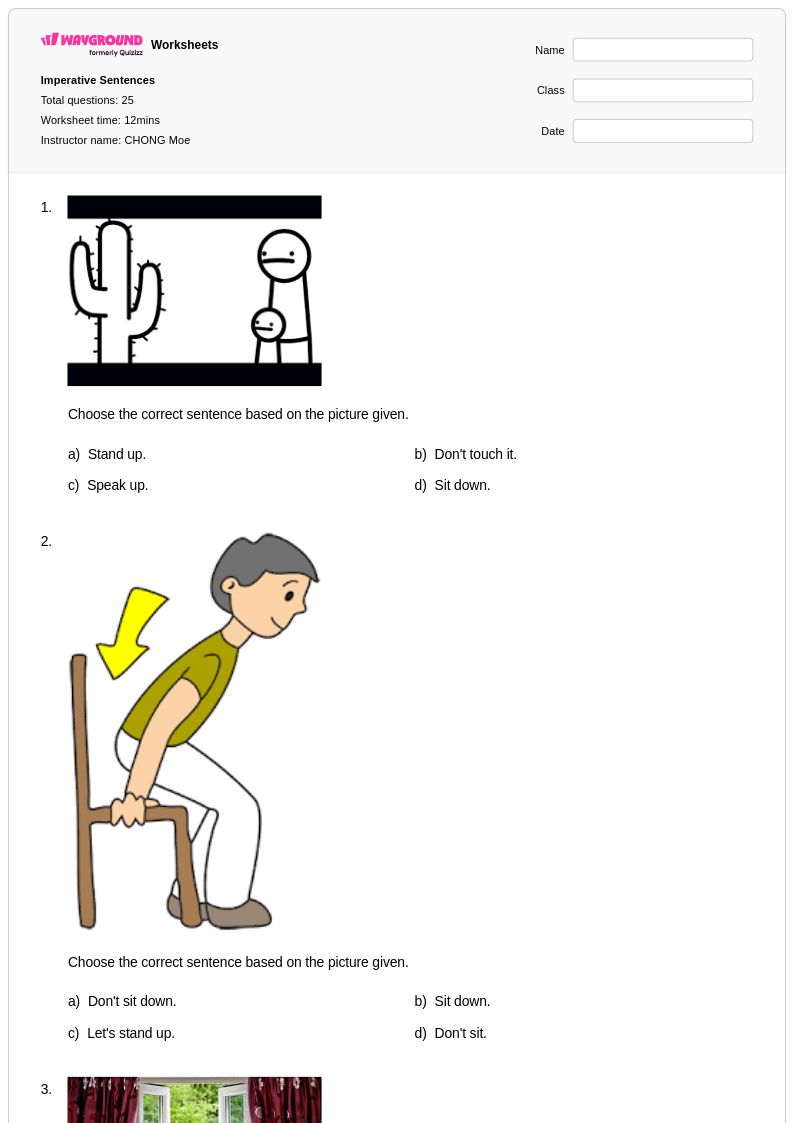
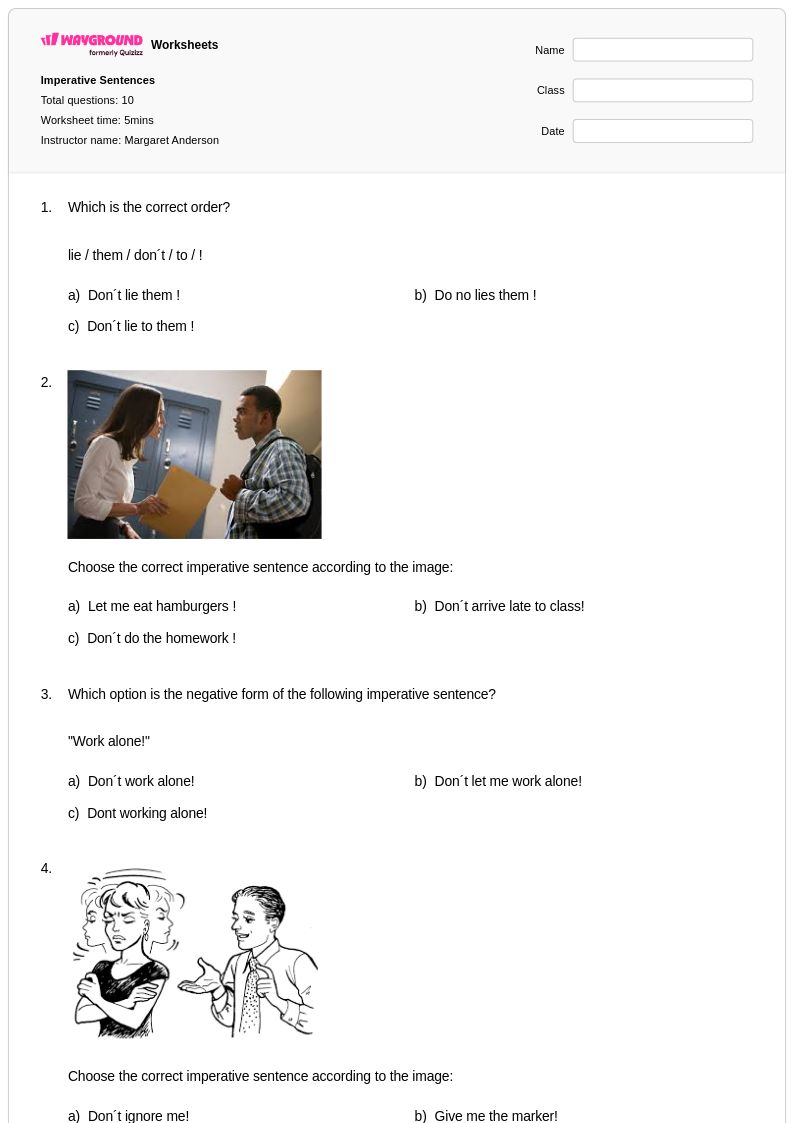
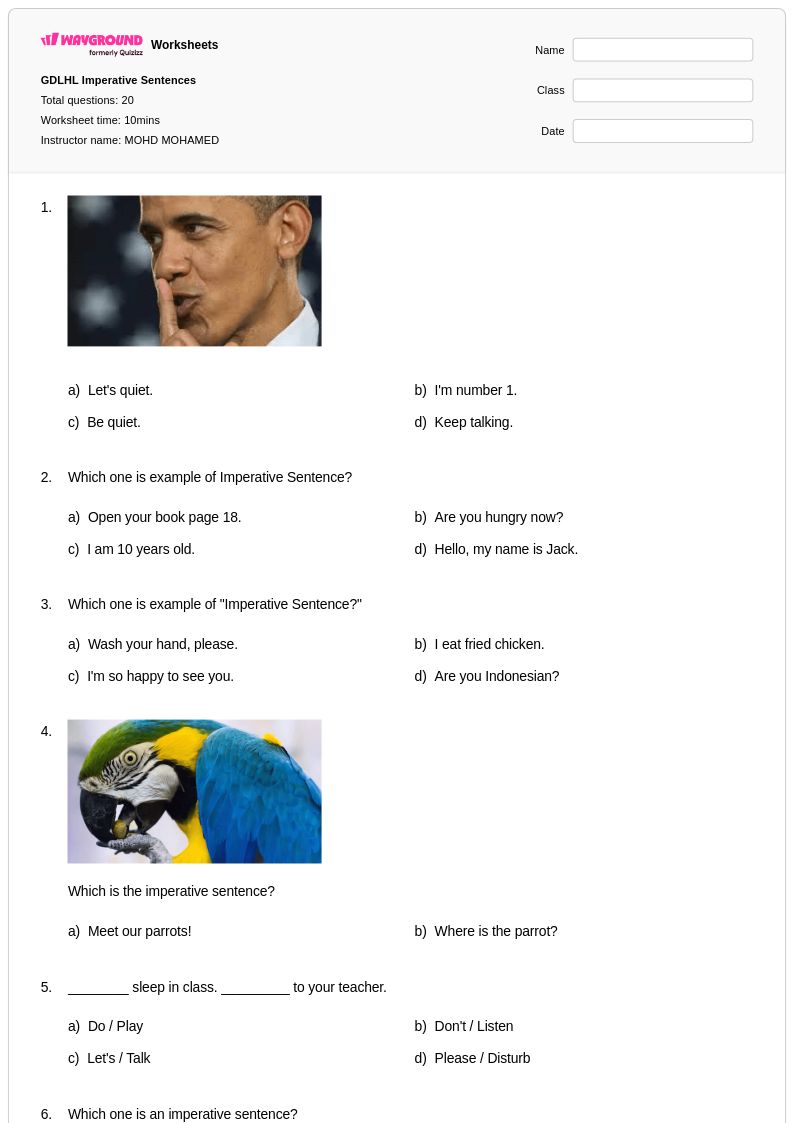
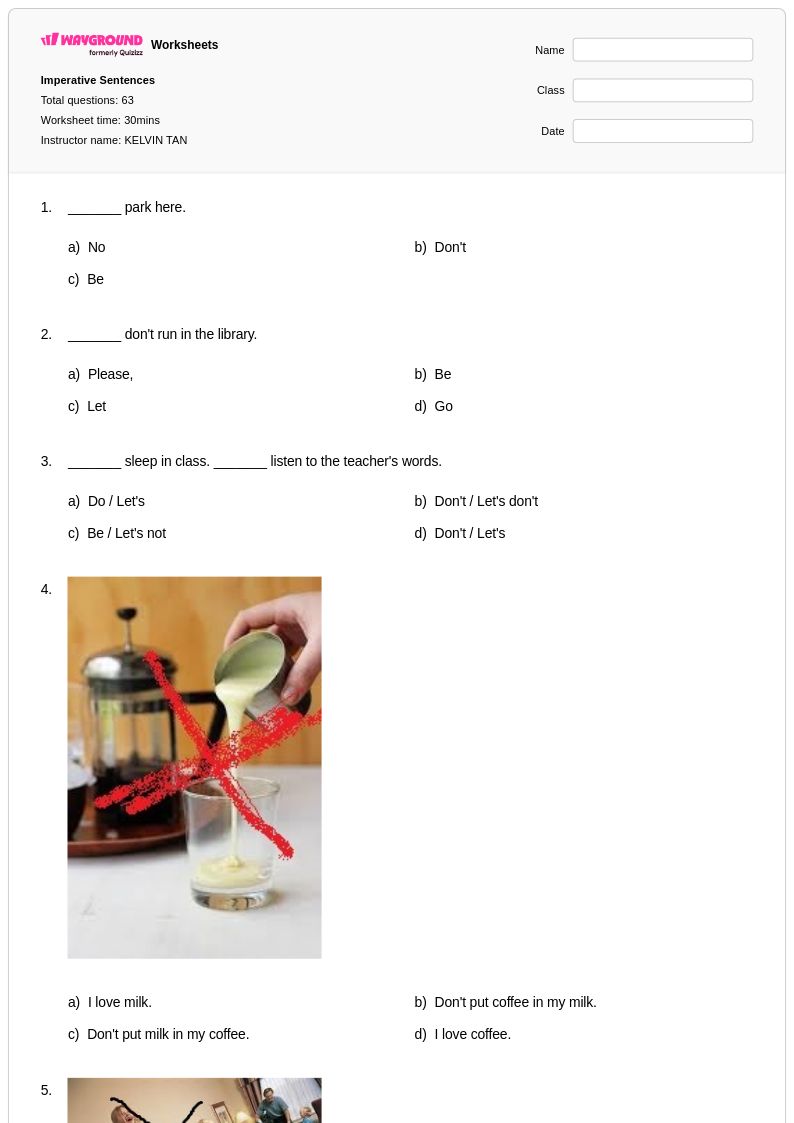
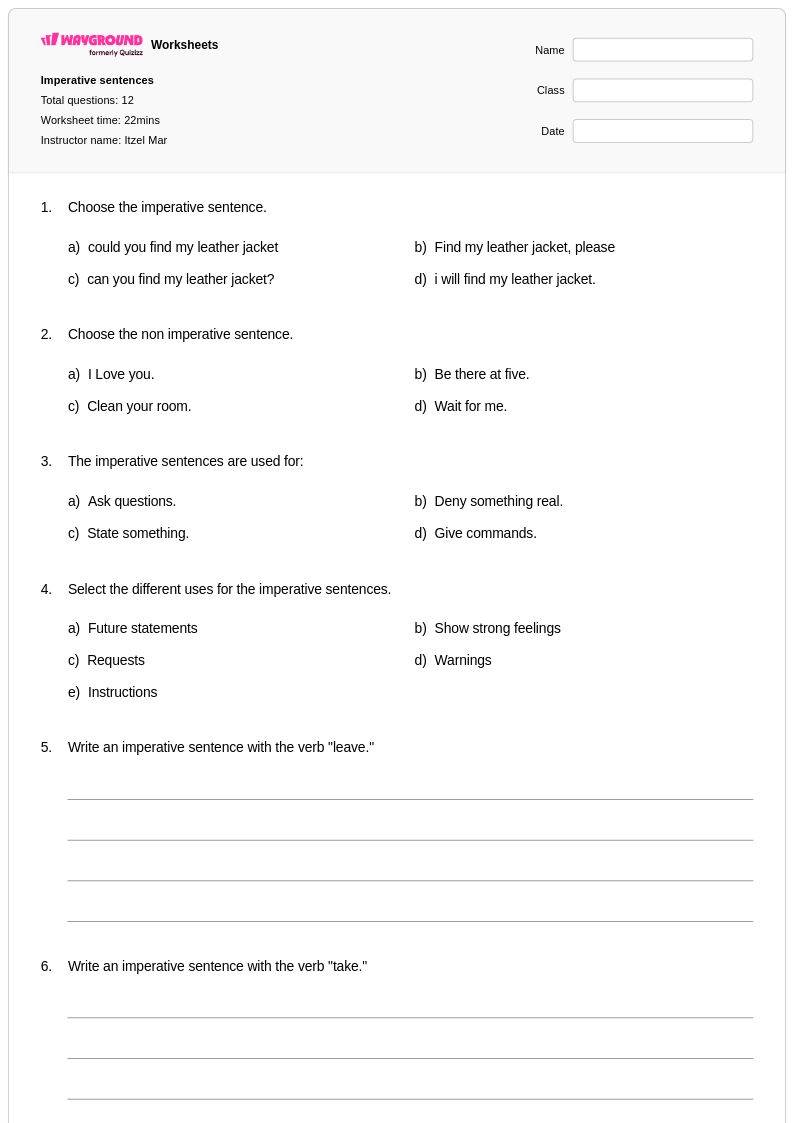
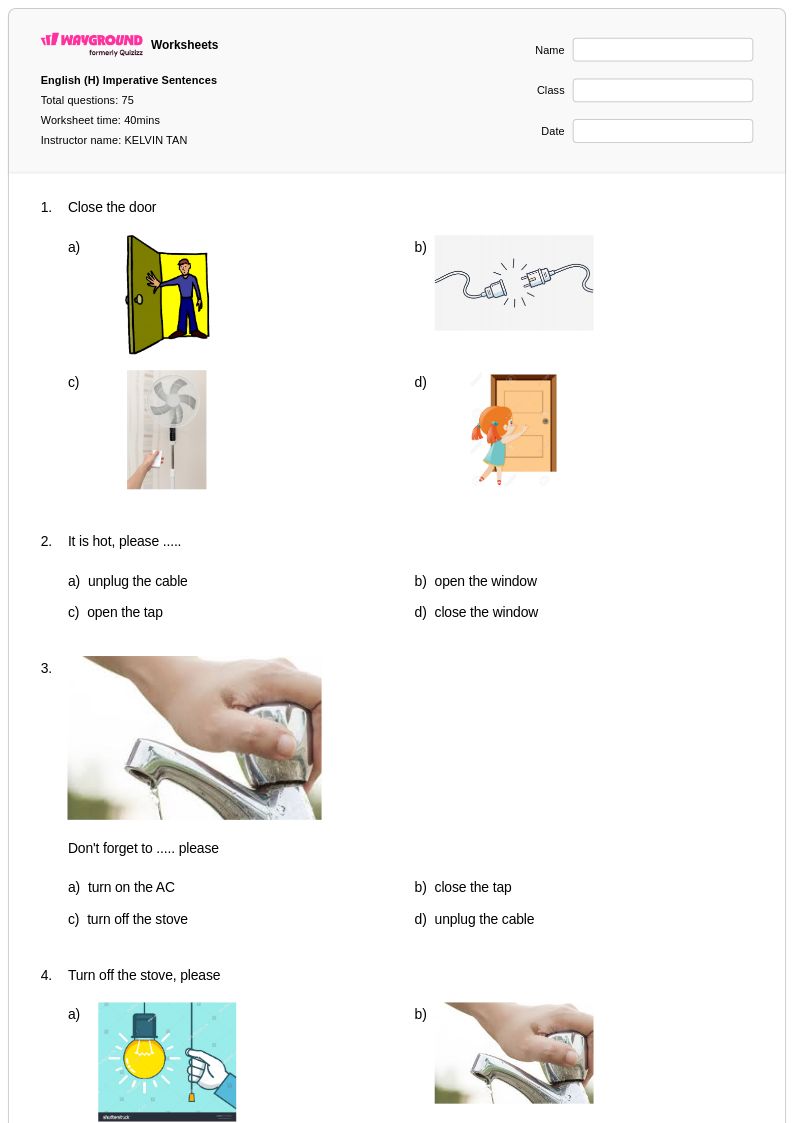
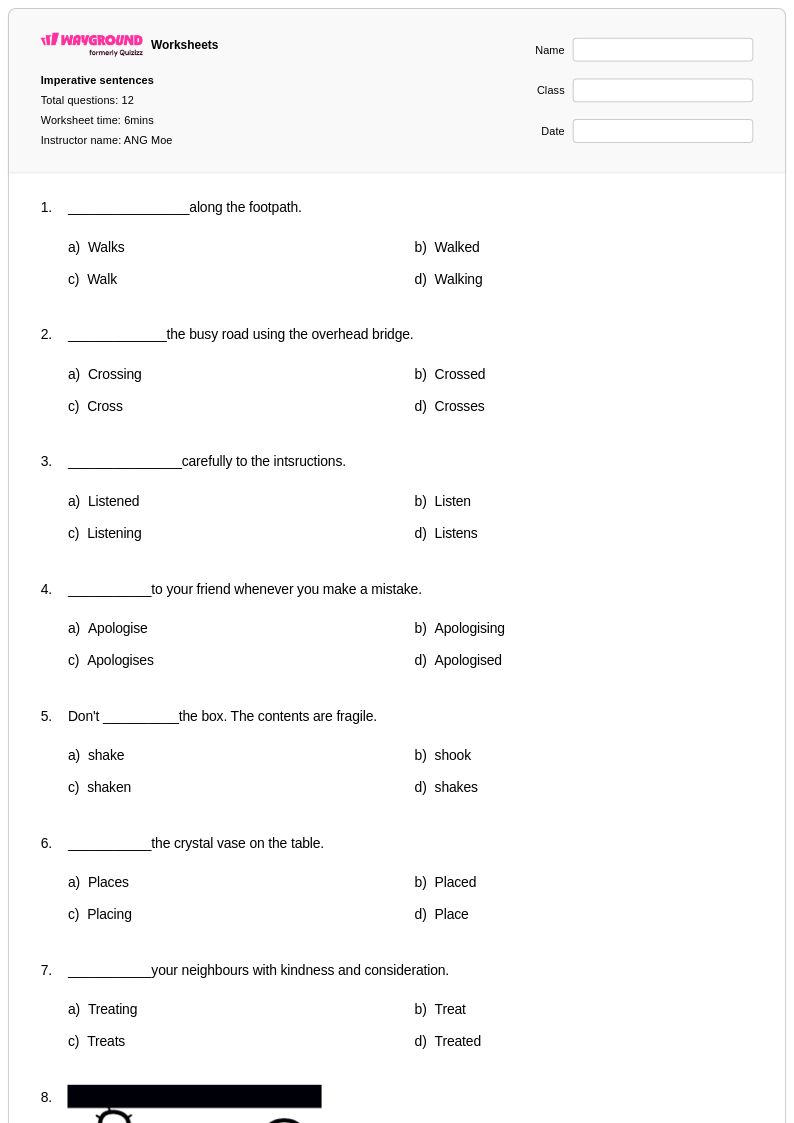
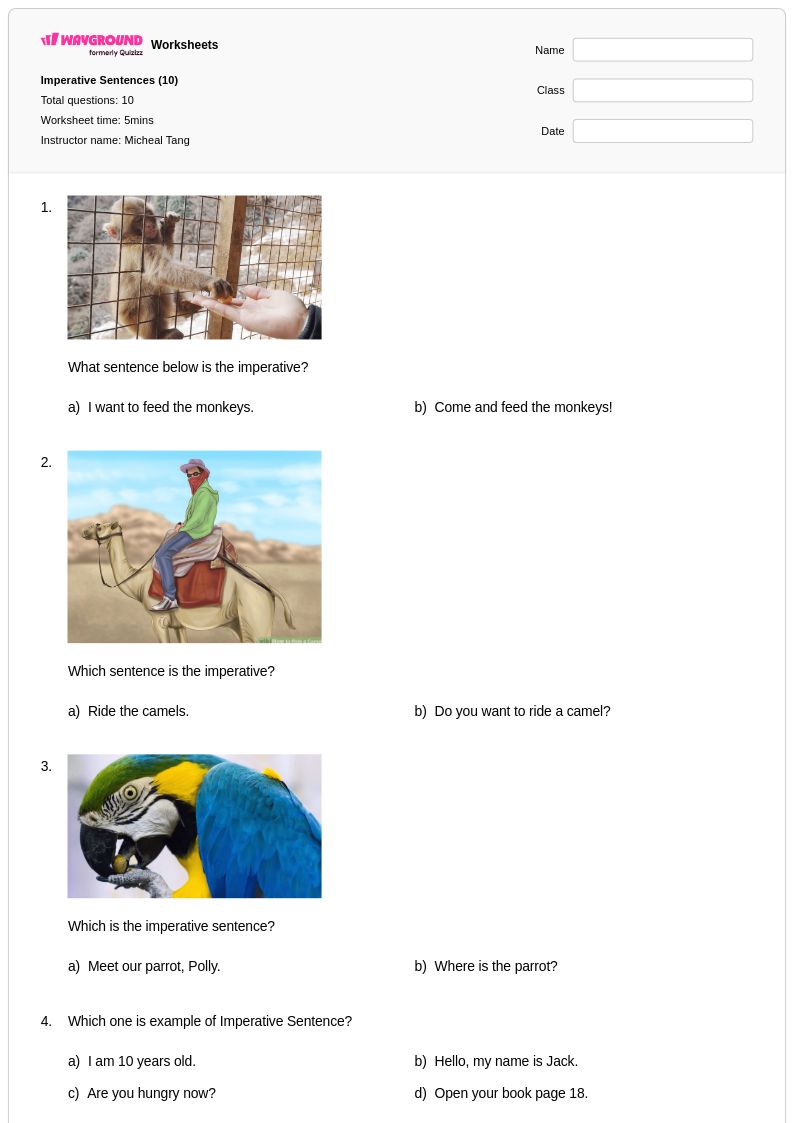
Imperative sentences form a crucial component of Year 5 English grammar instruction, and Wayground's comprehensive worksheet collection provides educators with expertly crafted resources to master this essential command structure. These printable worksheets guide fifth-grade students through identifying, writing, and properly punctuating imperative sentences while distinguishing them from declarative, interrogative, and exclamatory sentence types. Each worksheet includes carefully scaffolded practice problems that progress from basic recognition exercises to more complex sentence construction tasks, complete with detailed answer keys that support both independent study and classroom instruction. The free PDF format ensures teachers can easily distribute materials for homework assignments, center rotations, or targeted intervention sessions focused on strengthening students' understanding of how imperative sentences function in both academic writing and everyday communication.
Wayground's platform empowers teachers with access to millions of teacher-created imperative sentence worksheets, offering robust search and filtering capabilities that allow educators to locate resources perfectly aligned with their Year 5 grammar curriculum standards and specific classroom needs. The platform's differentiation tools enable seamless customization of worksheet difficulty levels, supporting both remediation for struggling learners and enrichment opportunities for advanced students ready to explore complex command structures and imperative mood variations. Teachers benefit from flexible formatting options that include both digital and printable versions, facilitating diverse instructional approaches from interactive whiteboard lessons to traditional paper-based practice sessions. This extensive resource library streamlines lesson planning while providing consistent, high-quality materials for skill practice, formative assessment, and reinforcement of imperative sentence concepts throughout the academic year.
FAQs
How do I teach imperative sentences to students?
Start by contrasting imperative sentences with declarative ones so students can feel the difference in purpose and tone. Emphasize that imperative sentences use a second-person implied subject ('you') that is never written, which is often the trickiest concept for learners to grasp. Use real-world examples like recipe instructions, classroom directions, and safety signs to ground the concept before moving into written practice.
What exercises help students practice imperative sentences?
Effective practice exercises include identifying imperative sentences within mixed sentence-type passages, converting declarative sentences into imperative form, and punctuating commands and requests correctly using periods or exclamation points. Tasks that ask students to write their own instructions for a familiar process, such as making a sandwich or playing a game, help reinforce command structure in a meaningful context.
What are common mistakes students make with imperative sentences?
The most frequent error is confusing the implied subject with a missing subject, leading students to mark imperative sentences as incomplete or incorrect. Students also commonly overpunctuate, placing exclamation points after every command rather than reserving them for urgent or emphatic imperatives. Another recurring issue is mixing imperative and declarative structures within a single sentence, particularly when students attempt to write multi-step instructions.
How do I differentiate imperative sentence instruction for struggling learners?
For students who need additional support, reduce cognitive load by focusing first on a single imperative type, such as direct commands, before introducing polite requests or negative imperatives. On Wayground, teachers can enable reduced answer choices for individual students to make identification exercises more accessible, and the Read Aloud feature can help students who benefit from hearing sentence structures before analyzing them in writing.
How do I use Wayground's imperative sentences worksheets in my classroom?
Wayground's imperative sentences worksheets are available as printable PDFs for traditional classroom use and in digital formats for technology-integrated learning environments, including the option to host them as a quiz directly on Wayground. Teachers can use the platform's search and filtering tools to find worksheets aligned to specific learning objectives, then assign them for independent practice, small group work, or whole-class instruction. Each worksheet includes a complete answer key, which supports both self-paced student review and efficient teacher grading.
How is an imperative sentence different from a declarative sentence?
A declarative sentence makes a statement and includes an explicit subject, while an imperative sentence gives a command, request, or instruction and omits the subject because it is implied to be 'you.' For example, 'You should close the door' is declarative, whereas 'Close the door' is imperative. Understanding this distinction helps students correctly identify sentence types and apply appropriate punctuation.