Free Printable Compound Words Worksheets for Year 1
Discover free Year 1 compound words worksheets and printables that help young learners identify, create, and practice combining two words into one through engaging activities, practice problems, and answer keys.
Explore printable Compound Words worksheets for Year 1
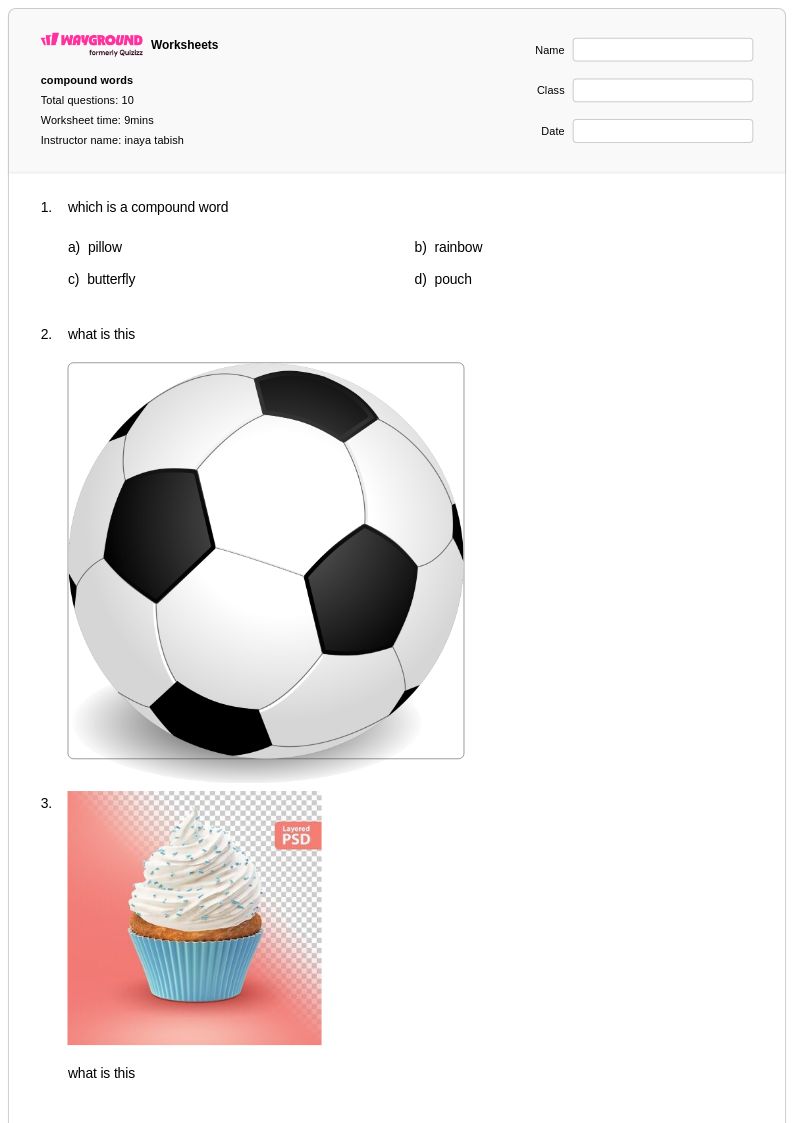
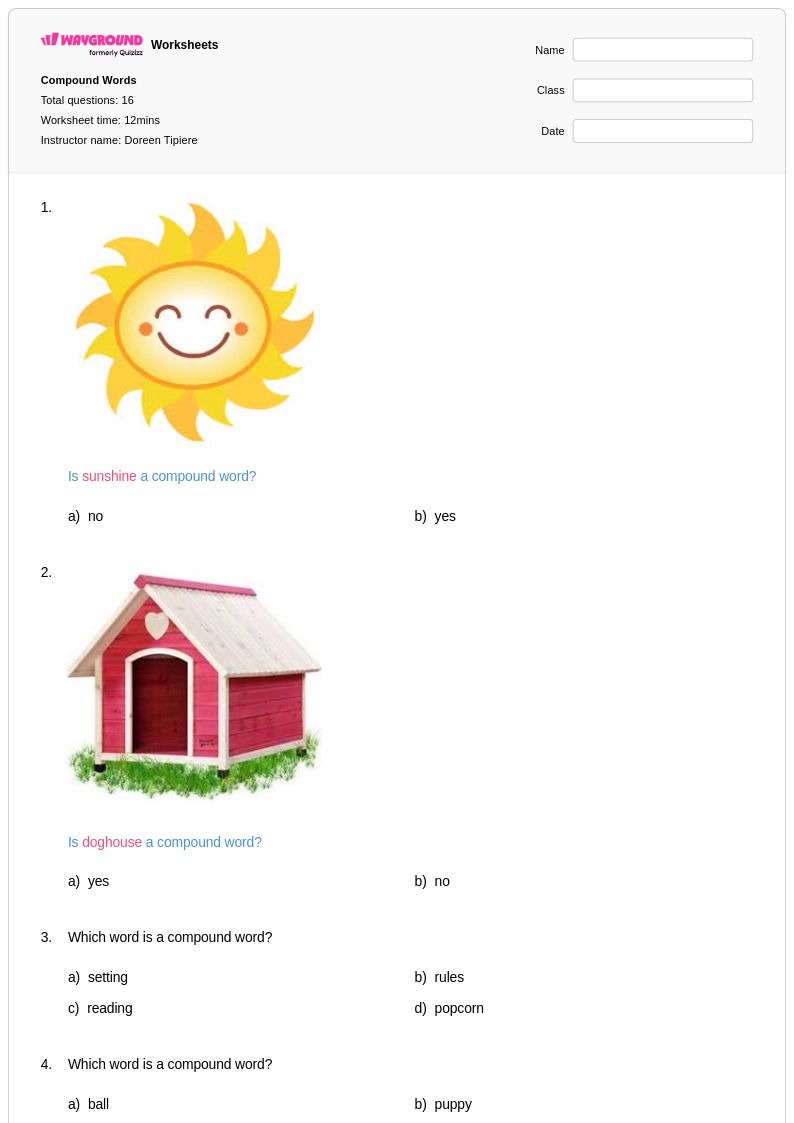
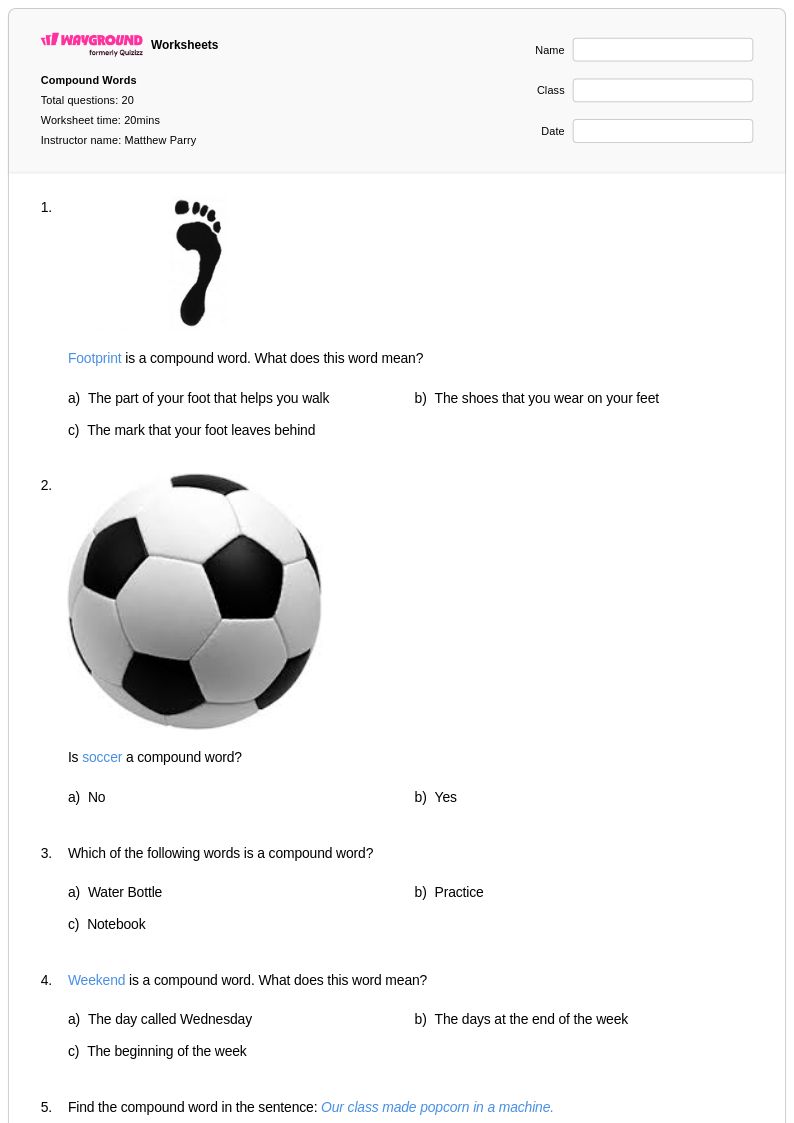
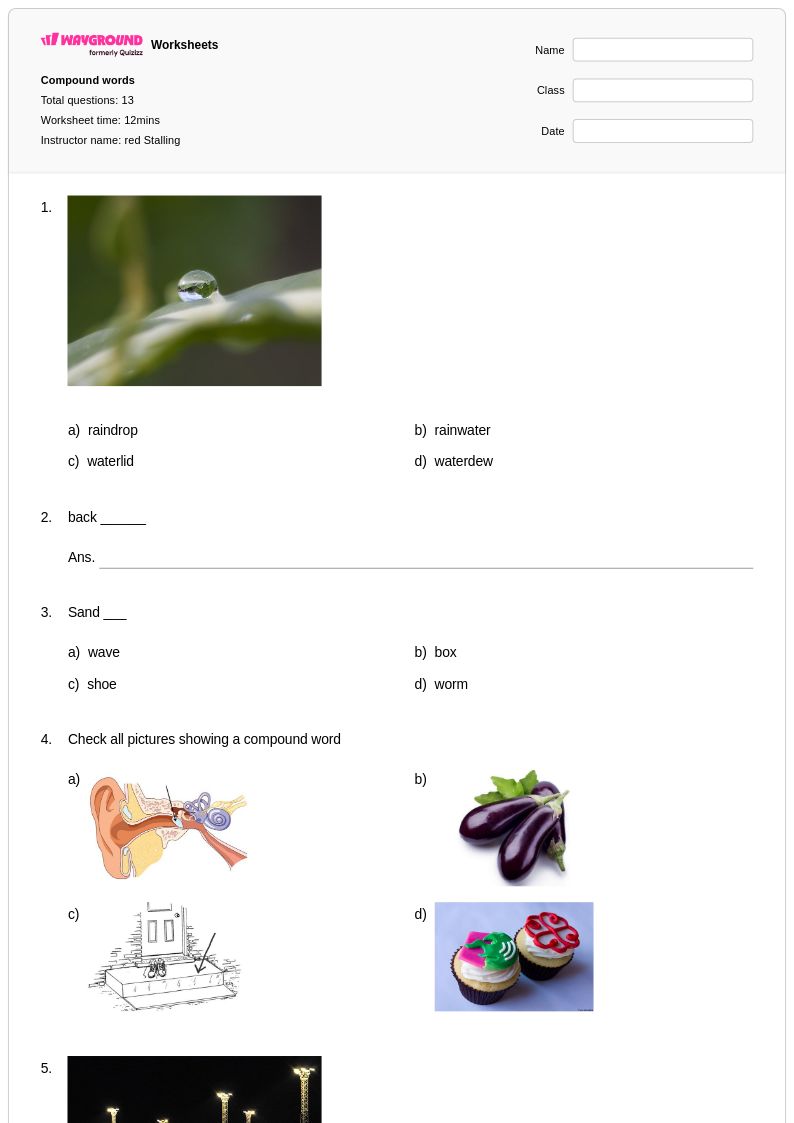
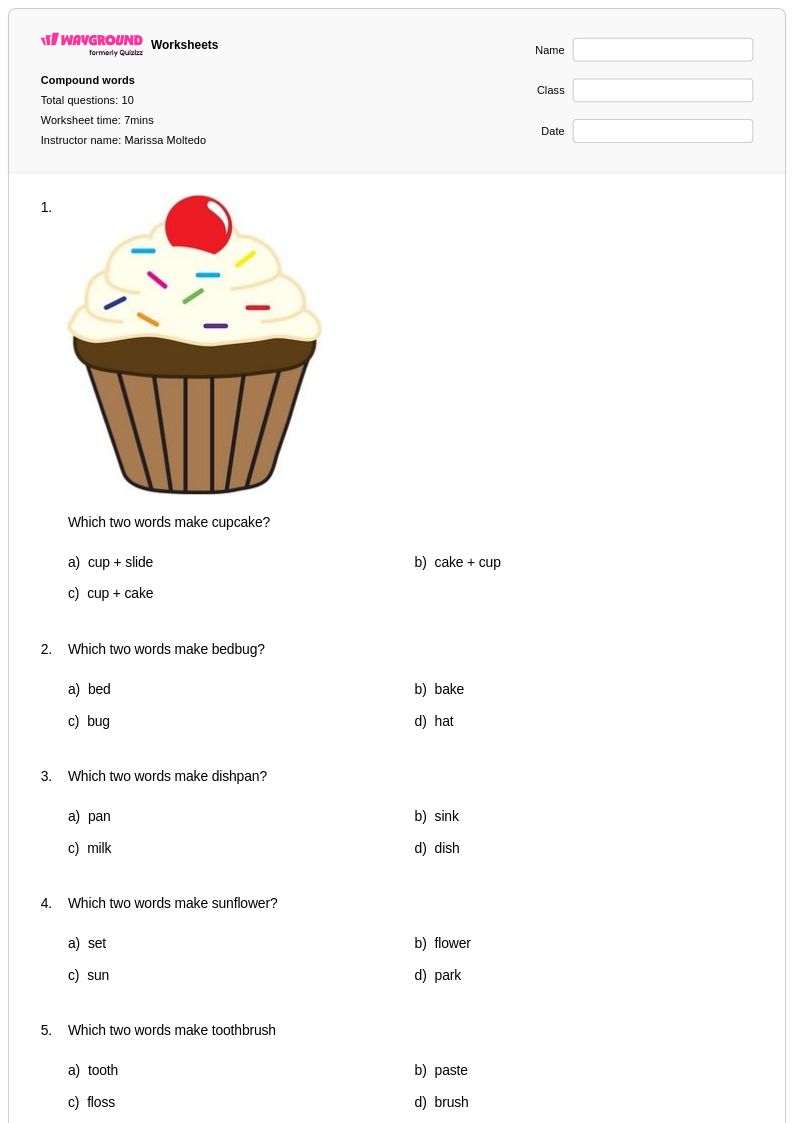
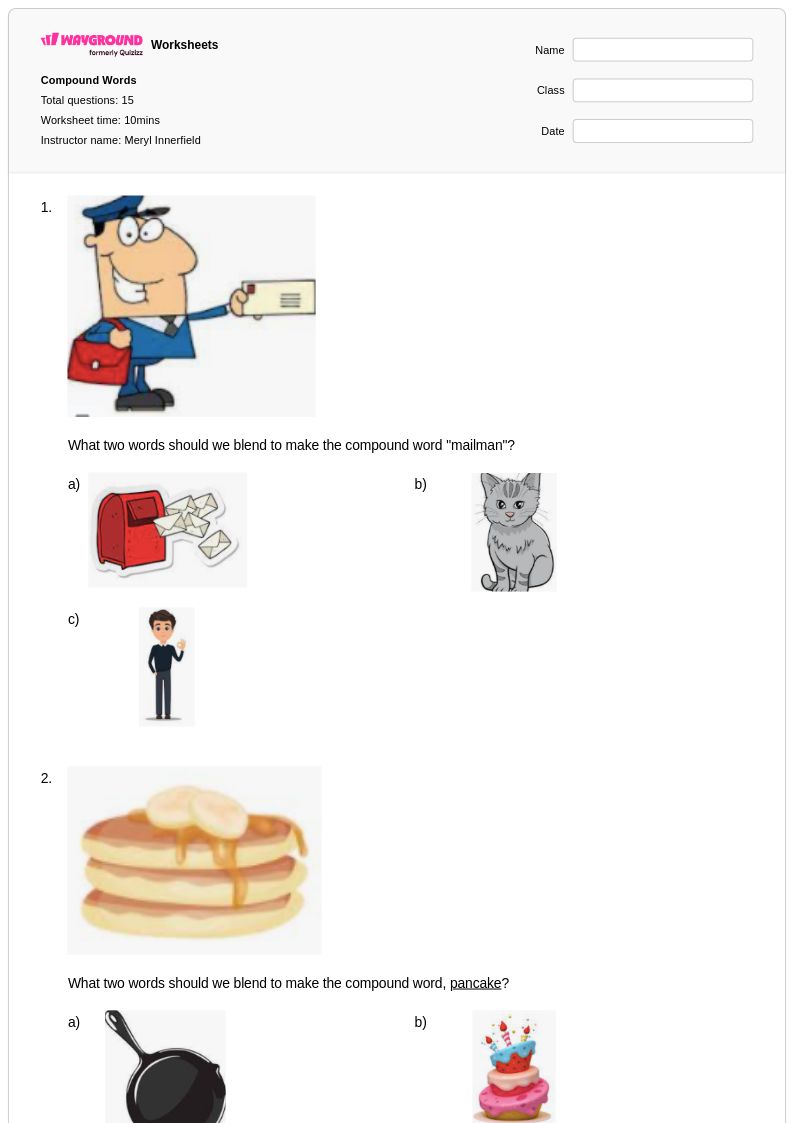
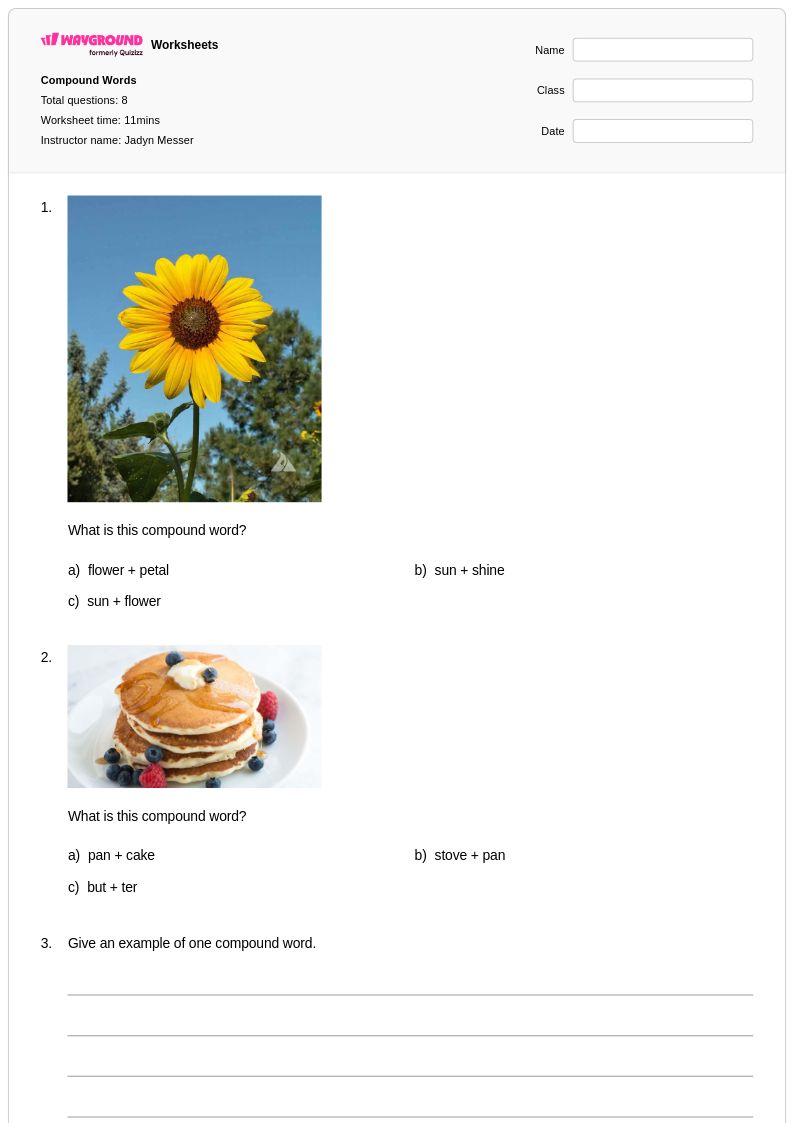
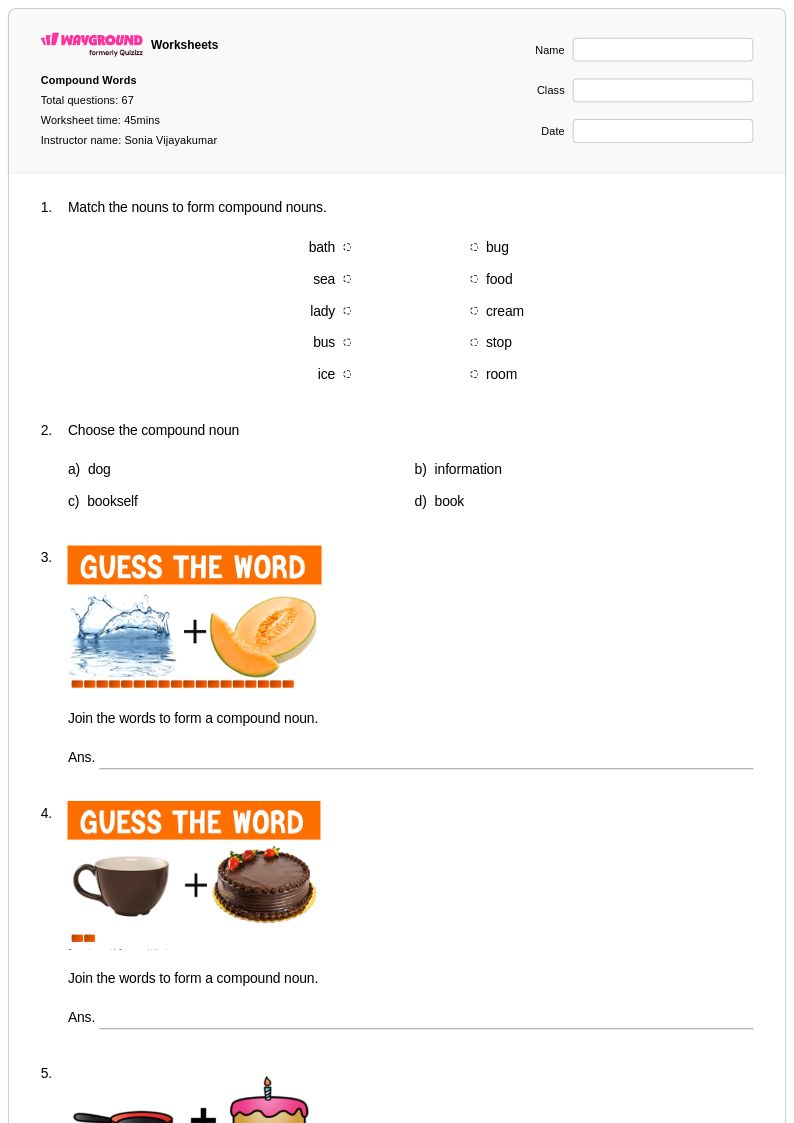
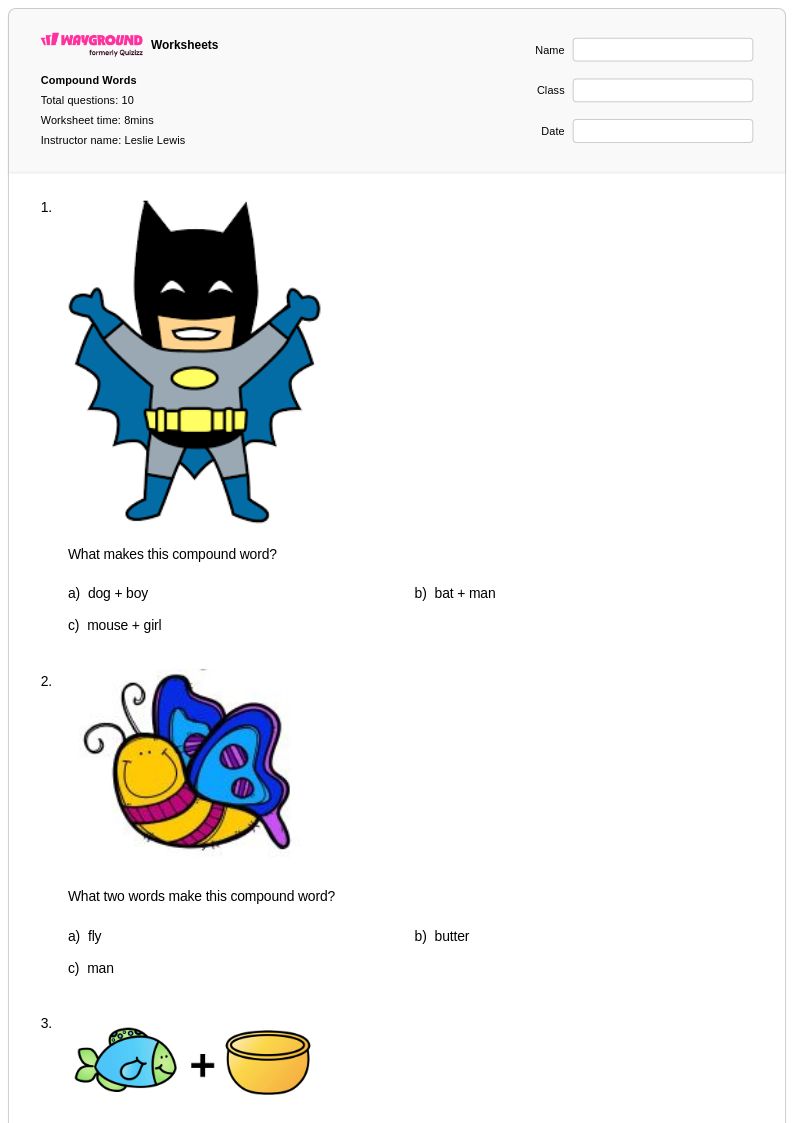
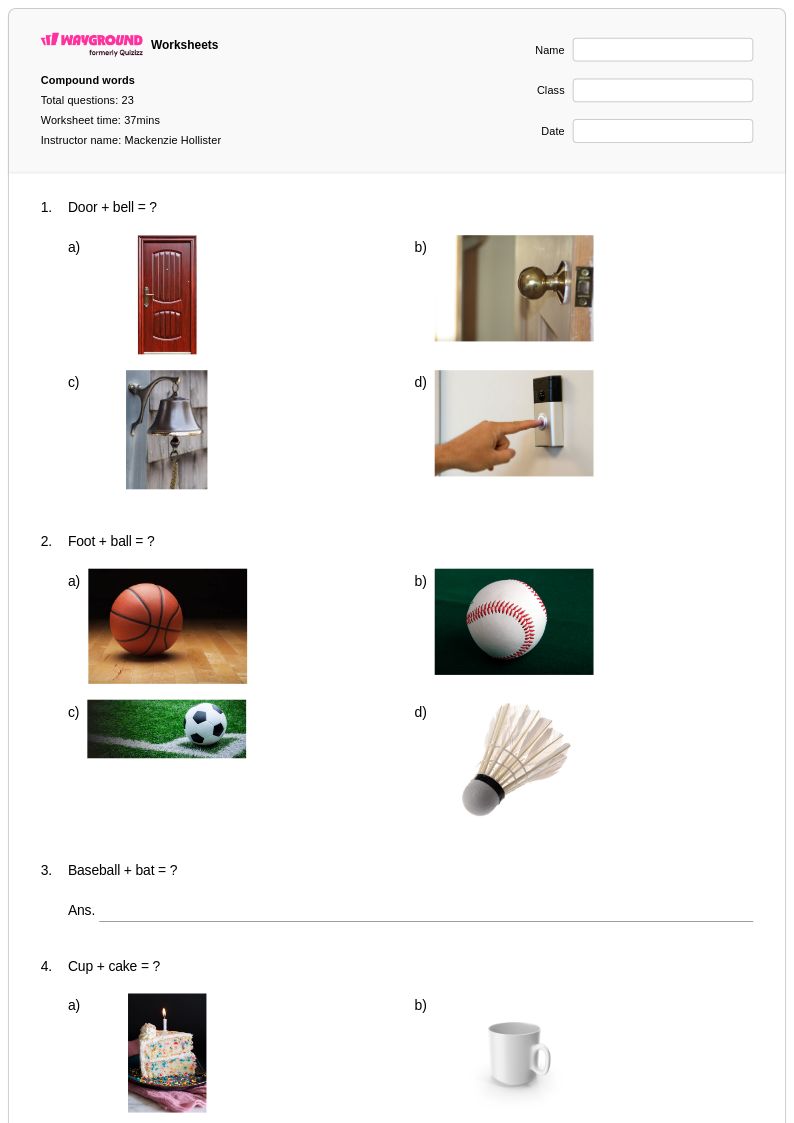
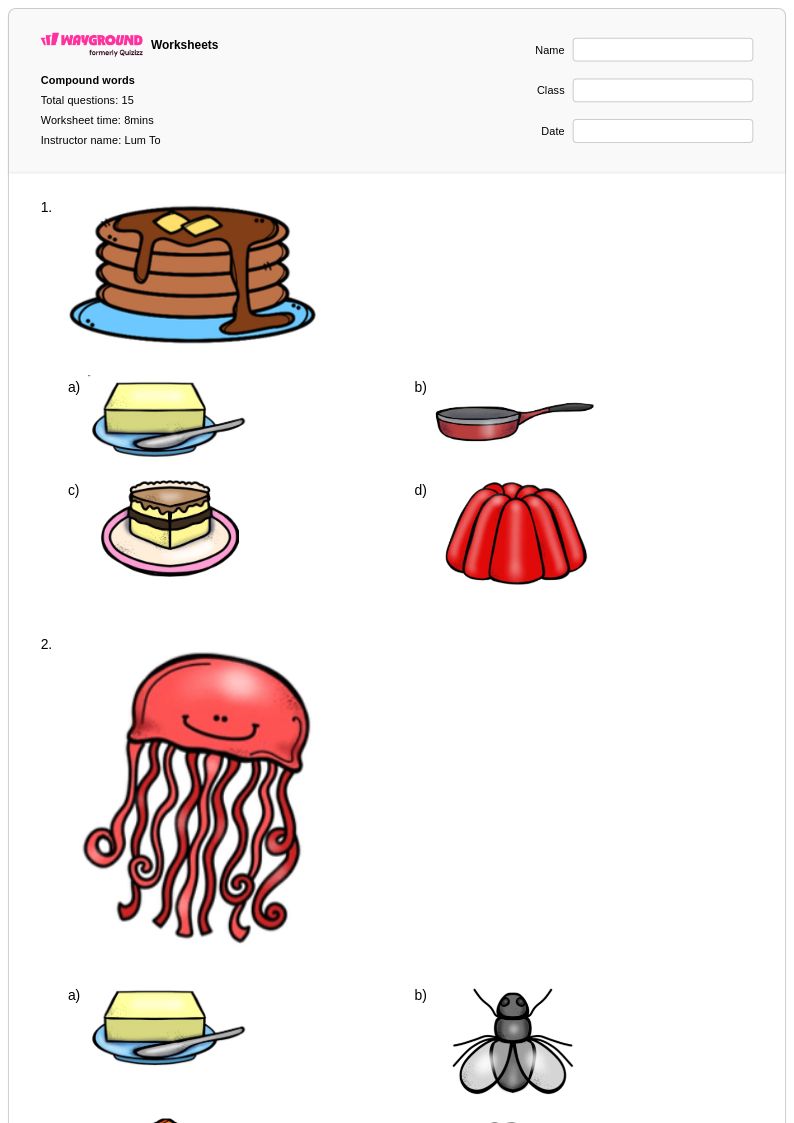
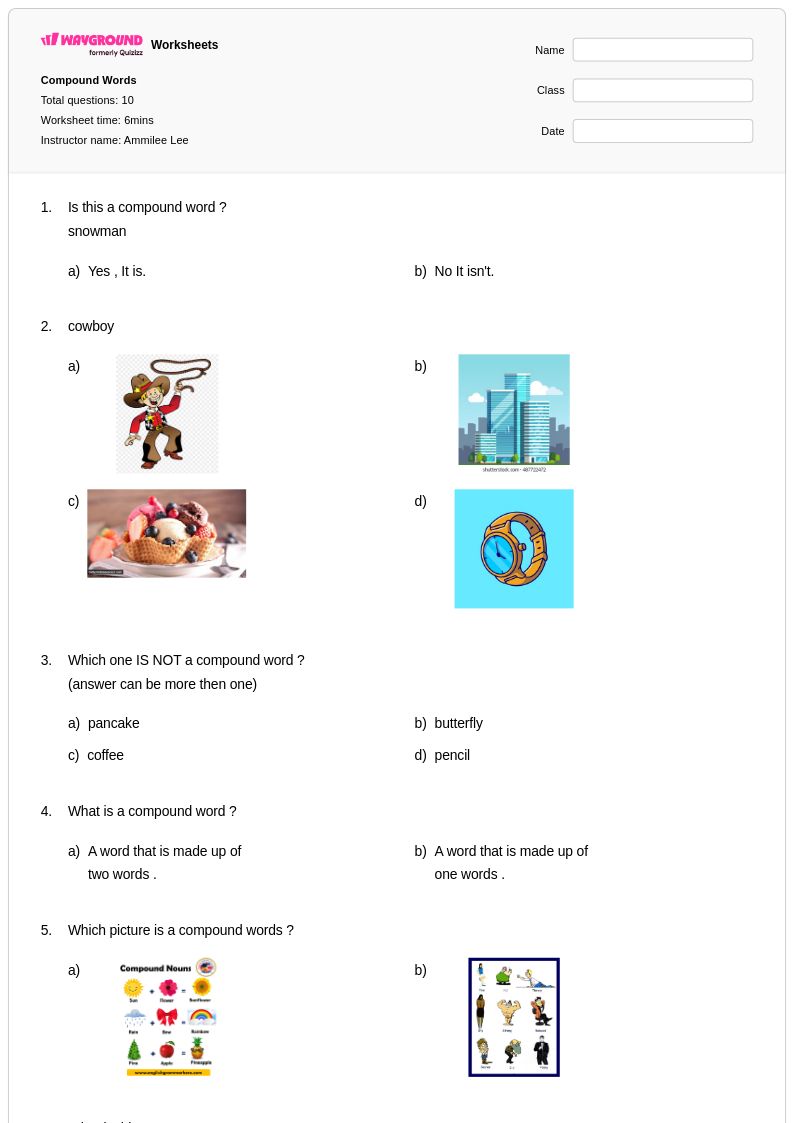
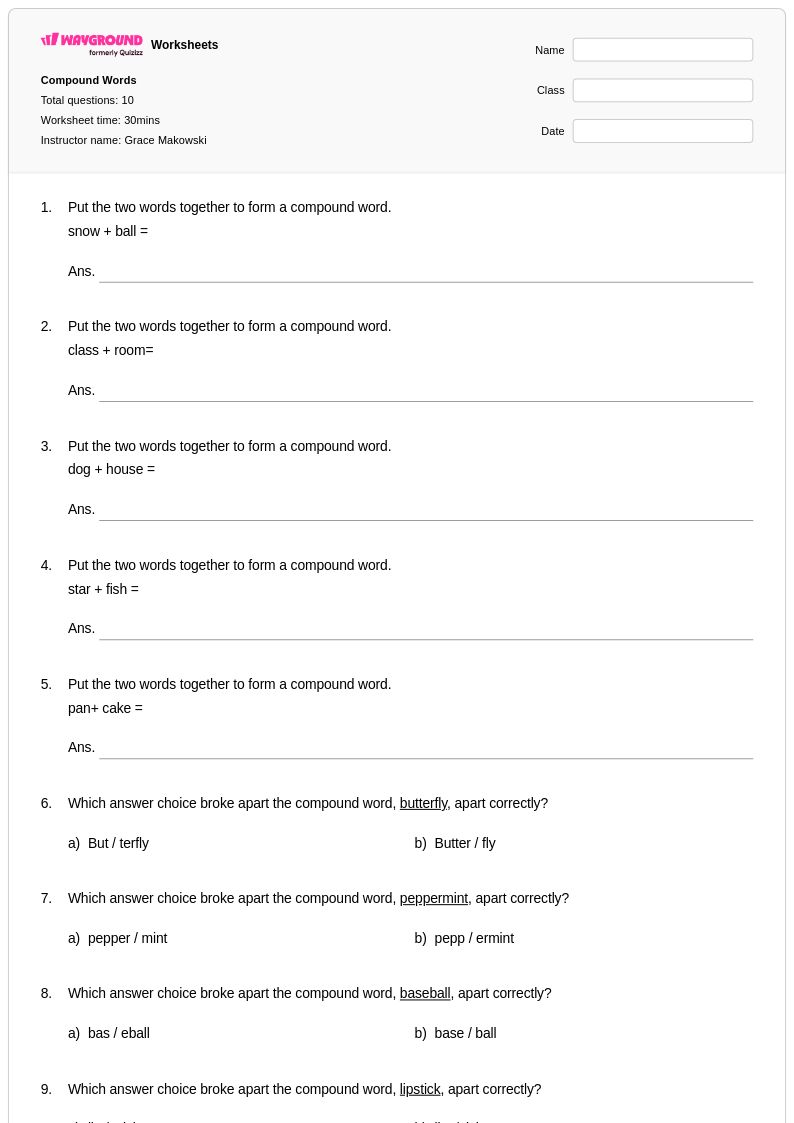
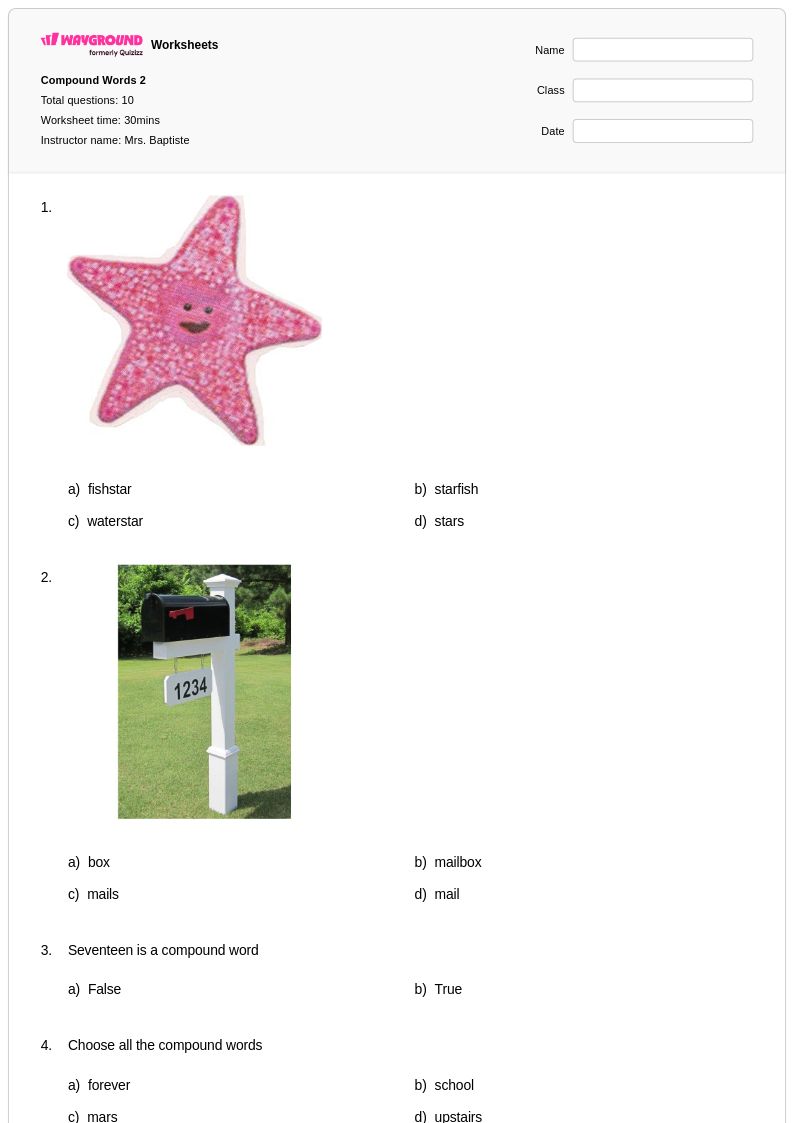
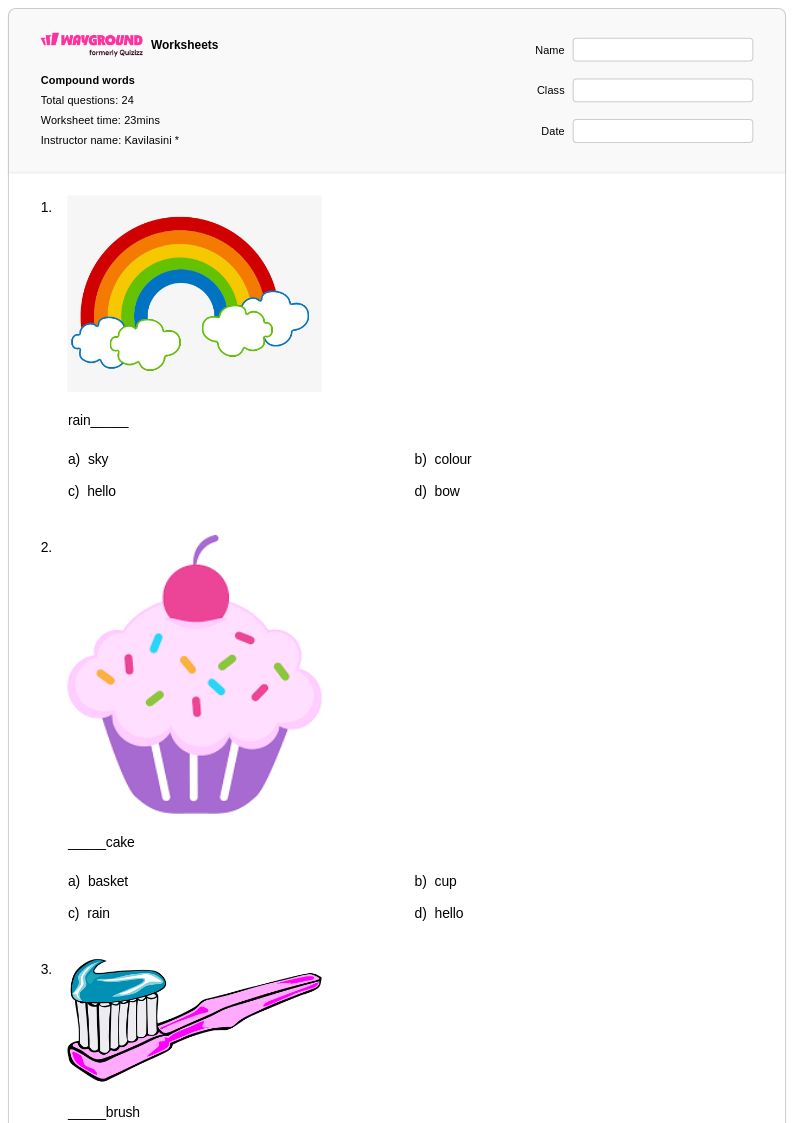
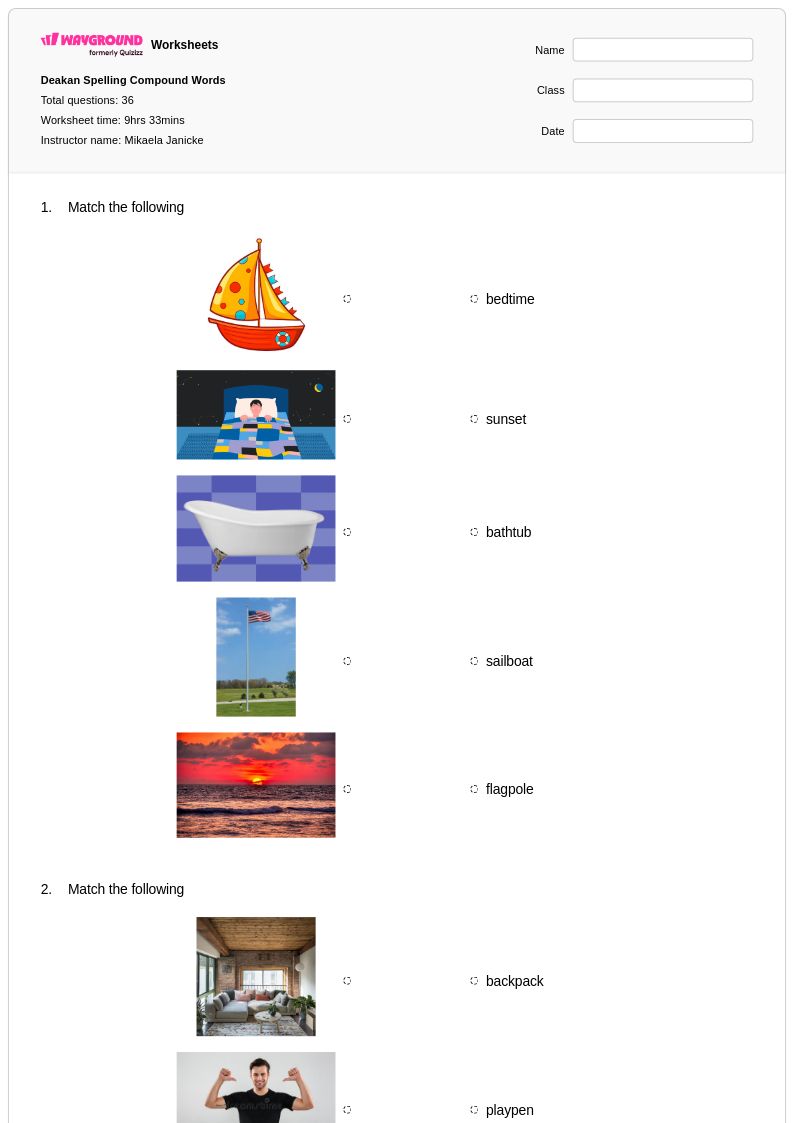
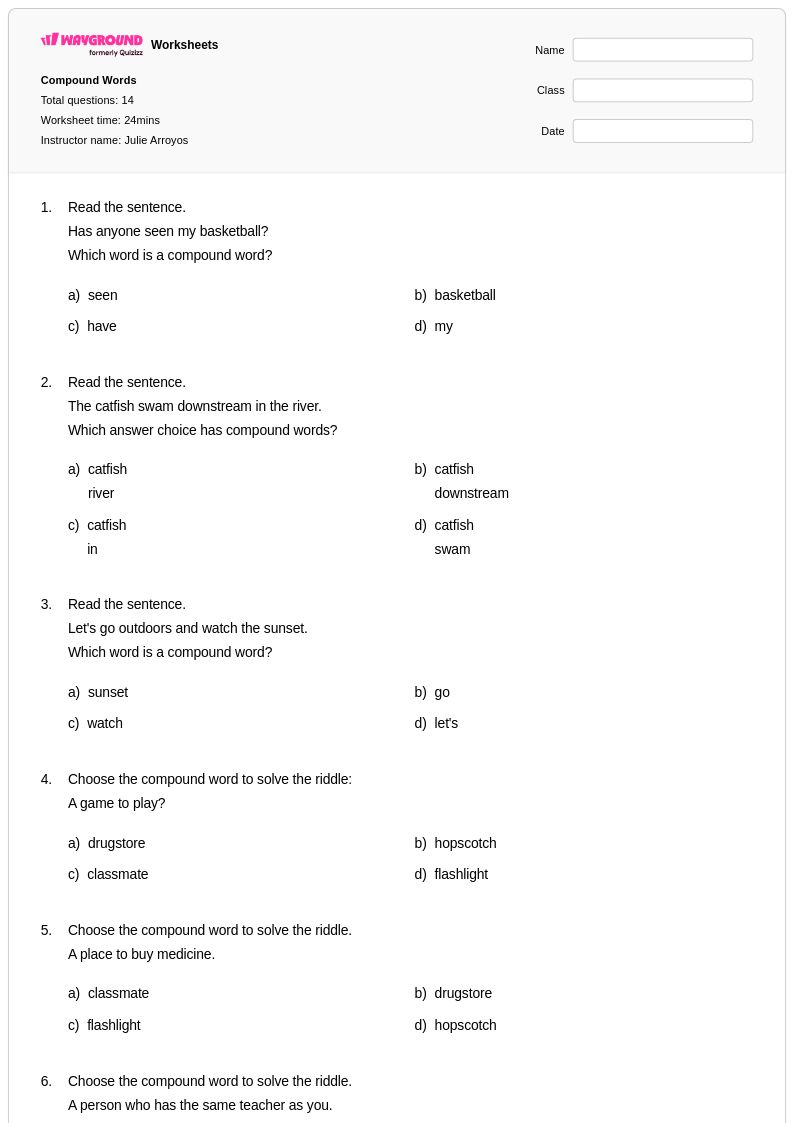
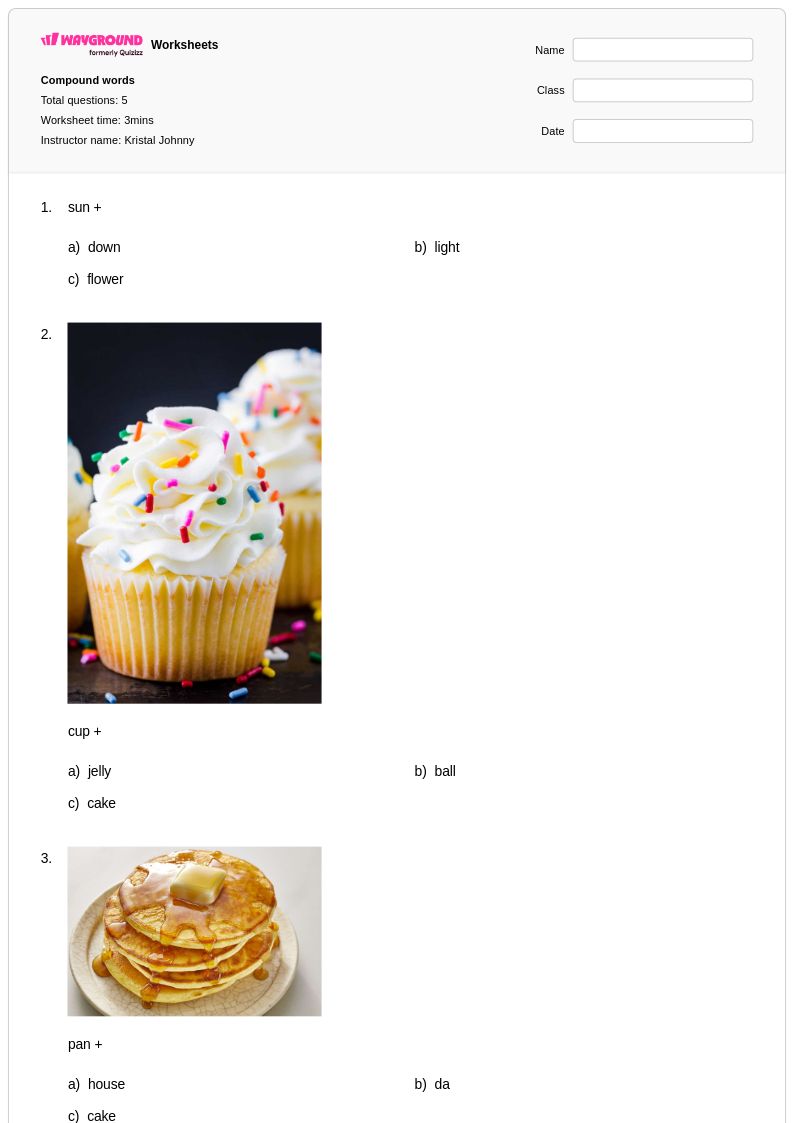
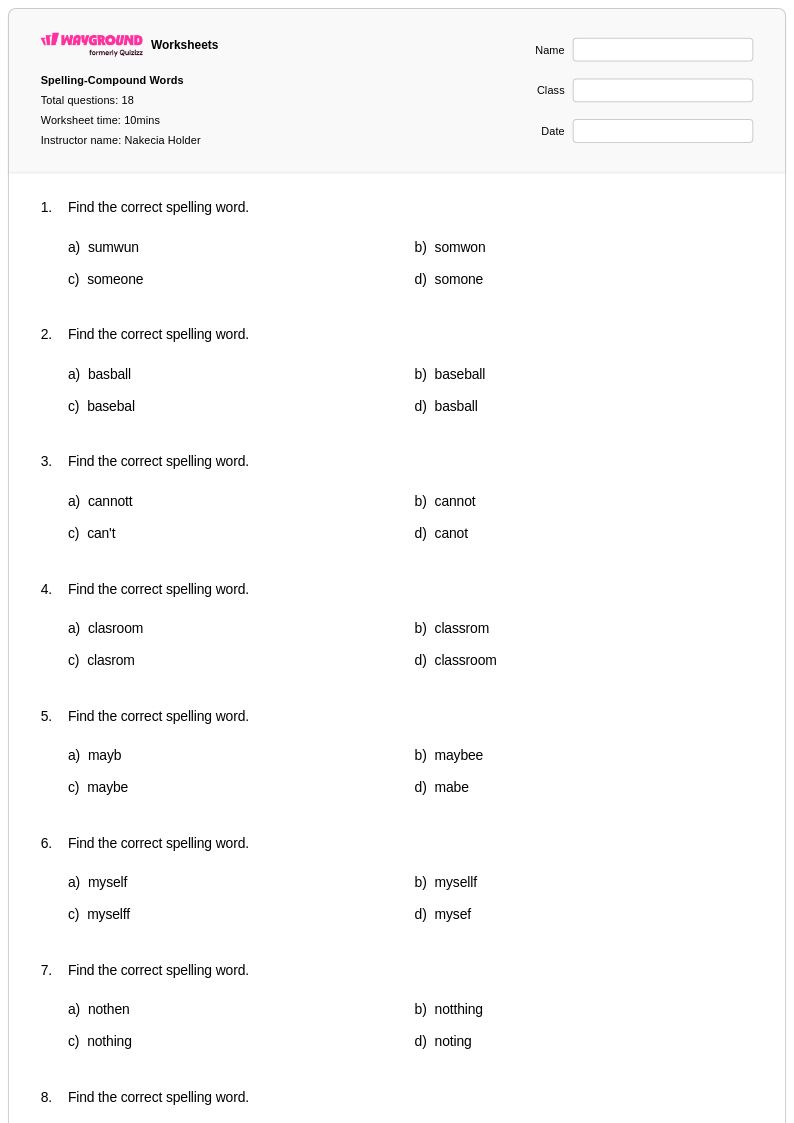
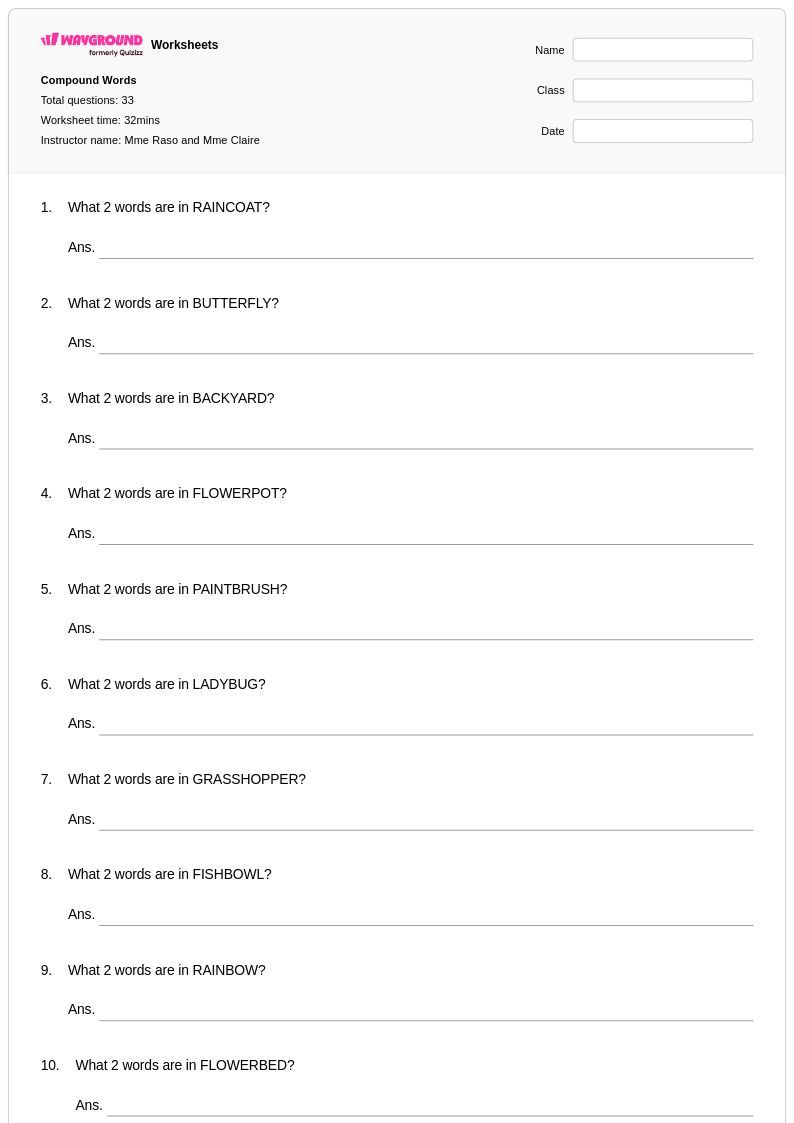
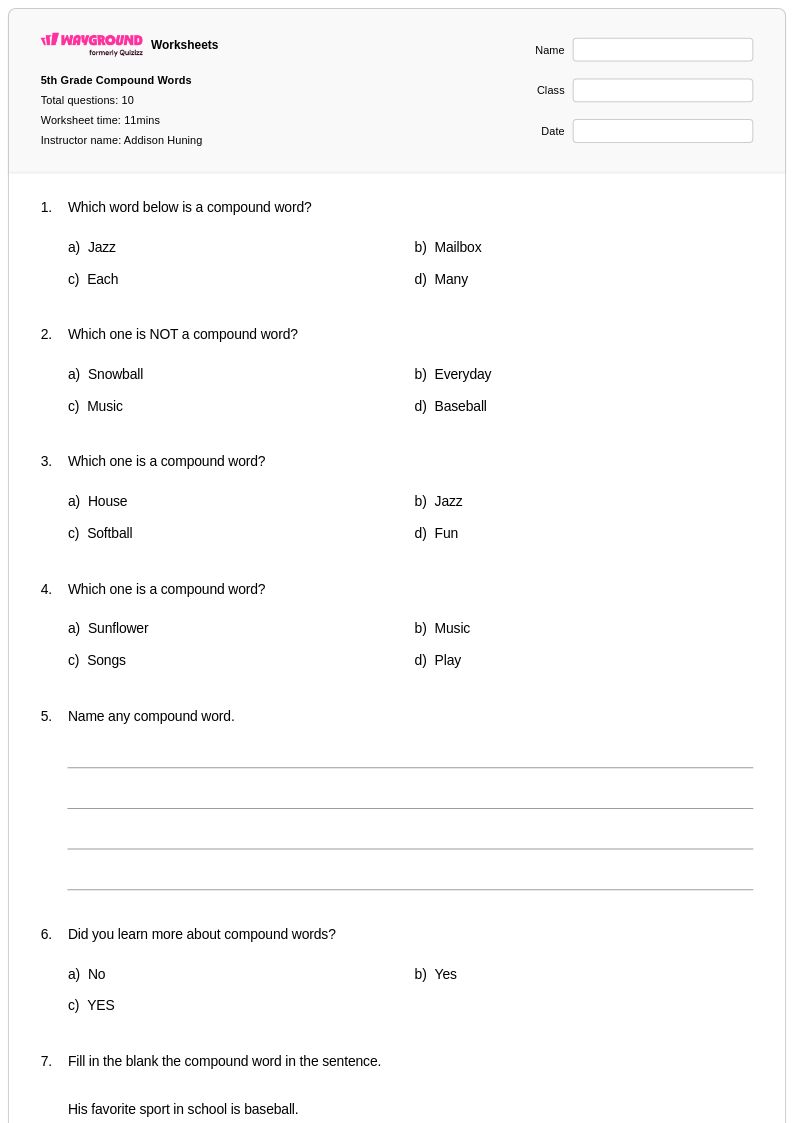
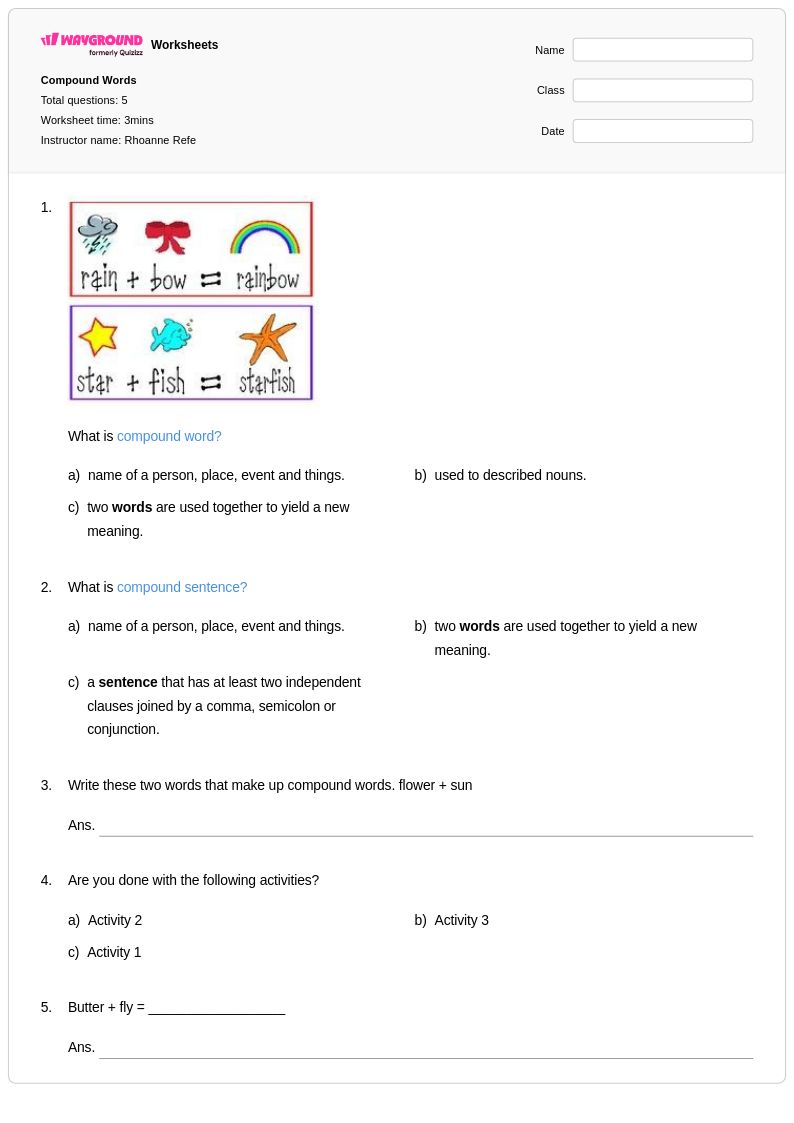
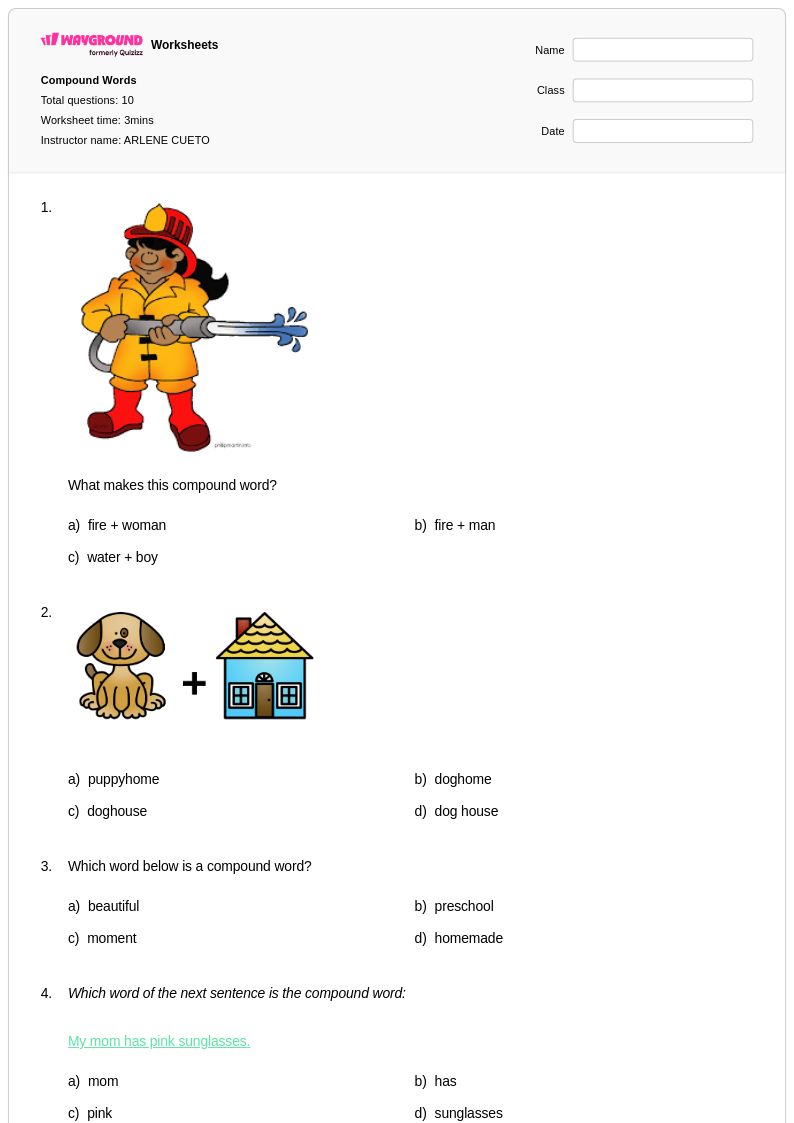
Compound words worksheets for Year 1 students available through Wayground (formerly Quizizz) provide essential practice in understanding how two separate words combine to create new meanings. These comprehensive printables help first-grade learners develop critical phonemic awareness and vocabulary expansion skills by working with familiar compound words like "rainbow," "sunflower," and "doghouse." Each worksheet includes structured practice problems that guide students through identifying the individual components within compound words, matching word parts to form complete compounds, and recognizing compound words in context. Teachers can access free pdf resources complete with answer keys, enabling efficient assessment and immediate feedback for students as they master this foundational language concept.
Wayground (formerly Quizizz) empowers educators with millions of teacher-created compound word resources specifically designed for Year 1 instruction, featuring robust search and filtering capabilities that allow teachers to locate materials aligned with specific learning standards and student needs. The platform's differentiation tools enable instructors to customize worksheets for various skill levels within their classroom, supporting both remediation for struggling learners and enrichment activities for advanced students. These flexible resources are available in both printable and digital formats, including downloadable pdf versions, making it simple for teachers to integrate compound word practice into daily lesson planning, homework assignments, or targeted skill intervention sessions that strengthen students' understanding of word structure and meaning.
FAQs
How do I teach compound words to elementary students?
Start by introducing compound words as two complete words that join together to form a new word with its own meaning, such as 'sun' + 'flower' = 'sunflower'. Use physical word cards so students can manipulate and combine word pairs, making the concept concrete before moving to written practice. Grouping examples by category (body parts, animals, weather) helps students recognize patterns and builds independent word-formation strategies.
What exercises help students practice identifying and forming compound words?
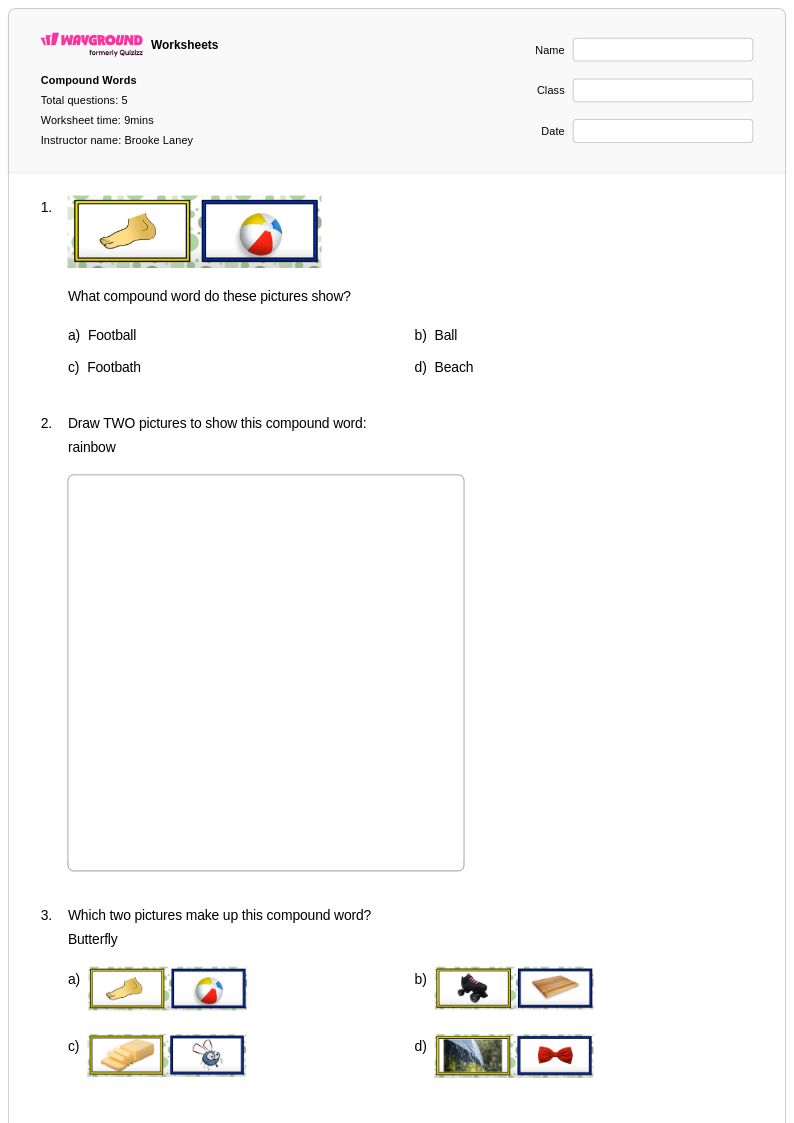
Matching exercises that pair two word halves are effective for building recognition, while fill-in-the-blank sentences require students to apply compound words in context. Picture-based prompts, where students identify the two images that combine to form a single word, work especially well for visual learners. Progressing from recognition tasks to independent construction activities ensures students move from passive identification to active use.
What are the most common mistakes students make with compound words?
Students frequently confuse compound words with common two-word phrases, incorrectly treating expressions like 'ice cream' or 'high school' as single compound words. Another common error is misreading the meaning of a compound word by interpreting each part literally rather than understanding the combined meaning, such as assuming 'butterfly' has something to do with butter. Targeted practice that contrasts true compound words with multi-word expressions helps correct both misconceptions.
How can I use compound words worksheets to support students at different skill levels?
For emerging learners, start with closed compound words that have transparent meanings, such as 'raincoat' or 'bedroom', before introducing less predictable combinations. Advanced students can work on analyzing how compound word meanings shift from their parts, building deeper morphological awareness. On Wayground, teachers can apply accommodations such as read aloud, reduced answer choices, and extended time to individual students, so every learner can engage with the same material at an appropriate level of support.
How do I use compound words worksheets from Wayground in my classroom?
Wayground's compound words worksheets are available as printable PDFs for traditional classroom use and in digital formats for technology-integrated environments, including the option to host them as a quiz directly on the platform. This flexibility makes them suitable for whole-class instruction, independent center work, or at-home practice. Teachers can use the worksheets for initial instruction, targeted remediation, or enrichment depending on where students are in their learning progression.
How do compound words worksheets support vocabulary and reading comprehension growth?
Practicing compound words builds morphological awareness, which means students learn to decode unfamiliar words by recognizing their component parts. This skill transfers directly to reading comprehension because students who understand how words are constructed can make informed guesses about meaning in context. Systematic compound word practice also expands productive vocabulary, giving students more precise language to use in their own writing.