Free Printable Consonant and Vowel Patterns Worksheets for Year 5
Enhance Year 5 students' understanding of consonant and vowel patterns through Wayground's comprehensive collection of free printable worksheets, featuring engaging practice problems and complete answer keys in PDF format.
Explore printable Consonant and Vowel Patterns worksheets for Year 5
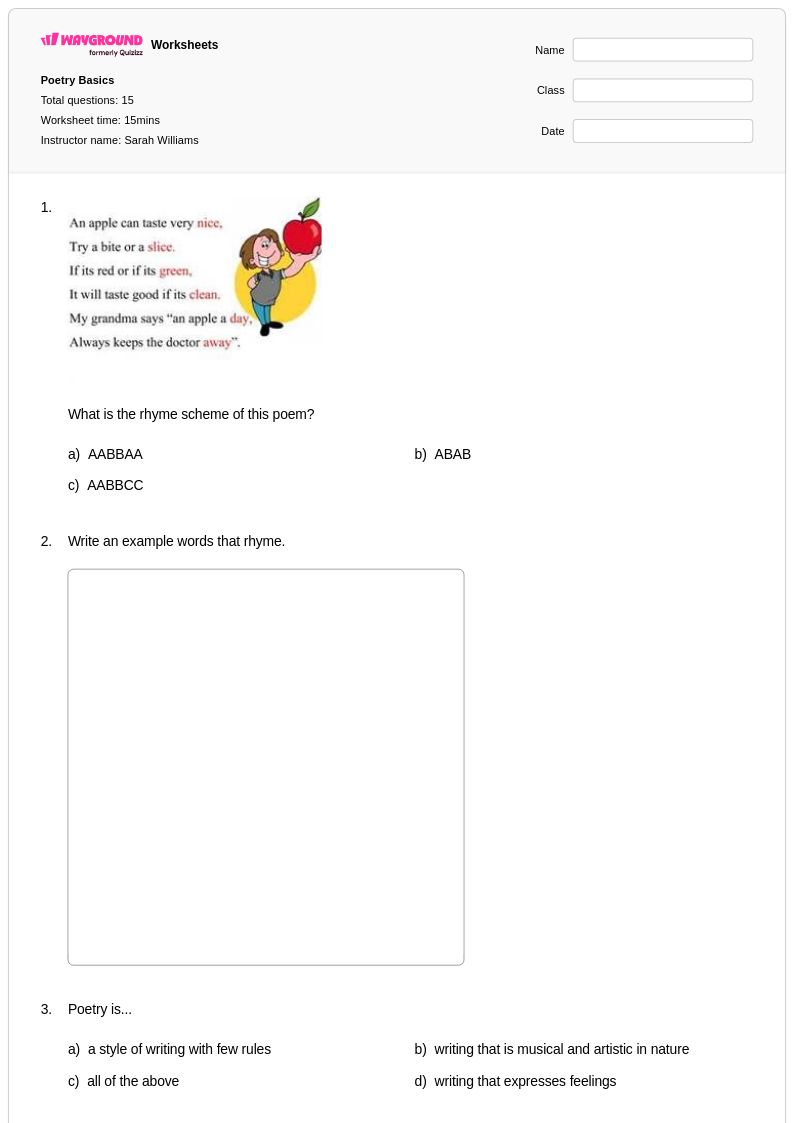
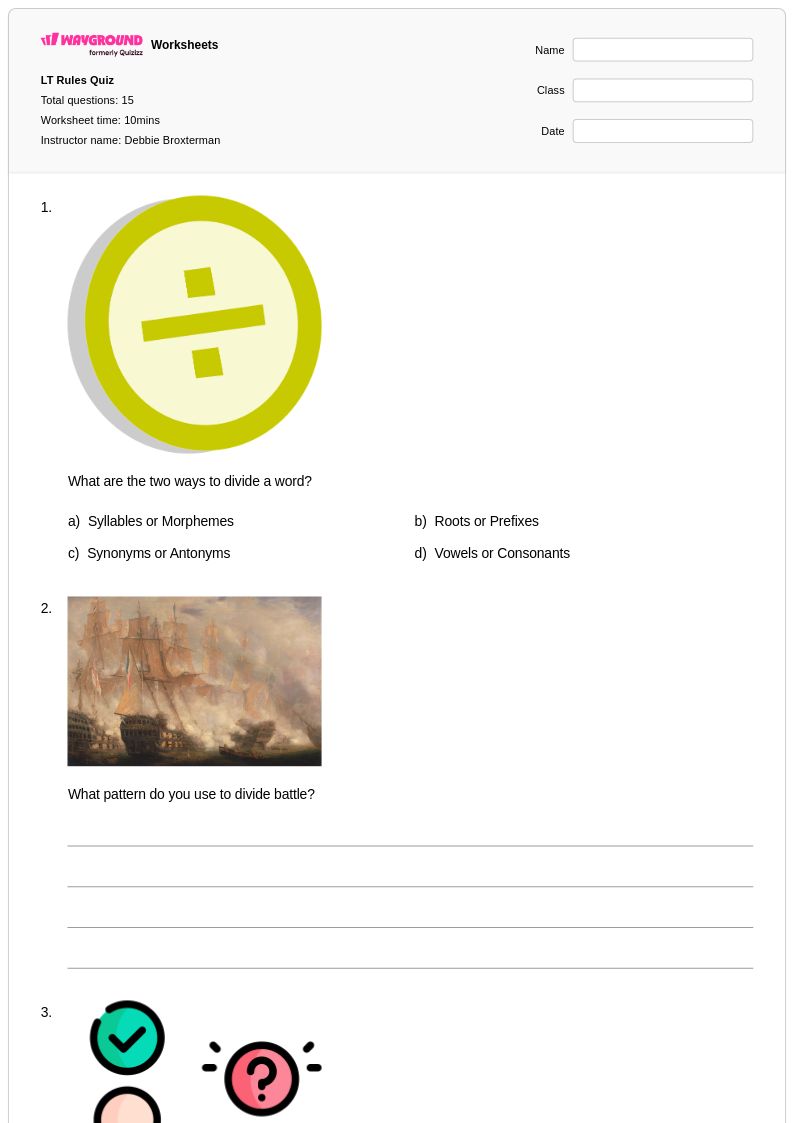
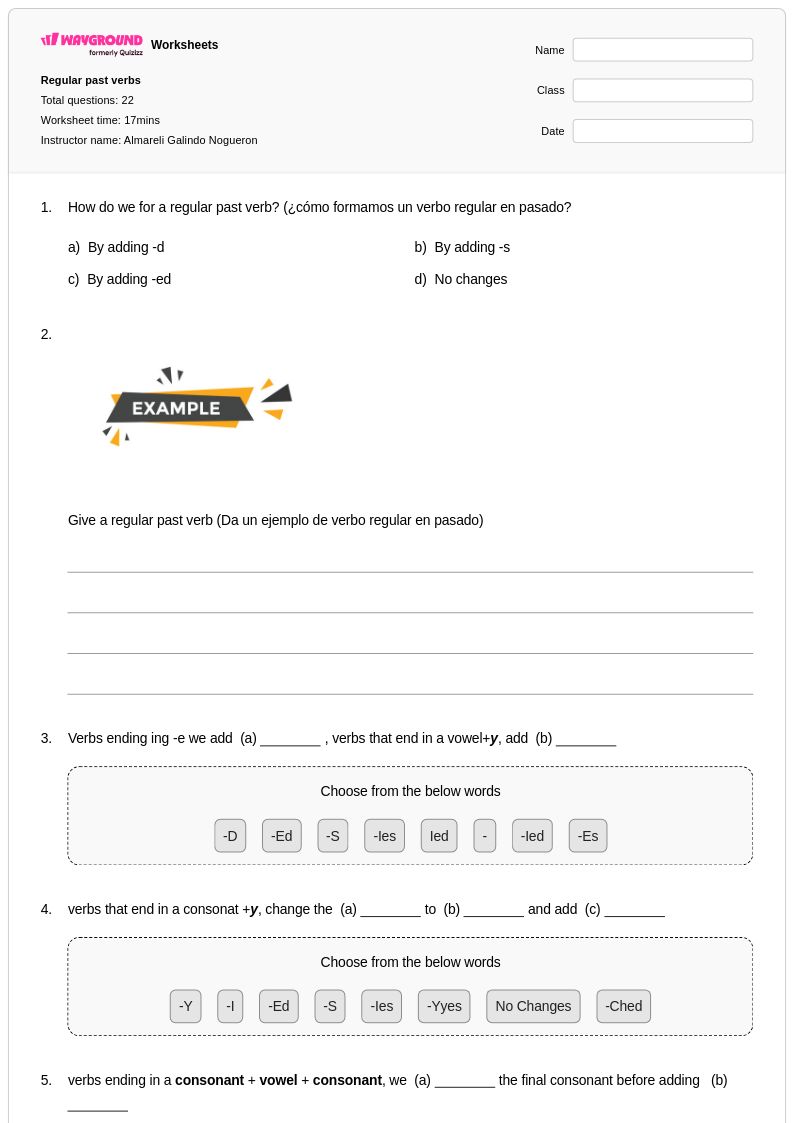
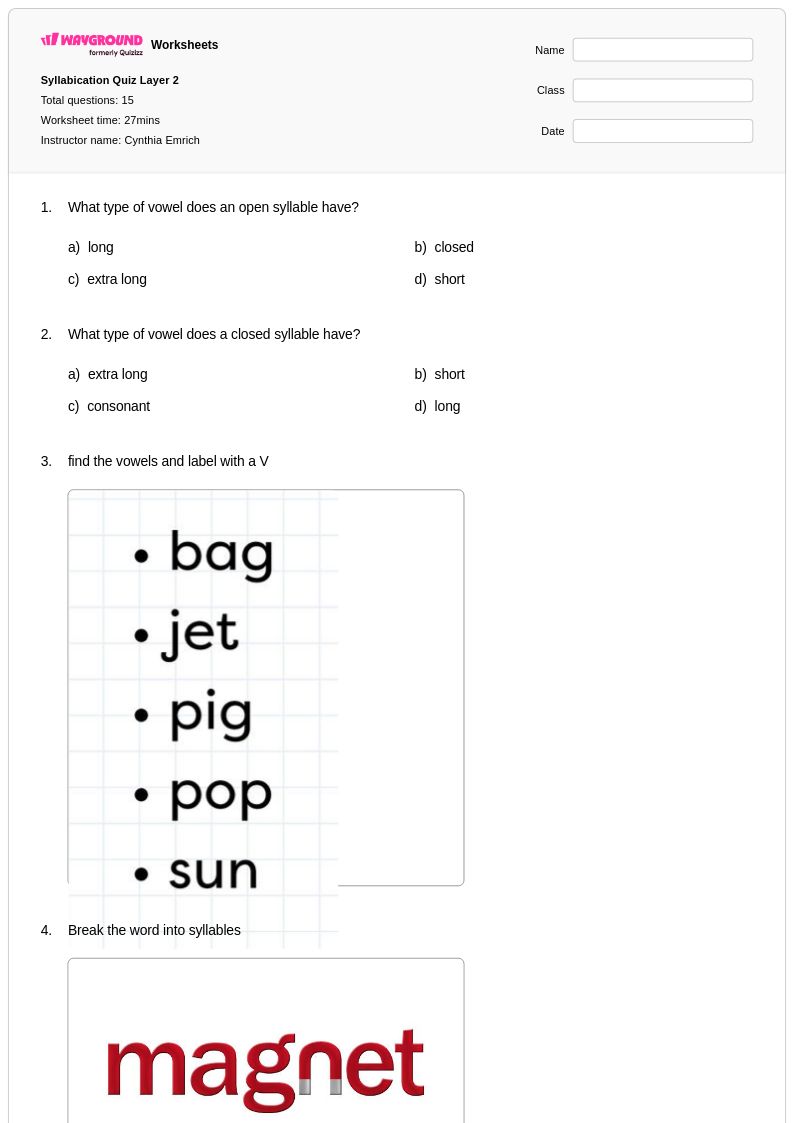
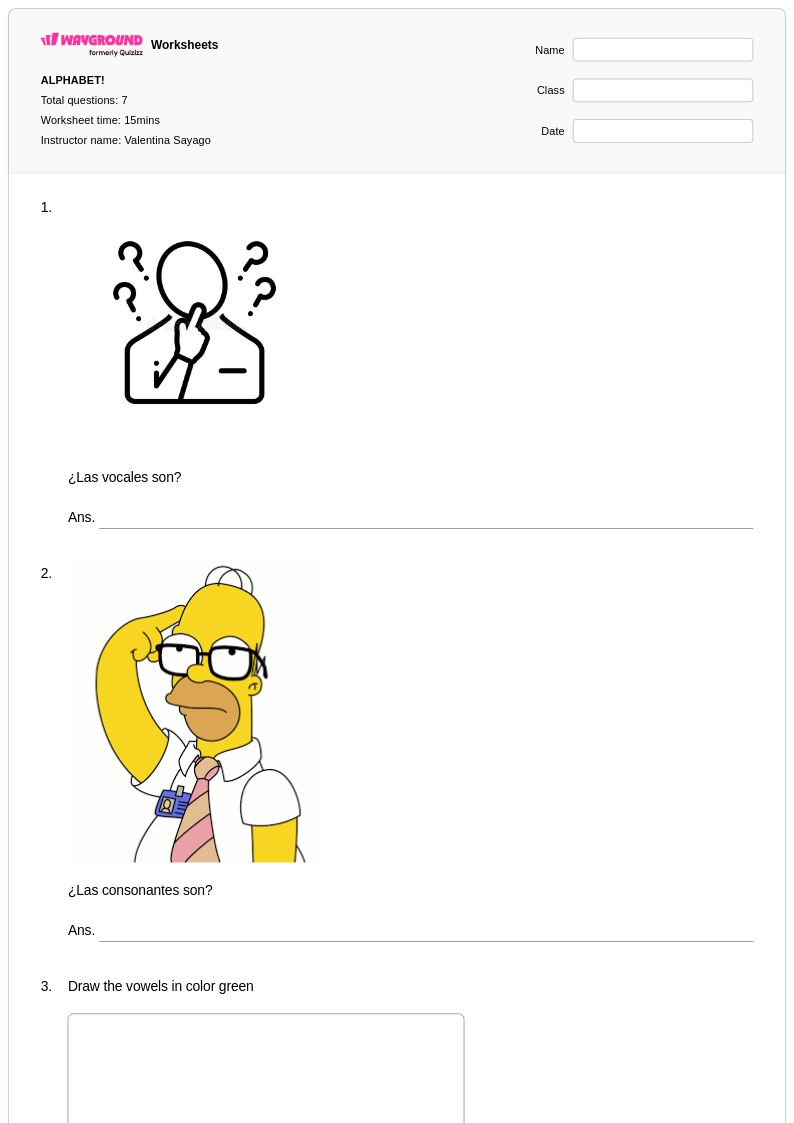
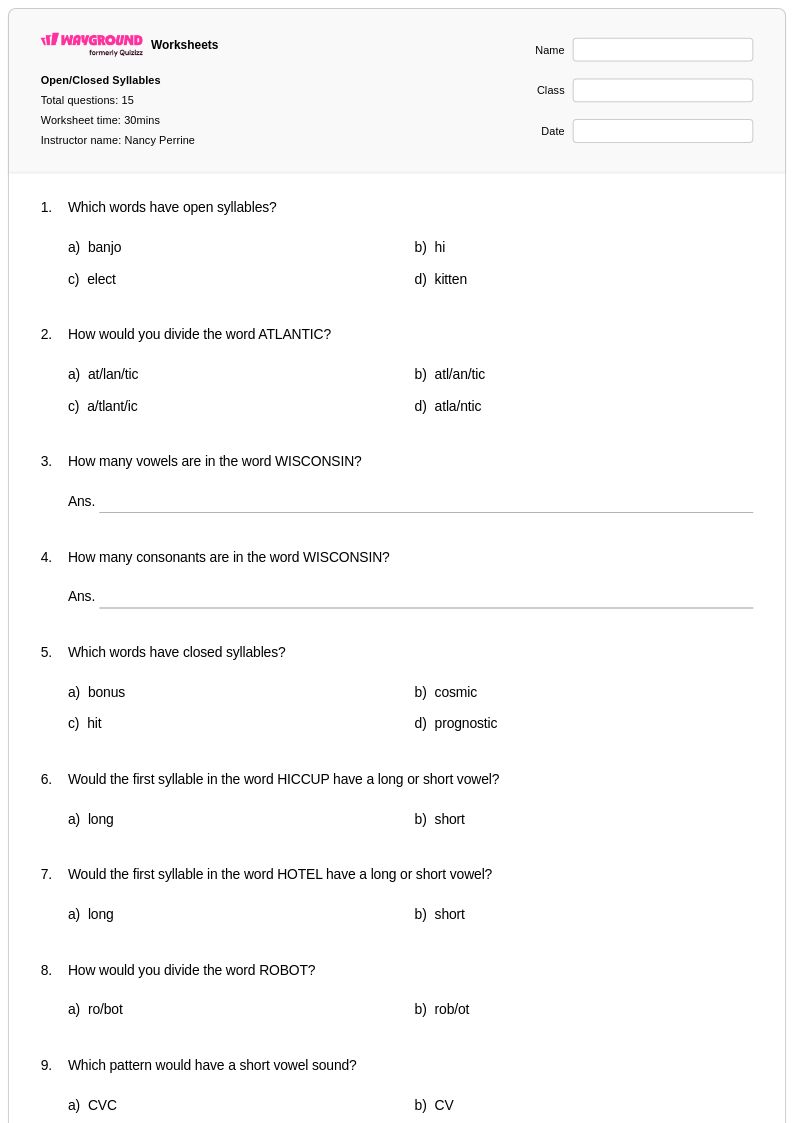
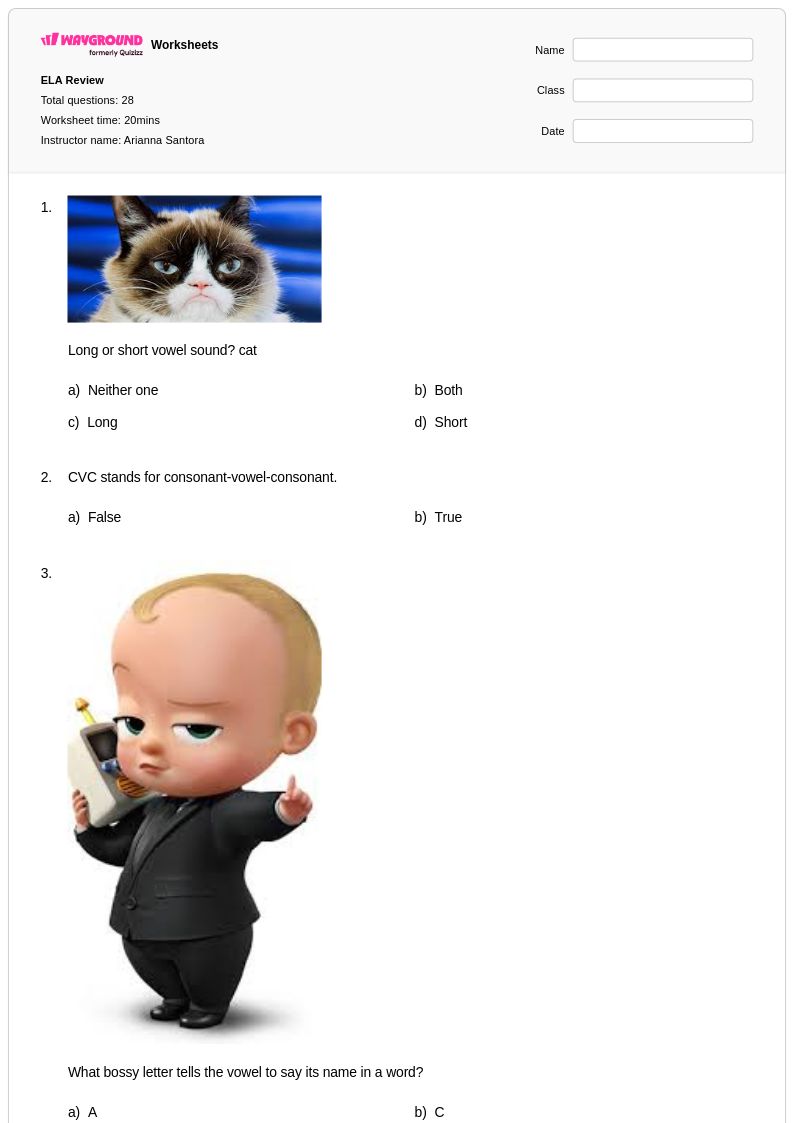
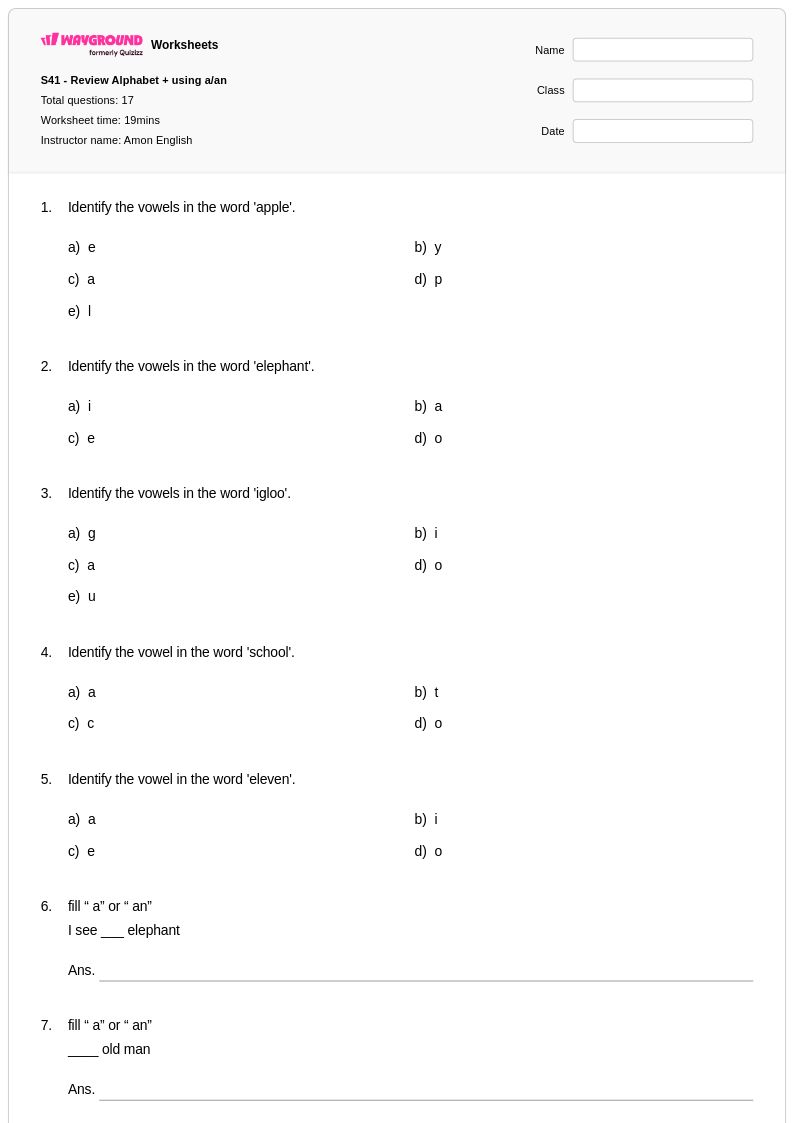
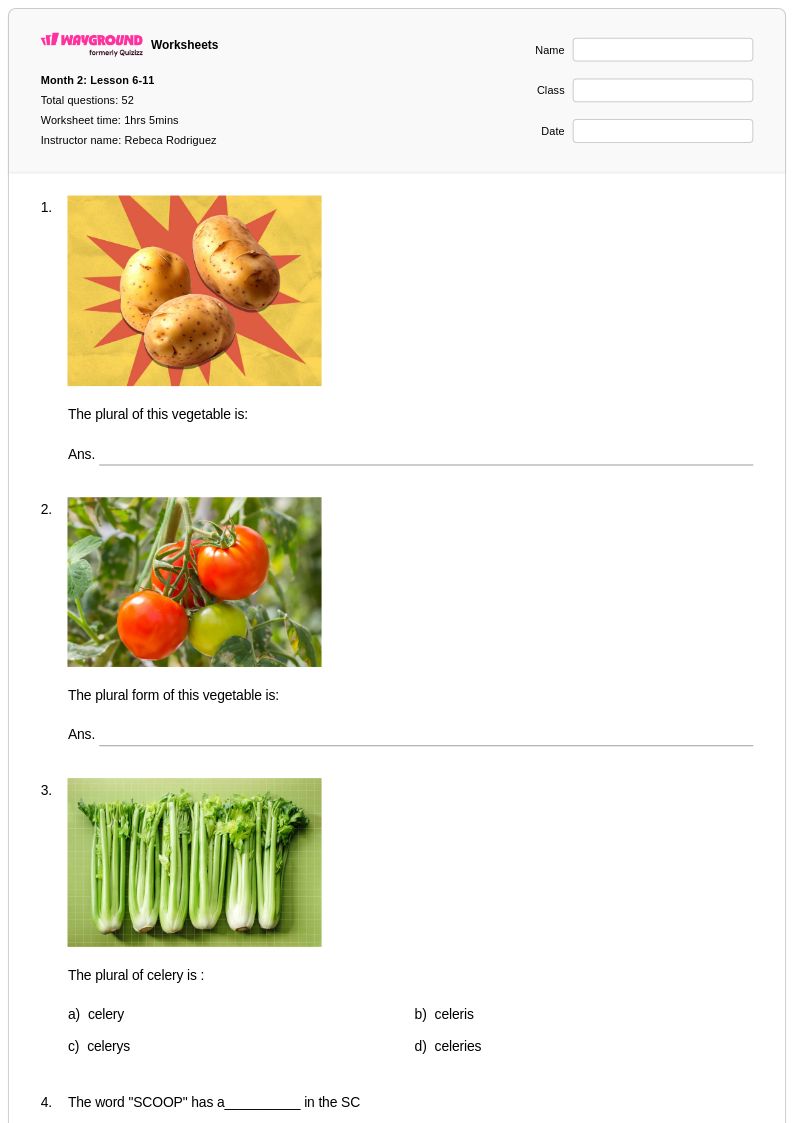
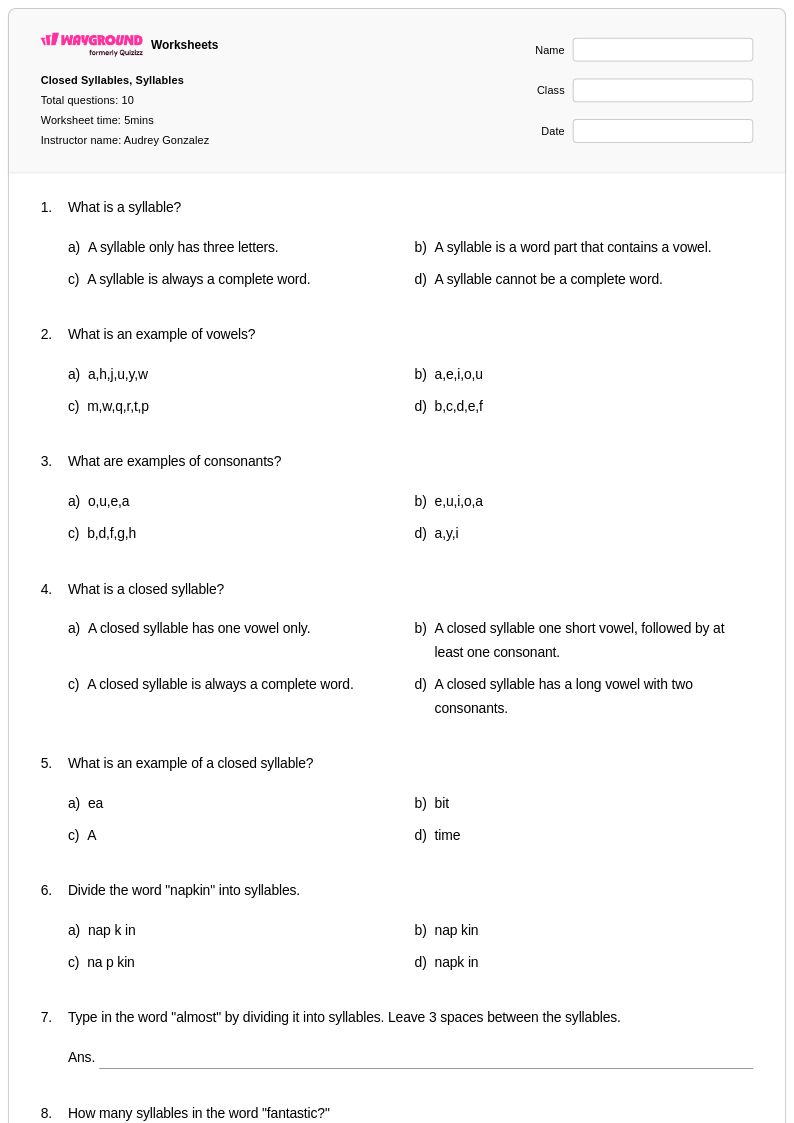
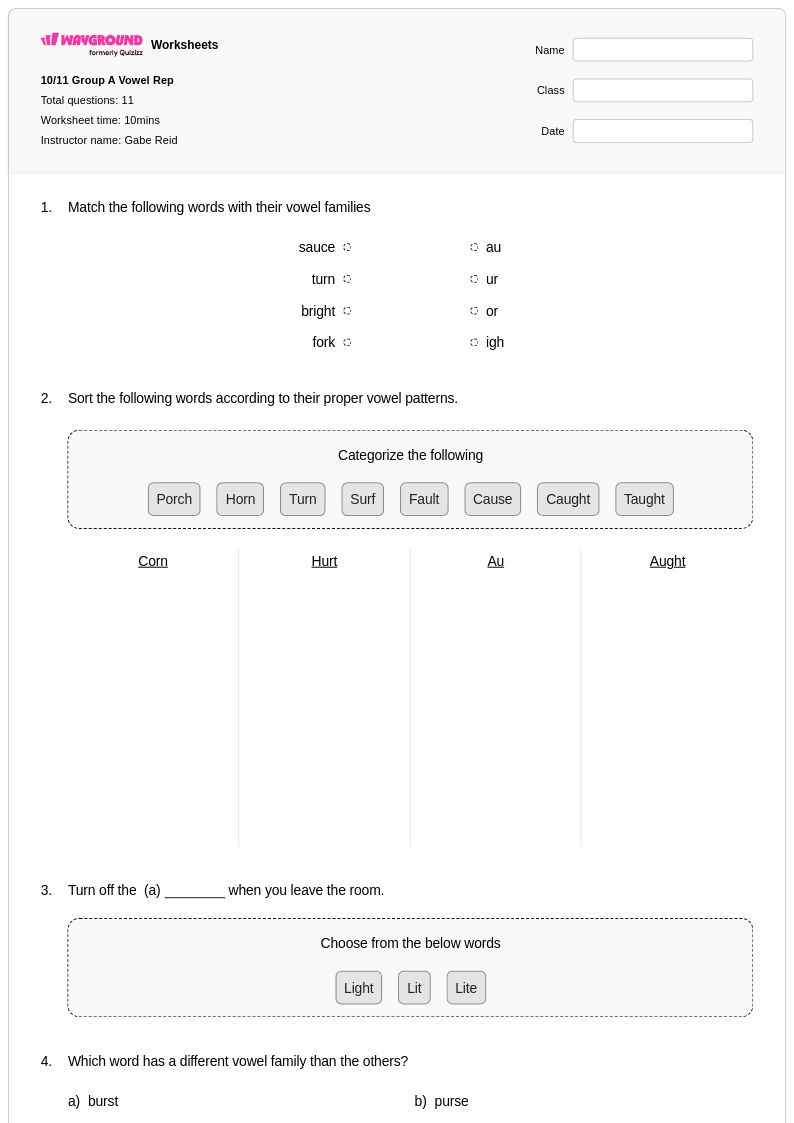
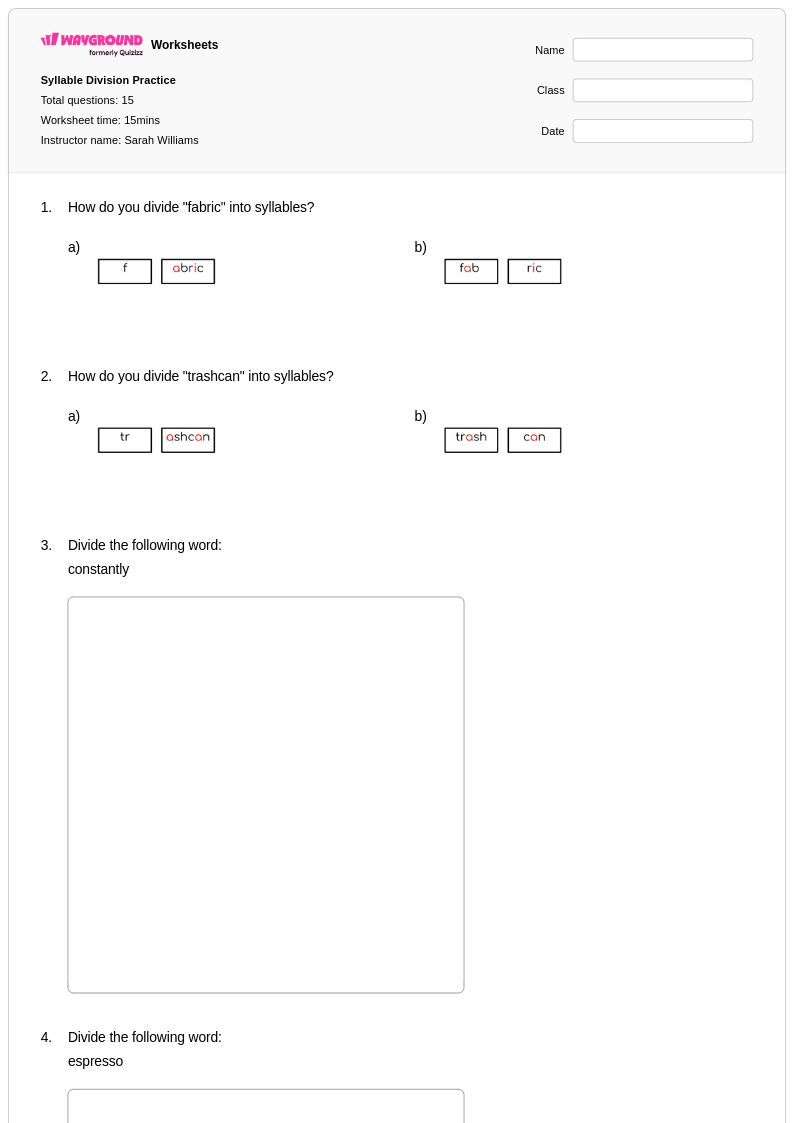
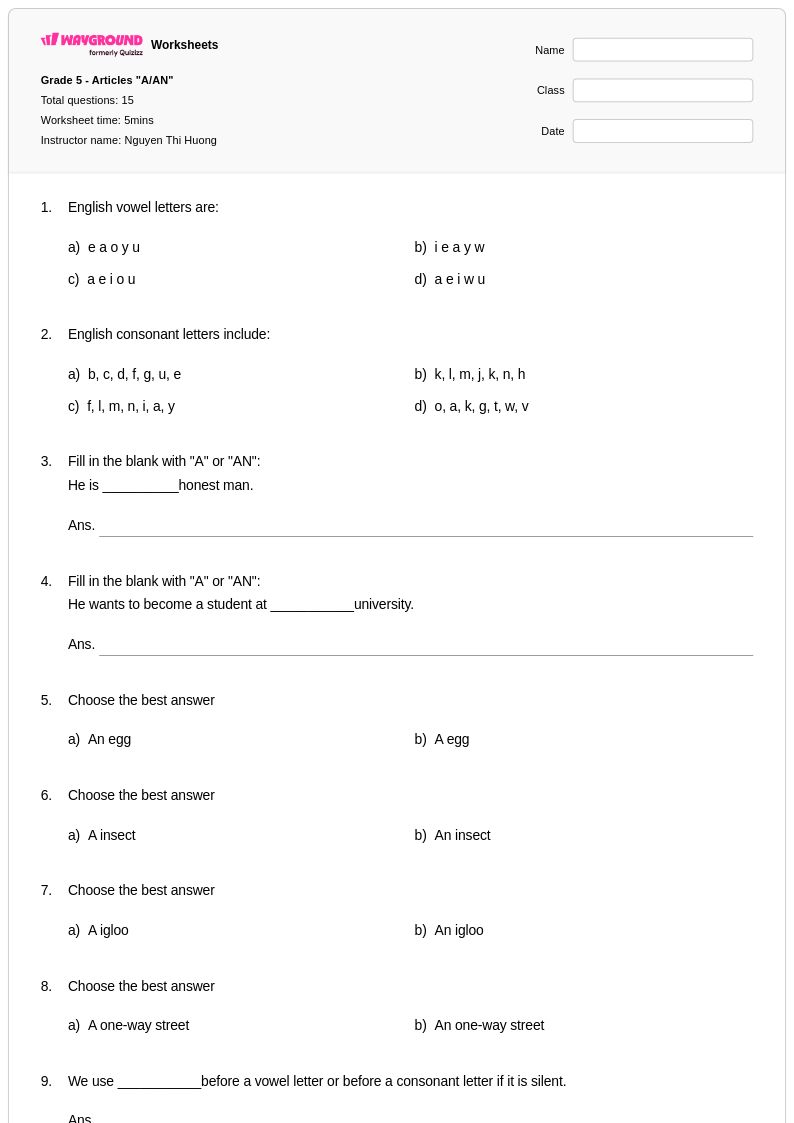
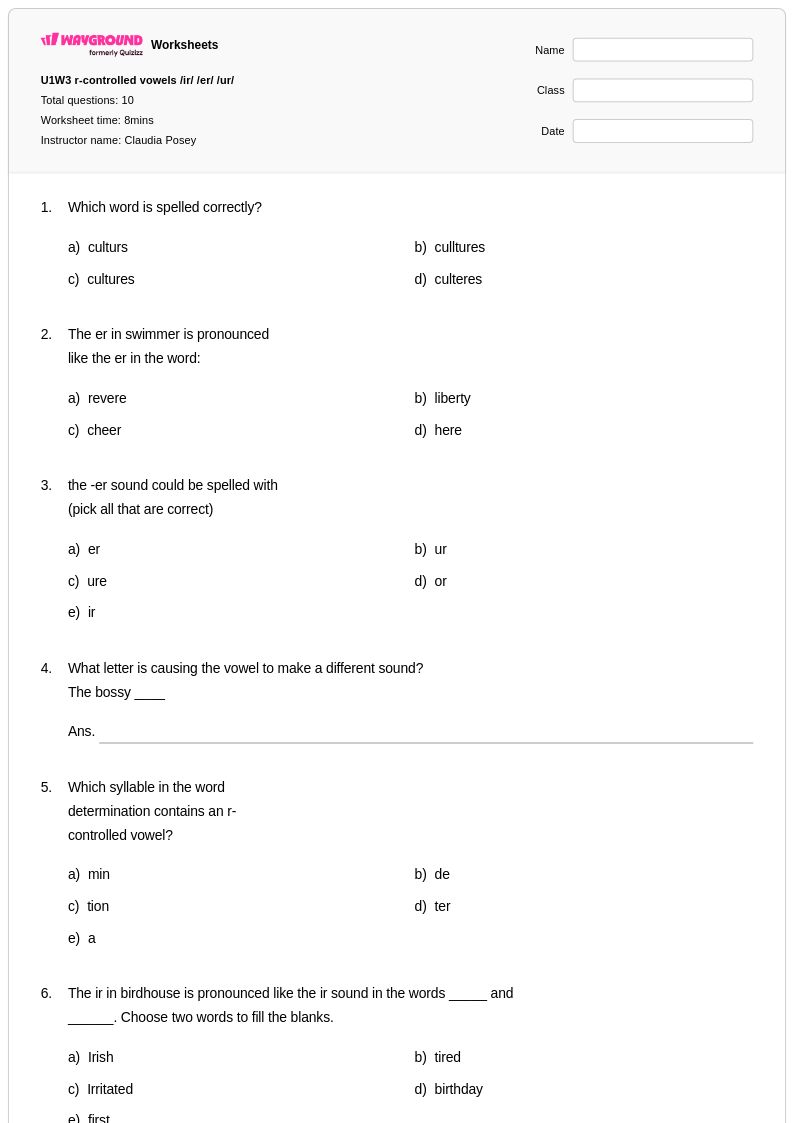
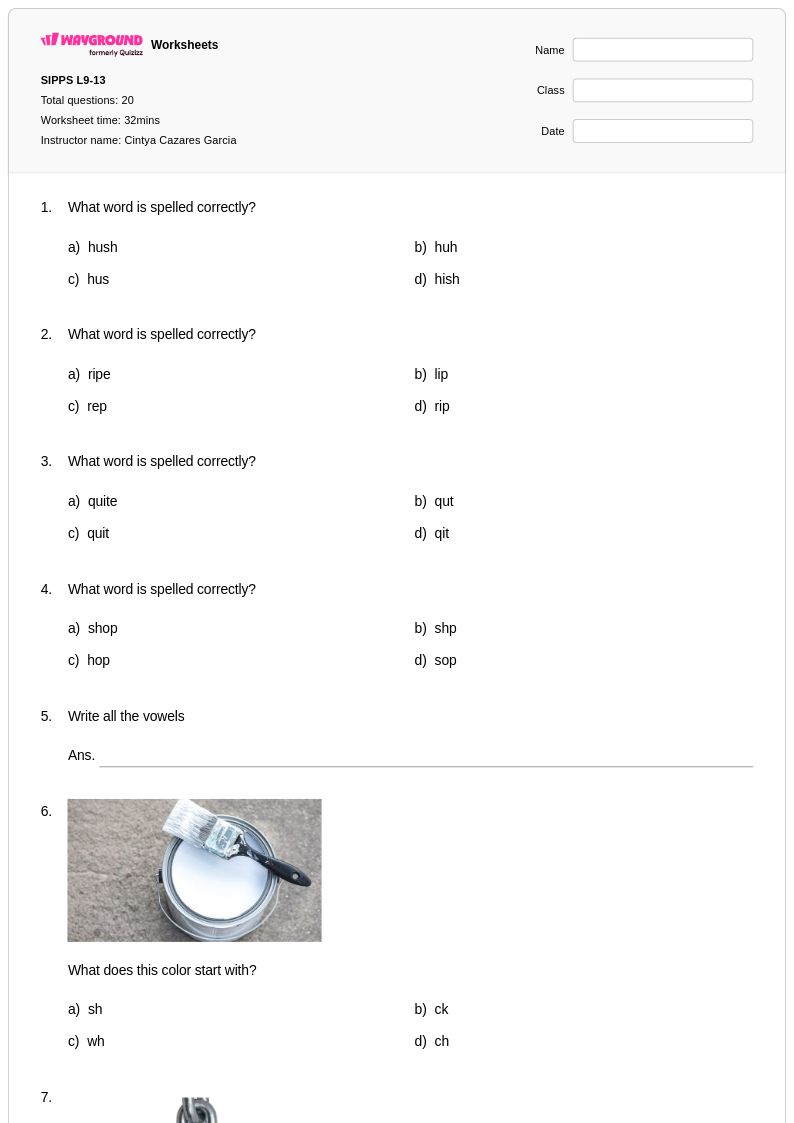
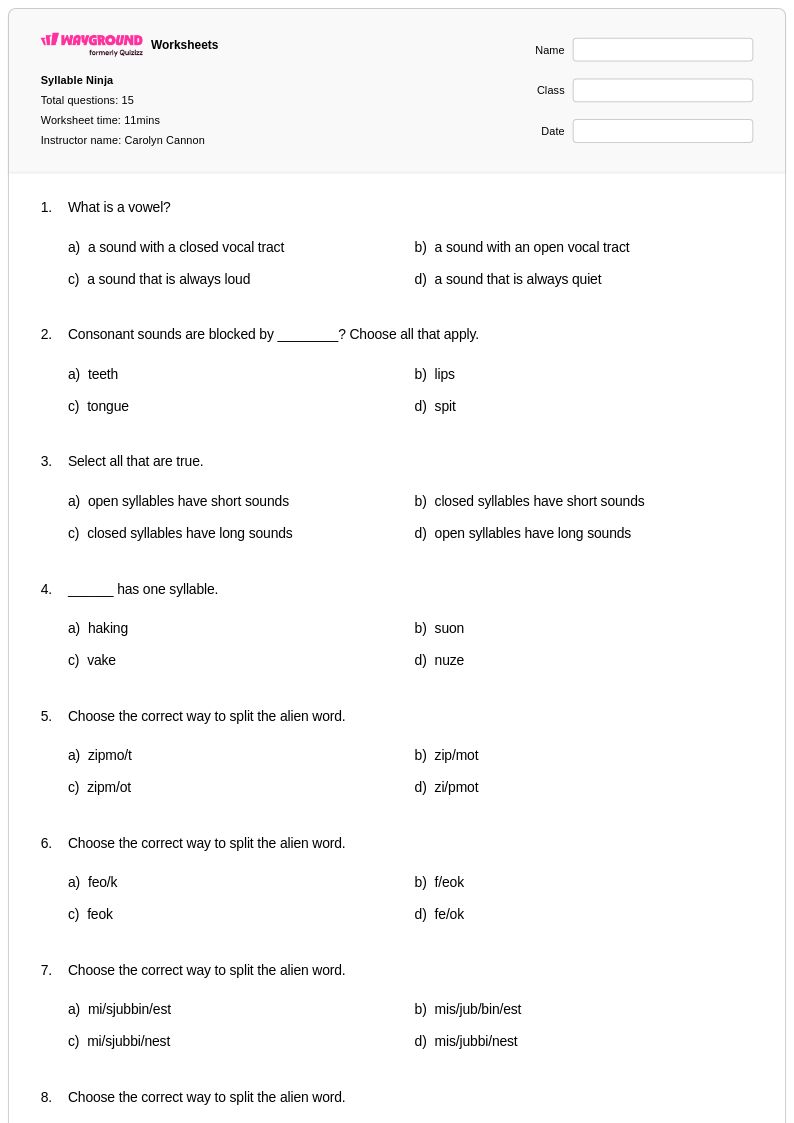
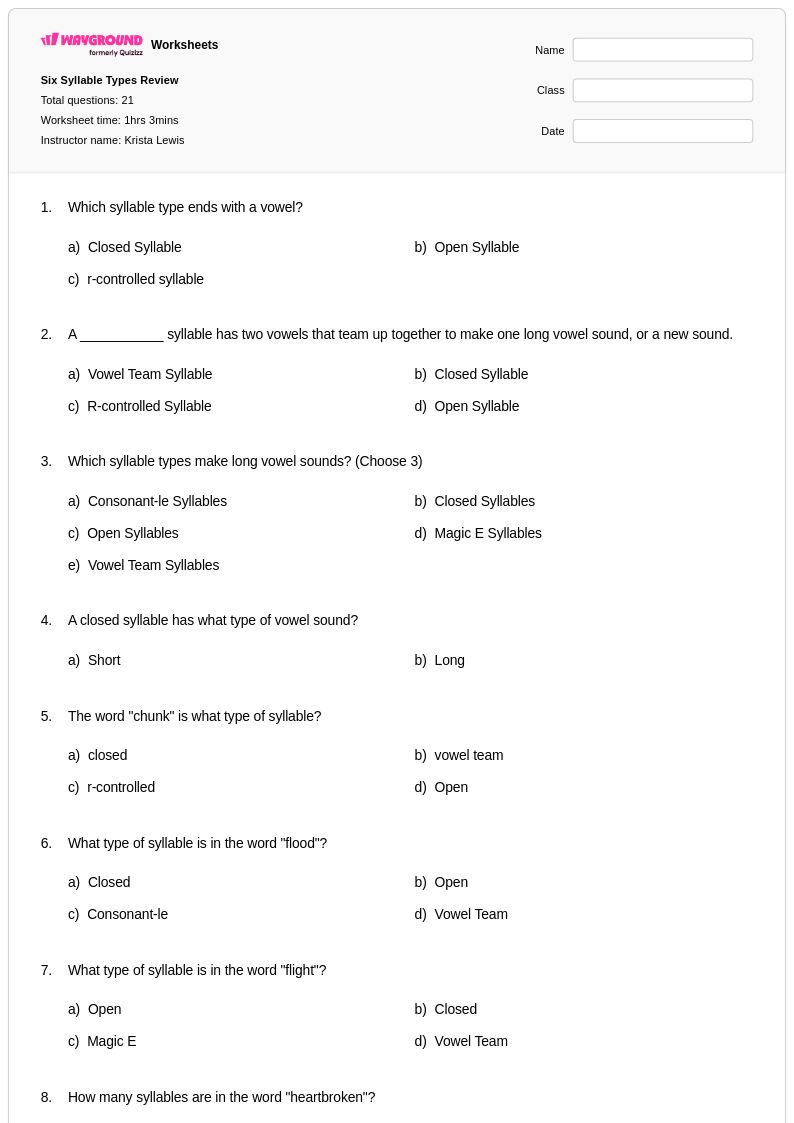
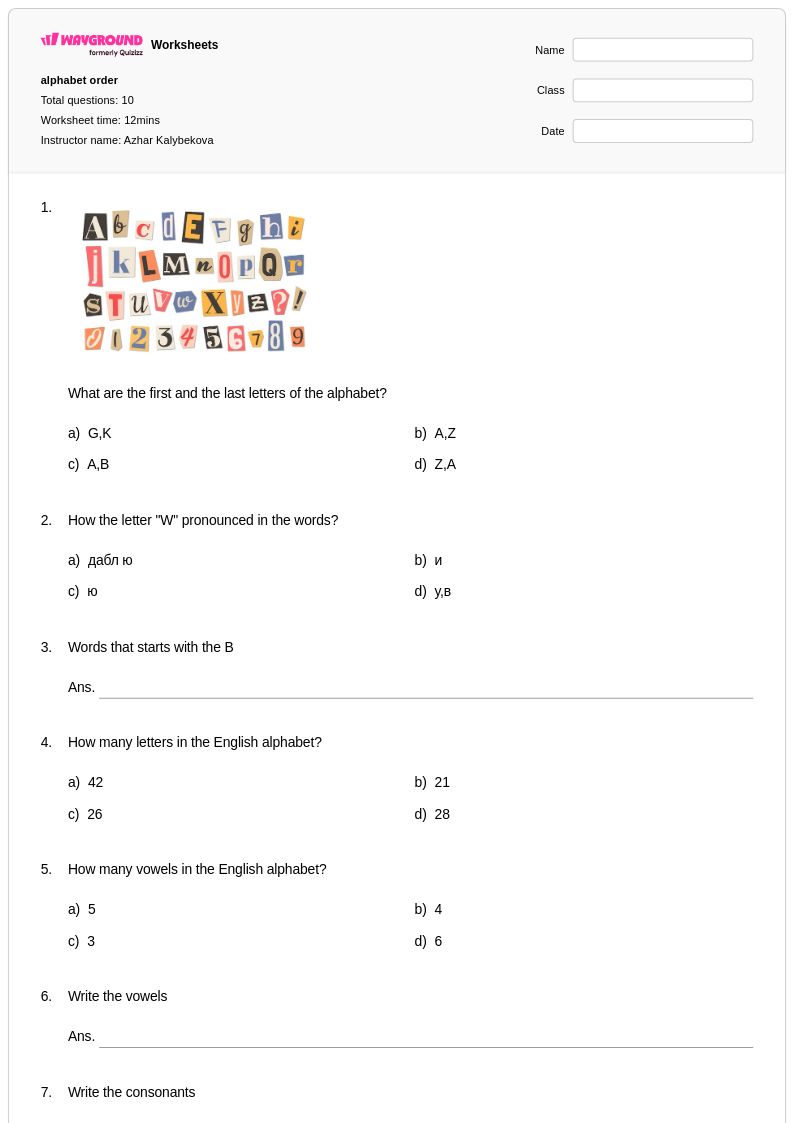
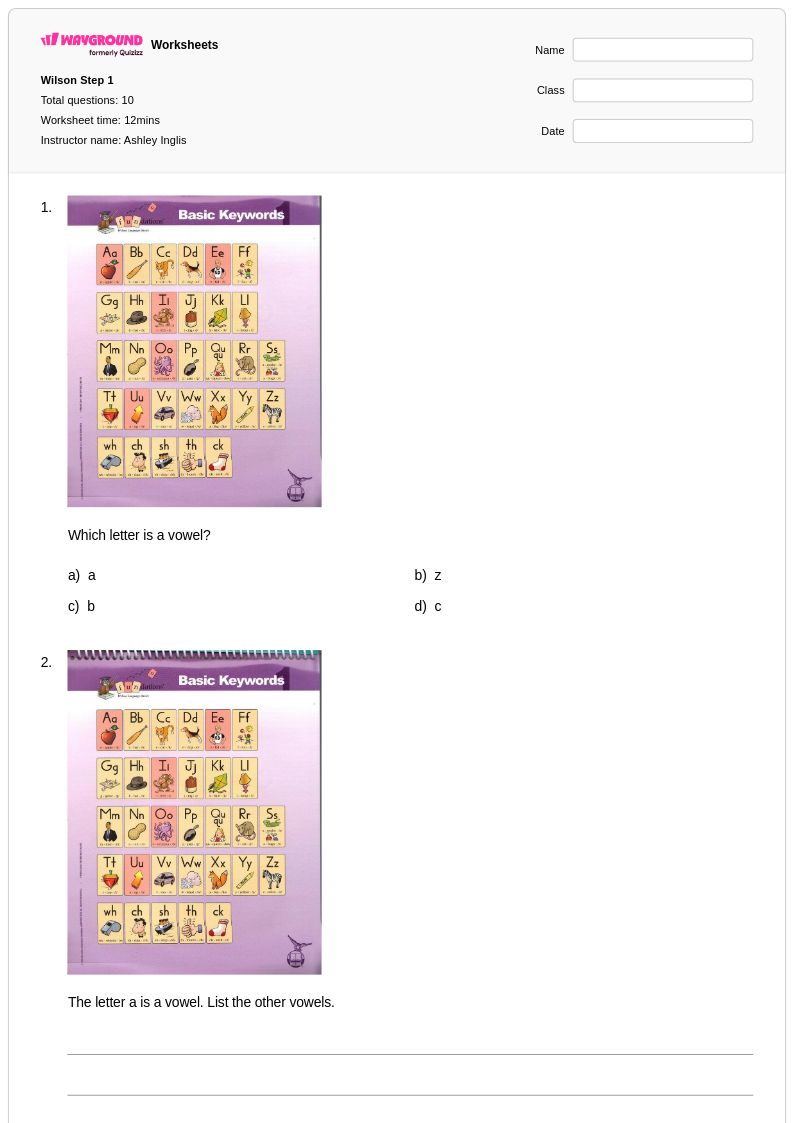
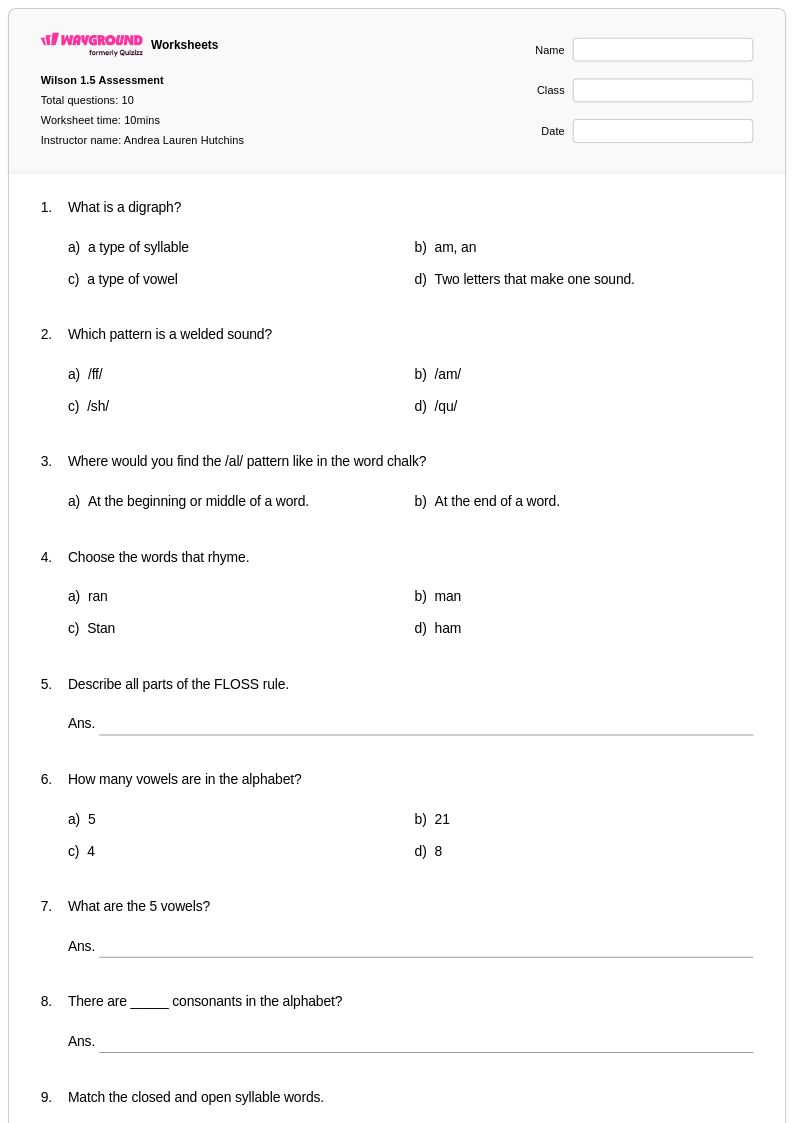
Consonant and vowel patterns form the foundation of advanced phonics instruction for Year 5 students, and Wayground's comprehensive worksheet collection provides targeted practice in recognizing and applying these essential spelling structures. These expertly designed worksheets guide fifth-grade learners through complex letter combinations including consonant blends, digraphs, vowel teams, and silent letter patterns that appear frequently in academic vocabulary. Students develop critical decoding skills through systematic practice problems that reinforce pattern recognition, while teachers benefit from ready-to-use materials complete with answer keys and flexible pdf formats. The free printables cover challenging concepts such as consonant-le syllables, r-controlled vowels, and vowel diphthongs, ensuring students master the sophisticated phonetic patterns necessary for reading fluency and spelling accuracy at the upper elementary level.
Wayground, formerly Quizizz, empowers educators with an extensive library of millions of teacher-created resources specifically focused on consonant and vowel pattern instruction for Year 5 classrooms. The platform's advanced search and filtering capabilities allow teachers to quickly locate worksheets aligned with specific phonics standards and learning objectives, while built-in differentiation tools enable customization for diverse student needs and ability levels. Whether delivered as printable pdf worksheets for independent practice or integrated into digital learning environments, these resources support comprehensive lesson planning and provide flexible options for remediation, enrichment, and targeted skill development. Teachers can seamlessly adapt materials to address individual student gaps in phonetic knowledge while building confidence in recognizing and applying complex letter-sound relationships across various academic contexts.
FAQs
How do I teach consonant and vowel patterns to early readers?
Effective consonant and vowel pattern instruction follows a systematic sequence, moving from simple CVC words and consonant blends to more complex patterns like digraphs, diphthongs, and r-controlled vowels. Teachers should provide explicit modeling first, showing students how to isolate and blend sounds before asking them to decode independently. Pairing visual pattern recognition activities with oral blending practice reinforces the sound-letter relationship from multiple angles, which is especially important for students building foundational phonics skills.
What exercises help students practice consonant and vowel patterns?
Effective practice exercises for consonant and vowel patterns include word sorting by pattern type, fill-in-the-blank decoding tasks, and identifying patterns in connected text rather than isolated words. Repeated exposure through varied formats, such as matching, cloze sentences, and word-building activities, helps students internalize patterns rather than memorize individual words. Worksheets that progress from recognition to application ensure students can transfer their understanding to independent reading.
What mistakes do students commonly make when learning consonant and vowel patterns?
One of the most common errors is overgeneralizing a single phonics rule, such as applying a short vowel sound to all CVC-E words or misreading r-controlled vowels like 'ar' and 'or' as standard short or long vowels. Students also frequently confuse consonant digraphs (where two letters make one sound, like 'sh' or 'ch') with blends (where both sounds are heard, like 'bl' or 'st'). Targeted practice that explicitly contrasts these patterns helps students build more accurate mental models.
How can I differentiate consonant and vowel pattern practice for students at different reading levels?
For struggling readers, focus on one pattern at a time with high repetition and multisensory reinforcement before introducing new patterns. Advanced learners benefit from activities that ask them to sort, generate, and compare multiple pattern types simultaneously. Wayground supports individual accommodations including Read Aloud for students who need audio support, reduced answer choices to lower cognitive load, and extended time settings, all of which can be applied per student without disrupting the rest of the class.
How do I use Wayground's consonant and vowel pattern worksheets in my classroom?
Wayground's consonant and vowel pattern worksheets are available as printable PDFs for traditional classroom use and in digital formats for technology-integrated or hybrid learning environments. Teachers can also host them as a quiz directly on Wayground, giving students an interactive experience while generating immediate results. Each worksheet includes a complete answer key, so teachers can use them for guided practice, independent work, or formative assessment without additional preparation.
How do consonant and vowel patterns connect to reading fluency?
When students can automatically recognize consonant and vowel patterns, they spend less cognitive effort on decoding and can direct more attention to comprehension and meaning. Fluency builds as pattern recognition becomes fast and reliable, which is why systematic phonics instruction, rather than whole-word memorization alone, is so effective. Worksheets that practice patterns in connected text, not just word lists, help students make this transition from decoding to fluent reading.