Free Printable Consonant Digraphs Worksheets for Kindergarten
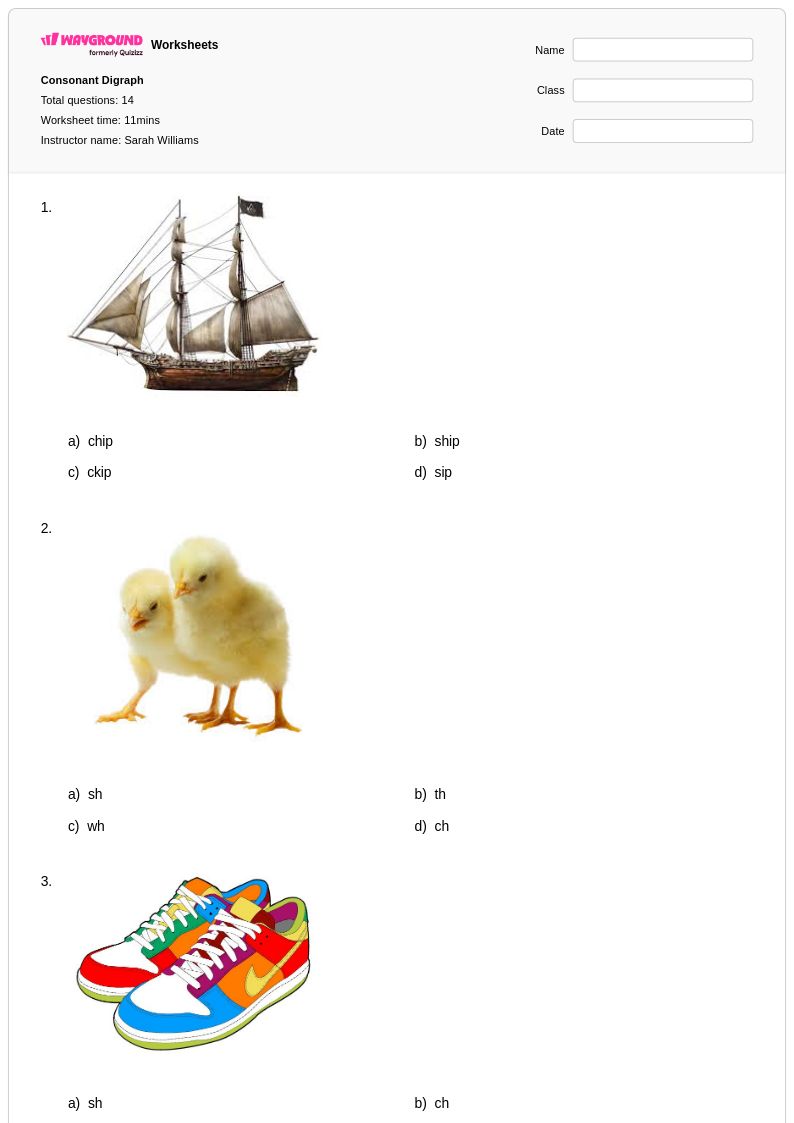
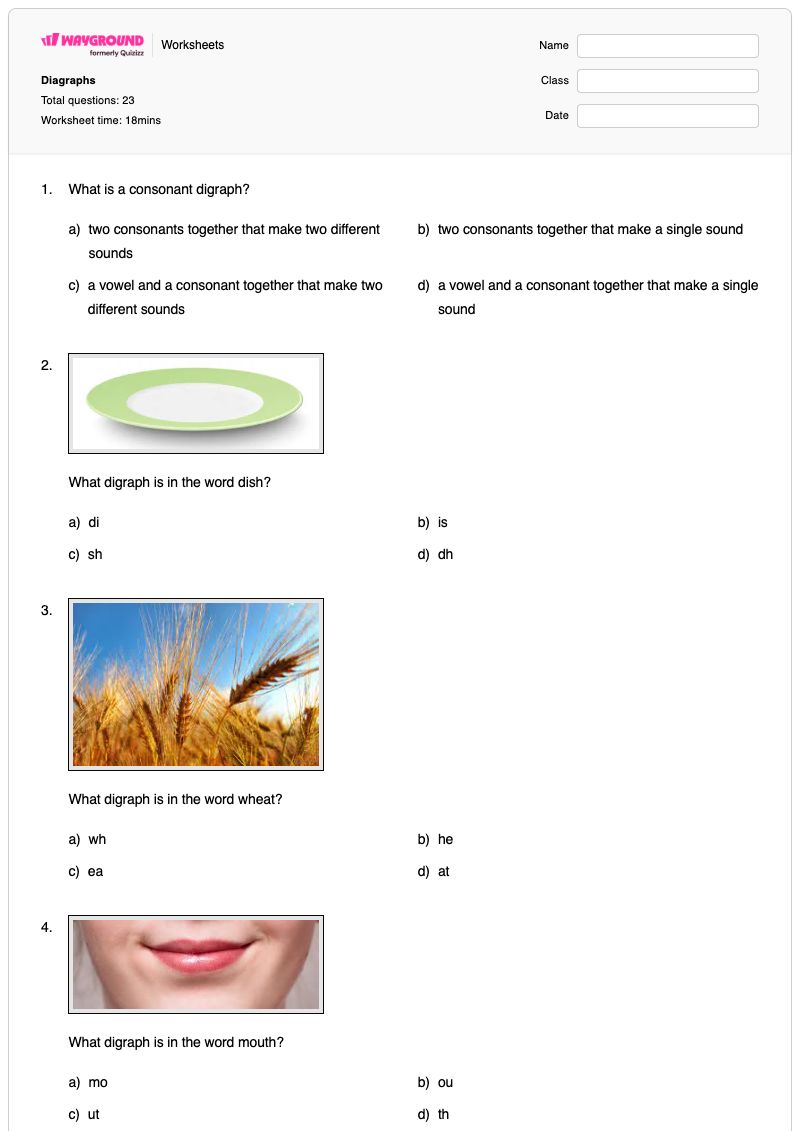
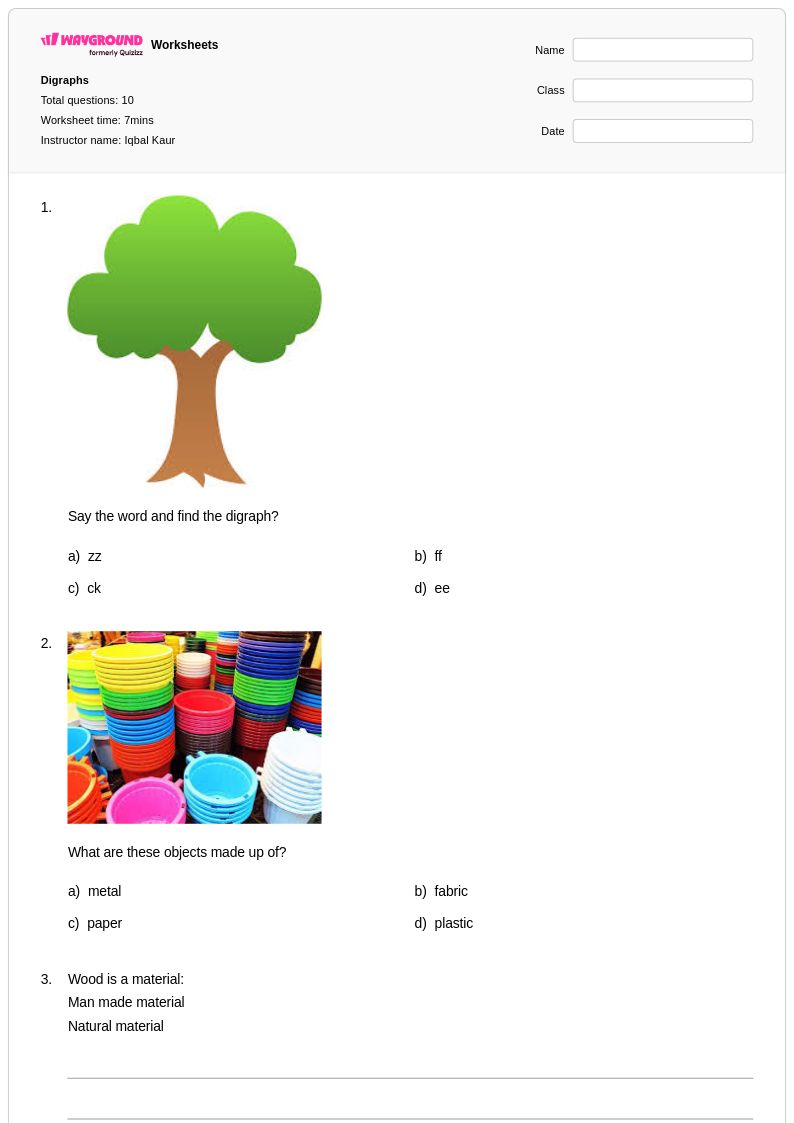
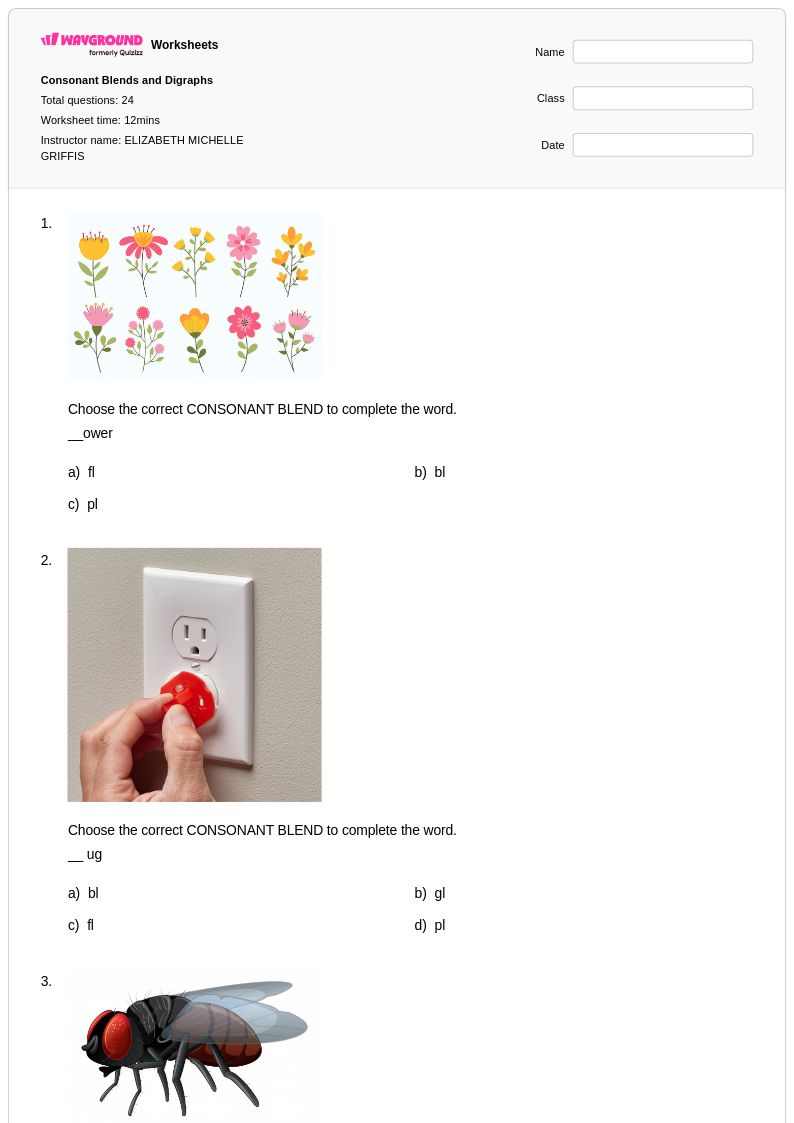
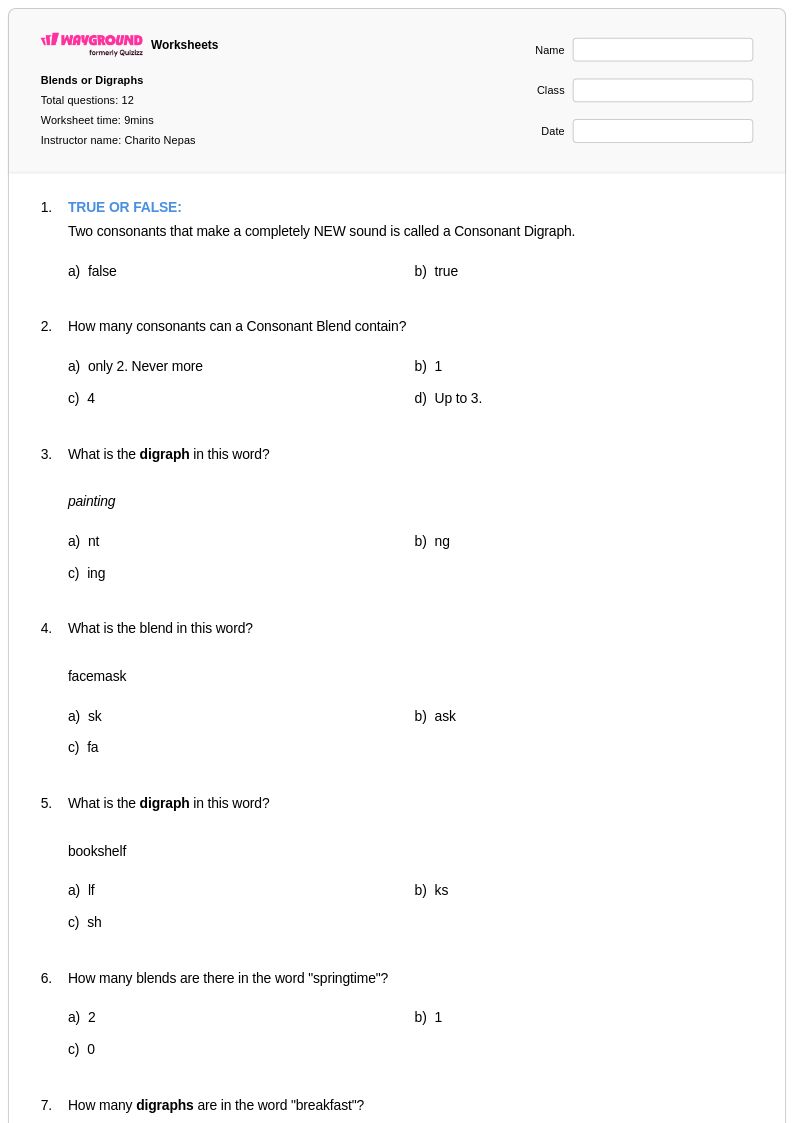
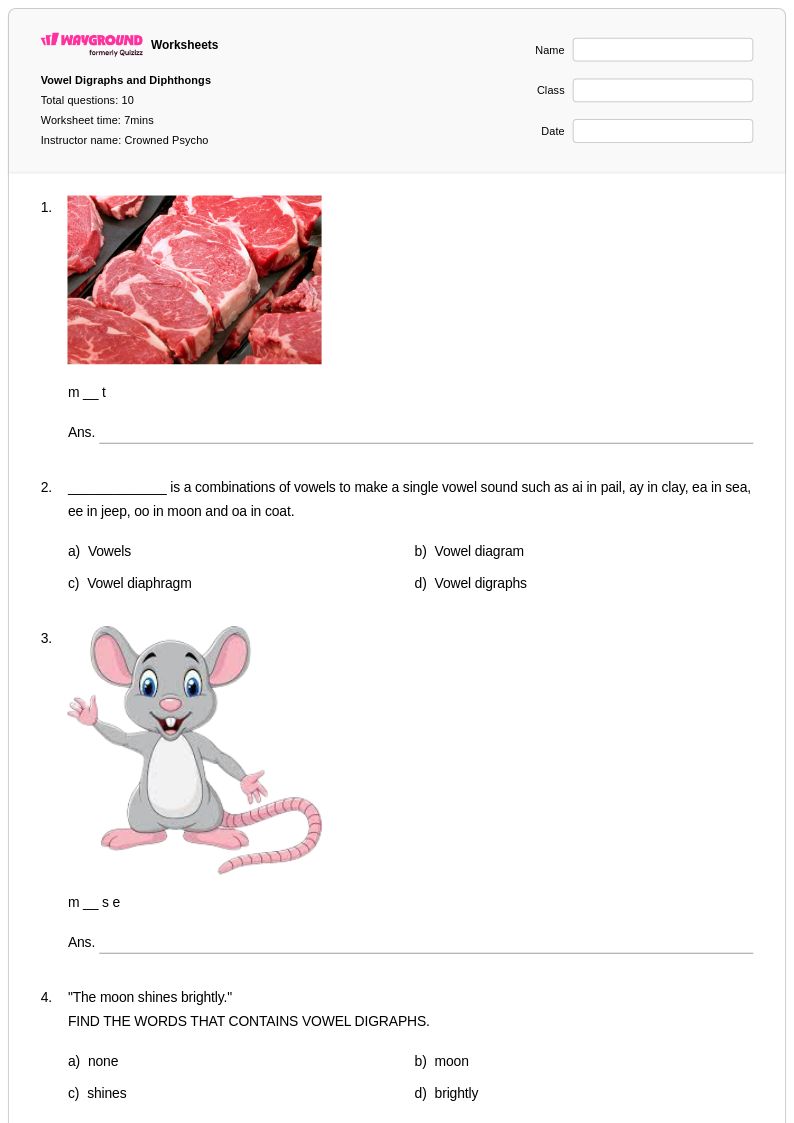
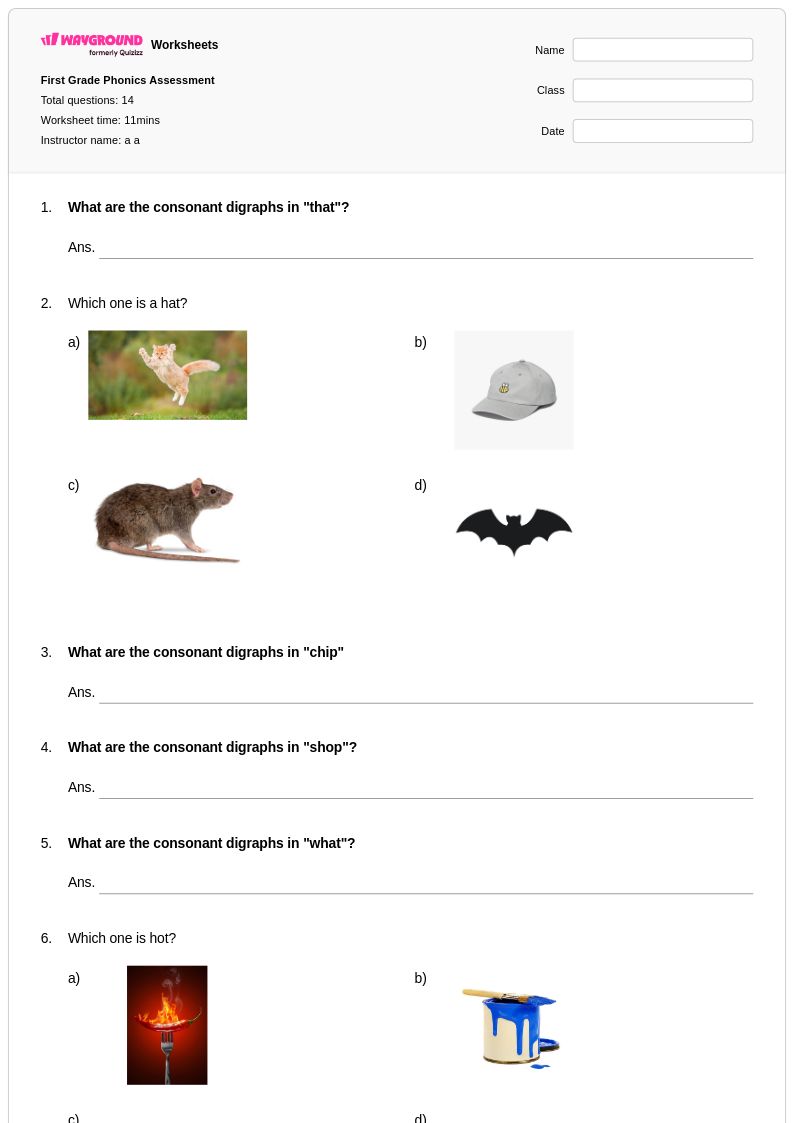
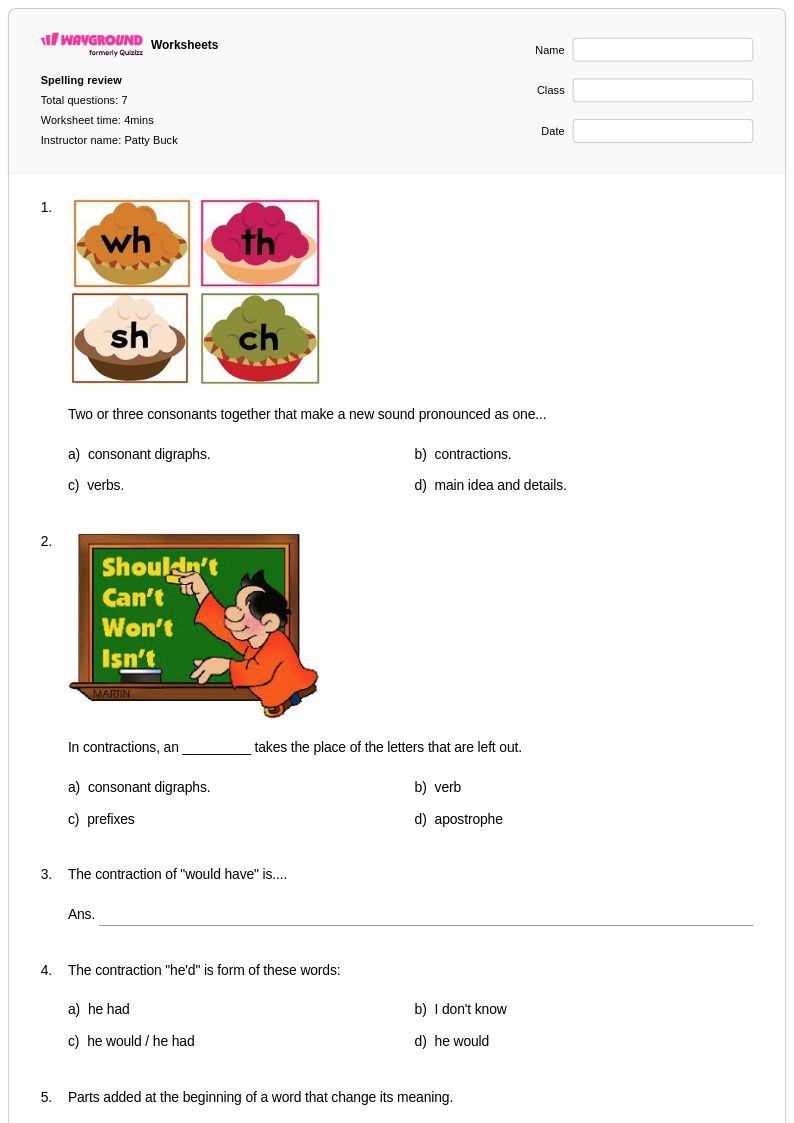
Wayground's free consonant digraphs worksheets for kindergarten provide engaging printables and practice problems with answer keys to help young learners master letter combinations like ch, sh, and th.
Explore printable Consonant Digraphs worksheets for Kindergarten
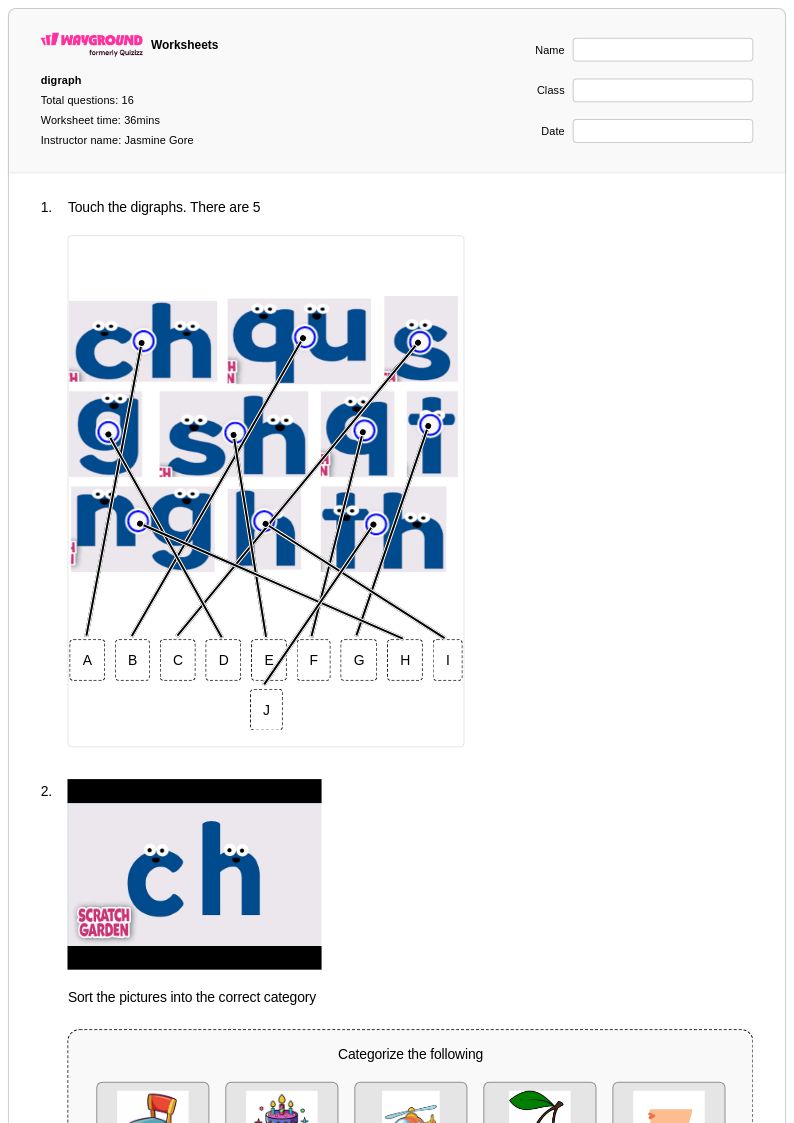
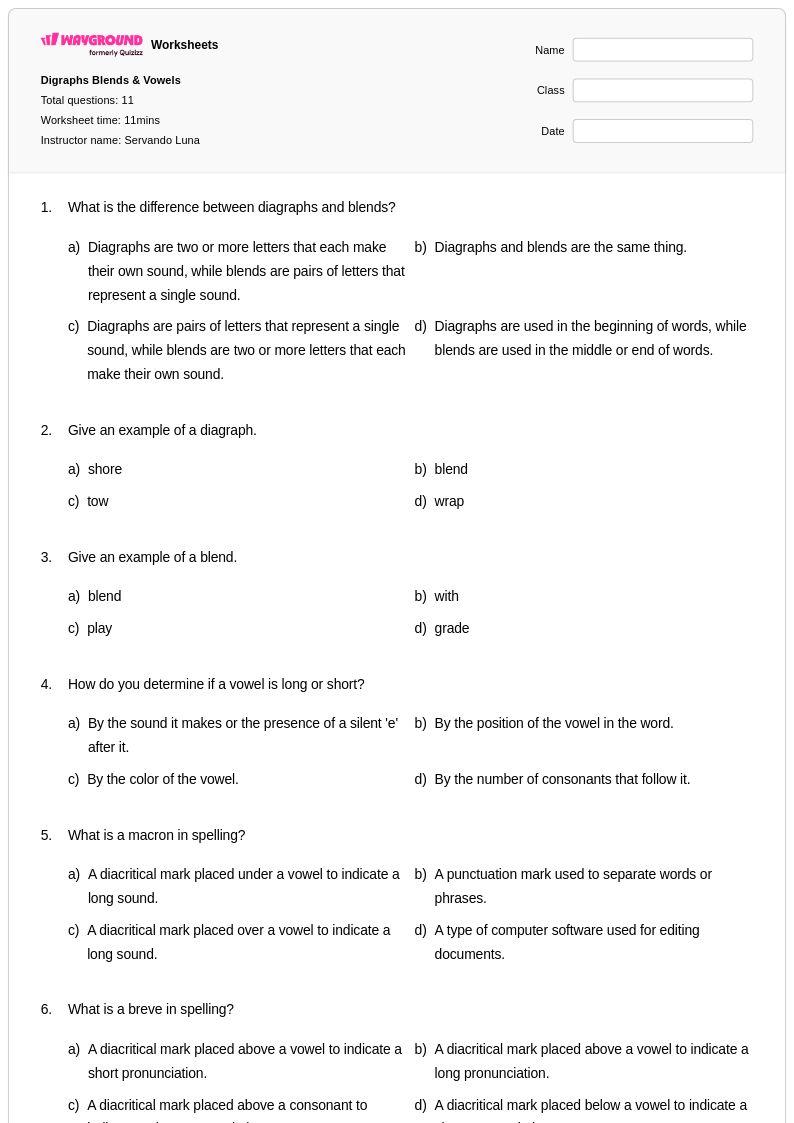
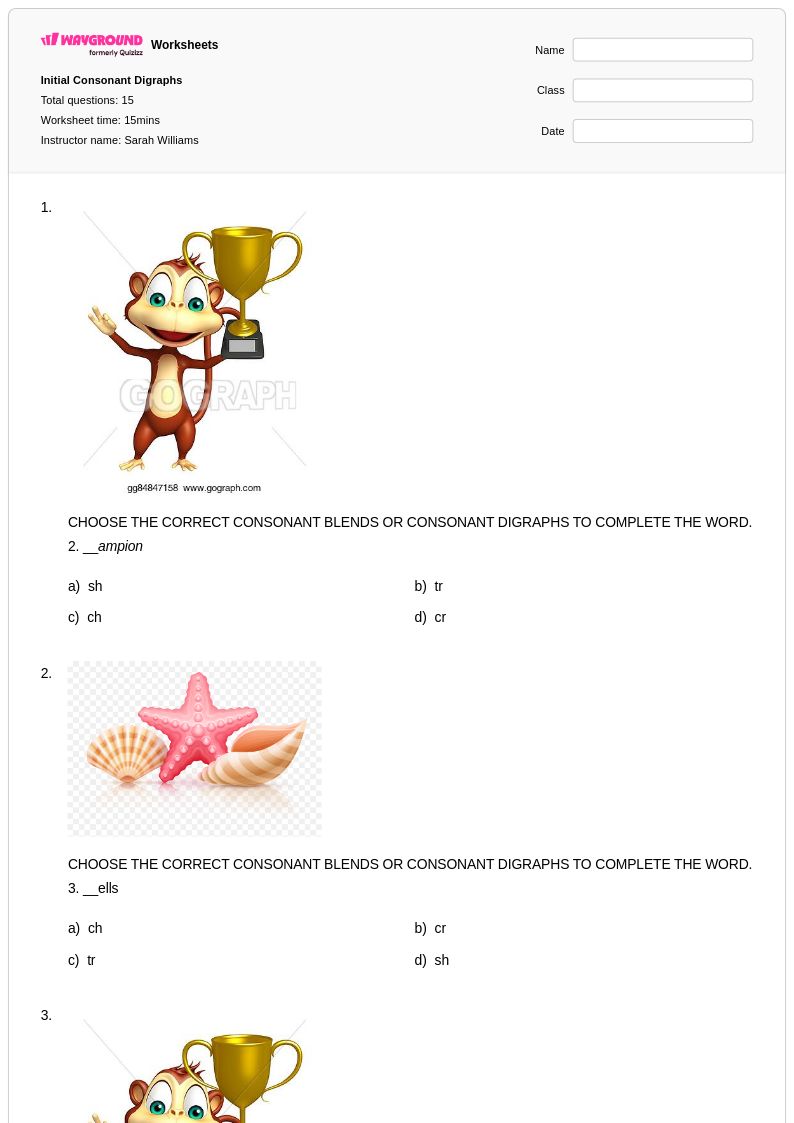
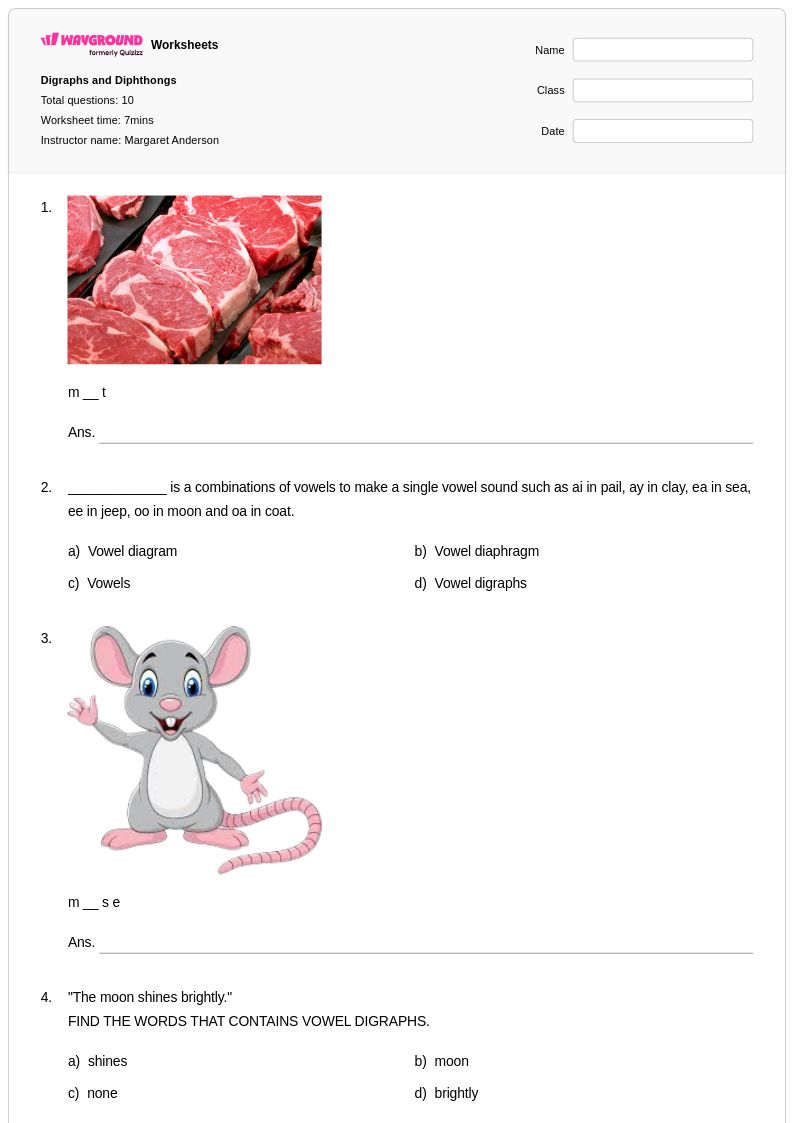
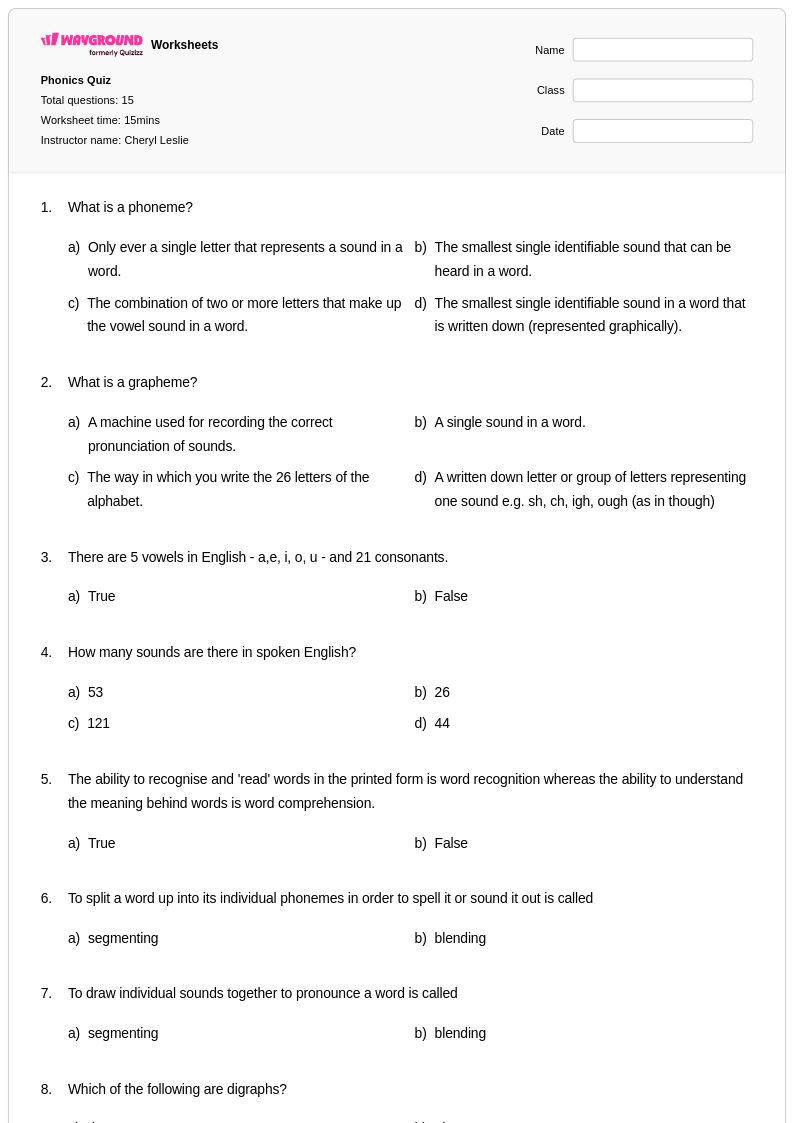
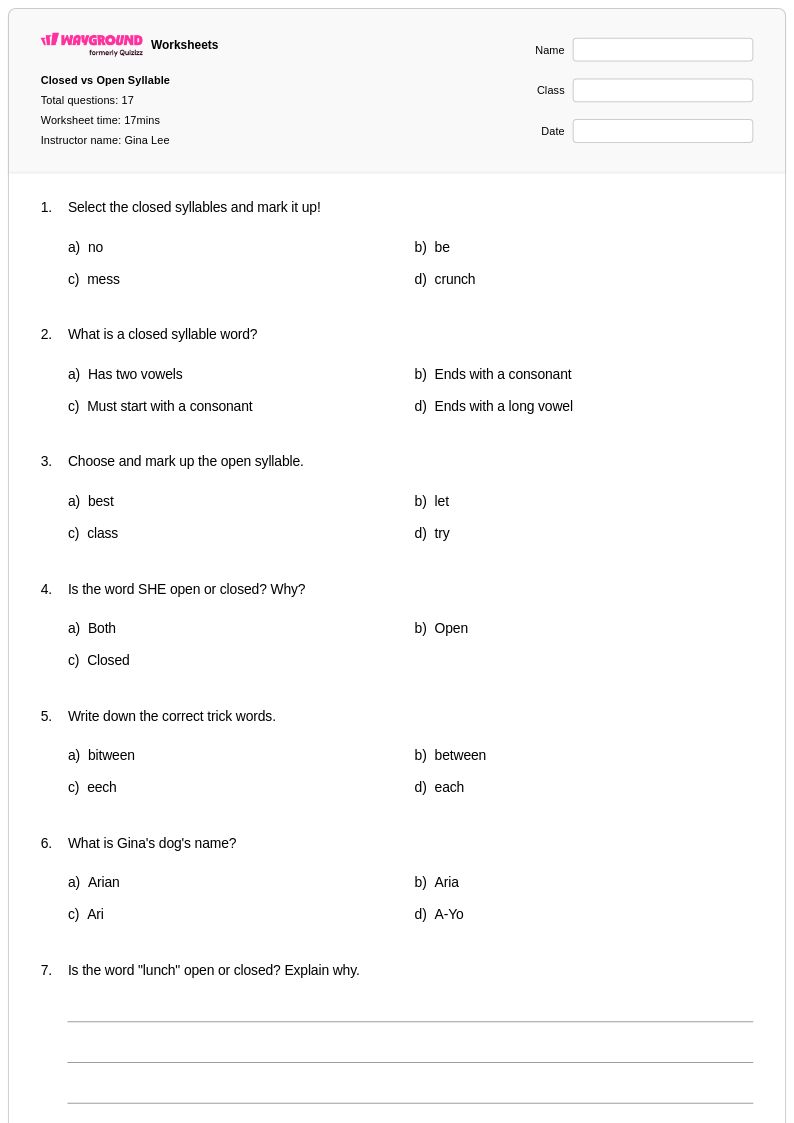
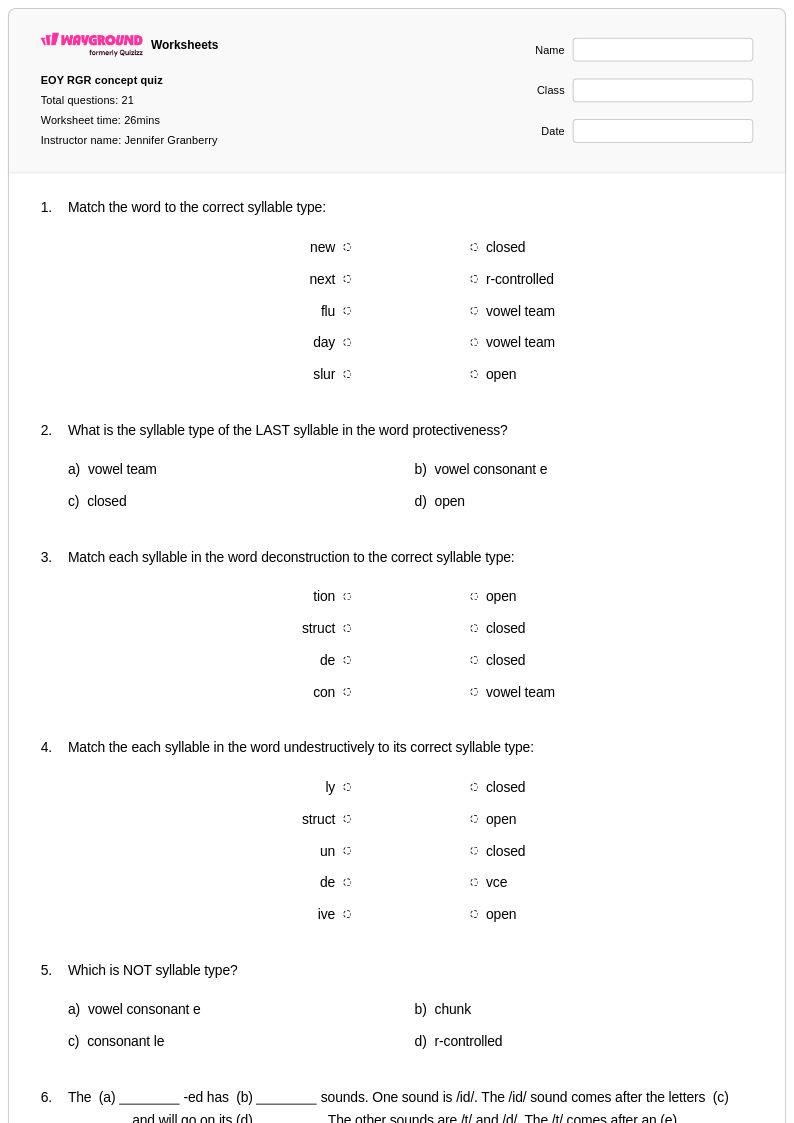
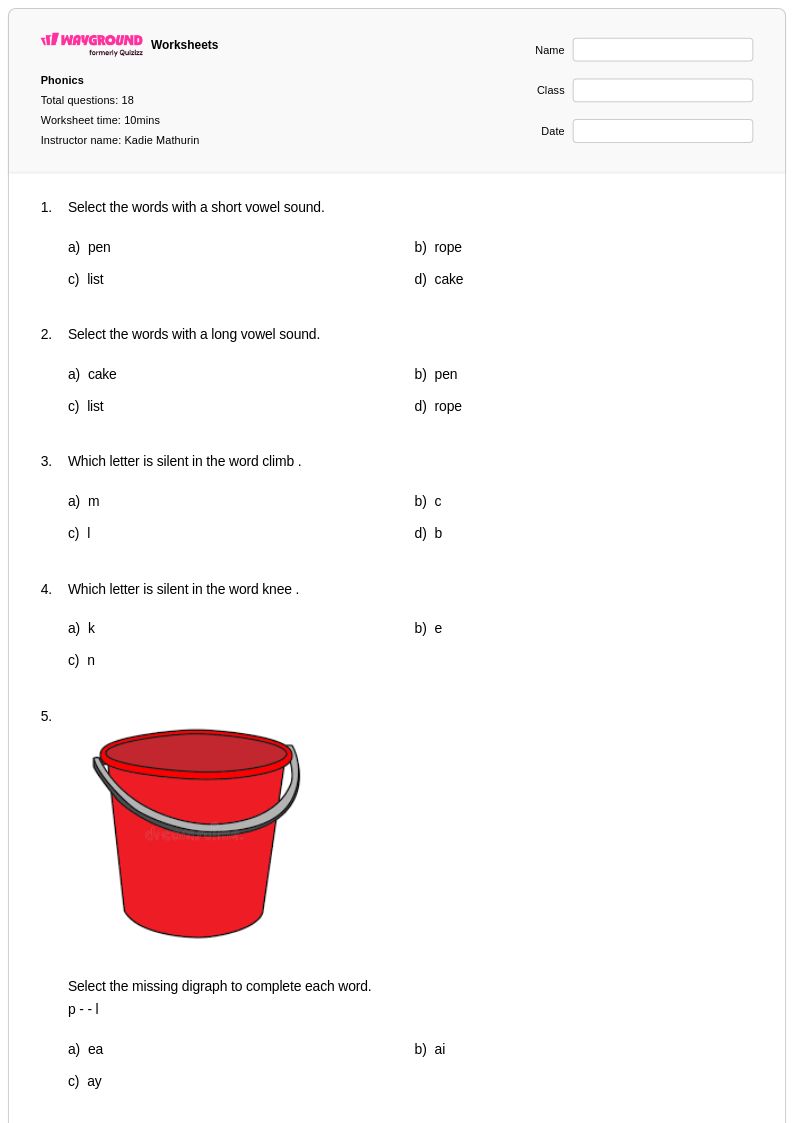
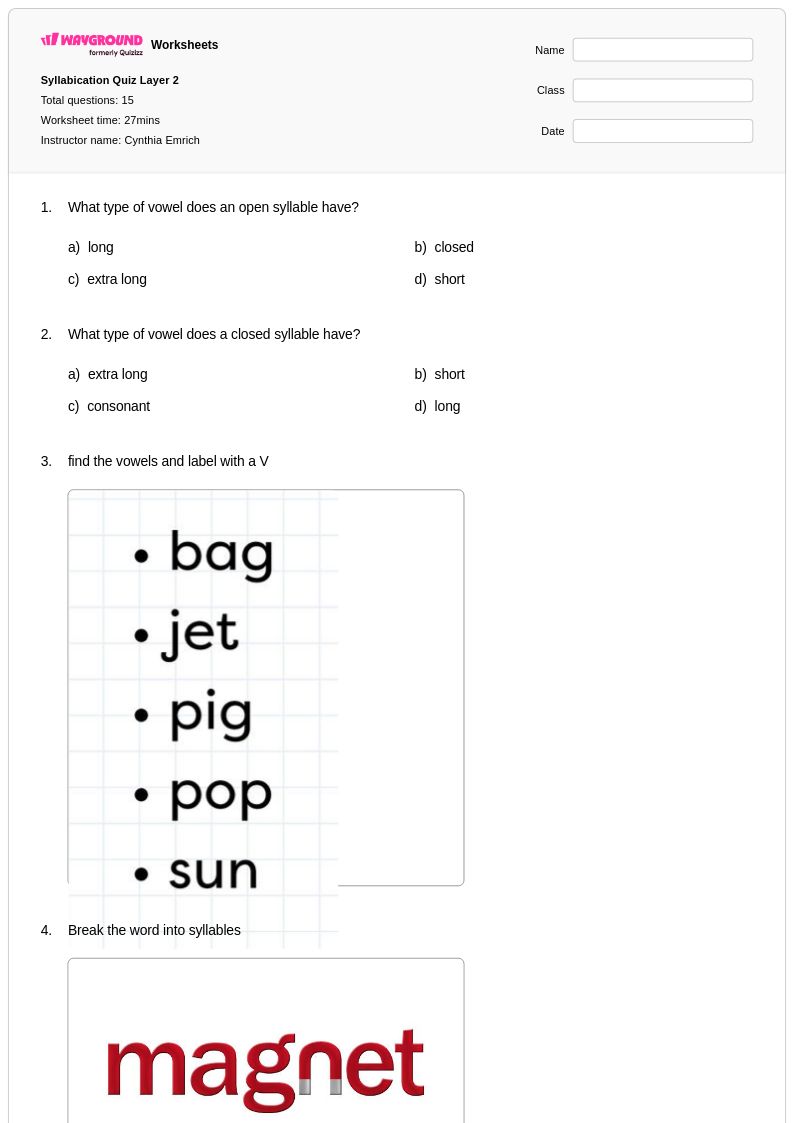
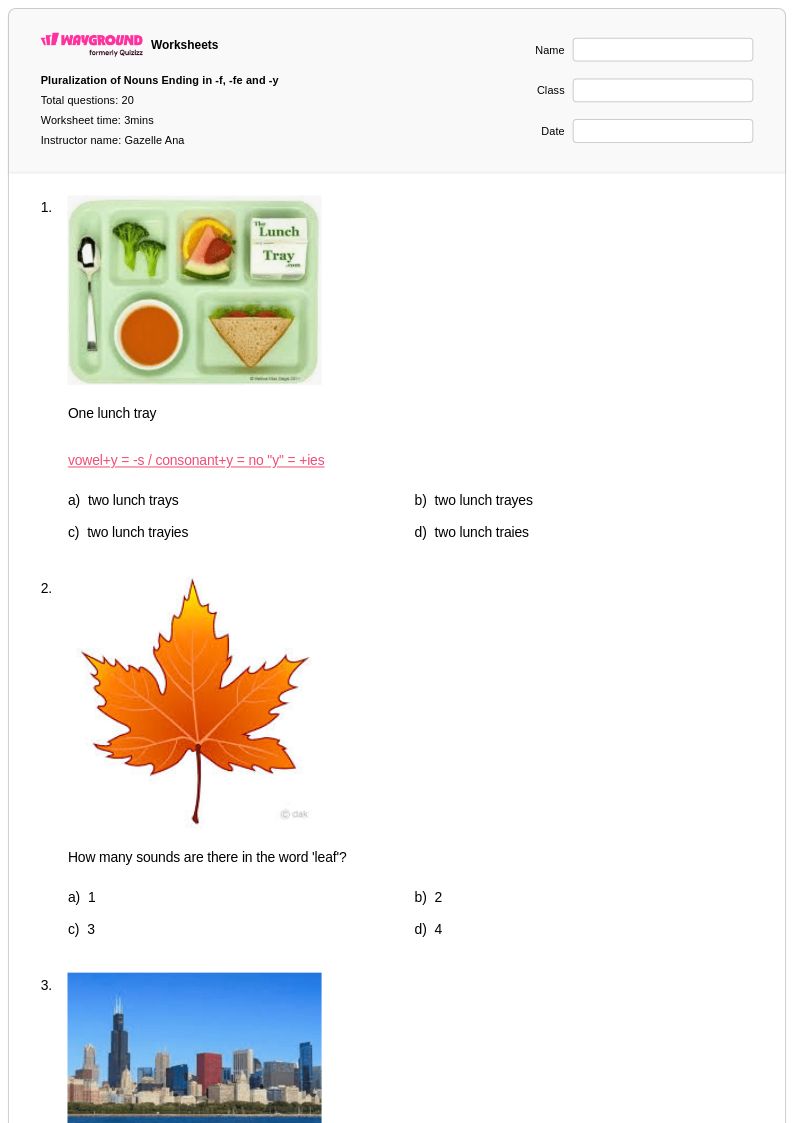
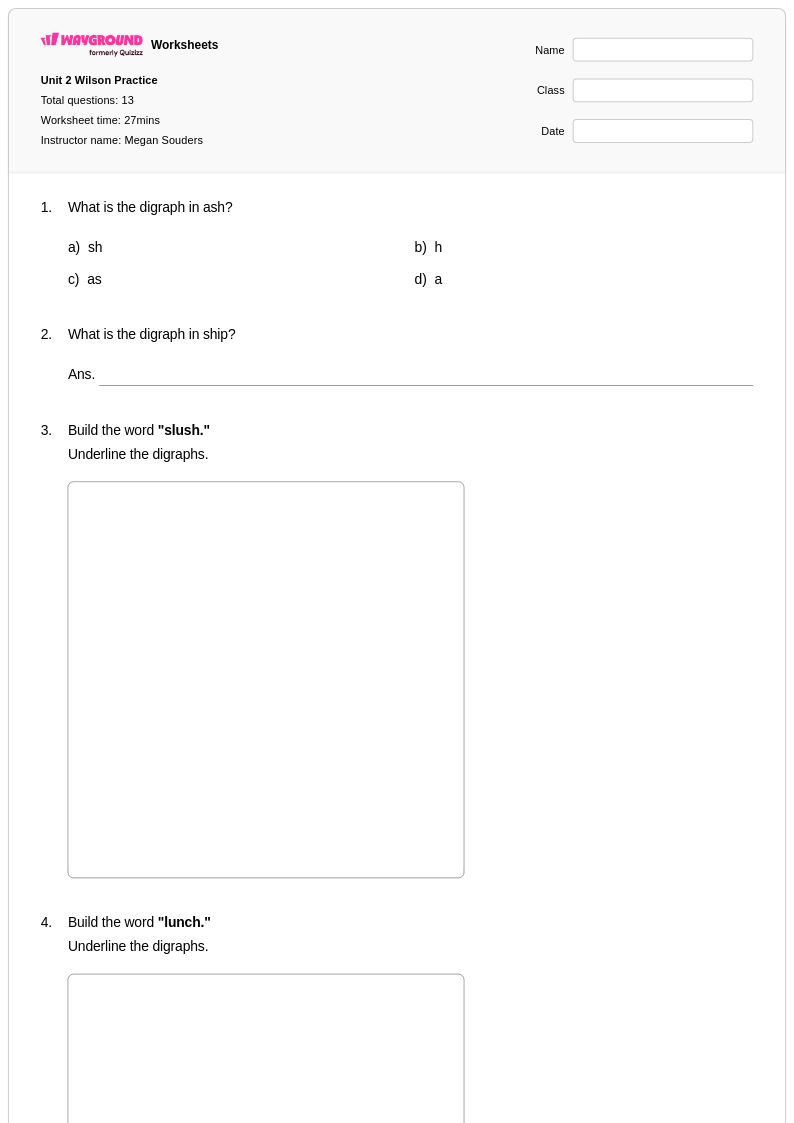
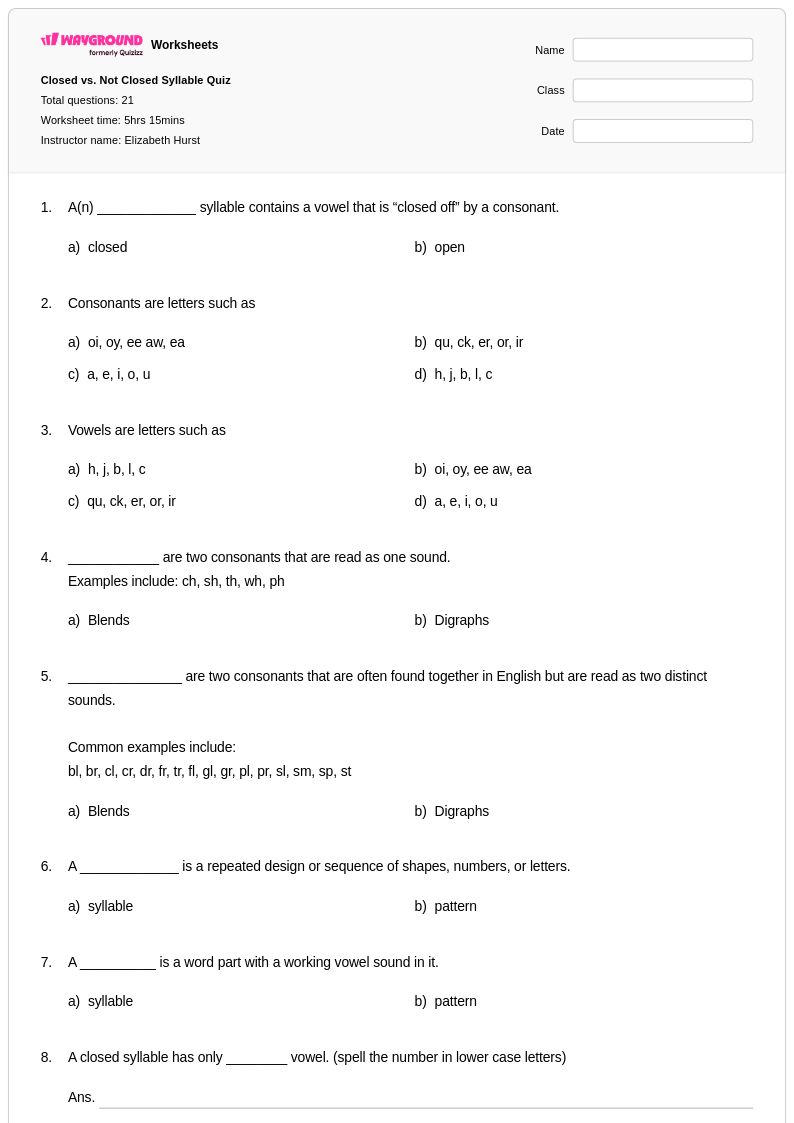
Consonant digraphs represent a fundamental building block in kindergarten phonics instruction, where two consonant letters combine to create a single, distinct sound that differs from either letter's individual pronunciation. Wayground's comprehensive collection of consonant digraph worksheets provides kindergarten students with systematic practice identifying, reading, and writing common digraph combinations such as ch, sh, th, wh, and ck. These carefully designed printables strengthen essential decoding skills through engaging activities that include picture-sound matching, word completion exercises, and simple sentence reading practice. Each worksheet comes with a complete answer key and is available as a free pdf download, enabling teachers to seamlessly integrate targeted phonics practice into daily literacy instruction while building students' confidence with these critical sound patterns.
Wayground, formerly Quizizz, empowers kindergarten teachers with access to millions of educator-created consonant digraph resources that streamline lesson planning and differentiated instruction. The platform's robust search and filtering capabilities allow teachers to quickly locate worksheets aligned with specific phonics standards and student readiness levels, while built-in customization tools enable easy modification of practice problems to meet individual learning needs. These versatile materials are available in both printable pdf format for traditional paper-based activities and digital formats for interactive learning experiences, supporting flexible classroom management and remote learning scenarios. Teachers can efficiently assign consonant digraph worksheets for skill reinforcement, remediation support, or enrichment activities, ensuring that every kindergarten student receives appropriate phonics practice to master these essential early reading foundations.
FAQs
How do I teach consonant digraphs to early readers?
Introduce consonant digraphs by teaching one combination at a time, starting with the most common patterns: 'sh', 'ch', 'th', and 'wh'. Use explicit phonics instruction by showing students that these two letters work together to produce a single, distinct sound that neither letter makes on its own. Anchor each digraph to a high-frequency keyword (e.g., 'ship' for 'sh') to build automaticity, then move students from isolated sound recognition to identifying digraphs within words and sentences.
What order should I teach consonant digraphs in?
Most phonics programs recommend teaching 'sh' and 'ch' first because they appear frequently in early decodable texts and have predictable, consistent pronunciations. 'Th' can be introduced next, noting that it has two sounds (voiced in 'this' and unvoiced in 'think'). 'Wh' and 'ph' are typically taught after students have mastered the more common digraphs, since 'ph' appears less frequently in early reading materials.
What exercises help students practice consonant digraphs?
Effective practice includes word sorting activities where students categorize words by their digraph, fill-in-the-blank exercises requiring students to complete words with the correct digraph, and picture-to-word matching tasks that reinforce sound-symbol connections. Moving from identification exercises to word formation activities ensures students can both recognize and apply digraphs in reading and spelling contexts. Repeated, distributed practice across multiple short sessions is more effective than a single extended lesson.
What mistakes do students commonly make when learning consonant digraphs?
A frequent error is decoding each letter in a digraph separately rather than treating the pair as one sound — for example, pronouncing 'sh' as two distinct sounds rather than the unified 'sh' sound in 'ship'. Students also commonly confuse 'ch' and 'sh' because both involve lip rounding and a similar articulation pattern. With 'th', many students default to a /d/ or /f/ substitution because the interdental sound is physically unfamiliar, particularly for English language learners.
How can I use consonant digraph worksheets to differentiate instruction?
Use identification and picture-matching worksheets for students who are still building phonemic awareness, and reserve word-building or sentence-level tasks for students ready for more complex application. On Wayground, teachers can apply student-level accommodations such as Read Aloud, which audibly reads questions aloud for students who need auditory support, and reduced answer choices to lower cognitive load for struggling readers. These settings can be assigned to individual students while the rest of the class receives default settings, allowing seamless differentiation without disruption.
How do I use Wayground's consonant digraph worksheets in my classroom?
Wayground's consonant digraph worksheets are available as free printable PDF downloads for traditional classroom use and in digital formats for technology-integrated instruction, making them flexible for whole-class lessons, small group work, or independent practice. Each worksheet includes a complete answer key, so teachers can provide immediate, targeted feedback. You can also host any worksheet as a live quiz on Wayground, which is useful for formative assessment and real-time progress monitoring.