
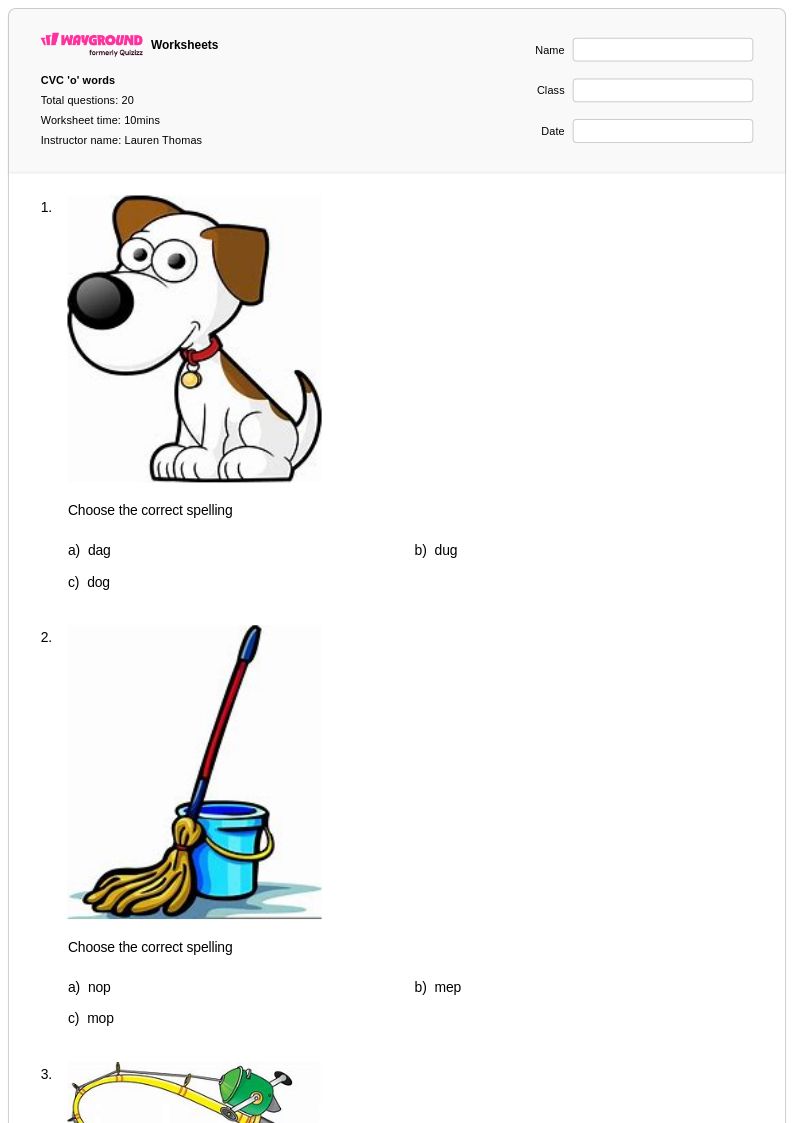
20 Q
1st - 2nd
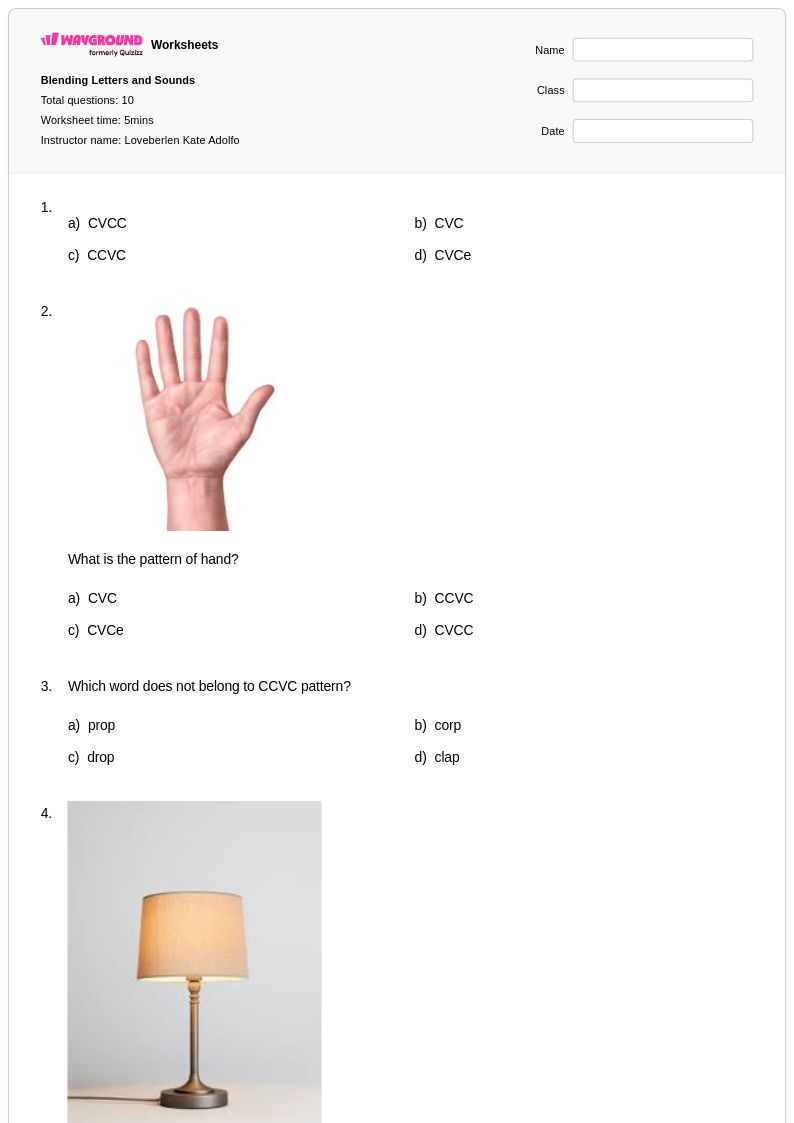
10 Q
2nd
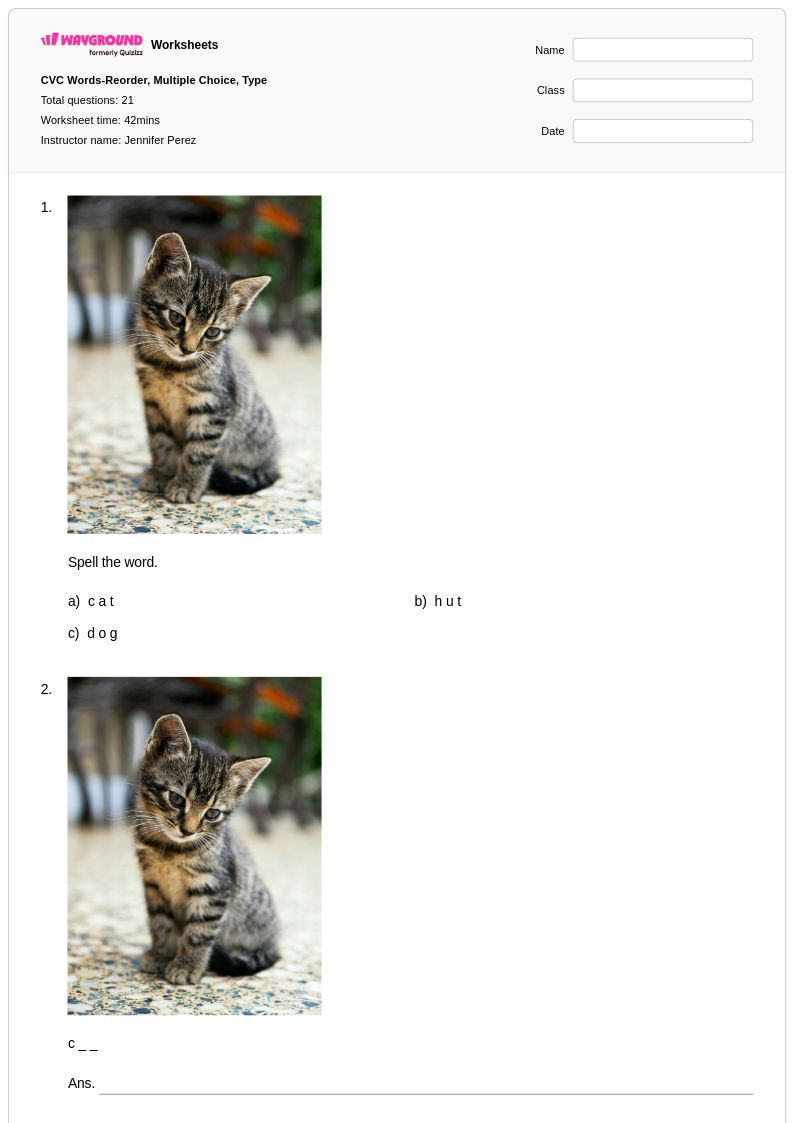
21 Q
1st - 5th
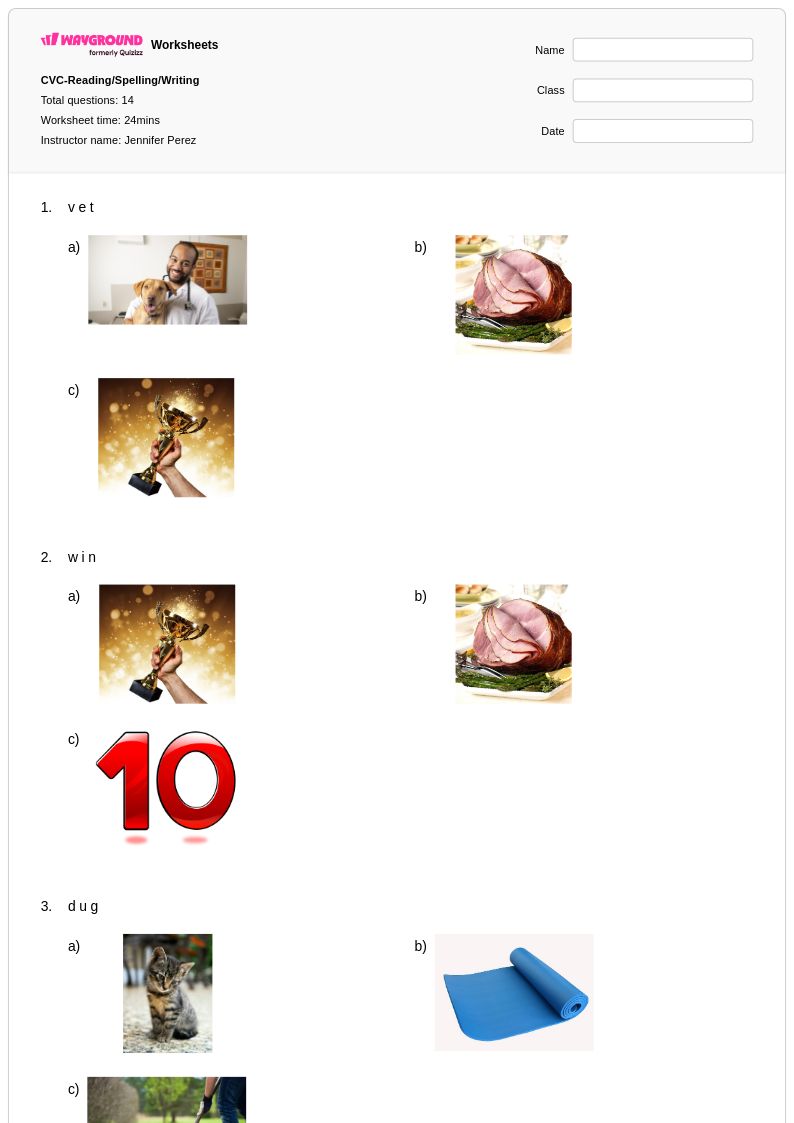
14 Q
1st - 5th
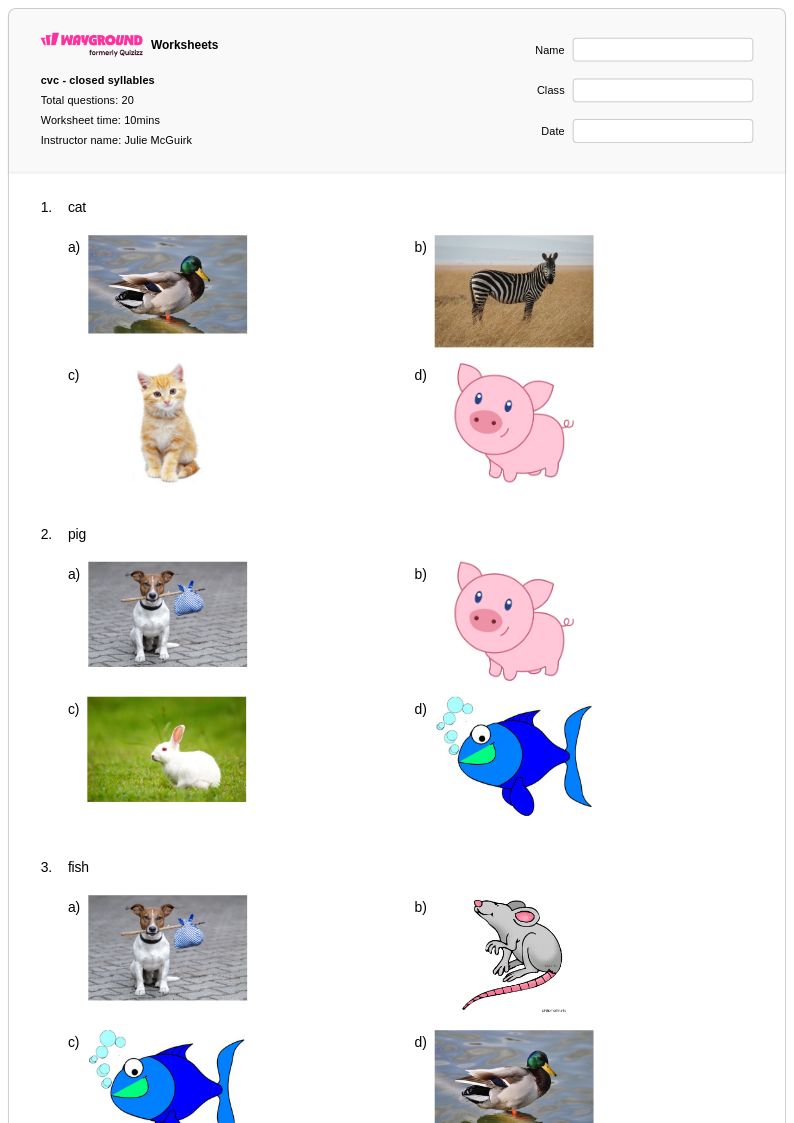
20 Q
KG - 2nd
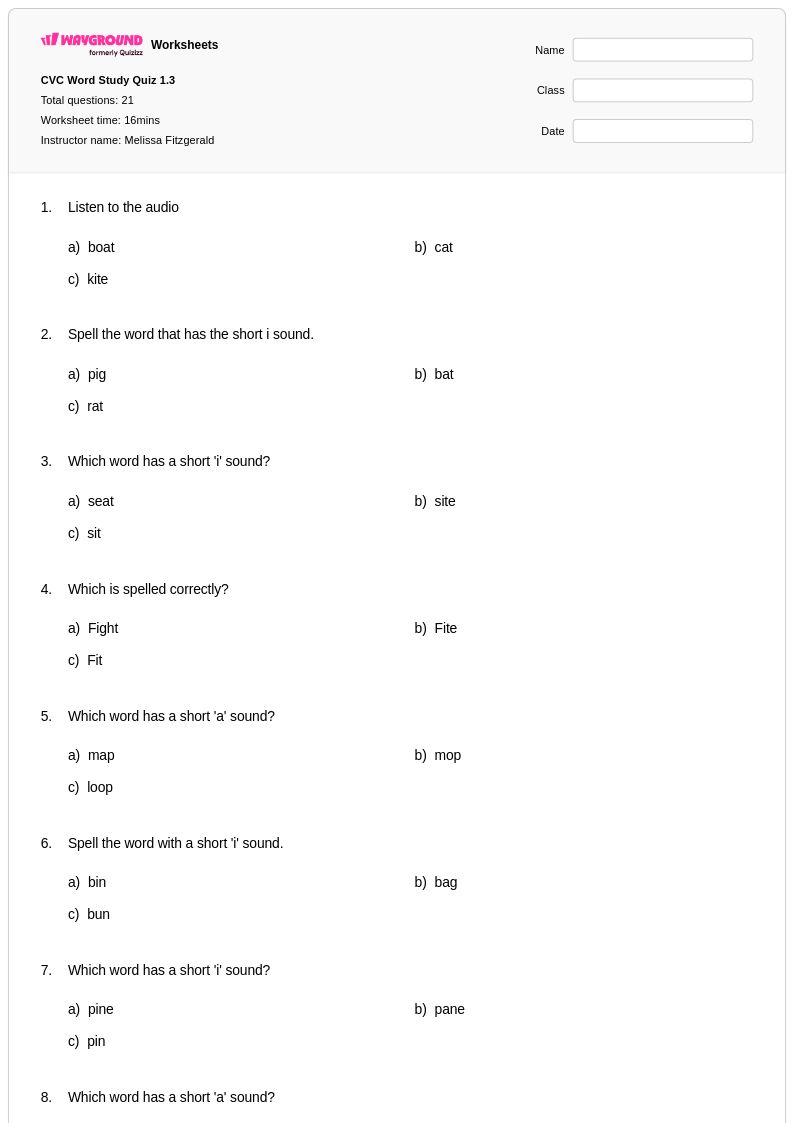
21 Q
2nd
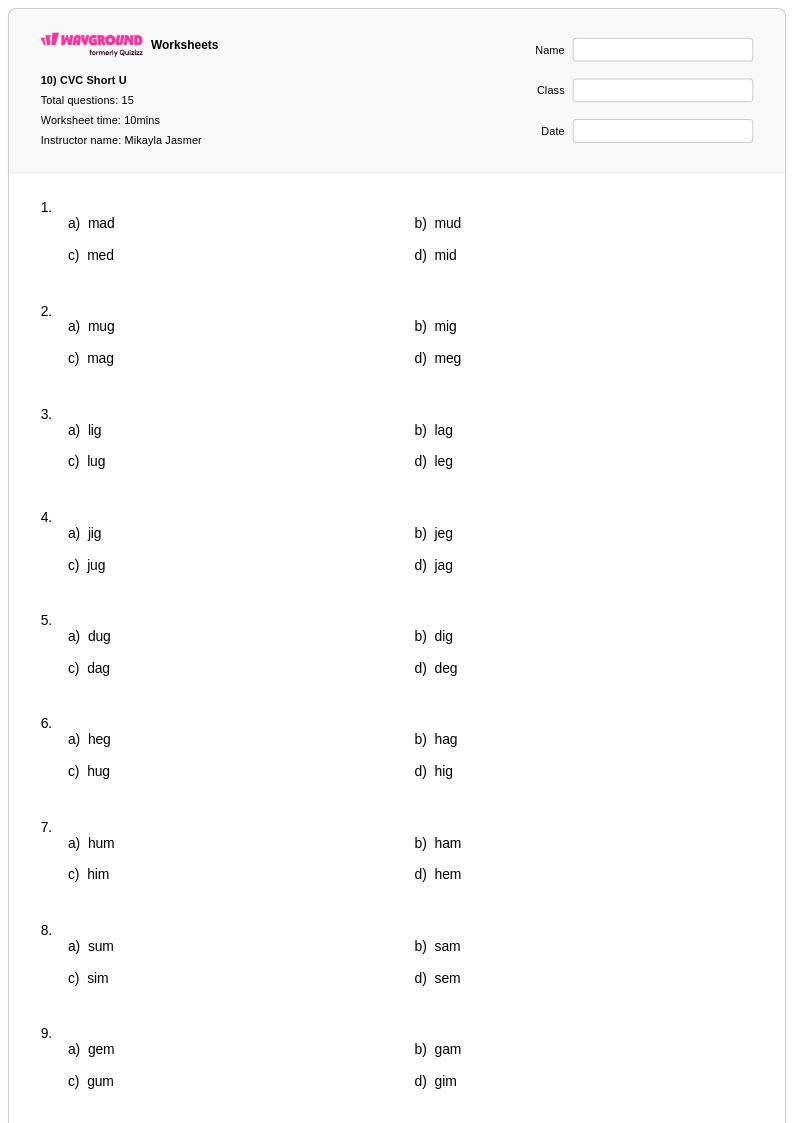
15 Q
1st - 4th
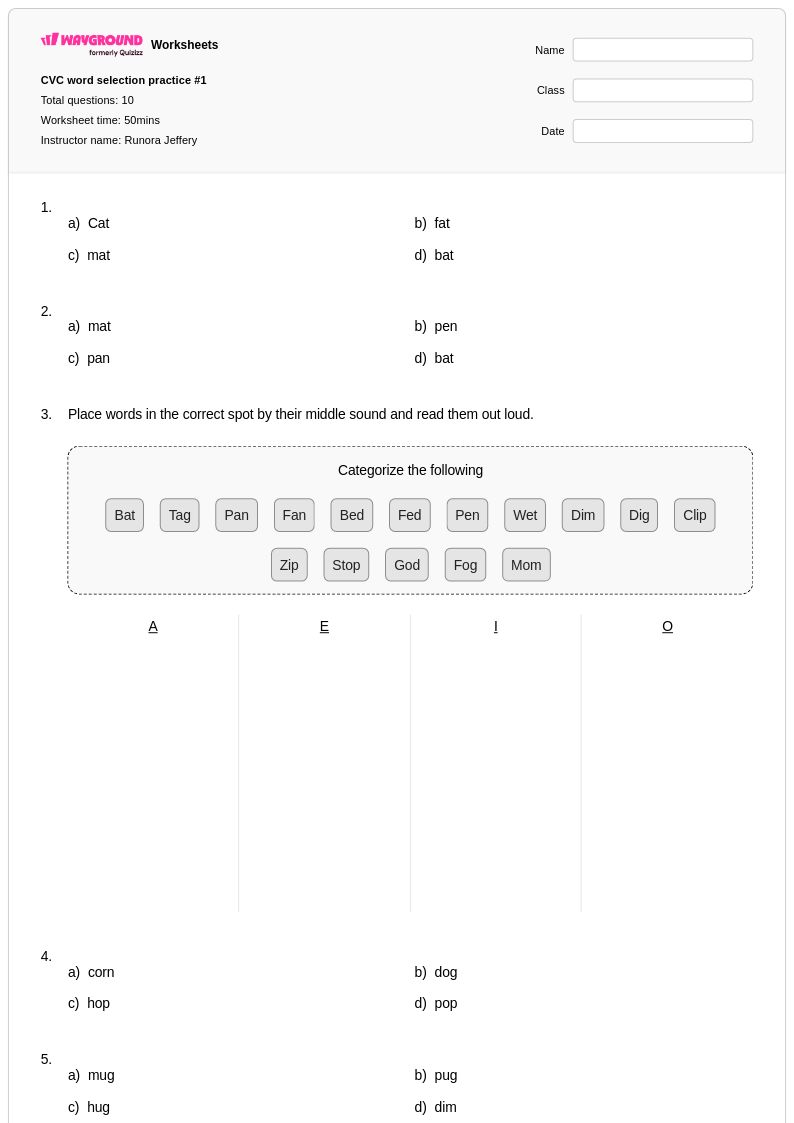
10 Q
2nd
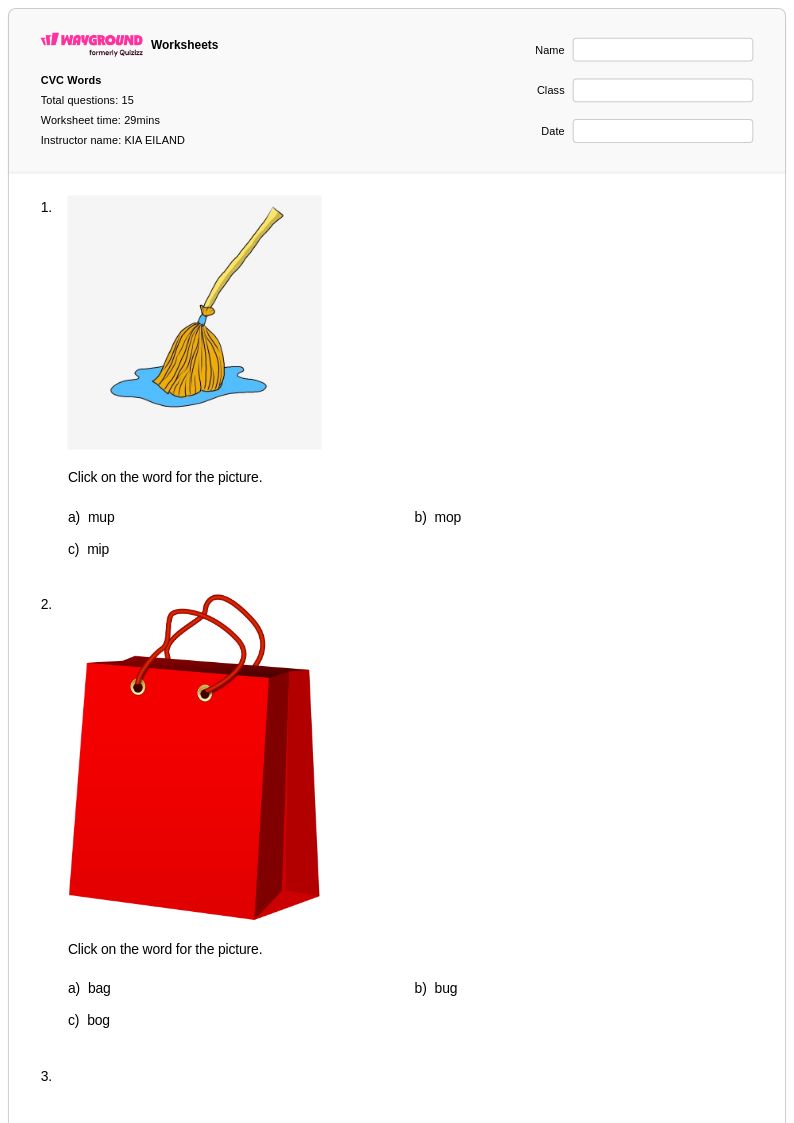
15 Q
1st - 5th
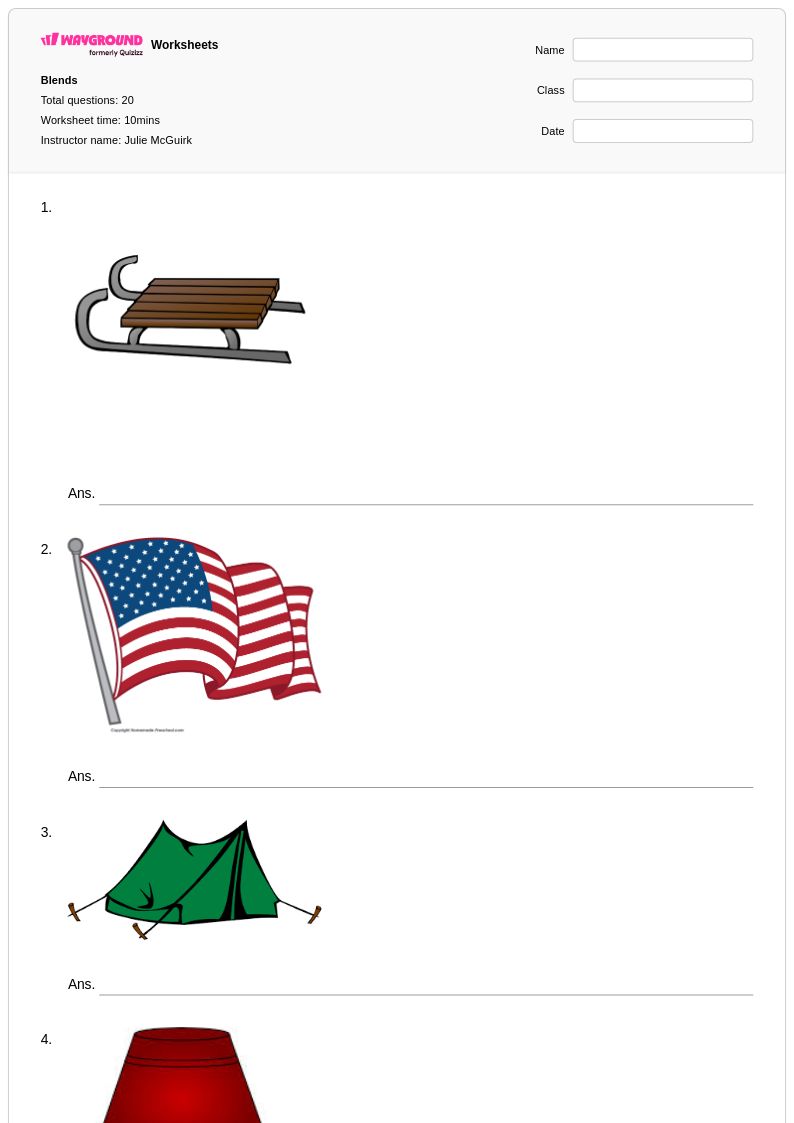
20 Q
1st - 3rd
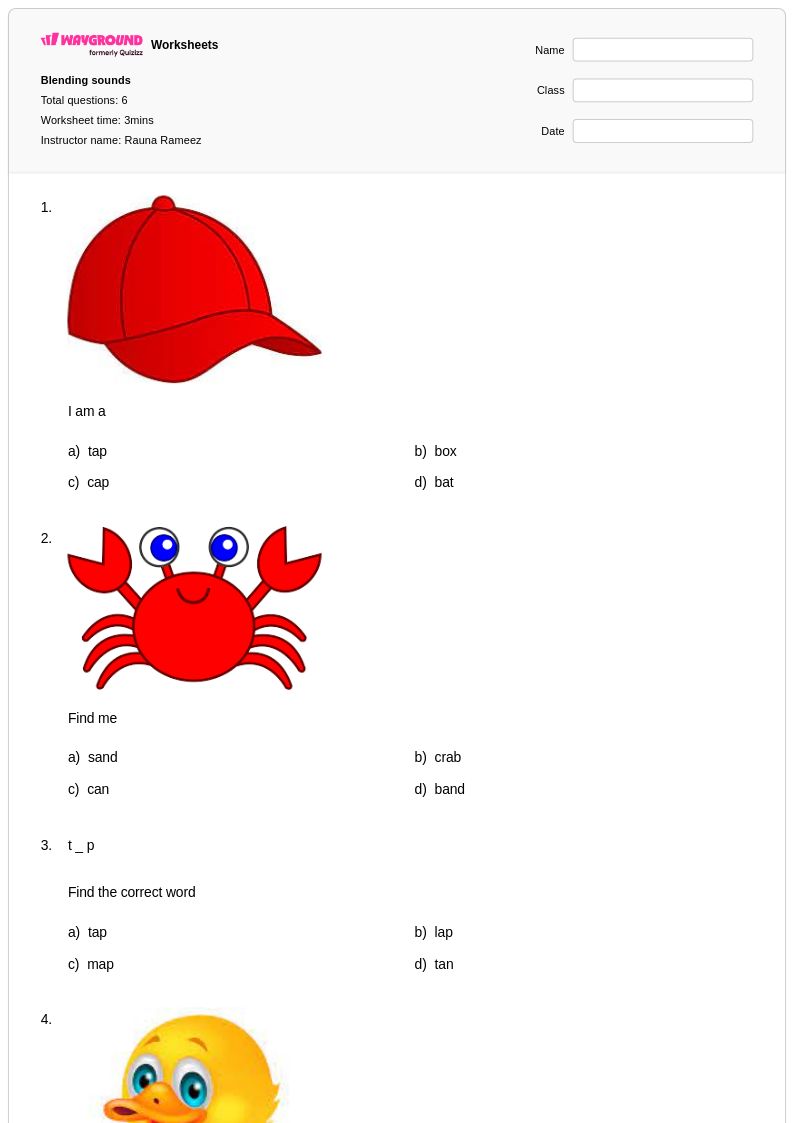
6 Q
KG - 3rd
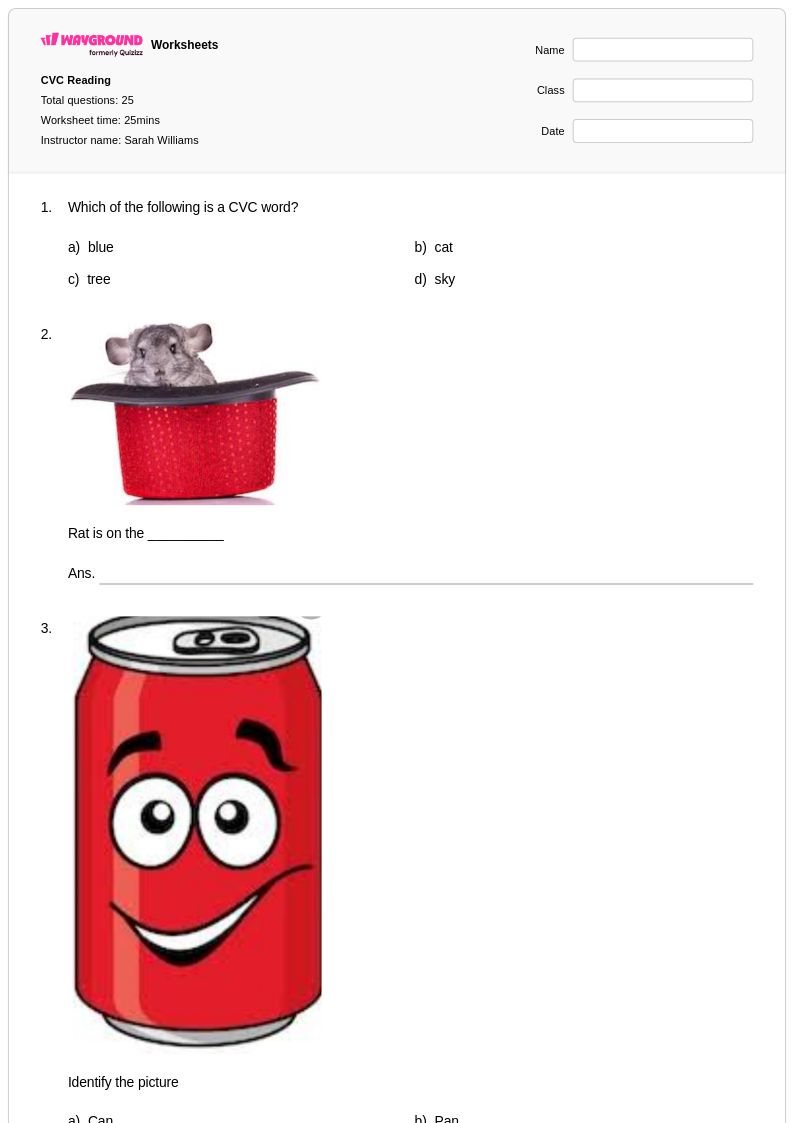
25 Q
2nd - Uni
15 Q
2nd - Uni
21 Q
2nd
25 Q
2nd - Uni
15 Q
2nd - Uni
12 Q
2nd
21 Q
2nd
11 Q
2nd
10 Q
2nd
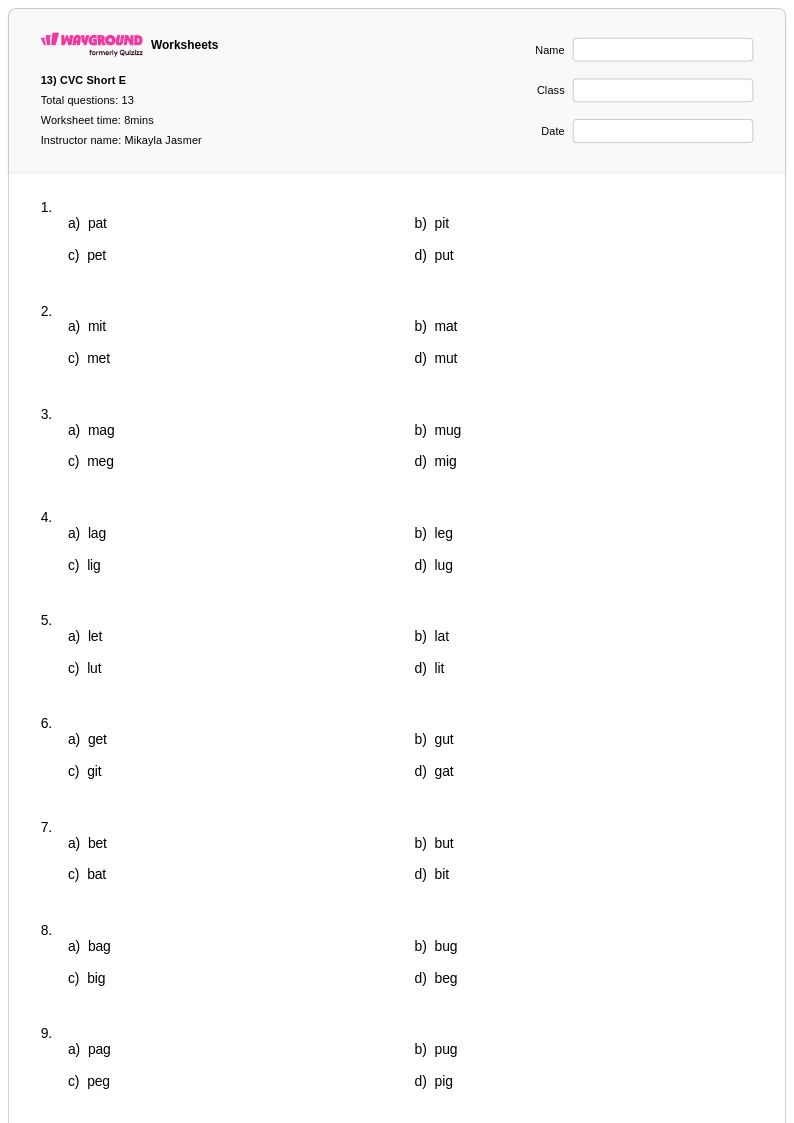
13 Q
1st - 4th
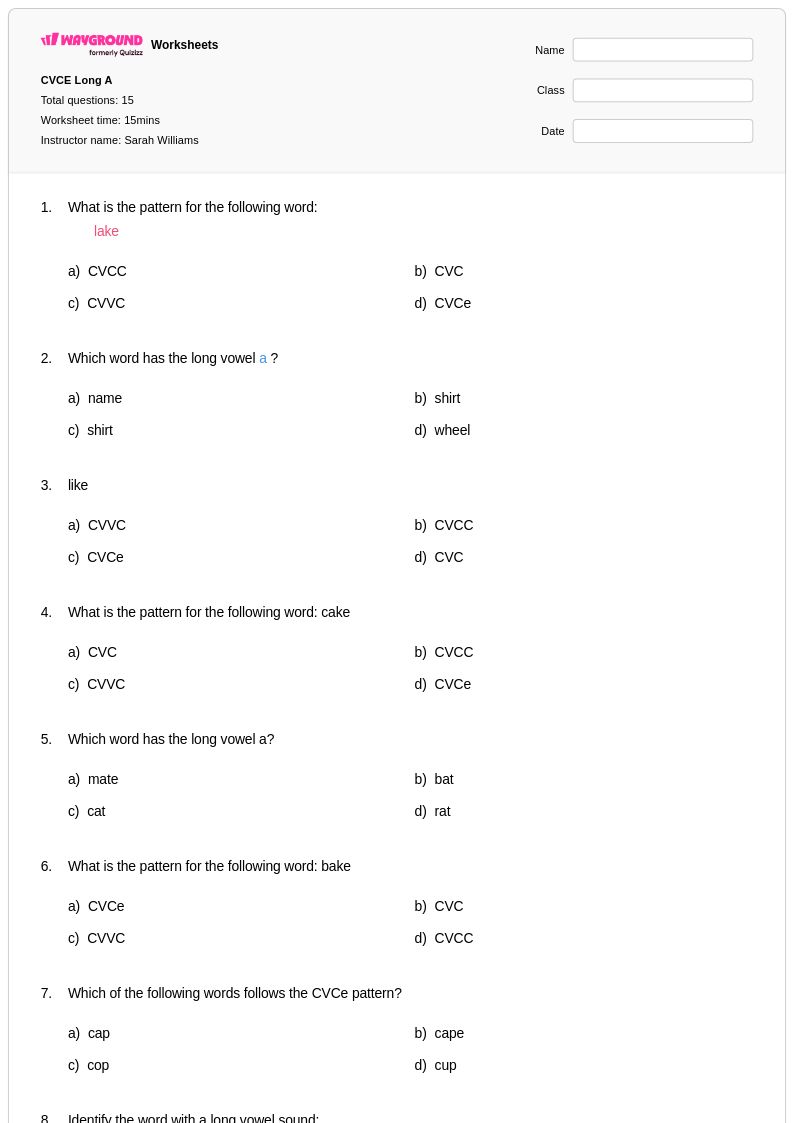
15 Q
2nd - Uni
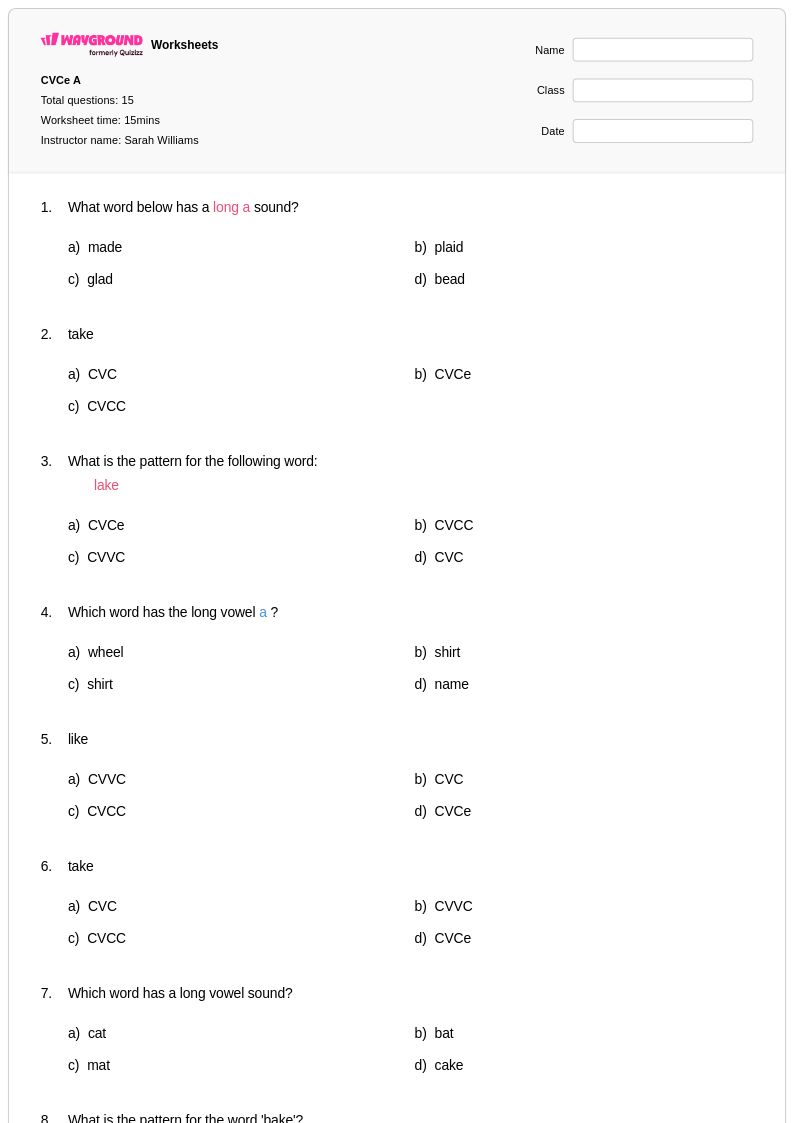
15 Q
2nd - Uni
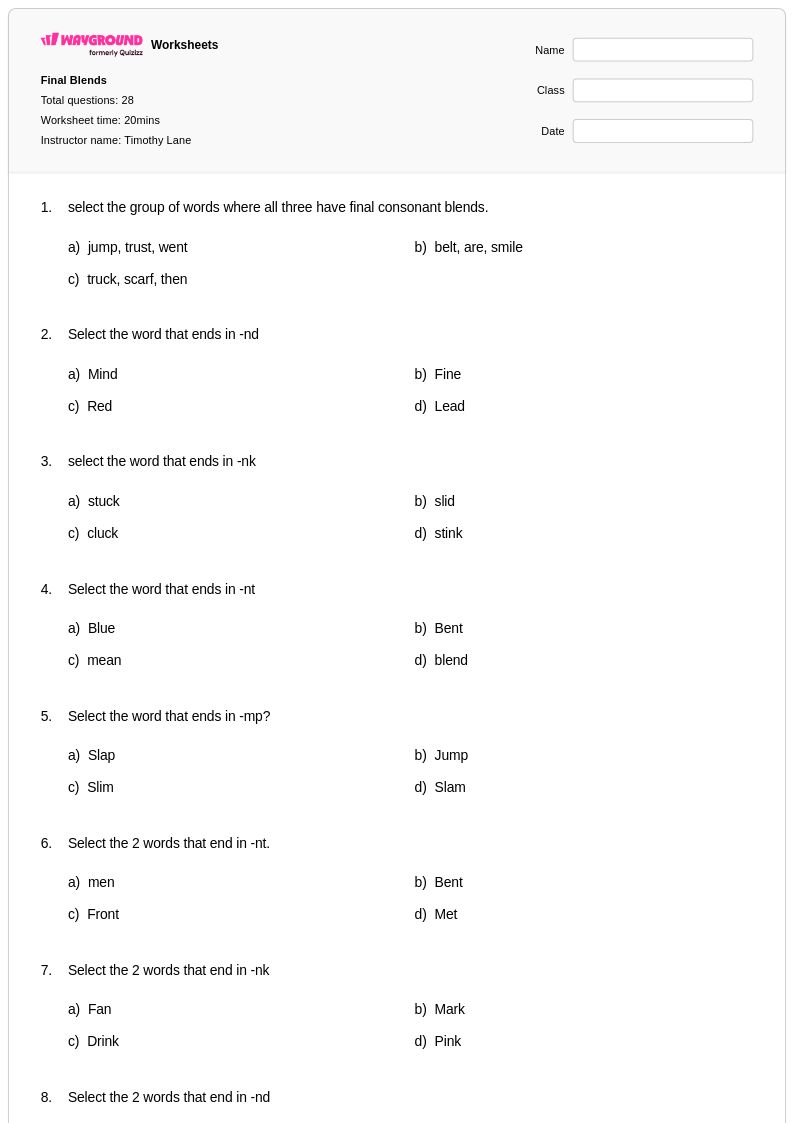
28 Q
1st - 2nd
Explore Cvc Blending Worksheets by Grades
Explore Other Subject Worksheets for year 2
Explore printable Cvc Blending worksheets for Year 2
CVC blending worksheets for Year 2 students available through Wayground (formerly Quizizz) provide essential foundational practice for developing reading fluency and phonemic awareness. These comprehensive printables focus specifically on helping young learners master the skill of smoothly connecting consonant-vowel-consonant sounds to form complete words, a critical stepping stone in early literacy development. Students work through carefully structured practice problems that guide them from identifying individual letter sounds to blending them seamlessly into recognizable words like "cat," "dog," and "sun." Each worksheet includes a complete answer key, making it simple for educators to assess student progress and identify areas where additional support may be needed. These free resources strengthen phonetic decoding abilities while building the automaticity necessary for confident reading, ensuring students develop the solid foundation required for more complex phonics concepts.
Wayground (formerly Quizizz) empowers educators with an extensive collection of teacher-created CVC blending resources, drawing from millions of high-quality materials that support diverse classroom needs. The platform's robust search and filtering capabilities allow teachers to quickly locate worksheets that align with specific learning standards and match their students' current skill levels. Advanced differentiation tools enable educators to customize these printable and digital materials, including pdf formats, to accommodate varying learning paces and styles within their Year 2 classrooms. These flexible resources prove invaluable for lesson planning, targeted remediation sessions, and enrichment activities, while the seamless integration of both digital and printable formats ensures teachers can adapt their instruction to any learning environment. The comprehensive nature of these CVC blending materials supports systematic skill practice that builds student confidence and accelerates reading development.
FAQs
How do I teach CVC blending to beginning readers?
What exercises help students practice CVC blending?
What mistakes do students commonly make when blending CVC words?
How do I support struggling readers during CVC blending practice?
How do I use Wayground's CVC blending worksheets in my classroom?
At what reading level should students begin CVC blending practice?