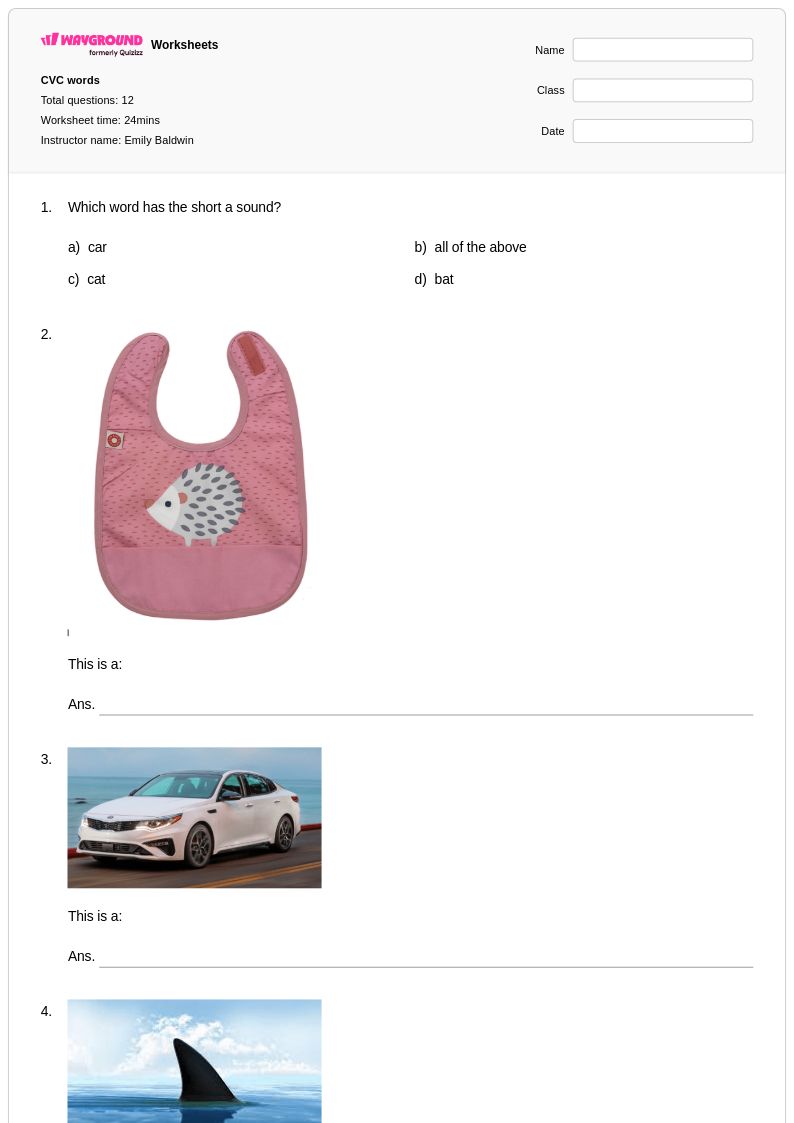
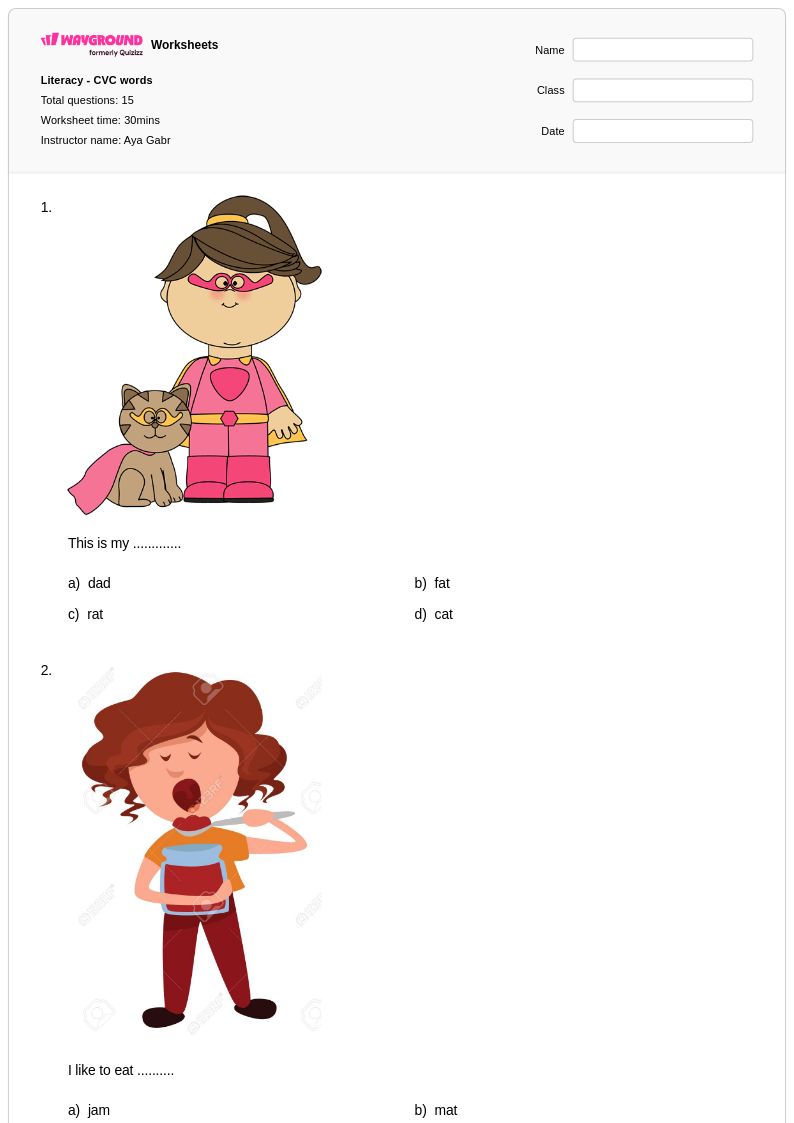
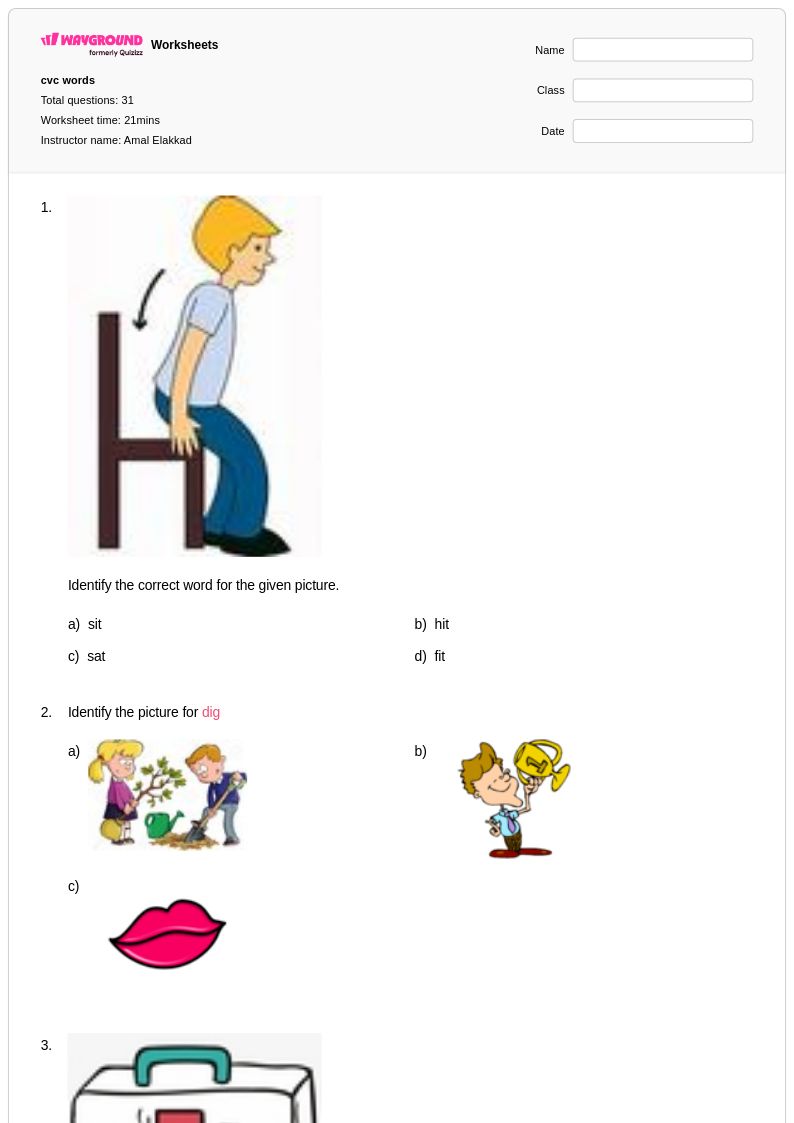
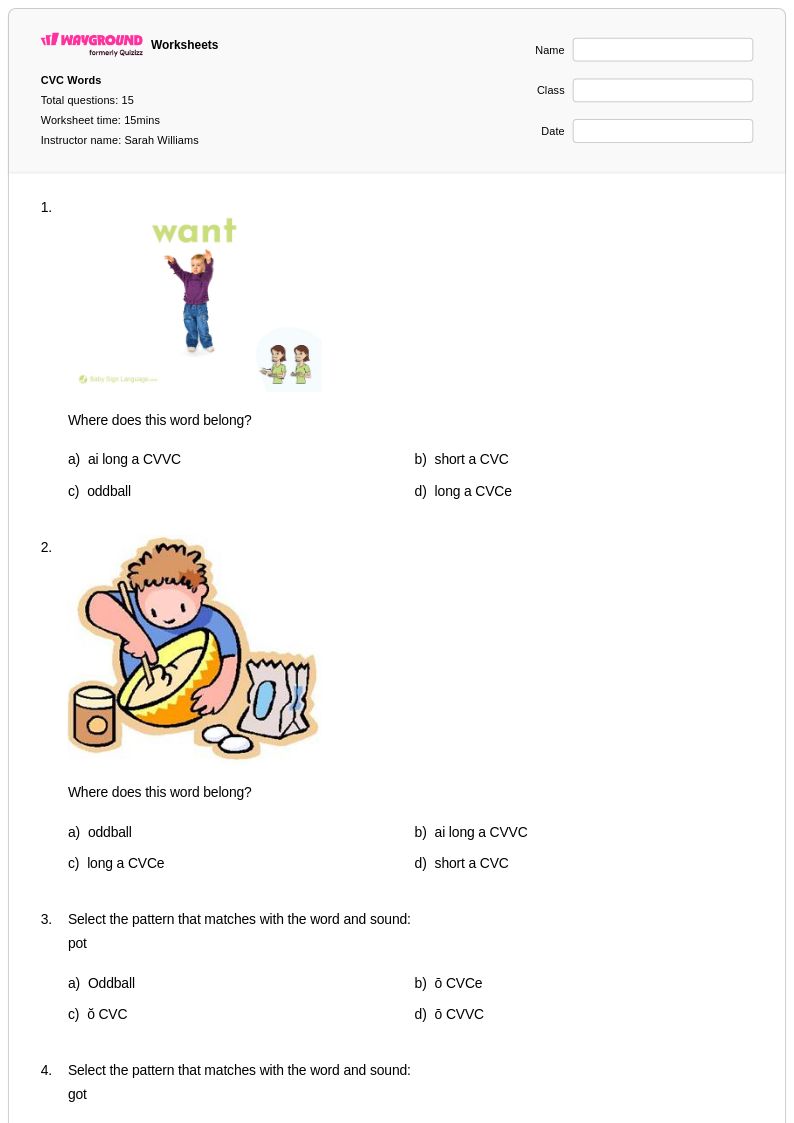
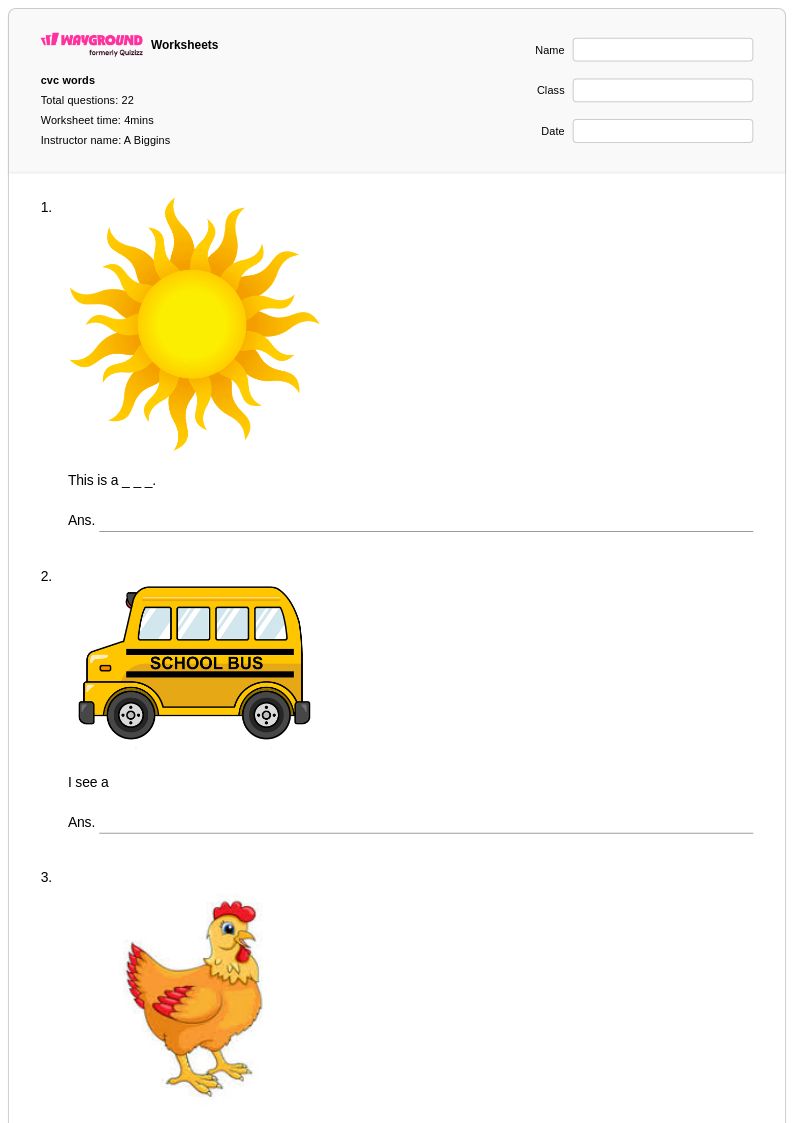
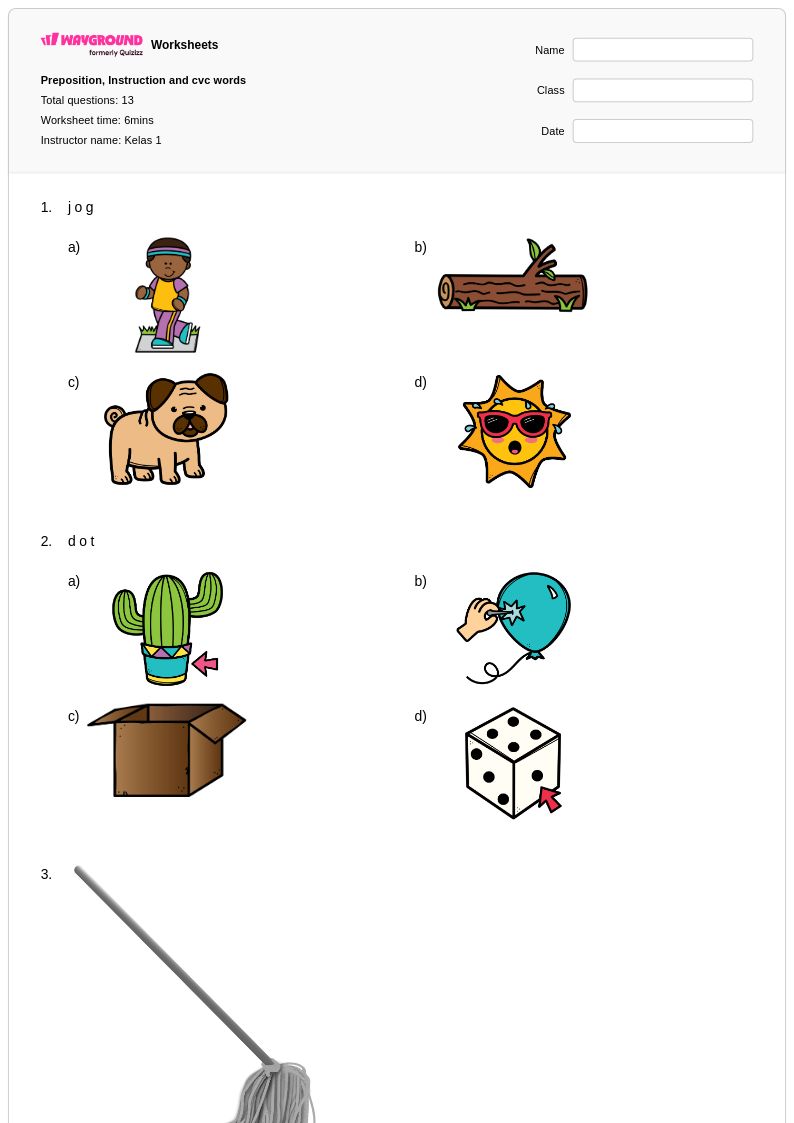
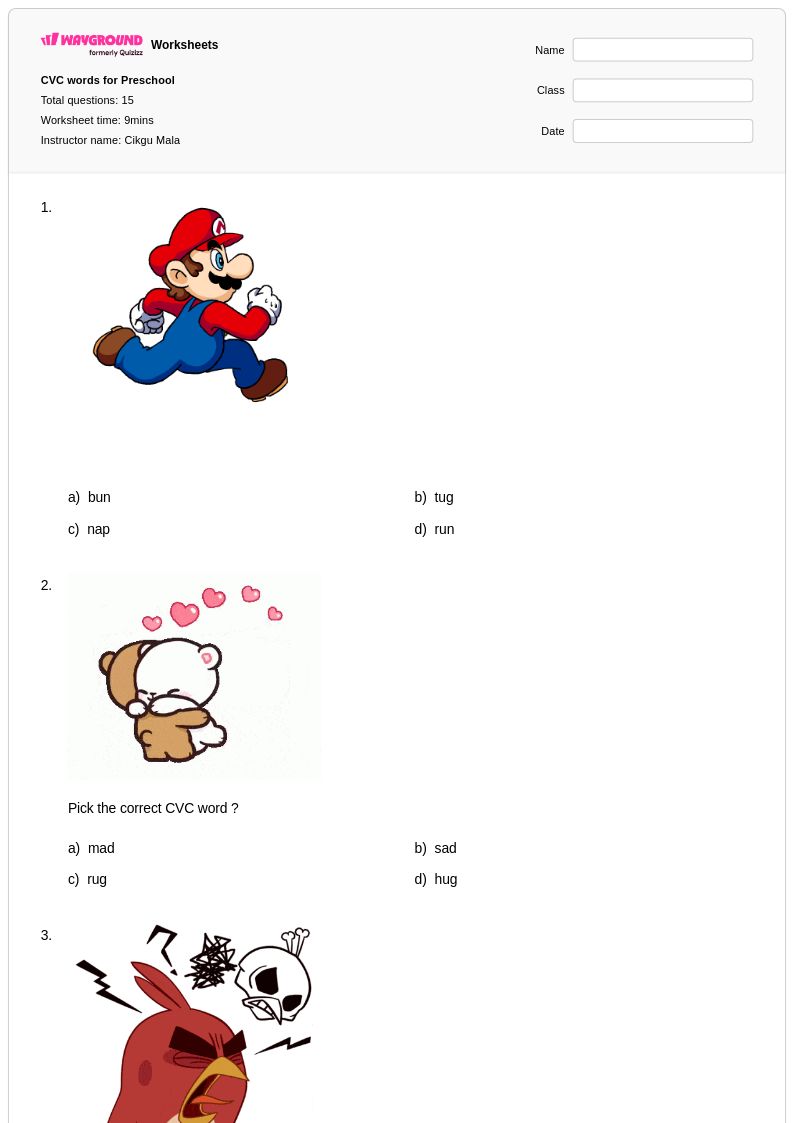
Enhance phonics skills with our free CVC words worksheets and printables, featuring engaging practice problems and complete answer keys to help students master consonant-vowel-consonant word patterns through structured learning activities.
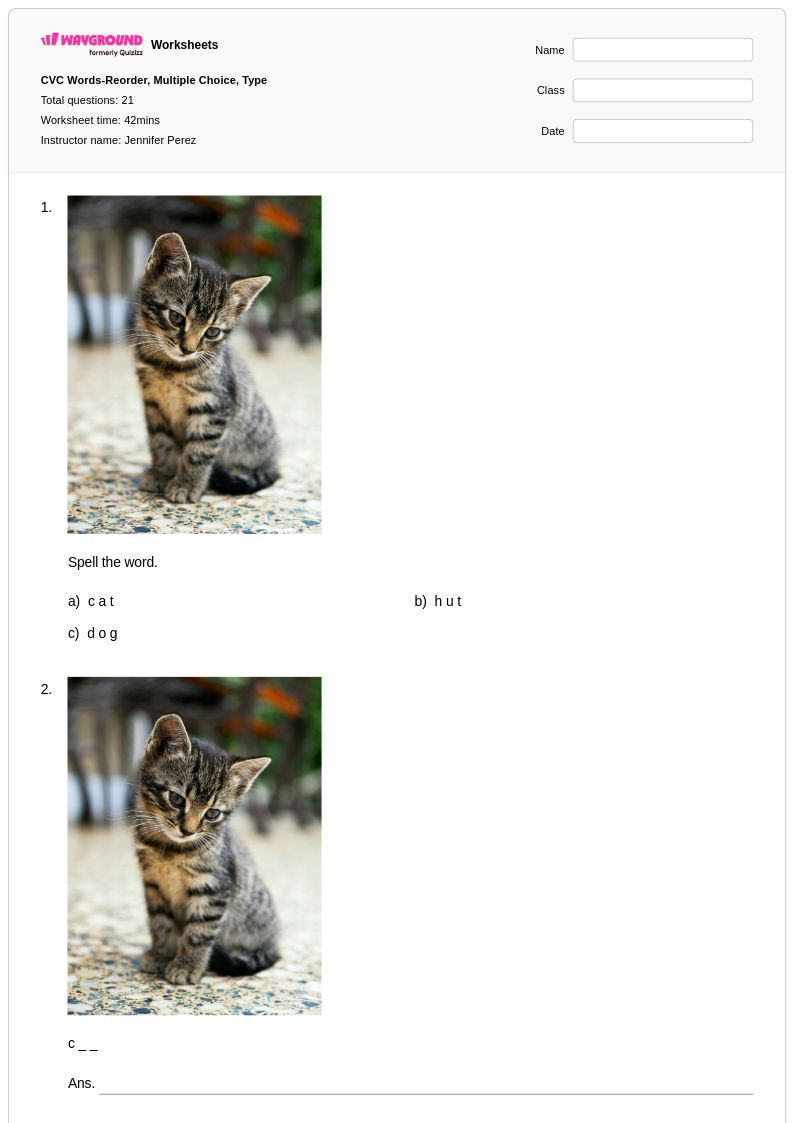
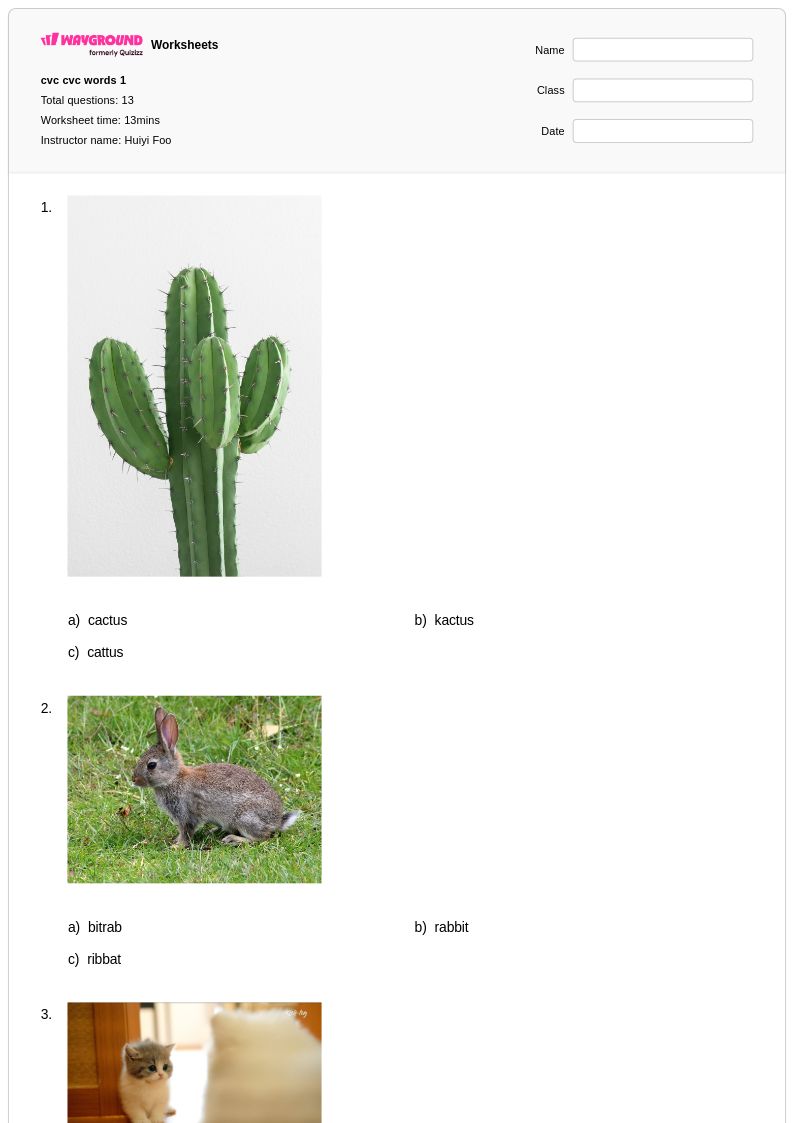
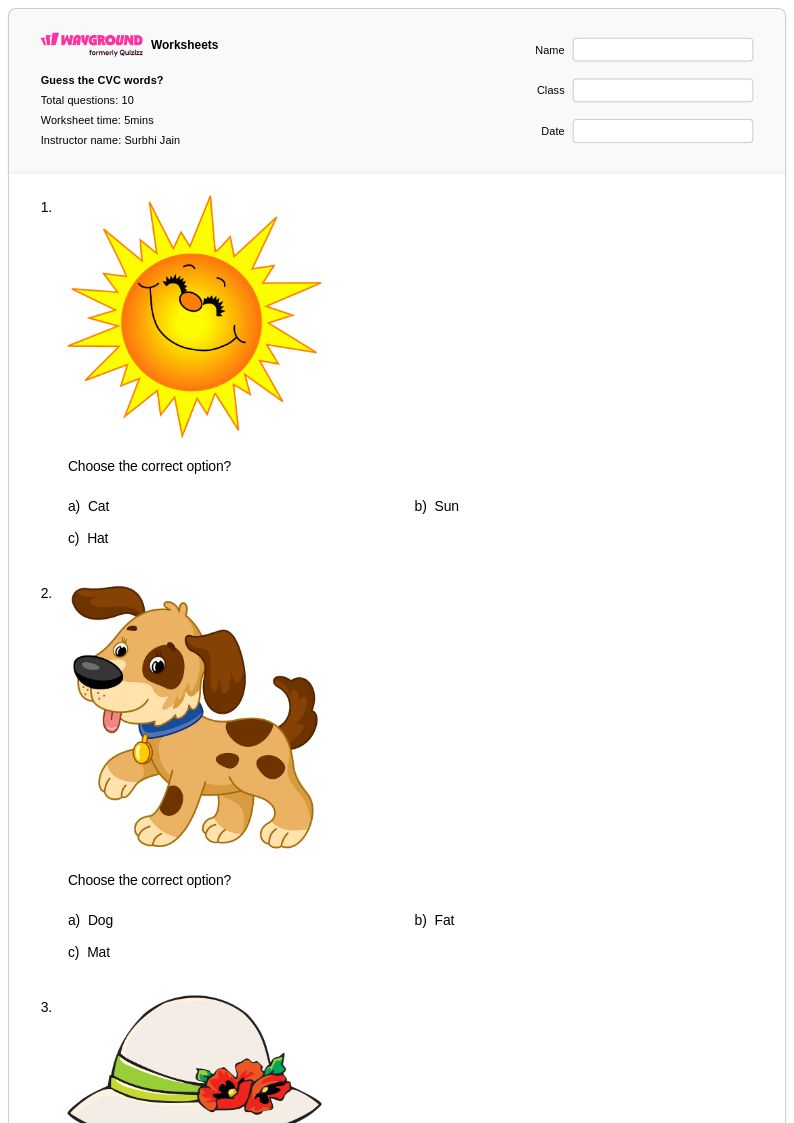
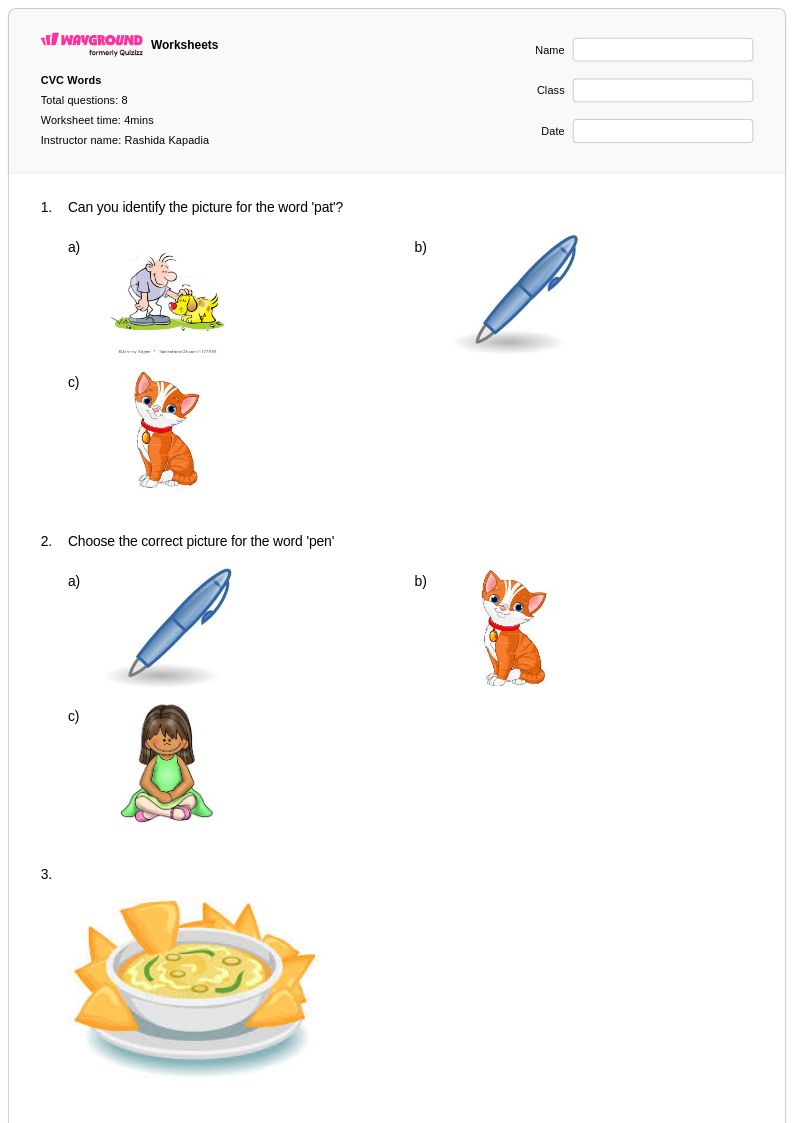
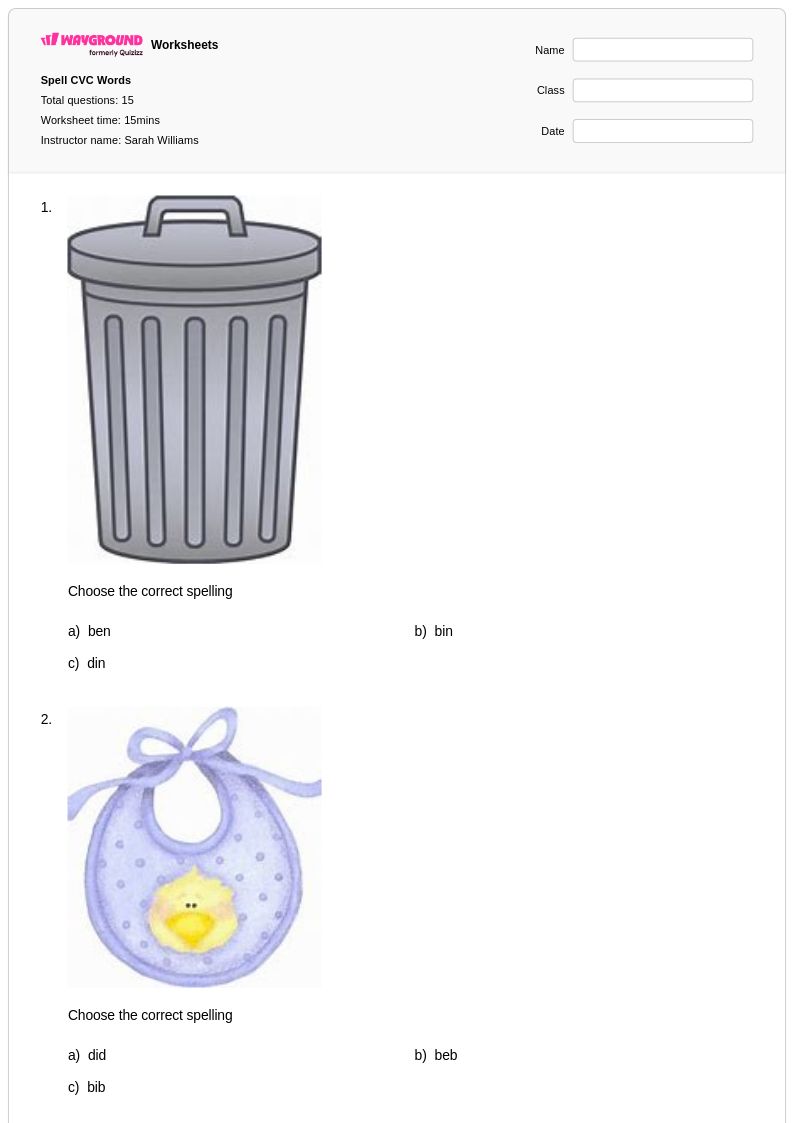
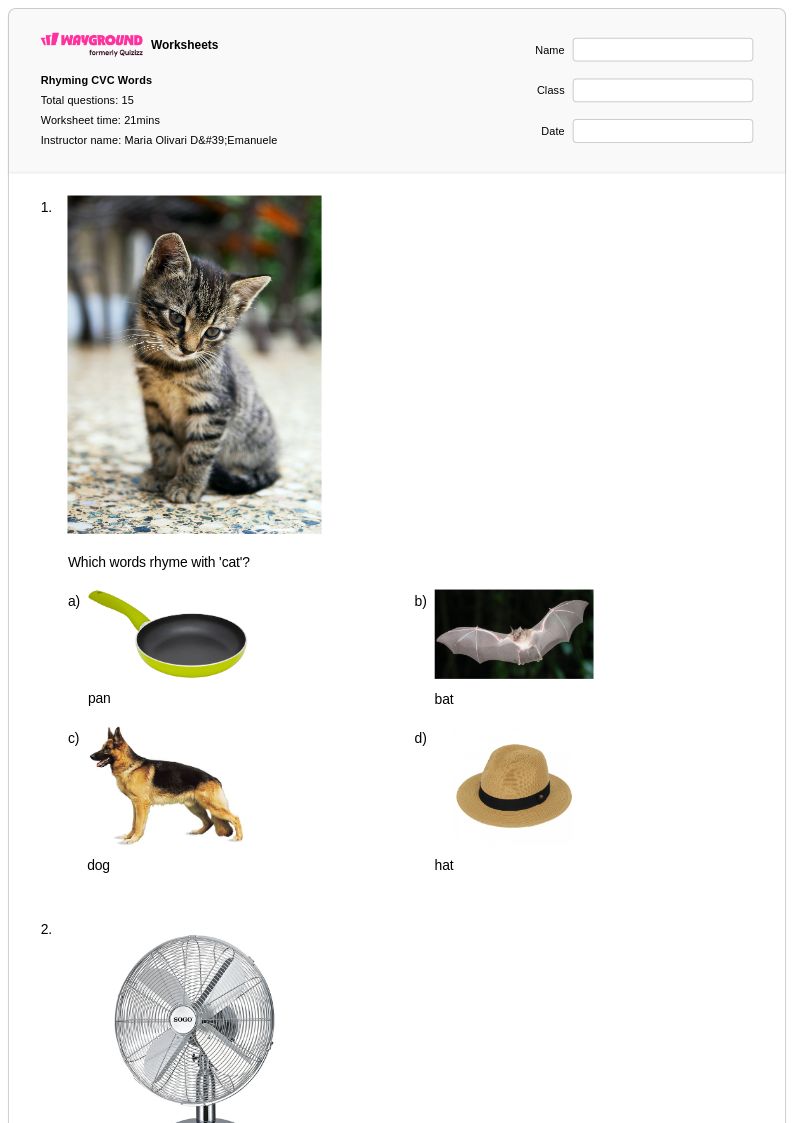
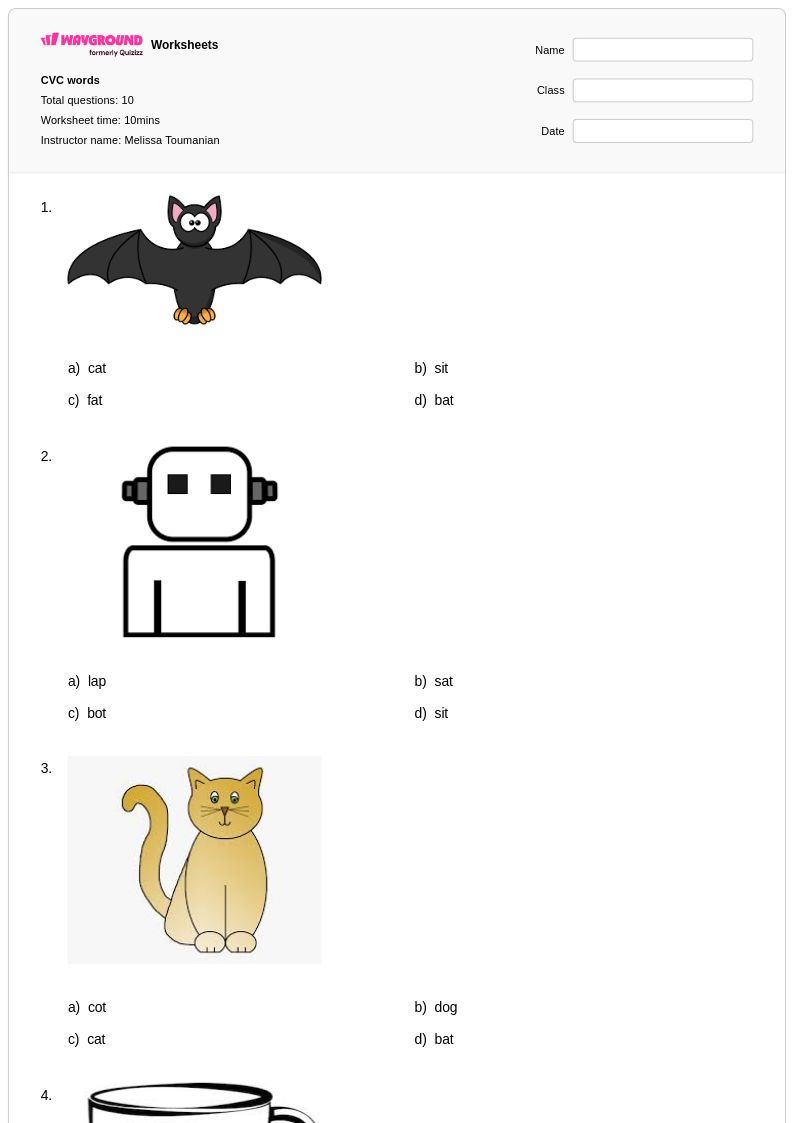
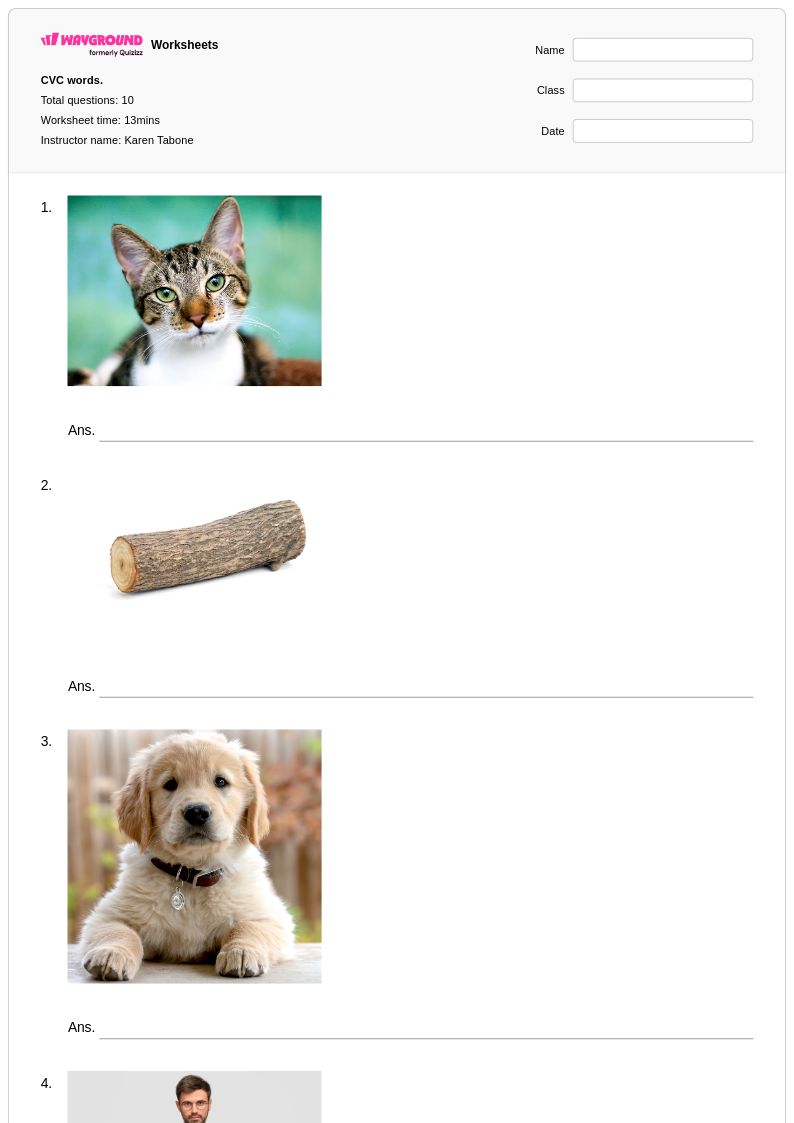
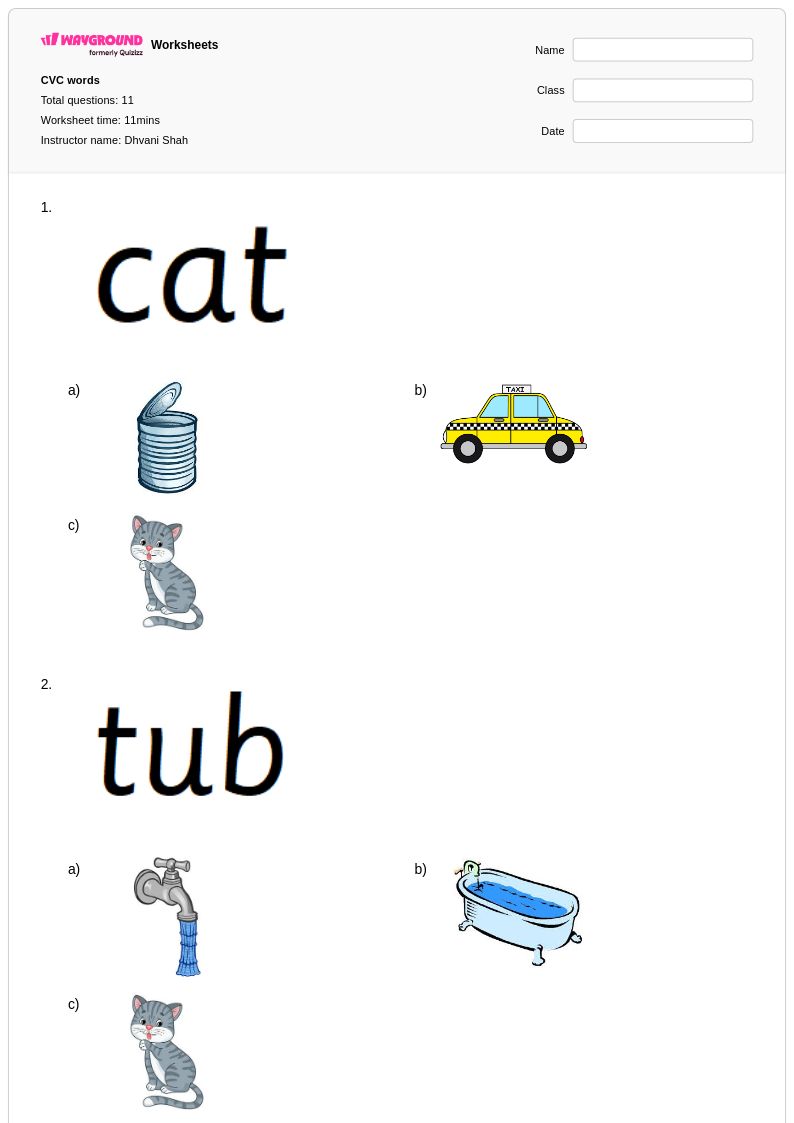
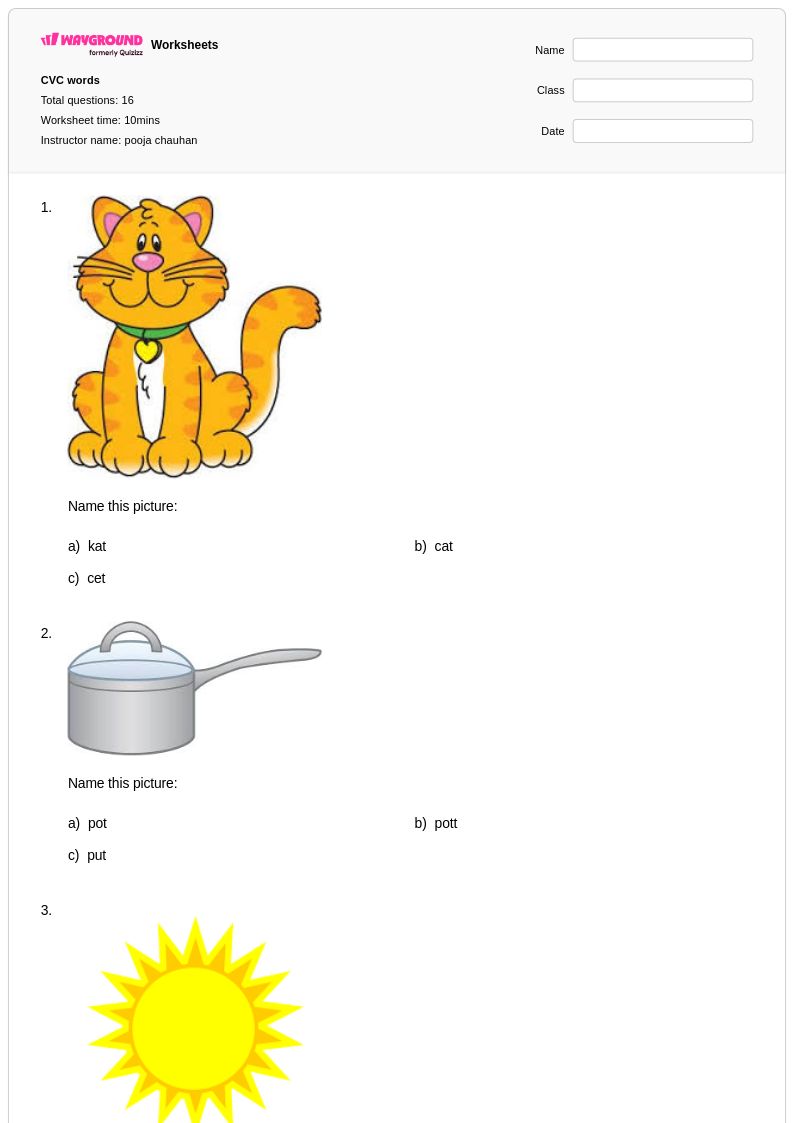
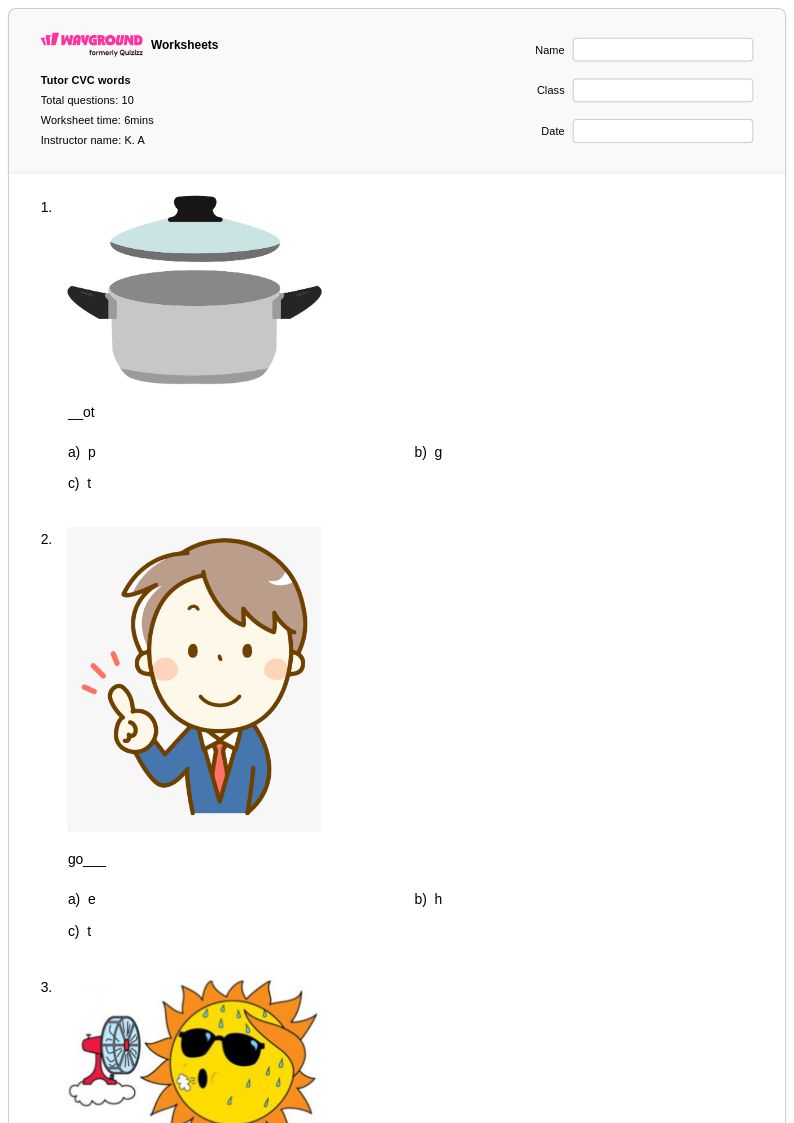
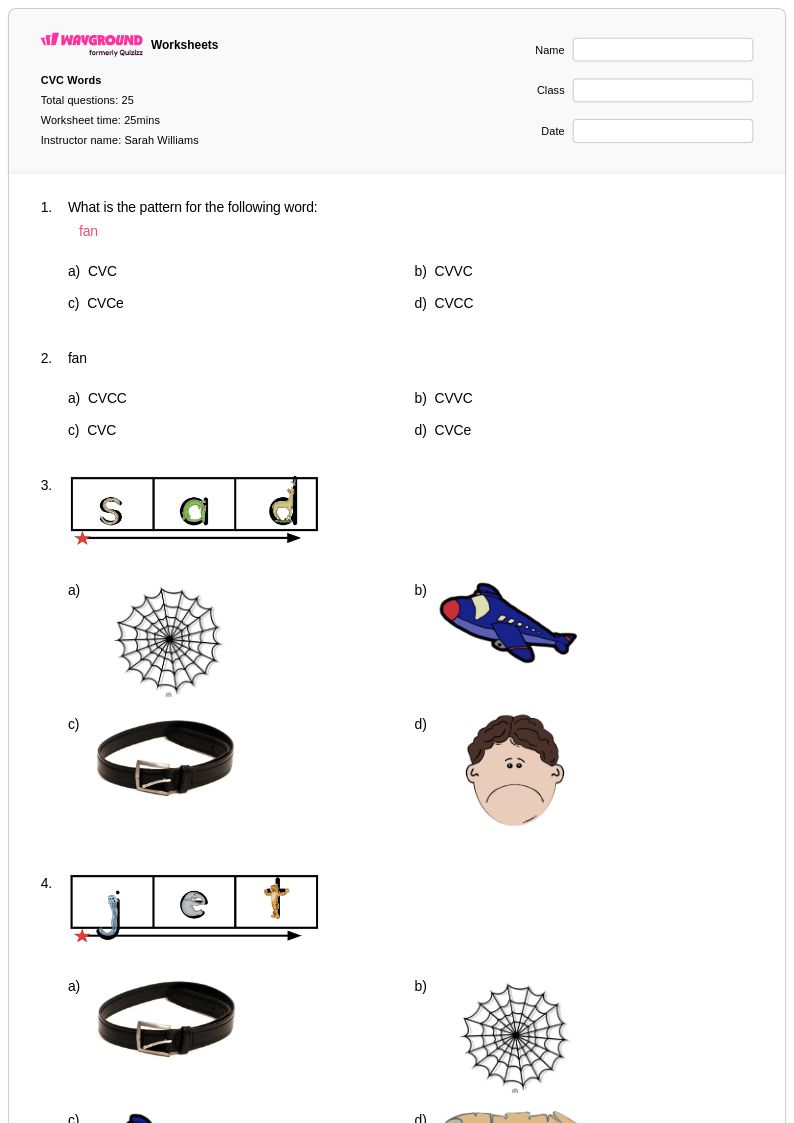
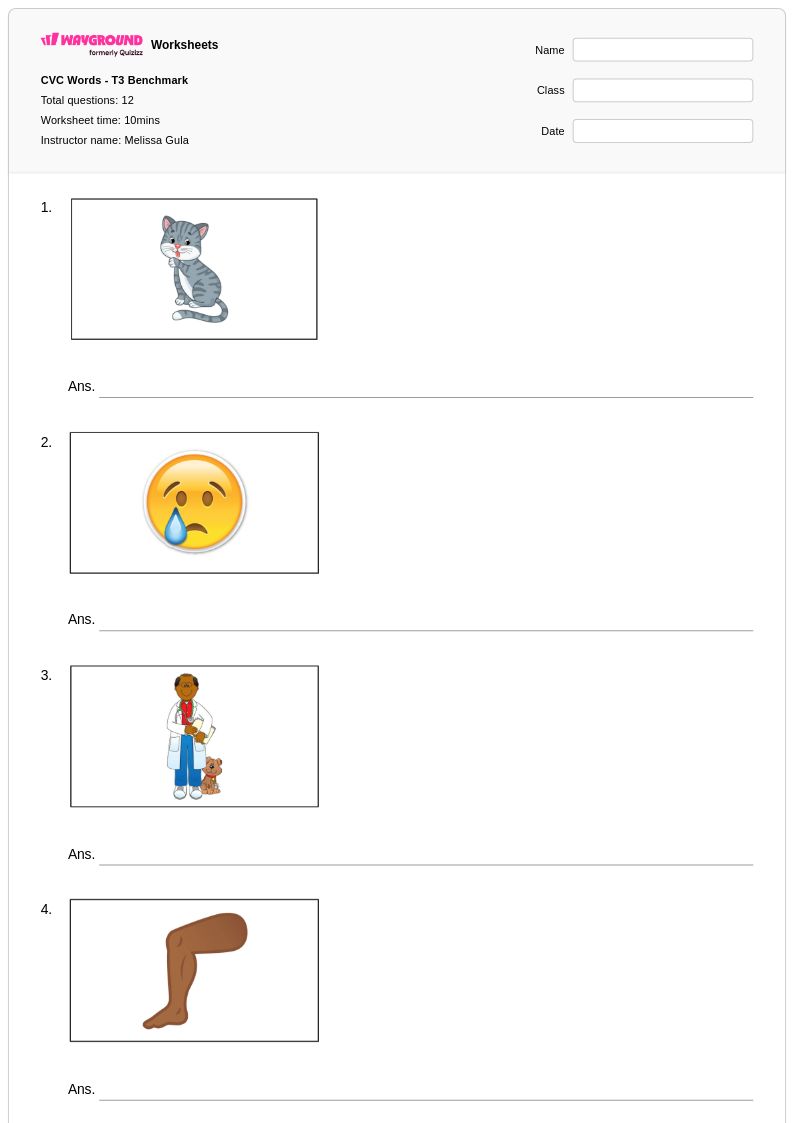
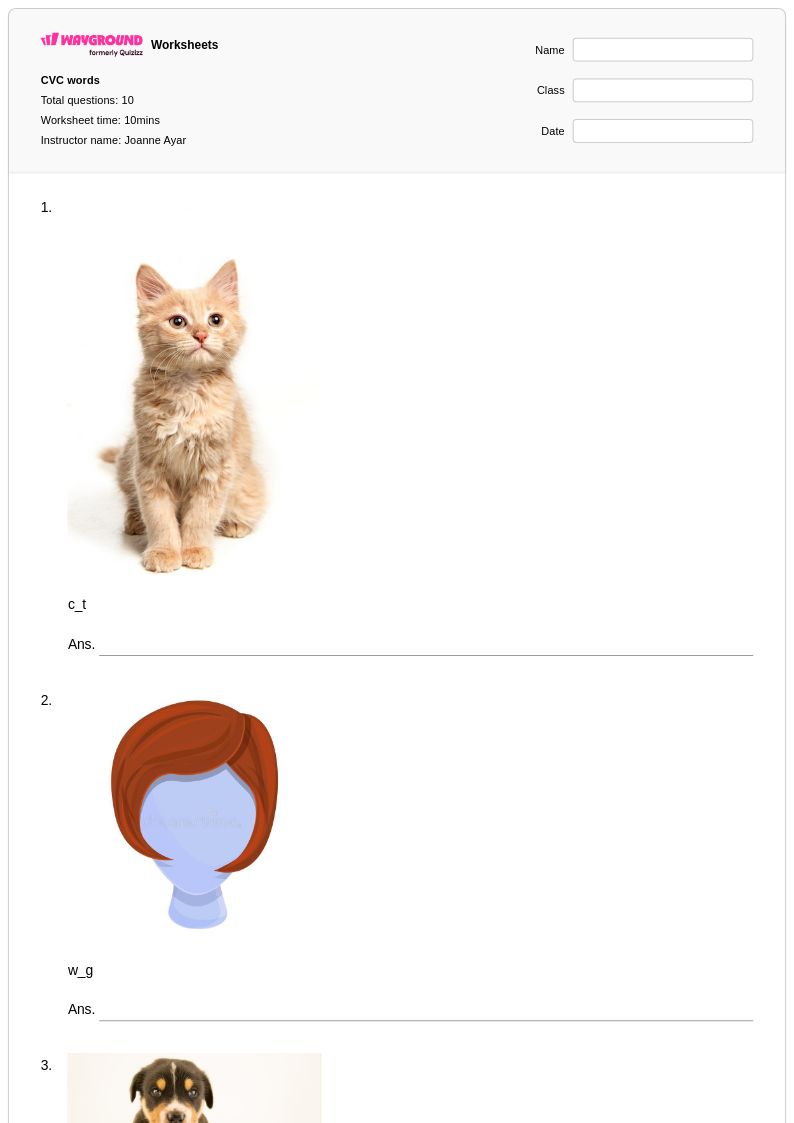
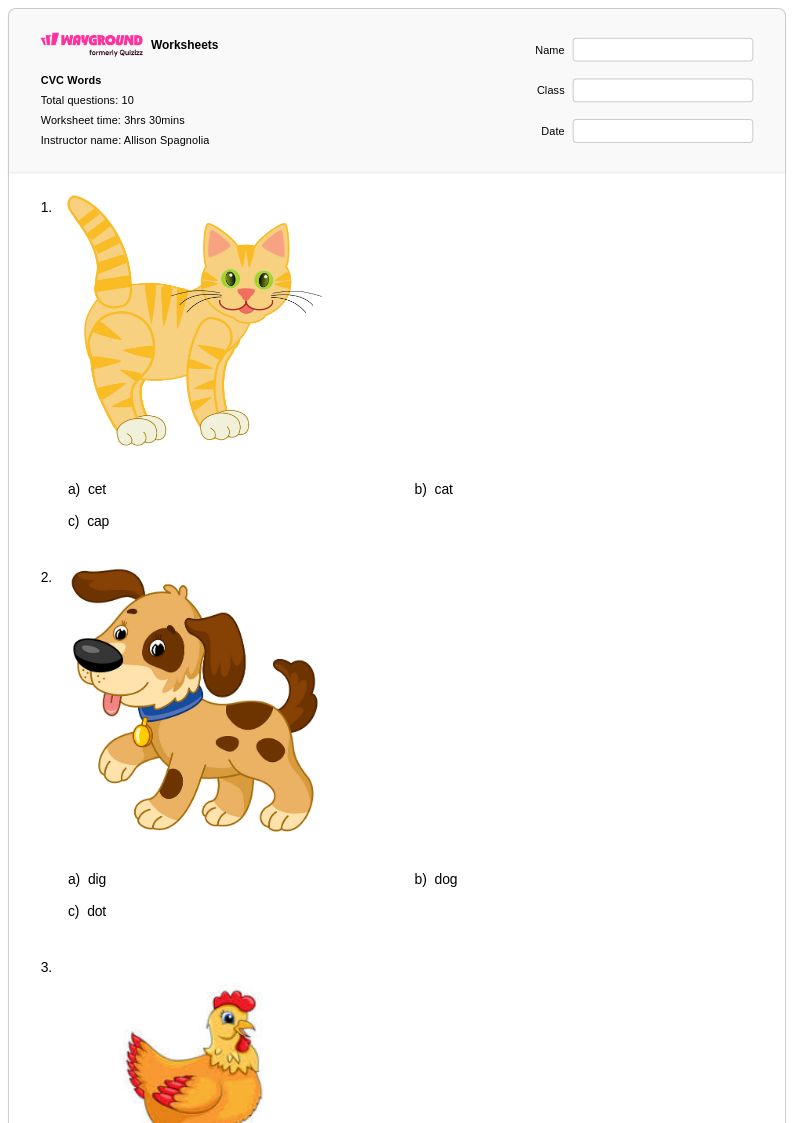
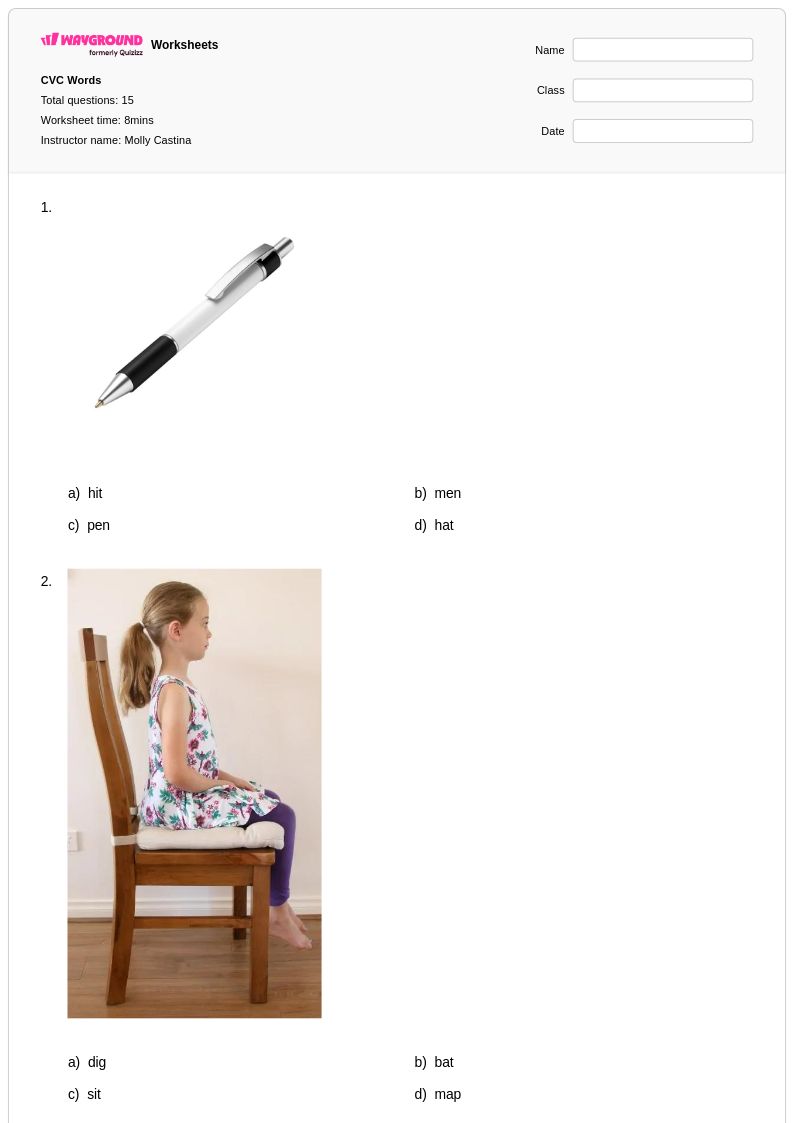
CVC words form the foundation of early reading instruction, and Wayground's comprehensive collection of phonics worksheets provides educators with essential resources to develop students' decoding skills. These carefully crafted worksheets focus on consonant-vowel-consonant patterns, helping learners master simple three-letter words like "cat," "dog," and "sun" through systematic practice. Each worksheet includes varied activities such as word building exercises, picture matching tasks, and fill-in-the-blank problems that reinforce phonetic patterns while building reading confidence. Teachers can access these free printables with complete answer keys, ensuring efficient grading and immediate feedback opportunities that support student progress in foundational literacy skills.
Wayground (formerly Quizizz) empowers educators with millions of teacher-created CVC word resources that streamline phonics instruction across diverse learning environments. The platform's robust search and filtering capabilities allow teachers to quickly locate age-appropriate materials that align with curriculum standards, while differentiation tools enable customization for varying skill levels within the classroom. These phonics worksheets are available in both printable pdf formats and interactive digital versions, providing flexibility for traditional paper-based activities or technology-enhanced learning experiences. Whether used for initial skill introduction, targeted remediation, or enrichment practice, these CVC word collections support comprehensive lesson planning and help teachers address individual student needs through systematic phonics instruction.
FAQs
How do I teach CVC words to beginning readers?
Start by introducing each consonant-vowel-consonant pattern explicitly, blending individual phonemes before asking students to decode whole words. Use picture-word matching activities to build meaning alongside decoding, and practice with word families (e.g., -at, -og, -un) so students recognize recurring patterns. Consistent, short daily practice sessions are more effective than infrequent longer ones for cementing phonemic awareness at this stage.
What activities help students practice CVC word patterns?
Word building exercises, picture-to-word matching tasks, and fill-in-the-blank problems are among the most effective practice formats for CVC words because they require students to actively apply phoneme-grapheme knowledge rather than passively recognize words. Varying the activity type within a single practice session reduces fatigue and reinforces the same pattern through multiple cognitive pathways, which strengthens retention.
What mistakes do students commonly make when reading CVC words?
The most frequent error is vowel confusion, where students substitute the short vowel sound with a long vowel or a similar short vowel (e.g., reading 'pet' as 'pit' or 'pat'). Students also commonly omit the medial vowel entirely, blending only the initial and final consonants. Targeted practice that isolates the middle vowel sound, such as picture-sorting by short vowel, helps address this directly.
How can I differentiate CVC word instruction for students at different skill levels?
For students who are still developing phonemic awareness, reduce the number of answer choices presented at a time to lower cognitive load and allow them to focus on individual phonemes. More advanced students can move into word-family sorting or simple sentence completion. On Wayground, teachers can apply accommodations such as reduced answer choices, read-aloud support, and extended time to individual students without signaling those differences to the rest of the class.
How do I use CVC words worksheets from Wayground in my classroom?
Wayground's CVC words worksheets are available as printable PDFs for traditional paper-based practice and in digital formats for technology-integrated classrooms. Teachers can assign them as independent seat work, small-group interventions, or homework, and the included answer keys make grading fast. Digital versions can also be hosted as a quiz on Wayground, enabling real-time tracking of student responses and immediate feedback.
When should students be able to read CVC words fluently?
Most students are introduced to CVC words in kindergarten and are expected to decode simple three-letter words with automaticity by the end of first grade. Students who struggle with CVC fluency beyond that point may need targeted phonics intervention, as this skill underpins the ability to decode longer, multisyllabic words in later grades.