Free Printable Definite Integral Worksheets for Year 9
Year 9 definite integral worksheets from Wayground provide comprehensive printables and practice problems to help students master integration techniques, complete with answer keys and free PDF downloads for effective calculus learning.
Explore printable Definite Integral worksheets for Year 9
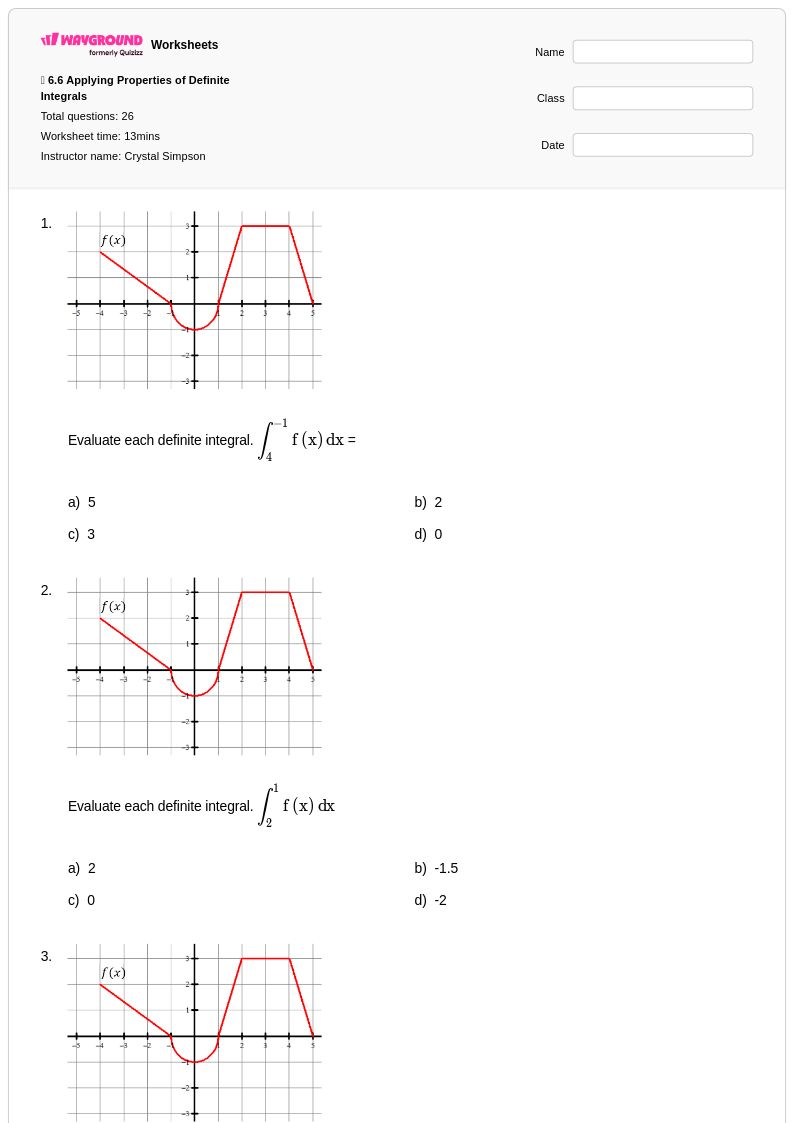
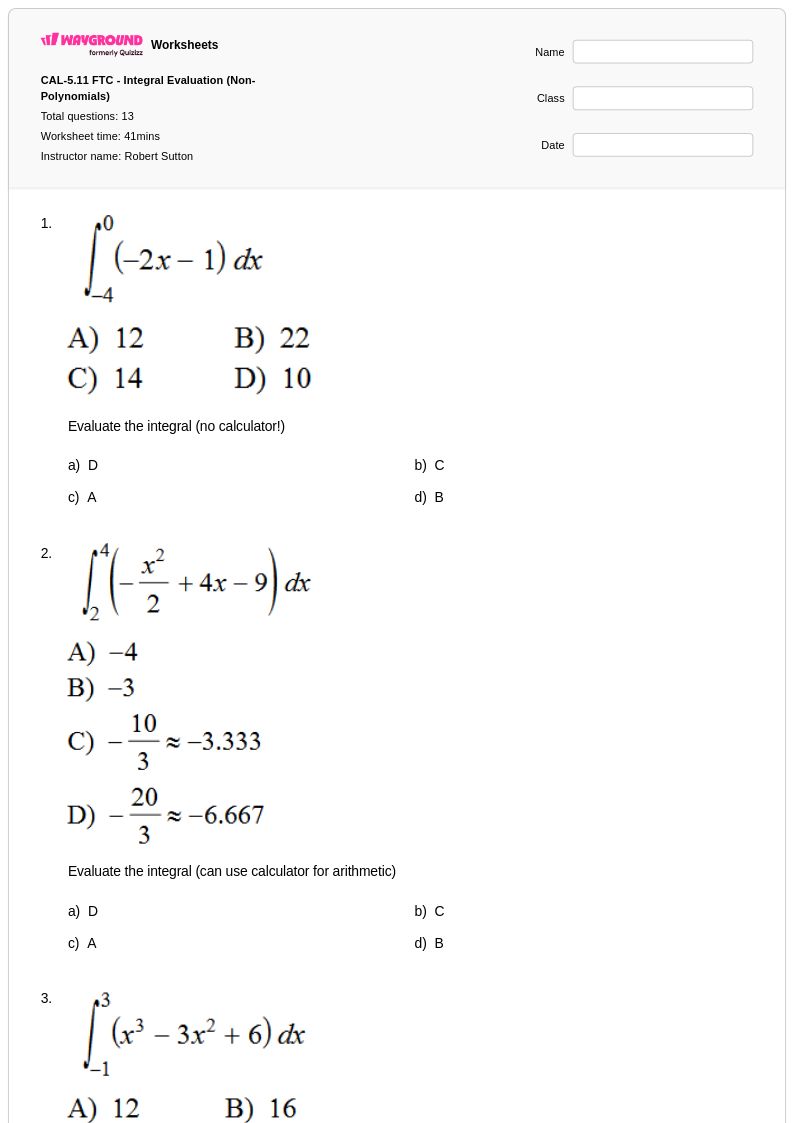
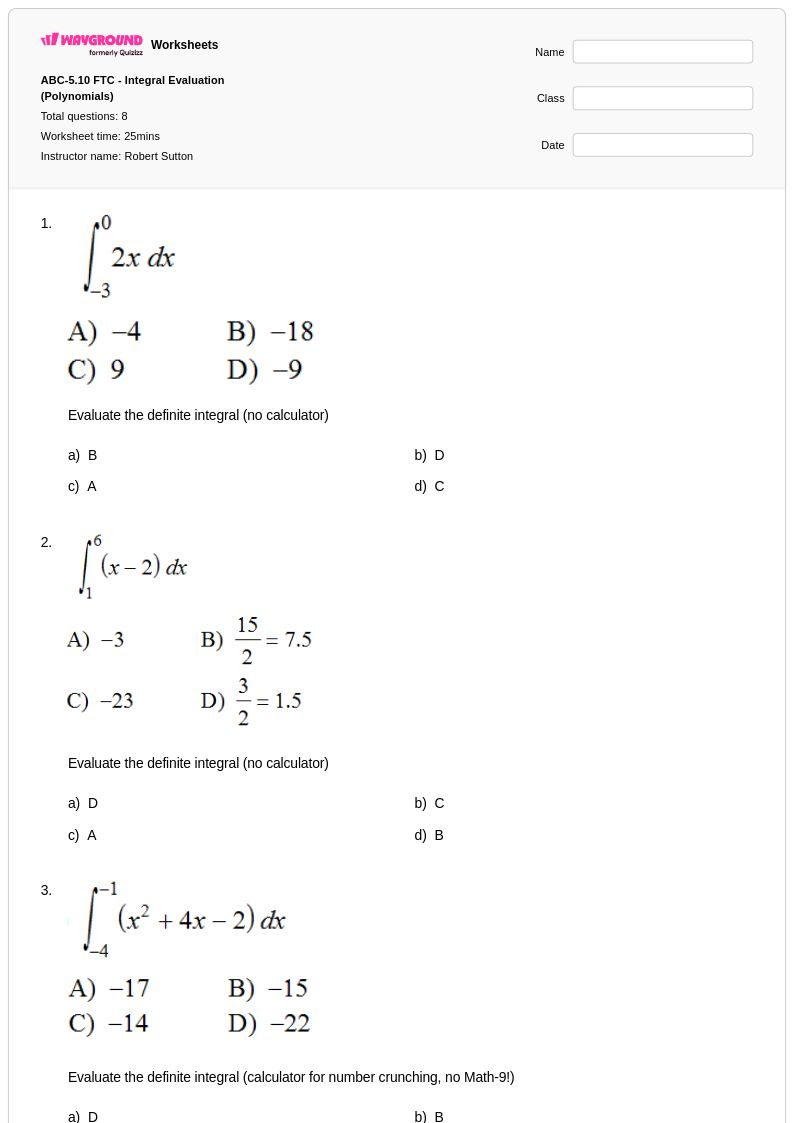
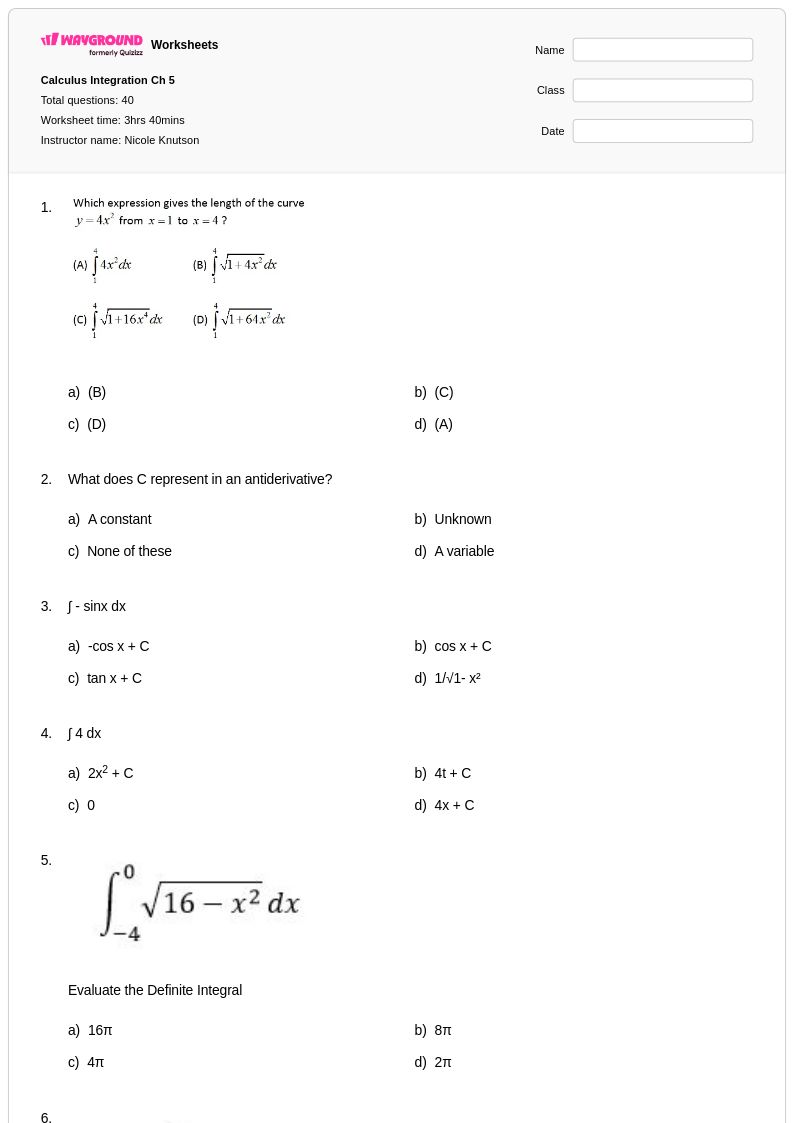
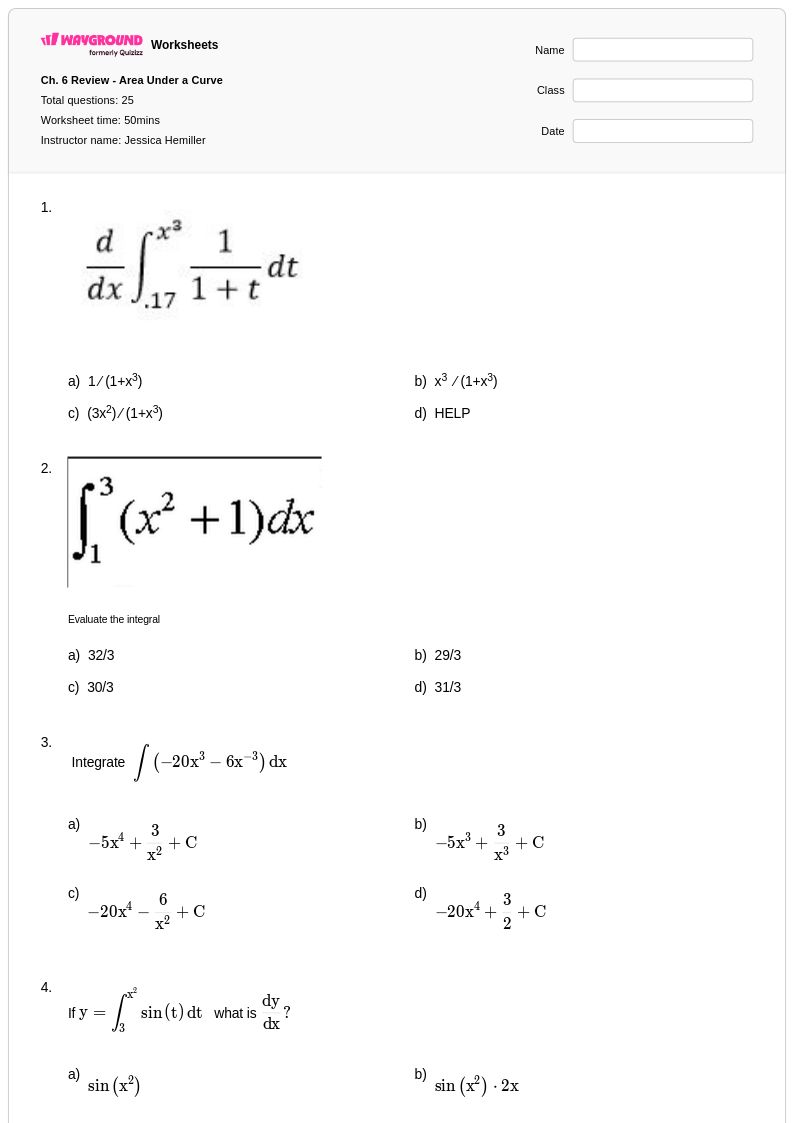
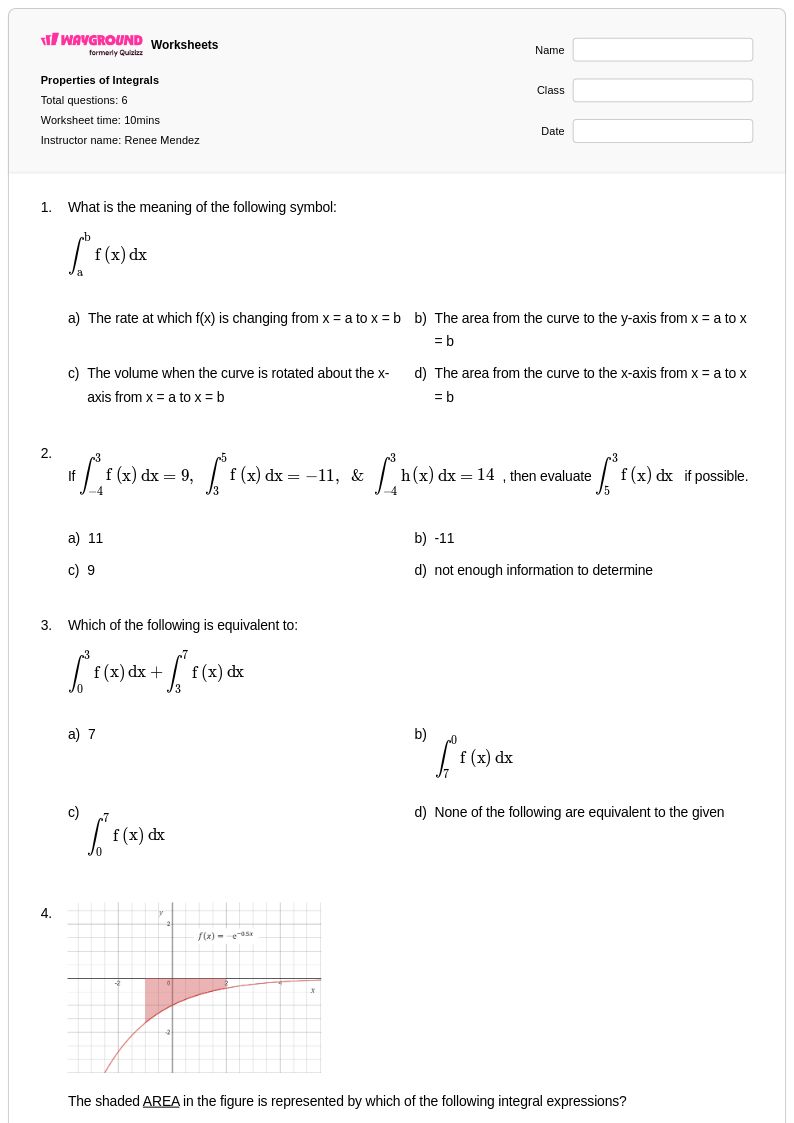
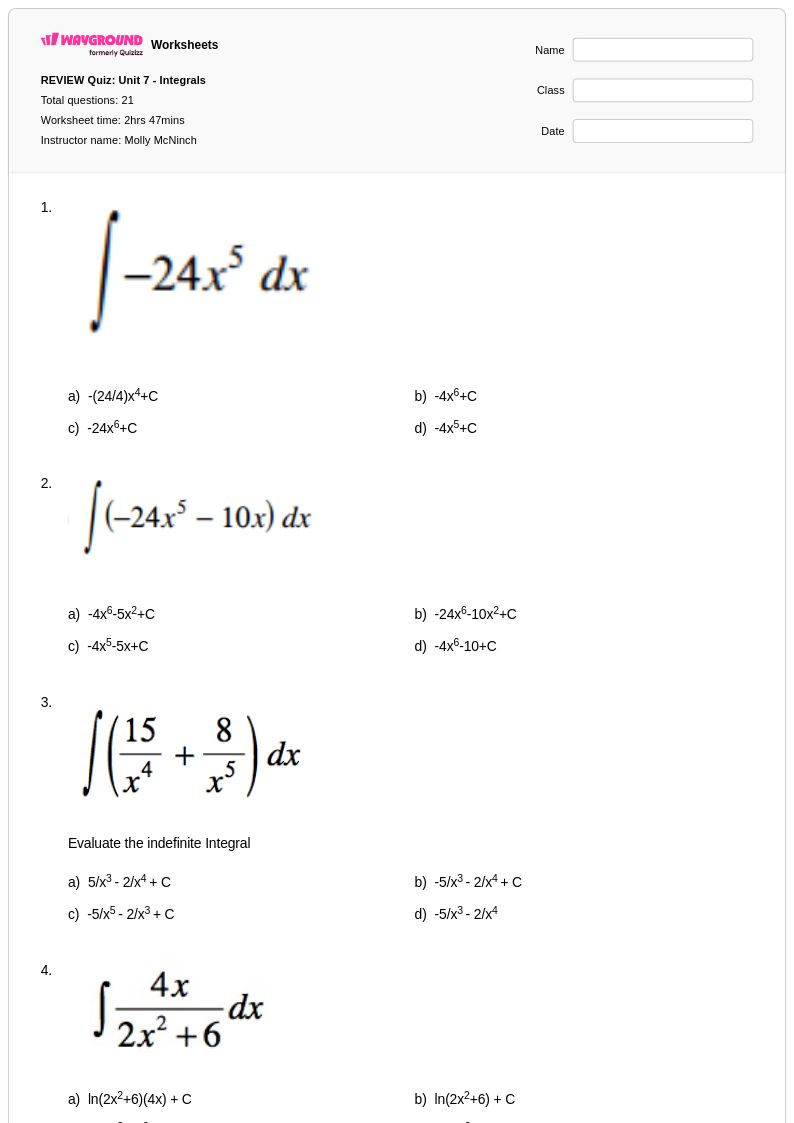
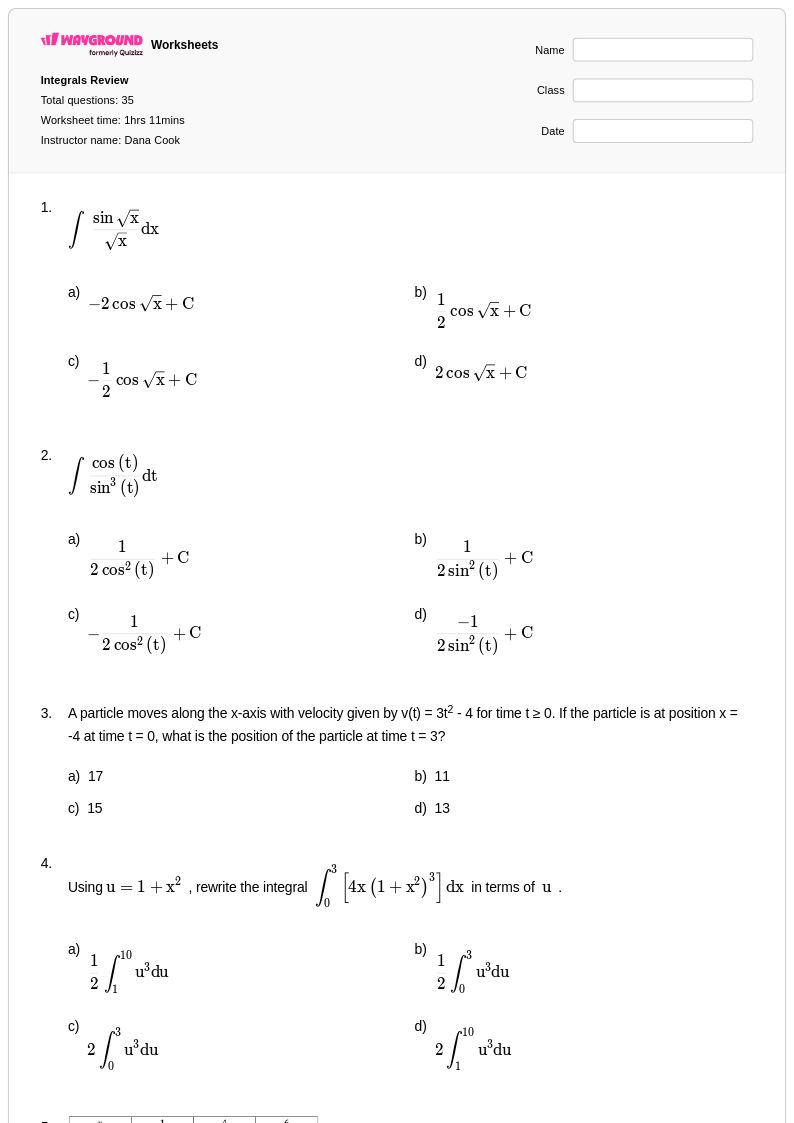
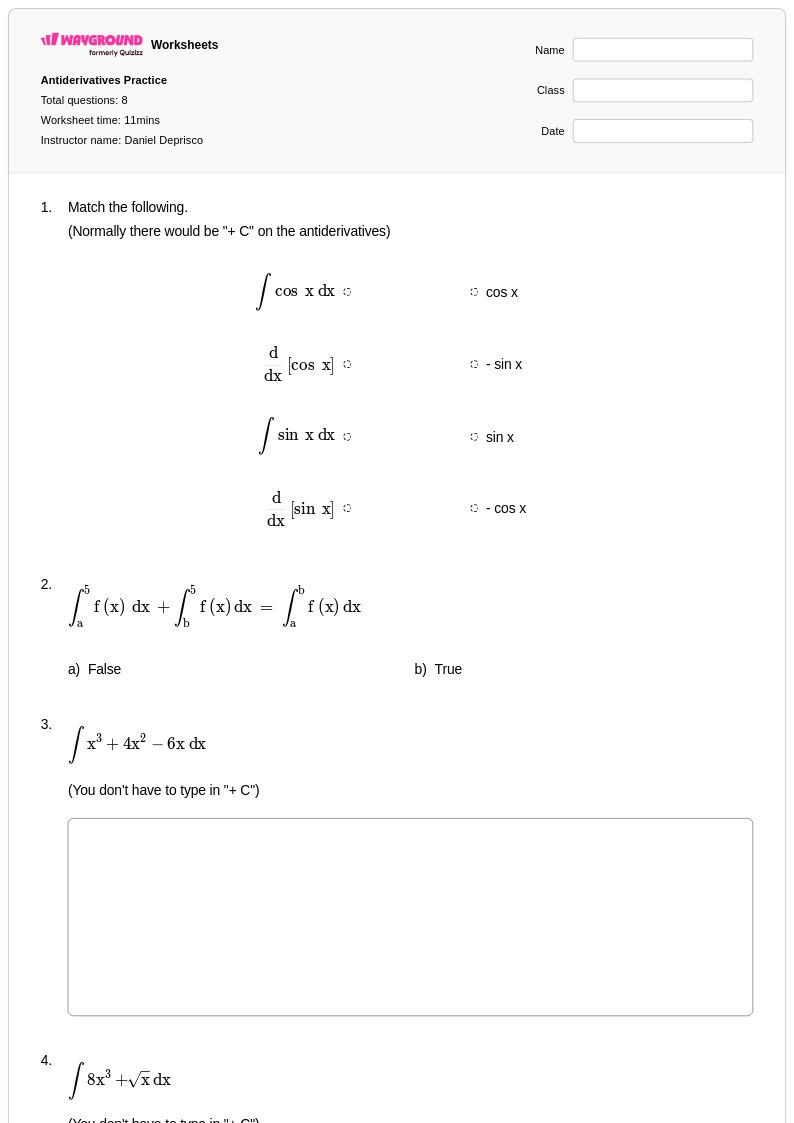
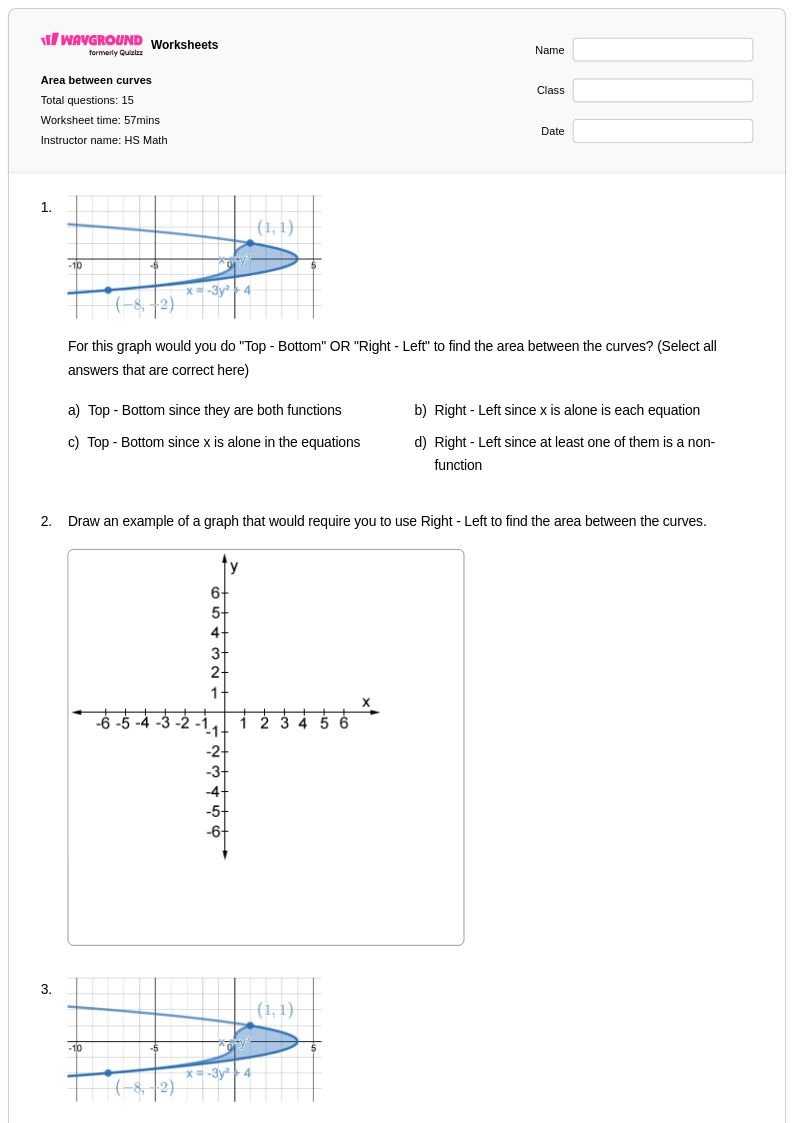
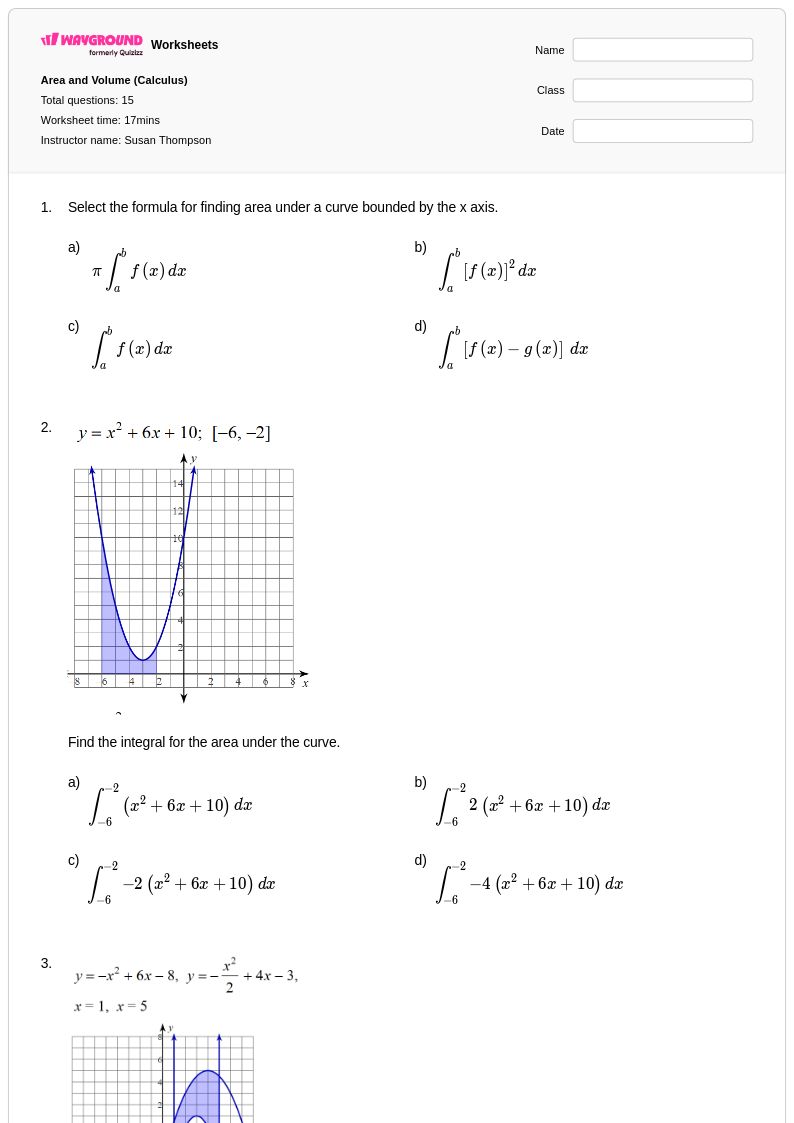
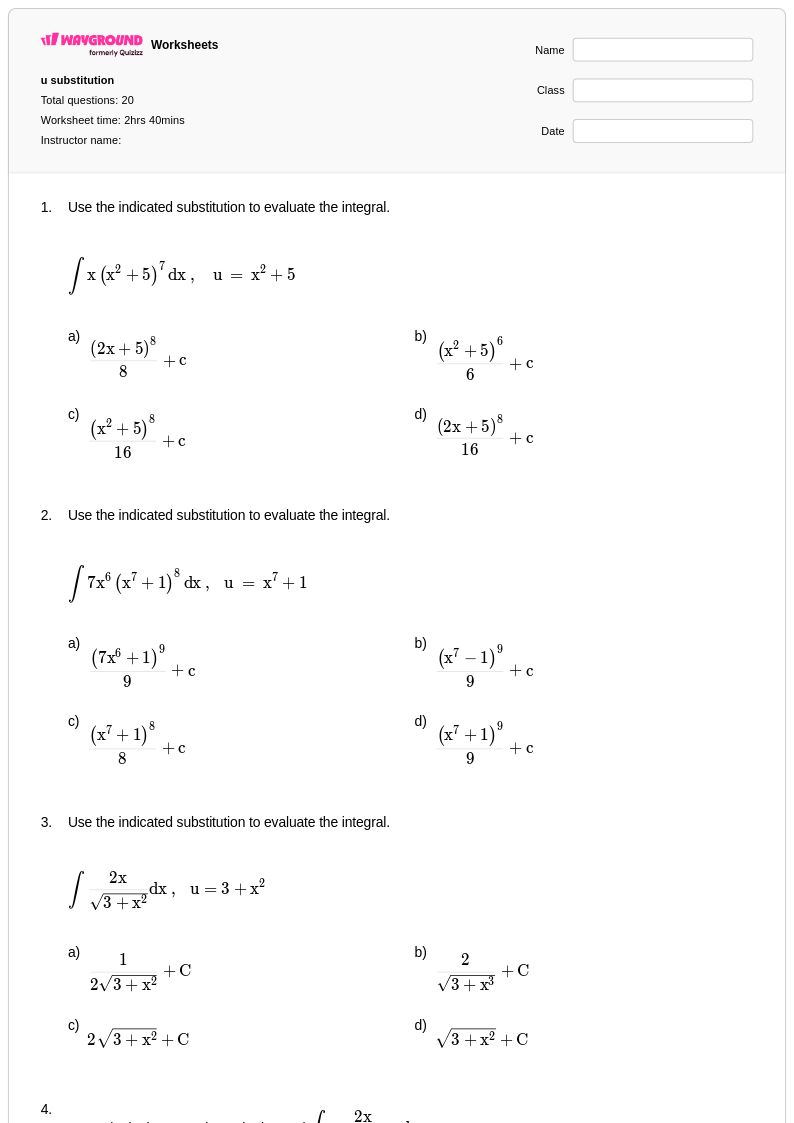
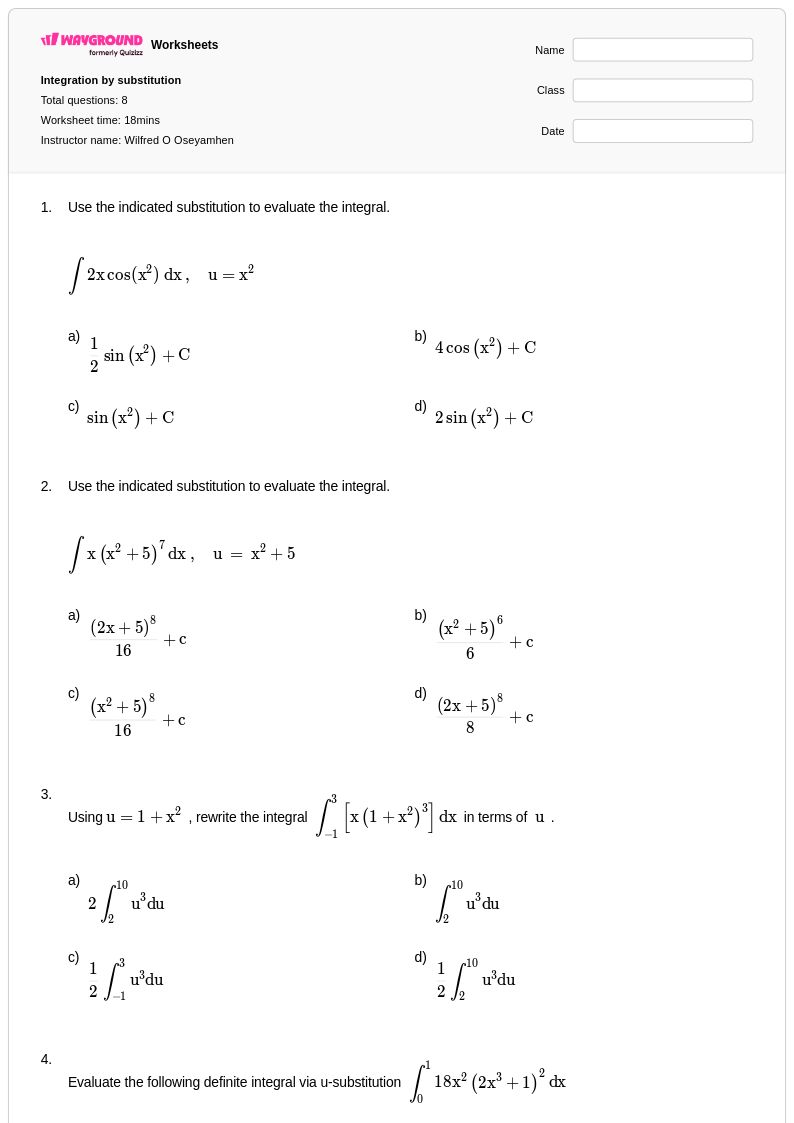
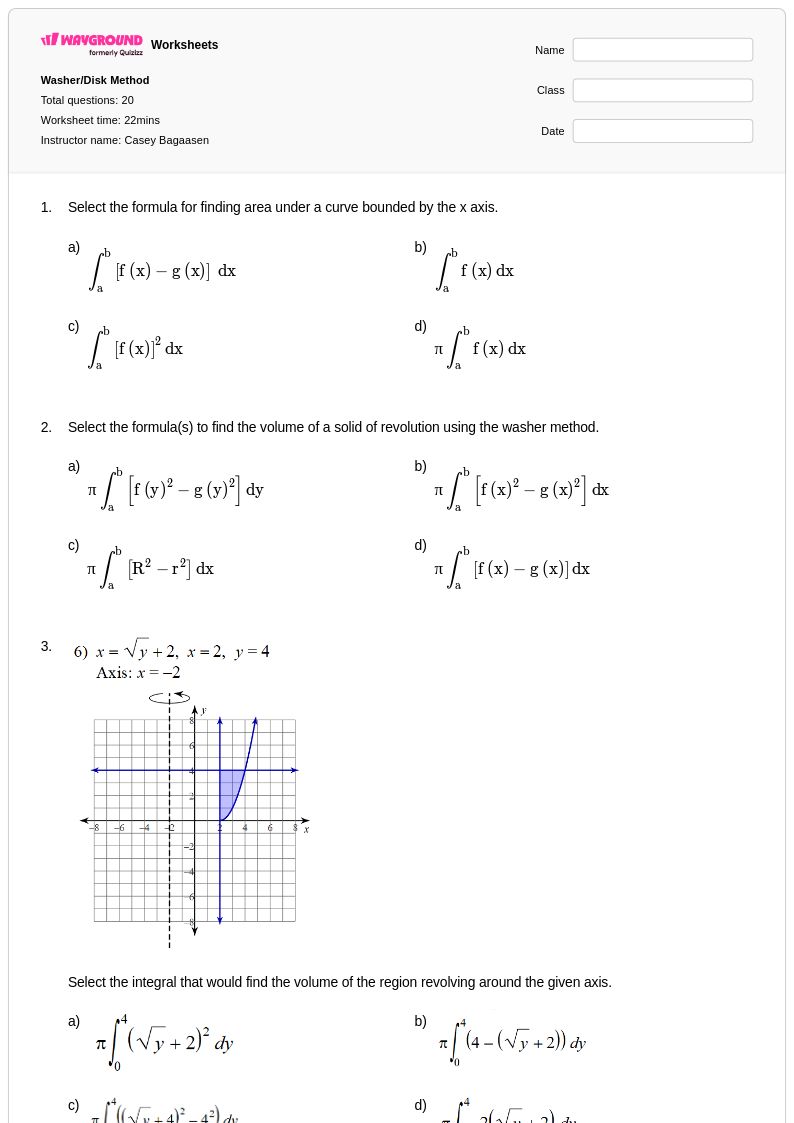
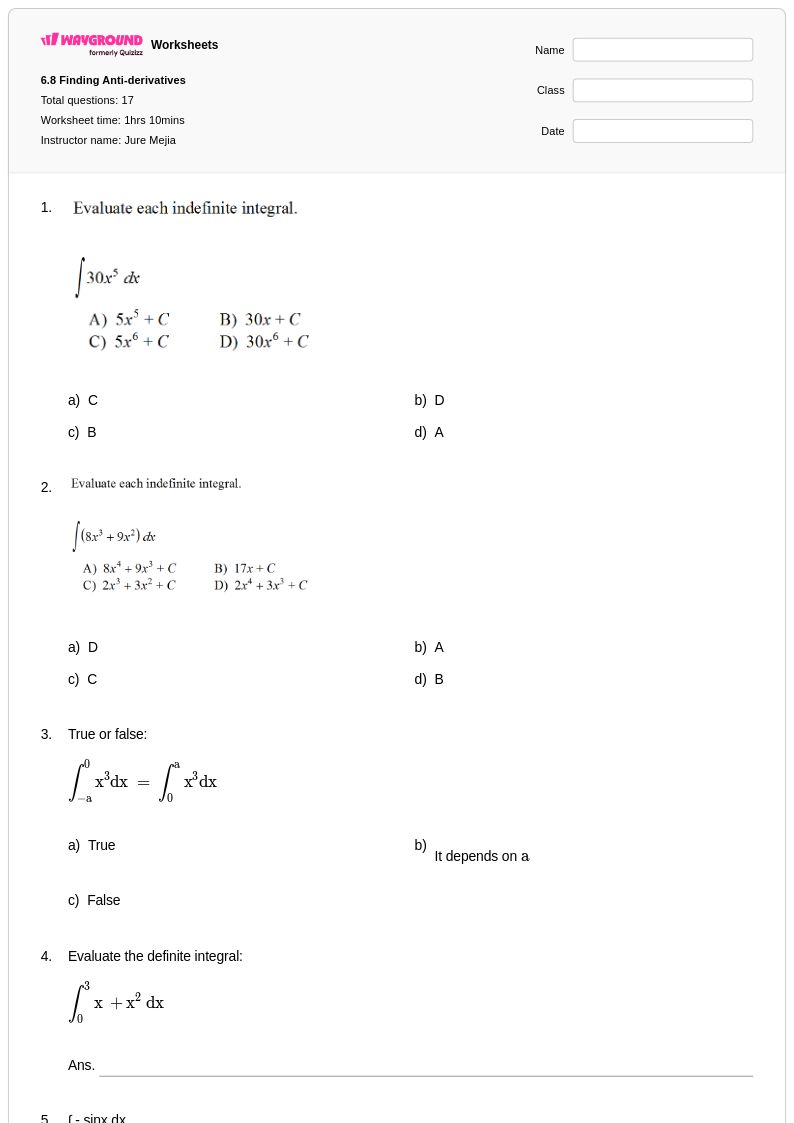
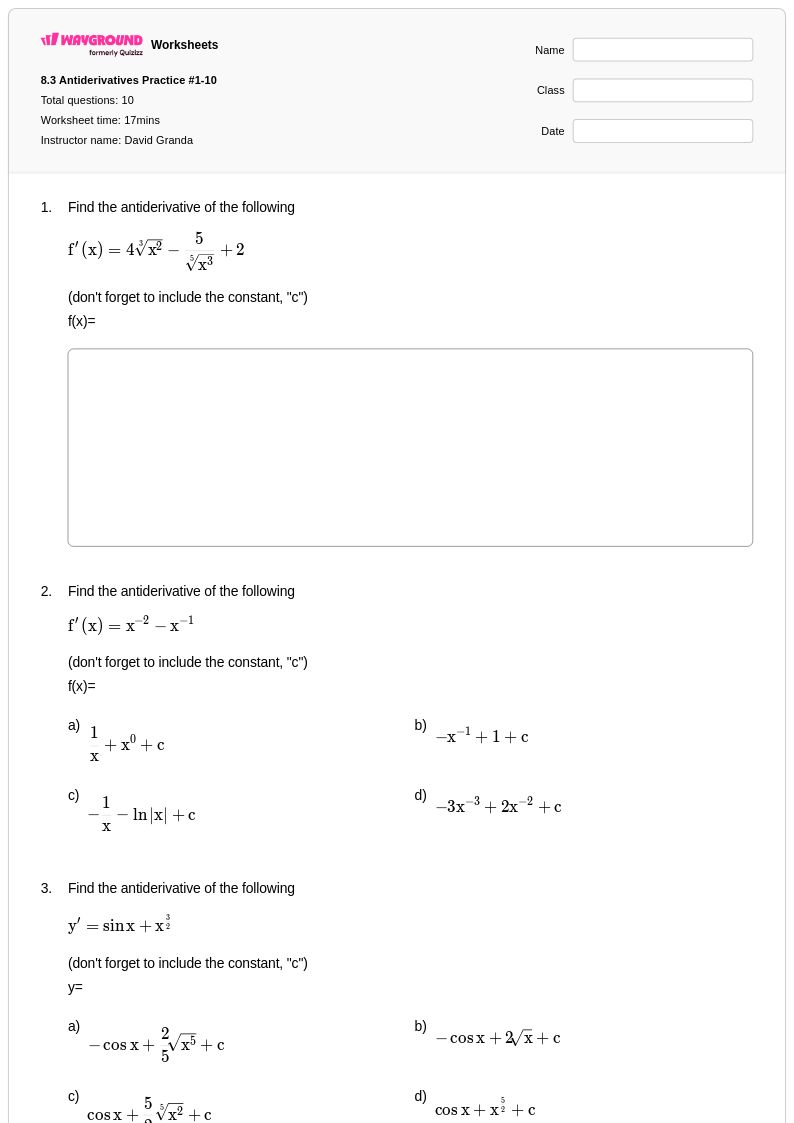
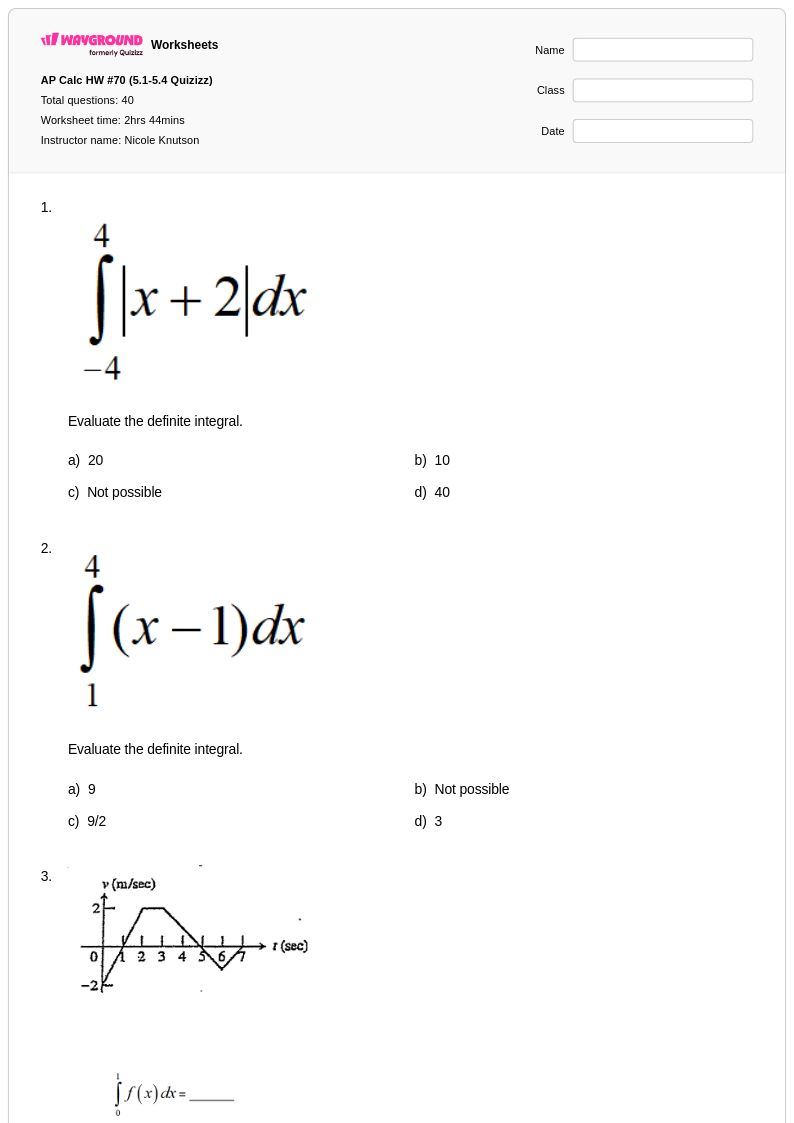
Definite integral worksheets for Year 9 mathematics provide essential foundational practice for students beginning their journey into advanced calculus concepts. These comprehensive worksheets available through Wayground (formerly Quizizz) focus on helping students master the fundamental principles of definite integrals, including understanding the relationship between area under curves and accumulated change, evaluating basic definite integrals using geometric interpretations, and applying the fundamental theorem of calculus in simplified contexts. Each worksheet collection includes detailed answer keys that allow students to verify their work and identify areas for improvement, while free printables ensure accessibility for all learners. The practice problems systematically build from simple geometric interpretations of definite integrals to more complex applications, strengthening students' analytical thinking and problem-solving abilities as they prepare for more advanced calculus topics in higher grade levels.
Wayground (formerly Quizizz) empowers educators with millions of teacher-created definite integral resources specifically designed to support Year 9 mathematics instruction and individual student needs. The platform's robust search and filtering capabilities enable teachers to quickly locate worksheets that align with specific curriculum standards and learning objectives, while built-in differentiation tools allow for seamless customization to accommodate varying skill levels within the classroom. Teachers can access these resources in both printable pdf formats for traditional paper-based learning and digital formats for interactive online practice, providing maximum flexibility for diverse teaching environments. These comprehensive worksheet collections serve as invaluable tools for lesson planning, targeted remediation for struggling students, enrichment activities for advanced learners, and ongoing skill practice that reinforces conceptual understanding of definite integrals throughout the academic year.
FAQs
Should Grade 9 students be learning definite integrals?
For most Grade 9 students, definite integrals are ahead of the standard curriculum — typical 9th grade math covers algebra, linear functions, and introductory geometry. However, students in accelerated or pre-AP tracks who have already worked through precalculus may encounter early calculus concepts, including geometric interpretations of area under a curve as a precursor to formal integration. If your Grade 9 class is at that level, the focus should stay on intuition and geometric reasoning rather than formal technique.
How do I introduce definite integrals to Grade 9 students?
Lead with area. Before any notation or formulas, have students estimate the area under a curve by counting grid squares or summing rectangles — this builds the intuition that a definite integral is measuring accumulated area. From there, connect it to functions they already know: the area under a constant function is just a rectangle, and the area under a linear function is a trapezoid. Formal notation and the Fundamental Theorem can follow once the geometric picture is solid.
What exercises help Grade 9 students practice definite integrals?
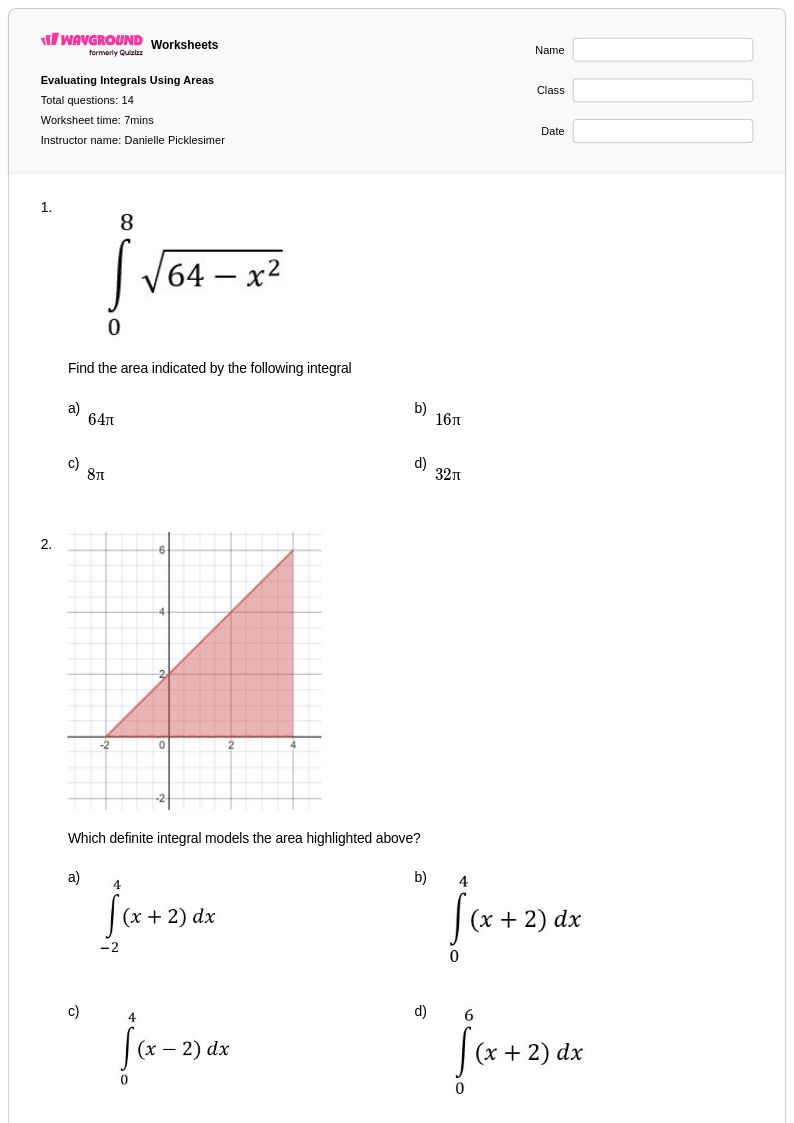
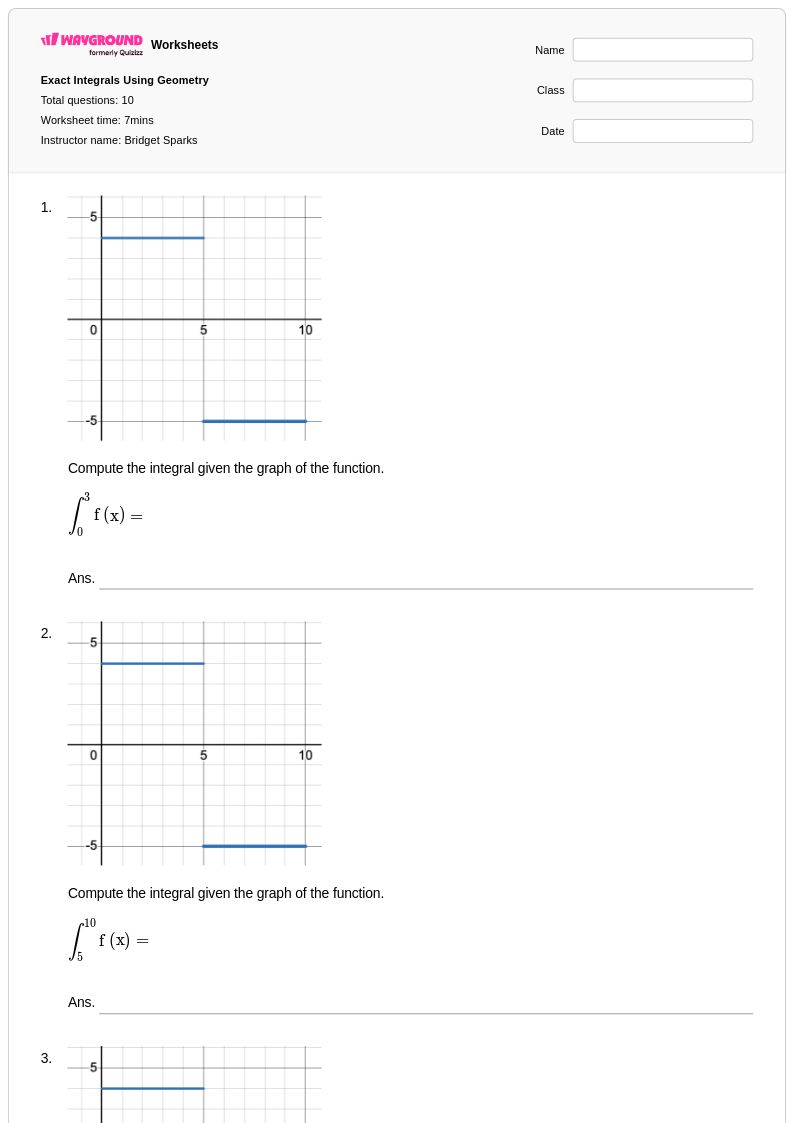
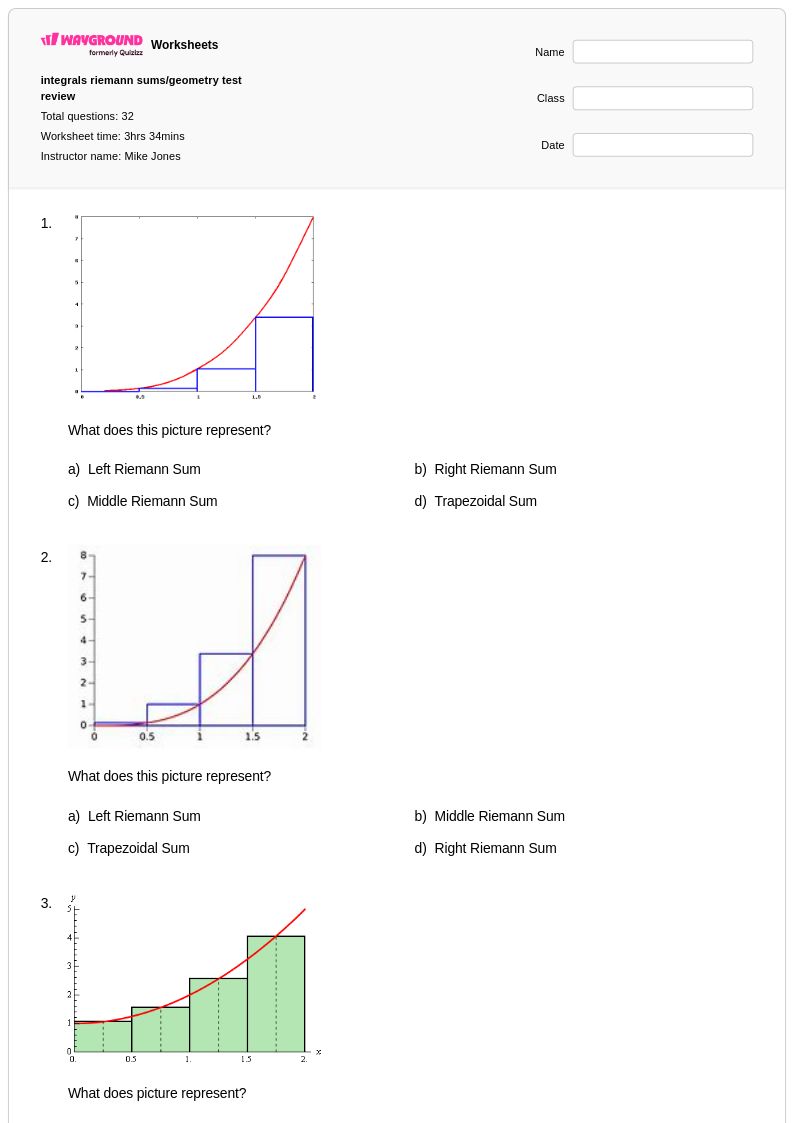
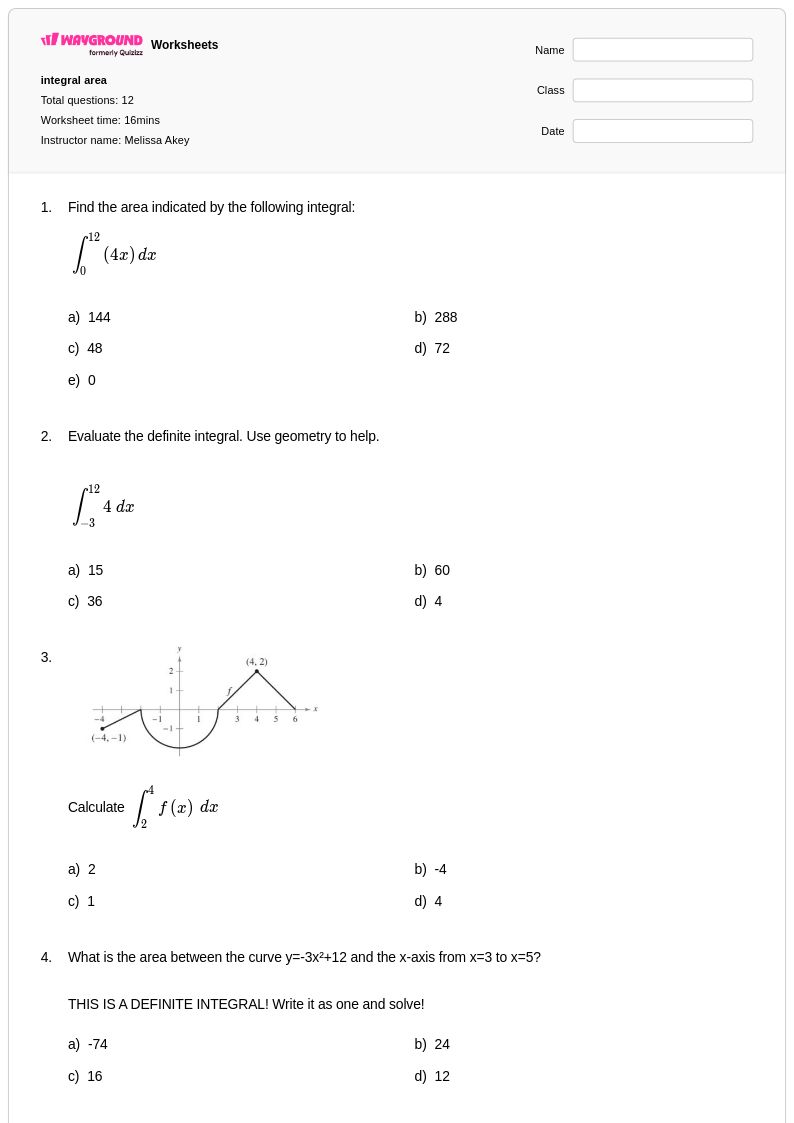
At this level, the most useful practice focuses on geometric interpretation rather than algebraic technique. Problems that ask students to evaluate definite integrals using area formulas for simple shapes (rectangles, triangles, semicircles) build the right foundation. Riemann sum approximations, drawing rectangles under a curve and summing their areas, are also valuable because they make the connection between discrete sums and continuous integration concrete before any formal rules are introduced.
What misconceptions do Grade 9 students have about definite integrals?
The most common one is treating the definite integral as just another algebraic operation rather than a measurement of accumulated area. Students at this level often don't distinguish between the integral sign as notation and what it actually represents geometrically. A related issue: students assume the integral is always positive, not realizing that area below the x-axis contributes negatively to the signed area — this trips up even strong students when they first encounter it.
How do I use Wayground's Grade 9 definite integral worksheets?
The worksheets come with complete answer keys, which makes them practical for independent practice or homework without extra prep on your end. You can host them as digital quizzes on Wayground for immediate student feedback, or print the PDFs for paper-based work — useful if you're managing screen time in your classroom. Either way, the content and answer key are the same.
How can I support Grade 9 students who struggle with the abstract notation in definite integrals?
The Read Aloud accommodation on Wayground can help students who get tripped up parsing integral notation in written problems — hearing the question read aloud reduces the cognitive load of decoding unfamiliar symbols. For students who need more visual clarity, adjusting font size or applying wider spacing on the worksheet makes the notation less visually crowded, which matters when students are seeing integral signs and bounds for the first time.