Free Printable Dental Hygiene Worksheets for Year 2
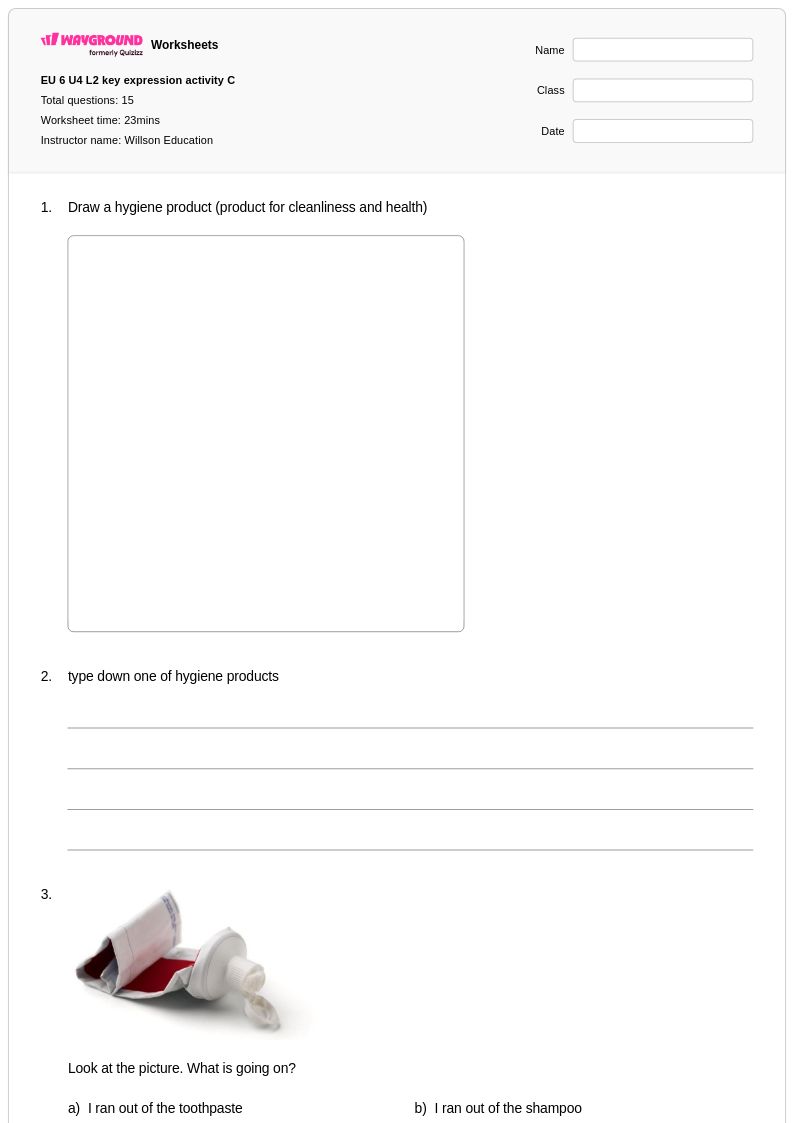
Year 2 dental hygiene worksheets from Wayground help students learn proper tooth care through engaging printables and practice problems, complete with answer keys for effective learning.
Explore printable Dental Hygiene worksheets for Year 2
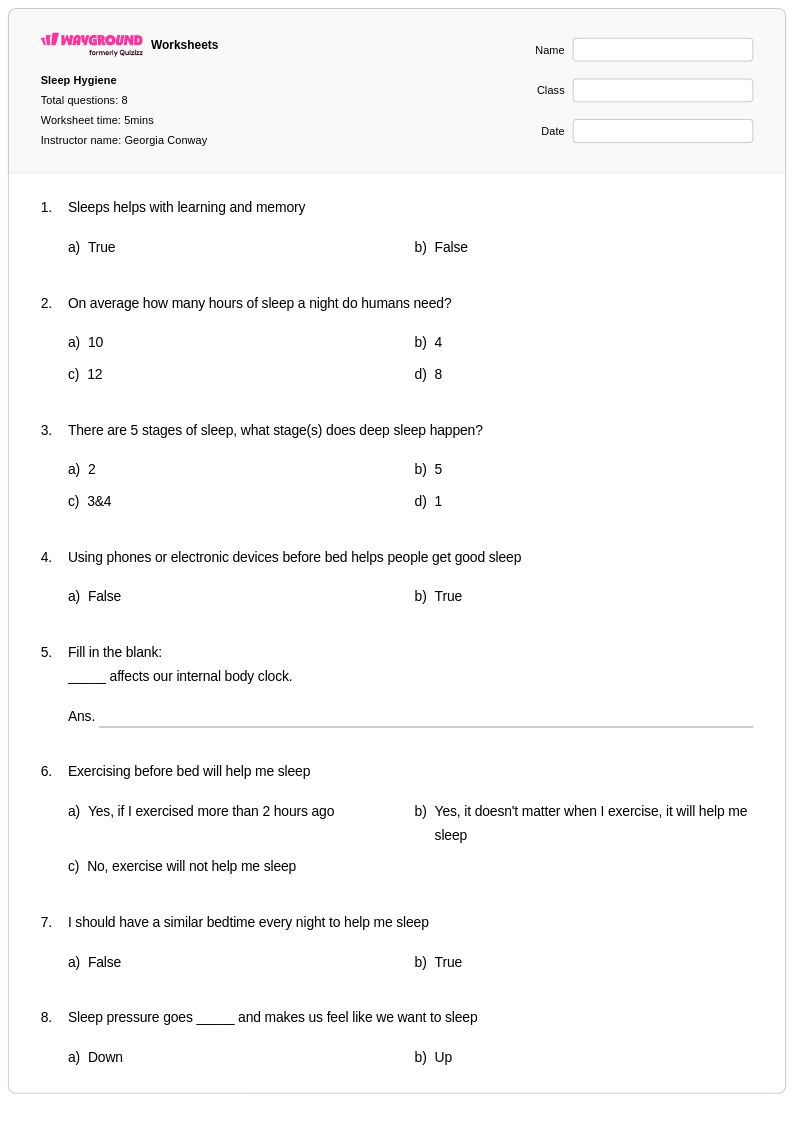
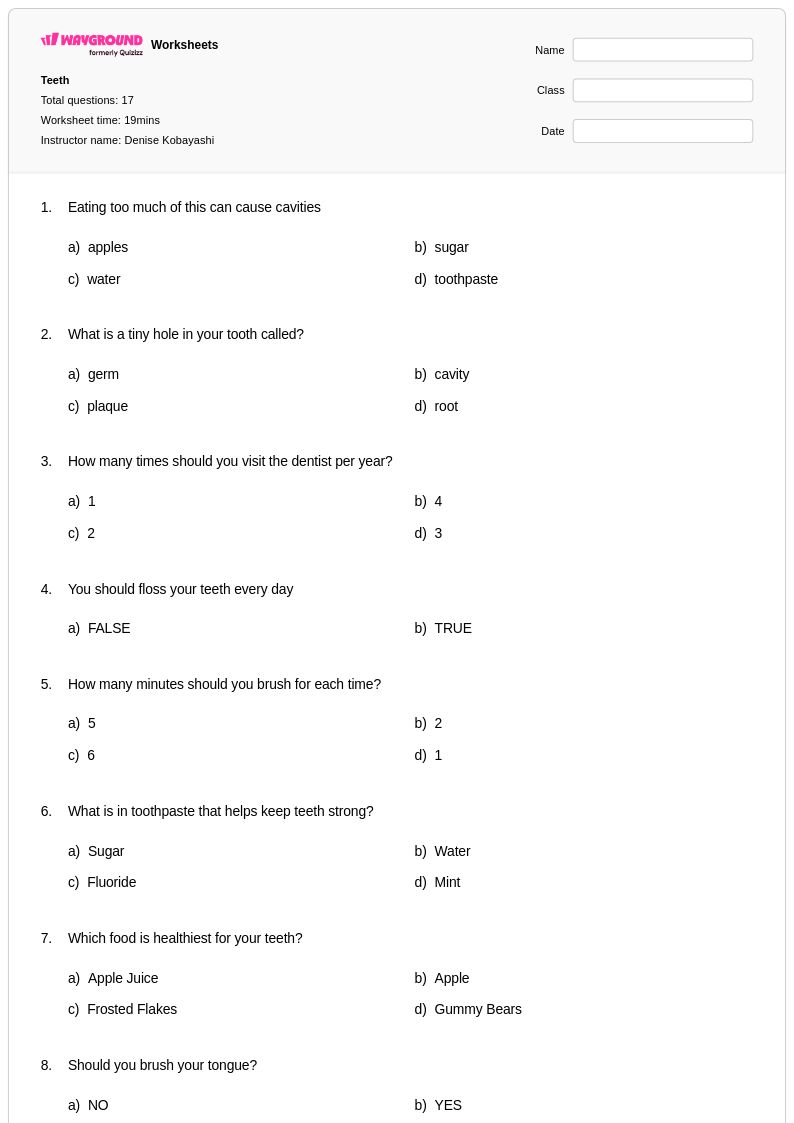
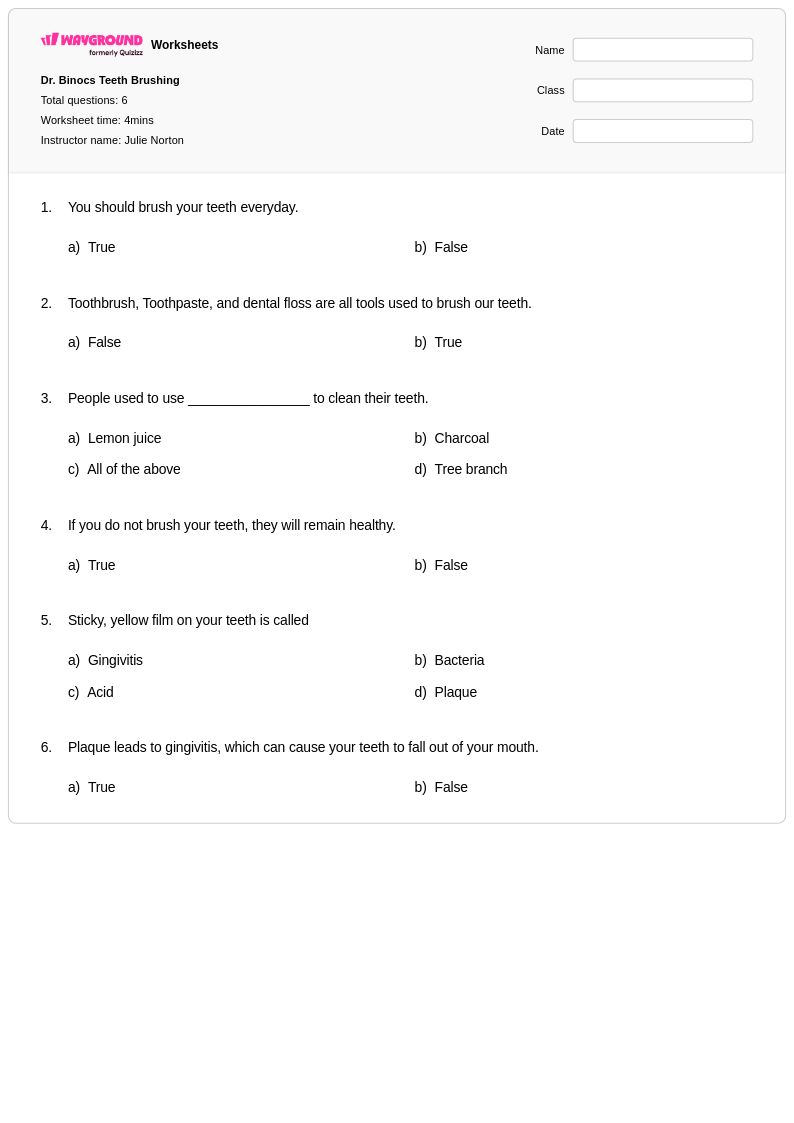
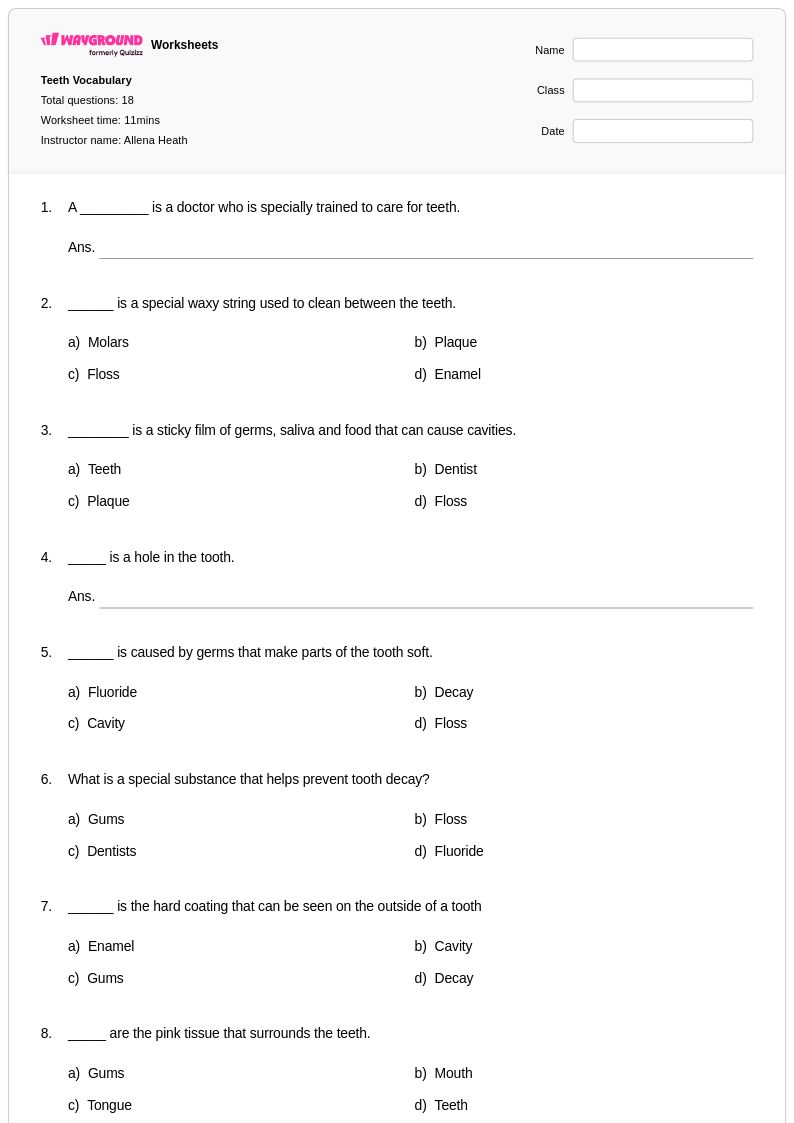
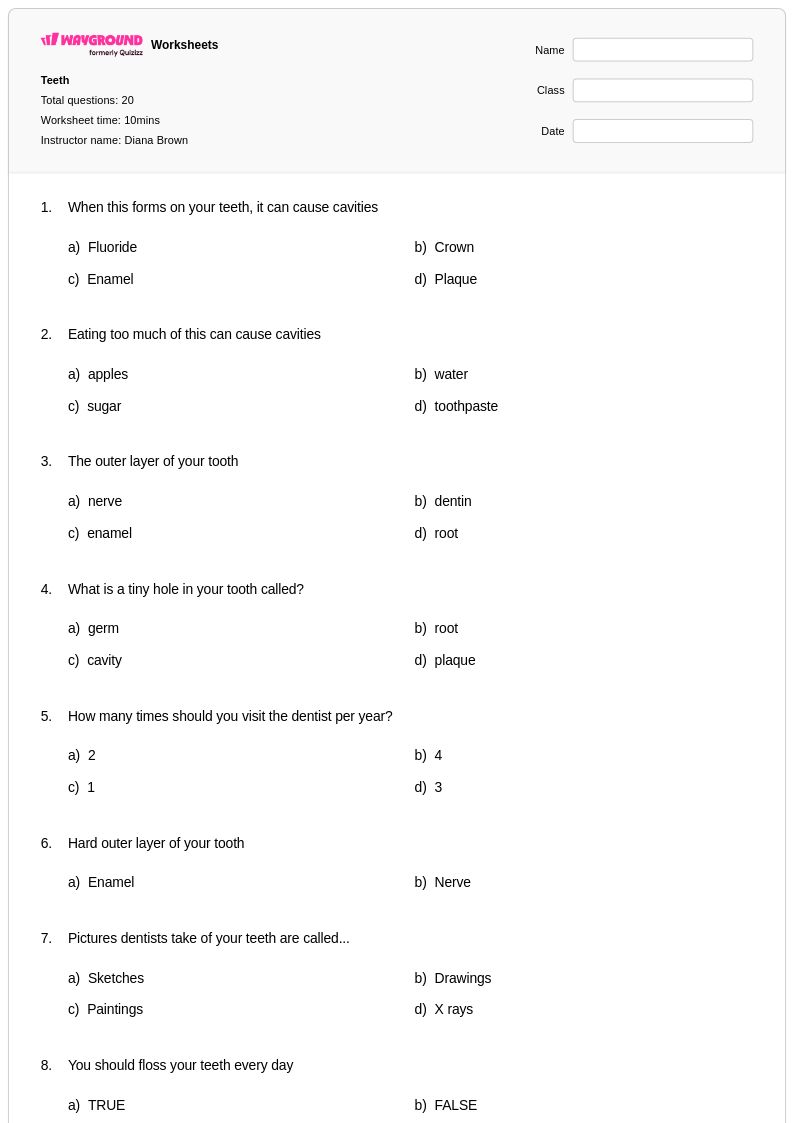
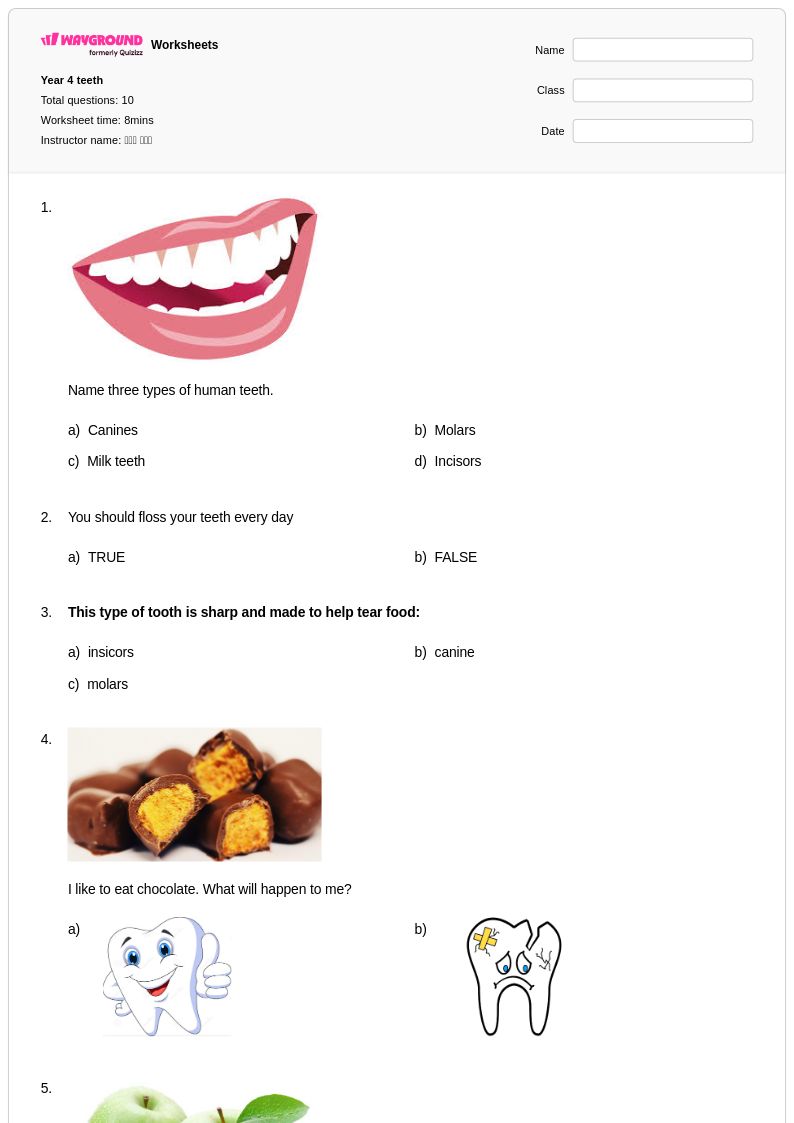
Dental hygiene worksheets for Year 2 students through Wayground (formerly Quizizz) provide essential educational resources that teach young learners proper oral care habits and the importance of maintaining healthy teeth and gums. These carefully designed printables focus on fundamental concepts such as brushing techniques, the role of fluoride, identifying healthy versus unhealthy foods for teeth, and understanding the consequences of poor dental care. Each worksheet incorporates age-appropriate activities including coloring exercises, matching games, and simple practice problems that reinforce key dental health concepts while keeping second-grade students engaged. Teachers can access comprehensive answer keys and free pdf downloads that make lesson planning efficient and ensure consistent instruction across different learning environments.
Wayground's extensive collection of dental hygiene resources draws from millions of teacher-created materials specifically curated for elementary physical education and health curricula. The platform's robust search and filtering capabilities allow educators to quickly locate worksheets that align with state health standards and accommodate diverse learning needs through built-in differentiation tools. Teachers can customize content difficulty levels, modify existing worksheets, or combine multiple resources to create comprehensive dental hygiene units suitable for whole-class instruction, small group work, or individual practice sessions. These versatile materials are available in both printable and digital formats, enabling seamless integration into traditional classroom settings, hybrid learning environments, or remote instruction while supporting targeted skill practice, remediation for struggling learners, and enrichment opportunities for advanced students.
FAQs
How do I teach dental hygiene to elementary students?
Teaching dental hygiene effectively starts with connecting oral care habits to tangible health outcomes students can understand, such as explaining how plaque leads to cavities or how flossing removes bacteria that brushing misses. Use visual diagrams of tooth anatomy alongside step-by-step brushing and flossing demonstrations to make abstract concepts concrete. Incorporating real-world scenarios, such as evaluating which foods are harmful to teeth, helps students apply principles to their daily routines rather than treating dental hygiene as an isolated lesson.
What topics should a dental hygiene worksheet cover?
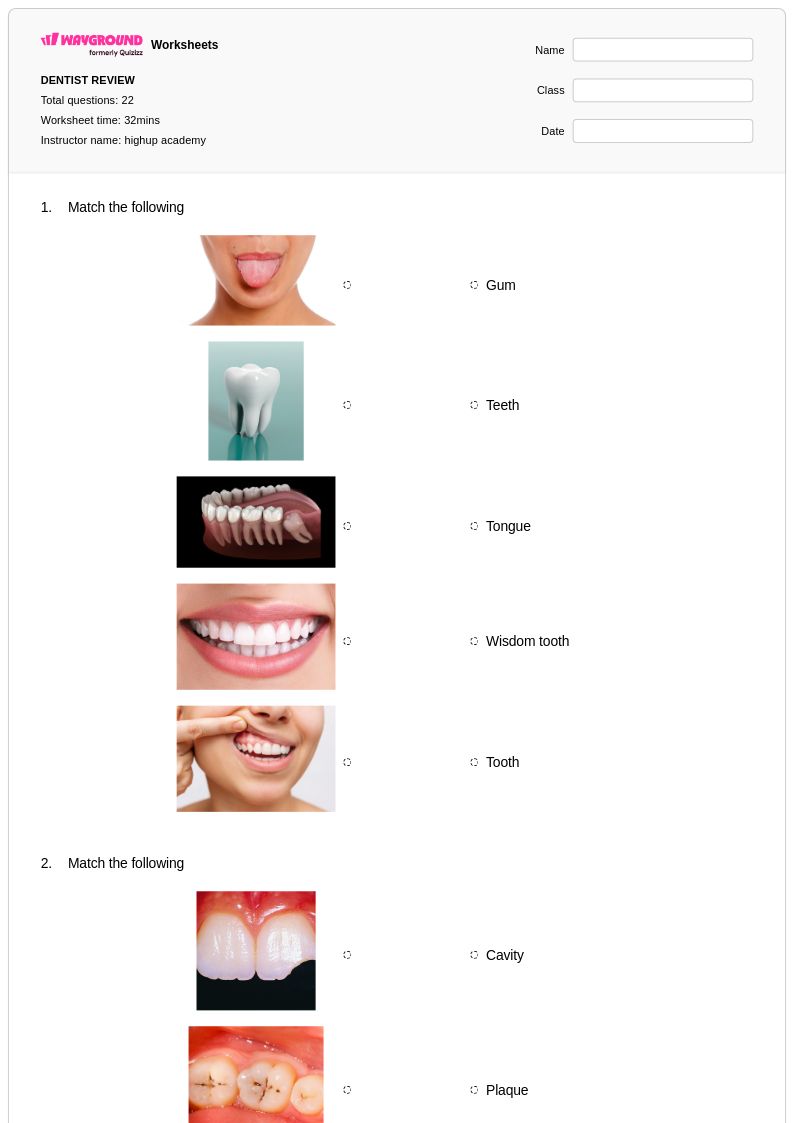
A well-rounded dental hygiene worksheet should cover proper brushing and flossing techniques, basic tooth anatomy, the role of diet in oral health, and the causes and prevention of common dental problems like cavities and gum disease. Including visual diagrams alongside practice questions helps students connect terminology to real structures and habits. Worksheets that incorporate real-world scenarios, such as identifying cavity-causing foods or sequencing a correct brushing routine, move students beyond memorization into applied understanding.
What mistakes do students commonly make when learning about dental hygiene?
One of the most common misconceptions is that brushing alone is sufficient for oral health, leading students to underestimate the importance of flossing in removing plaque between teeth. Students also frequently confuse the effects of sugar on teeth, not understanding that it is the acid produced by bacteria feeding on sugar that causes enamel erosion rather than sugar acting directly on the tooth. Another frequent error is conflating tooth anatomy terms, such as mixing up enamel, dentin, and pulp, which can be addressed with labeled diagram exercises.
How can I use dental hygiene worksheets in my health class?
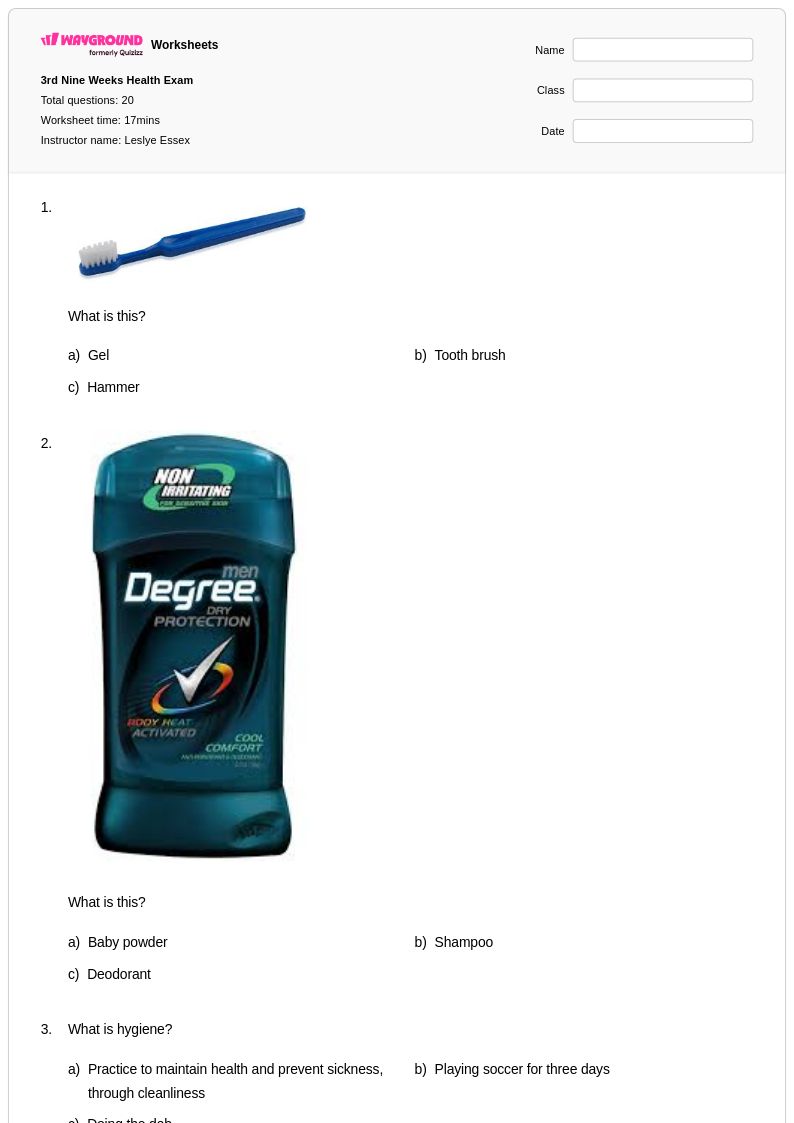
Dental hygiene worksheets on Wayground are available as printable PDFs for traditional classroom distribution and in digital formats for technology-integrated learning environments, making them easy to deploy whether students are working at desks or on devices. Teachers can also host worksheets as a quiz directly on Wayground, which adds an interactive assessment layer to the lesson. The included answer keys make it straightforward to review responses quickly, whether during a full-class discussion or as individual formative assessments.
How do I differentiate dental hygiene instruction for students at different learning levels?
For students who need additional support, simplifying tasks, such as reducing the number of answer choices on identification questions, helps lower cognitive load while keeping them engaged with the same core content. Wayground's built-in accommodation tools allow teachers to assign features like read aloud, extended time, and reduced answer choices on a per-student basis, so struggling learners receive targeted support without disrupting the rest of the class. Advanced students can be challenged with enrichment tasks such as analyzing the nutritional content of common foods and assessing their impact on oral health.
How does diet connect to oral health, and how can I teach it effectively?
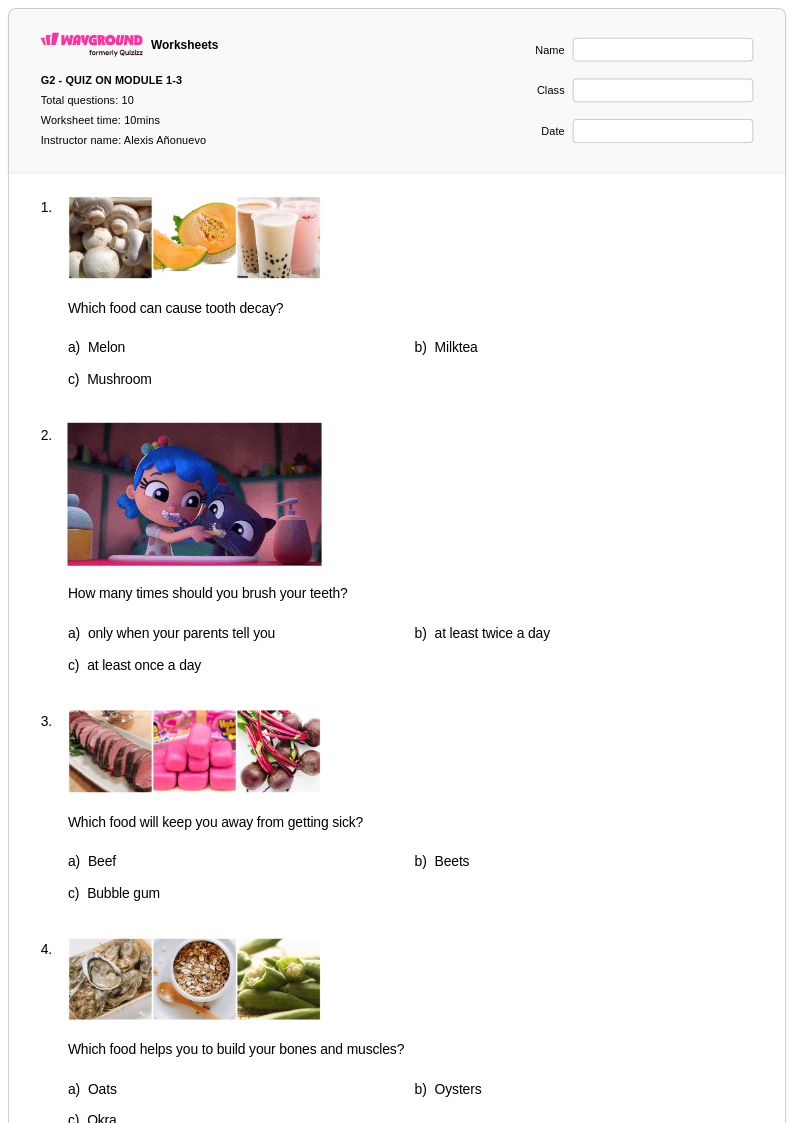
Diet is one of the most direct environmental factors affecting oral health because sugars and fermentable carbohydrates fuel the bacteria that produce enamel-eroding acids. Teaching this connection works well when students evaluate real food examples, categorizing them by their risk to teeth and then linking their choices back to cavity prevention strategies. Worksheets that present real-world dietary scenarios give students a structured way to apply this knowledge rather than simply recalling it on a test.