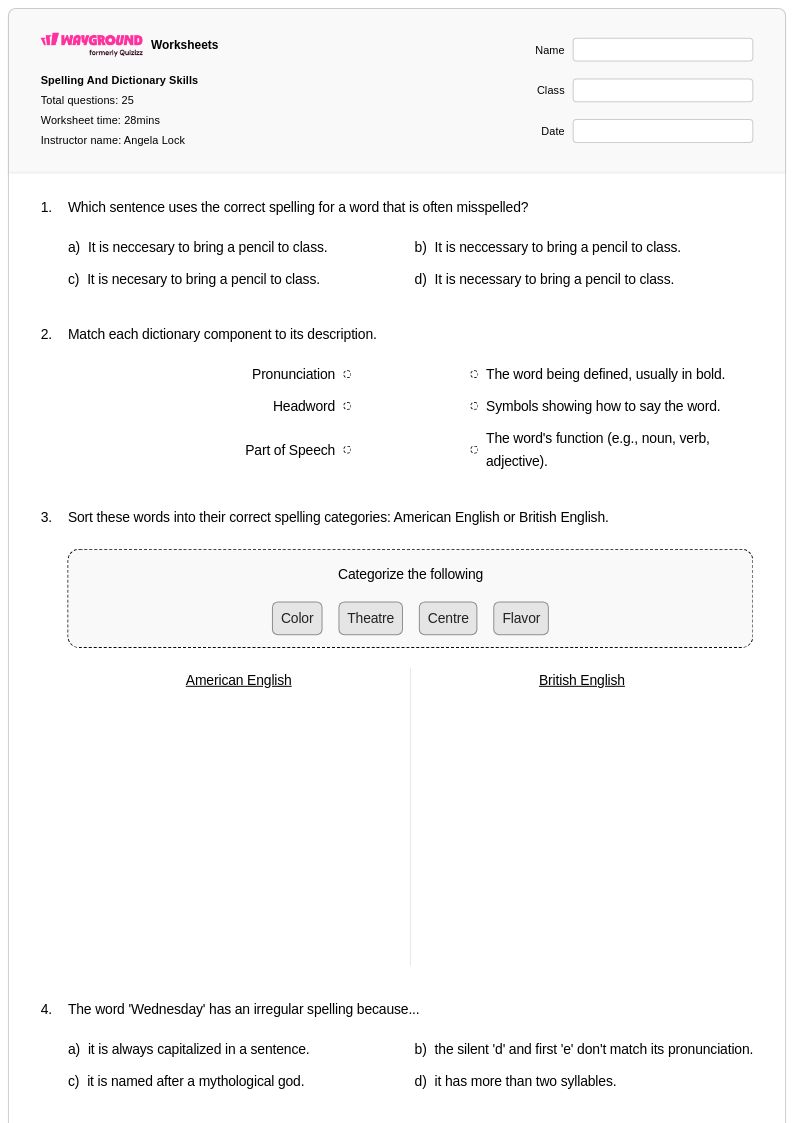
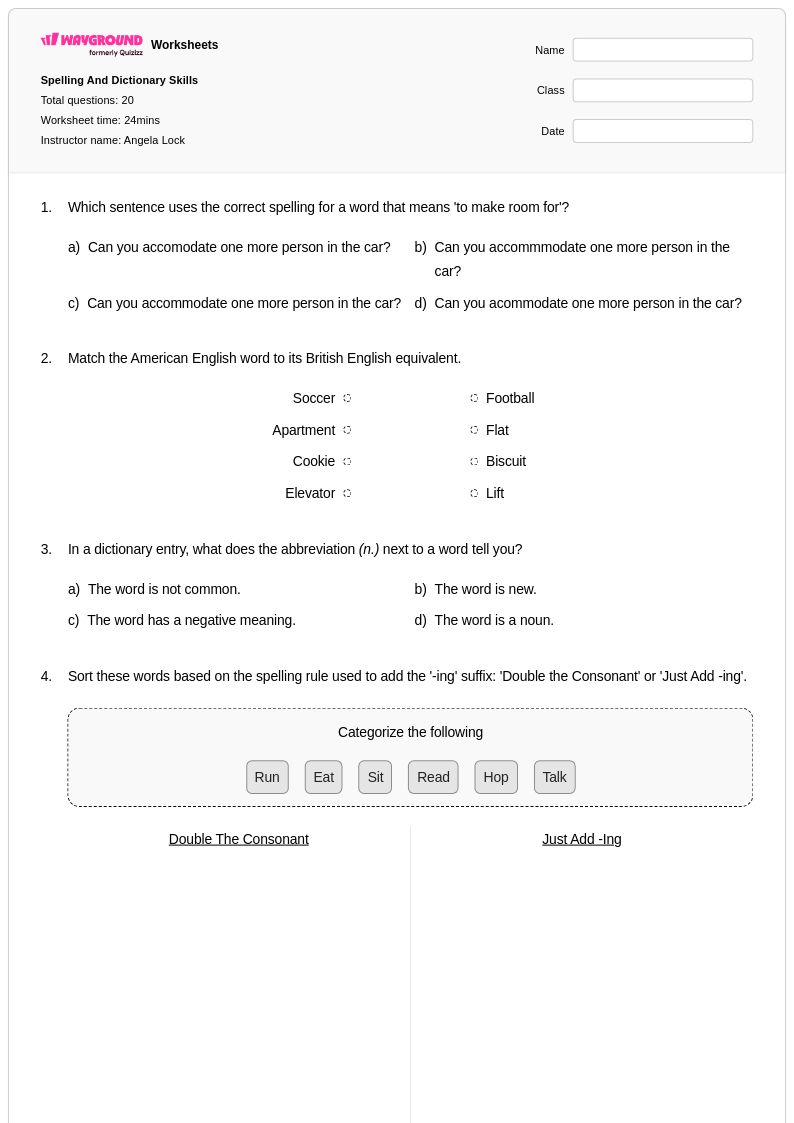
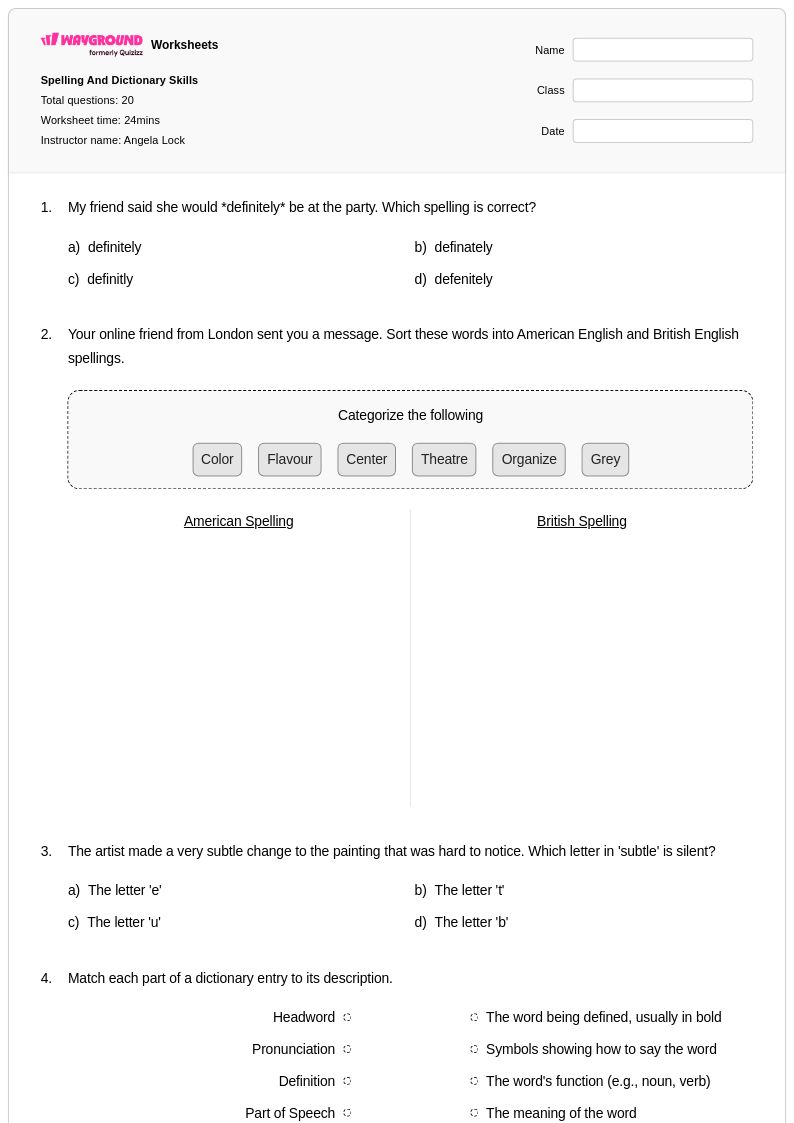
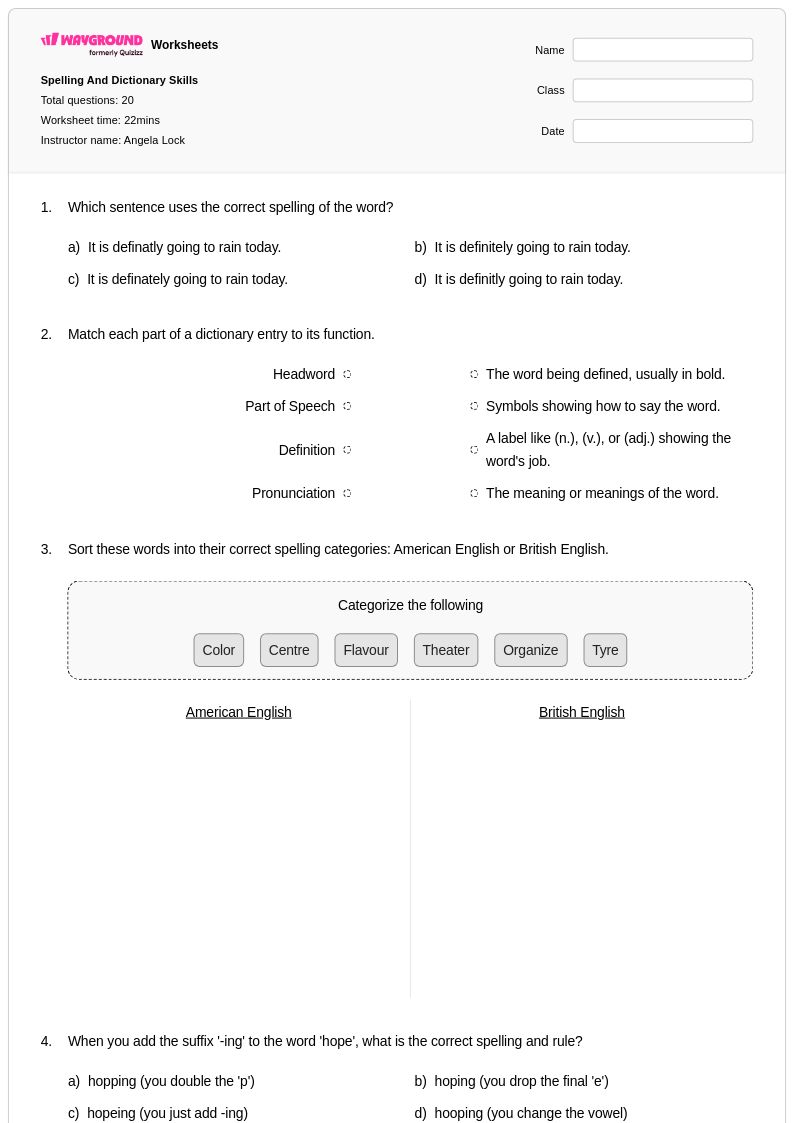
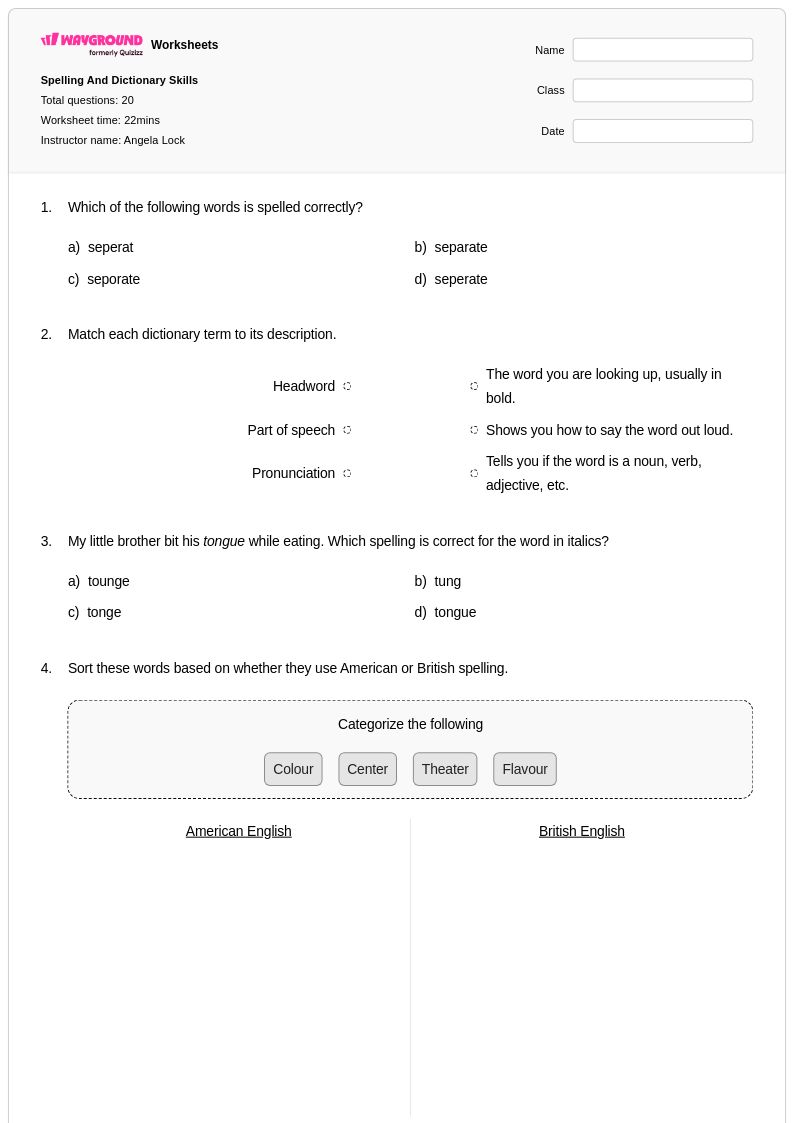
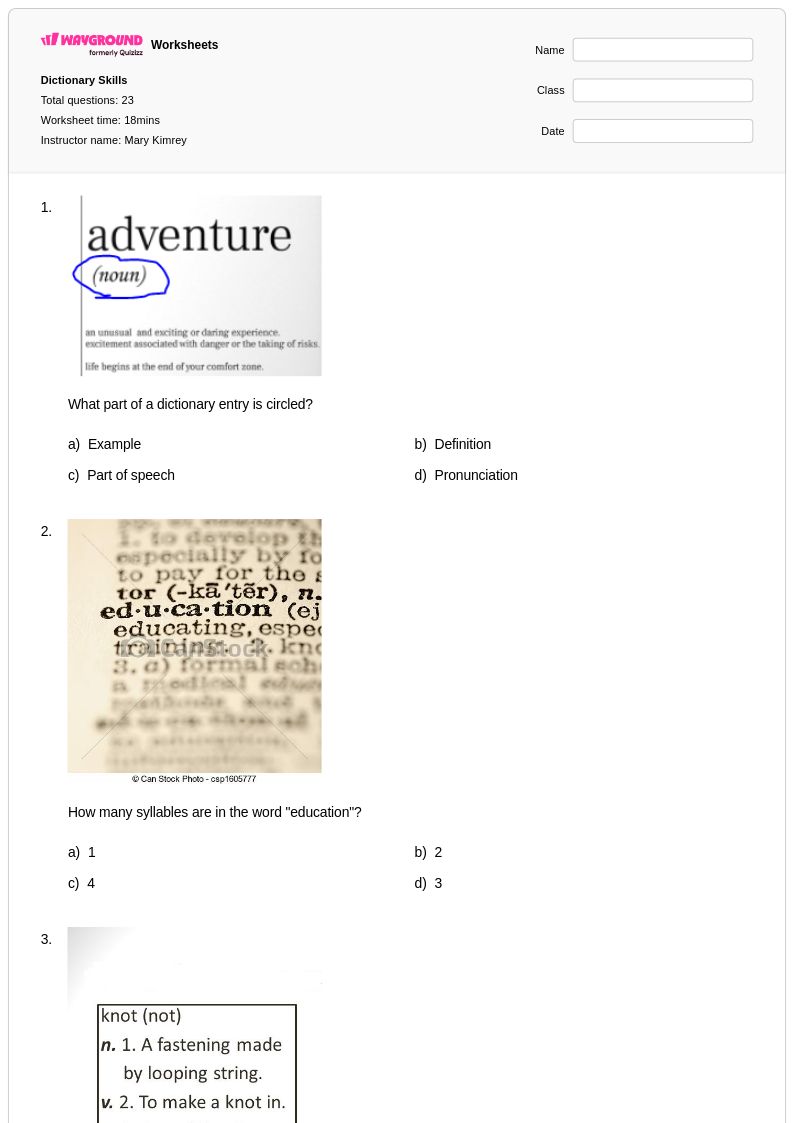
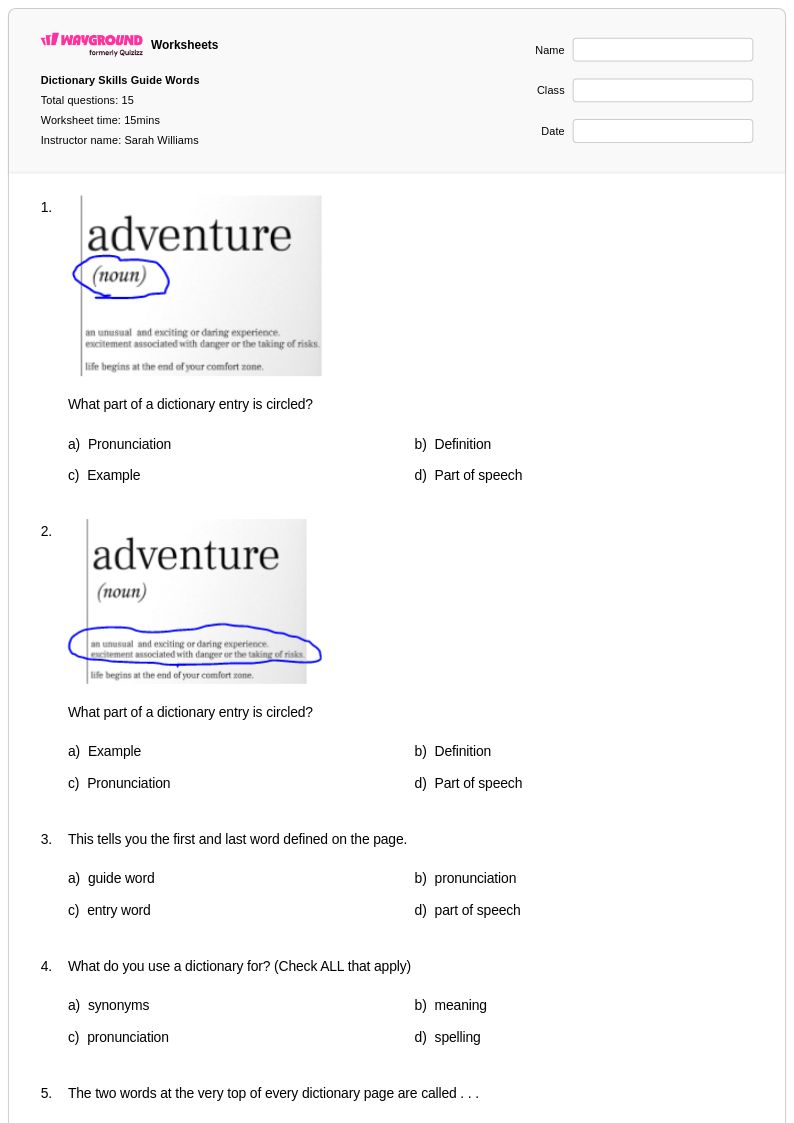
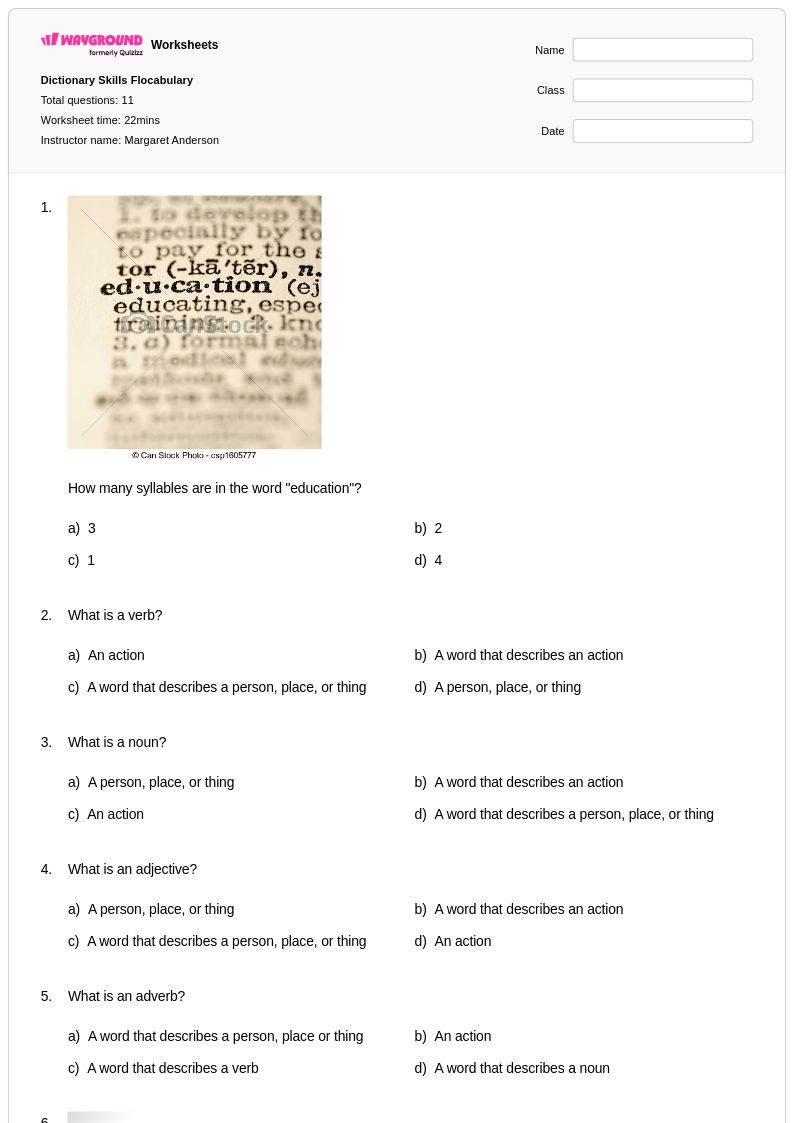
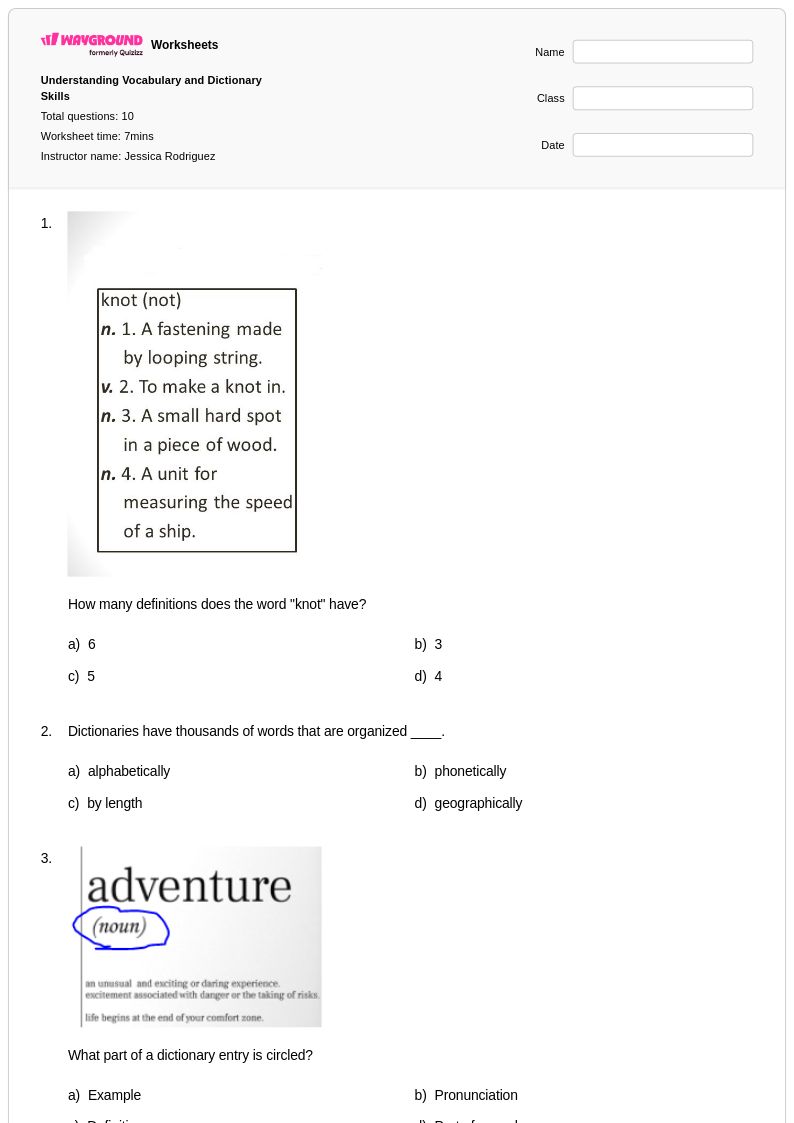
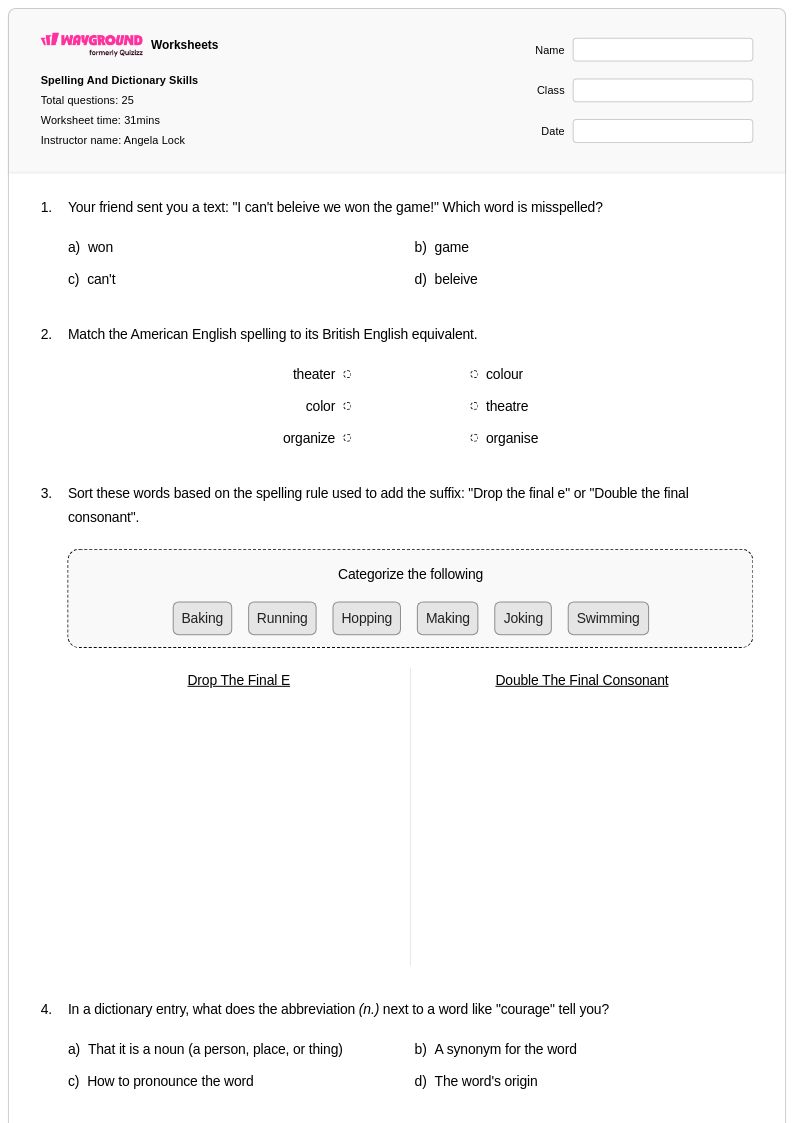
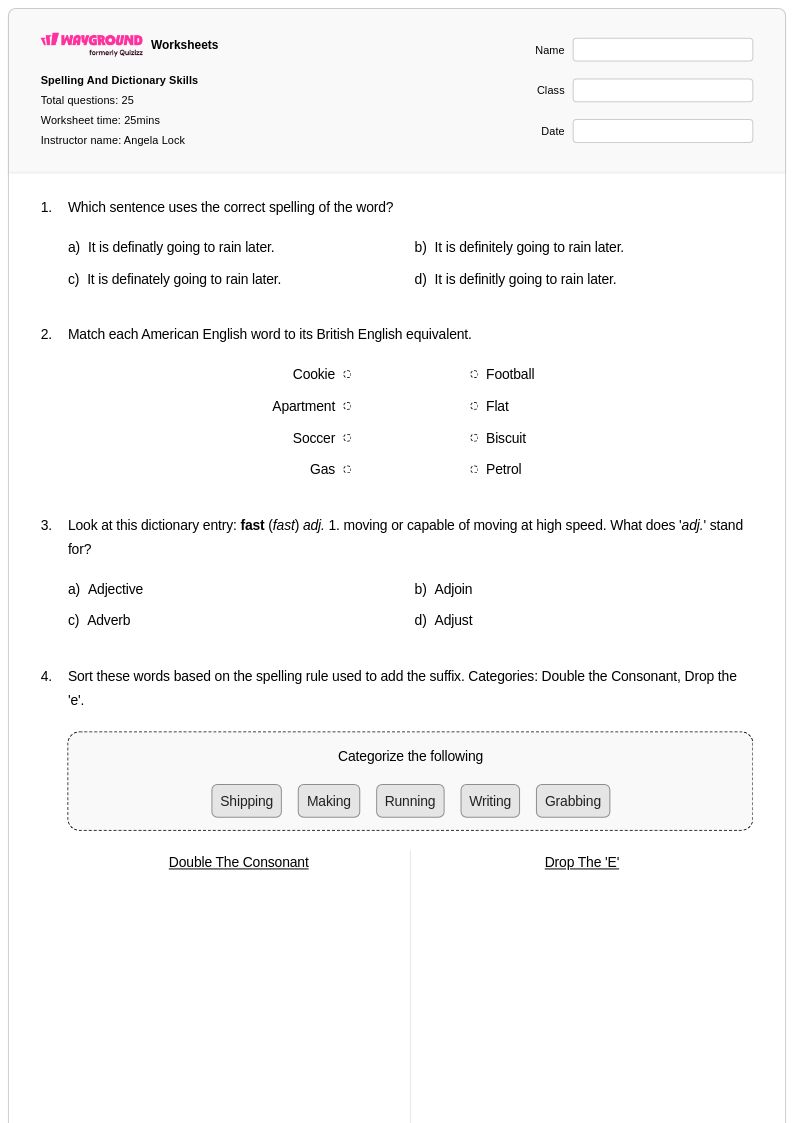
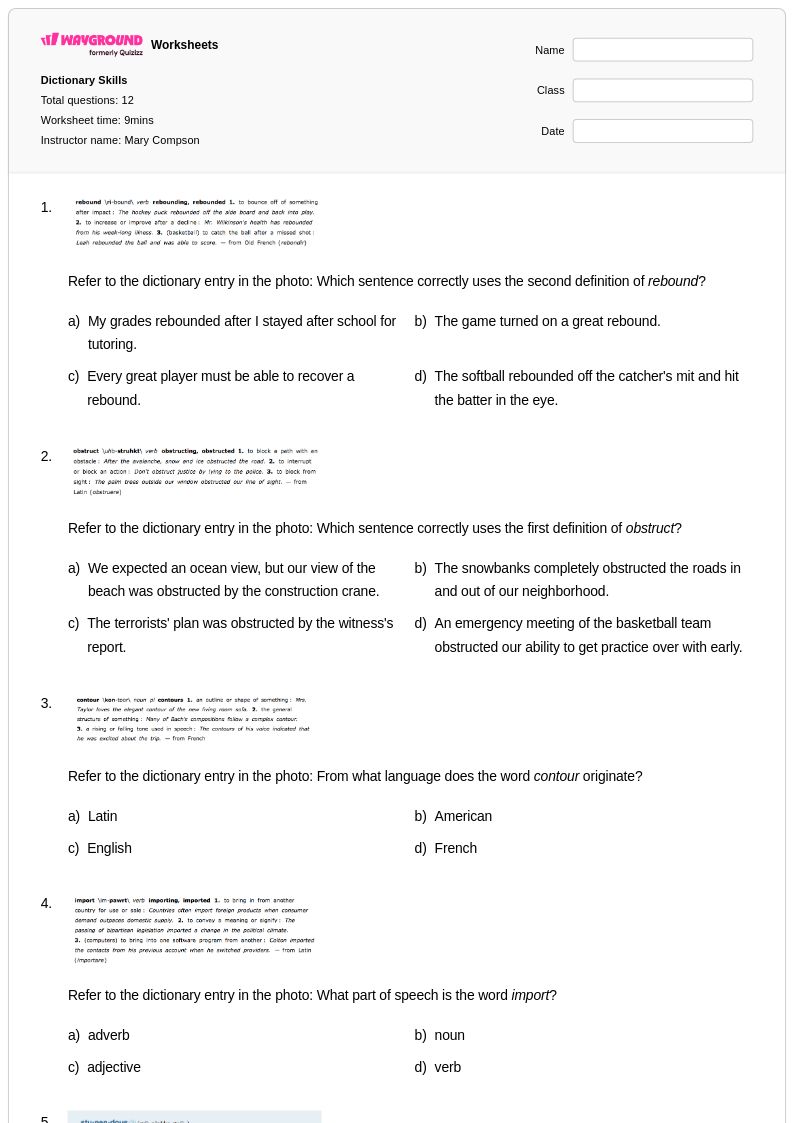
Enhance students' dictionary skills with Wayground's comprehensive collection of free worksheets and printables that teach alphabetical order, guide words, pronunciation keys, and word definitions through engaging practice problems with complete answer keys.
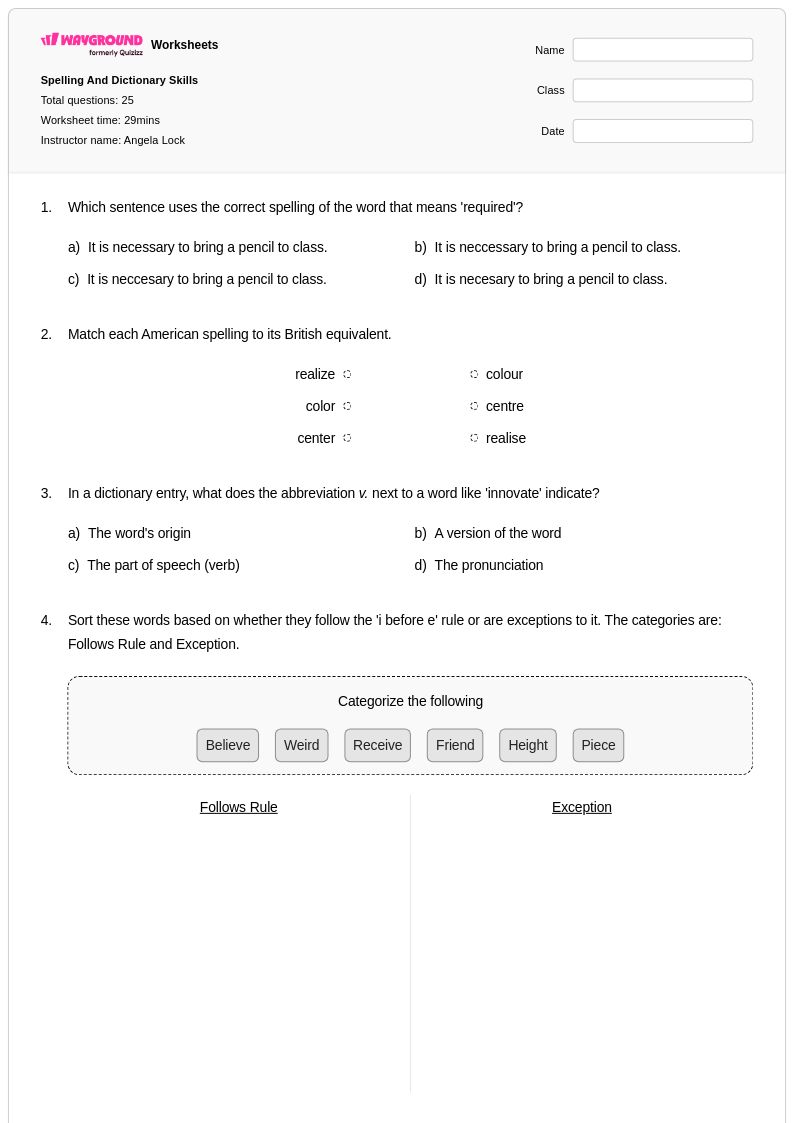
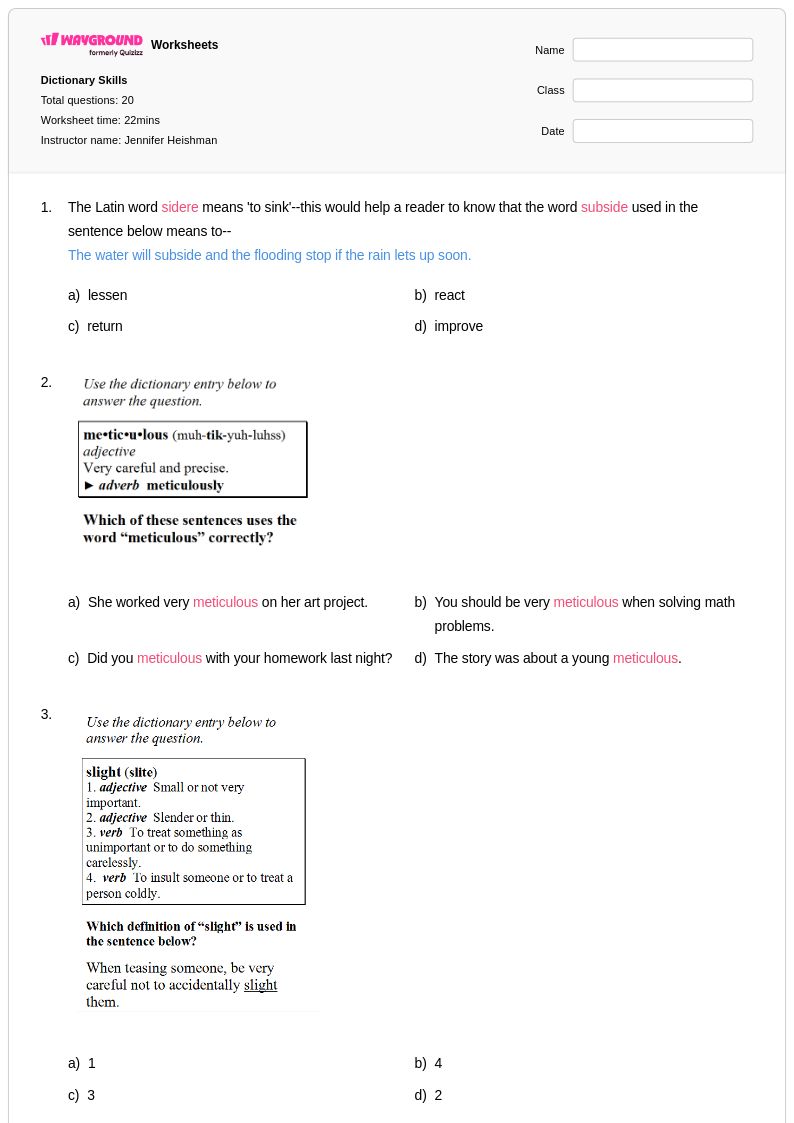
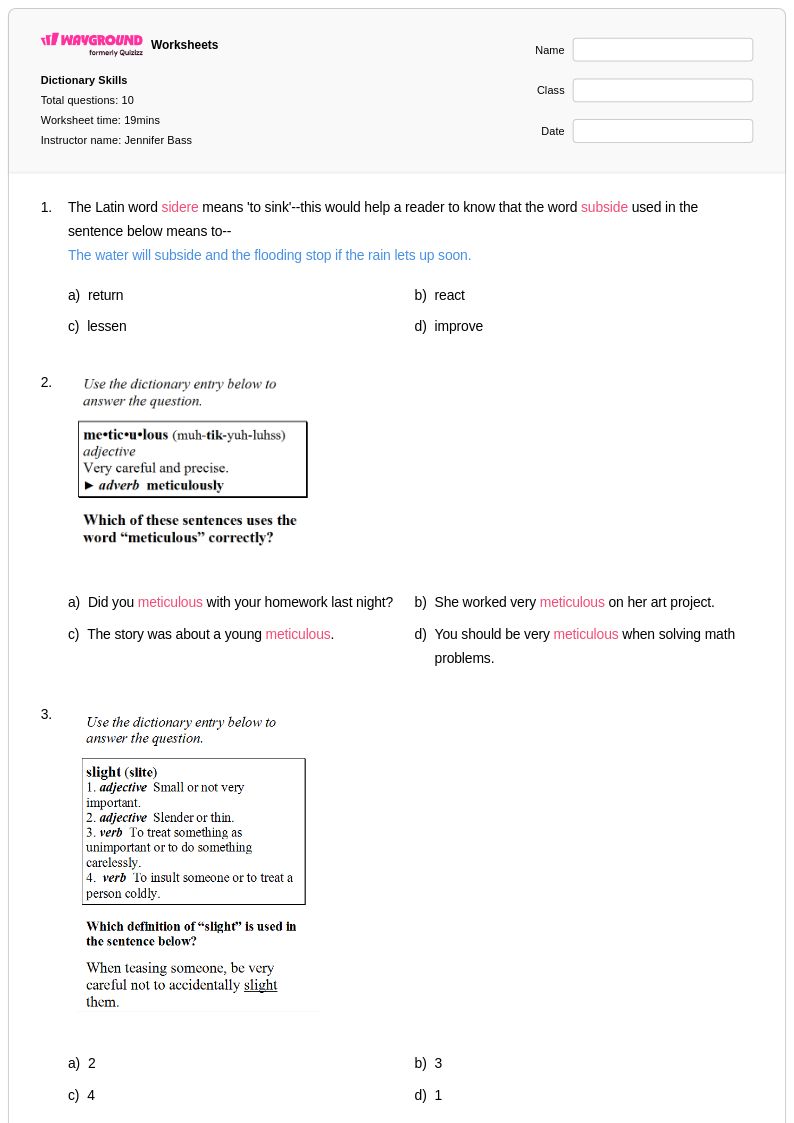
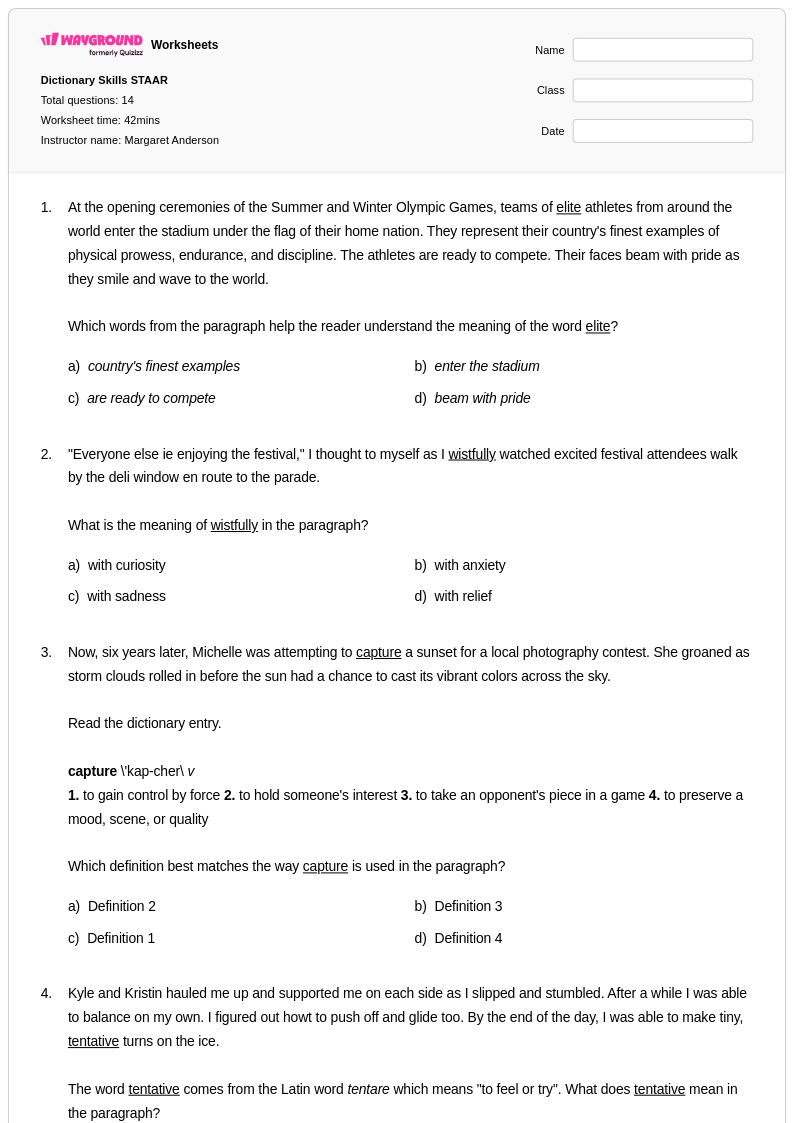
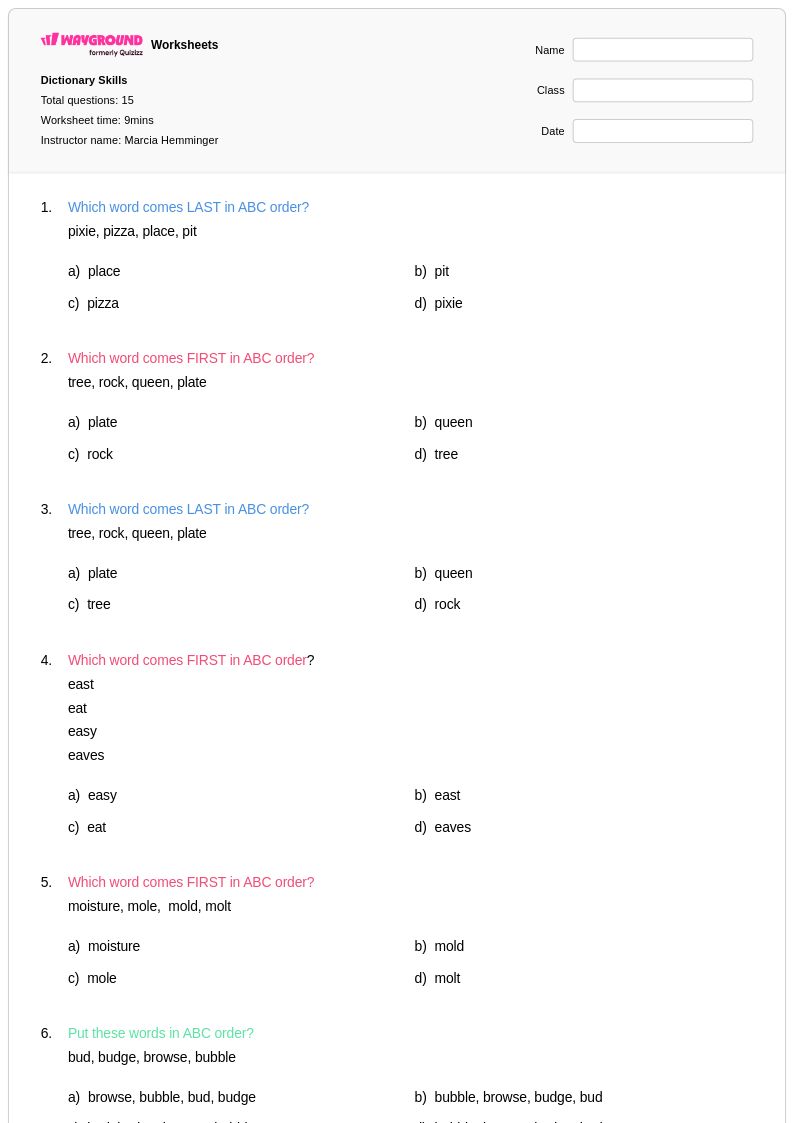
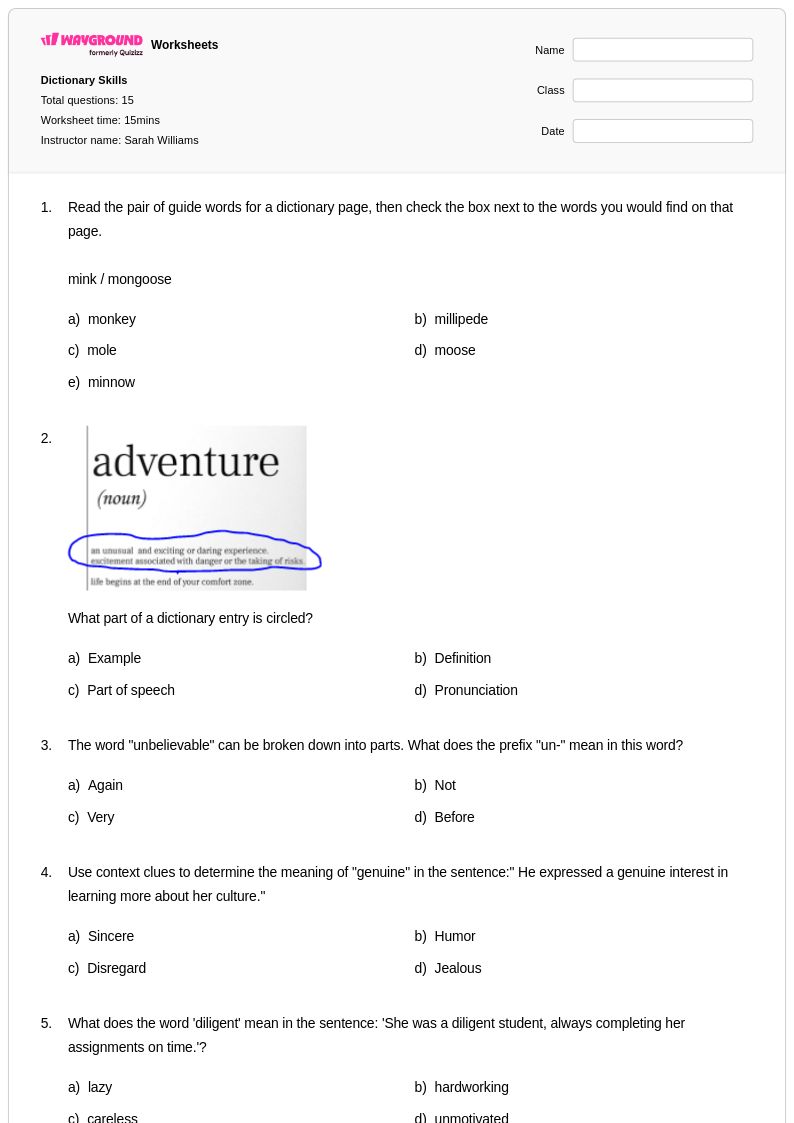
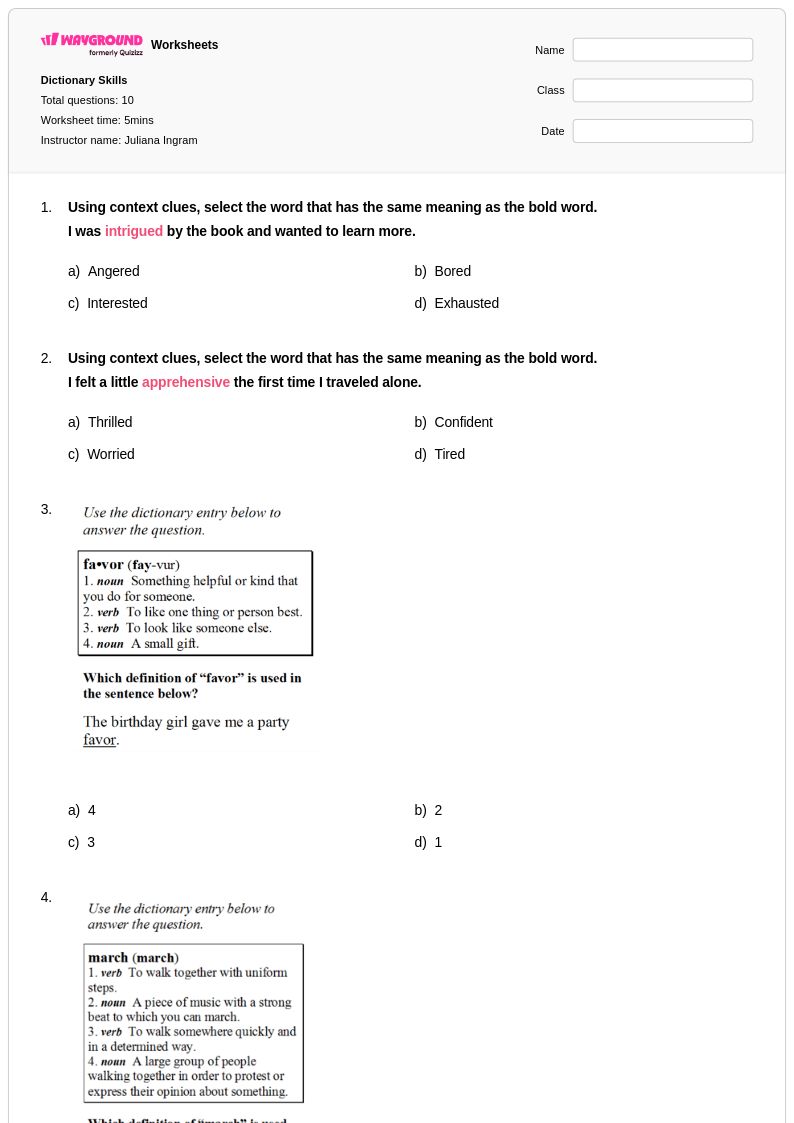
Dictionary Skills worksheets available through Wayground (formerly Quizizz) provide comprehensive practice opportunities for students to master essential reference skills that form the foundation of independent learning and vocabulary development. These expertly designed worksheets guide learners through critical competencies including alphabetical ordering, guide word navigation, pronunciation key interpretation, multiple meaning identification, and etymology exploration. Students engage with authentic dictionary entries while developing proficiency in locating information efficiently, understanding abbreviations and symbols, and distinguishing between different word forms and their corresponding definitions. The collection includes free printable resources with complete answer keys, enabling teachers to implement immediate feedback and assessment while students work through structured practice problems that reinforce proper dictionary usage techniques.
Wayground's extensive library of teacher-created Dictionary Skills worksheets offers educators access to millions of differentiated resources designed to meet diverse classroom needs and support various learning objectives. The platform's robust search and filtering capabilities allow teachers to quickly locate materials aligned with specific curriculum standards, while customization tools enable easy modification of content to match individual student requirements. These versatile worksheets are available in both printable PDF formats and interactive digital versions, providing flexibility for classroom instruction, homework assignments, remediation programs, and enrichment activities. Teachers can seamlessly integrate these resources into lesson planning workflows, using the comprehensive collection to scaffold vocabulary instruction, support struggling learners with targeted skill practice, and challenge advanced students with complex dictionary navigation tasks that strengthen their research and reference capabilities.
FAQs
How do I teach dictionary skills to elementary students?
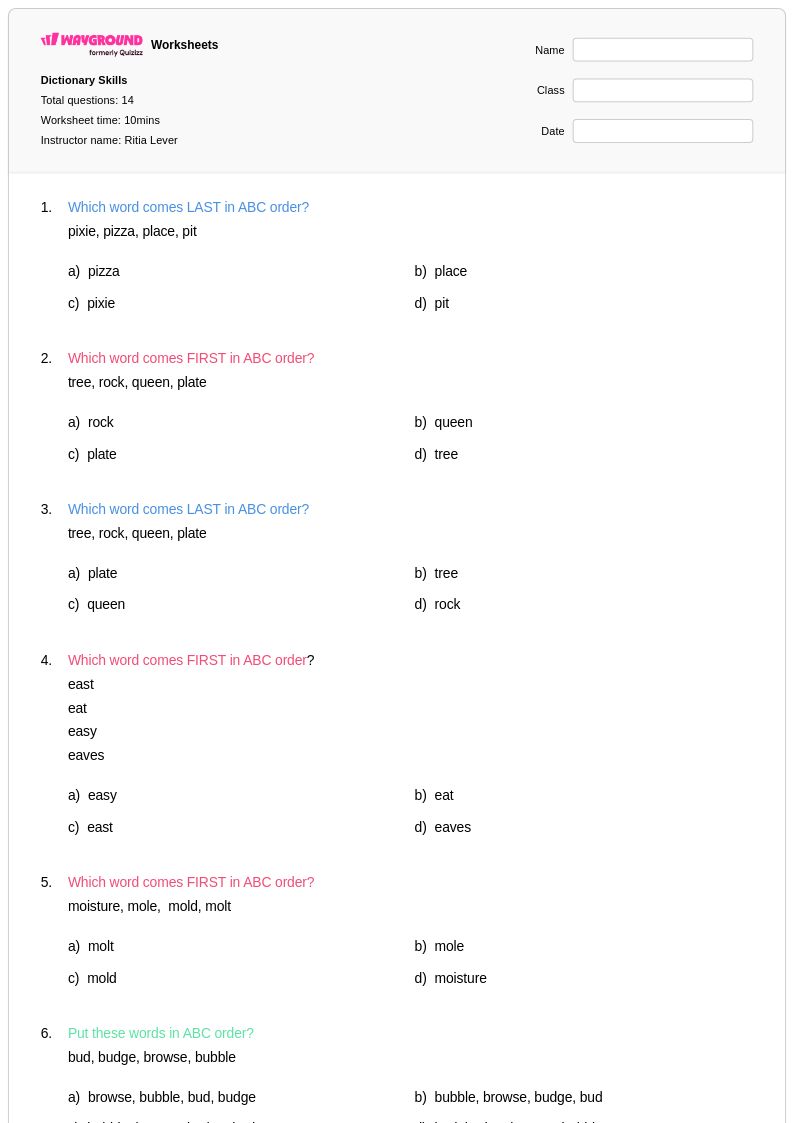
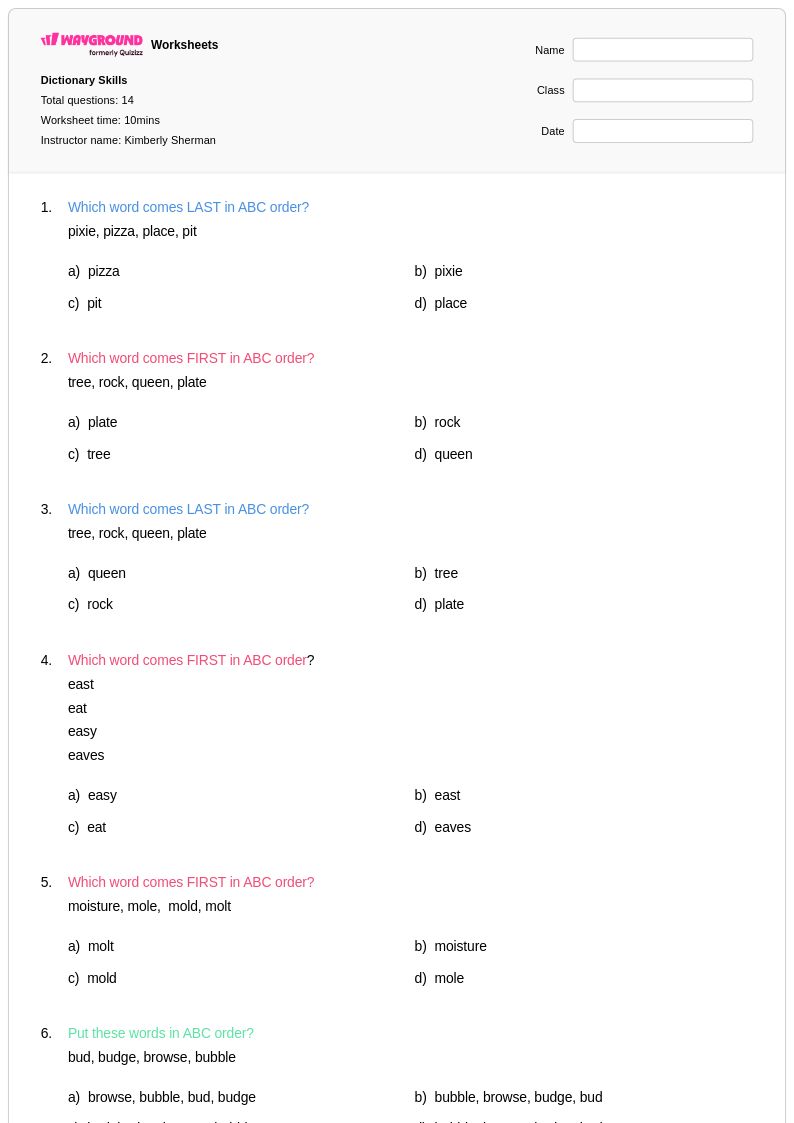
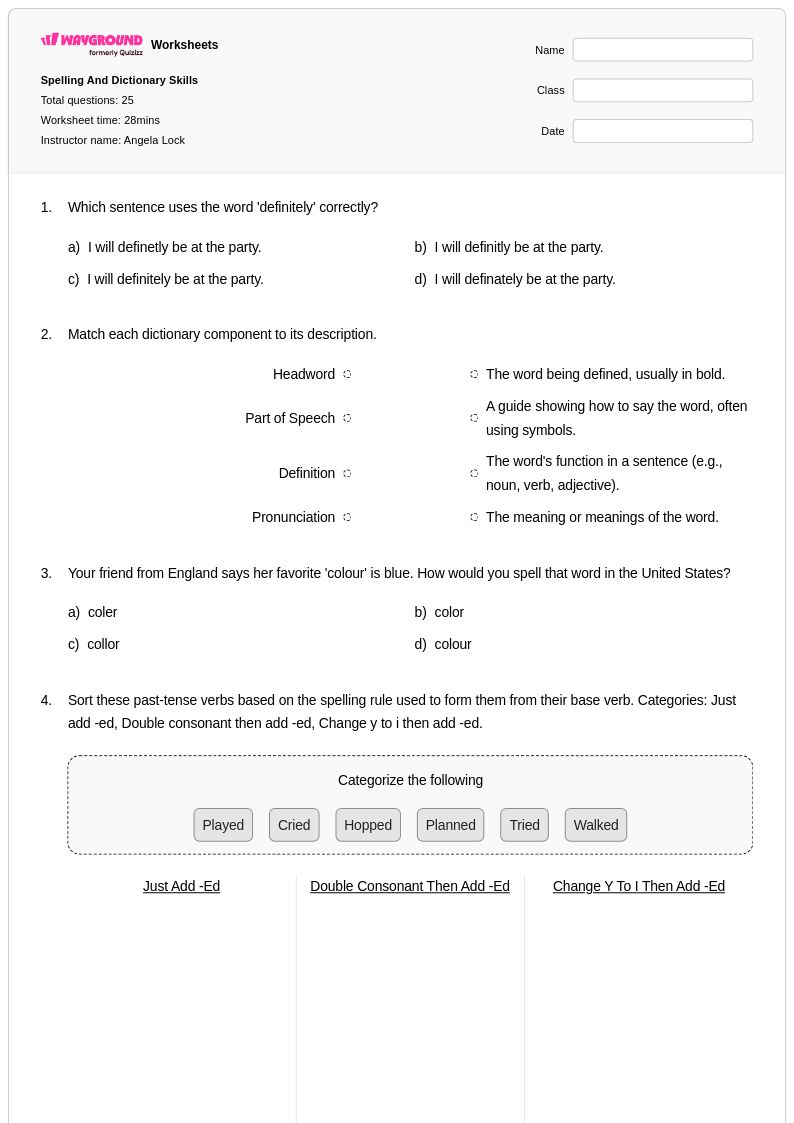
Start by teaching alphabetical order to the first letter, then second and third letters as students grow more confident. From there, introduce guide words by showing students how to use the top of a dictionary page to narrow their search before moving on to reading a full entry, including part of speech, pronunciation key, and multiple definitions. Hands-on practice with real dictionary pages tends to be more effective than definitions alone, because students need to build the habit of navigating reference material efficiently.
What exercises help students practice using guide words in a dictionary?
Effective practice exercises include presenting students with a pair of guide words and asking them to identify which of several given words would appear on that page, as well as tasks where students must arrange words in the correct alphabetical sequence to determine page order. Worksheets that simulate real dictionary pages with visible guide words help students apply the skill in context rather than in the abstract. Repeated low-stakes practice with immediate answer-key feedback accelerates mastery of this skill.
What mistakes do students commonly make when using a dictionary?
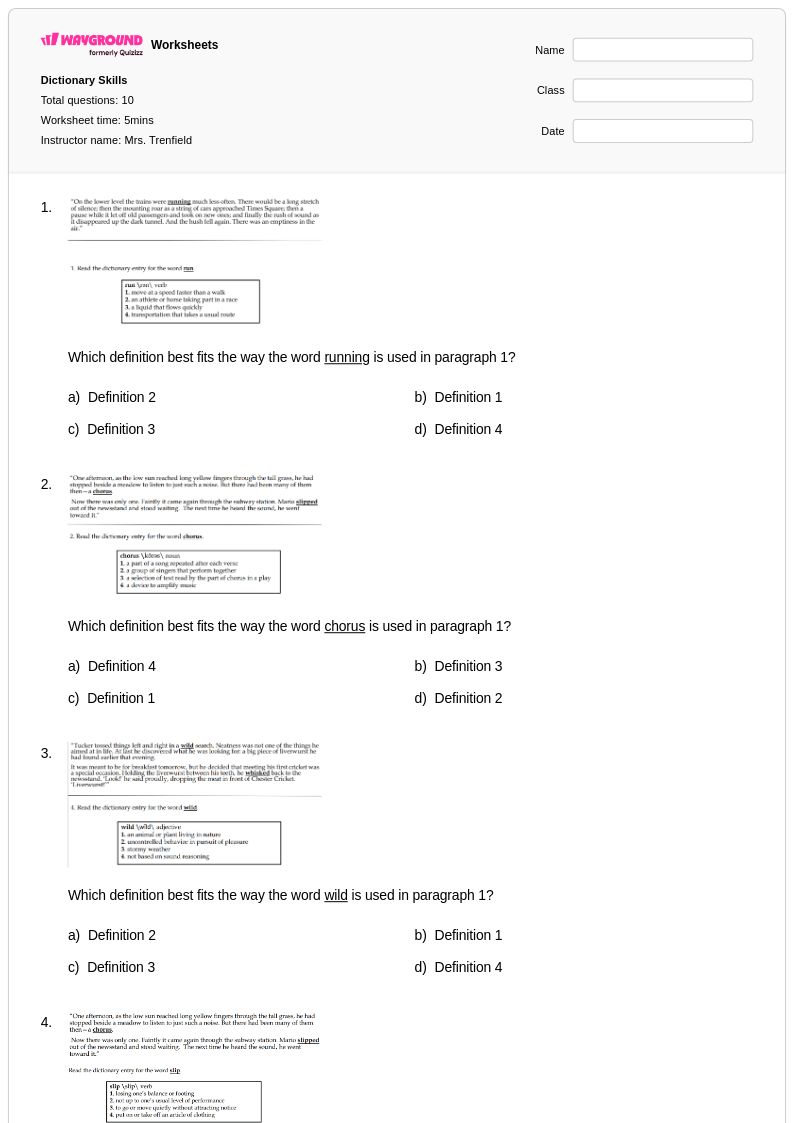
One of the most common errors is ignoring guide words and flipping through pages randomly, which slows students down and discourages dictionary use altogether. Students also frequently select the first definition listed rather than reading all definitions to find the one that fits the context of their sentence. Misreading pronunciation keys is another persistent challenge, particularly for students unfamiliar with phonetic symbols or diacritical marks. Targeted worksheet practice that isolates each of these sub-skills can address each misconception directly.
How can I use dictionary skills worksheets to support struggling readers?
For struggling readers, start with worksheets that focus on a single sub-skill, such as alphabetical ordering to the first letter, before introducing multi-step tasks like locating a word and selecting the correct definition. If you use Wayground's digital format, you can enable the Read Aloud accommodation so questions and content are read to students who need auditory support, and you can reduce answer choices for students who benefit from a lighter cognitive load. Scaffolding the skill sequence and pairing accommodations with structured practice helps struggling readers build confidence alongside competency.
How do I use Wayground's dictionary skills worksheets in my classroom?
Wayground's dictionary skills worksheets are available as printable PDFs, making them easy to use for in-class practice, homework, or small-group remediation without any technology required. They are also available in digital formats, so you can assign them through the platform and host them as a quiz directly on Wayground for immediate scoring and feedback. Each worksheet includes a complete answer key, which reduces grading time and allows students to self-check their work during independent practice sessions.
At what grade level should students be taught dictionary skills?
Basic dictionary skills, such as alphabetical order and locating simple definitions, are typically introduced in grades 2 and 3. By grades 4 through 6, instruction expands to guide words, pronunciation keys, multiple meanings, abbreviations, and etymology. Reinforcement and extension of these skills continues through middle school as students encounter more complex reference materials and academic vocabulary demands.