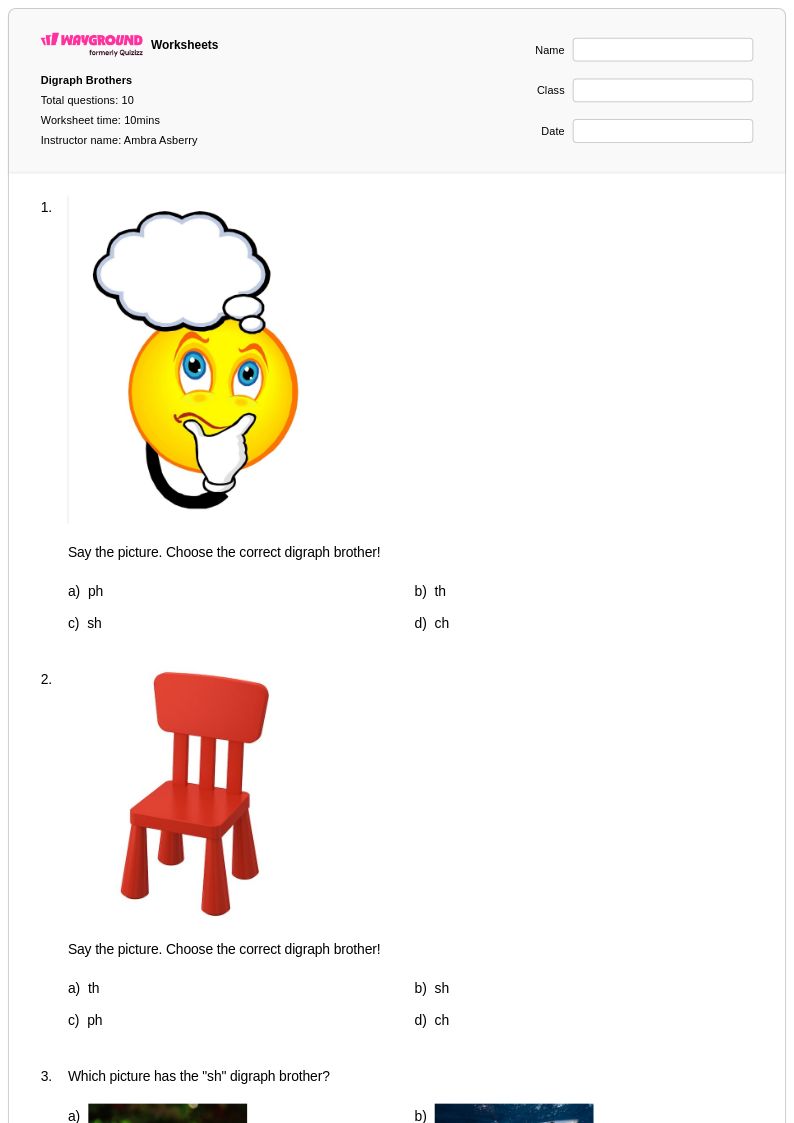
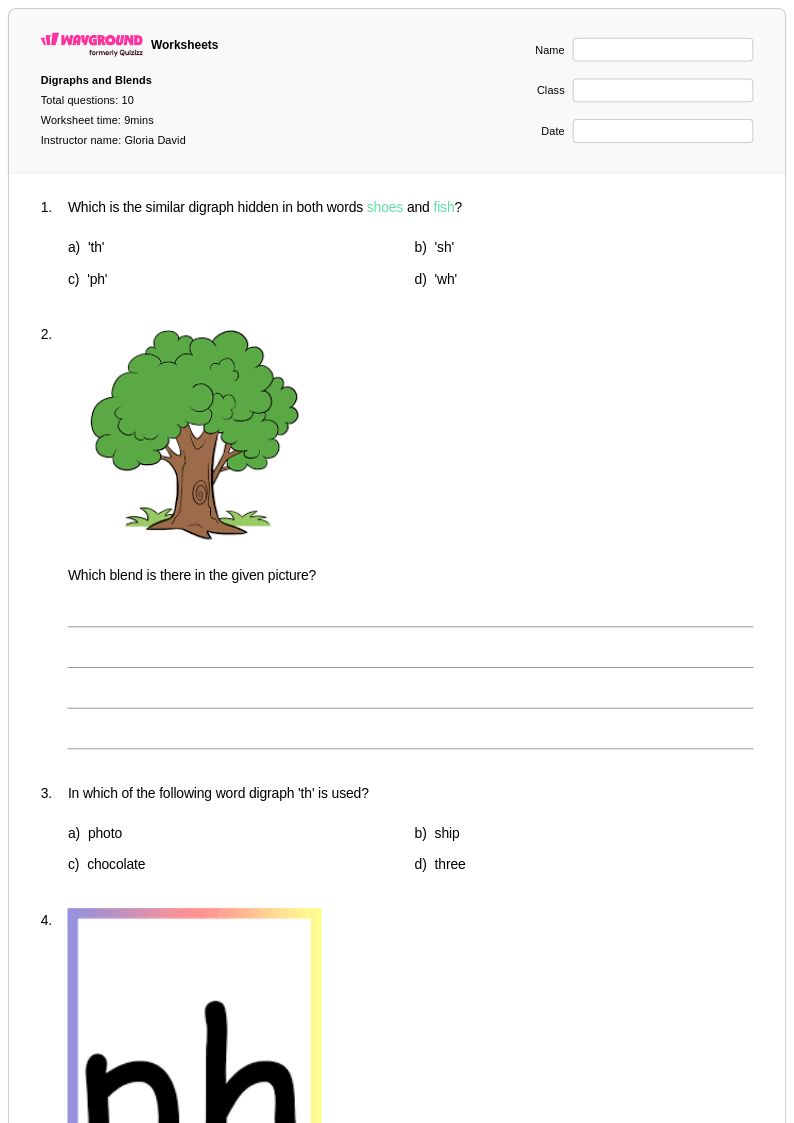
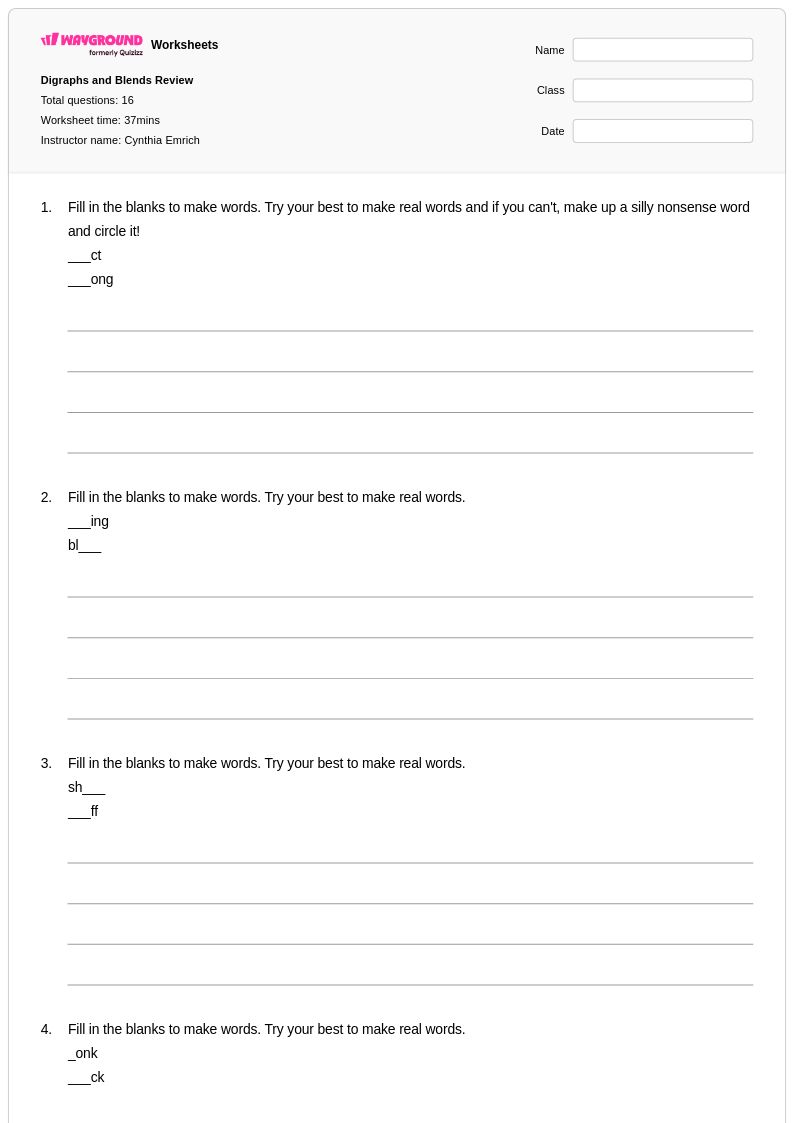
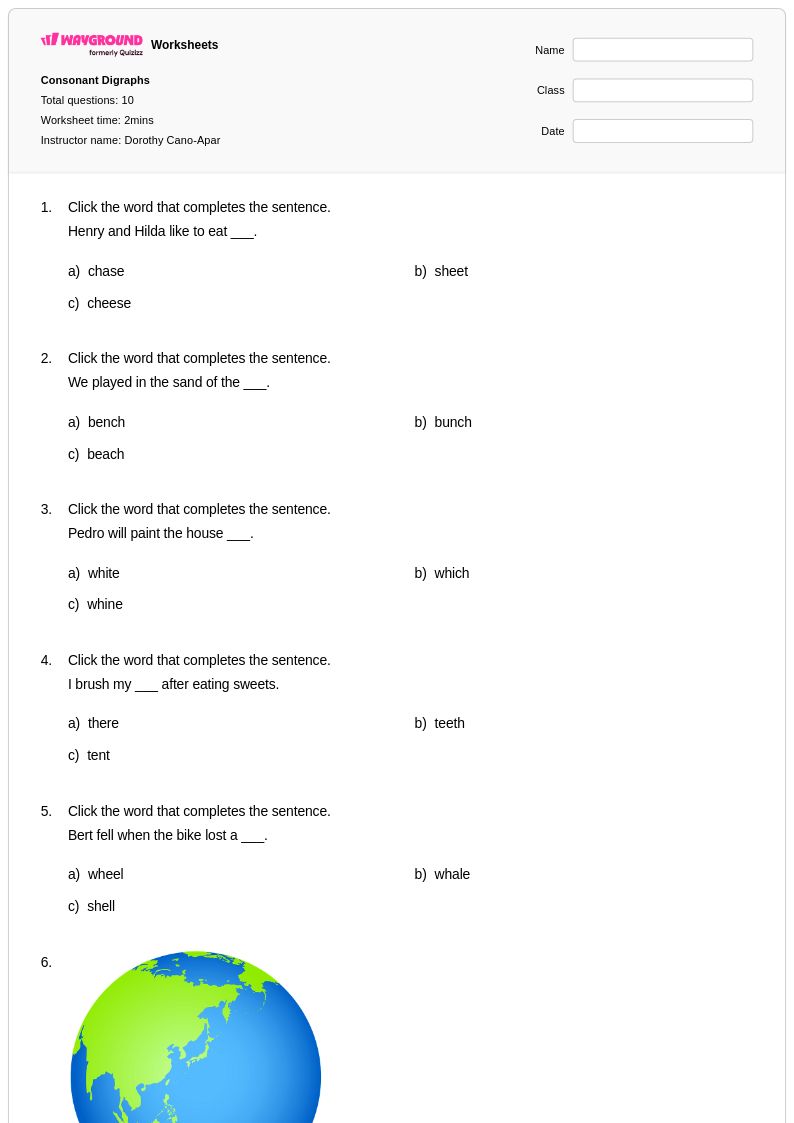
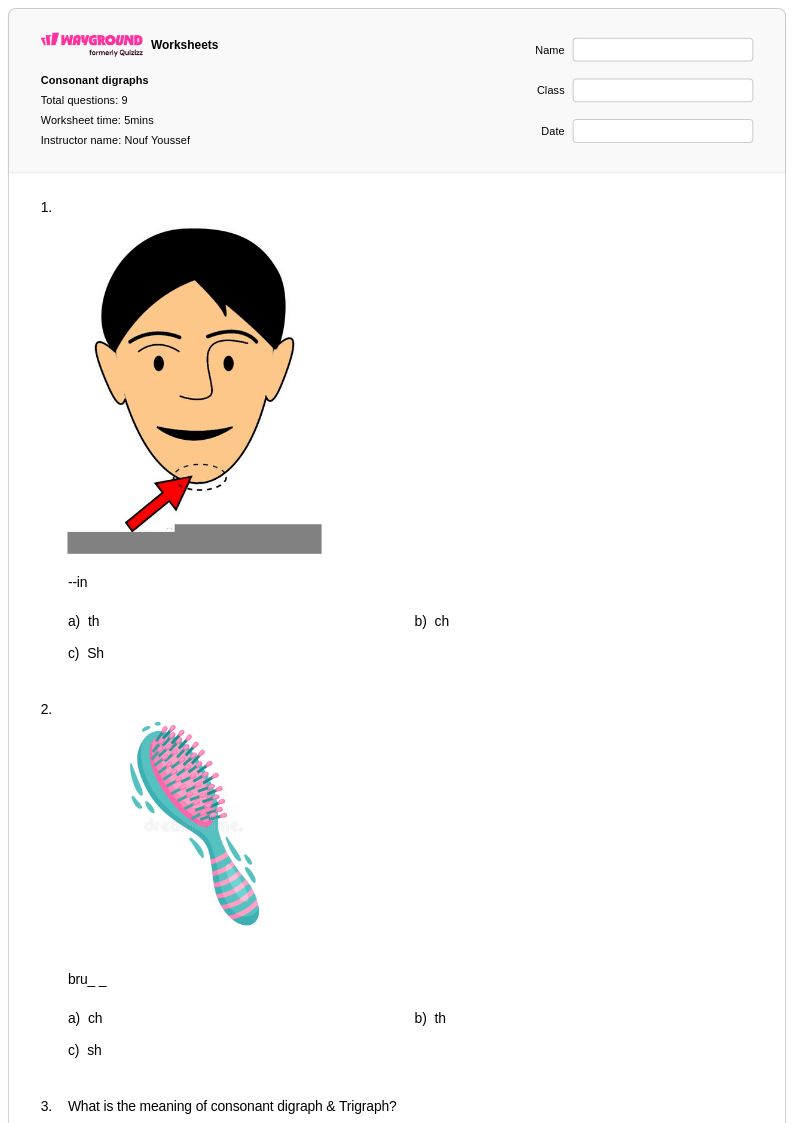
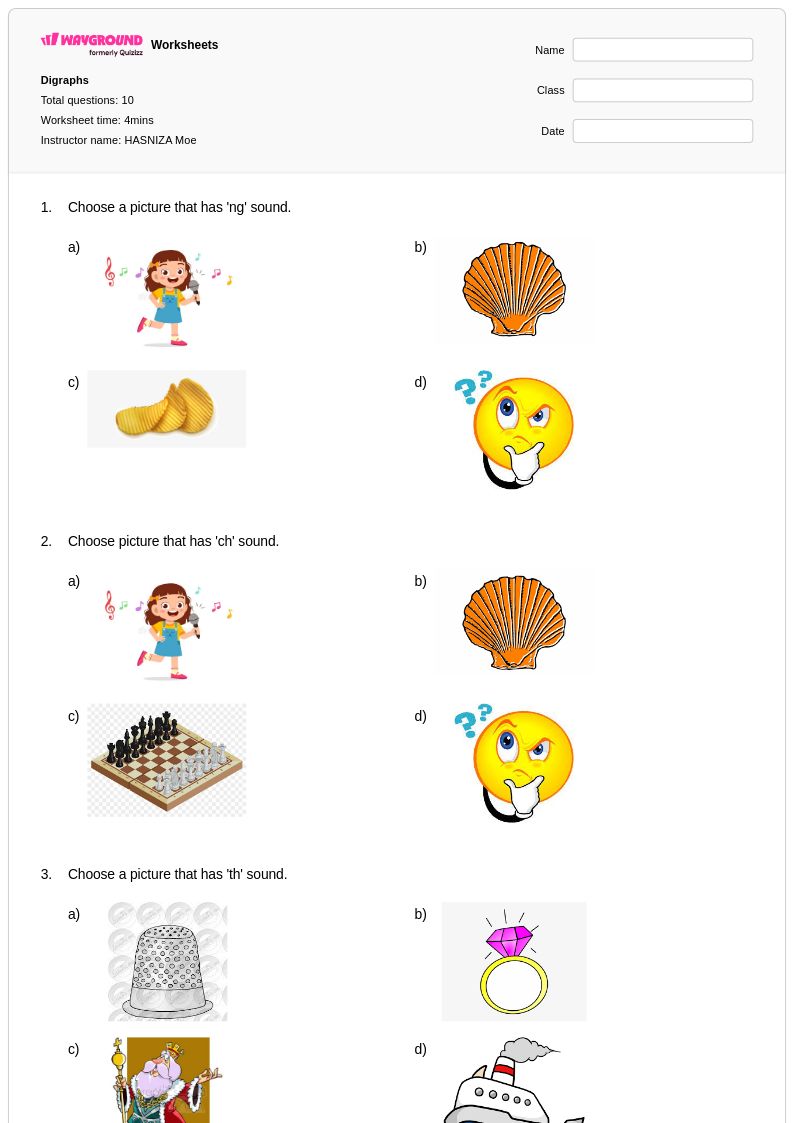
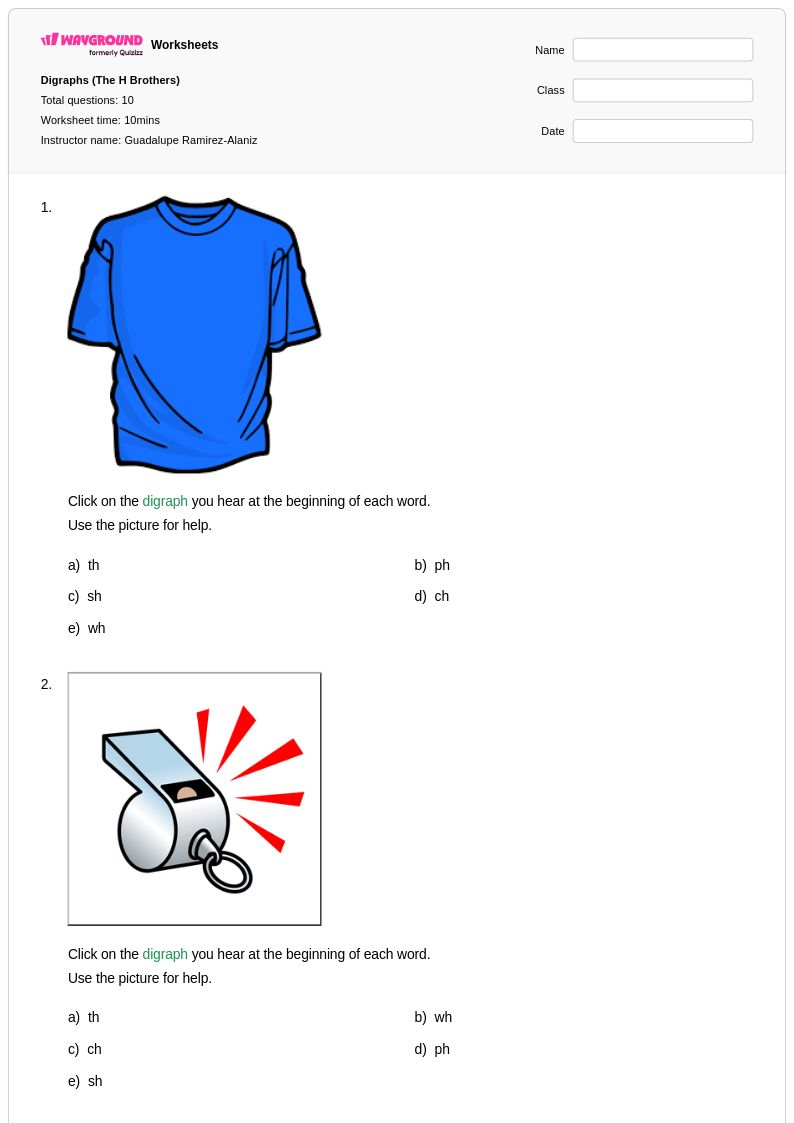
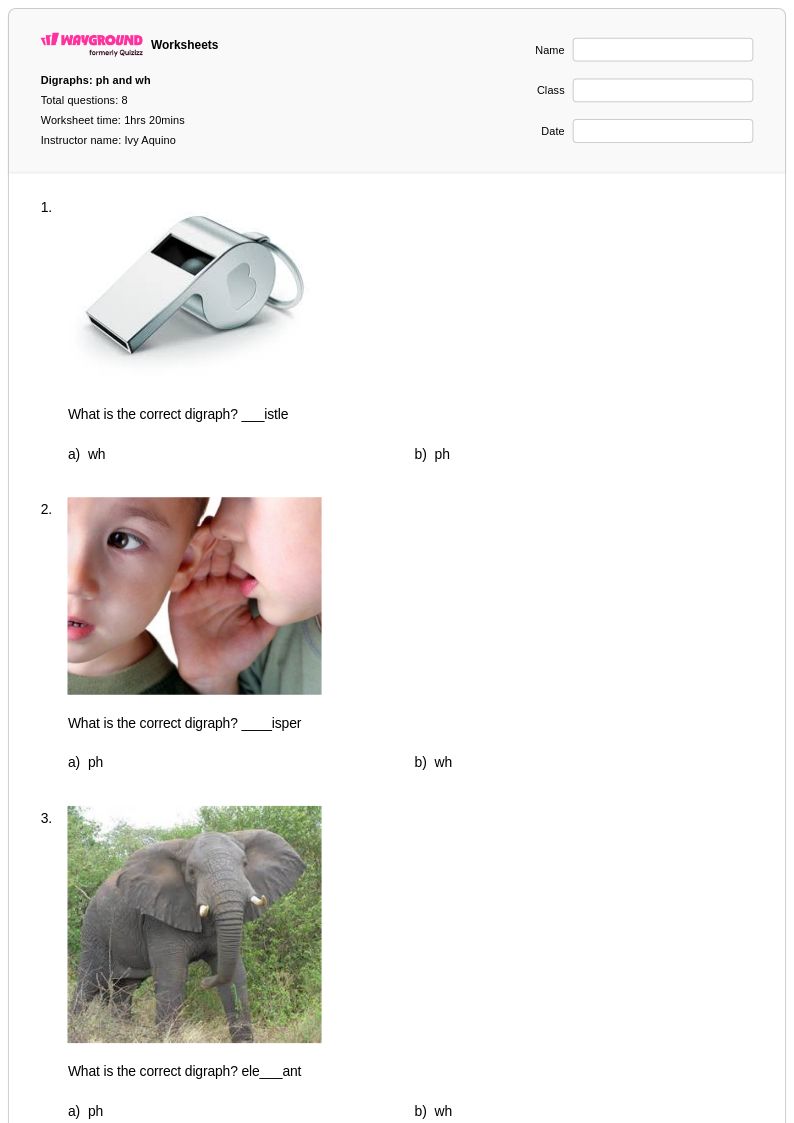
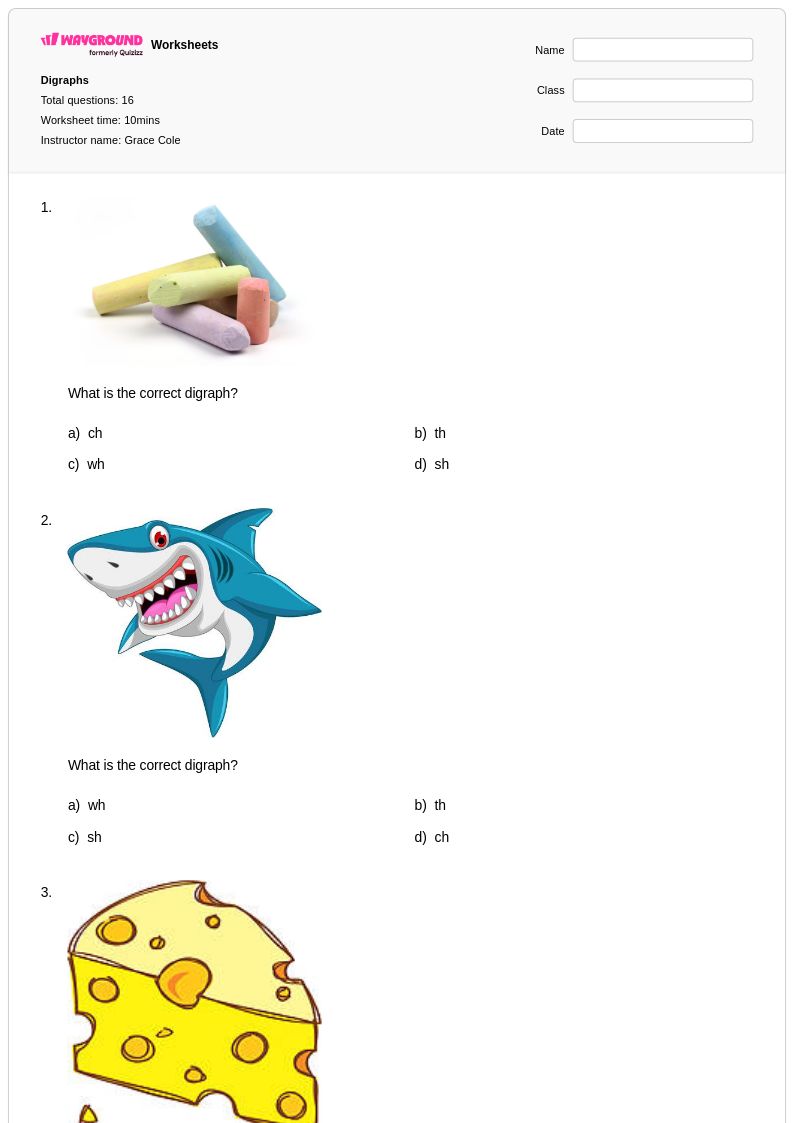
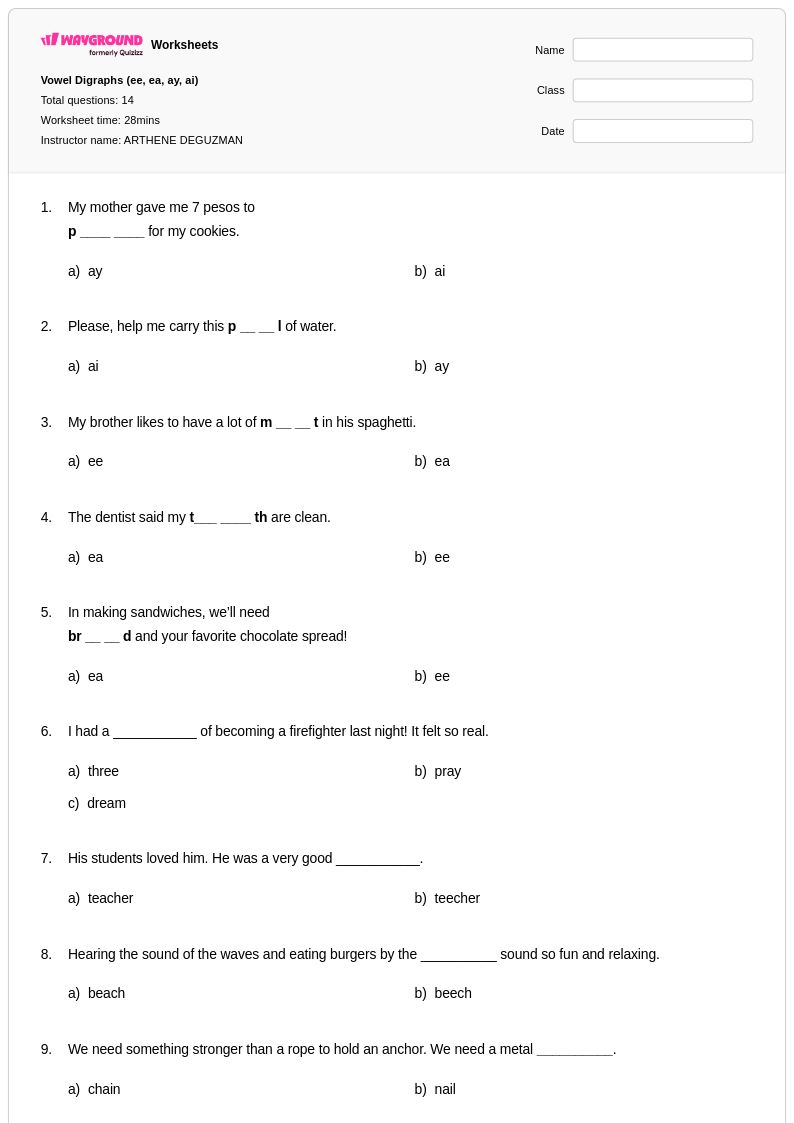
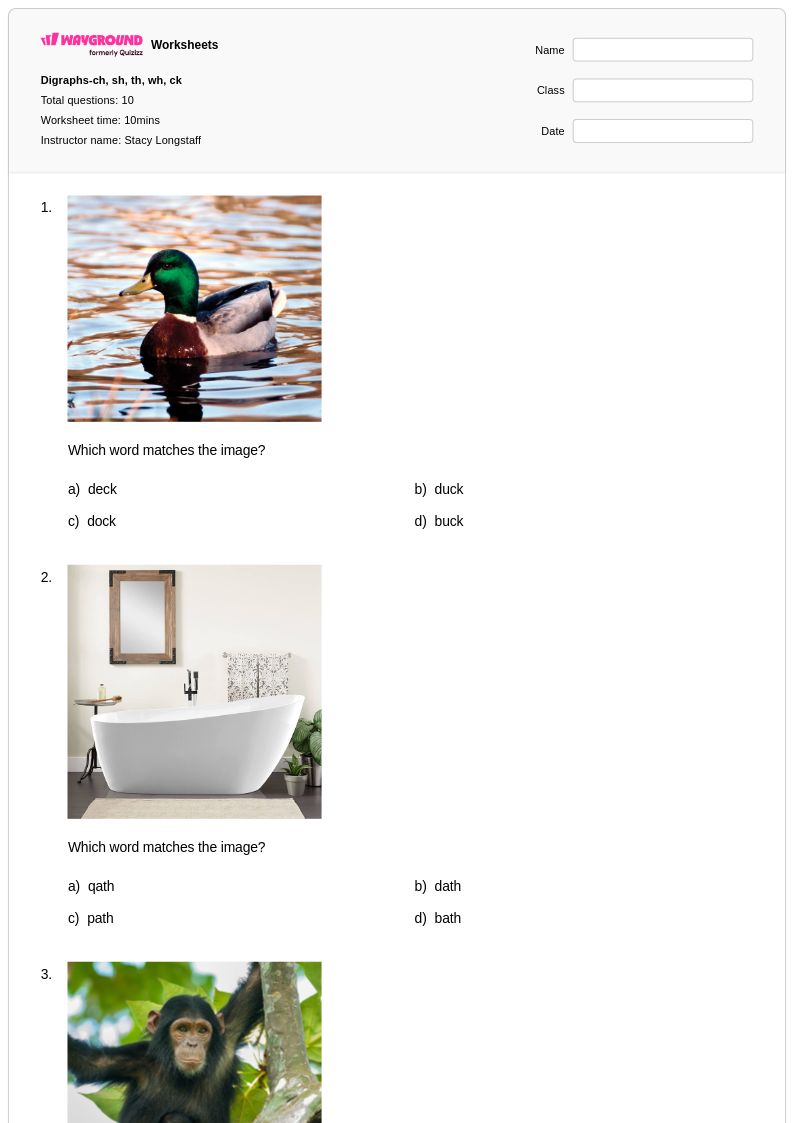
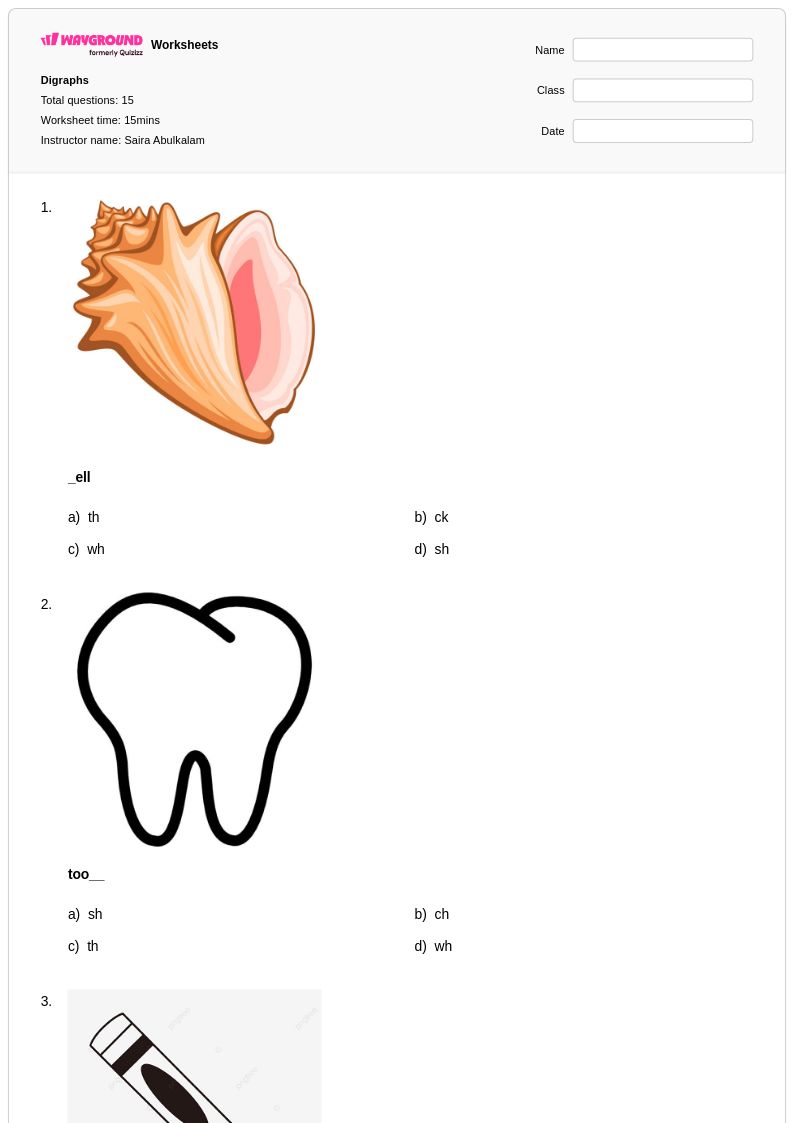
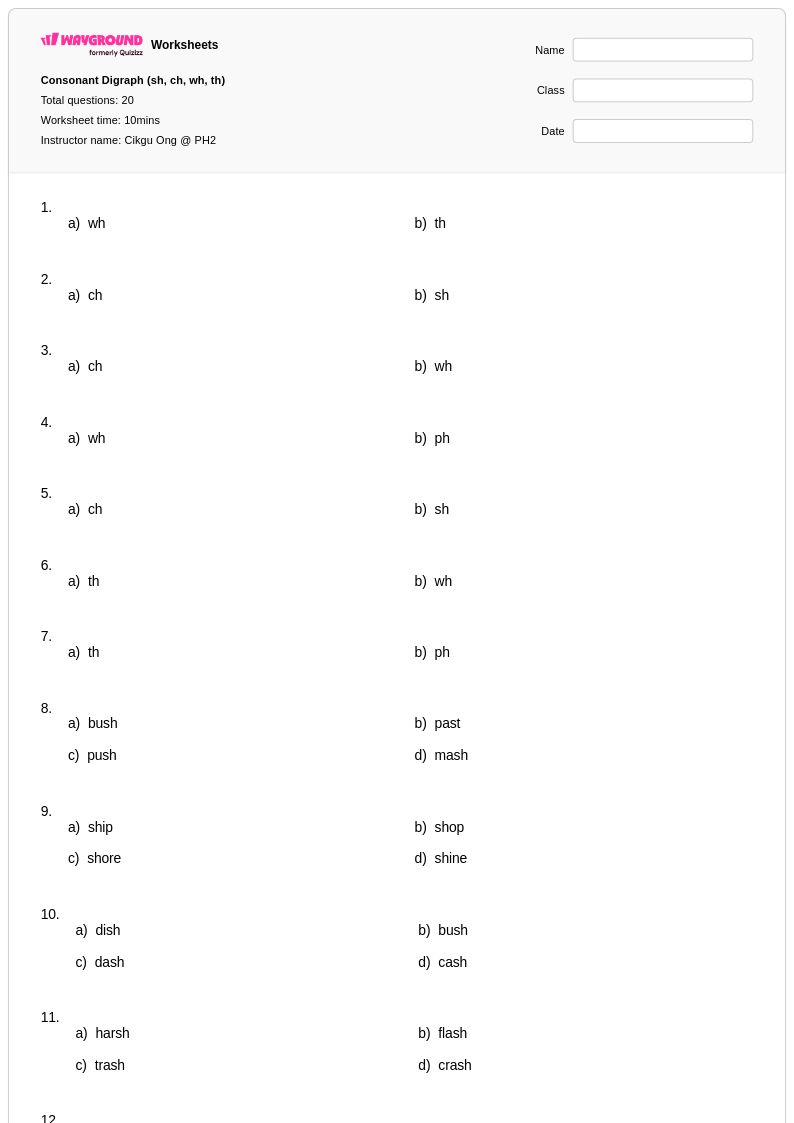
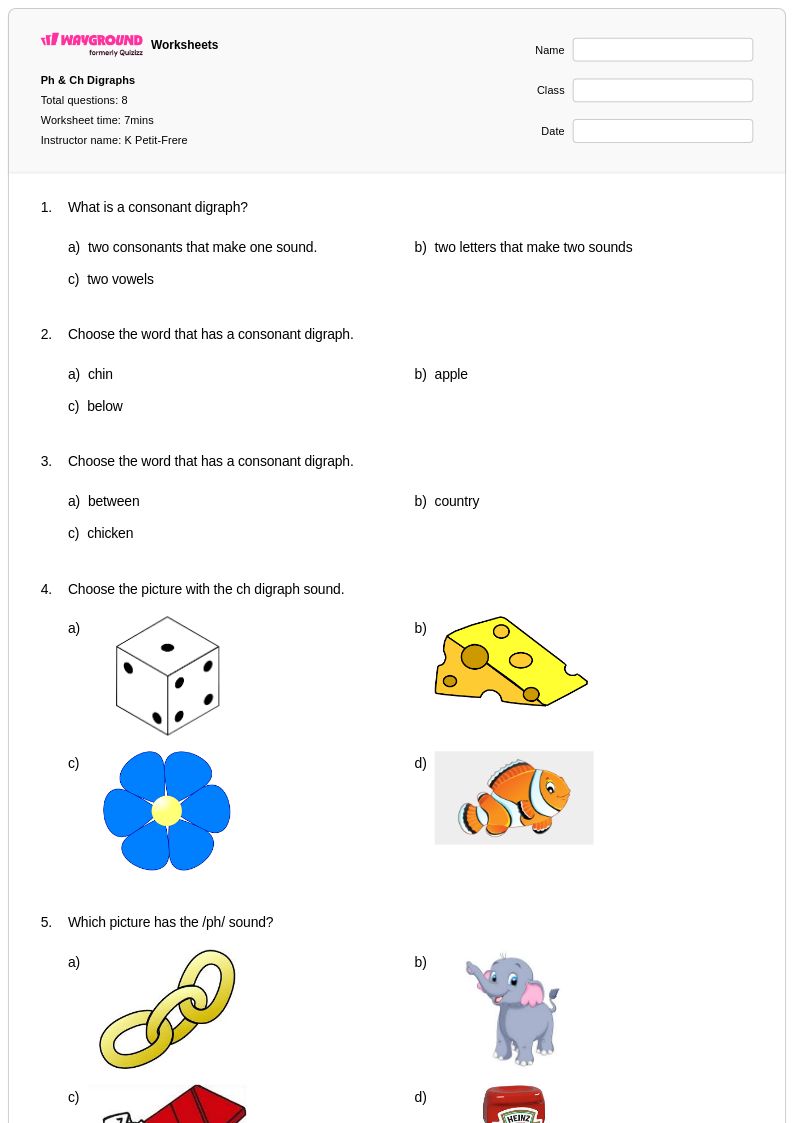
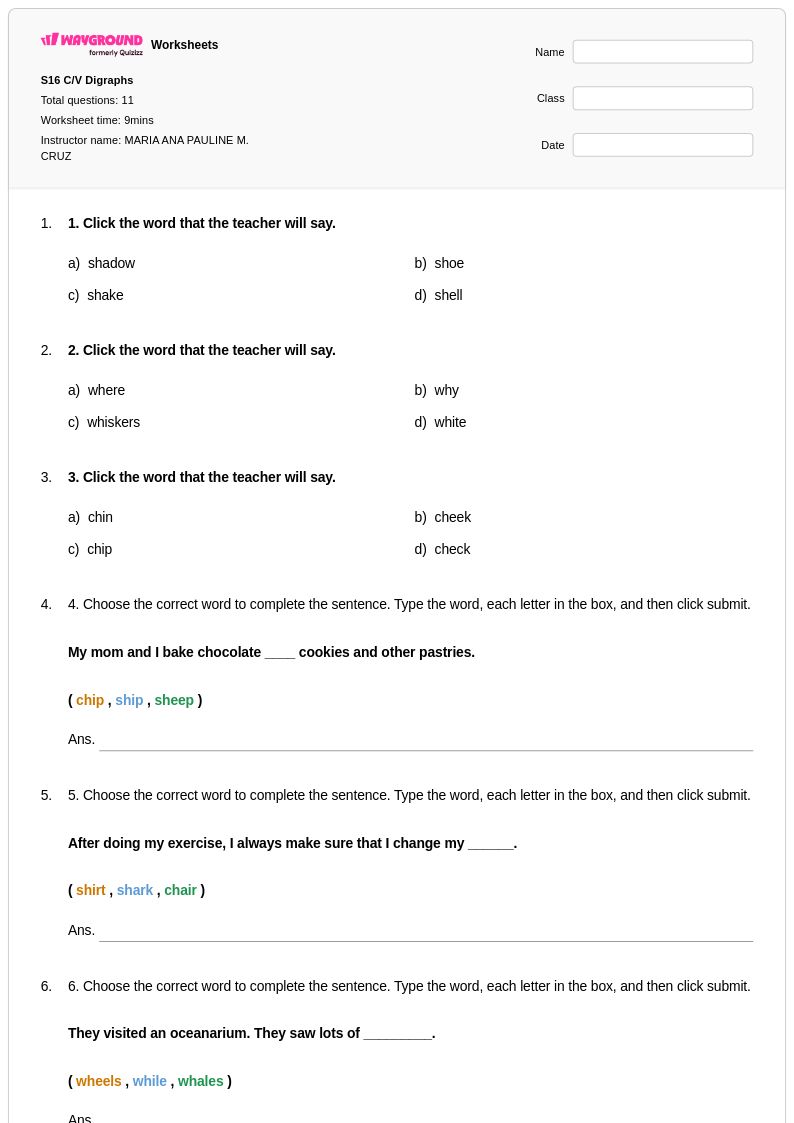
Year 1 digraphs worksheets from Wayground help young learners master two-letter sound combinations through engaging printables, practice problems, and free PDF resources with complete answer keys.
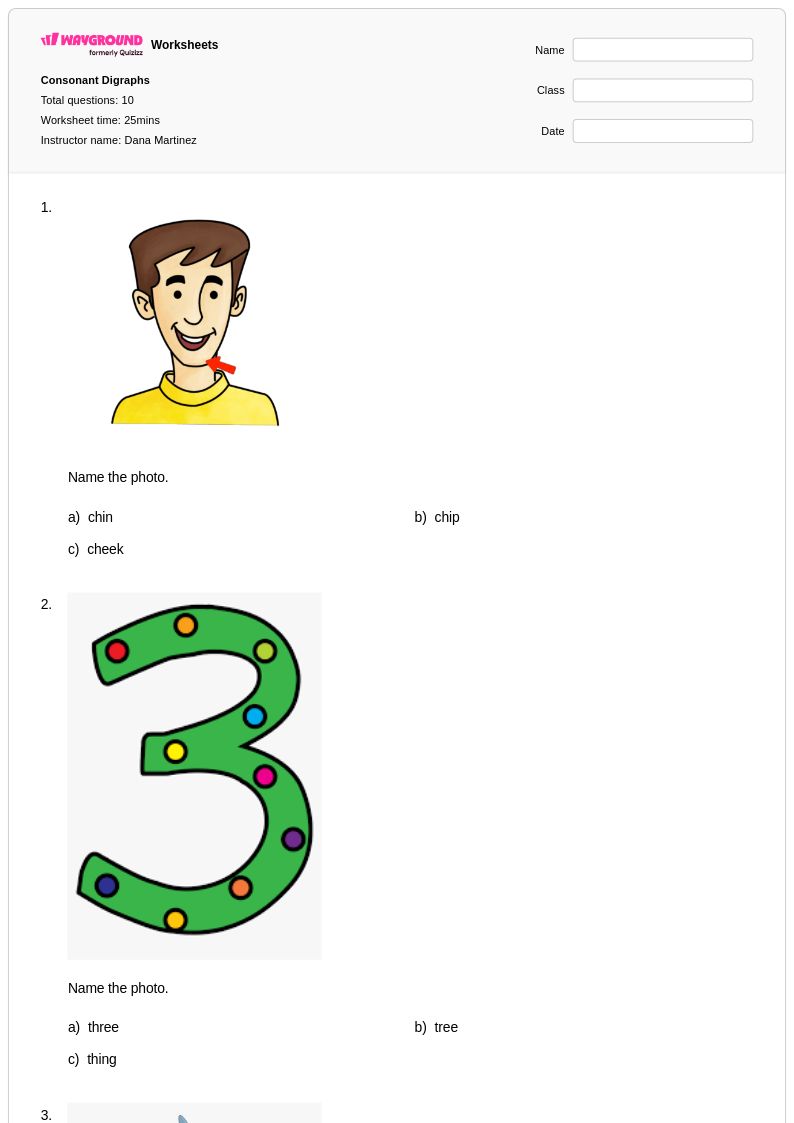
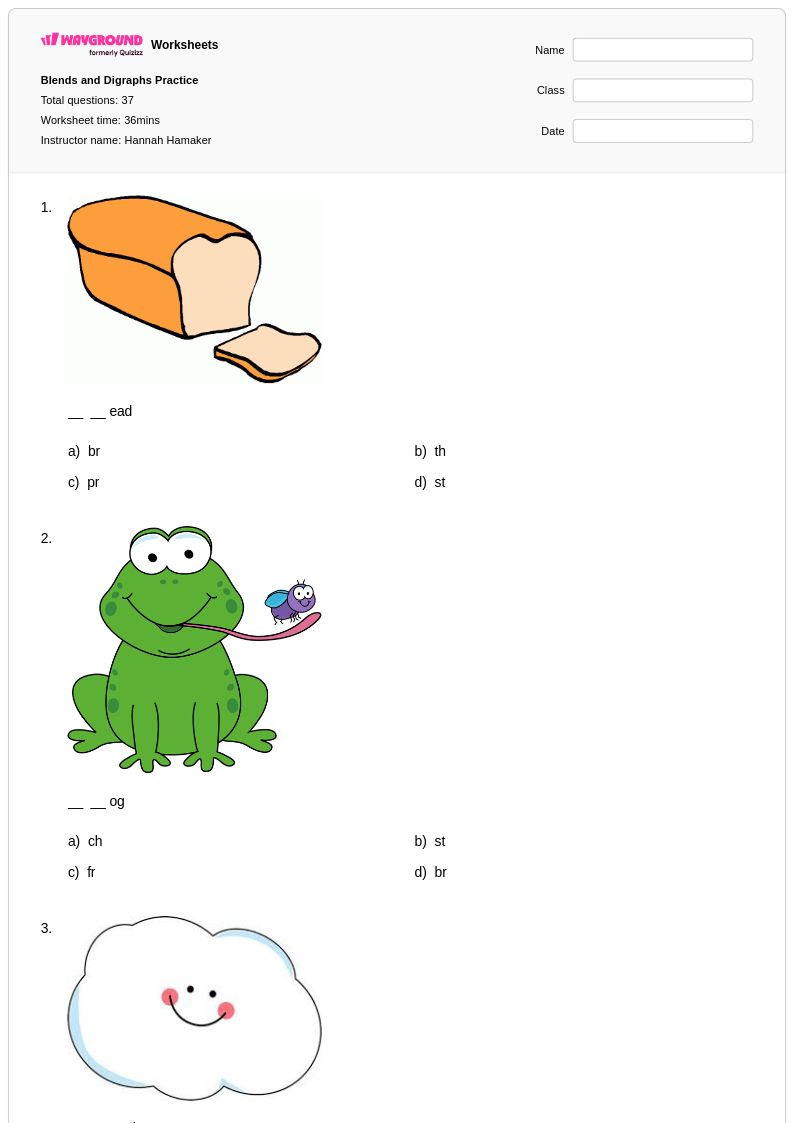
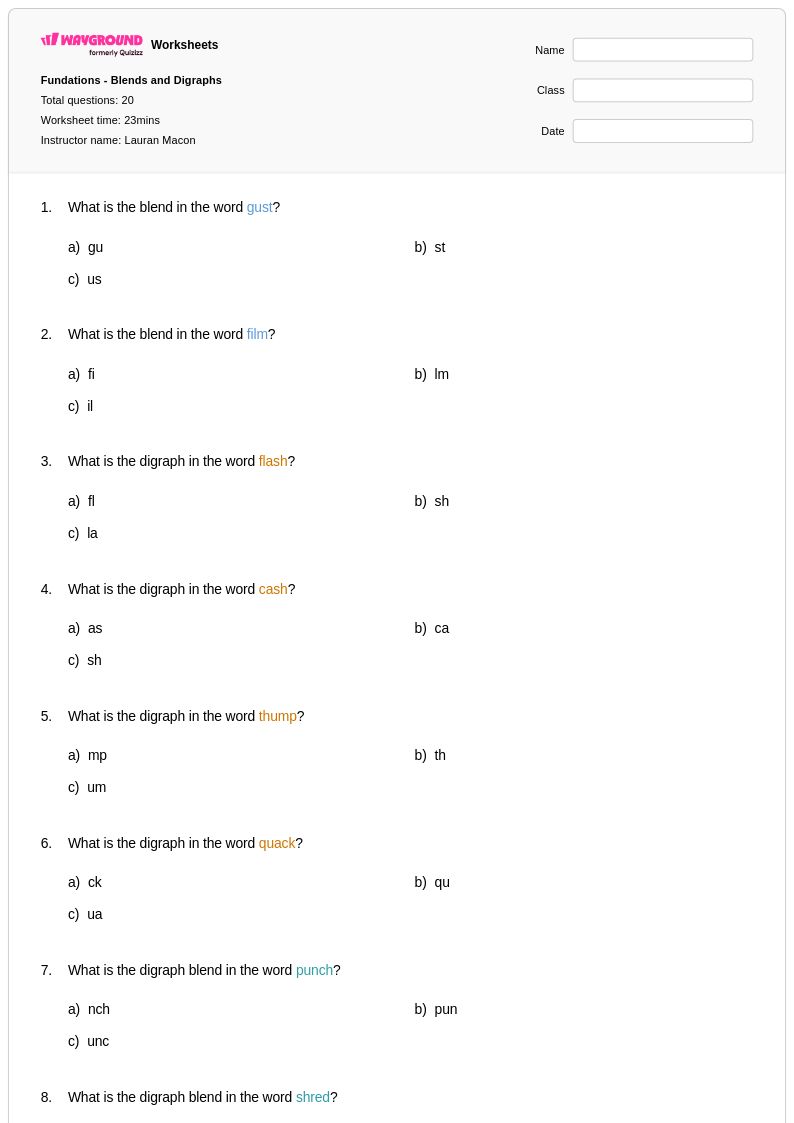
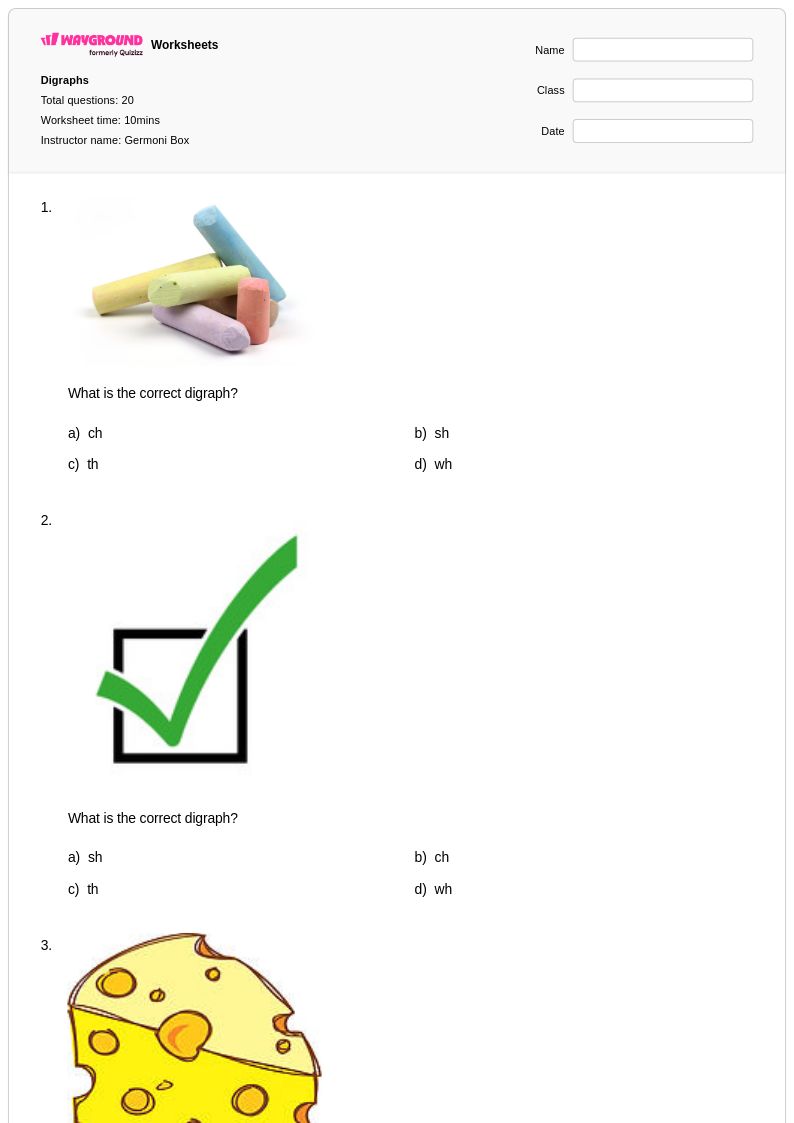
Digraphs represent a foundational element in Year 1 reading instruction, where two letters combine to create a single sound that differs from their individual phonetic values. Wayground's extensive collection of digraph worksheets provides first-grade students with systematic practice in recognizing and applying common letter combinations such as ch, sh, th, wh, and ph through engaging activities that build phonemic awareness and decoding skills. These carefully structured printables offer varied practice problems that progress from simple identification exercises to more complex word building and reading comprehension tasks, with each worksheet including a comprehensive answer key to support both independent learning and teacher-guided instruction. The free pdf format ensures accessibility while maintaining high-quality educational content that strengthens students' ability to decode unfamiliar words and develop reading fluency.
Wayground, formerly Quizizz, empowers educators with millions of teacher-created digraph resources that streamline lesson planning and provide targeted skill practice for Year 1 students at varying ability levels. The platform's robust search and filtering capabilities allow teachers to quickly locate worksheets aligned with specific learning standards while accessing differentiation tools that accommodate diverse learning needs within the classroom. These customizable resources are available in both printable pdf and interactive digital formats, enabling flexible implementation across different teaching environments and learning modalities. Teachers can efficiently address remediation needs for struggling readers, provide enrichment opportunities for advanced learners, and maintain consistent skill practice through carefully sequenced worksheet collections that support systematic phonics instruction and reading development.
FAQs
How do I teach digraphs to early readers?
Start by introducing one digraph at a time, using sound-first instruction before connecting it to print. Have students listen for the digraph sound in spoken words before seeing the letters, then practice blending the digraph with familiar vowel patterns. Anchor each digraph to a keyword picture (e.g., 'sh' with a finger to lips) to build lasting phonemic memory. Systematic, cumulative review across sessions is key to retention.
What is the difference between consonant digraphs and vowel digraphs?
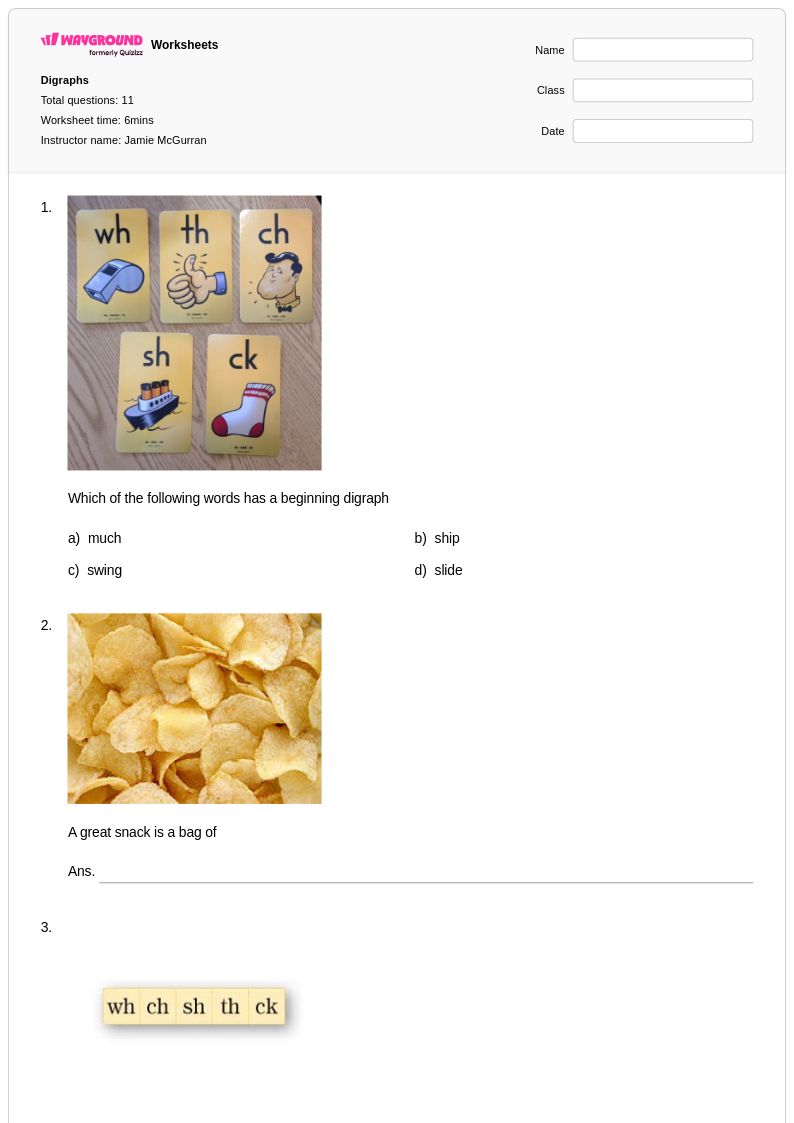
Consonant digraphs are two consonant letters that together produce a single sound not made by either letter alone, such as 'ch', 'sh', 'th', 'wh', 'ph', and 'ck'. Vowel digraphs, by contrast, are two vowel letters that combine to represent one vowel sound, such as 'ai', 'ea', 'oa', and 'ou'. Both are foundational phonics patterns, but they are typically introduced at different stages, with consonant digraphs coming earlier in most phonics sequences.
What exercises help students practice identifying digraphs in words?
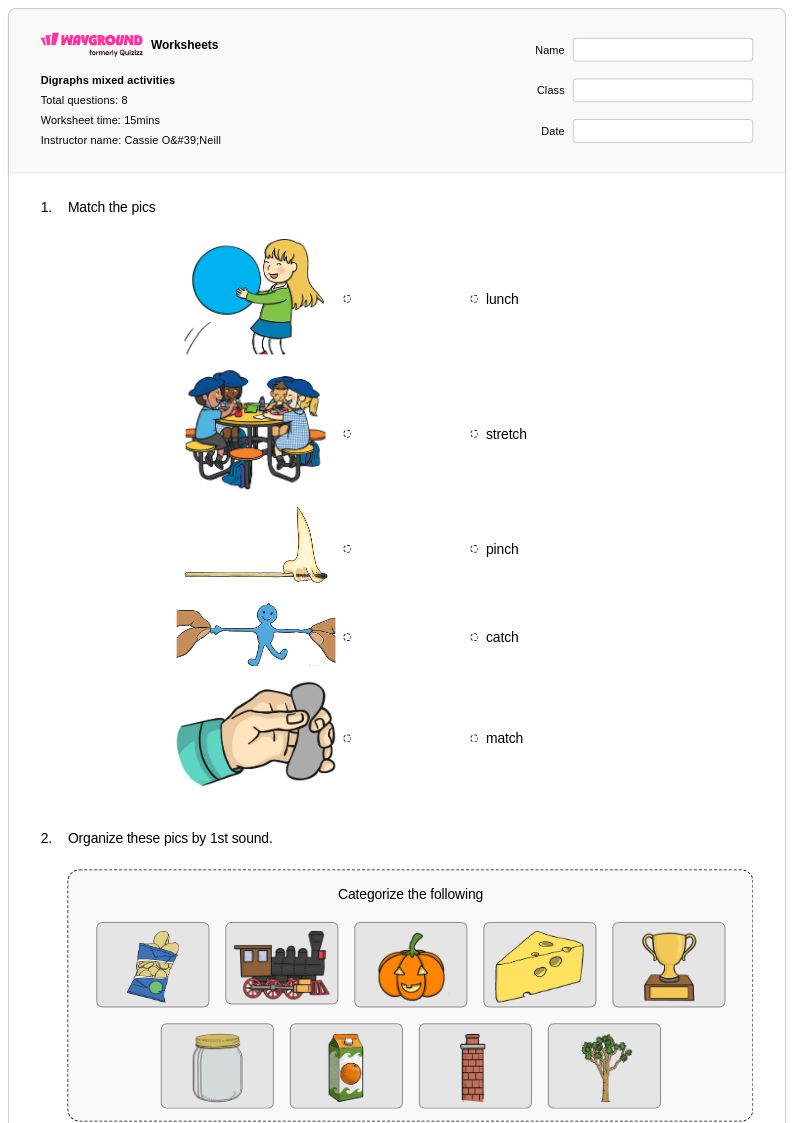
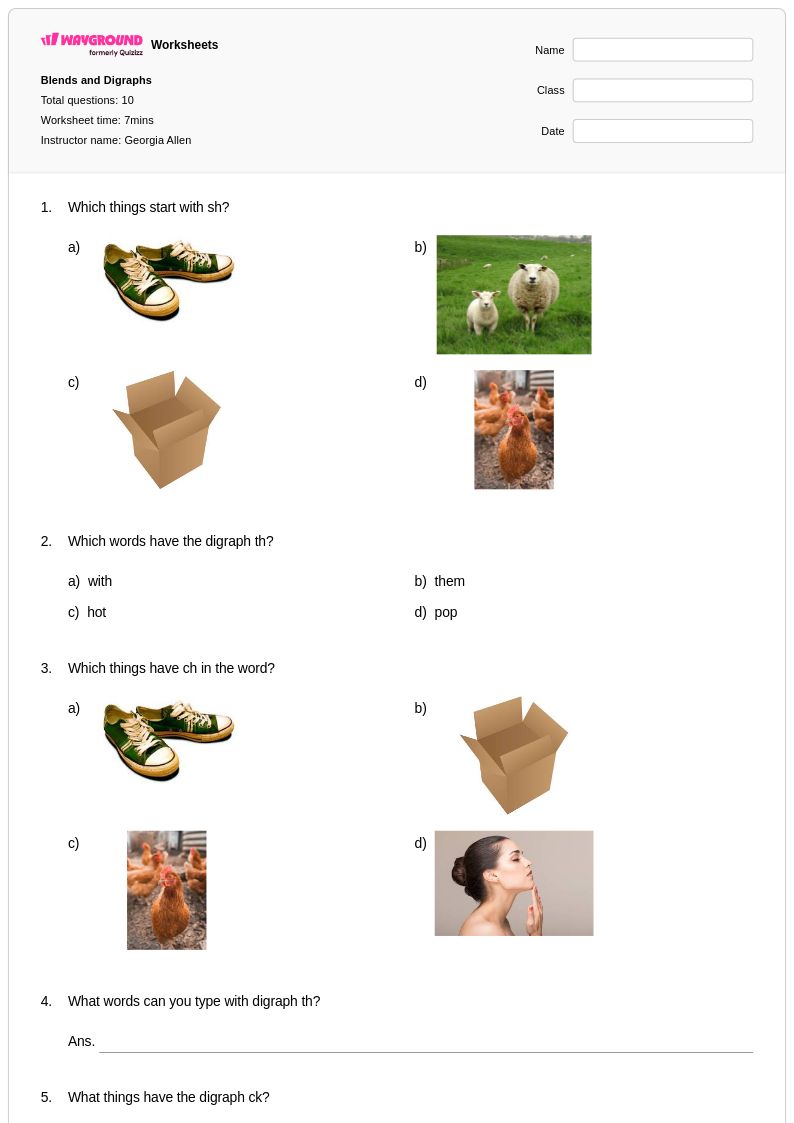
Effective practice exercises include sorting words by their digraph, circling or underlining the digraph within a word, filling in missing digraphs to complete a word, and matching pictures to words containing a target digraph. Progressing from basic identification tasks to spelling and writing tasks ensures students move from recognition to application, which is the level needed for real reading and spelling transfer.
What mistakes do students commonly make with digraphs?
A common error is treating the two letters of a digraph as separate sounds, such as pronouncing 'sh' as /s/ + /h/ instead of the single sound /sh/. Students also frequently confuse digraphs with blends, where each letter does retain its individual sound. Another frequent mistake is misreading less common digraphs like 'ph' (as in 'phone') or 'wh' because their sounds are not intuitively connected to the individual letters.
How do I use Wayground's digraph worksheets in my classroom?
Wayground's digraph worksheets are available as printable PDFs for traditional classroom use and in digital formats for technology-integrated instruction, giving teachers flexibility for whole-class lessons, small group work, independent practice, or homework. Teachers can also host worksheets as a quiz directly on Wayground, enabling real-time participation and automatic answer checking. Each worksheet includes a complete answer key, reducing prep time and making formative assessment straightforward.
How can I support students who are struggling with digraphs while keeping the rest of the class on track?
On Wayground, teachers can apply individual accommodations to struggling students without disrupting the rest of the class. Options include Read Aloud, which has questions and words read aloud for students who need auditory support, reduced answer choices to lower cognitive load, and extended time per question. These accommodations are saved per student and apply automatically in future sessions, so teachers set them up once and the platform handles differentiation from there.