Free Printable Distributive Property of Multiplication Worksheets for Year 4
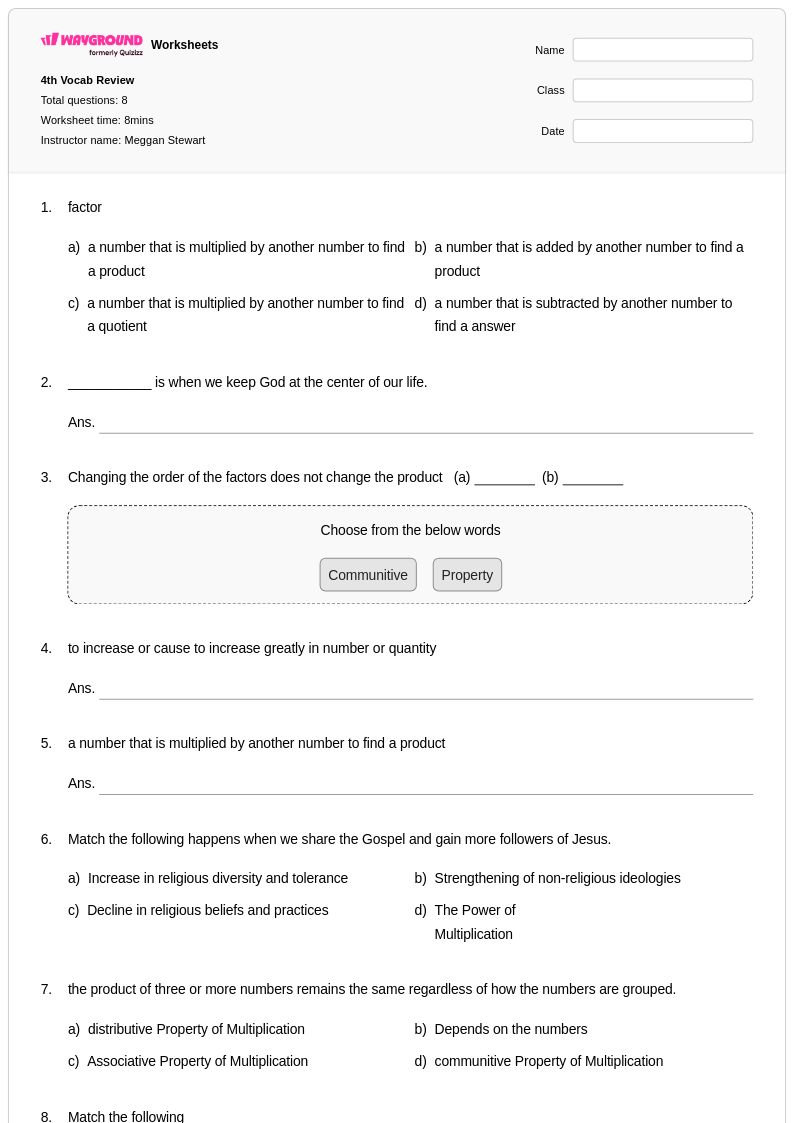
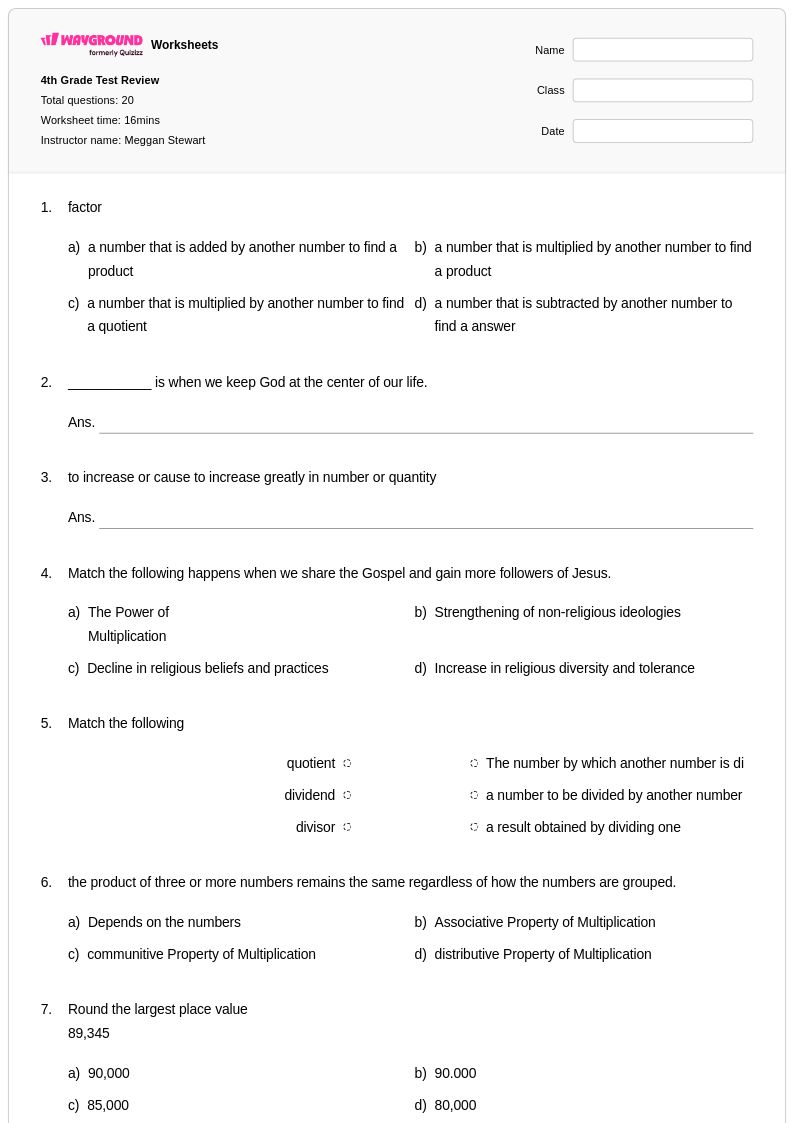
Year 4 distributive property of multiplication worksheets from Wayground provide free printables and practice problems with answer keys to help students master breaking apart numbers for easier calculation.
Explore printable Distributive Property of Multiplication worksheets for Year 4
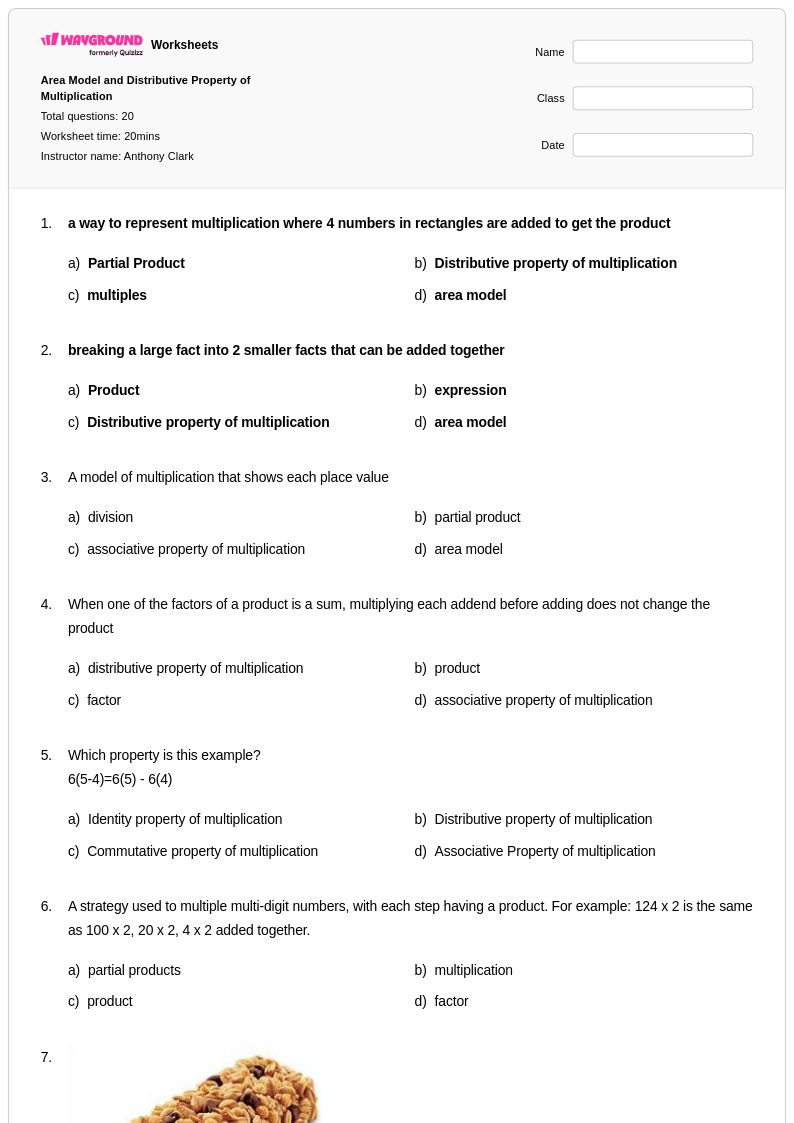
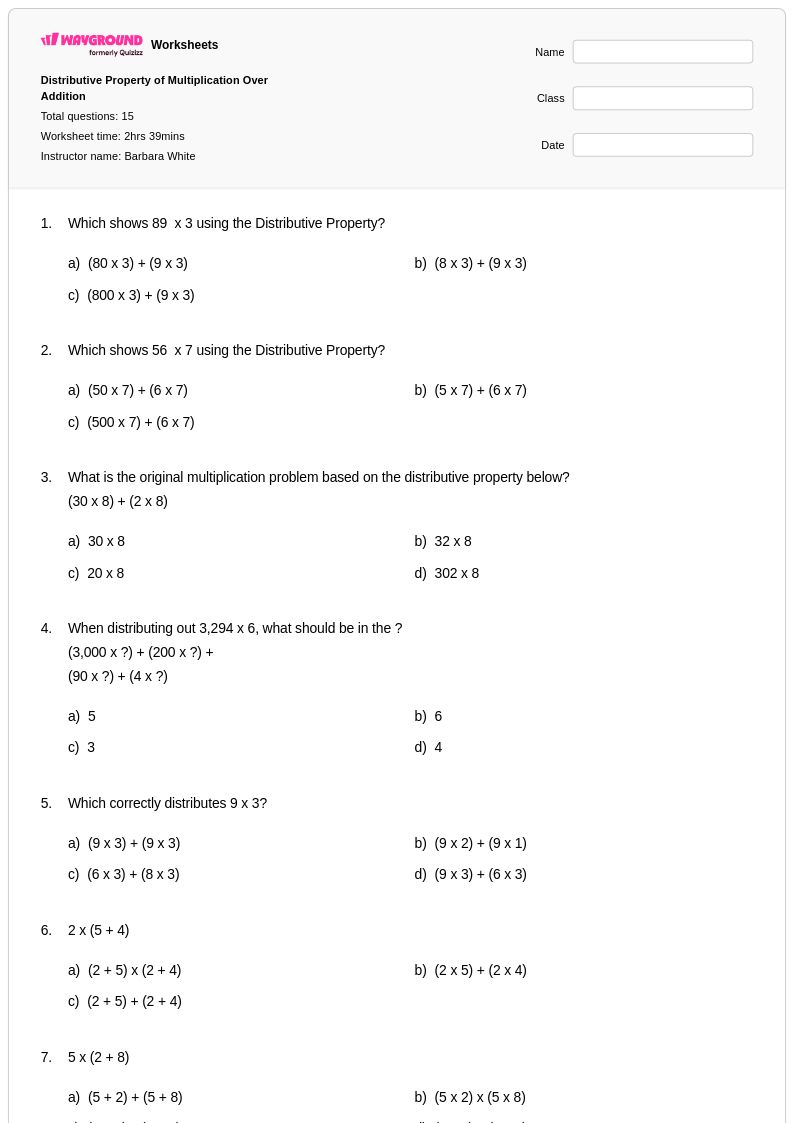
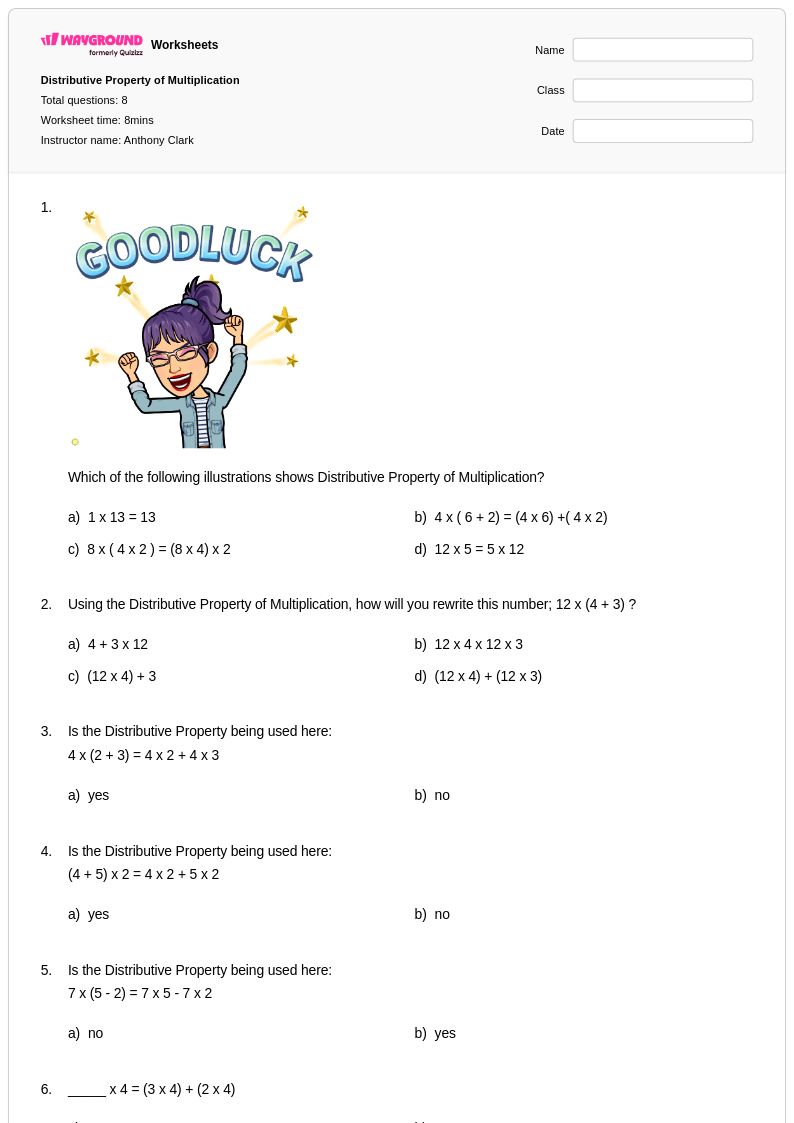
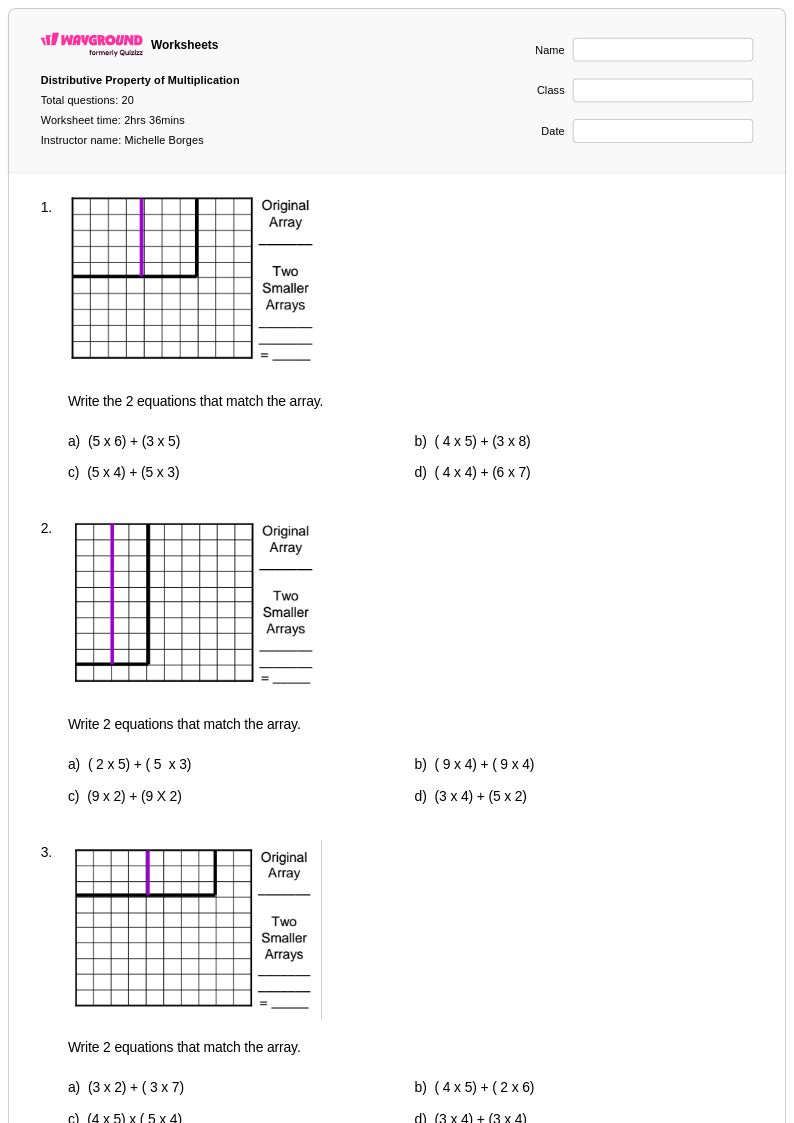
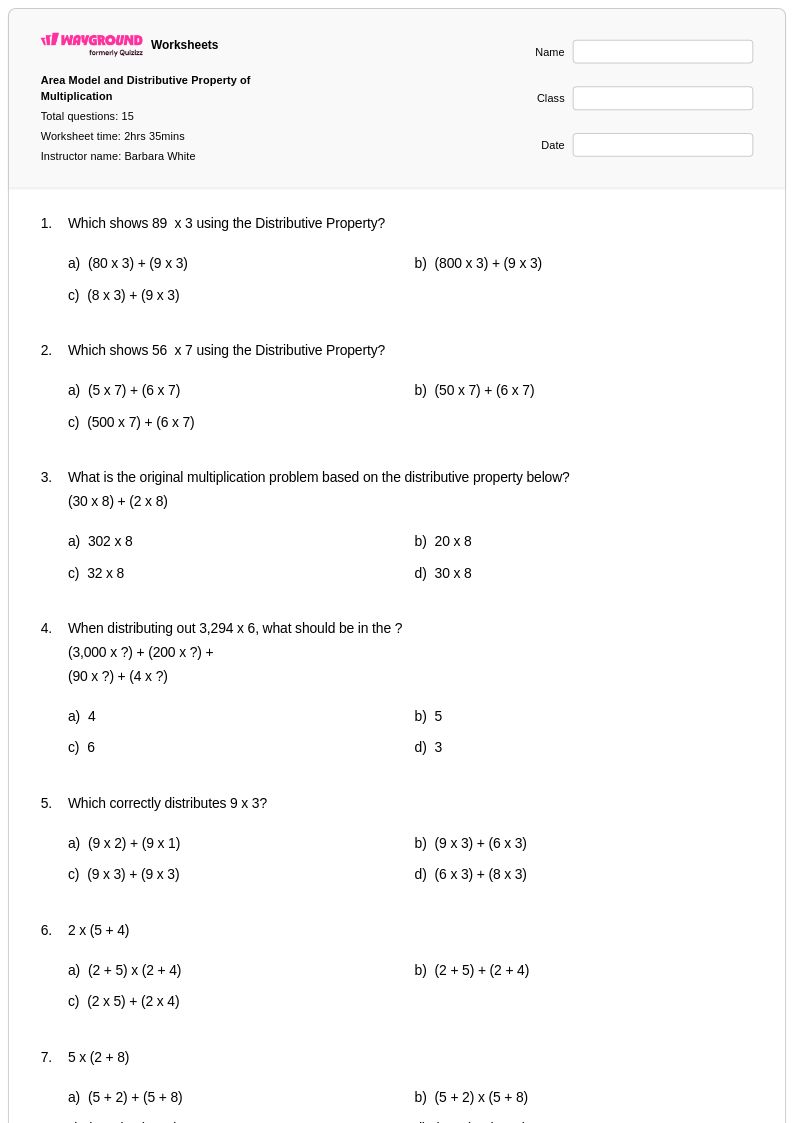
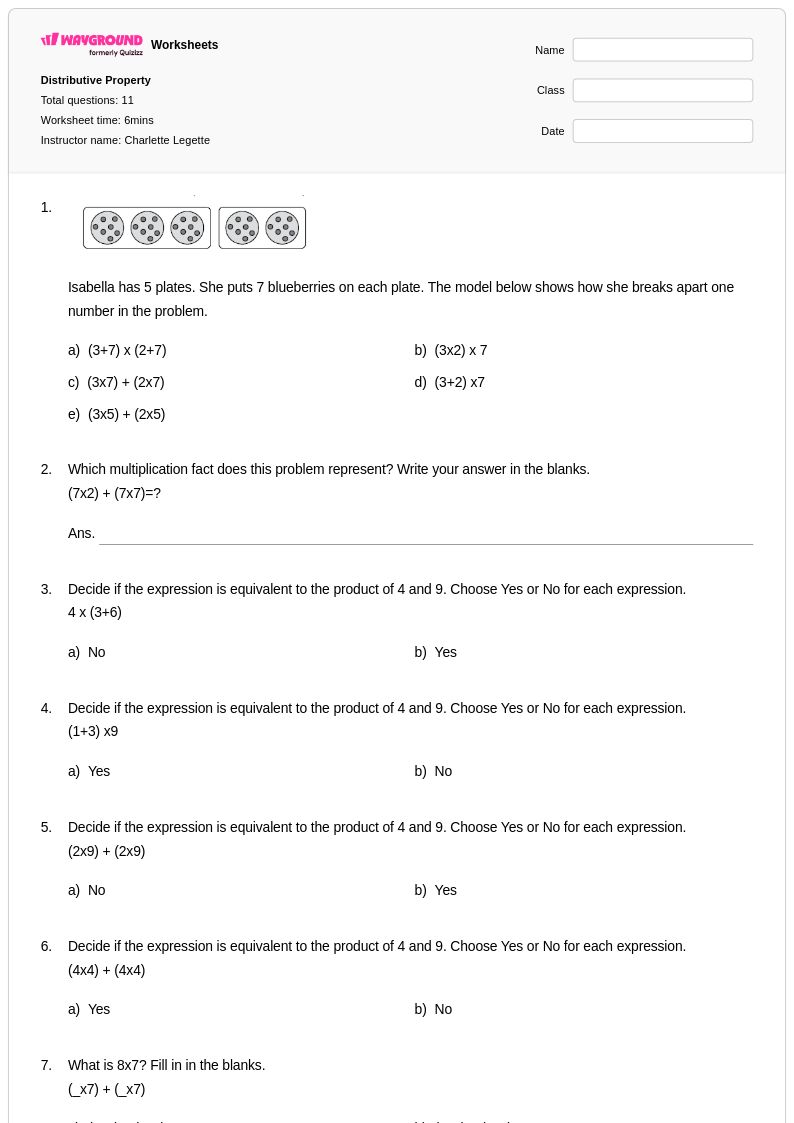
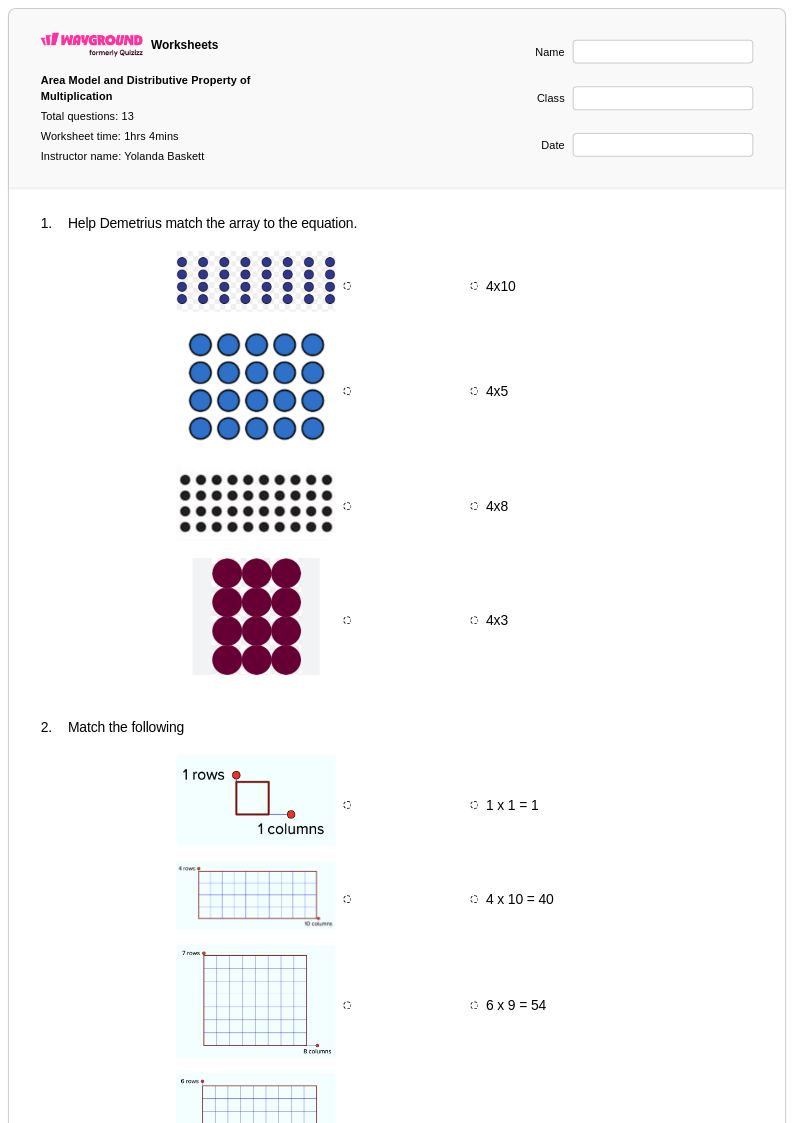
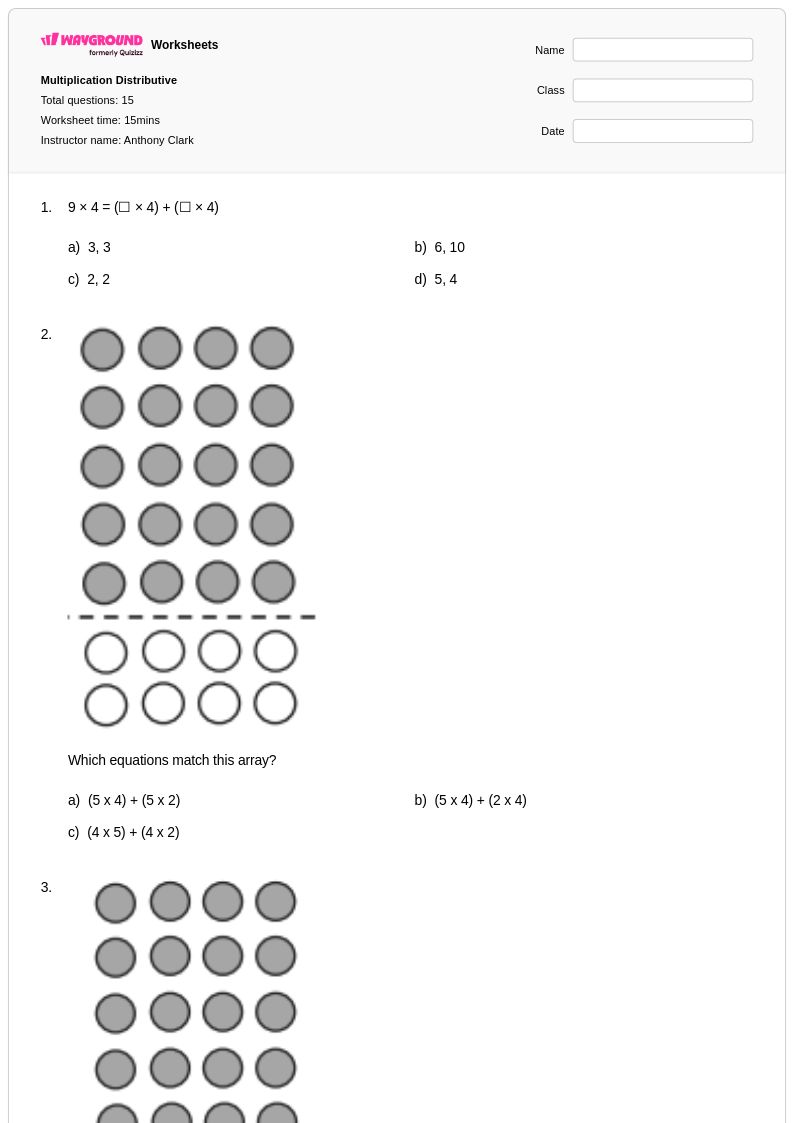
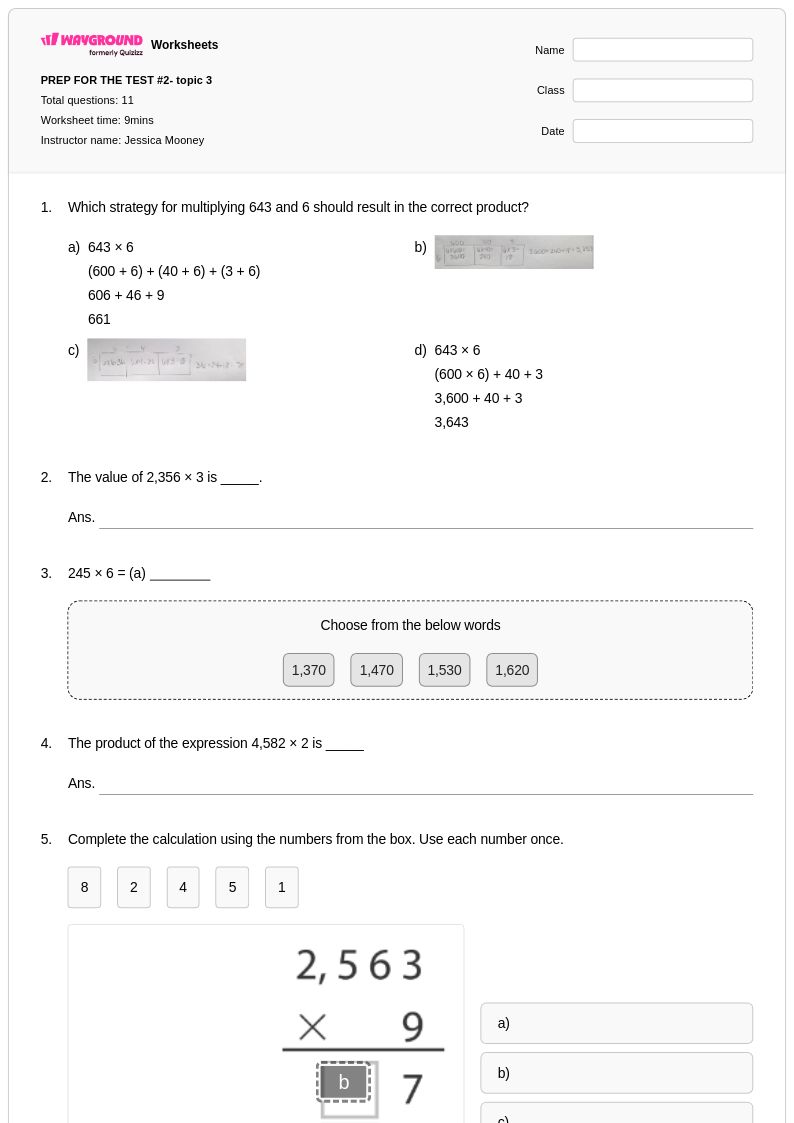
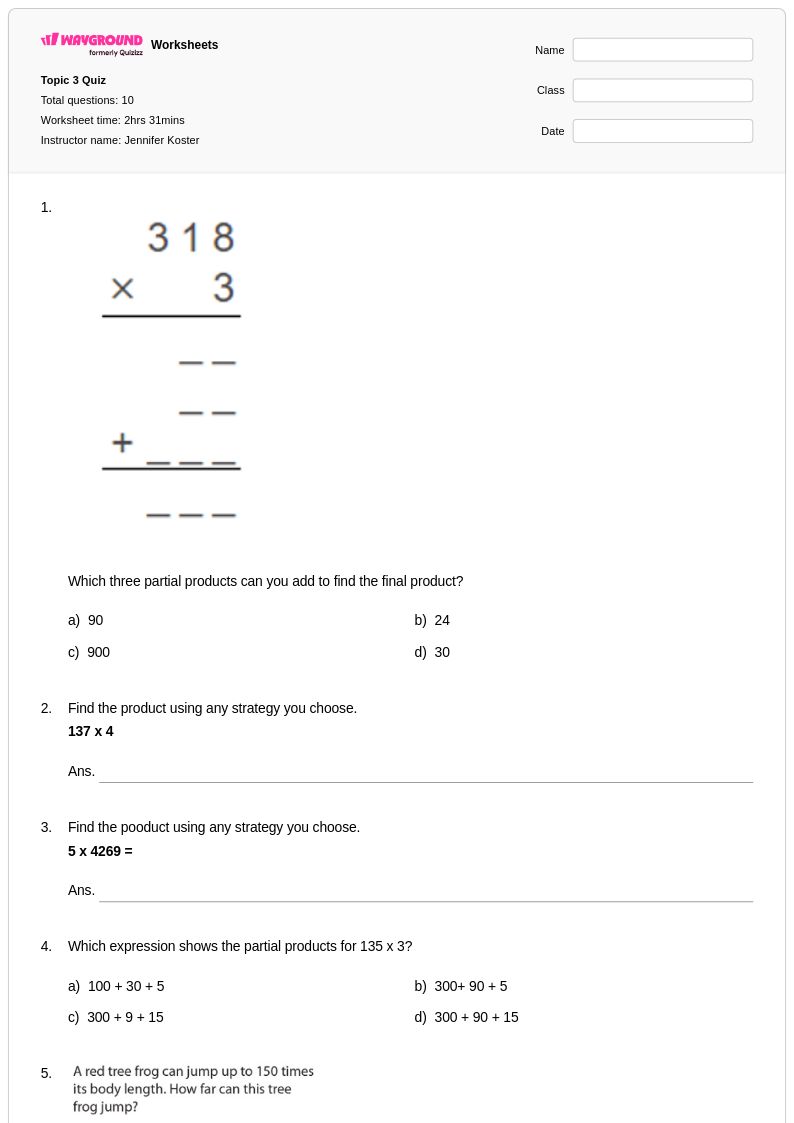
Distributive Property of Multiplication worksheets for Year 4 students available through Wayground (formerly Quizizz) provide comprehensive practice with this fundamental mathematical concept that bridges basic multiplication facts and more complex algebraic thinking. These carefully designed worksheets help students understand how multiplication distributes over addition, enabling them to break apart larger multiplication problems into smaller, more manageable parts. Students strengthen essential skills including mental math strategies, number sense, and problem-solving flexibility as they work through practice problems that demonstrate how expressions like 6 × (4 + 3) equal 6 × 4 + 6 × 3. Each worksheet collection includes detailed answer keys and is available as free printable pdf resources, making it easy for educators to implement immediate assessment and provide targeted feedback on student understanding.
Wayground (formerly Quizizz) supports mathematics teachers with an extensive library of millions of teacher-created resources specifically focused on the distributive property and other essential Year 4 mathematical concepts. The platform's robust search and filtering capabilities allow educators to quickly locate worksheets that align with specific learning standards and match their students' varied skill levels. Teachers benefit from built-in differentiation tools that enable customization of problem complexity and quantity, ensuring appropriate challenge levels for remediation, standard practice, or enrichment activities. These distributive property resources are available in both printable and digital formats, including downloadable pdf versions, providing flexibility for classroom instruction, homework assignments, and independent practice sessions that reinforce this critical multiplication strategy.
FAQs
How do I teach the distributive property of multiplication in fourth grade?
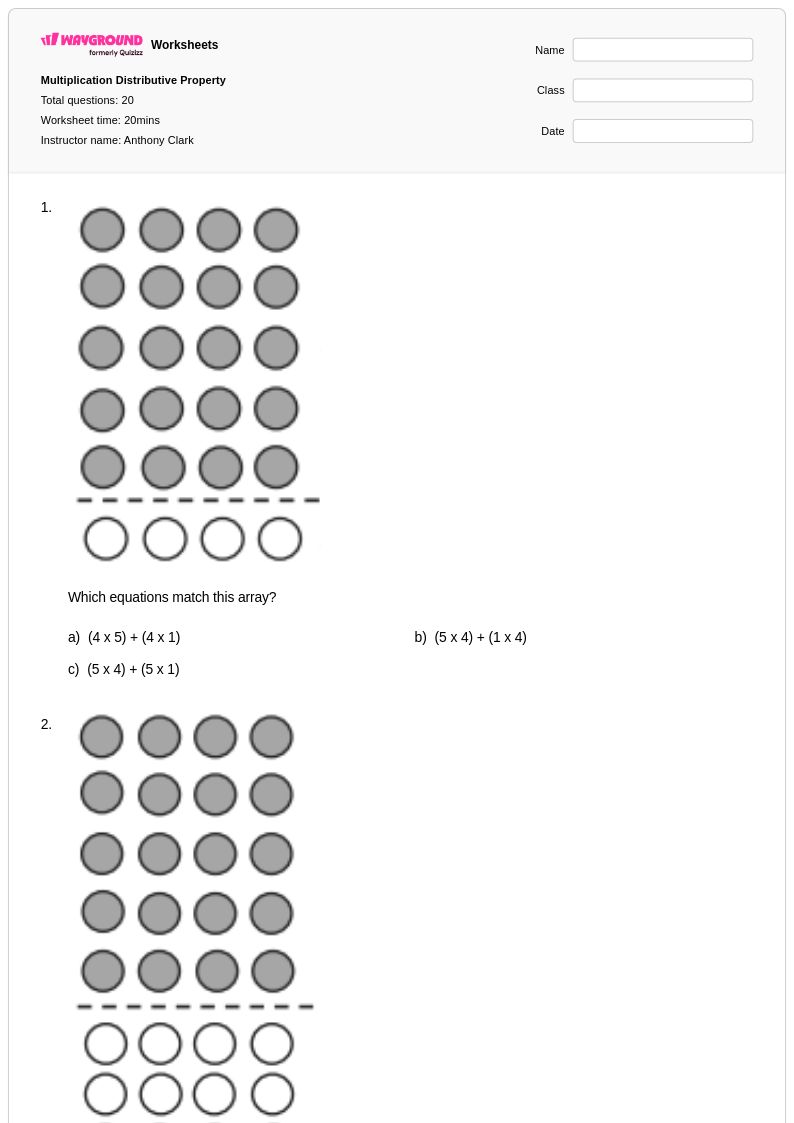
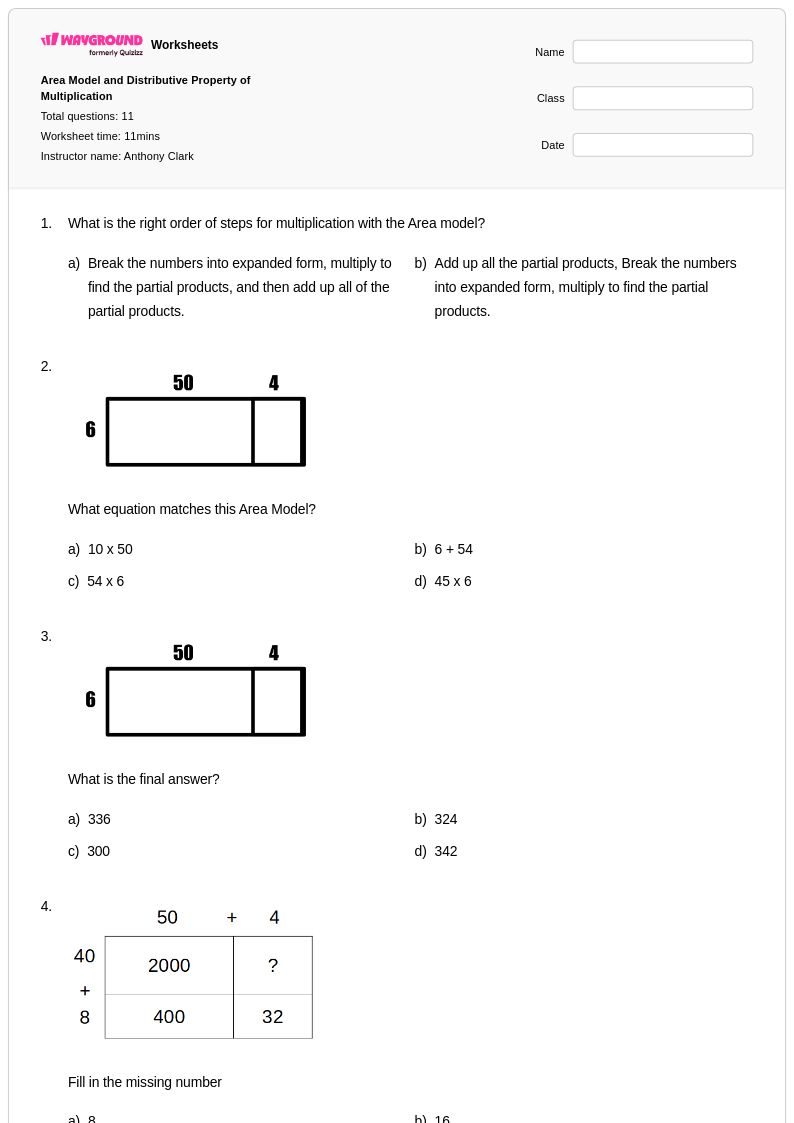
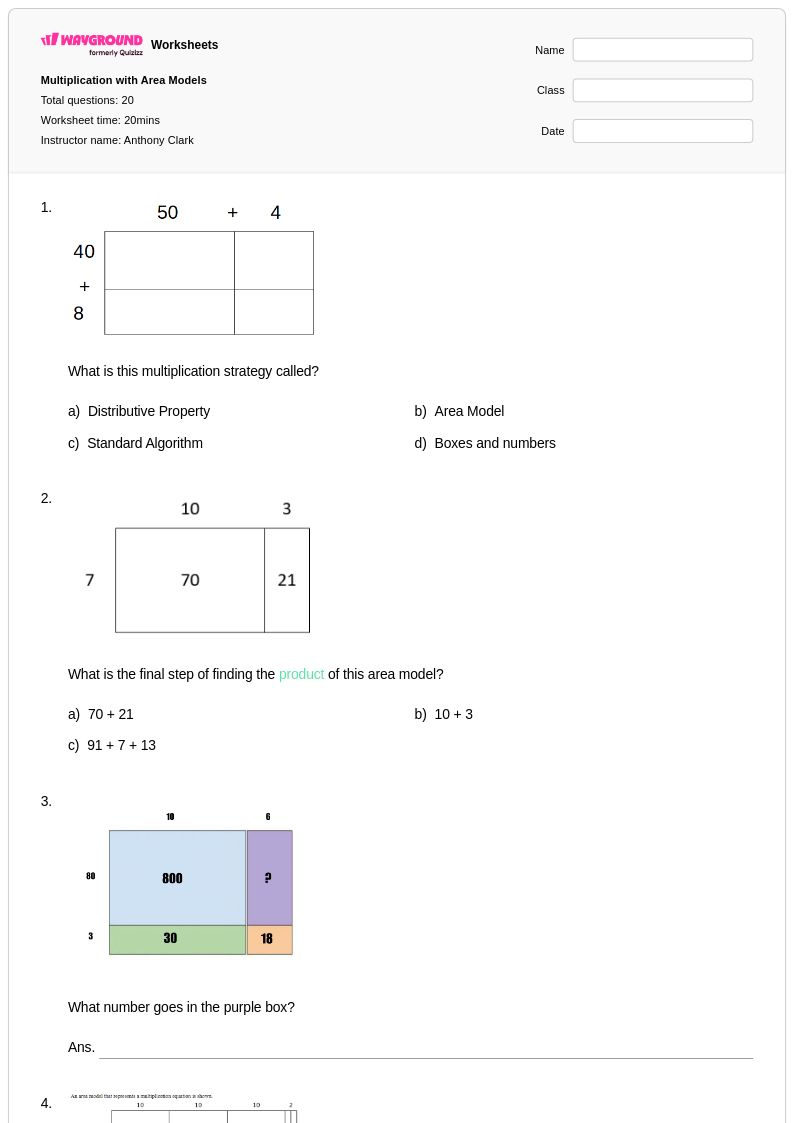
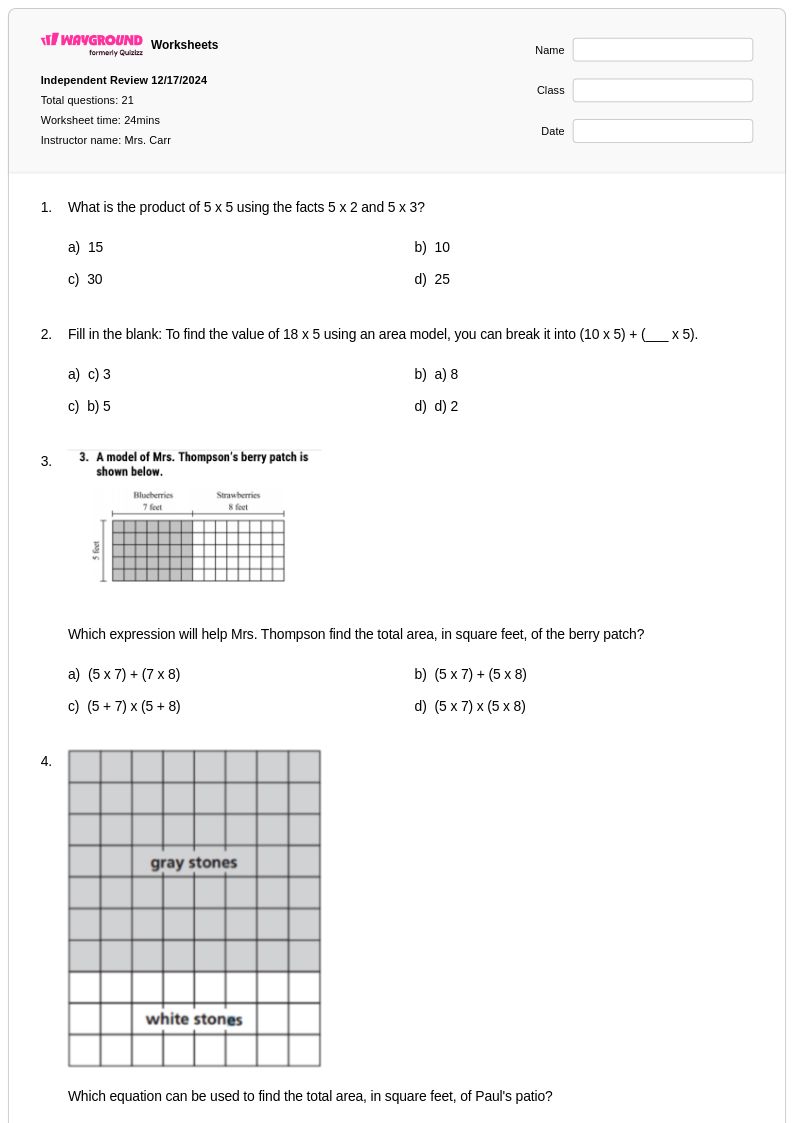
By Grade 4, students should move beyond arrays and start using the distributive property as a mental math tool for multi-digit multiplication. A useful entry point: show students how 6 × 23 becomes 6 × 20 + 6 × 3, which most can solve mentally. Connect this explicitly to the area model they may have seen in Grade 3, then practice with increasingly larger numbers. The payoff is that students start to see multi-digit multiplication as something they can reason through, not just a procedure to memorize.
What practice problems are most effective for fourth graders learning the distributive property?
Problems that require students to choose their own decomposition are more valuable than fill-in-the-blank expansion at this grade. Ask students to solve 7 × 36 using the distributive property and show their work — there's more than one valid split, and discussing different approaches builds number sense. Also include problems that run in reverse: given 7 × 30 + 7 × 6, can students write the original expression?
What errors do fourth graders commonly make with the distributive property?
Two errors show up repeatedly. First, students decompose only one part of the expression and forget to multiply the outer number by both terms — especially when the numbers get larger and the arithmetic is harder to track. Second, when subtraction appears (e.g., 6 × 29 as 6 × 30 − 6 × 1), students often add instead of subtract when combining the partial products. Both errors are worth targeting explicitly before students move to multi-digit multiplication algorithms.
How do I use these Grade 4 distributive property worksheets in my class?
These worksheets are available as printable PDFs with a complete answer key included, so you can assign them as independent practice or homework and grade quickly. For a more interactive session, host the worksheet as a digital quiz on Wayground — students work through problems on their devices and you can see results in real time. The answer key is there either way, so students can also self-check after completing paper versions.
How does the distributive property fit into the Common Core Grade 4 math progression?
In Grade 4, Common Core expects students to use place value understanding and properties of operations — including the distributive property — to multiply multi-digit numbers. Specifically, students learn to break a two-digit factor into tens and ones and multiply each part separately, which is the conceptual foundation for the standard multiplication algorithm they'll formalize in Grade 5. The distributive property is what makes that algorithm make sense rather than just being a set of steps to follow.
How can I differentiate distributive property practice for my fourth graders?
For students who are still shaky on the concept, Wayground's reduced answer choices accommodation can help — fewer options to evaluate means less cognitive overload while they're building confidence. You can also generate a version of the worksheet with larger font and wider spacing for students who need it. For students who are ready for more, push them toward problems involving three-digit numbers or subtraction-based decomposition (e.g., 8 × 49 as 8 × 50 − 8 × 1), which previews the mental math strategies they'll use in Grade 5.