Free Printable Distributive Property of Multiplication Worksheets for Year 5
Explore Wayground's free Year 5 distributive property of multiplication worksheets and printables with practice problems and answer keys to help students master breaking apart numbers for easier calculation.
Explore printable Distributive Property of Multiplication worksheets for Year 5
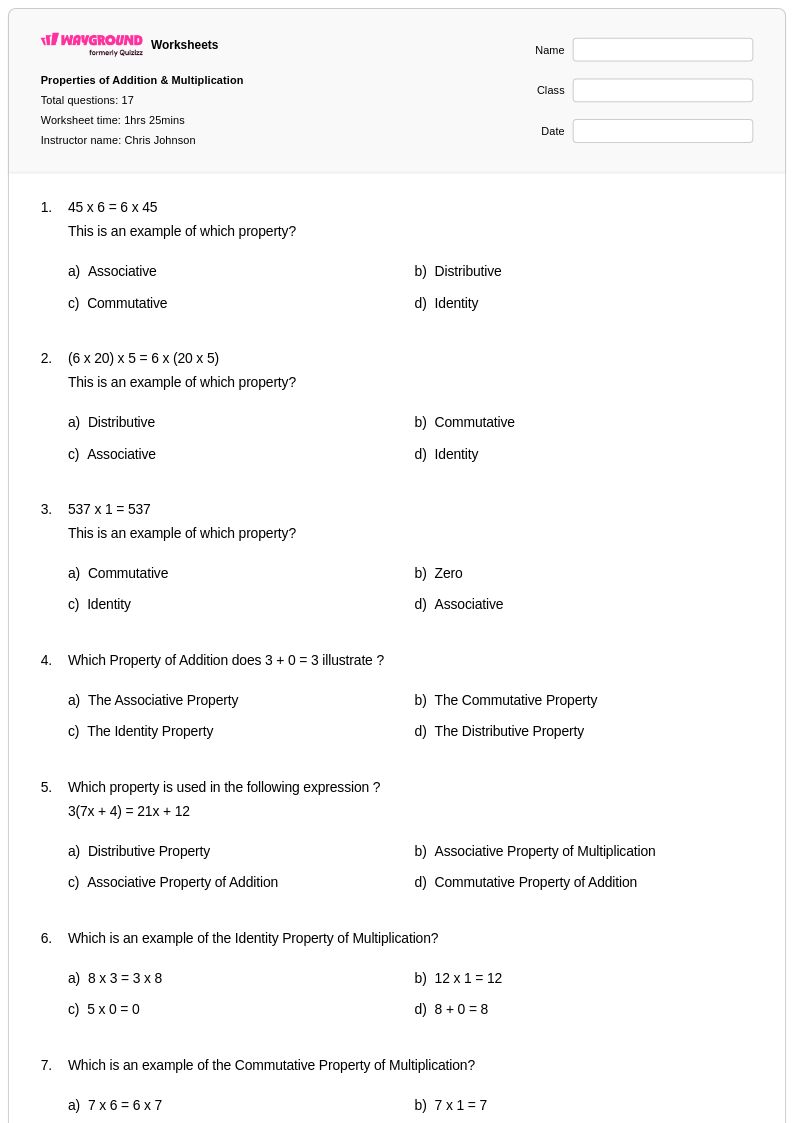
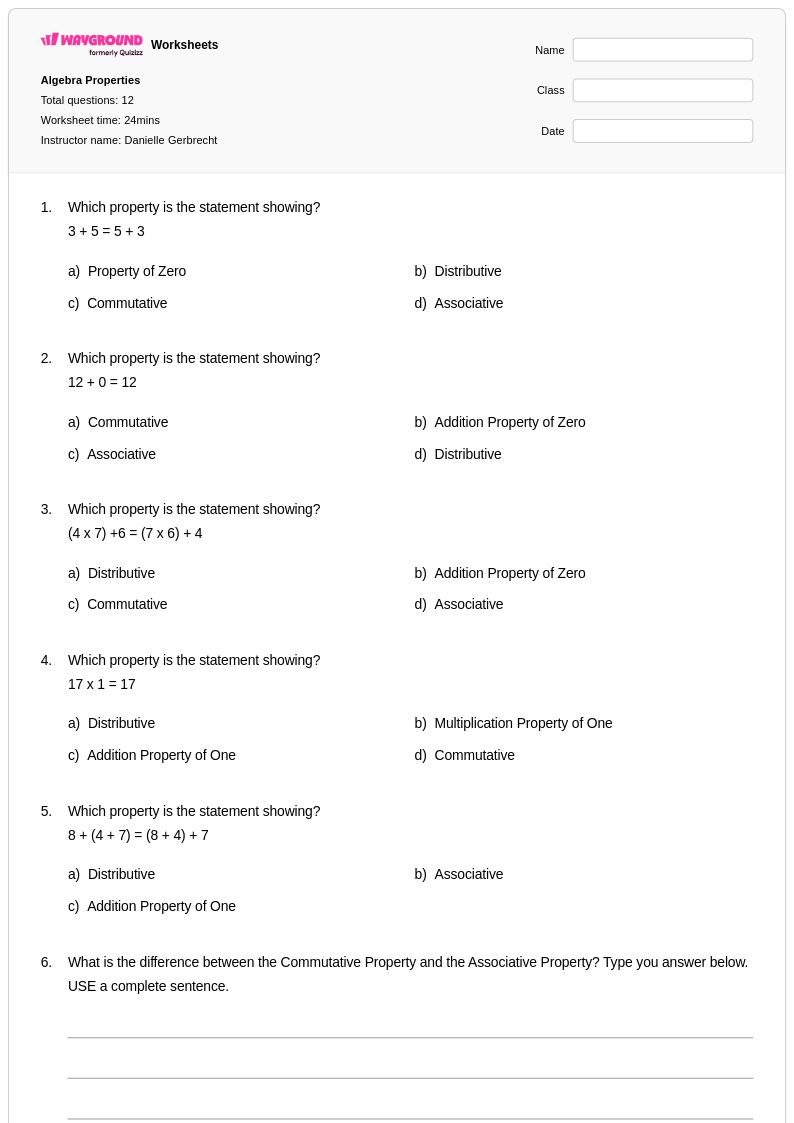
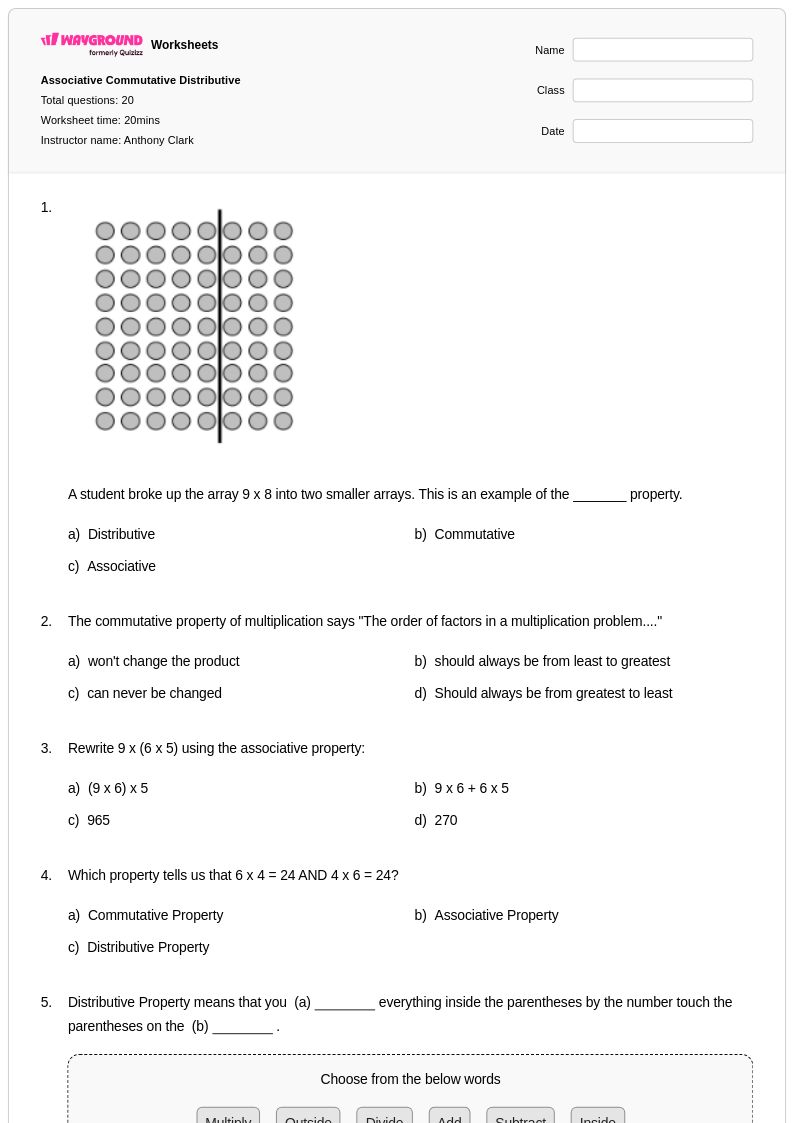
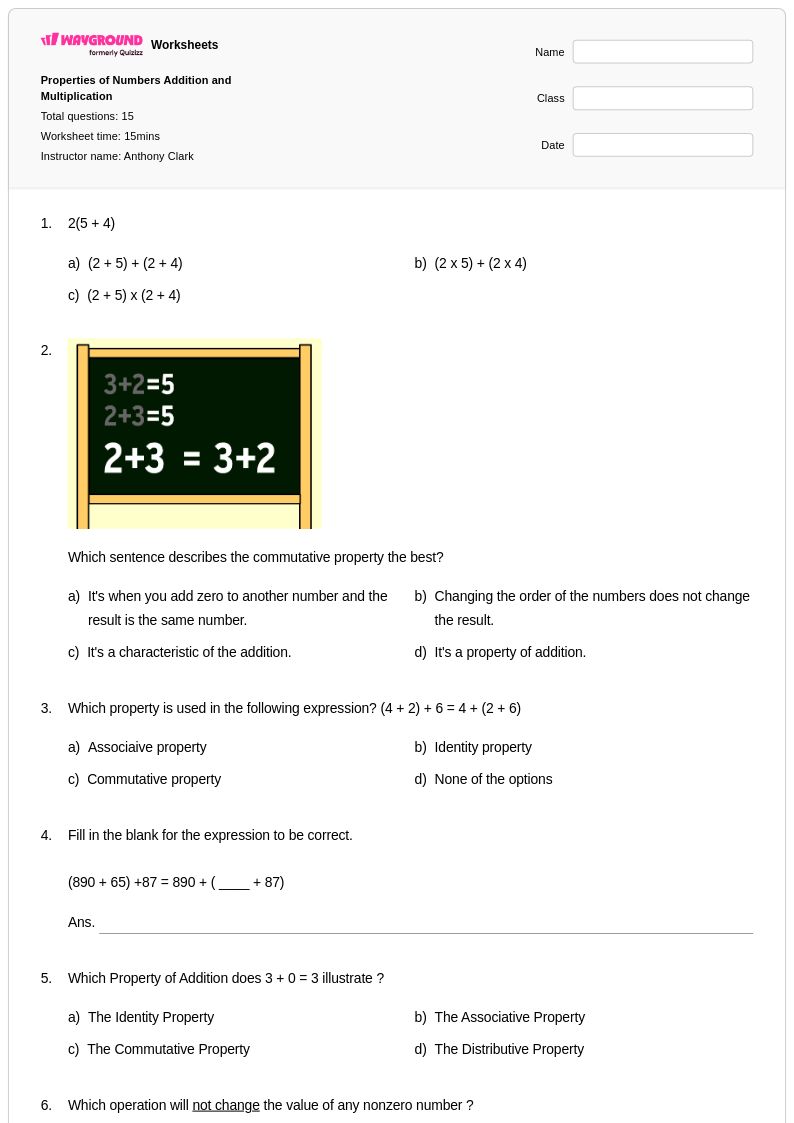
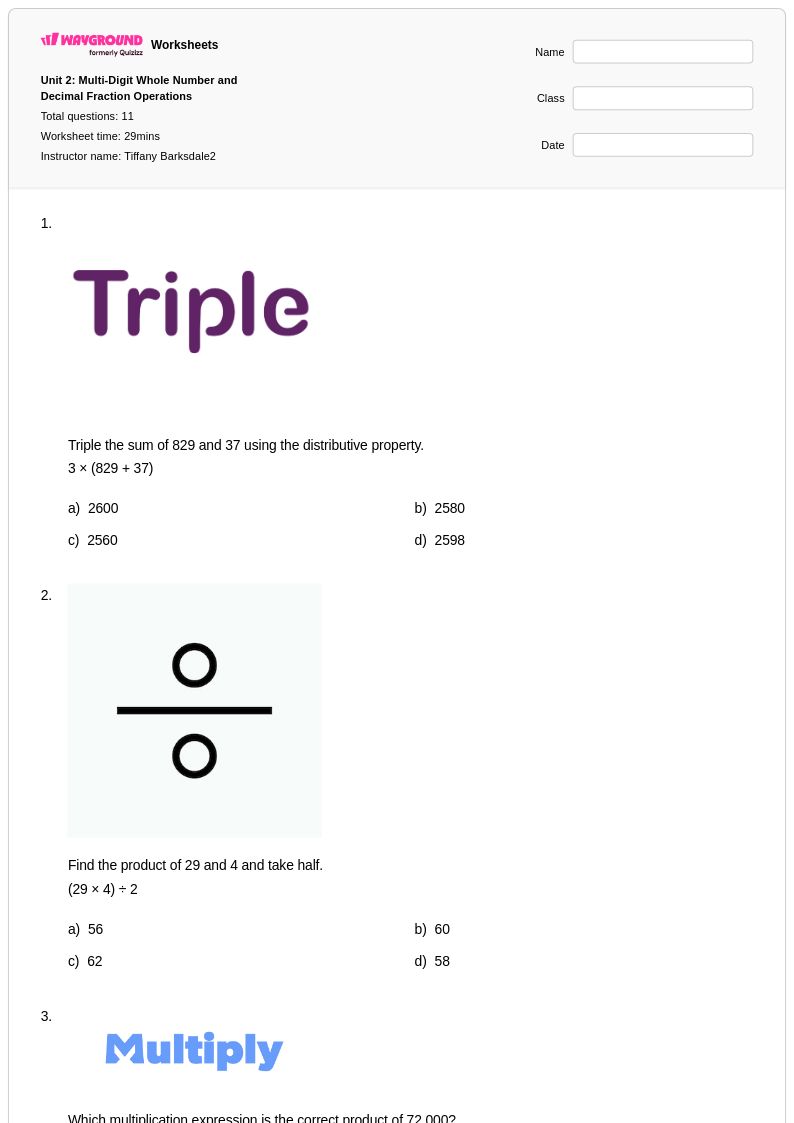
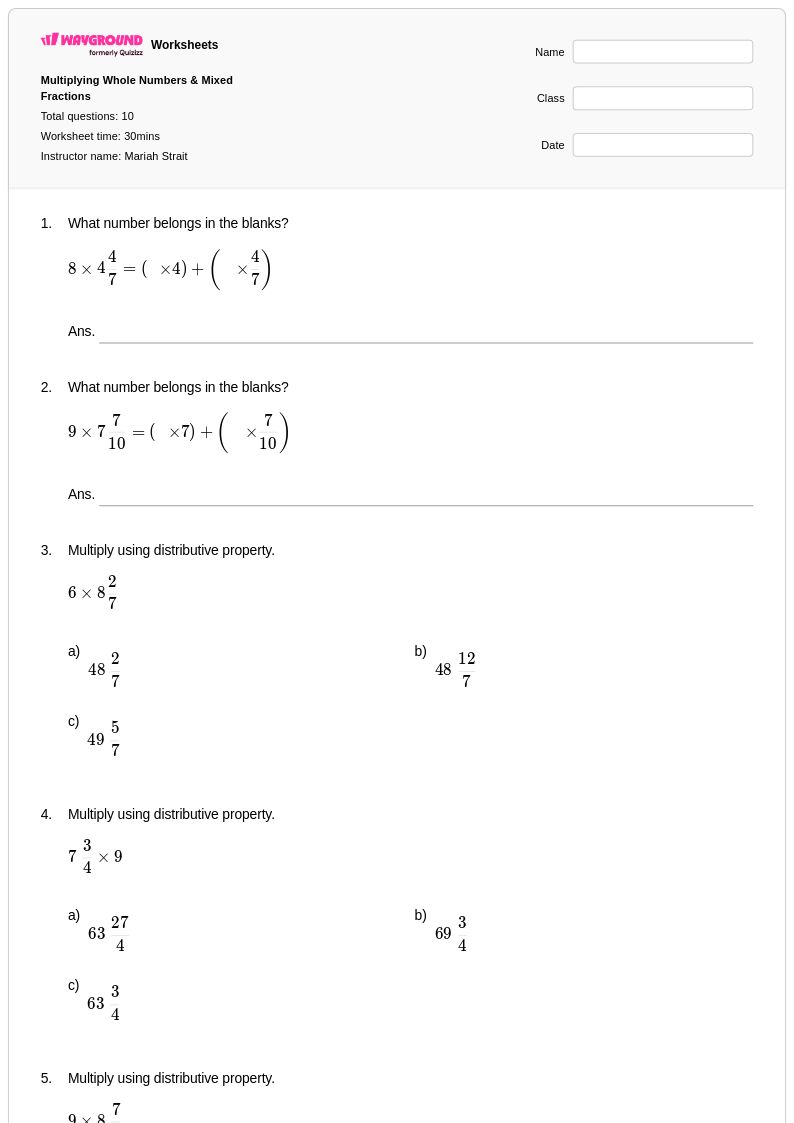
Year 5 distributive property of multiplication worksheets available through Wayground (formerly Quizizz) provide students with comprehensive practice in understanding and applying one of mathematics' most fundamental algebraic concepts. These carefully designed worksheets help students master the principle that multiplying a number by a sum equals the sum of multiplying that number by each addend separately, such as 4 × (3 + 5) = (4 × 3) + (4 × 5). The collection strengthens critical mathematical reasoning skills by guiding students through systematic practice problems that demonstrate how the distributive property simplifies complex multiplication expressions and builds foundational understanding for future algebraic thinking. Each worksheet includes a complete answer key and is available as a free printable pdf, ensuring teachers have immediate access to both instructional materials and assessment tools that support student learning objectives.
Wayground (formerly Quizizz) empowers educators with millions of teacher-created distributive property resources that can be easily discovered through robust search and filtering capabilities aligned to curriculum standards. These comprehensive worksheet collections support effective lesson planning by offering materials that address varying skill levels, from introductory conceptual understanding to advanced application problems requiring multi-step solutions. Teachers can customize existing worksheets or create differentiated versions to meet individual student needs, whether for remediation of struggling learners or enrichment of advanced students. The platform's flexible delivery options include both printable pdf formats for traditional classroom use and digital formats for interactive learning environments, enabling seamless integration into diverse instructional approaches while ensuring consistent skill practice across different learning modalities.
FAQs
How do I teach the distributive property of multiplication in fifth grade?
By Grade 5, students should be using the distributive property fluently for multi-digit multiplication and starting to see it as an algebraic rule, not just an arithmetic shortcut. A good instructional move is to present the same problem two ways — 4 × (3 + 5) solved by adding first, then solved by distributing — and ask students to verify both give 32. Then introduce expressions where adding first isn't possible (like when a variable is involved), making the distributive property the only path. That's the conceptual bridge into Grade 6 algebra.
What practice problems help fifth graders apply the distributive property?
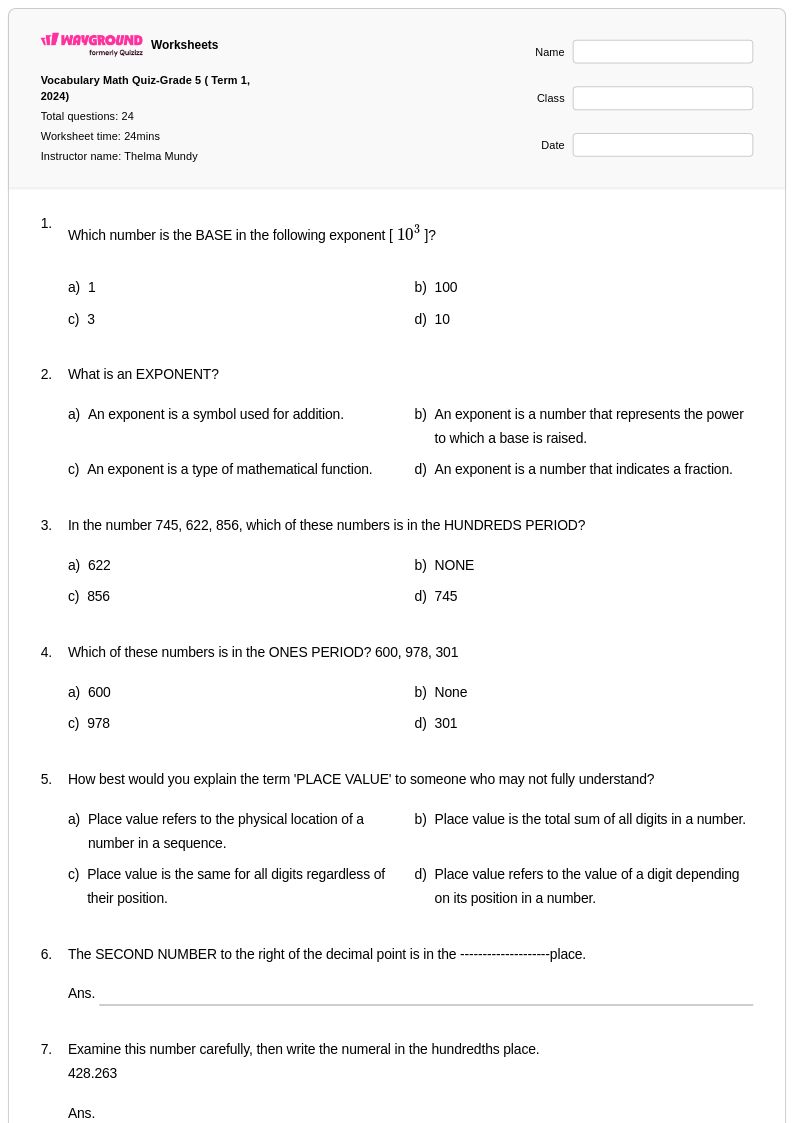
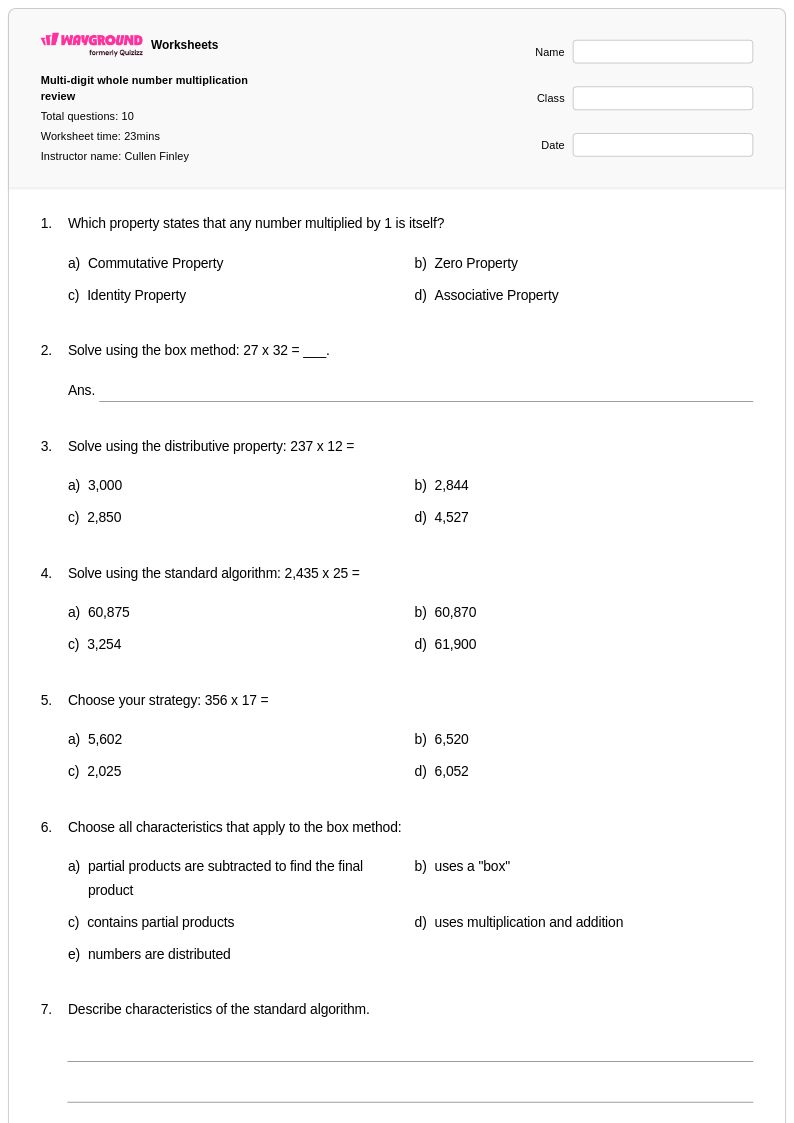
At Grade 5, effective practice includes: expanding expressions with larger numbers (e.g., 12 × (20 + 7)), applying the property to simplify mental math for multi-digit multiplication, and working in reverse to factor a sum. Problems that mix all three in one set — rather than drilling one type repeatedly — better prepare students for the varied ways the property appears in middle school math.
What mistakes do fifth graders make with the distributive property?
The most persistent error at this grade is sign mistakes when subtraction is involved: students correctly distribute the multiplication but then add the partial products instead of subtracting. A second issue is incomplete distribution in multi-term expressions — students who are fine with two terms inside the parentheses start making errors when there are three. Both errors tend to resurface in Grade 6 when variables are introduced, so it's worth addressing them explicitly now.
How do I use these Grade 5 distributive property worksheets?
Each worksheet is available as a printable PDF with a complete answer key, making it easy to assign as classwork or homework and have students self-check. You can also run the same worksheet as a digital quiz on Wayground, where students submit answers on their devices. If you go the paper route, the Wayground for Teachers app lets you scan or capture student work to grade digitally — useful when you want a record of student responses without manual data entry.
How does the distributive property fit into the Common Core Grade 5 math progression?
Common Core treats Grade 5 as the point where students consolidate multi-digit multiplication using strategies grounded in place value and properties of operations — the distributive property chief among them. Students are expected to explain why their multiplication strategies work, not just execute them. This sets up Grade 6, where the same property is applied to algebraic expressions with variables, so a student who understands 4 × (3 + 5) conceptually will have a much easier time with 4(x + 5) the following year.
How can I support diverse learners with these Grade 5 worksheets?
Wayground lets you create alternate versions of the same worksheet with adjusted font size or a dyslexia-friendly font for students who need it, and you can translate the worksheet into another language for English language learners. For students who struggle with working memory — common when tracking multiple partial products — the Read Aloud accommodation reads questions aloud so students can focus on the math rather than decoding the text. These settings apply per student, so the rest of the class works from the standard version without any disruption.