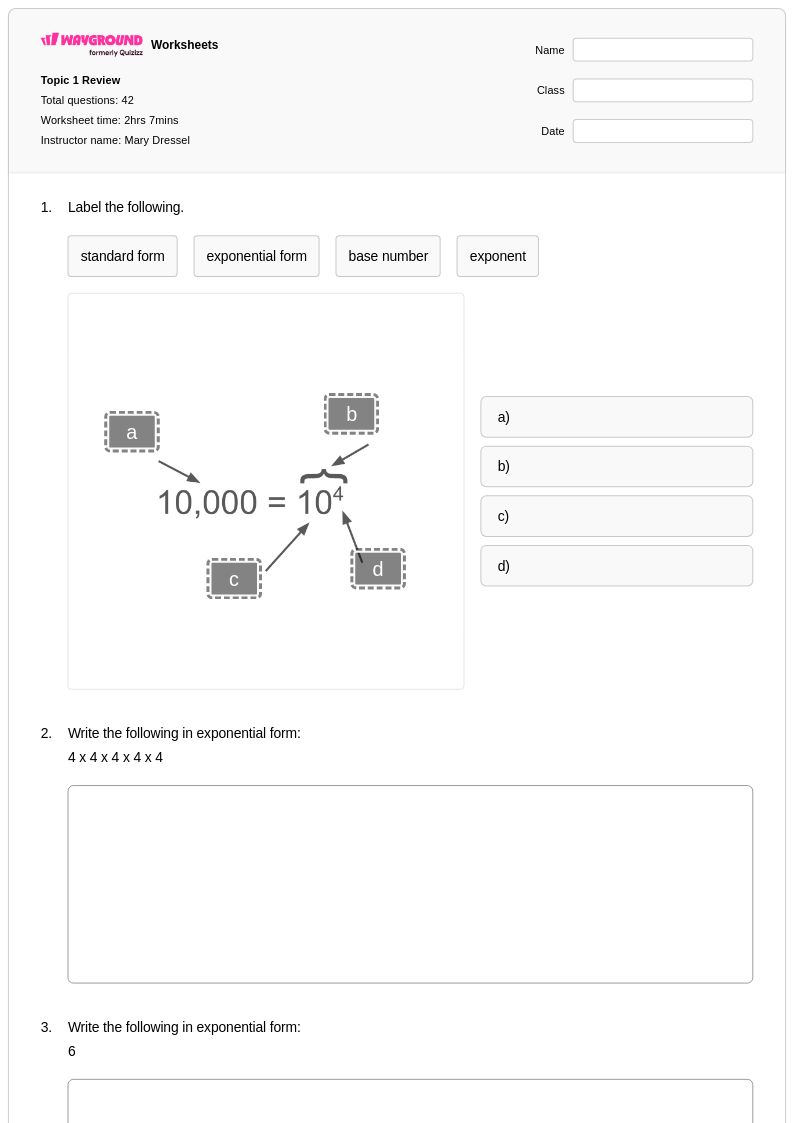
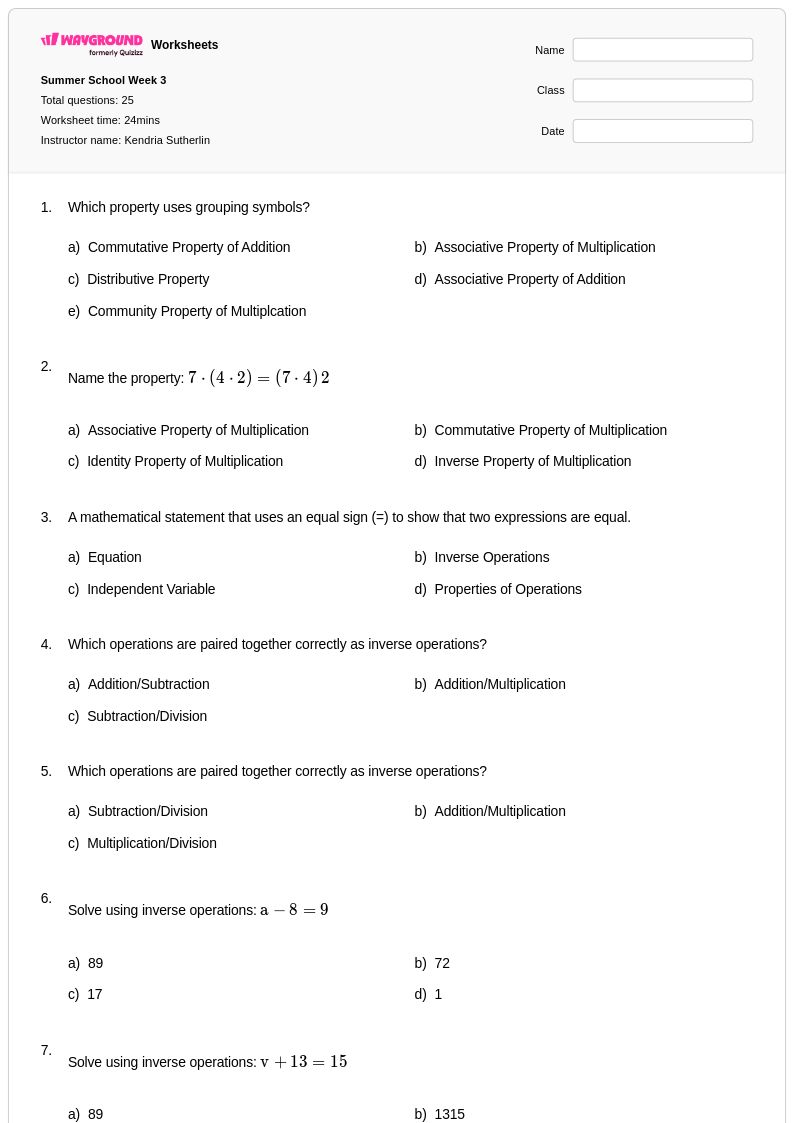
Free Printable Distributive Property of Multiplication Worksheets for Year 6
Free Year 6 distributive property of multiplication worksheets and printables help students master breaking down complex multiplication problems into simpler parts, featuring practice problems with step-by-step solutions and answer keys.
Explore printable Distributive Property of Multiplication worksheets for Year 6
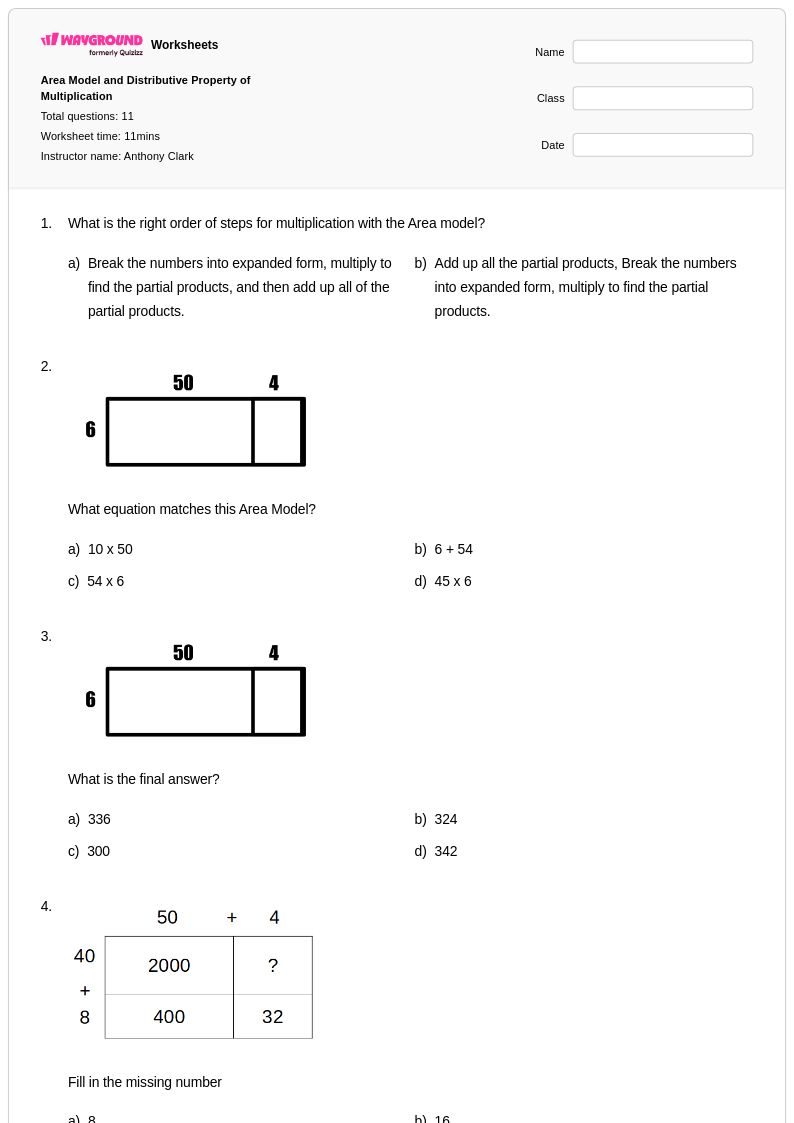
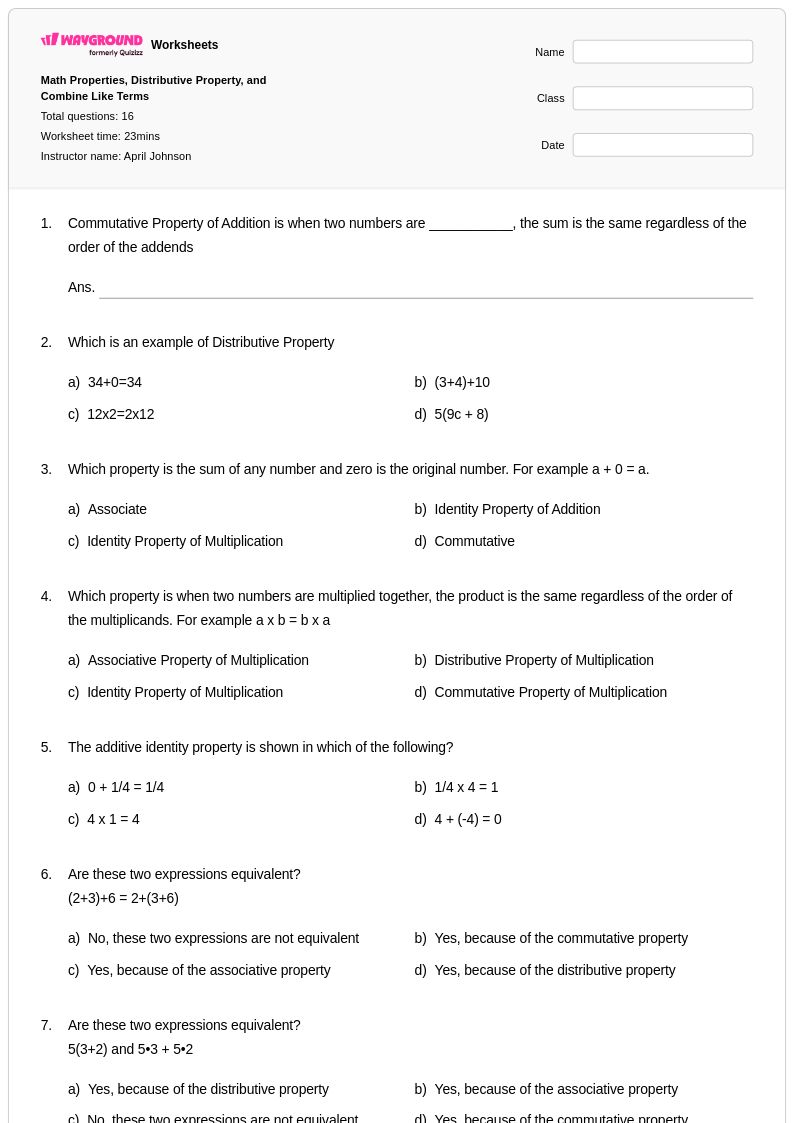
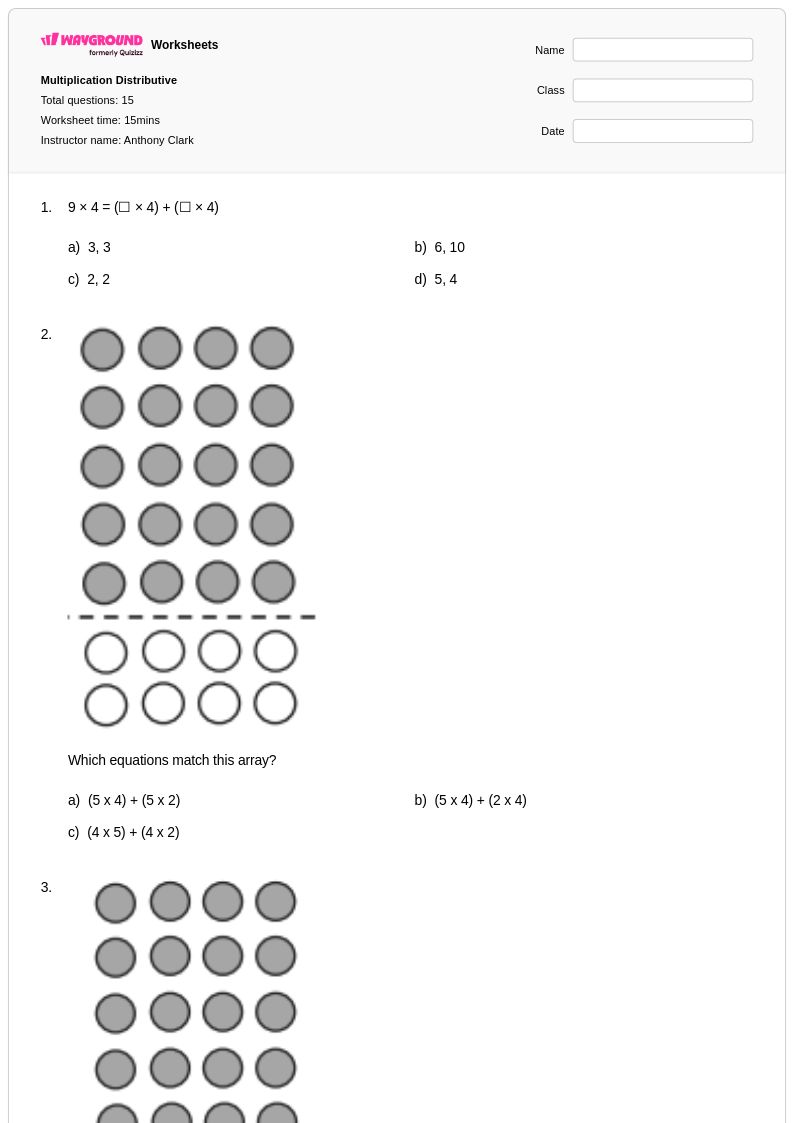
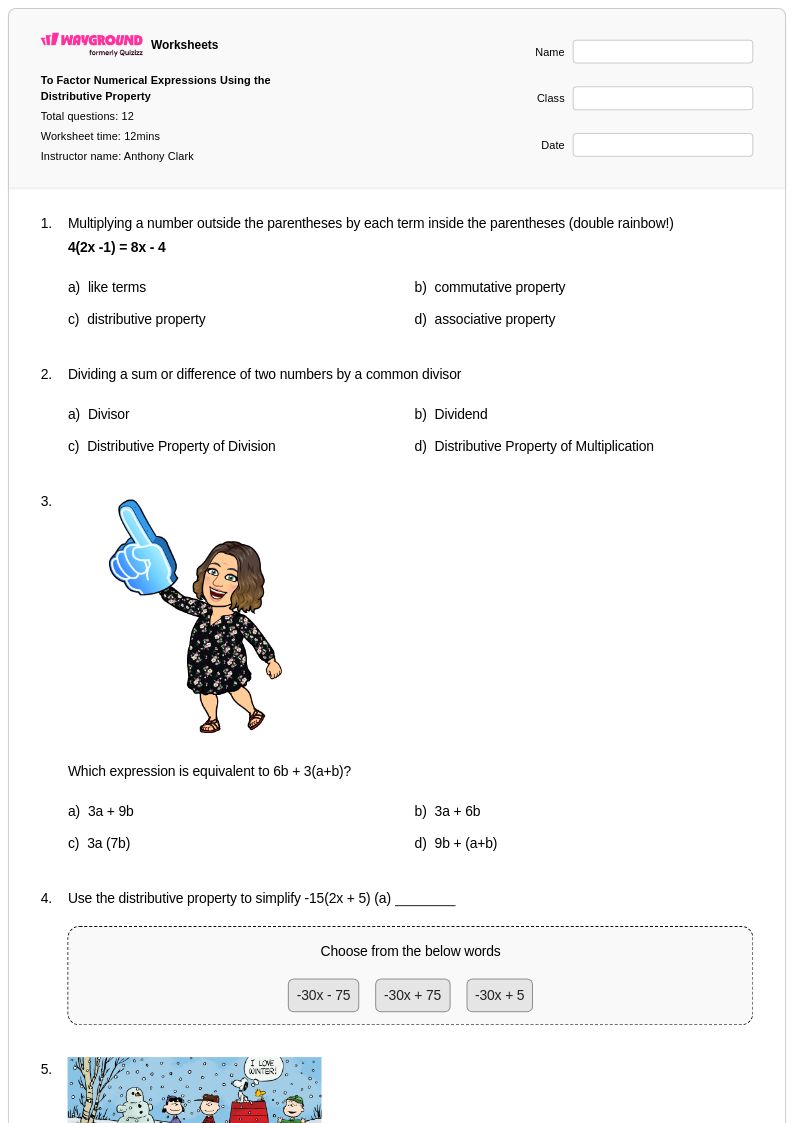
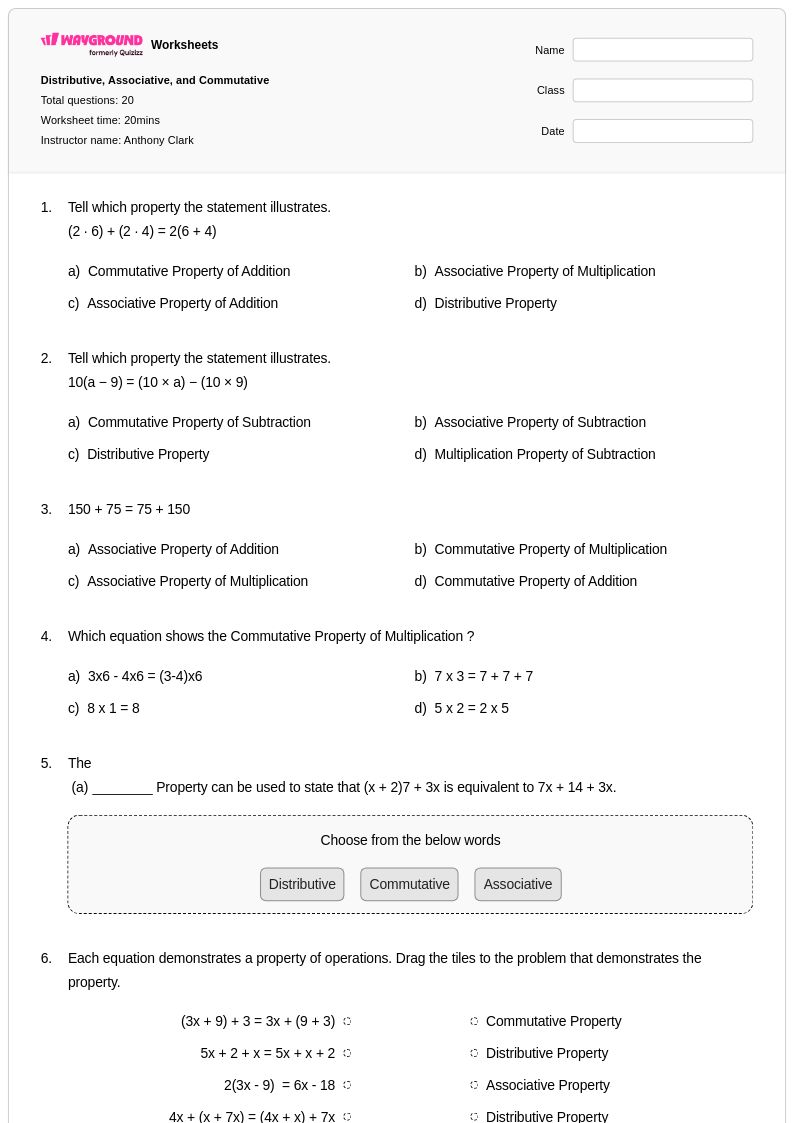
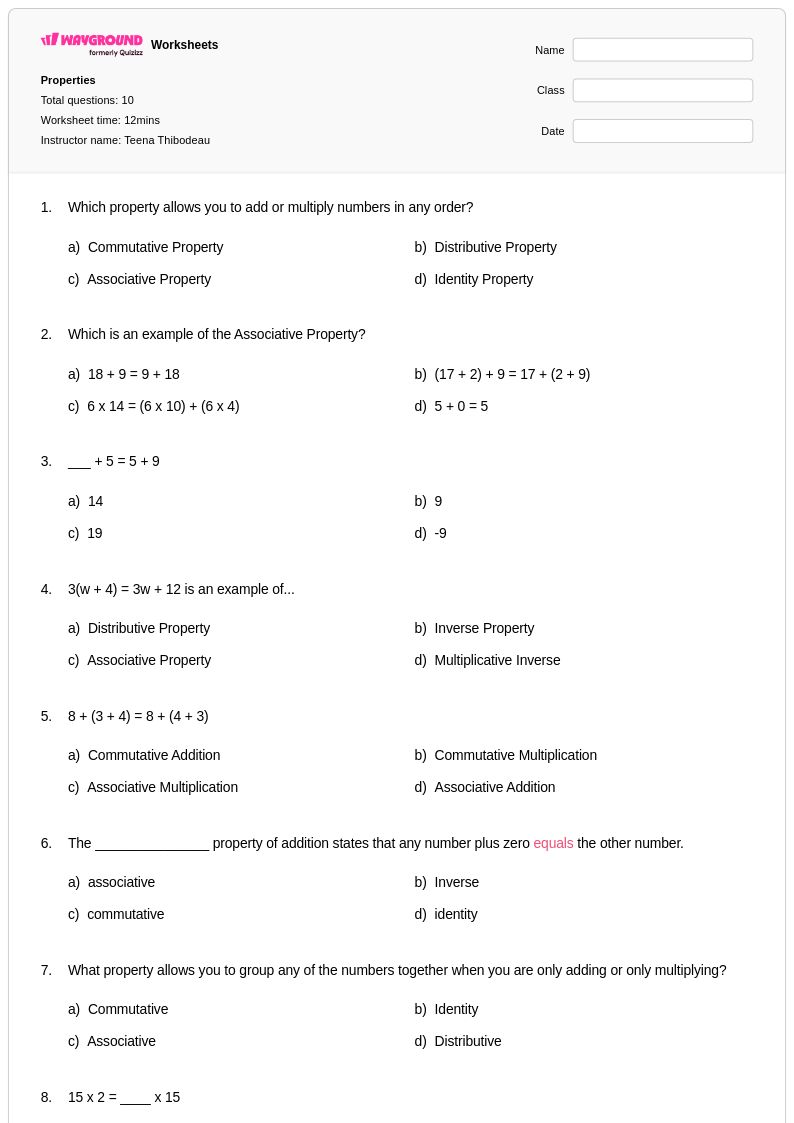
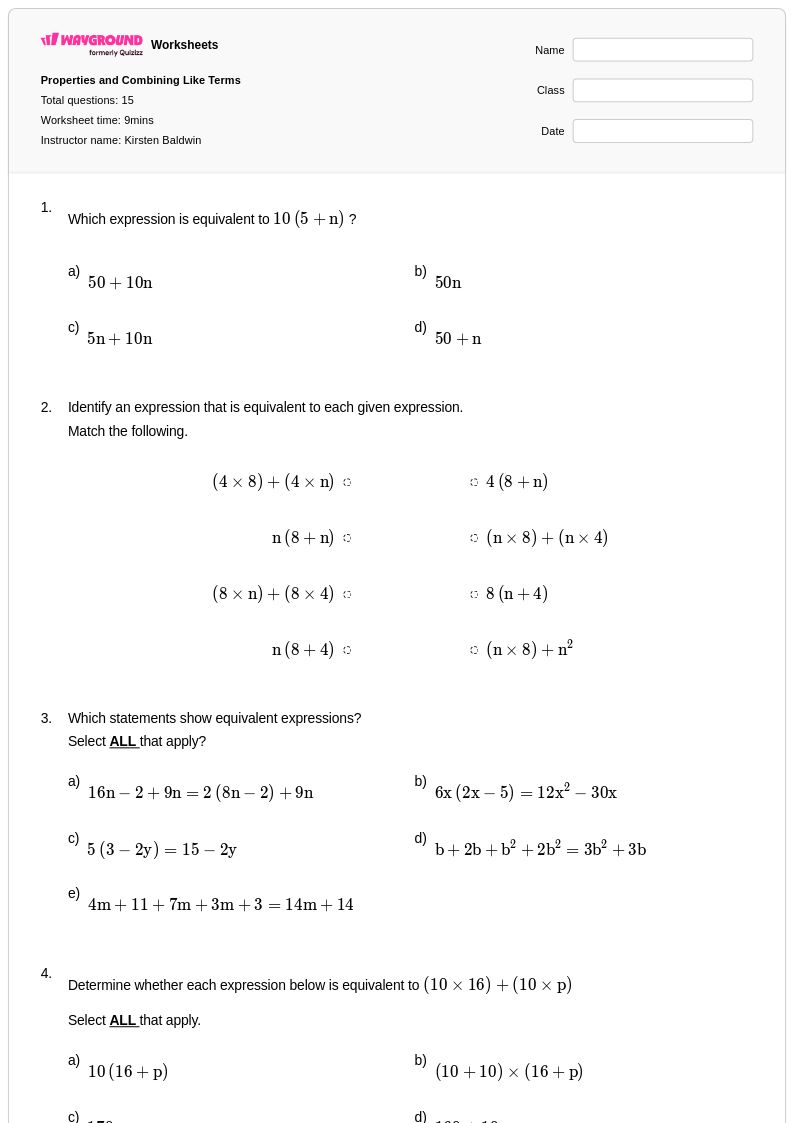
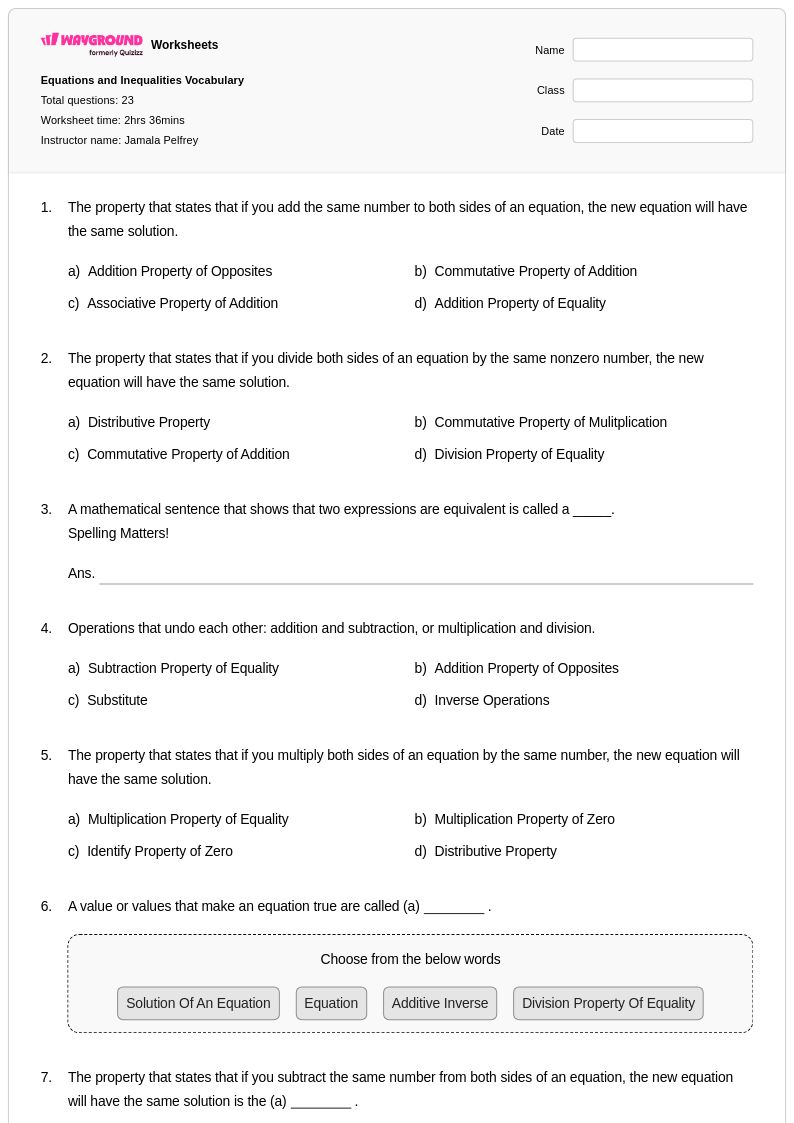
The Distributive Property of Multiplication worksheets available through Wayground (formerly Quizizz) provide Year 6 students with comprehensive practice in one of mathematics' most fundamental algebraic concepts. These carefully designed worksheets strengthen students' understanding of how multiplication distributes over addition and subtraction, teaching them to break down complex expressions like 6(4 + 7) into 6 × 4 + 6 × 7 for easier computation. Students develop essential skills in mental math strategies, algebraic thinking, and number sense through varied practice problems that range from basic numerical examples to more advanced applications involving variables and multi-step expressions. Each worksheet comes with a complete answer key and is available as a free printable pdf, making it simple for educators to provide targeted practice and immediate feedback on this crucial mathematical property.
Wayground (formerly Quizizz) empowers teachers with an extensive collection of millions of teacher-created resources specifically designed to support Distributive Property of Multiplication instruction at the Year 6 level. The platform's robust search and filtering capabilities allow educators to quickly locate worksheets that align with specific curriculum standards and match their students' exact learning needs, whether for initial concept introduction, skill reinforcement, or advanced application practice. Teachers can easily customize these resources to create differentiated assignments for diverse learners, adapting content for both remediation and enrichment purposes while maintaining focus on core mathematical understanding. The flexible availability of materials in both printable and digital formats, including downloadable pdfs, streamlines lesson planning and enables seamless integration into any classroom environment, supporting effective mathematics instruction through purposeful skill practice and assessment.
FAQs
How do I teach the distributive property of multiplication in sixth grade?
In Grade 6, the distributive property shifts from an arithmetic strategy to a core algebraic tool. Students who understood 3(4 + 5) = 12 + 15 in earlier grades now need to apply the same logic to 3(x + 5) = 3x + 15 — and that transition is where many students stumble. Start by connecting the new variable expressions explicitly to numerical examples they already know, then move to expressions involving subtraction and negative terms. Factoring — rewriting 3x + 15 as 3(x + 5) — should be introduced as the reverse operation, not a separate skill.
What practice problems are most useful for sixth graders working on the distributive property?
Grade 6 practice should include three levels: numerical expressions (to confirm the foundation is solid), expressions with one variable like 4(x + 7), and expressions involving subtraction or negative coefficients like −2(x − 3). Factoring problems — given 6x + 18, write the factored form — are often undertaught at this grade but are essential for the equation-solving work students will do in Grade 7.
What mistakes do sixth graders commonly make with the distributive property?
Three errors come up most often. First, sign errors with subtraction: students write 3(x − 4) = 3x − 4 instead of 3x − 12, forgetting to distribute to the second term. Second, distributing a negative coefficient: −2(x + 5) becomes −2x + 5 instead of −2x − 10. Third, incomplete factoring — students factor out a common factor but choose one that isn't the greatest common factor, leaving an expression that's partially but not fully simplified. All three become bigger problems in seventh grade if not caught now.
How do I use these Grade 6 distributive property worksheets?
Host the worksheet as a digital quiz on Wayground for immediate, auto-graded feedback — especially useful when students are working through algebraic expressions for the first time and benefit from knowing right away whether their approach is correct. Alternatively, print the PDF and use the included answer key for paper-based practice; the Wayground for Teachers app lets you scan completed work to grade on your device. For a topic where sign errors are this common, the faster students get feedback, the less likely bad habits are to stick.
How does the distributive property fit into the Common Core Grade 6 math progression?
Common Core marks Grade 6 as the point where the distributive property becomes explicitly algebraic. Students are expected to apply it to expressions with variables, use it to expand products and factor sums, and recognize it as one of the properties that governs how expressions can be rewritten equivalently. This is a direct prerequisite for solving one-step and two-step equations in Grade 7, where distributing and factoring are required steps — not optional strategies.
How can I differentiate these worksheets for my sixth graders?
For students still shaky on the arithmetic foundation, start with numerical problems before introducing variables — Wayground lets you create a modified version of the worksheet with adjusted content alongside the standard version. For students with reading challenges, the Read Aloud accommodation reads questions aloud, which helps when multi-step algebraic instructions are involved. Students who are ready to move ahead can be pushed toward problems with negative coefficients or multi-term expressions, which previews the equation-solving work coming in Grade 7.