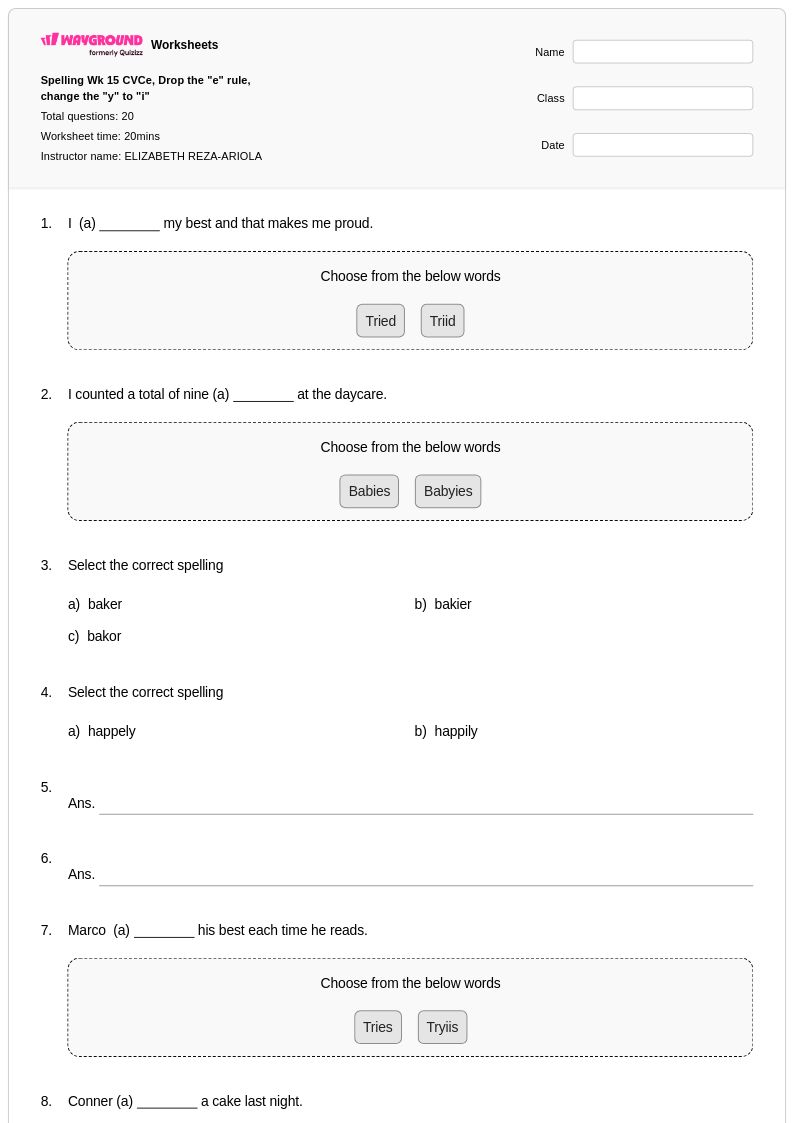
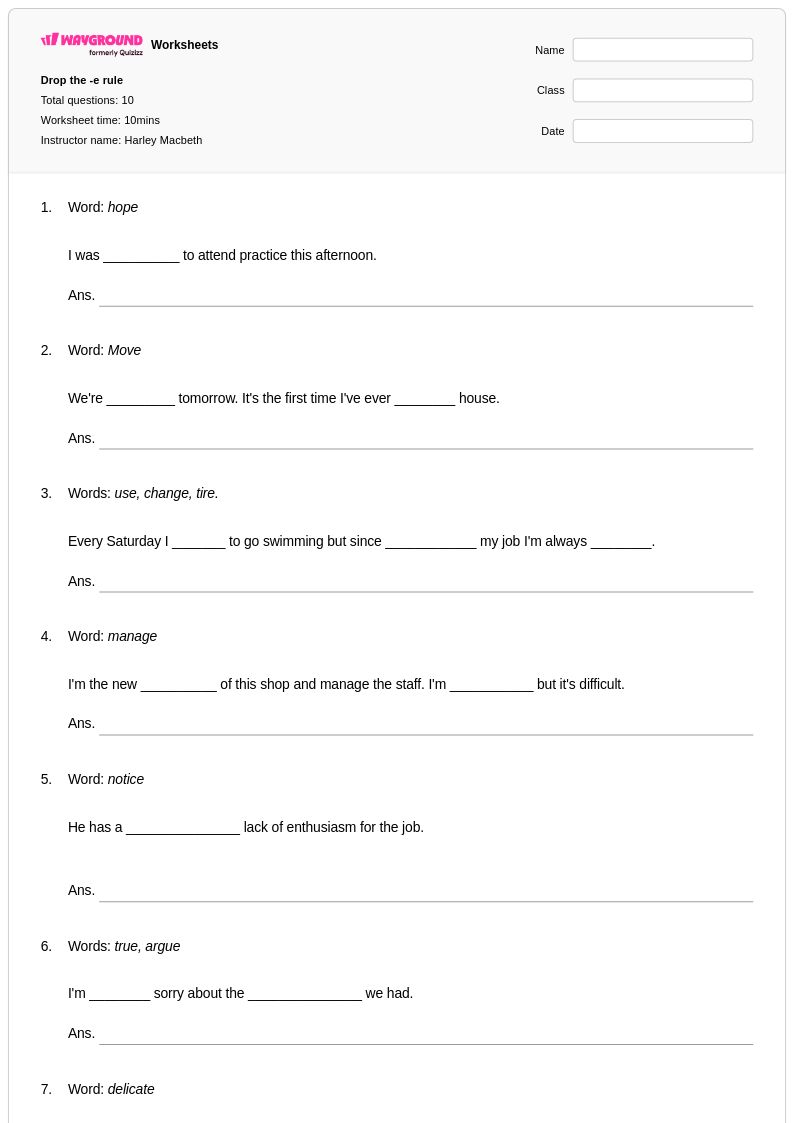
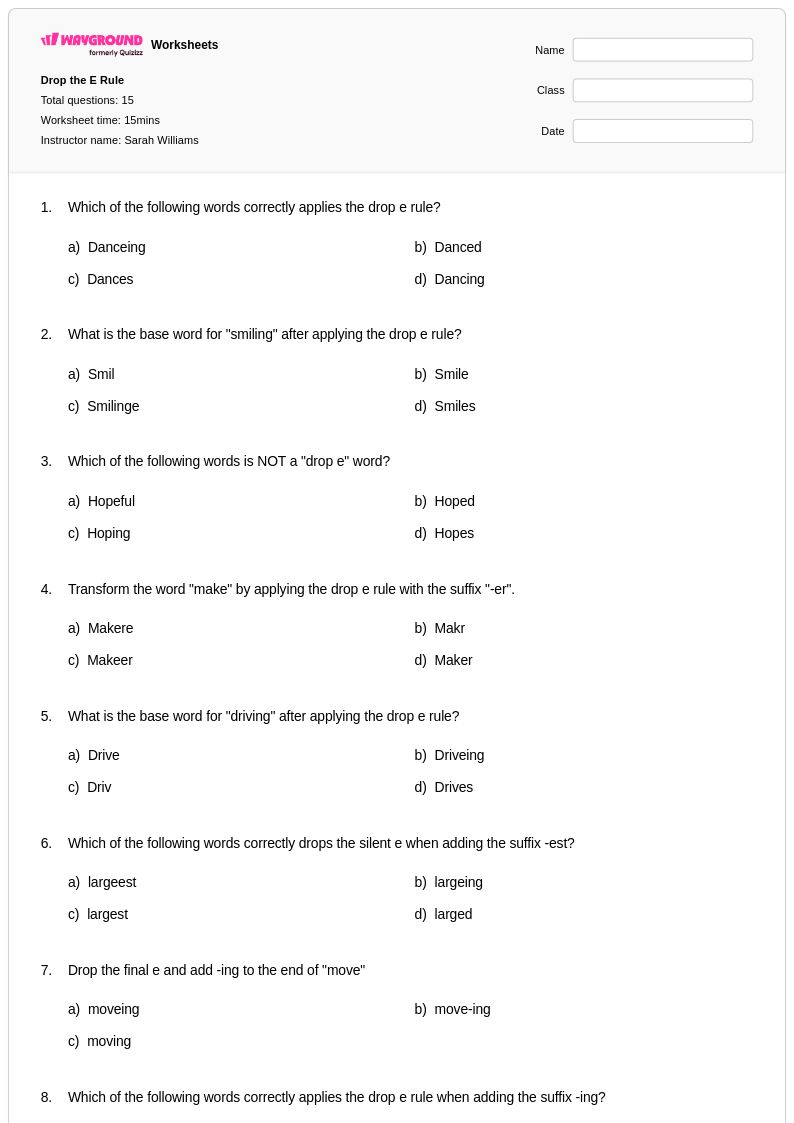
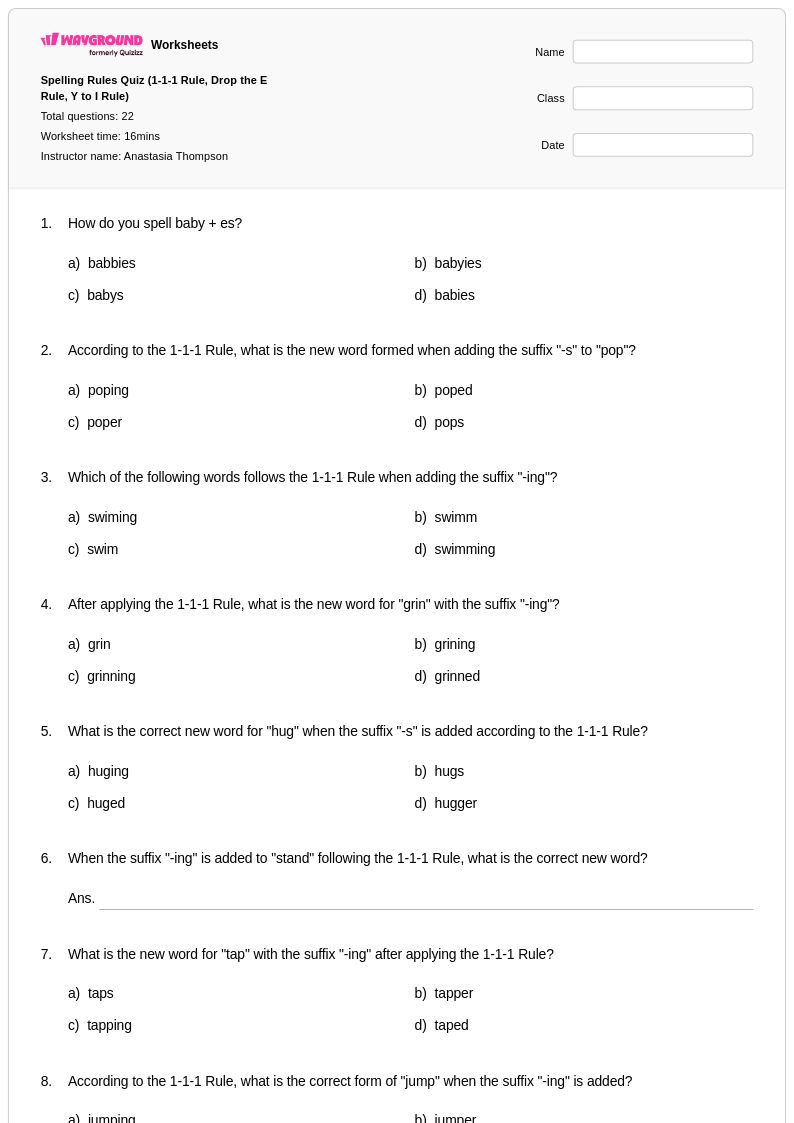
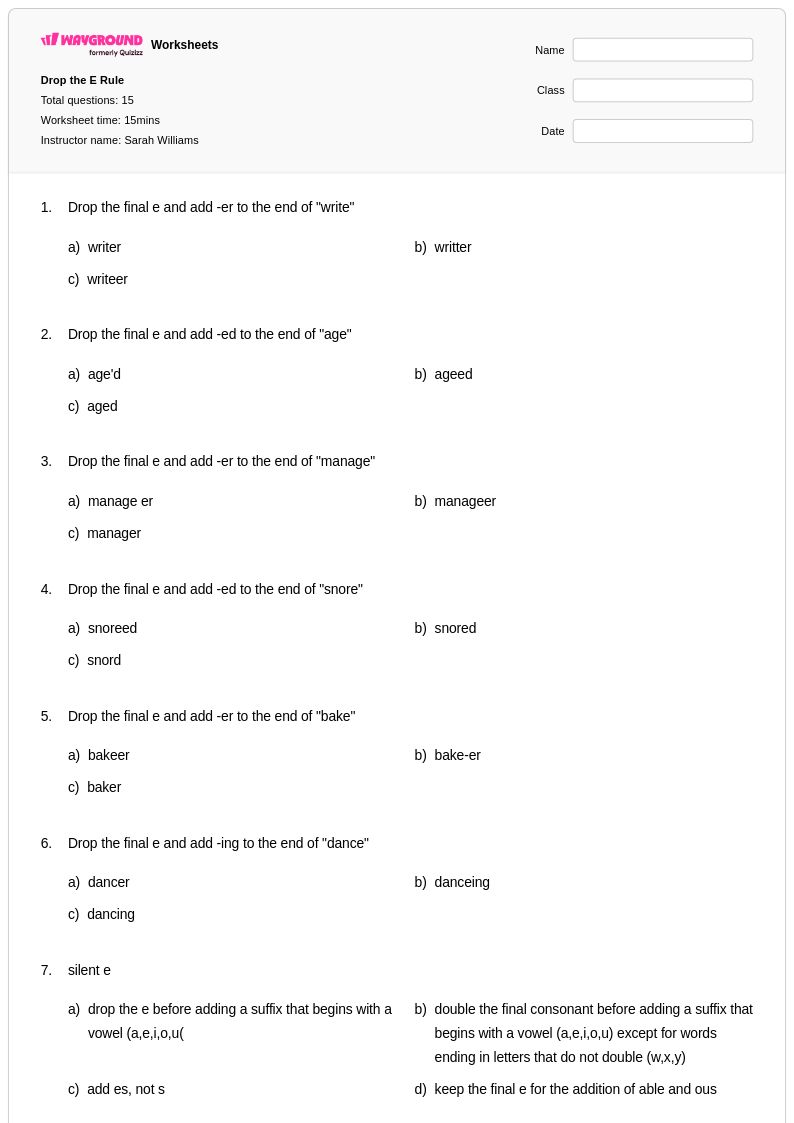
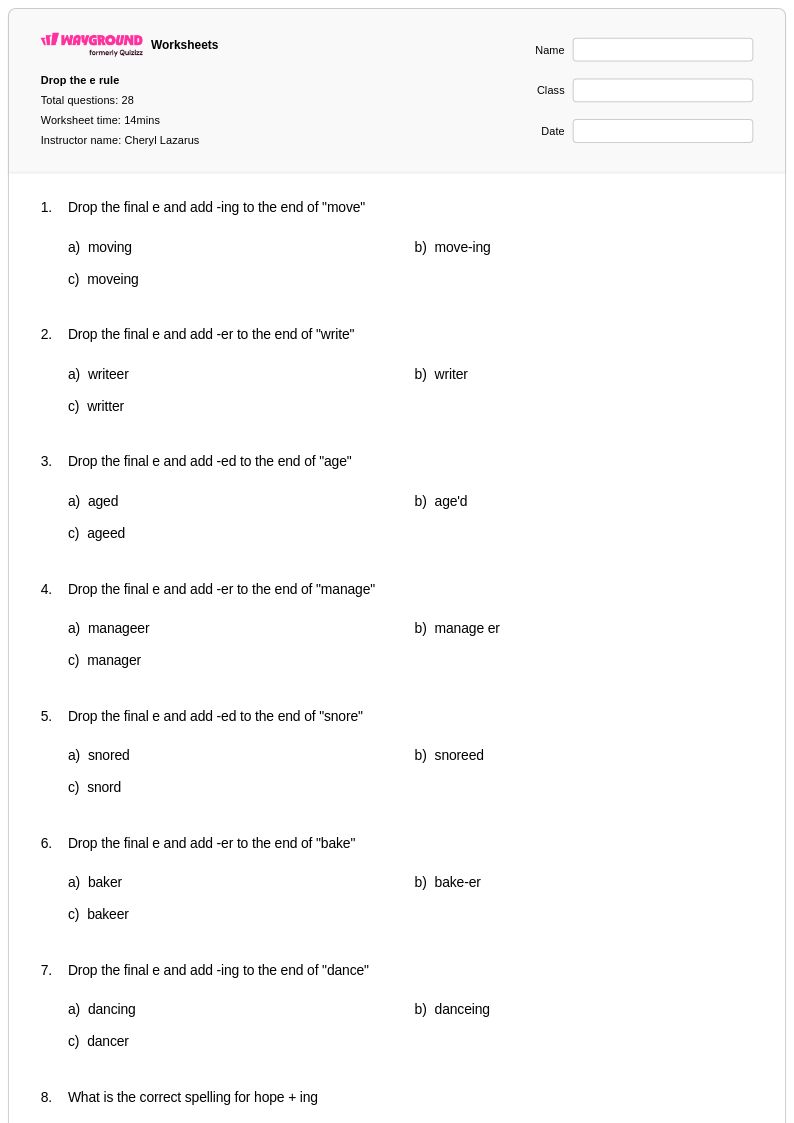
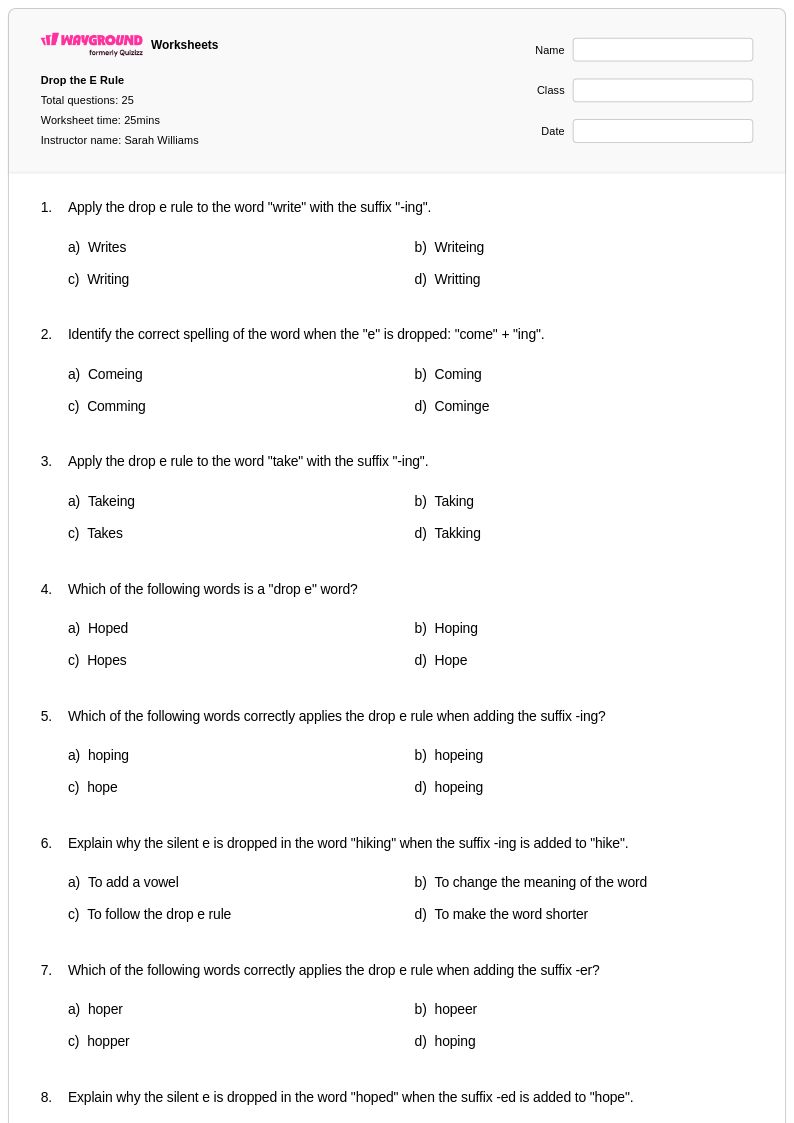
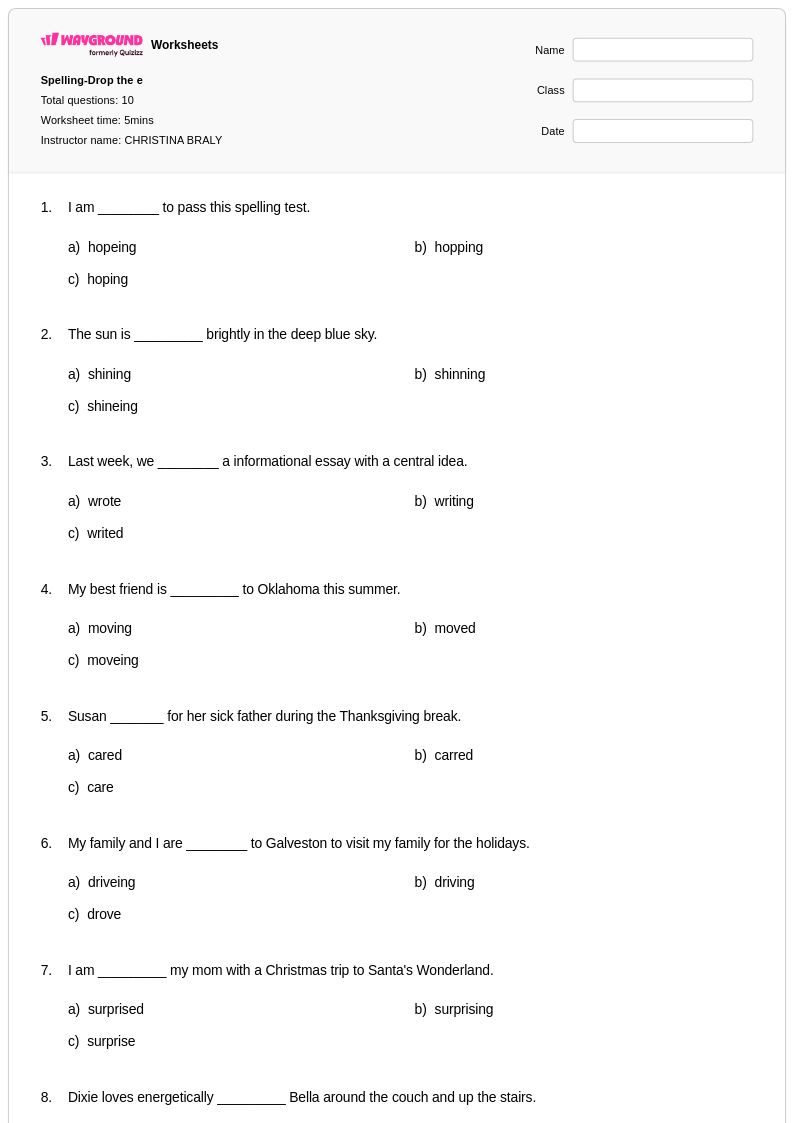
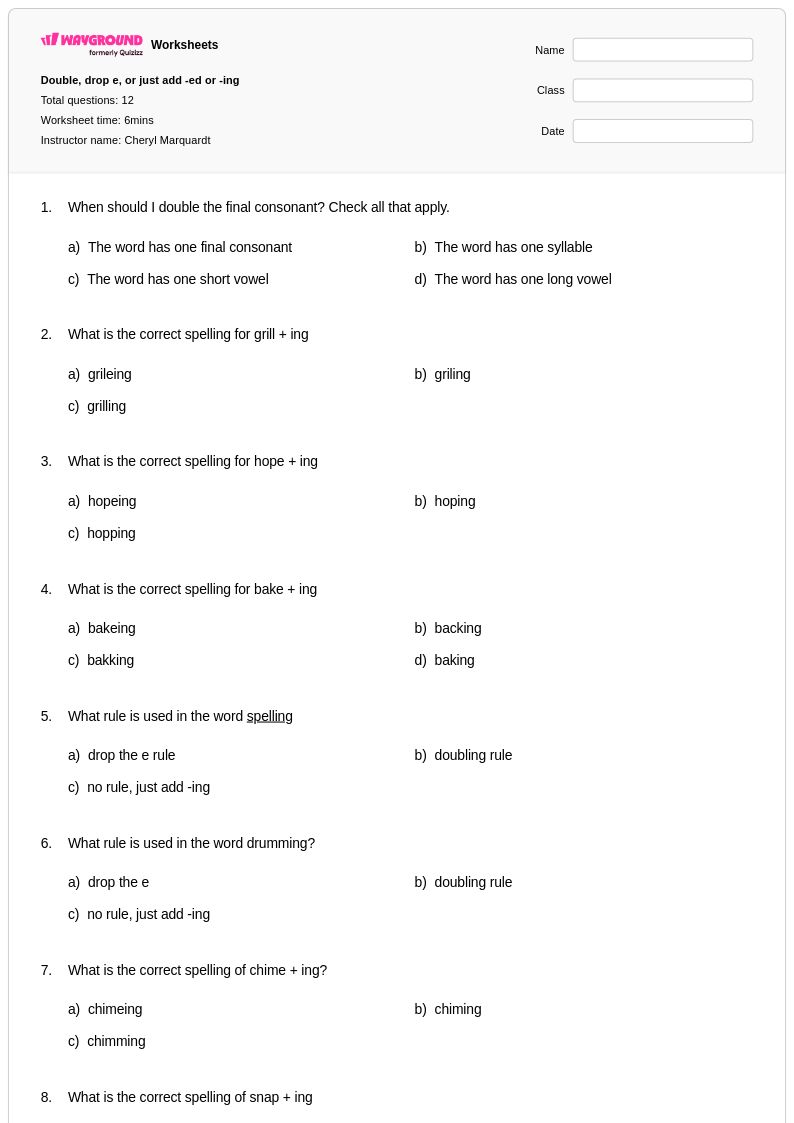
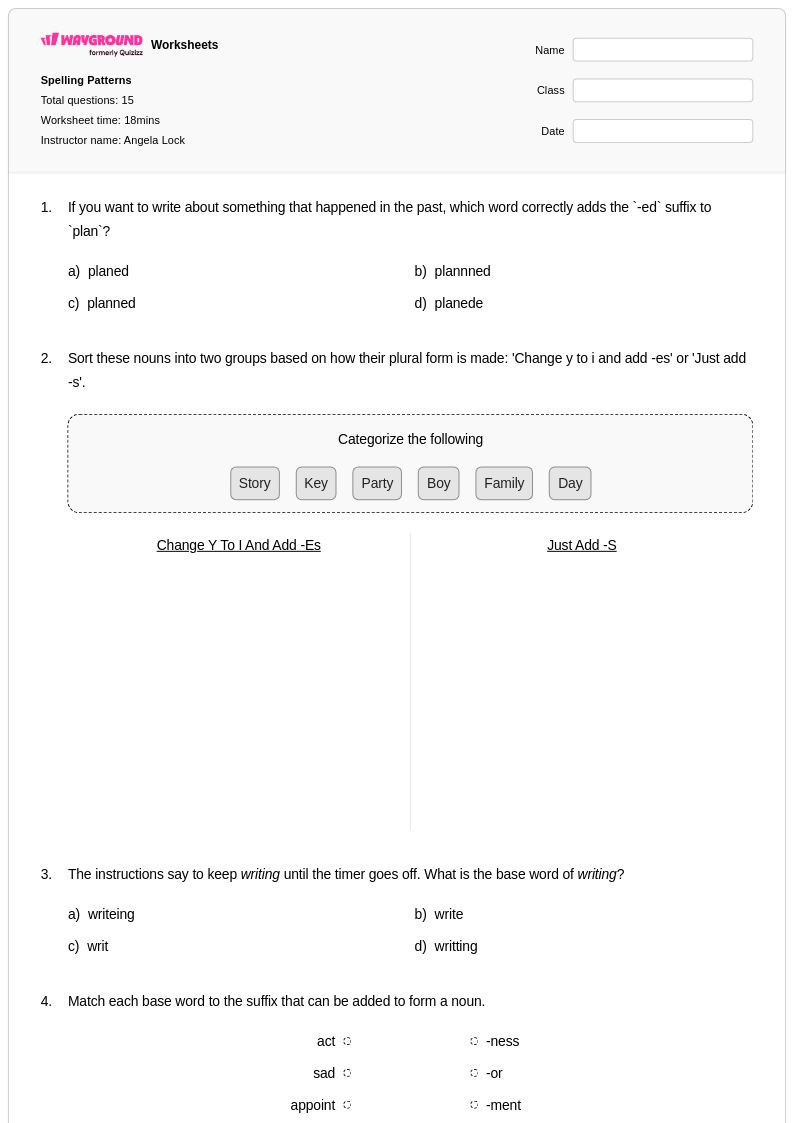
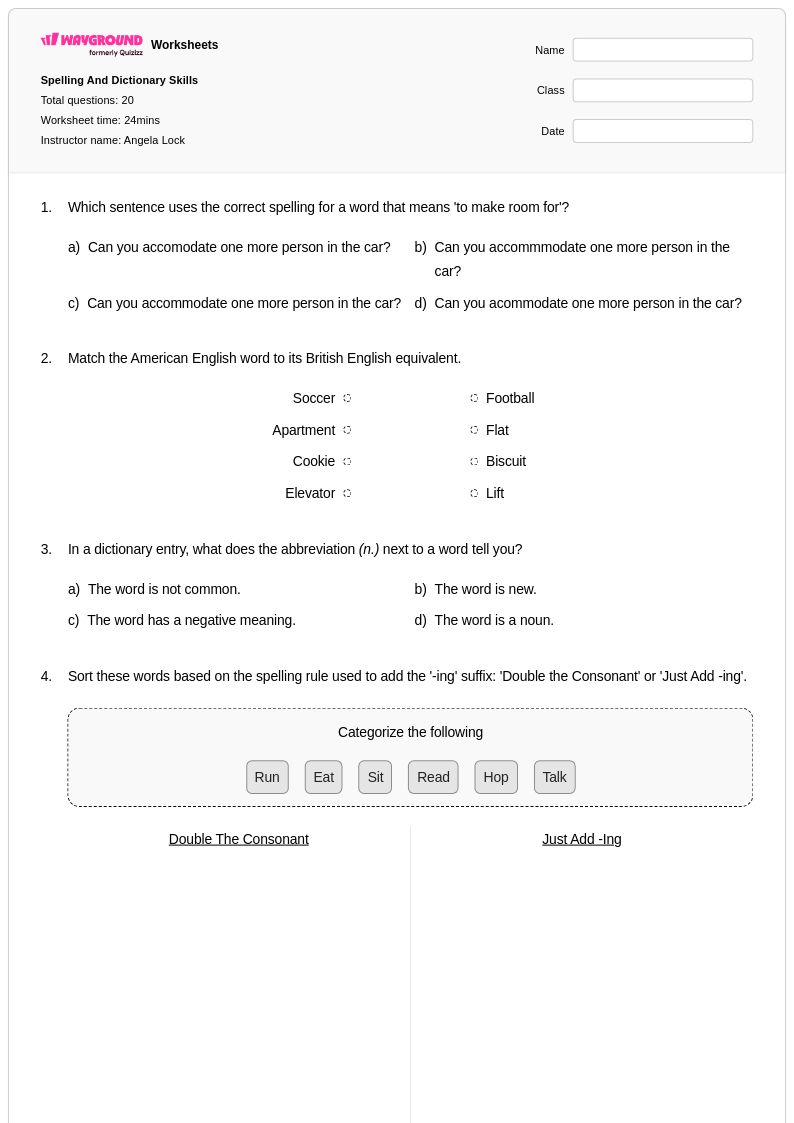
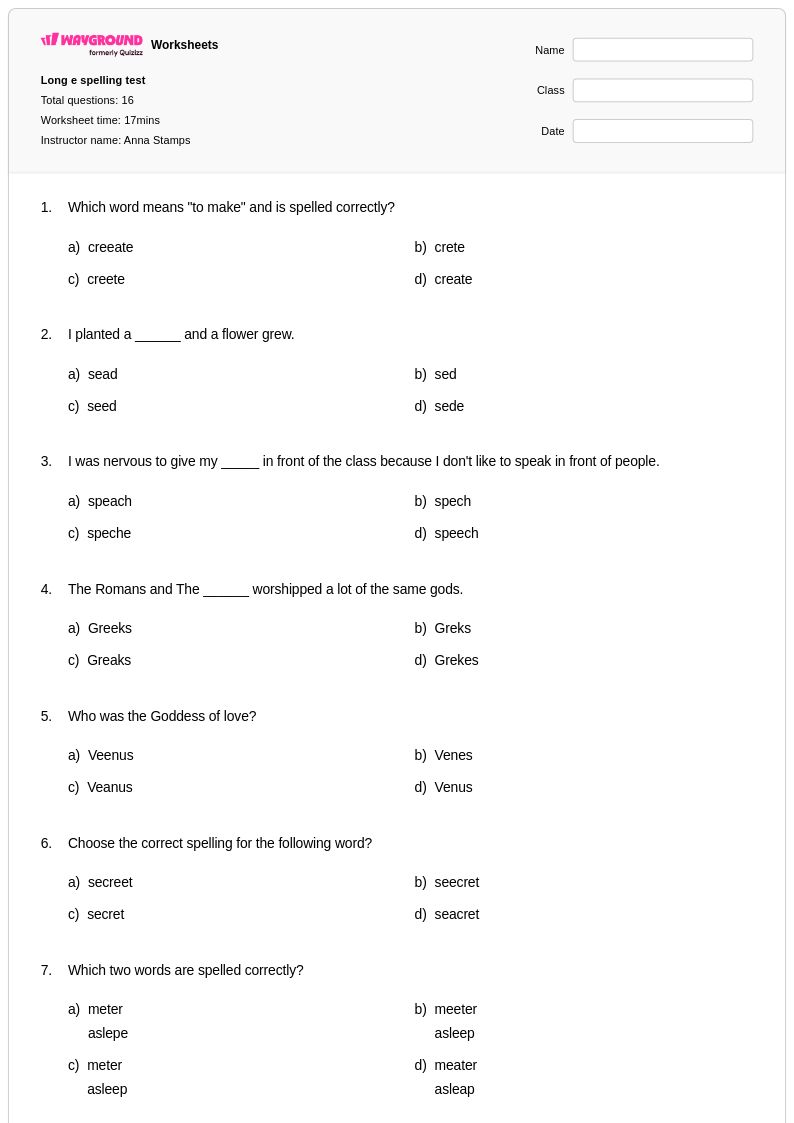
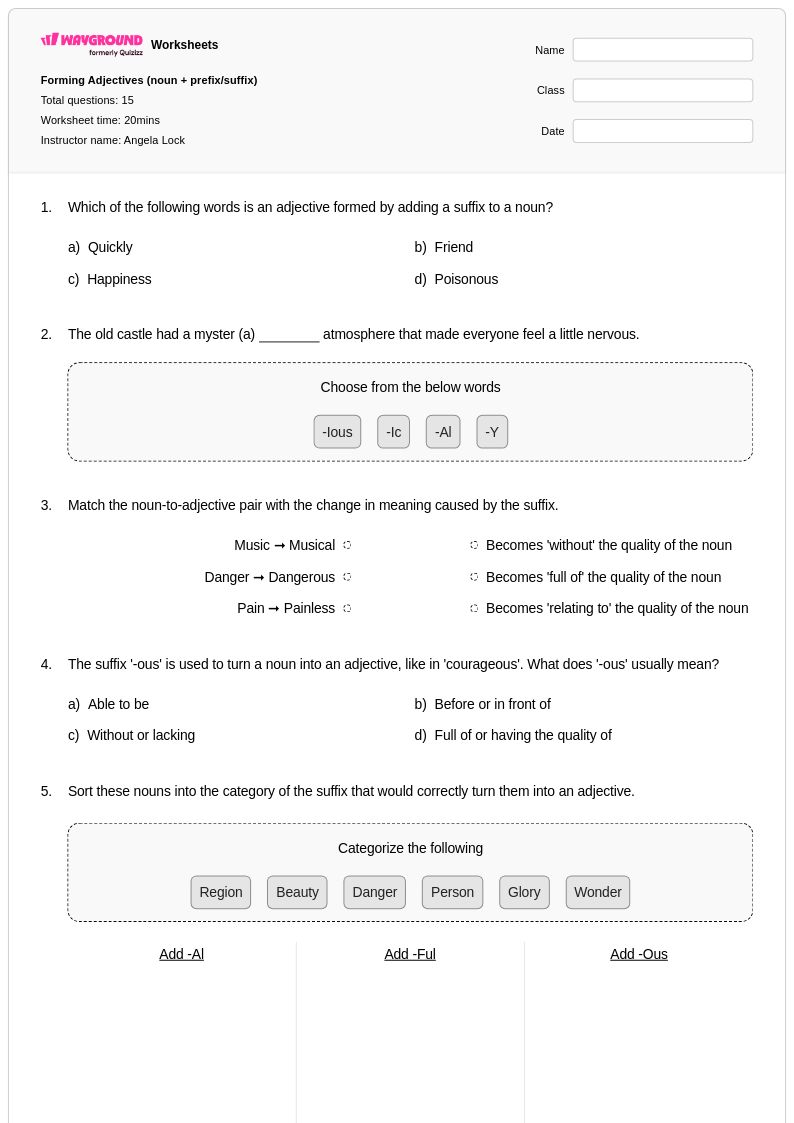
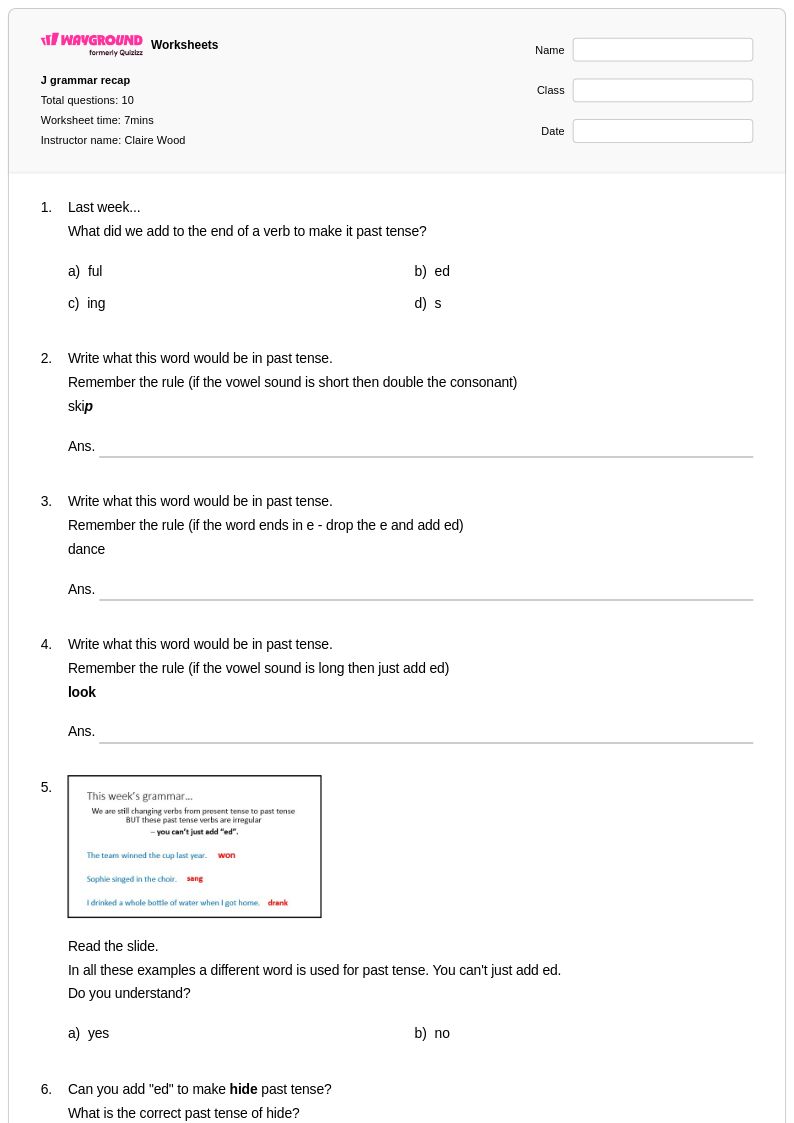
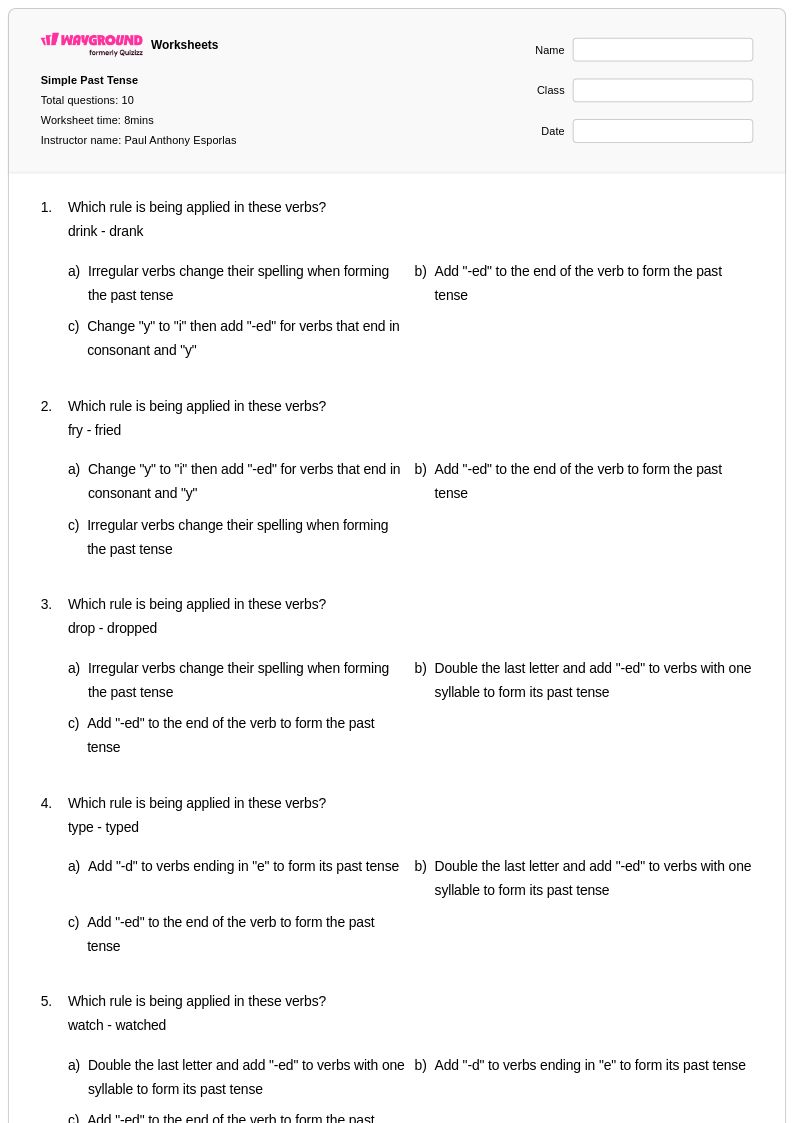
Enhance students' spelling skills with Wayground's free Drop the E Rule worksheets and printables, featuring practice problems and answer keys to master this essential spelling pattern through engaging PDF exercises.
Drop the E Rule worksheets available through Wayground (formerly Quizizz) provide comprehensive practice for one of English spelling's most fundamental patterns. These carefully designed printables help students master the essential skill of removing the silent E before adding suffixes that begin with vowels, such as transforming "make" to "making" or "hope" to "hoping." The worksheets strengthen orthographic awareness and spelling fluency through systematic practice problems that guide learners through the decision-making process of when to drop or retain the final E. Each resource includes detailed answer keys and free pdf formats that support both independent practice and guided instruction, ensuring students develop automaticity with this critical spelling convention that appears across thousands of English words.
Wayground (formerly Quizizz) empowers educators with millions of teacher-created Drop the E Rule resources that streamline lesson planning and differentiated instruction. The platform's robust search and filtering capabilities allow teachers to quickly locate worksheets aligned with specific learning standards and student proficiency levels, while customization tools enable modification of existing materials to meet diverse classroom needs. These comprehensive collections support remediation for struggling spellers, enrichment opportunities for advanced learners, and systematic skill practice for all students through both printable and digital formats. Teachers can seamlessly integrate these resources into spelling centers, homework assignments, or assessment preparation, knowing that each worksheet has been crafted by experienced educators who understand the complexities of English orthography and the developmental needs of emerging spellers.
FAQs
How do I teach the Drop the E Rule to my students?
The Drop the E Rule states that when a base word ends in a silent E, the E is dropped before adding a vowel suffix (e.g., 'make' becomes 'making', 'hope' becomes 'hoping'). Begin instruction by helping students identify silent E words and distinguish between vowel and consonant suffixes, since the E is retained before consonant suffixes like '-ness' or '-ful'. Using visual sorting activities where students categorize words by whether they drop or keep the E builds the decision-making habit before moving to independent writing practice.
What exercises help students practice the Drop the E Rule?
Effective practice exercises include suffix-addition drills where students rewrite base words with both vowel and consonant suffixes, error-correction tasks where students identify and fix misspelled words, and fill-in-the-blank sentences requiring the correct suffix form. Sorting activities that ask students to group words by 'drop the E' versus 'keep the E' are particularly effective because they reinforce the underlying rule rather than rote memorization. Repeated, varied exposure across these formats builds the automaticity students need to apply the rule in their own writing.
What mistakes do students commonly make when applying the Drop the E Rule?
The most common error is over-applying the rule — students drop the E before consonant suffixes (writing 'hopful' instead of 'hopeful') because they conflate all suffix addition with E-dropping. A second frequent mistake is failing to drop the E before vowel suffixes, producing spellings like 'makeing' instead of 'making'. Students also struggle with exceptions such as words ending in '-ce' or '-ge', where the E is retained before vowel suffixes to preserve the soft consonant sound (e.g., 'noticeable', 'courageous').
How can I differentiate Drop the E Rule instruction for struggling spellers?
For struggling spellers, reduce the complexity by working exclusively with high-frequency base words before introducing less familiar vocabulary. Color-coding the final E in base words and the first letter of the suffix helps students visually process the vowel-consonant distinction that drives the rule. On Wayground, teachers can enable individual accommodations such as Read Aloud so students hear words spoken aloud, and Reduced Answer Choices to lower cognitive load during digital practice — both settings can be applied to specific students without affecting the rest of the class.
How do I use Drop the E Rule worksheets in my classroom?
Drop the E Rule worksheets on Wayground are available as printable PDFs for traditional classroom use and in digital formats for technology-integrated environments, making them flexible enough for spelling centers, homework assignments, or guided small-group instruction. Teachers can also host them as a quiz directly on Wayground to track student responses and identify error patterns in real time. Each worksheet includes a complete answer key, so they work equally well for self-checking independent practice or teacher-led correction.