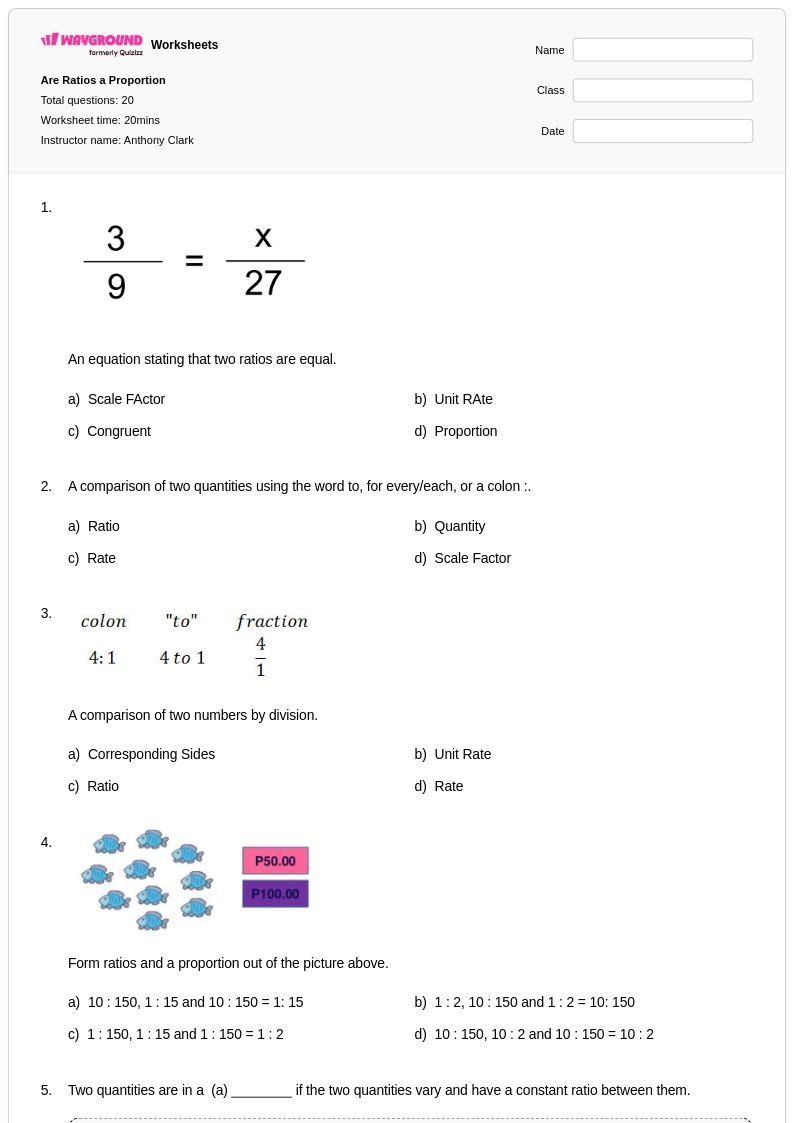
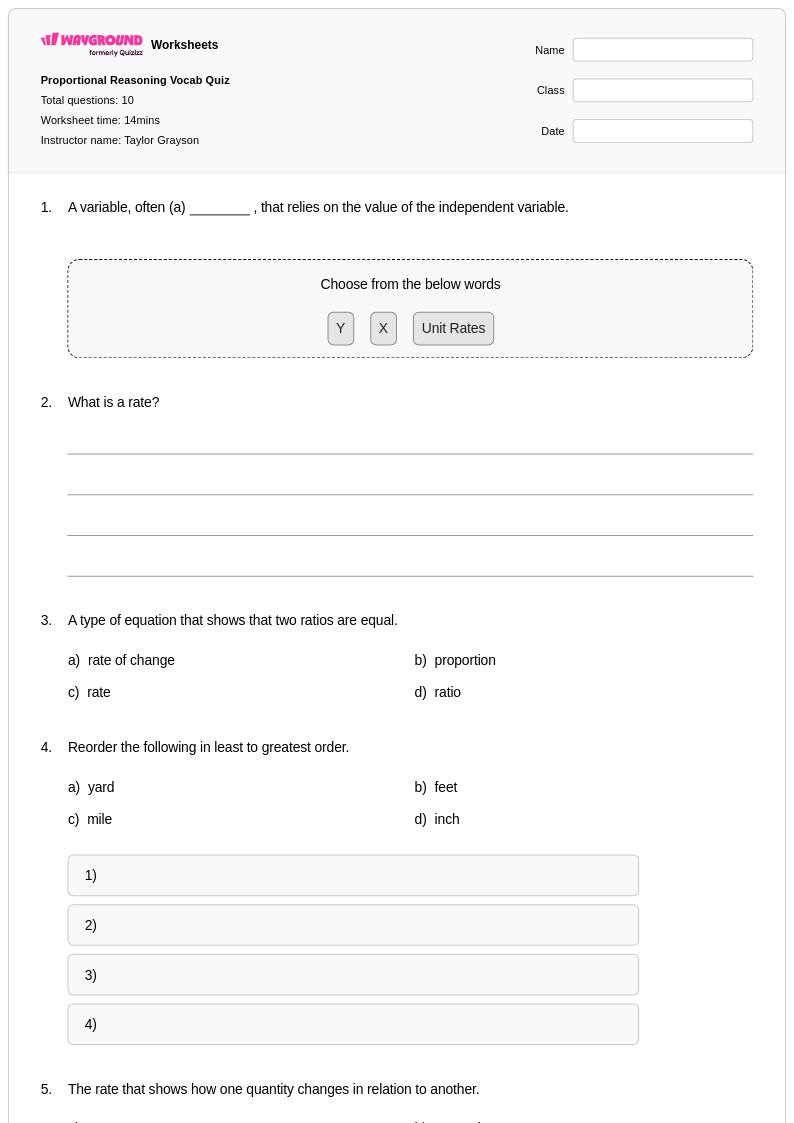
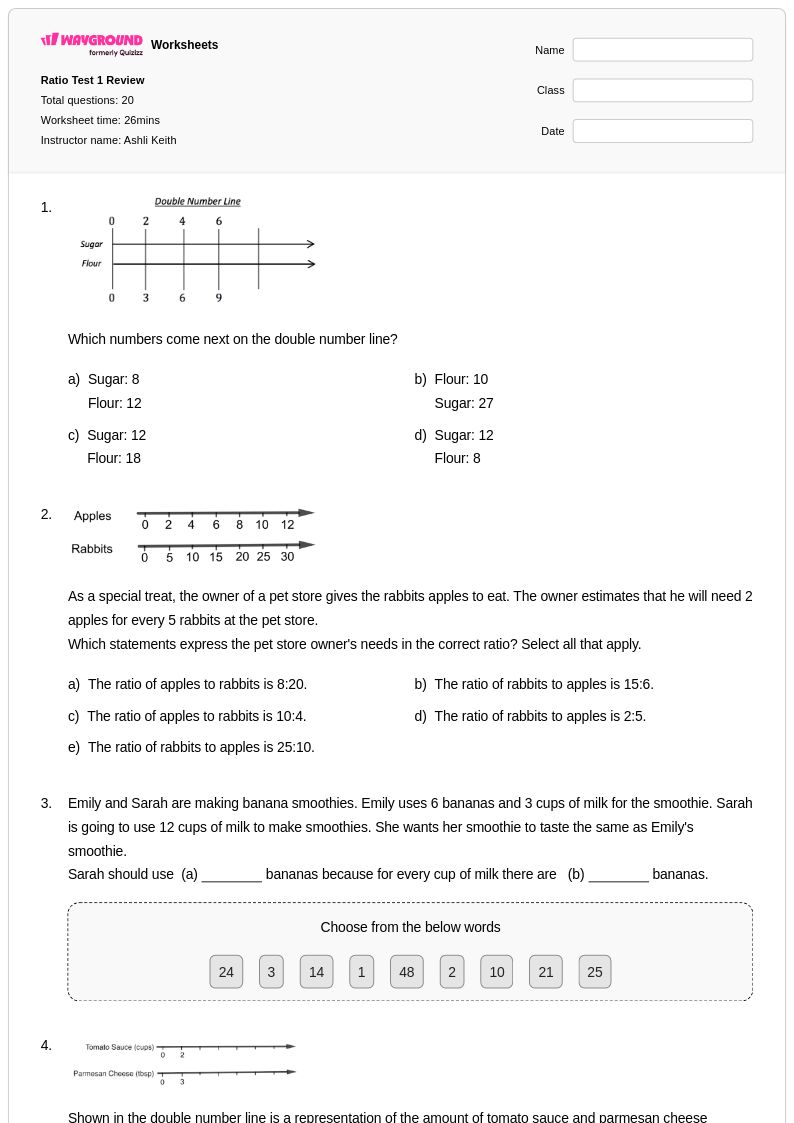
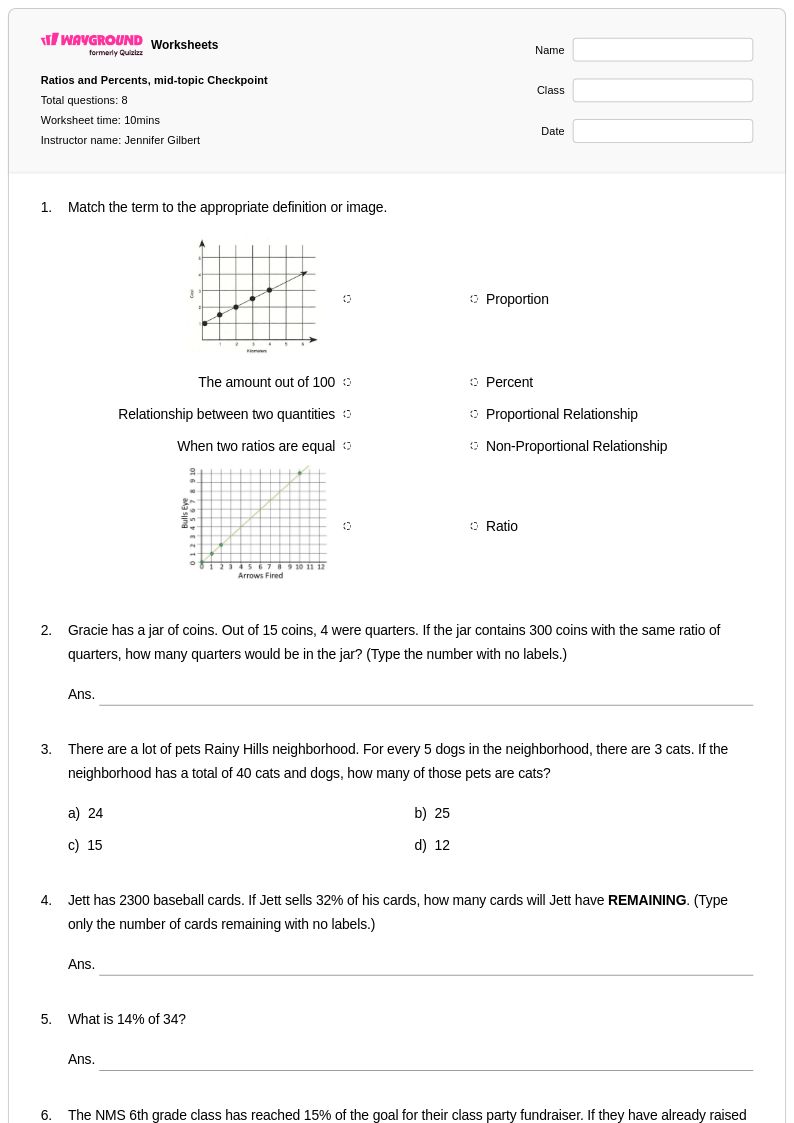
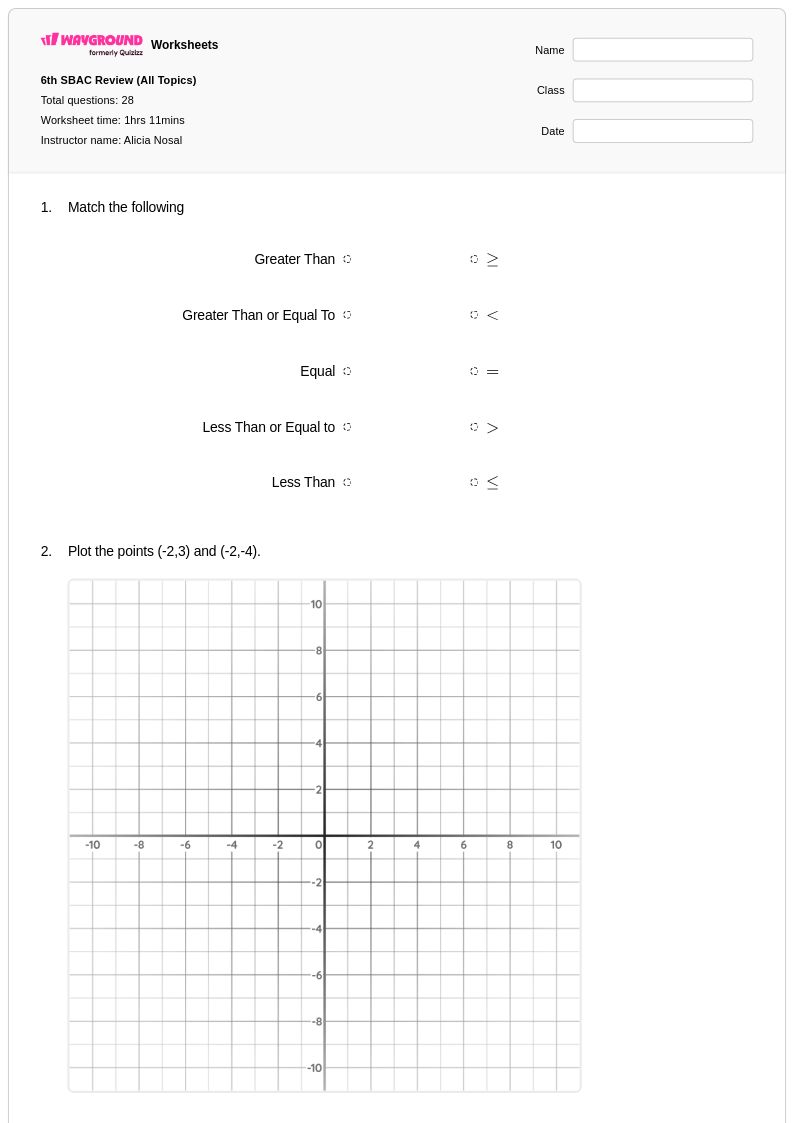
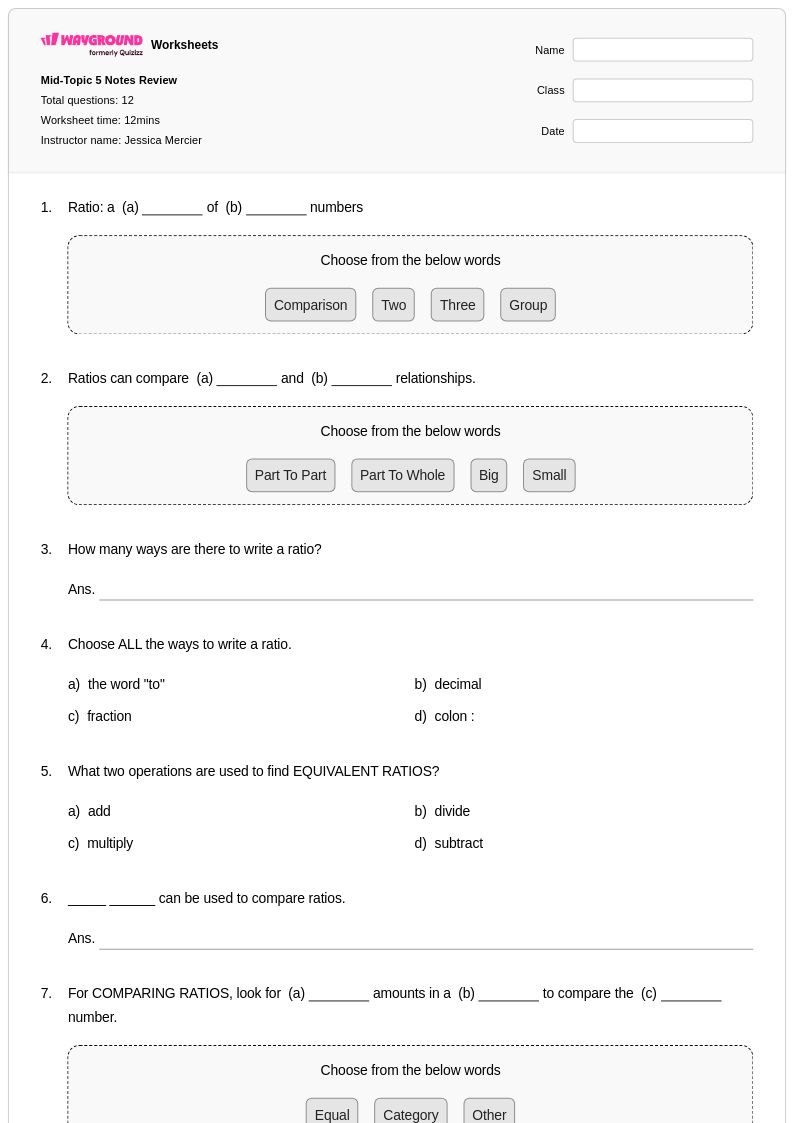
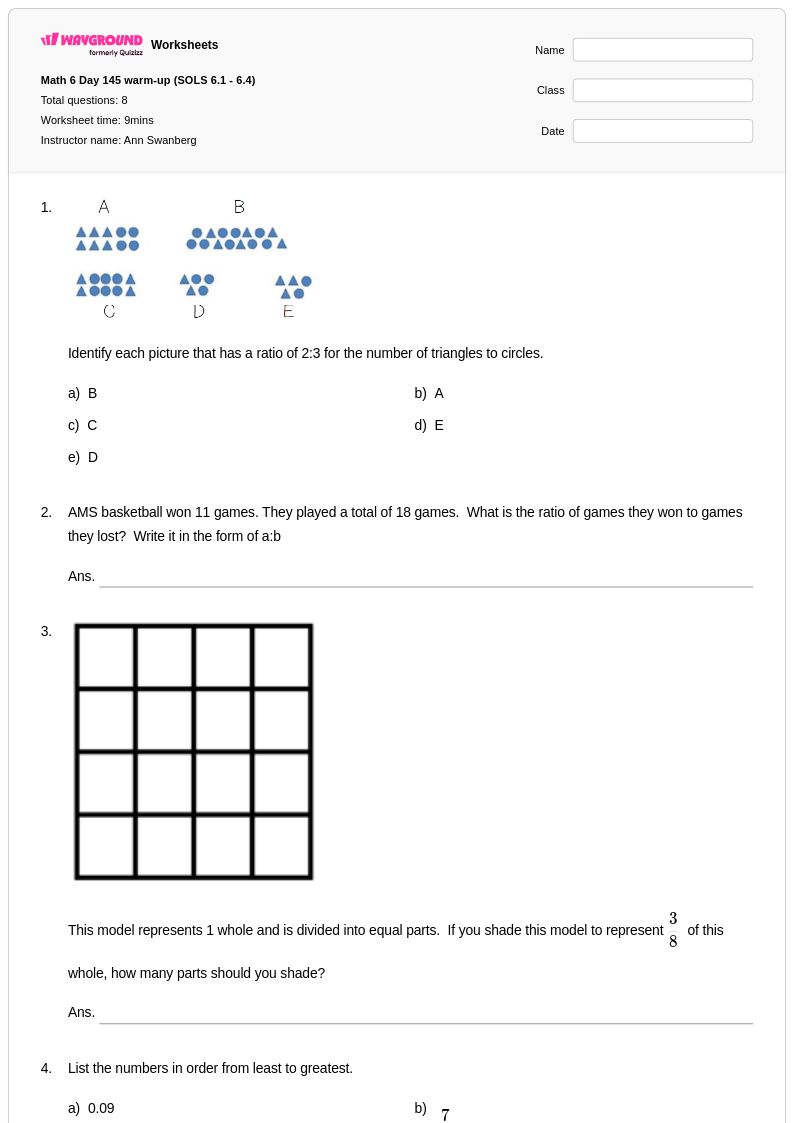
Wayground's free Year 6 equal ratios worksheets provide comprehensive practice problems and answer keys to help students master identifying and creating equivalent ratios through engaging printable PDF activities.
Explore printable Equal Ratios worksheets for Year 6
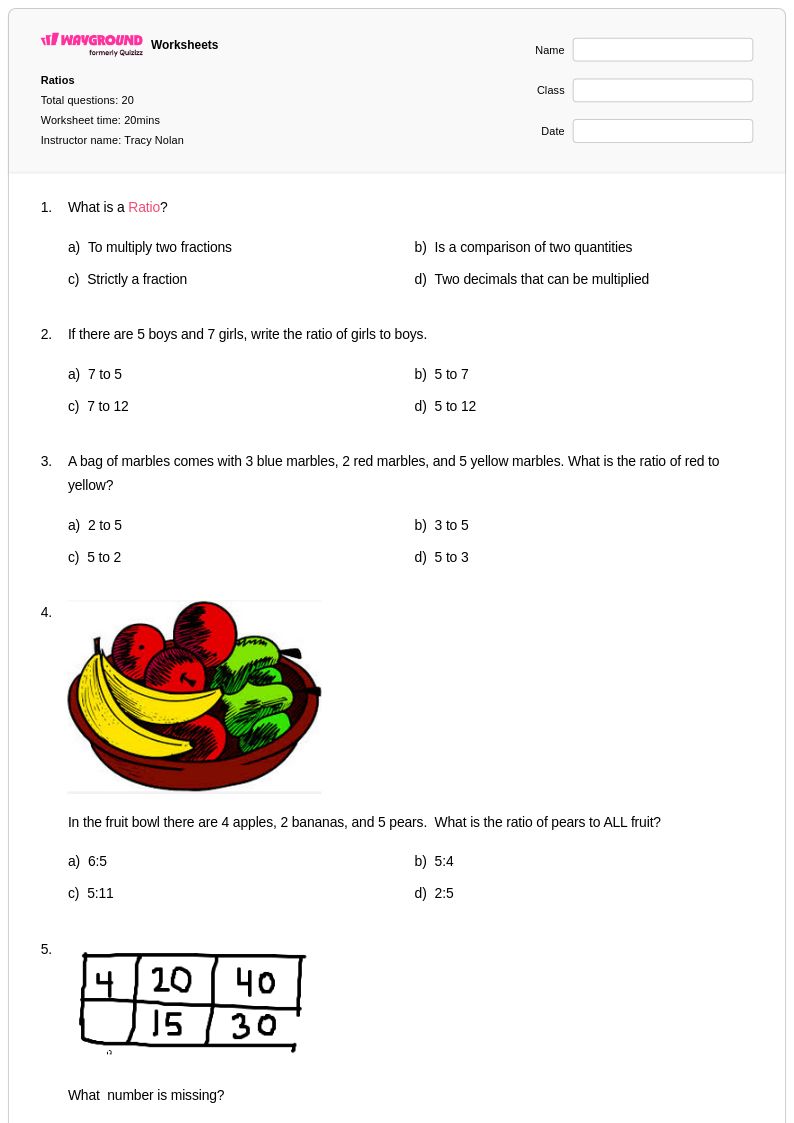
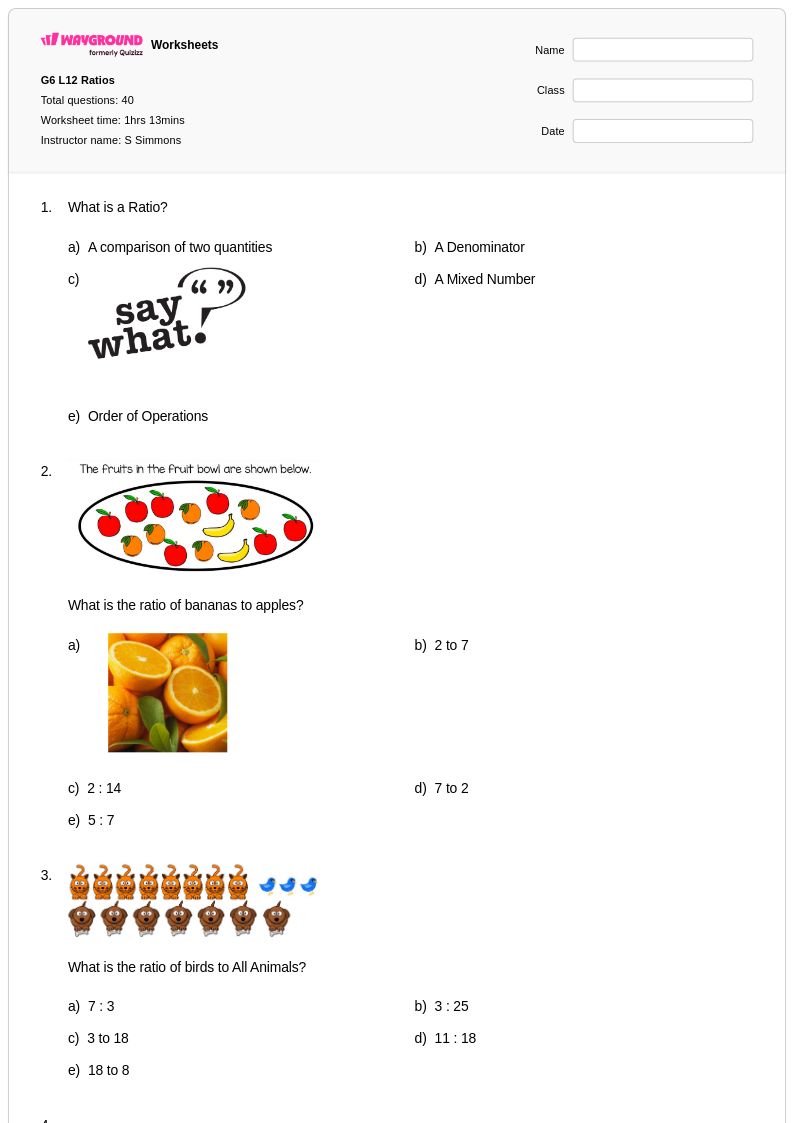
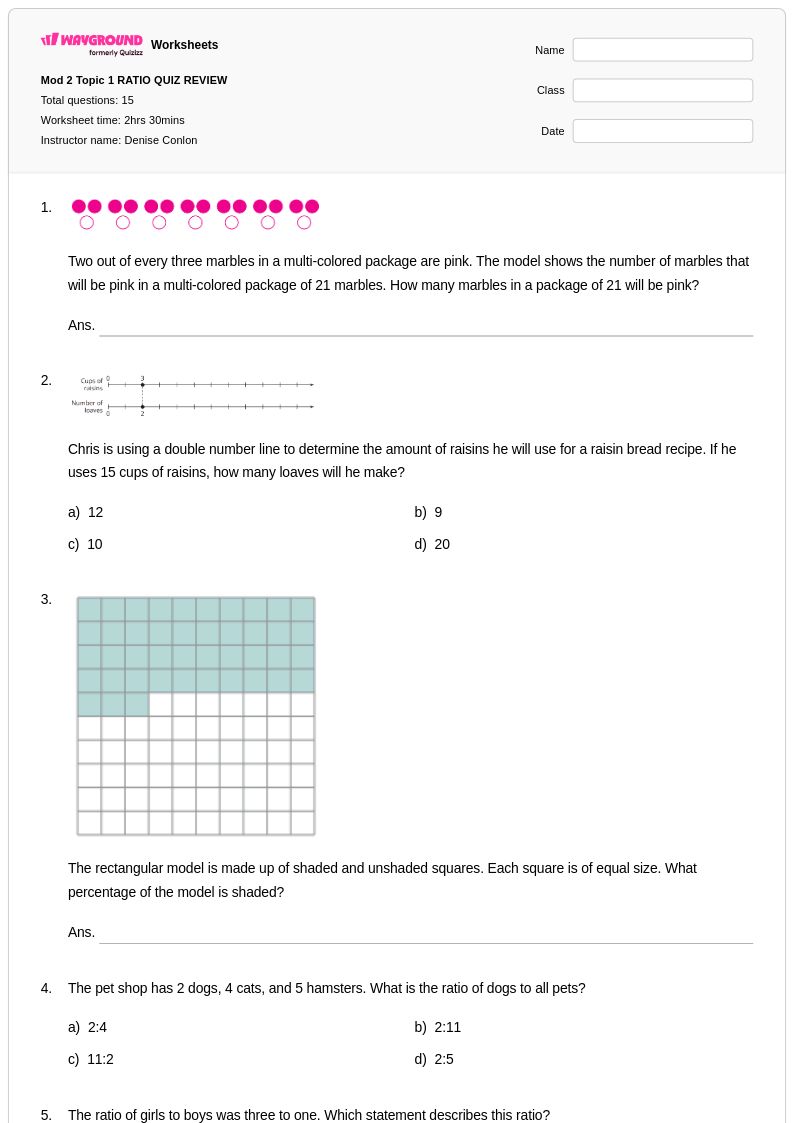
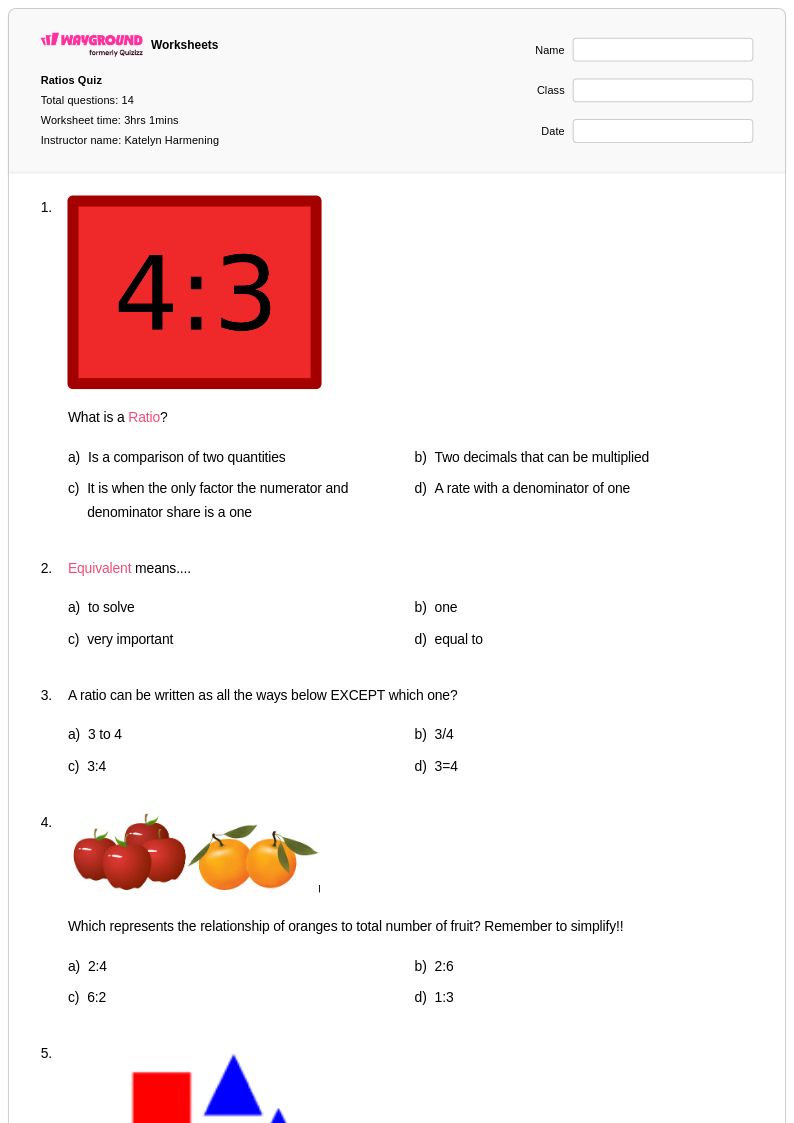
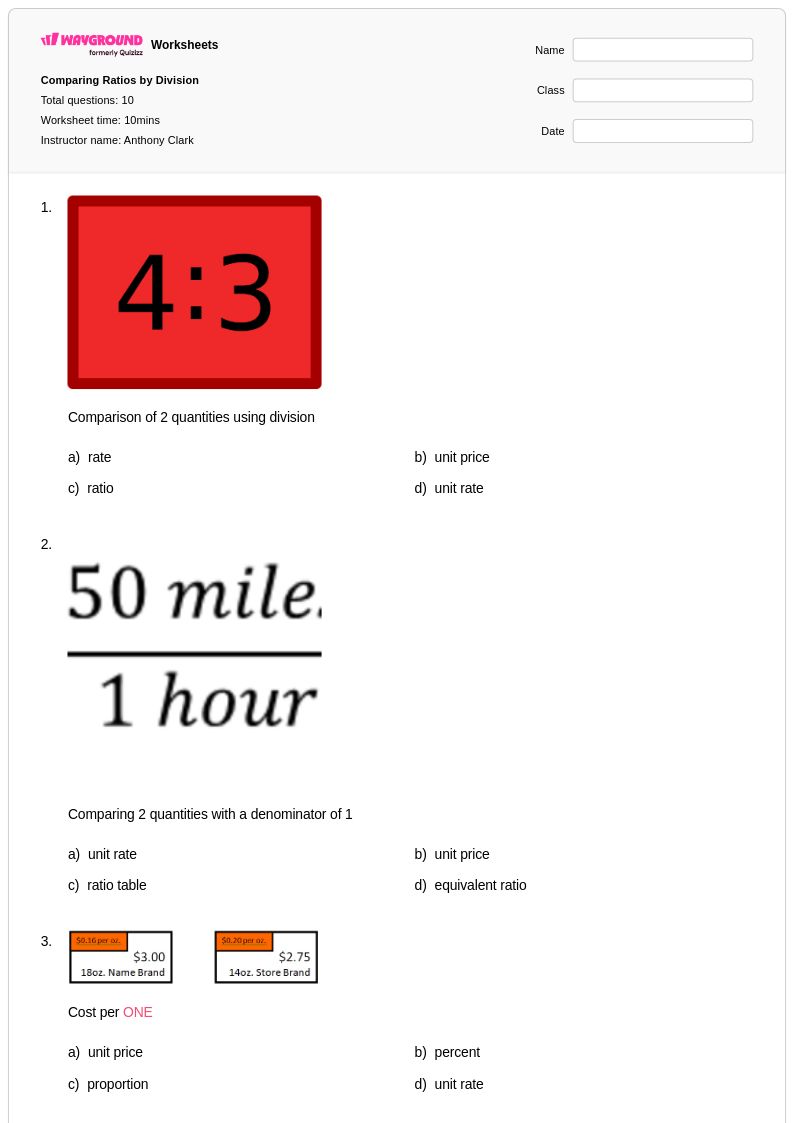
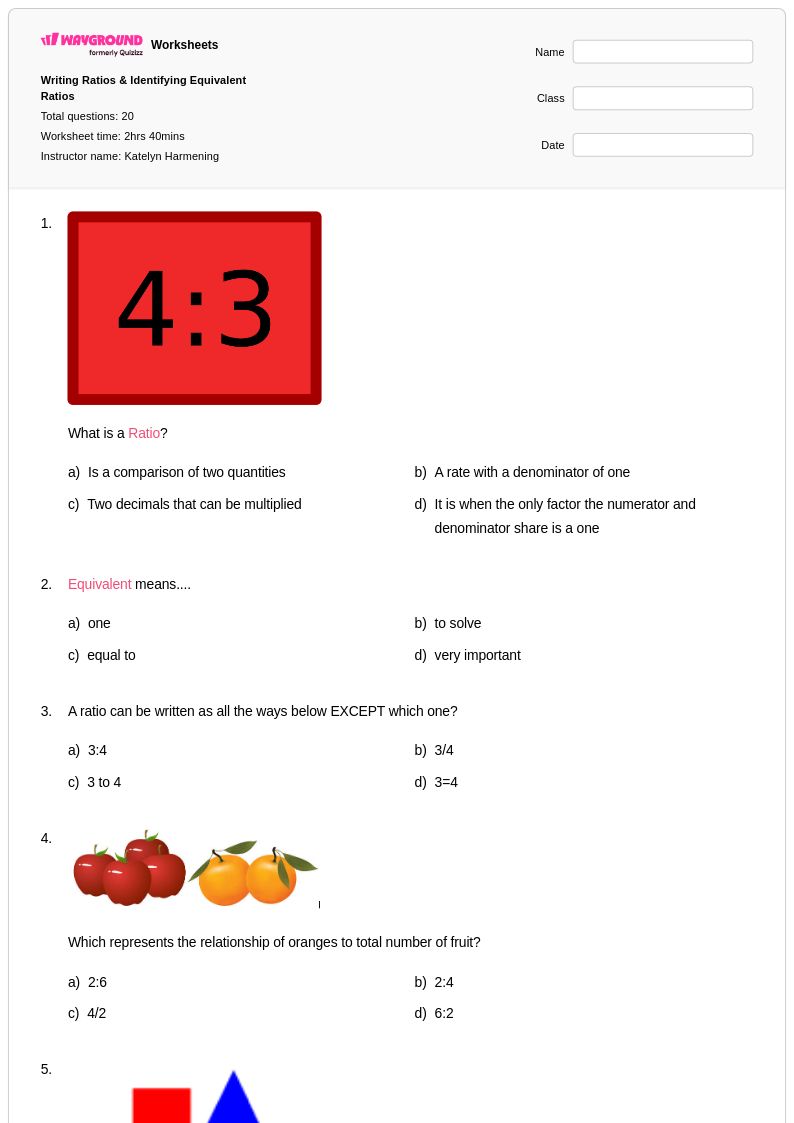
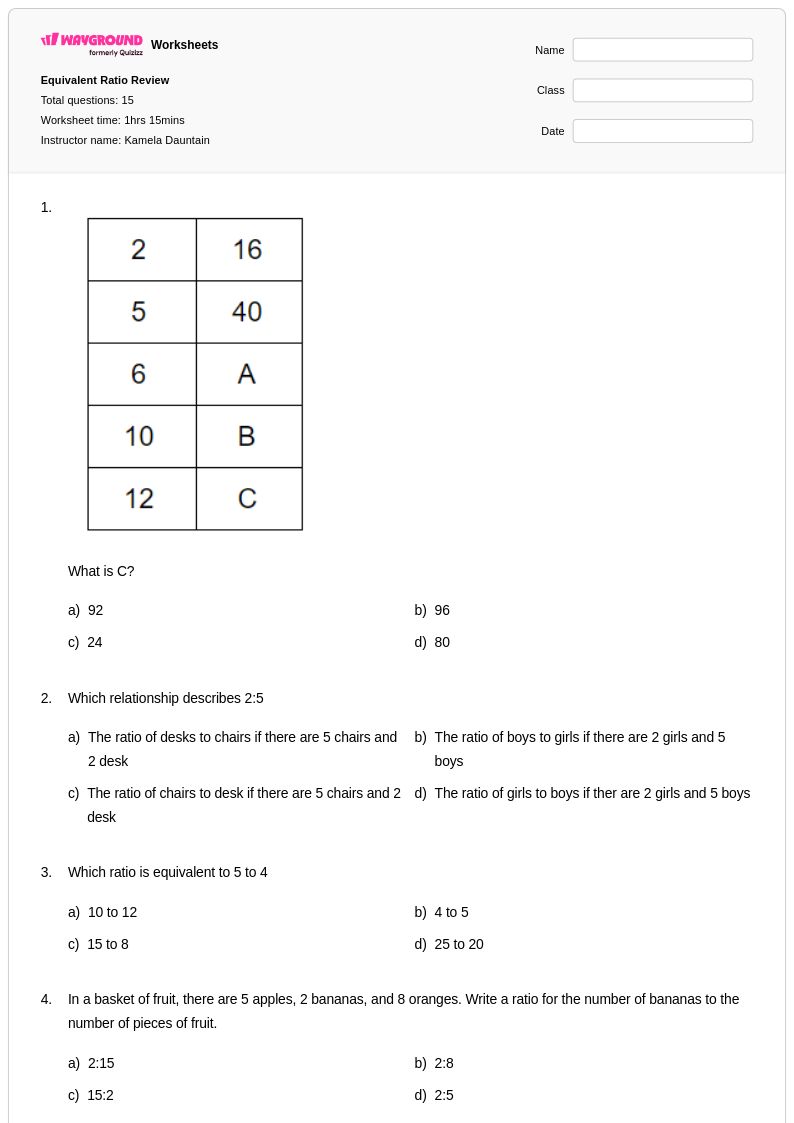
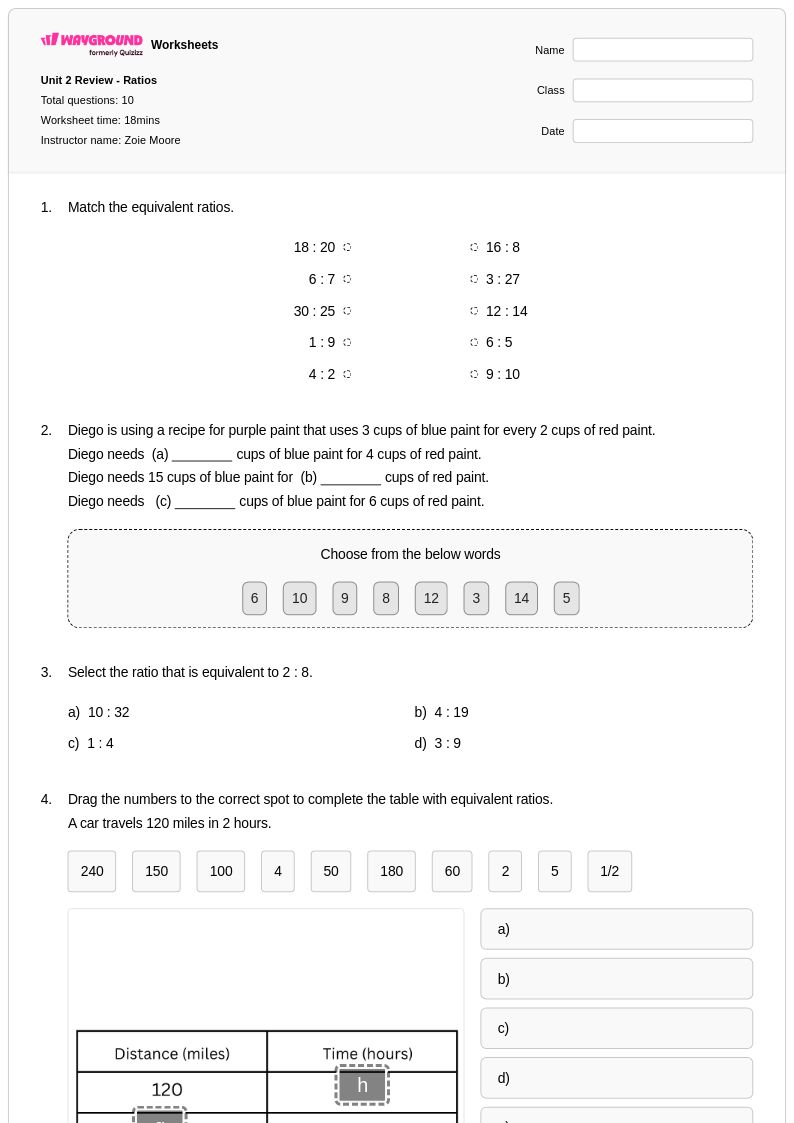
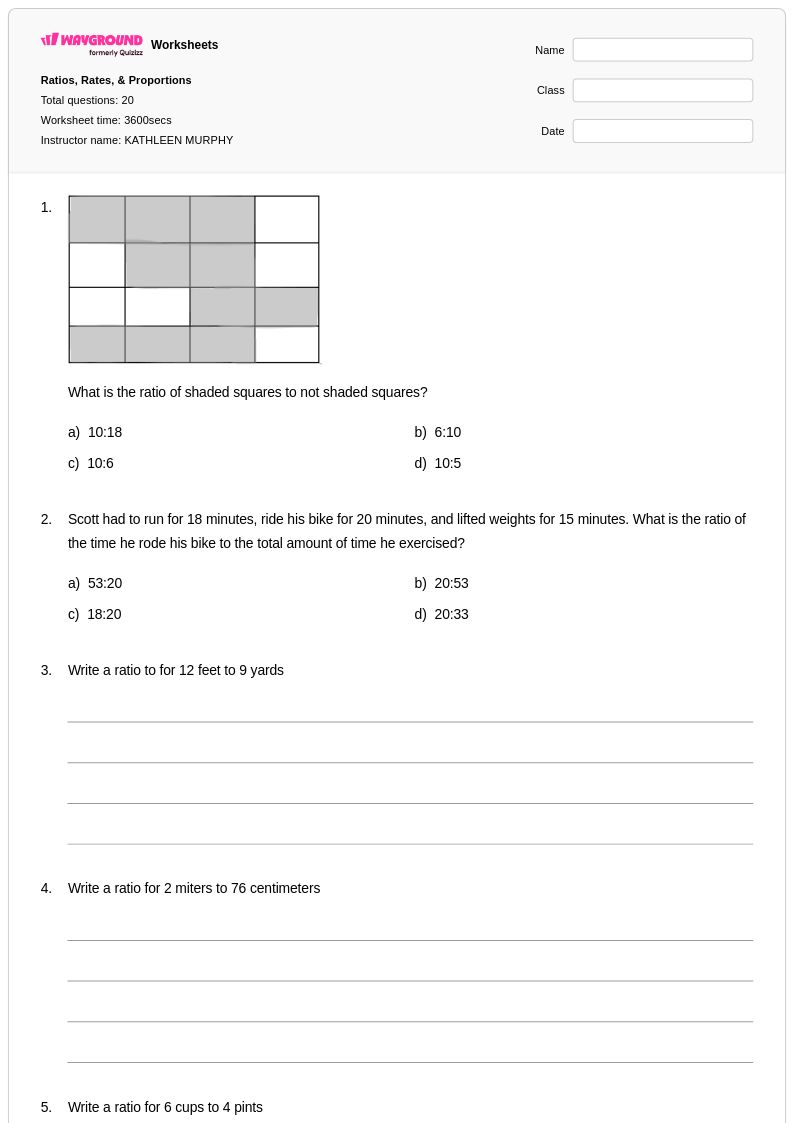
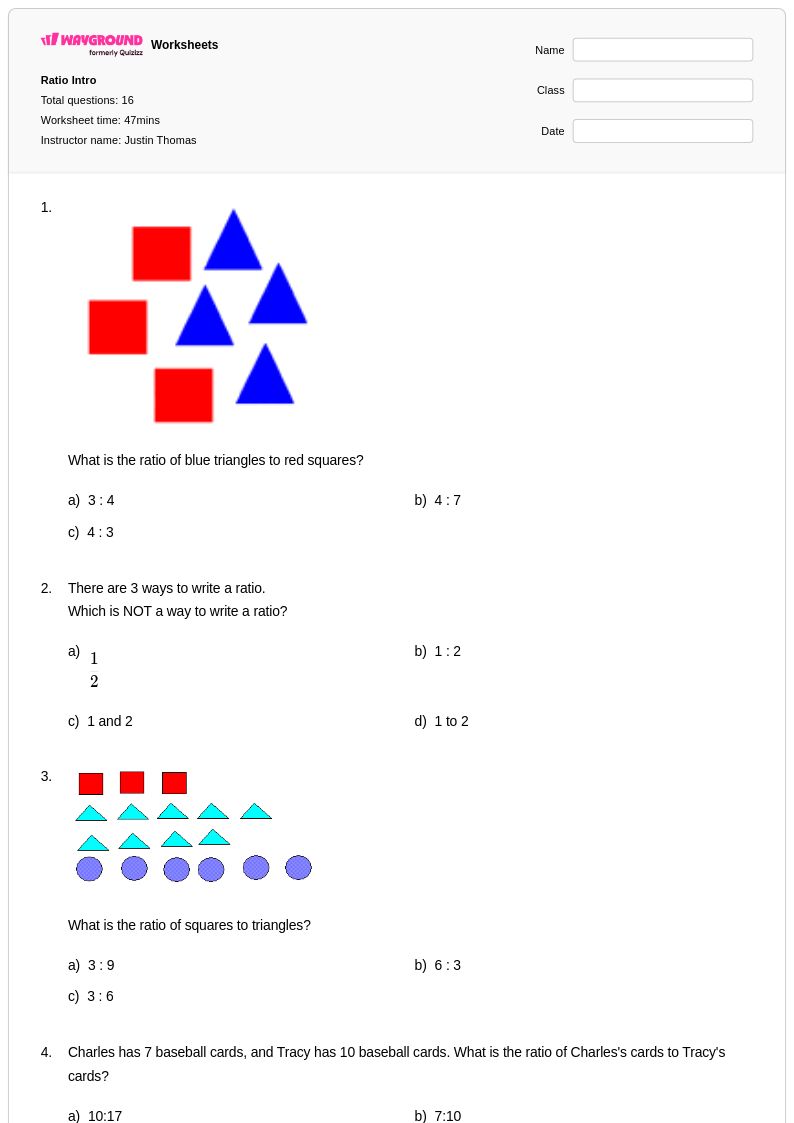
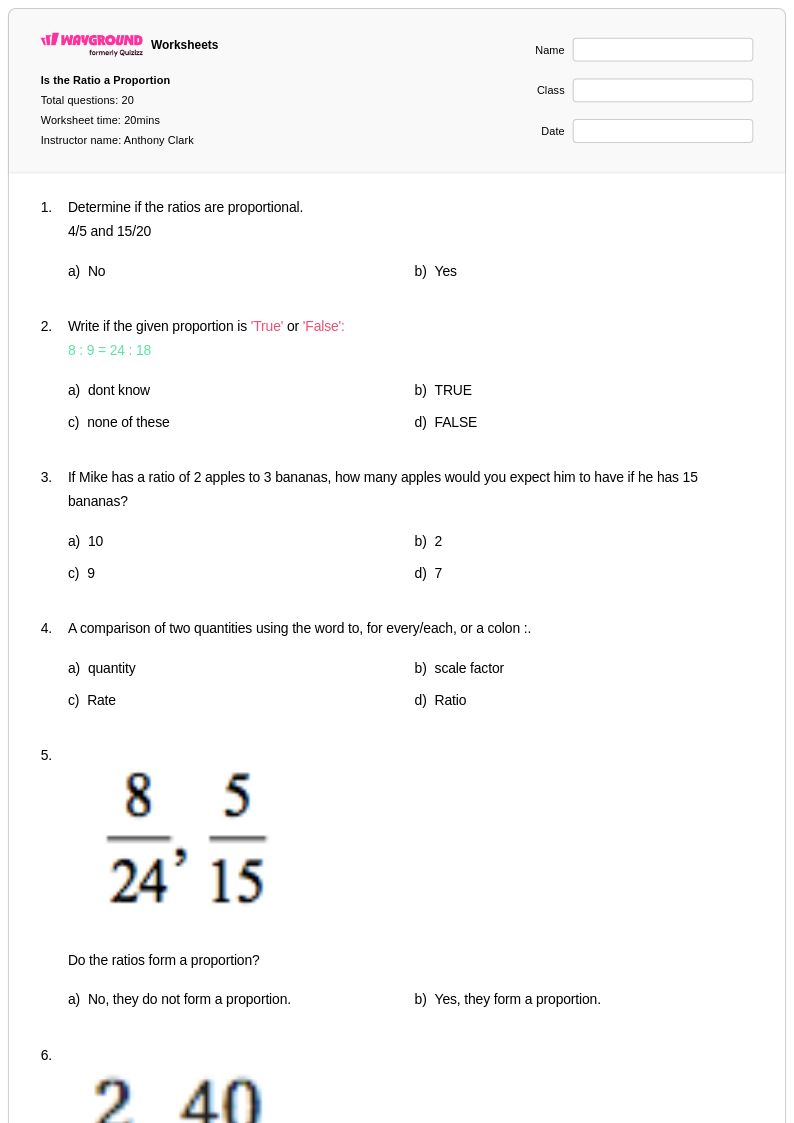
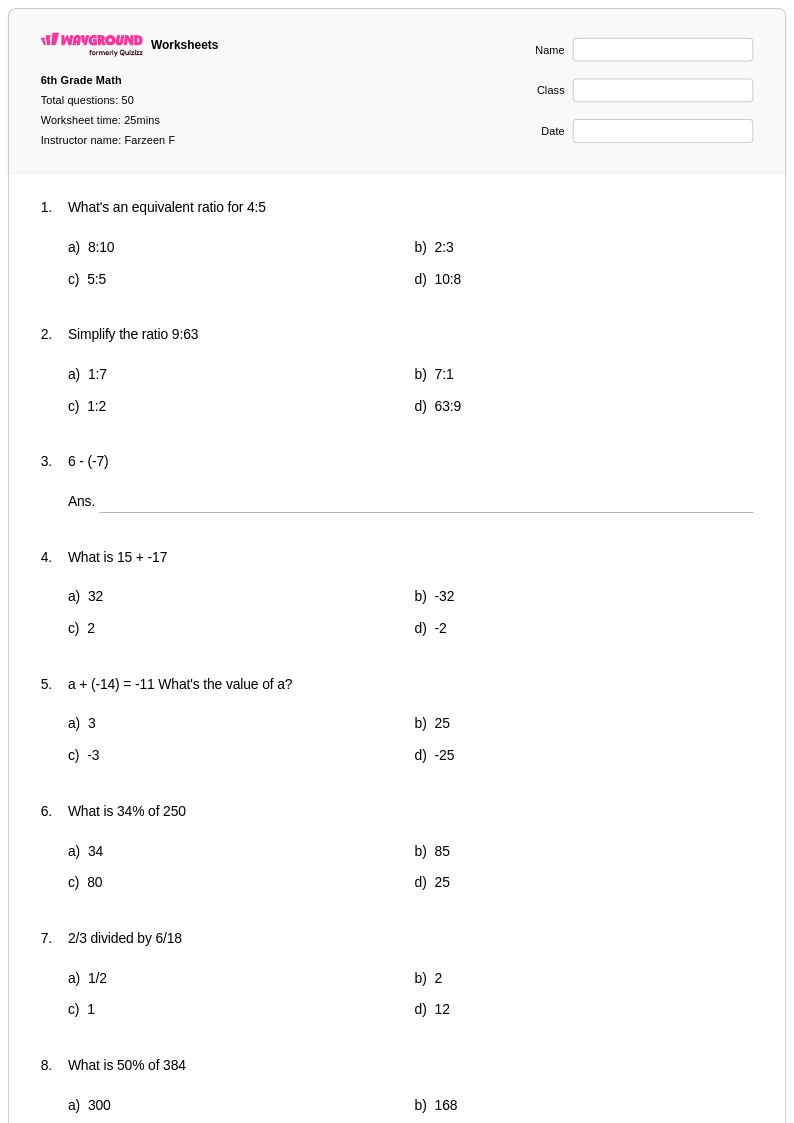
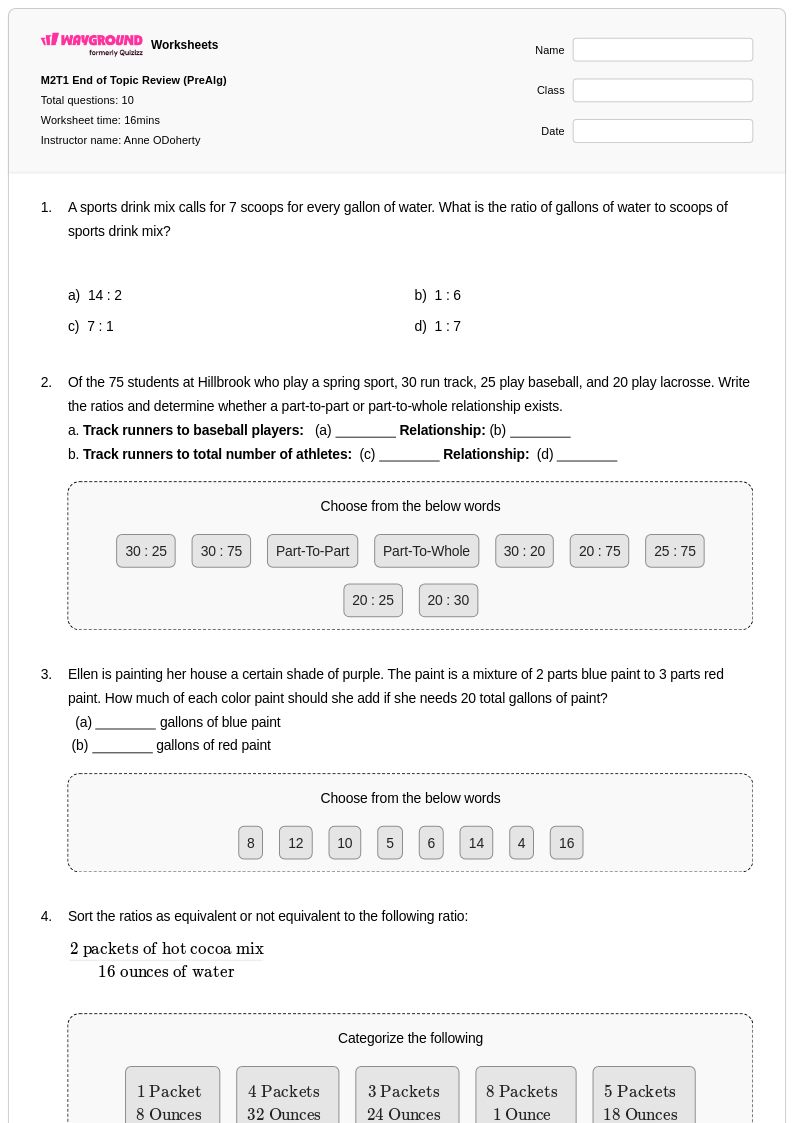
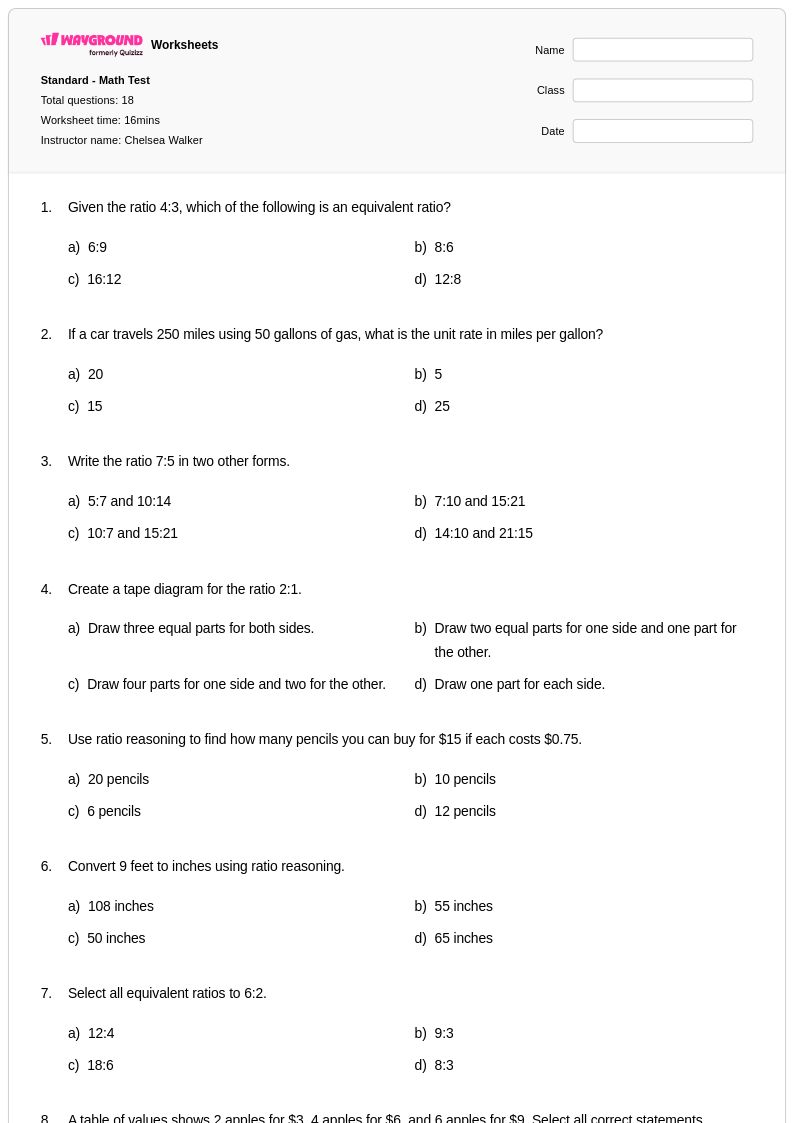
Equal ratios worksheets for Year 6 mathematics provide students with essential practice in identifying, creating, and working with equivalent proportional relationships. These comprehensive worksheet collections through Wayground (formerly Quizizz) focus on developing students' understanding of how ratios maintain their meaning when both terms are multiplied or divided by the same non-zero number. Students engage with practice problems that require them to determine whether two ratios are equal, find missing values in equivalent ratios, and create ratio tables to demonstrate proportional reasoning. Each worksheet includes an answer key and is available as a free printable pdf, allowing educators to seamlessly integrate this foundational concept into their mathematics instruction while building students' confidence with proportional thinking.
Wayground (formerly Quizizz) supports mathematics educators with millions of teacher-created equal ratios resources that streamline lesson planning and differentiated instruction for Year 6 classrooms. The platform's robust search and filtering capabilities enable teachers to quickly locate worksheets aligned with specific learning standards and skill levels, while customization tools allow for modifications that meet diverse student needs. These equal ratios worksheet collections are available in both printable pdf format and interactive digital versions, providing flexibility for in-class activities, homework assignments, and remote learning scenarios. Teachers utilize these resources for targeted remediation with struggling learners, enrichment opportunities for advanced students, and regular skill practice that reinforces the critical foundation equal ratios provide for more complex proportional reasoning in advanced mathematics courses.
FAQs
How do I teach equal ratios to 6th graders?
Sixth graders are making the shift from additive to multiplicative thinking, so that transition is the real teaching target. Use ratio tables early and often — they make the multiplicative pattern visible without requiring algebra. A concrete anchor like doubling a recipe helps students see that 1:2 and 3:6 describe the same relationship before you formalize the rule about multiplying both terms by the same number.
What exercises help 6th graders practice equal ratios?
Three problem types cover the core skill well: determining whether two ratios are equal, finding a missing value in an equivalent pair, and completing a ratio table. Word problems that involve scaling — adjusting a recipe, comparing speeds, or reading a map — give students a reason to care about the answer. Starting with the table format before moving to bare number pairs tends to reduce errors.
What mistakes do 6th graders commonly make with equal ratios?
The most persistent error is adding instead of multiplying — a student sees 3:5 and writes 5:7 as an equivalent ratio by adding 2 to each term. This usually means the student hasn't yet internalized that ratio equivalence is multiplicative, not additive. Asking them to check their answer by dividing both terms back to simplest form catches this error quickly and reinforces the correct reasoning.
How do I use Wayground's Grade 6 equal ratios worksheets?
Each worksheet includes a complete answer key, so it's ready to use for independent practice, homework, or a quick formative check. Assign it as a digital quiz on Wayground and students get immediate feedback as they work — useful when you want to see results before the next lesson. If you prefer paper, download the PDF and use the Wayground for Teachers app to scan and grade submissions without manual re-entry.
Is equal ratios a 6th grade Common Core topic?
Yes. Common Core places ratio and proportional reasoning squarely in Grade 6, and equal ratios are central to that work. Students are expected to use ratio tables, tape diagrams, and double number lines to find equivalent ratios and solve problems — not just apply a cross-multiplication rule. This lays the groundwork for Grade 7's work on proportional relationships and unit rates, so the conceptual understanding built here carries significant forward weight.
How can I support struggling 6th graders with equal ratios?
For students who find the abstract notation confusing, start with visual models — ratio tables and tape diagrams — before introducing symbolic notation. On Wayground, you can apply reduced answer choices for students who get overwhelmed by multiple-choice options, and the Read Aloud feature supports students who struggle with reading the problem itself. Worksheet-level tools like larger font sizes or a dyslexia-friendly font can also remove format barriers so the math is the only challenge.