Free Printable Equitable Distribution Worksheets for Year 1
Explore Wayground's free Year 1 equitable distribution worksheets and printables that help young learners master fair sharing concepts through engaging practice problems with comprehensive answer keys.
Explore printable Equitable Distribution worksheets for Year 1
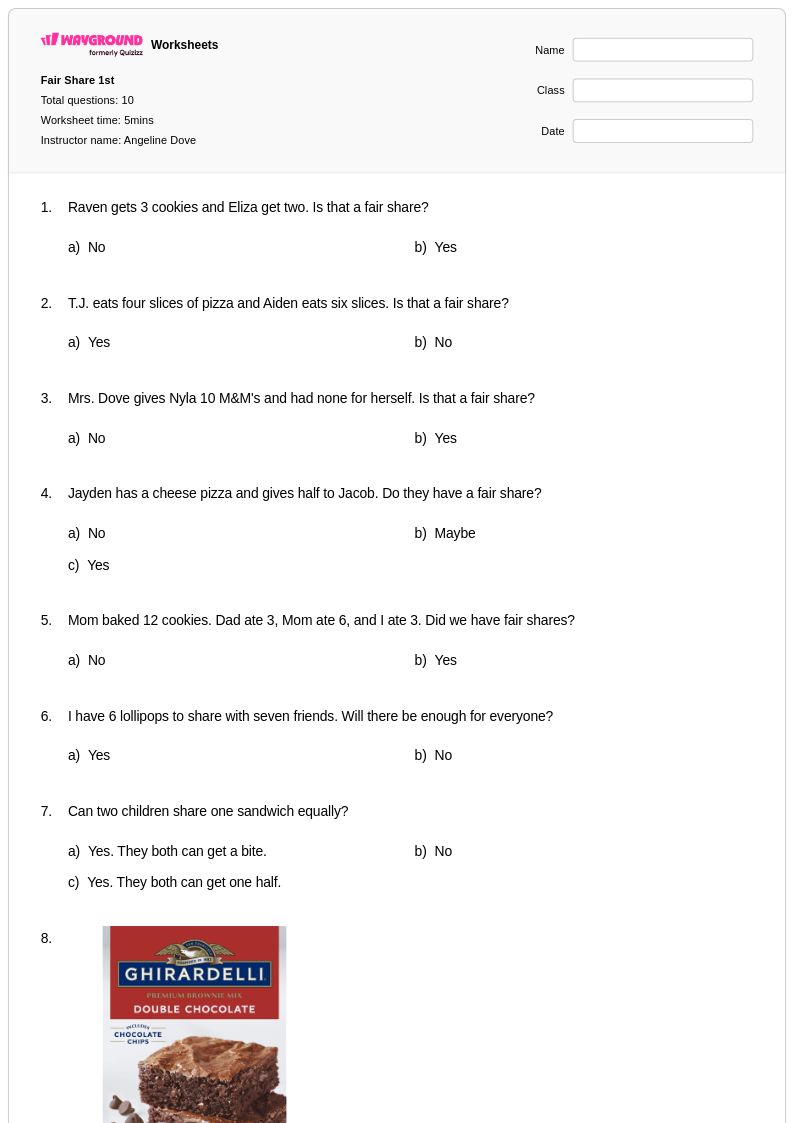
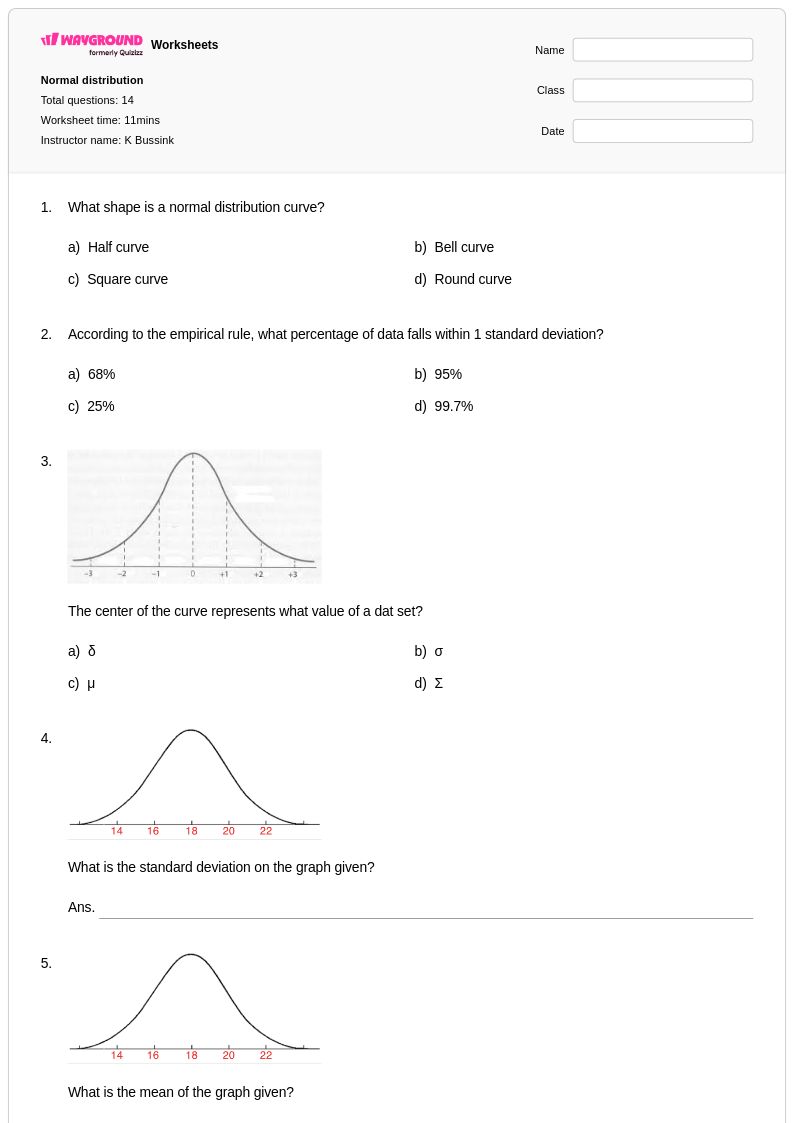
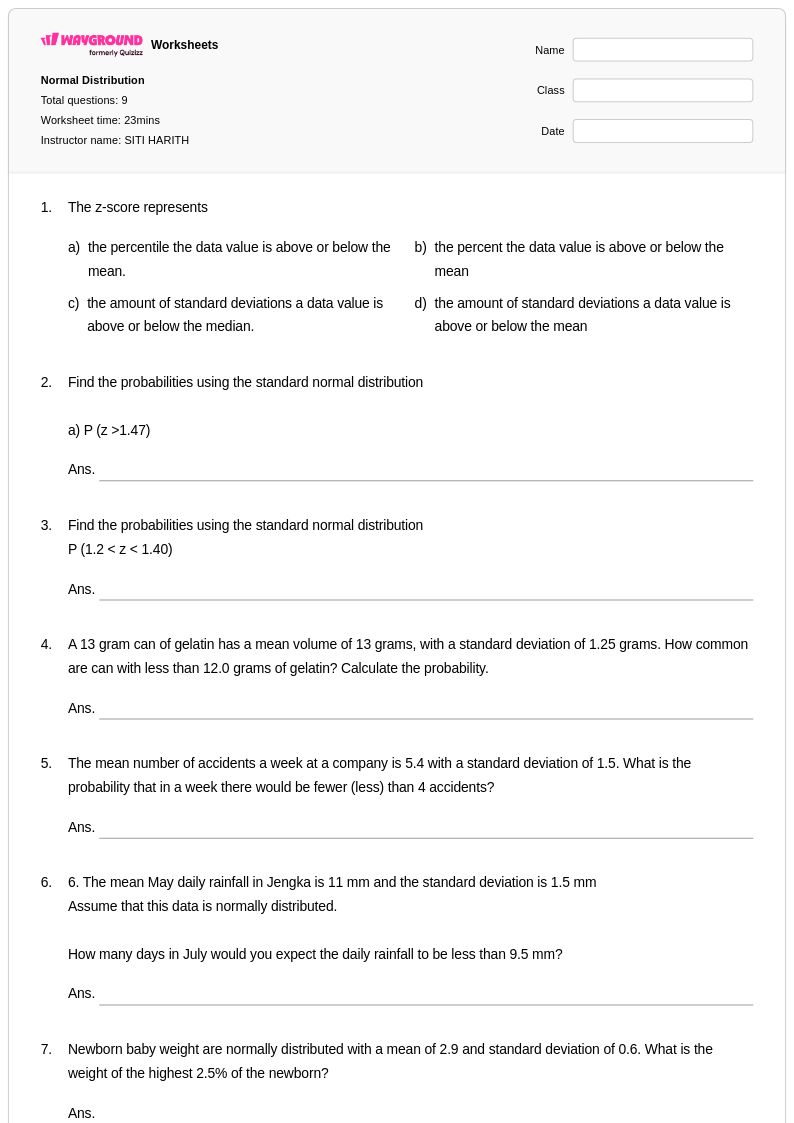
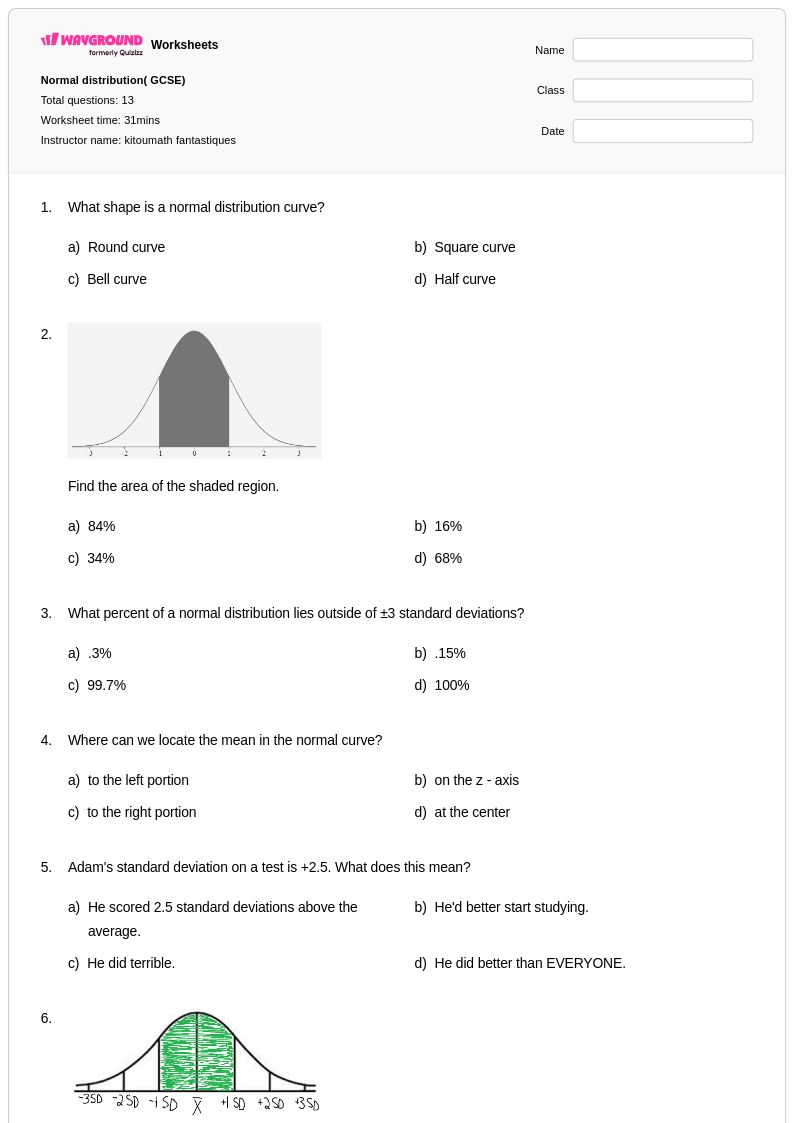
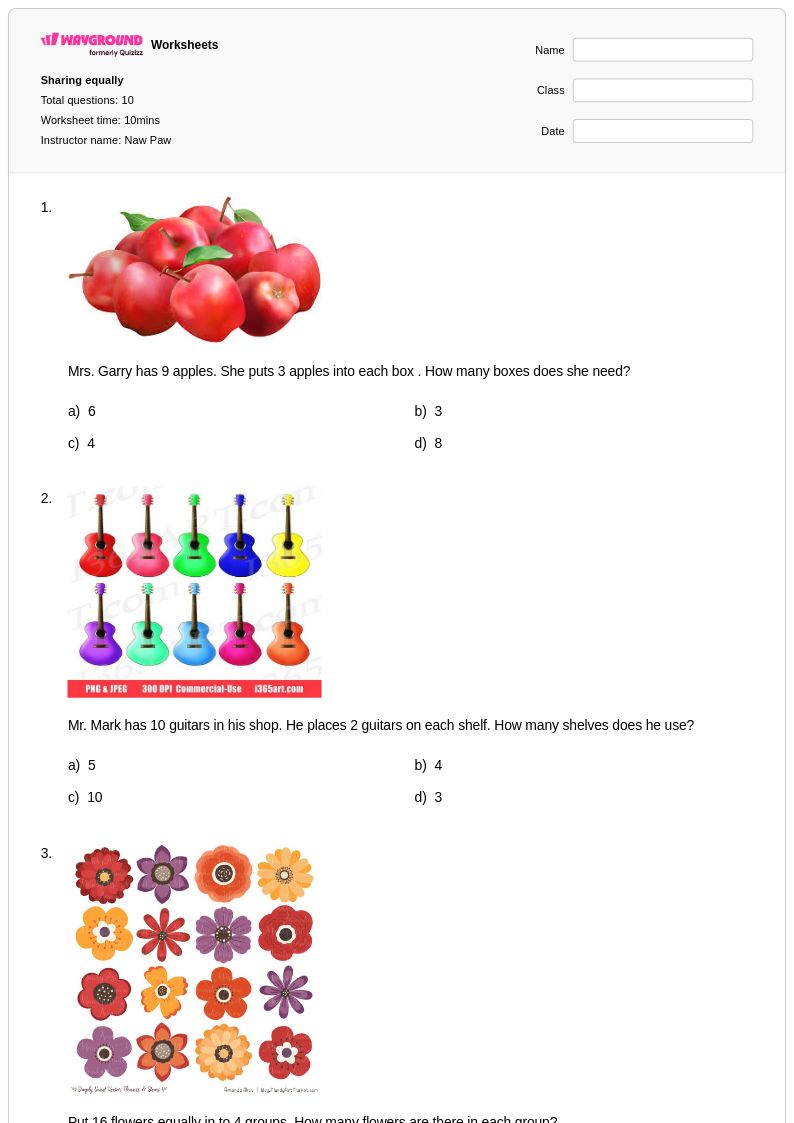
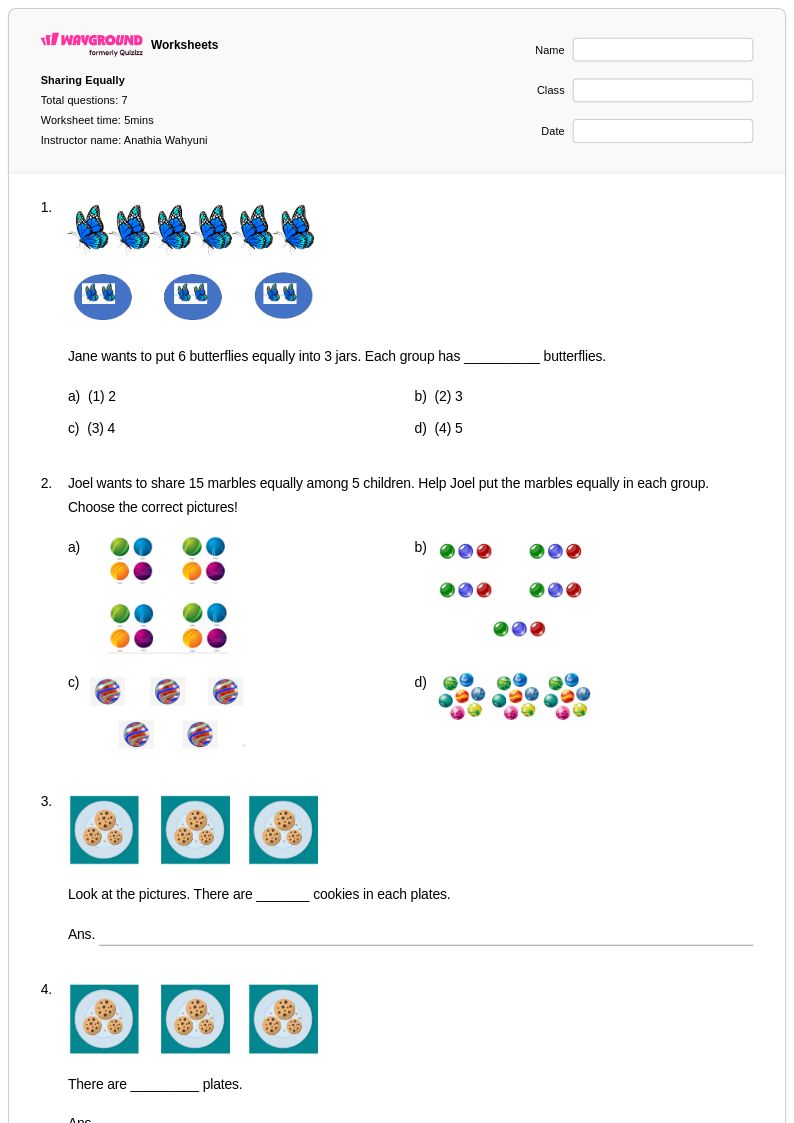
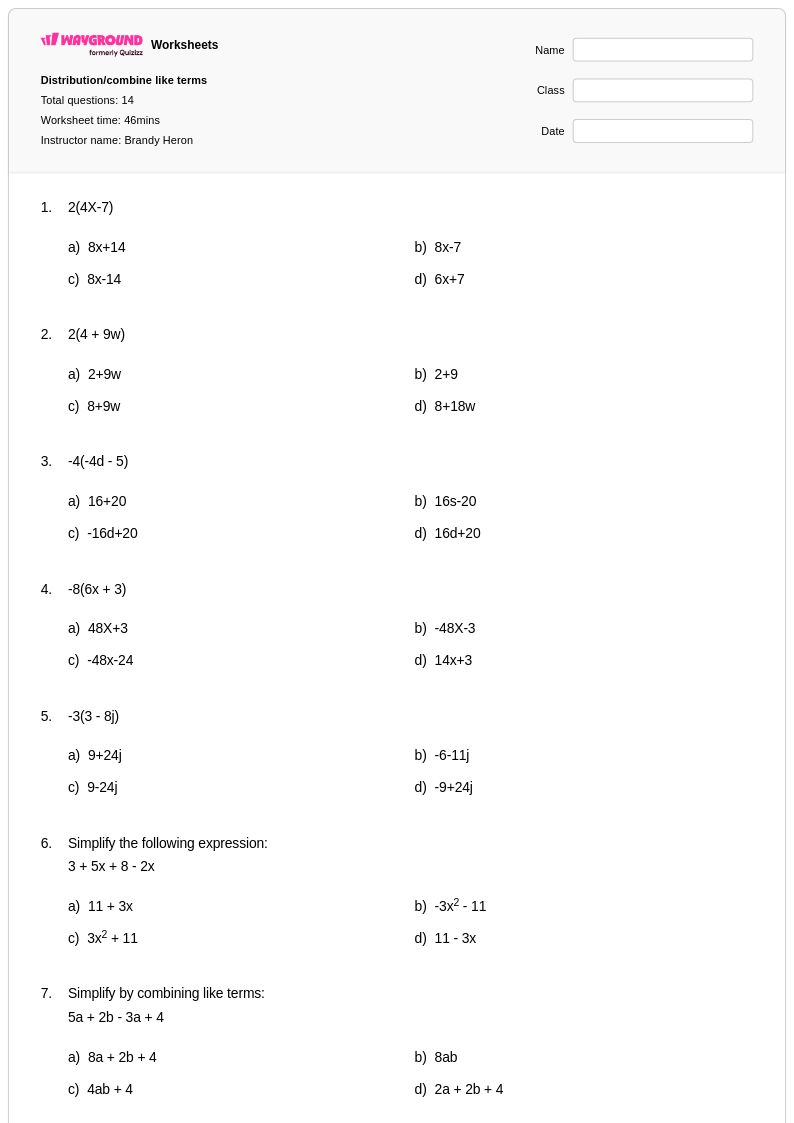
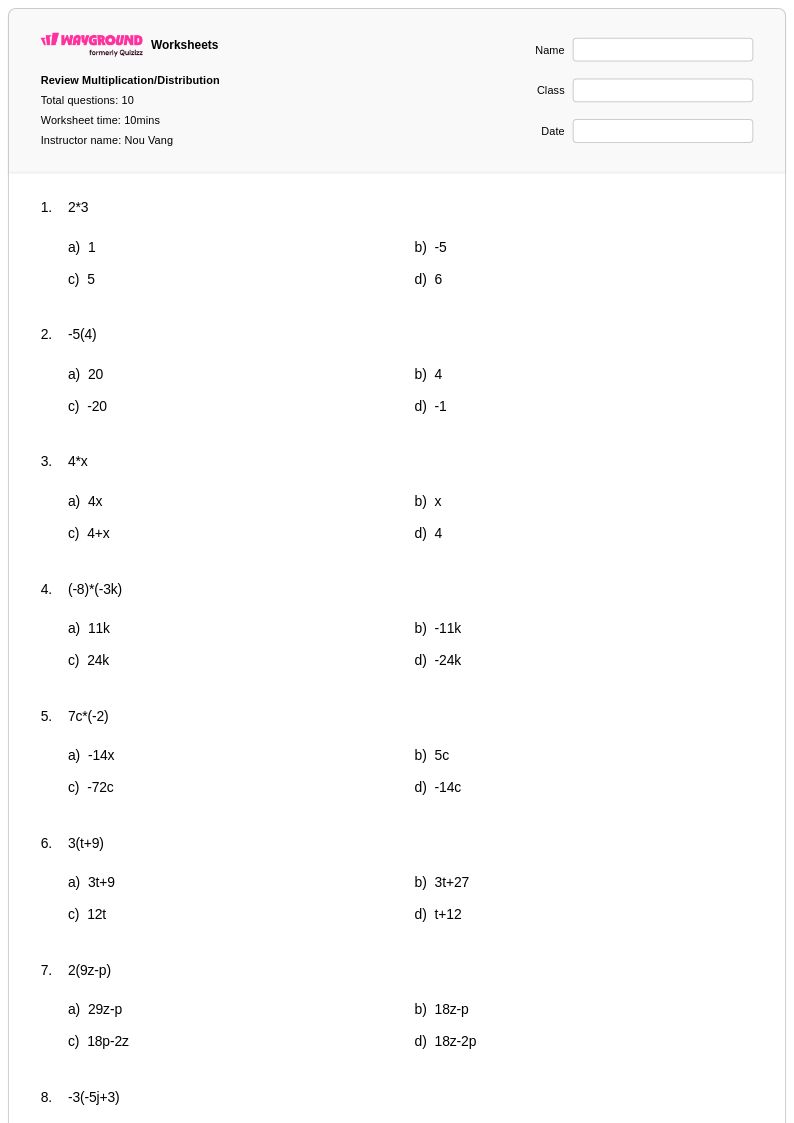
Equitable distribution worksheets for Year 1 students available through Wayground (formerly Quizizz) introduce young learners to the foundational concept of sharing objects fairly among groups. These carefully designed practice problems help first graders develop essential mathematical reasoning skills by working through scenarios where items must be divided equally, such as sharing toys among friends or distributing snacks to classmates. The worksheets strengthen critical thinking abilities while building number sense and early division concepts through hands-on activities that make abstract mathematical ideas concrete and accessible. Each printable resource includes comprehensive answer keys and free pdf downloads, allowing students to practice equitable distribution problems at their own pace while teachers can easily assess understanding and progress.
Wayground (formerly Quizizz) empowers educators with an extensive collection of millions of teacher-created equitable distribution worksheets specifically aligned with Year 1 mathematical standards and developmental expectations. The platform's robust search and filtering capabilities enable teachers to quickly locate age-appropriate materials that match their specific classroom needs, whether for initial instruction, remediation support, or enrichment activities. These versatile resources are available in both printable and digital formats, including downloadable pdfs, and feature flexible customization tools that allow educators to differentiate instruction for diverse learning styles and abilities. Teachers can seamlessly integrate these worksheets into lesson planning, use them for targeted skill practice, or deploy them as assessment tools to ensure all students master the critical concept of fair sharing before progressing to more advanced mathematical operations.
FAQs
How do I teach equitable distribution to first graders?
First graders are ready to move from purely physical sharing toward representing it on paper, but they still need the concrete step first. Start with manipulatives — have students deal out counters one at a time into cups or circles drawn on paper. Then ask them to record what they did: 'I had 8 counters and 2 groups, so each group got 4.' That narration bridges the physical act to the written representation and sets up division thinking for later grades.
What practice problems are most effective for Grade 1 equitable distribution?
Problems that pair a picture with a question work best at this level — for example, showing 10 apples and 2 baskets and asking how many go in each basket. Students can draw lines or circles to show their work rather than relying on computation alone. These worksheets use that format, progressing toward problems where students determine the answer without a picture as their confidence grows.
What errors do first graders commonly make with fair sharing?
Two errors come up repeatedly. First, students distribute items without checking equality — they stop when the objects run out rather than verifying each group has the same amount. Second, they confuse the number of groups with the share size: given 6 items split into 3 groups, they write '3' as the answer instead of '2.' Having students label each group and count before writing their answer catches both.
How do I use Wayground's Grade 1 equitable distribution worksheets?
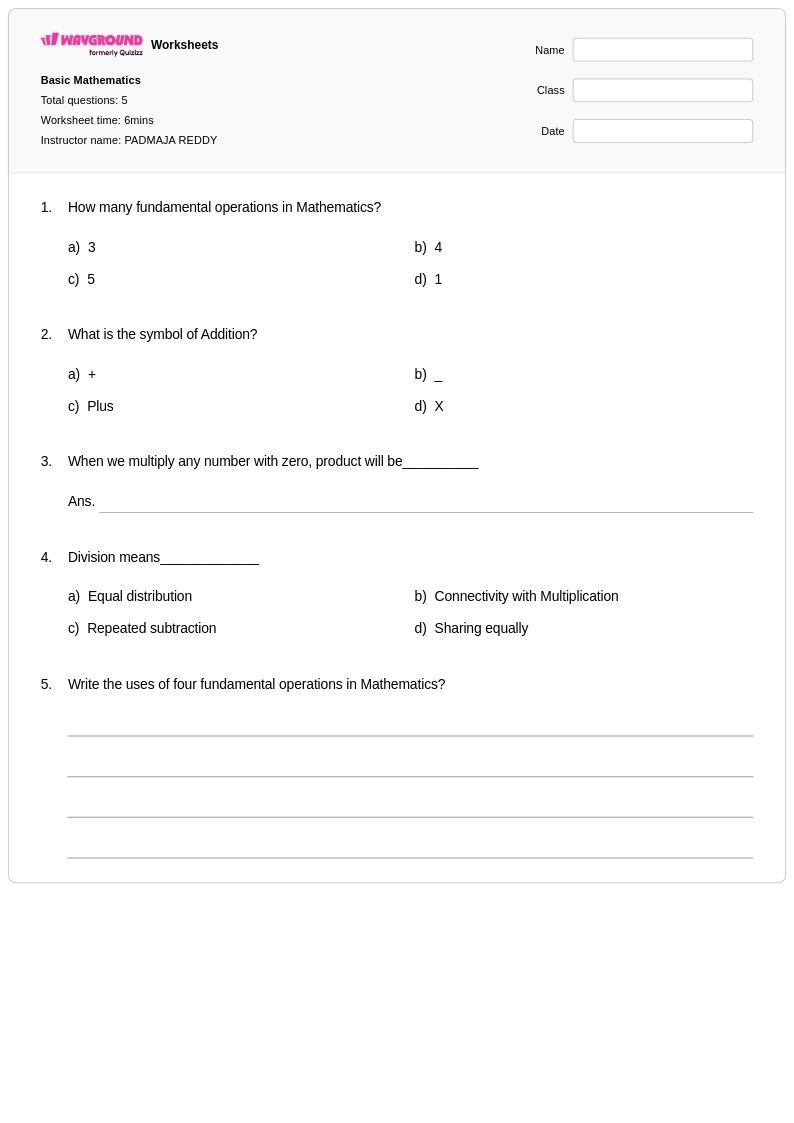
These worksheets are available as printable PDFs with a complete answer key included, so you can assign them independently and check work without prep. If you're running a digital session, you can host the same worksheet as an interactive quiz on Wayground — students submit answers on a device and you see results in real time. Both formats use the same problems, so switching between them based on your setup that day is straightforward.
How does Grade 1 equitable distribution align with Common Core math standards?
Common Core introduces equal shares formally in first grade as part of geometry (partitioning shapes) and informally through operations work. Equitable distribution practice at this level builds the conceptual groundwork that Common Core formalizes as division in Grade 3 — specifically, the understanding that dividing a quantity into equal groups is the inverse of repeated addition. First graders who can explain why a share is fair are better positioned to make sense of the division symbol when they encounter it later.
How can I differentiate equitable distribution practice for my Grade 1 class?
Students who are still building number sense benefit from the Read Aloud feature, which removes the reading barrier so they can focus on the math. For students ready for more, you can move them toward problems without visual supports — just a number sentence describing the sharing scenario. Wayground also lets you adjust font size and spacing when generating a worksheet version, which helps students who find standard layouts hard to navigate.