Free Printable Fact Families Worksheets for Year 2
Explore our Year 2 fact families printables and free worksheets that help students master addition and subtraction relationships through engaging practice problems with comprehensive answer keys available as downloadable PDFs.
Explore printable Fact Families worksheets for Year 2
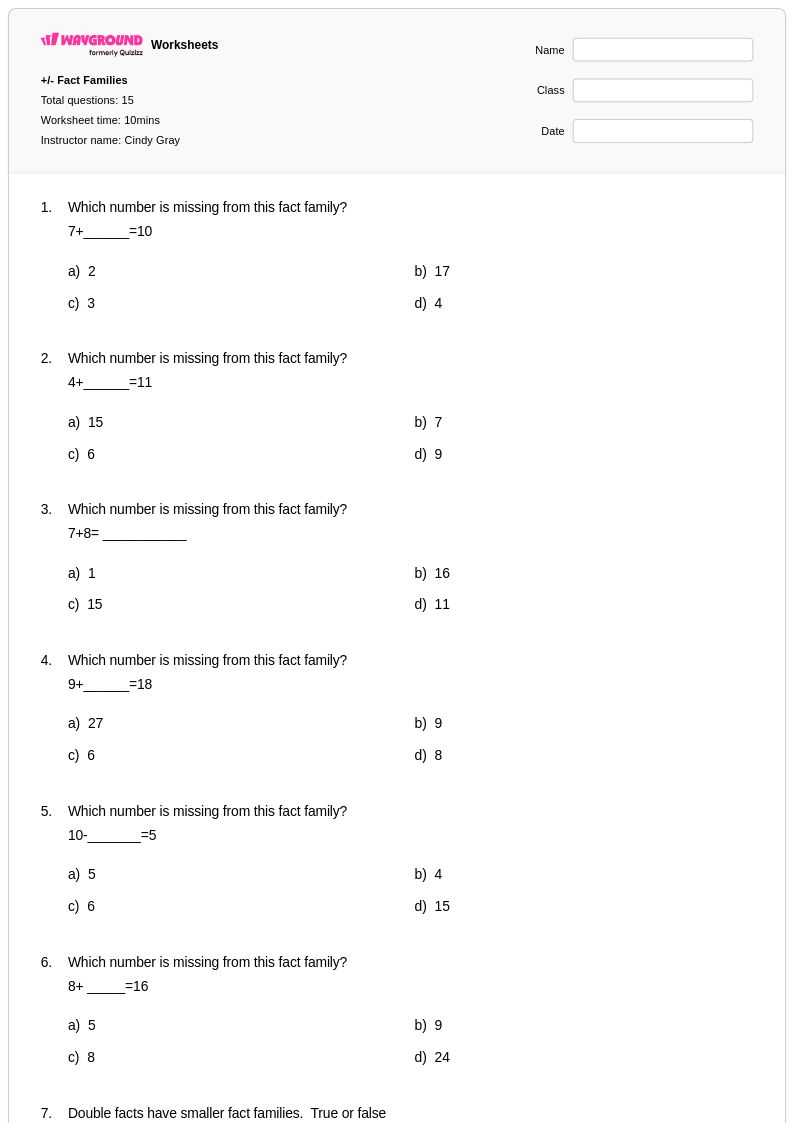
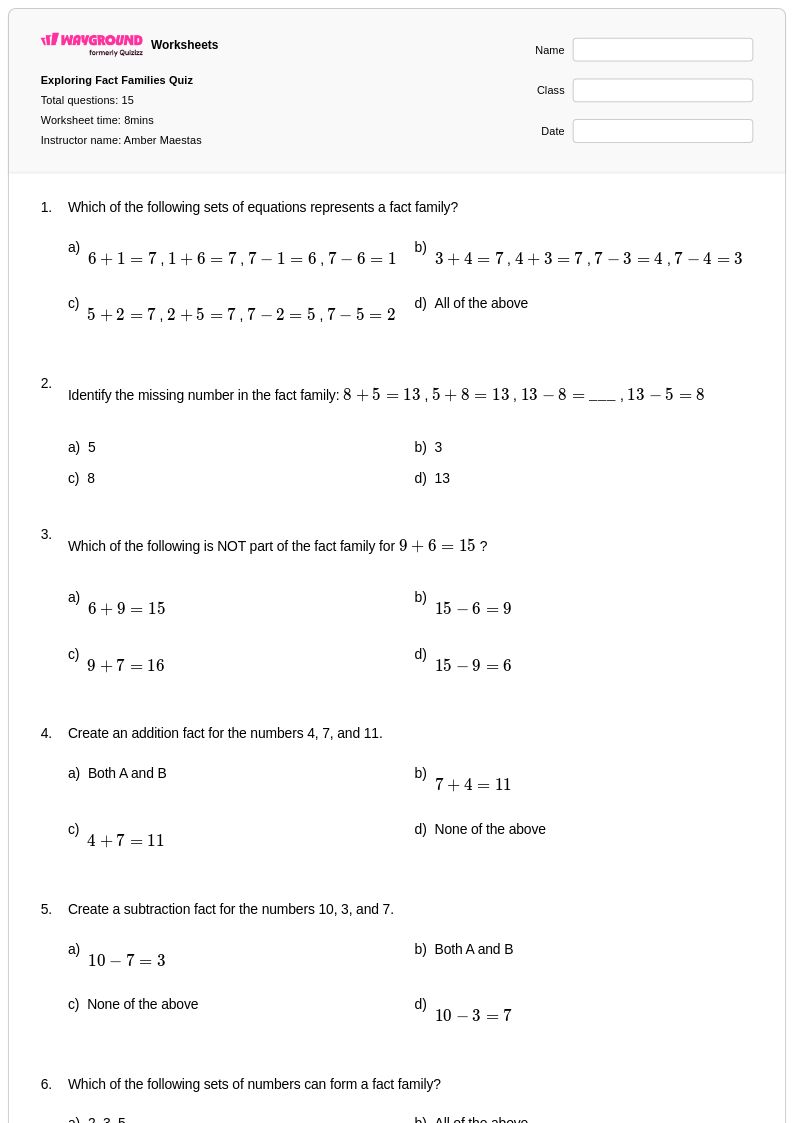
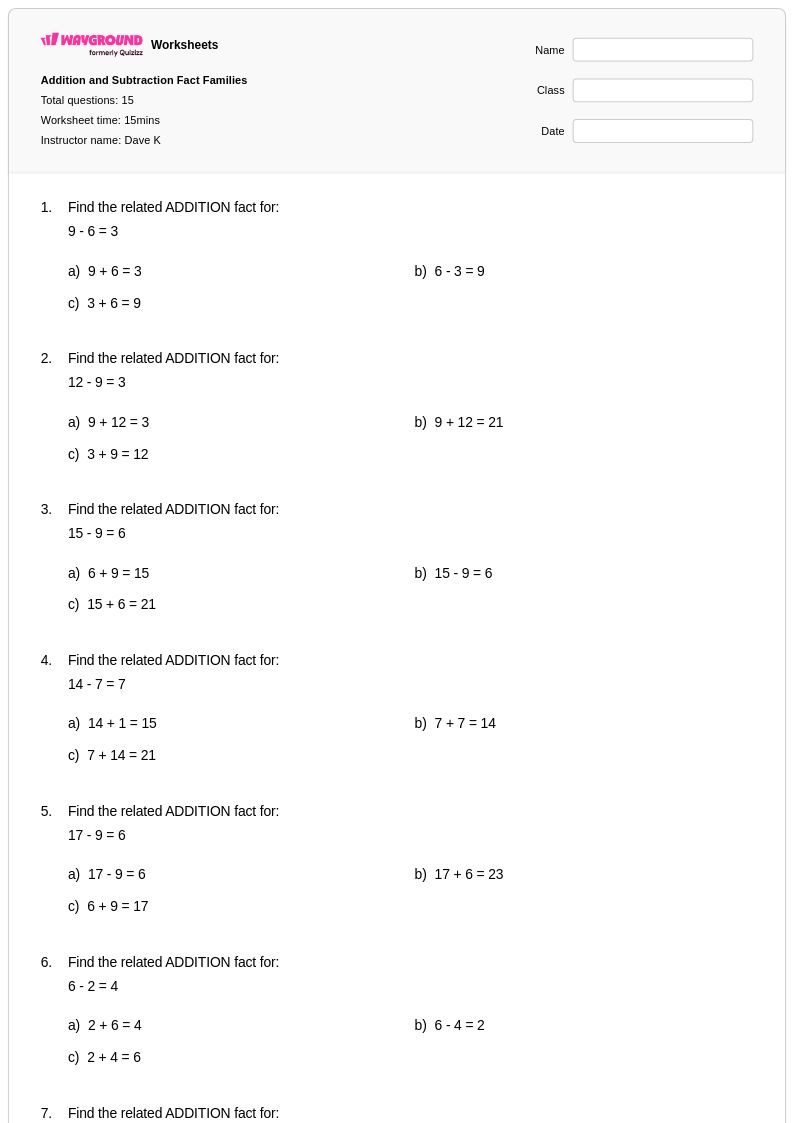
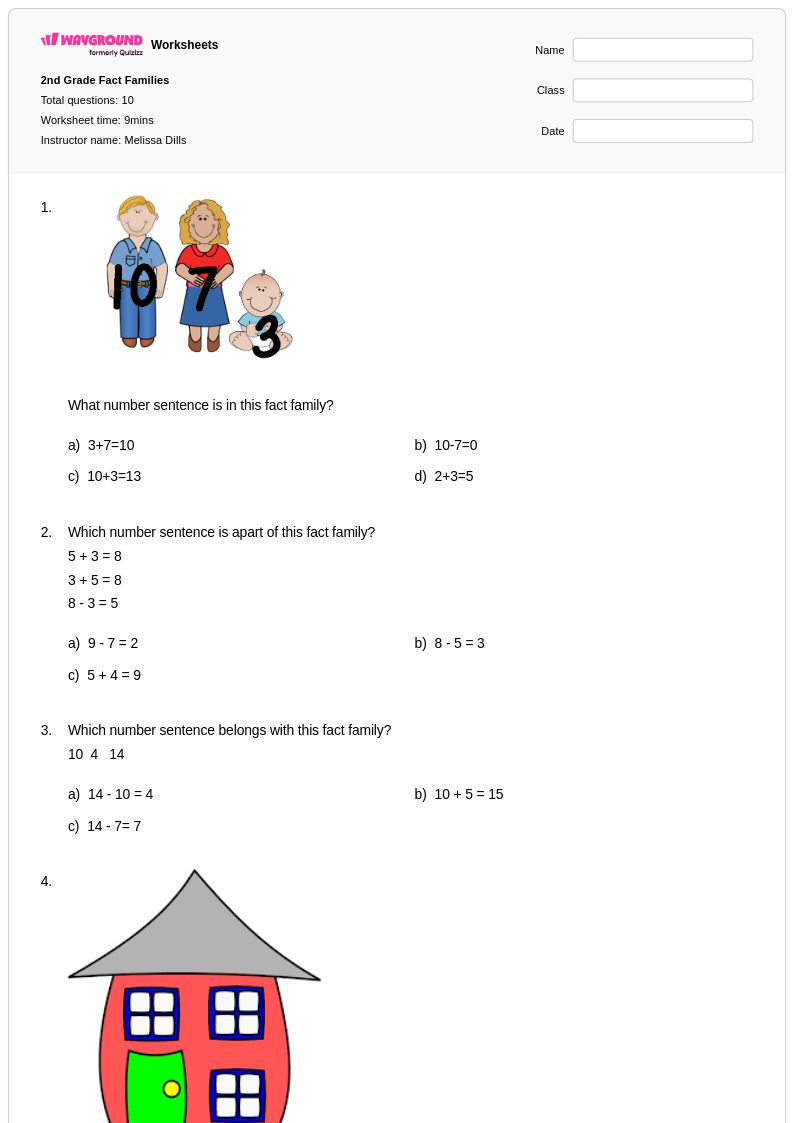
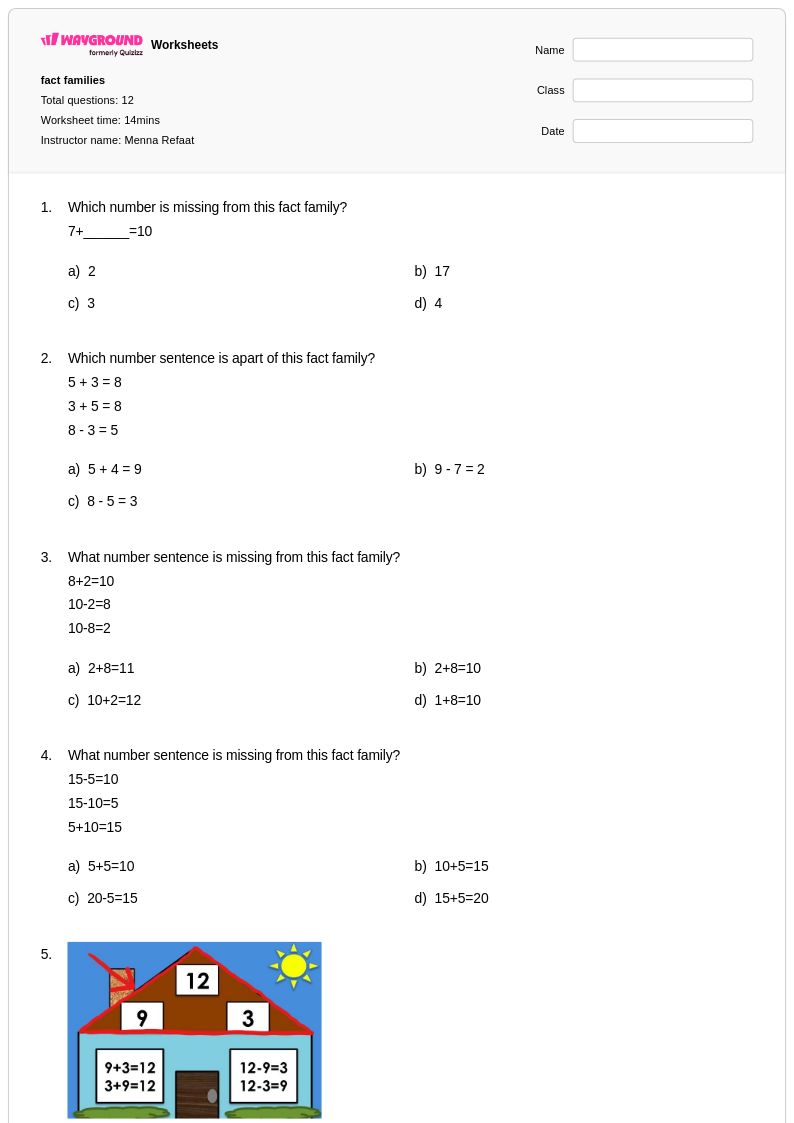
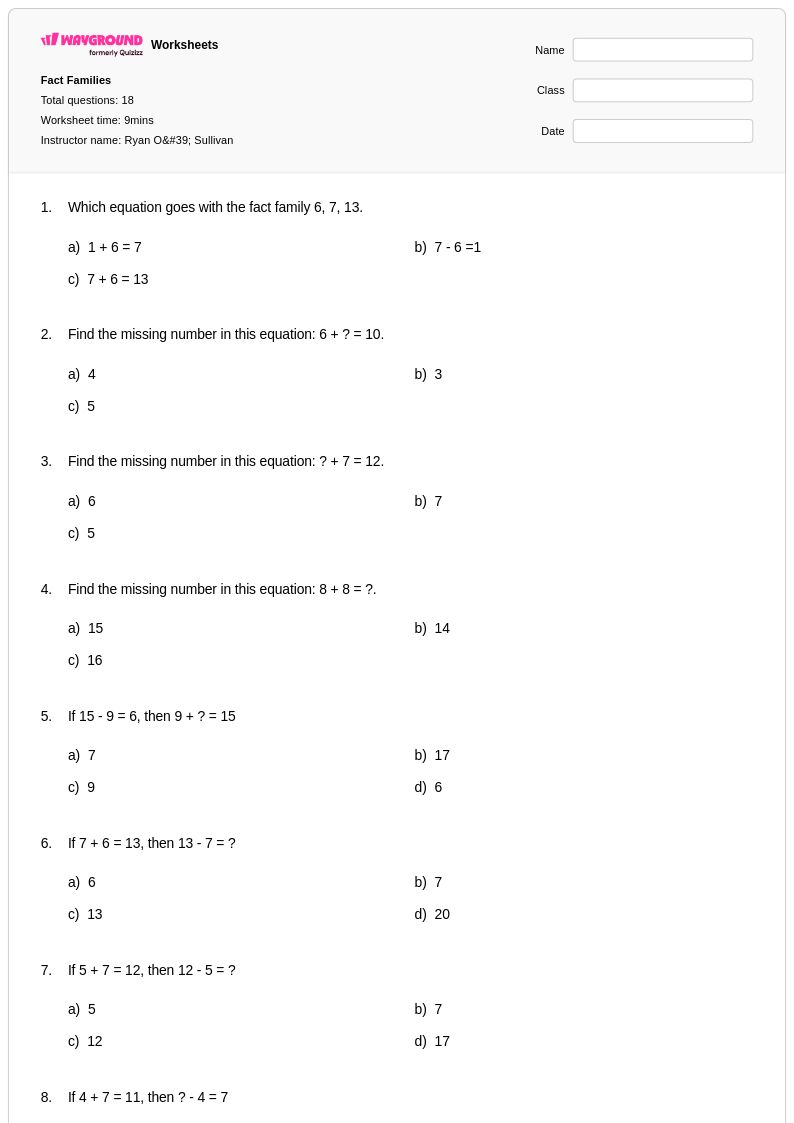
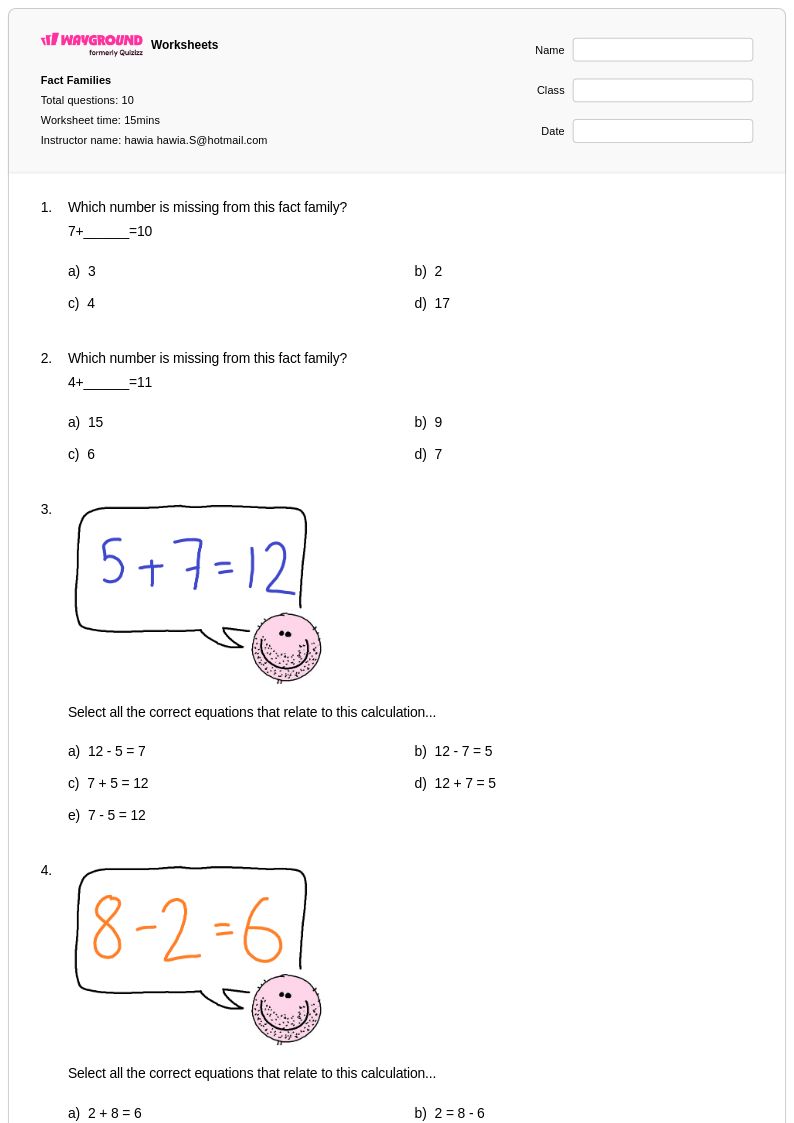
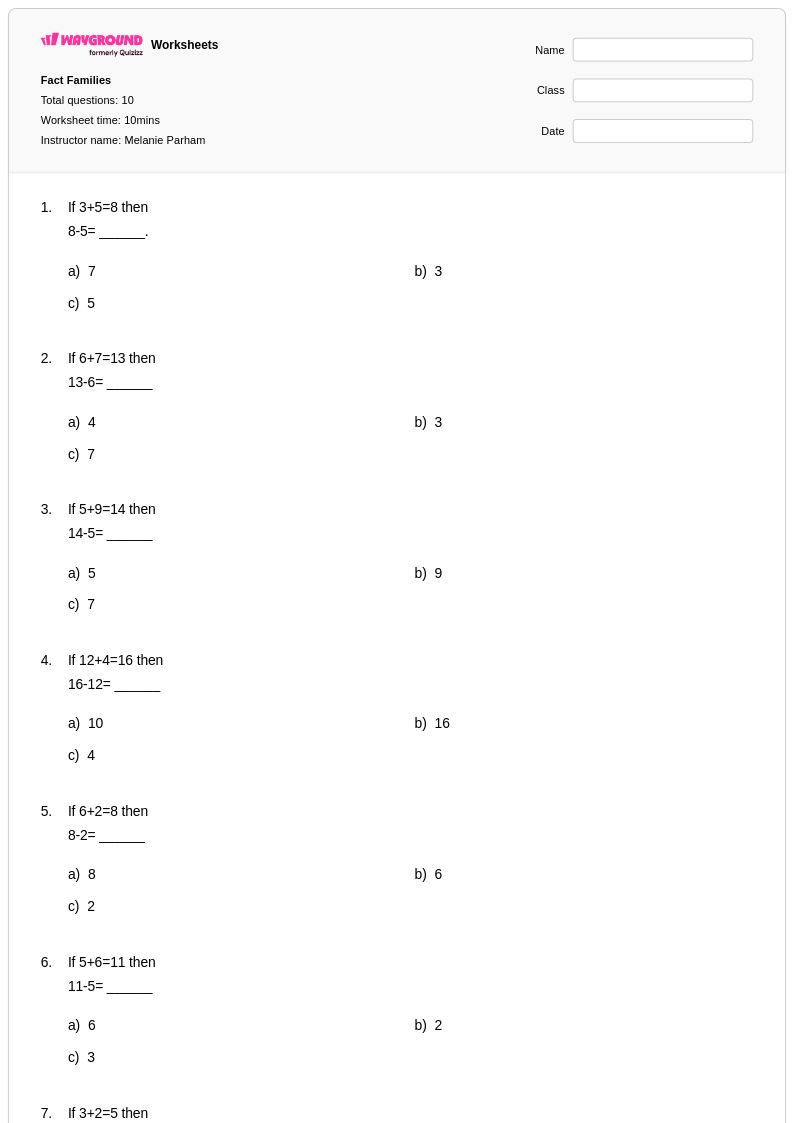
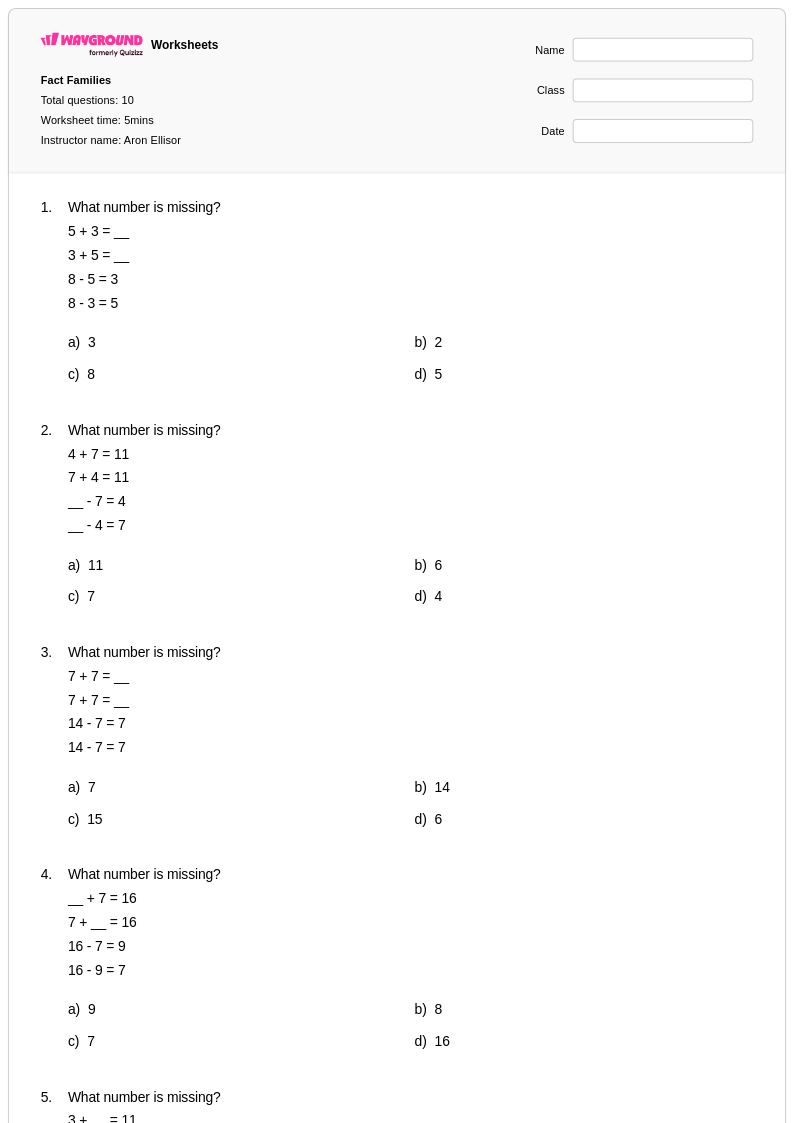
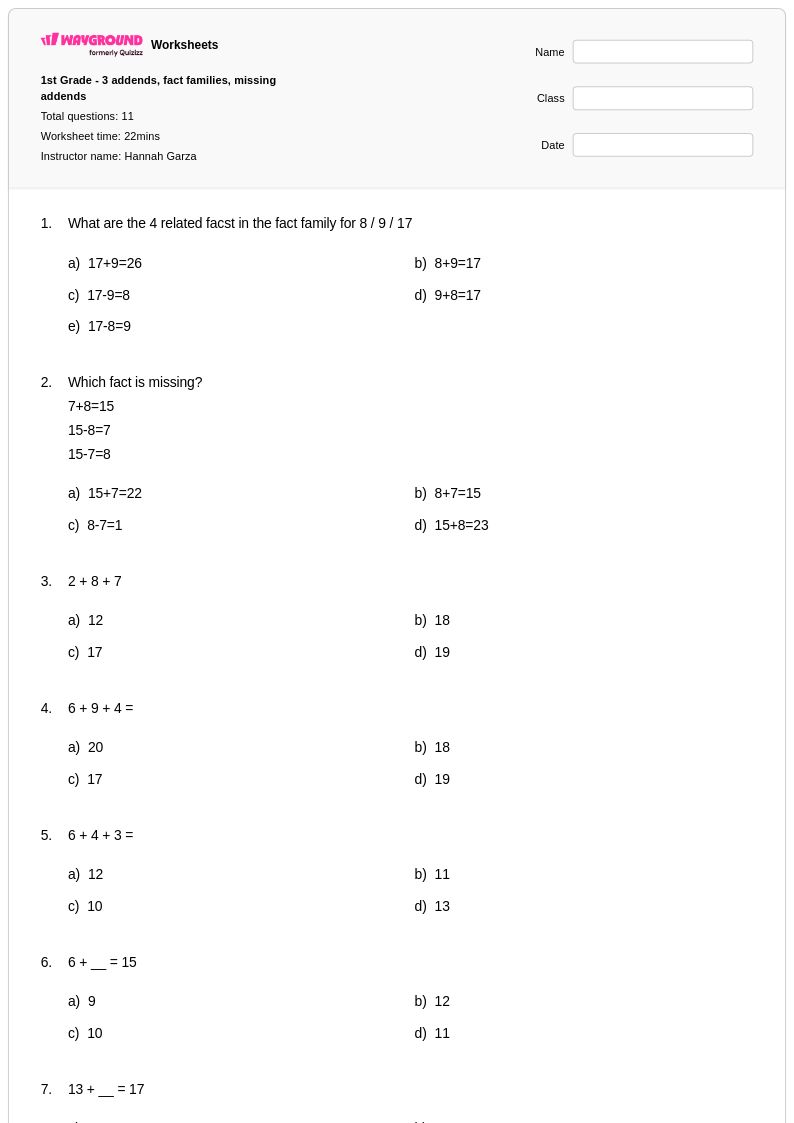
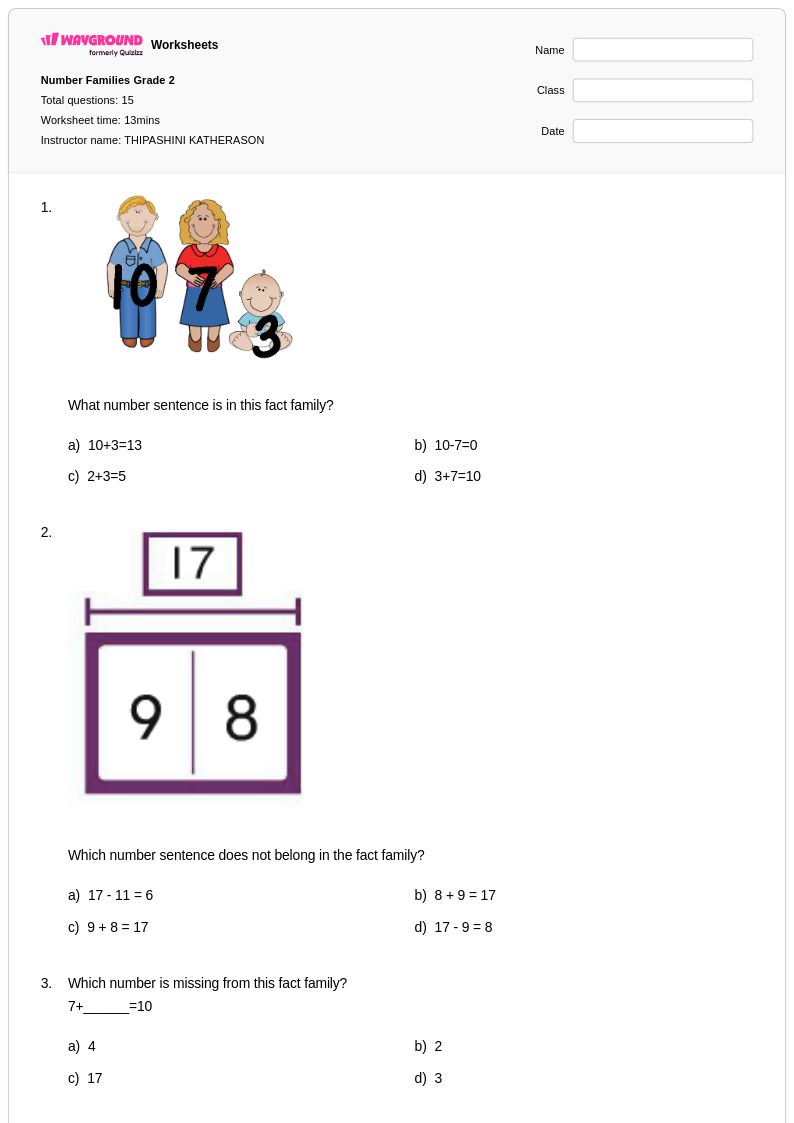
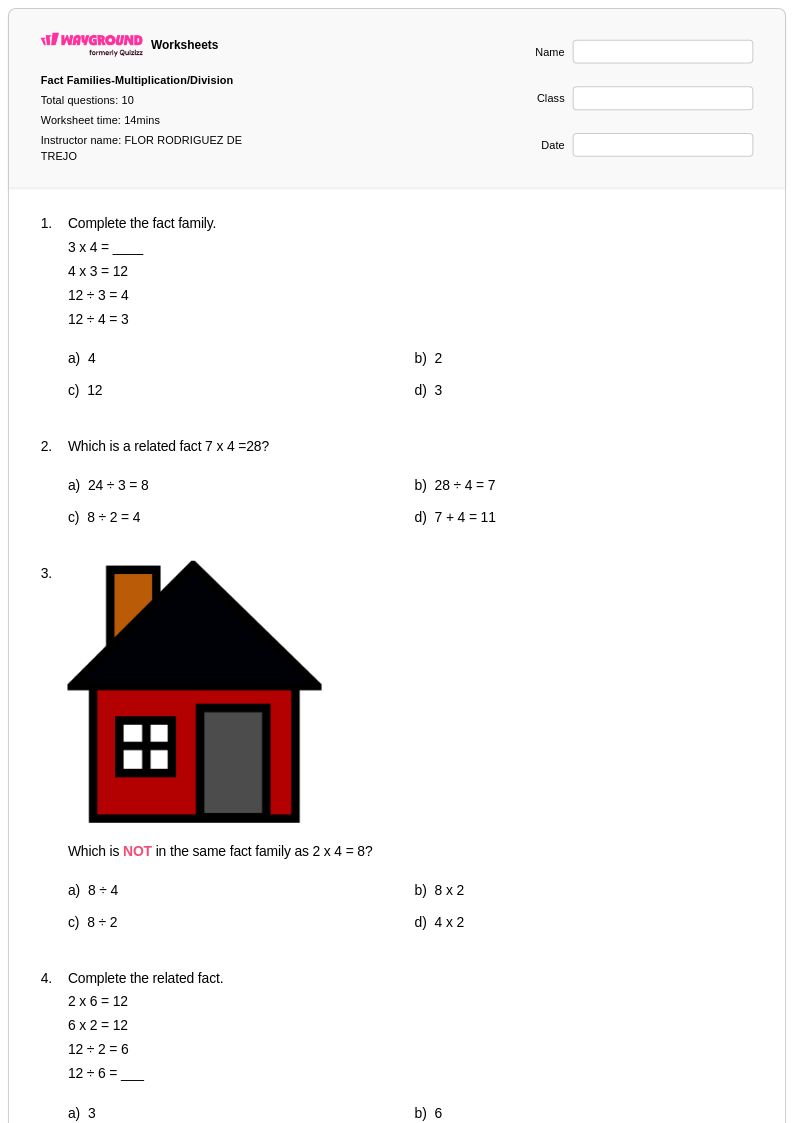
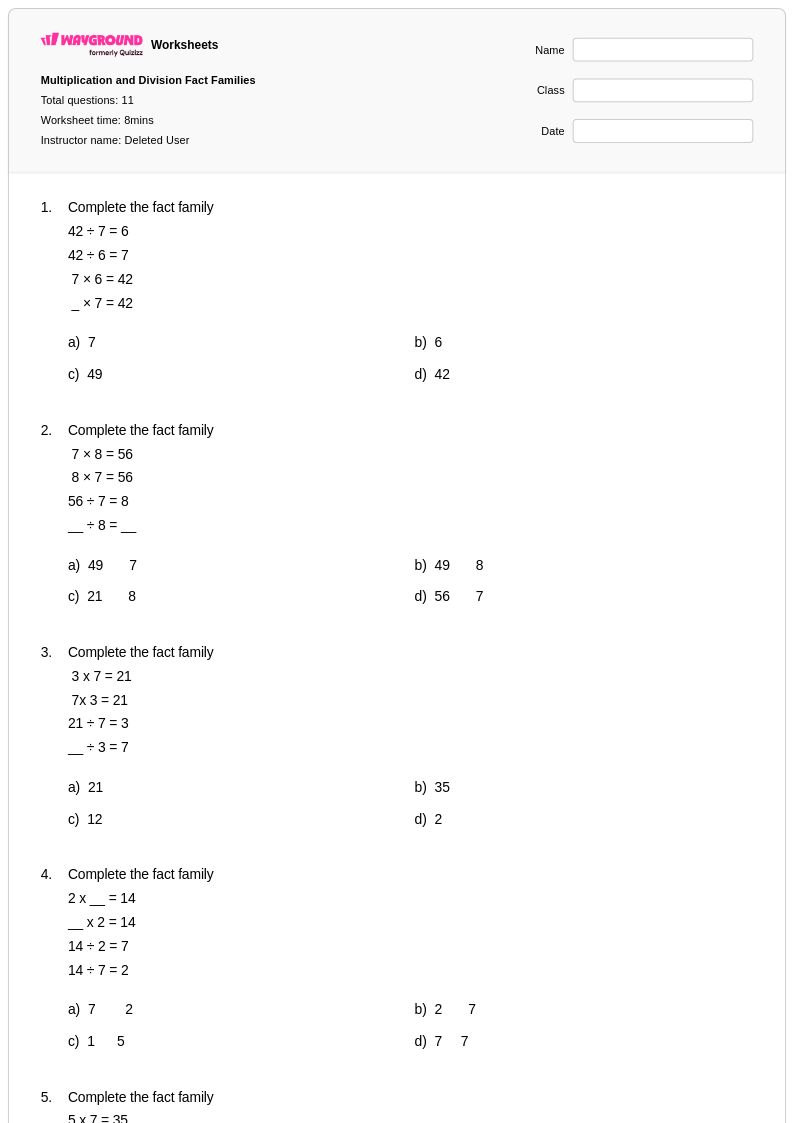
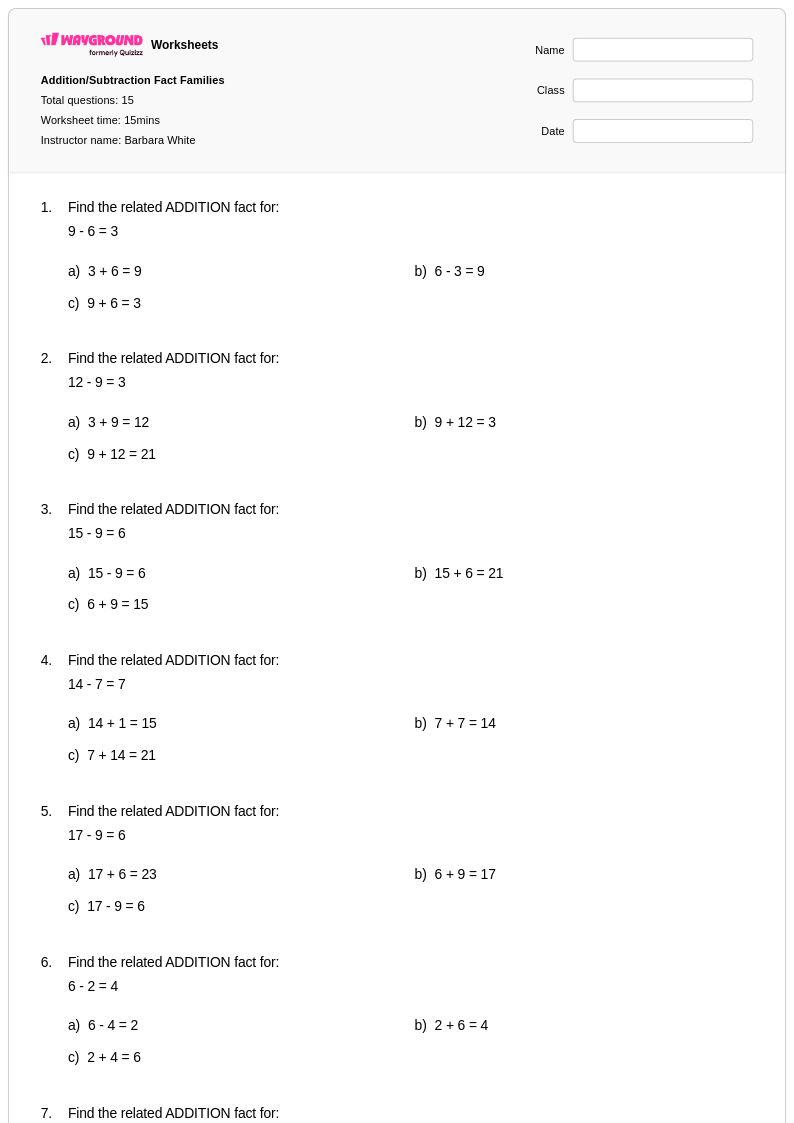
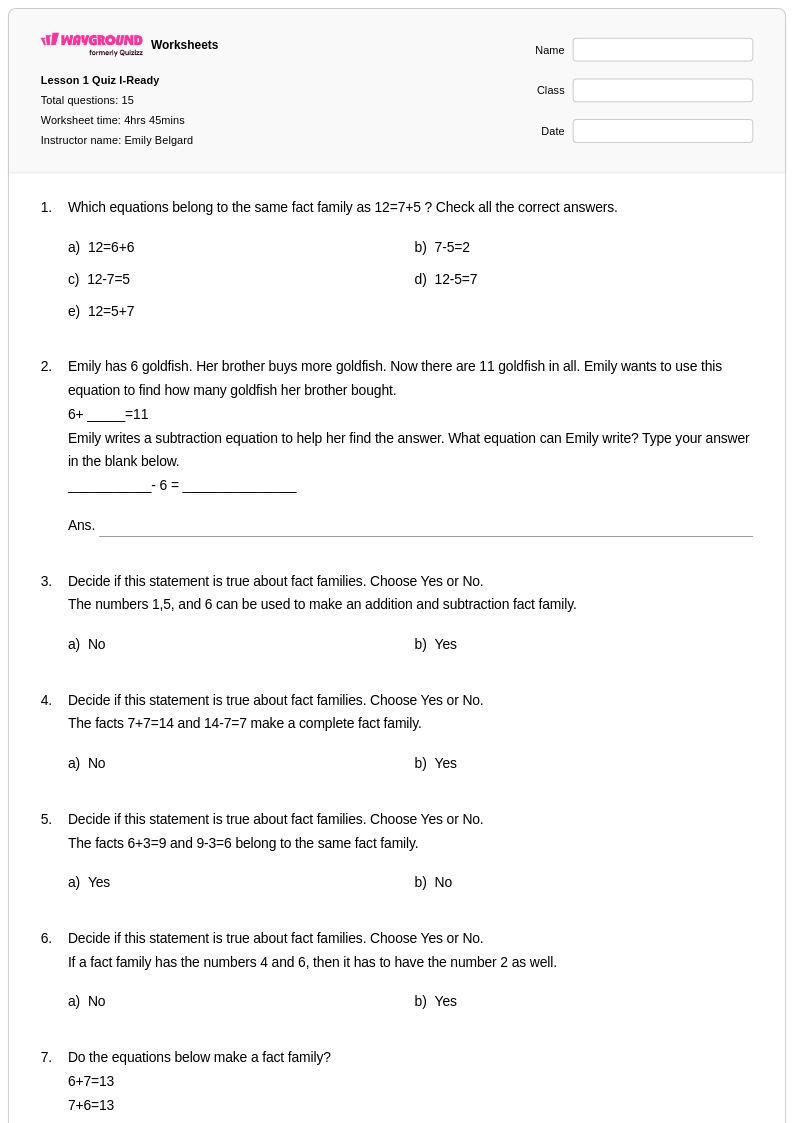
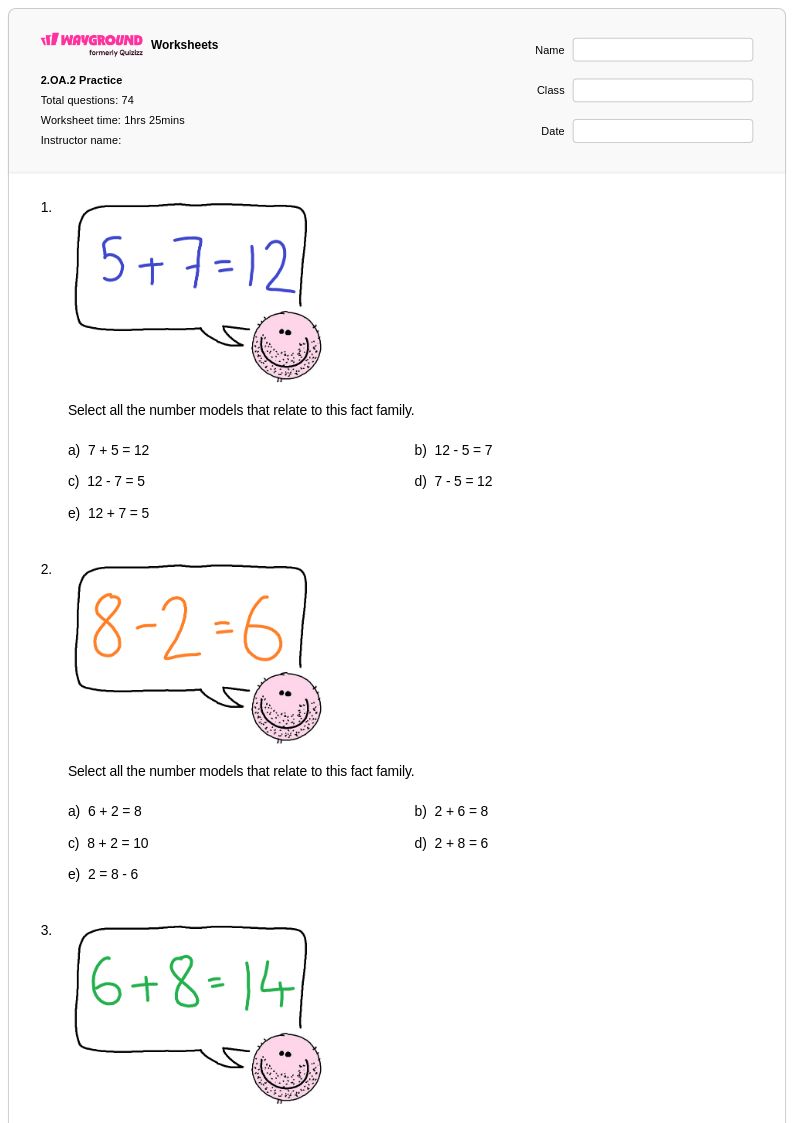
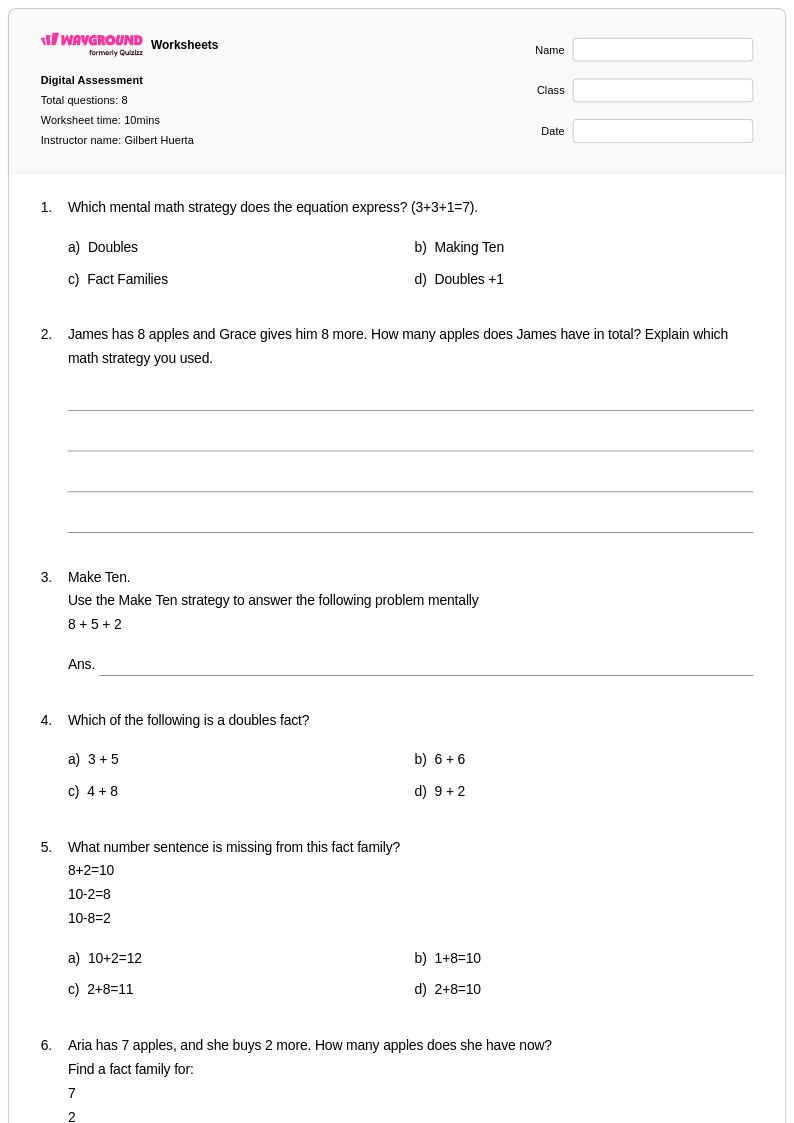
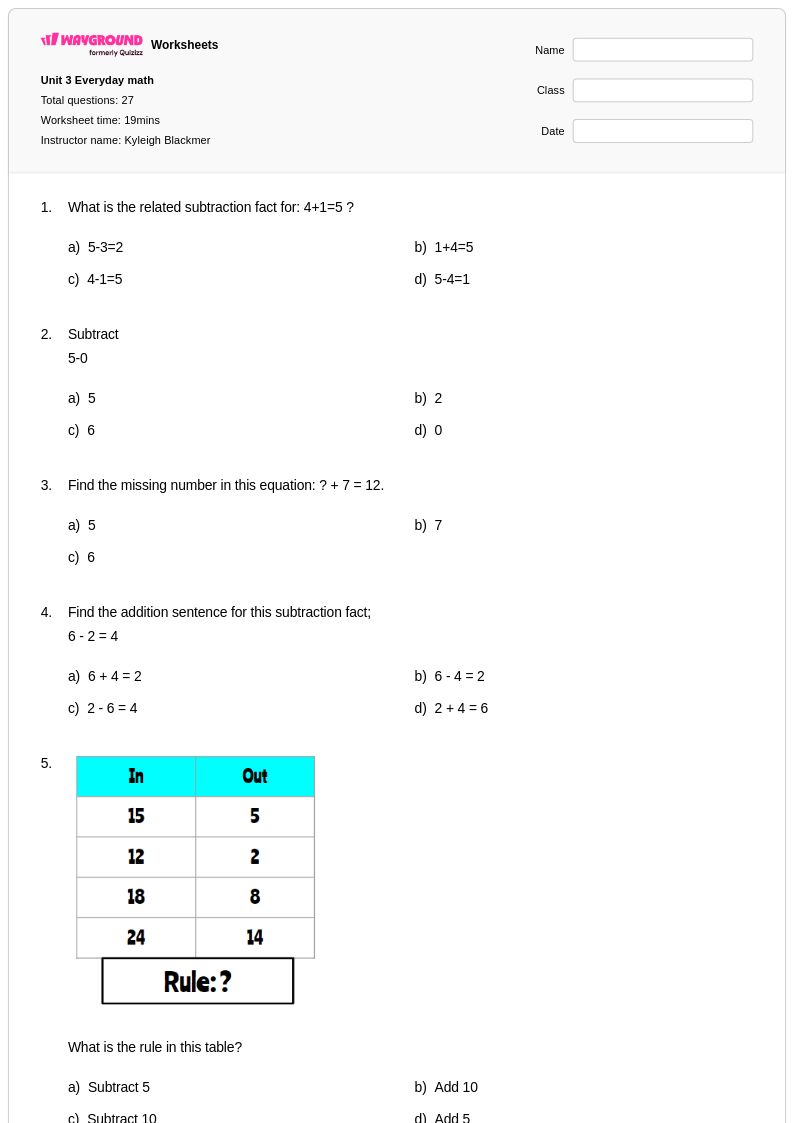
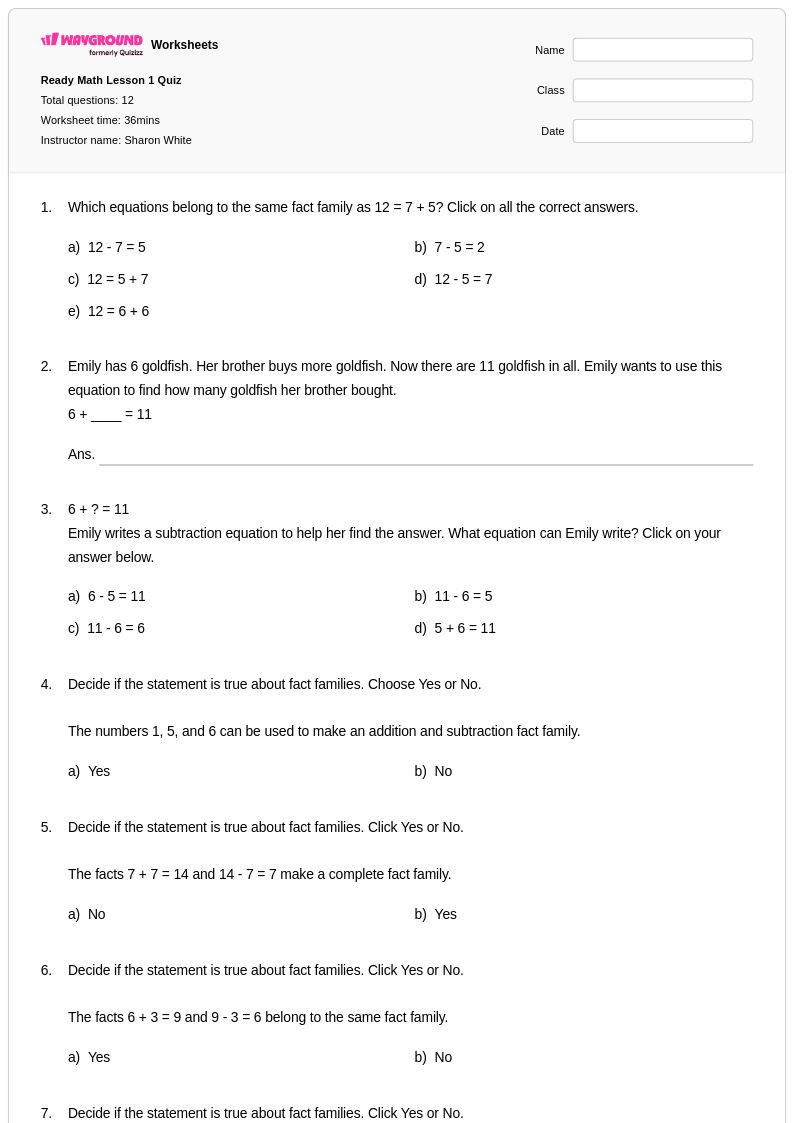
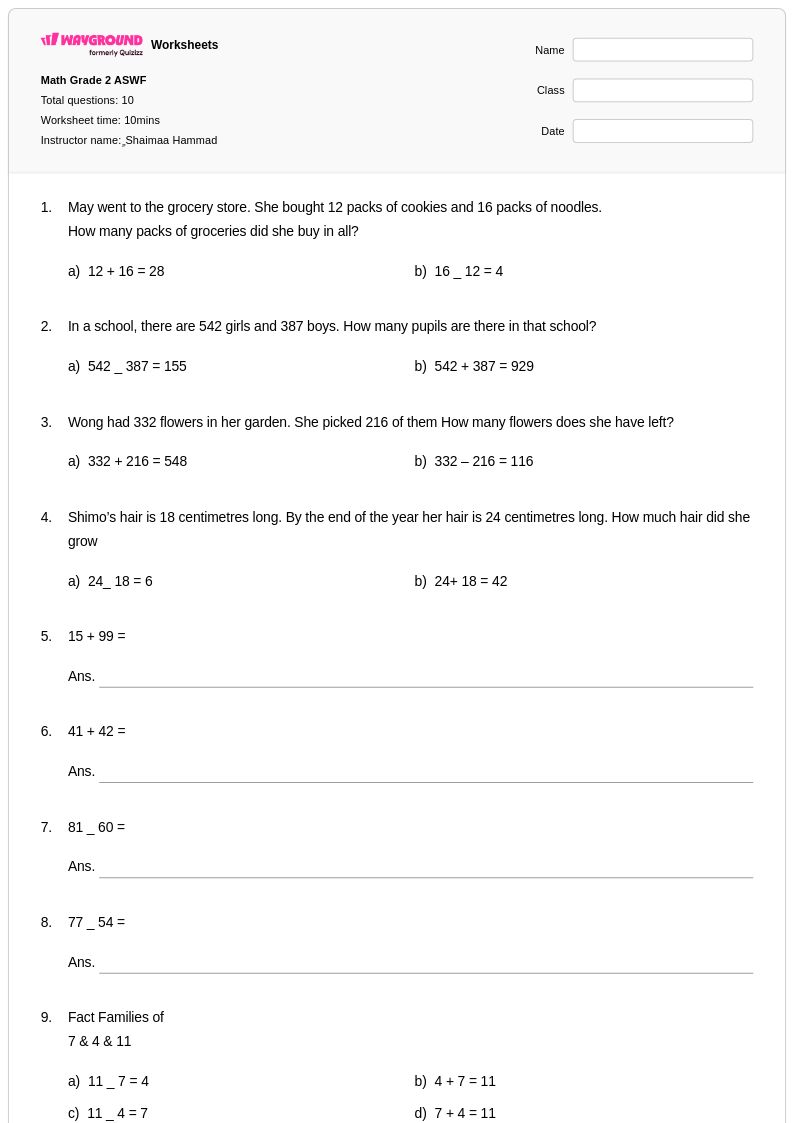
Fact families worksheets for Year 2 students available through Wayground (formerly Quizizz) provide essential practice in understanding the mathematical relationships between addition and subtraction operations. These comprehensive printables help young learners recognize how numbers work together in groups, such as understanding that 3 + 4 = 7, 4 + 3 = 7, 7 - 3 = 4, and 7 - 4 = 3 all belong to the same number family. The worksheets strengthen critical thinking skills by encouraging students to see patterns and connections between operations, building foundational number sense that supports more advanced mathematical concepts. Each practice problem set includes detailed answer keys and is designed as free pdf resources that teachers can easily print and distribute, making fact family mastery both accessible and engaging for second-grade students.
Wayground (formerly Quizizz) supports educators with millions of teacher-created fact family worksheets that can be filtered by specific Year 2 standards and skill levels to meet diverse classroom needs. The platform's robust search functionality allows teachers to quickly locate materials aligned with their curriculum requirements, while differentiation tools enable customization of worksheets for students requiring additional support or enrichment opportunities. These resources are available in both printable pdf format for traditional classroom use and digital formats for interactive learning experiences, providing flexibility for various teaching environments. Teachers can efficiently plan targeted skill practice sessions, implement focused remediation strategies, and track student progress through fact family concepts, ensuring that all learners develop strong foundational understanding of these critical mathematical relationships.
FAQs
How do I teach fact families in second grade?
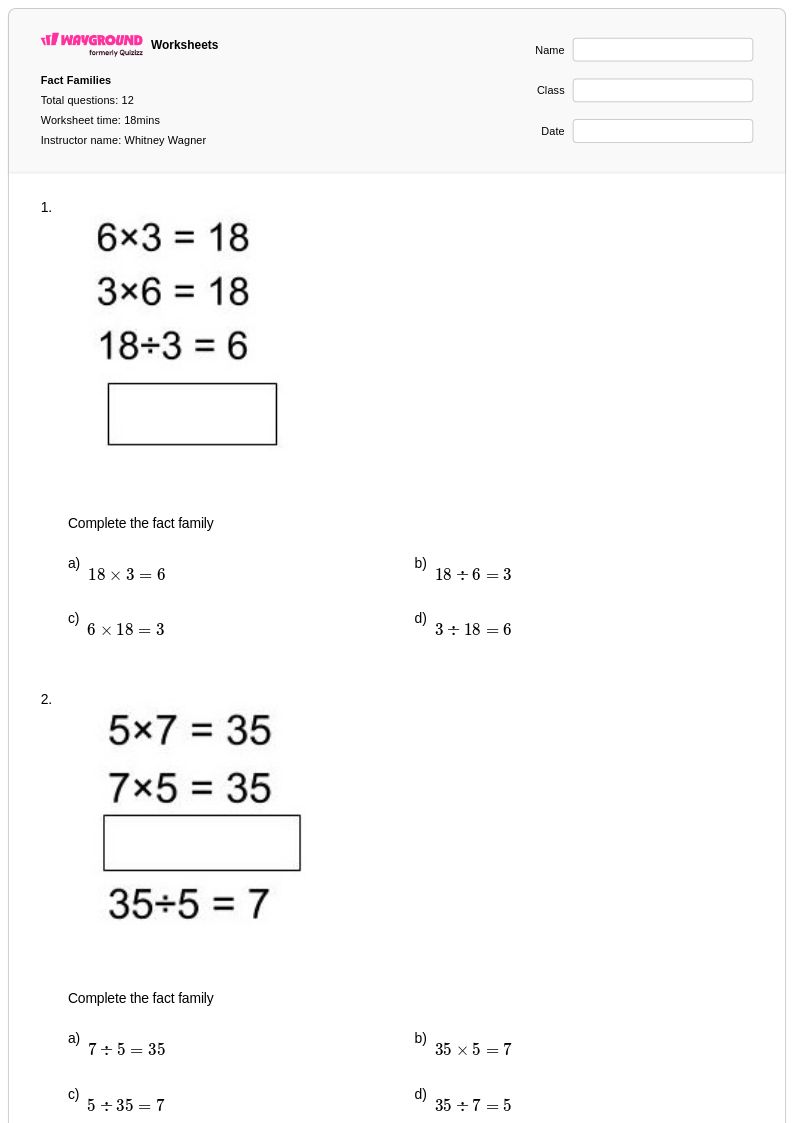
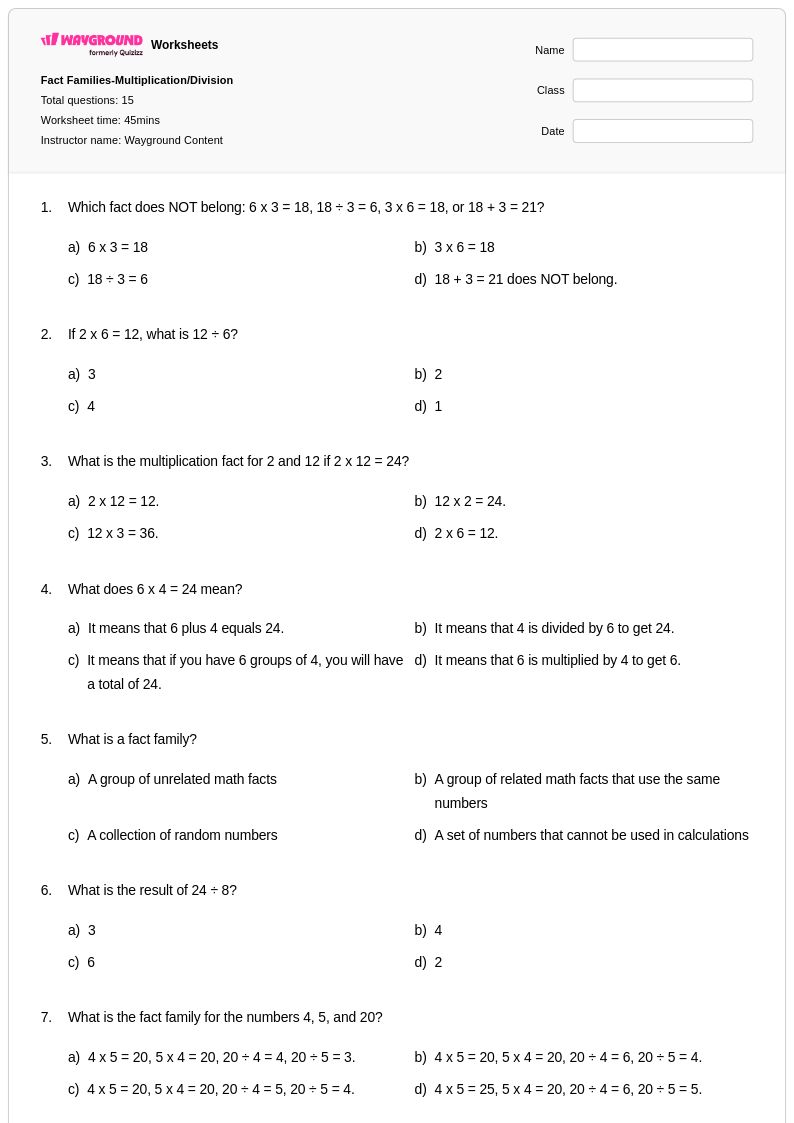
By second grade, most students have seen fact families before, so the teaching goal shifts from introducing the concept to deepening fluency and extending it to larger numbers. Push students to work with trios in the teens and twenties, and introduce multiplication/division fact families if your curriculum includes early multiplication. The key second-grade move is making the inverse relationship automatic — students should reach for a related addition fact the moment they see a subtraction problem, without stopping to count.
What fact family practice is most useful for second graders?
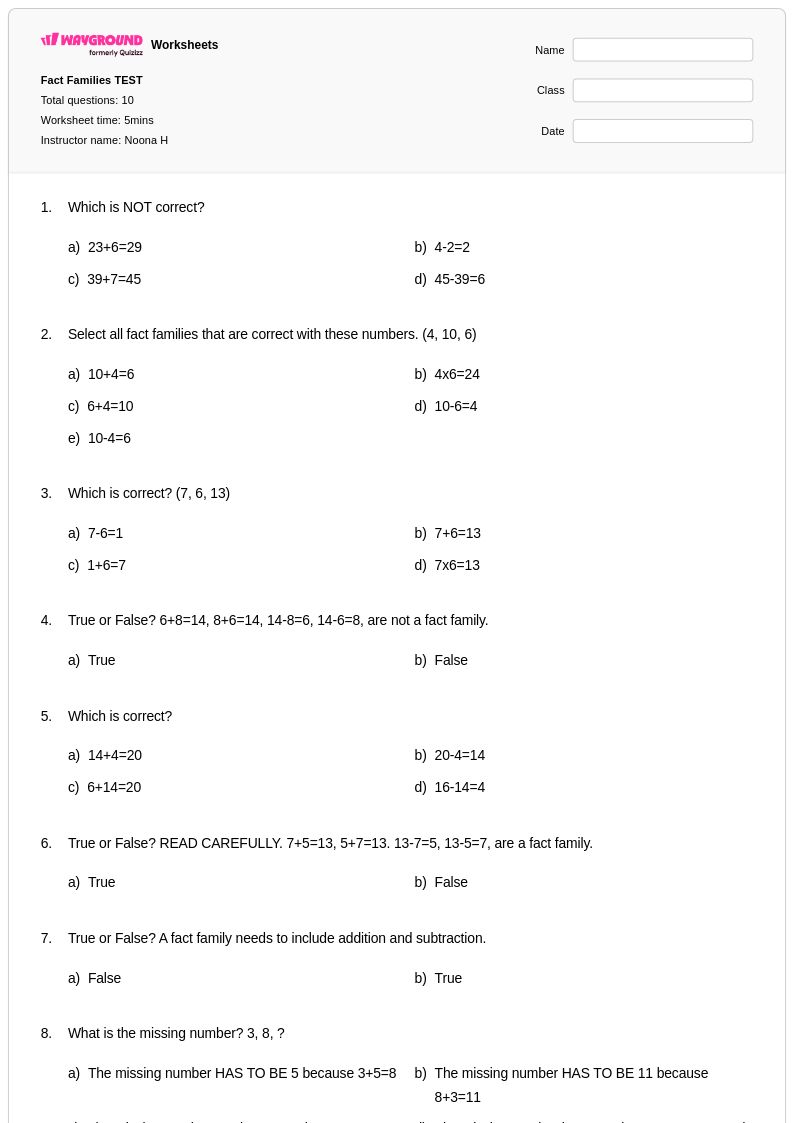
Second graders benefit most from practice that forces them to use the inverse relationship rather than just complete a pattern. Good formats: missing-number problems (14 - ___ = 6), writing a full fact family from a single equation, and identifying which equation does NOT belong to a given family. That last type is especially useful — it catches students who can complete a family by rote but don't actually understand why the four equations are related.
What errors do second graders still make with fact families?
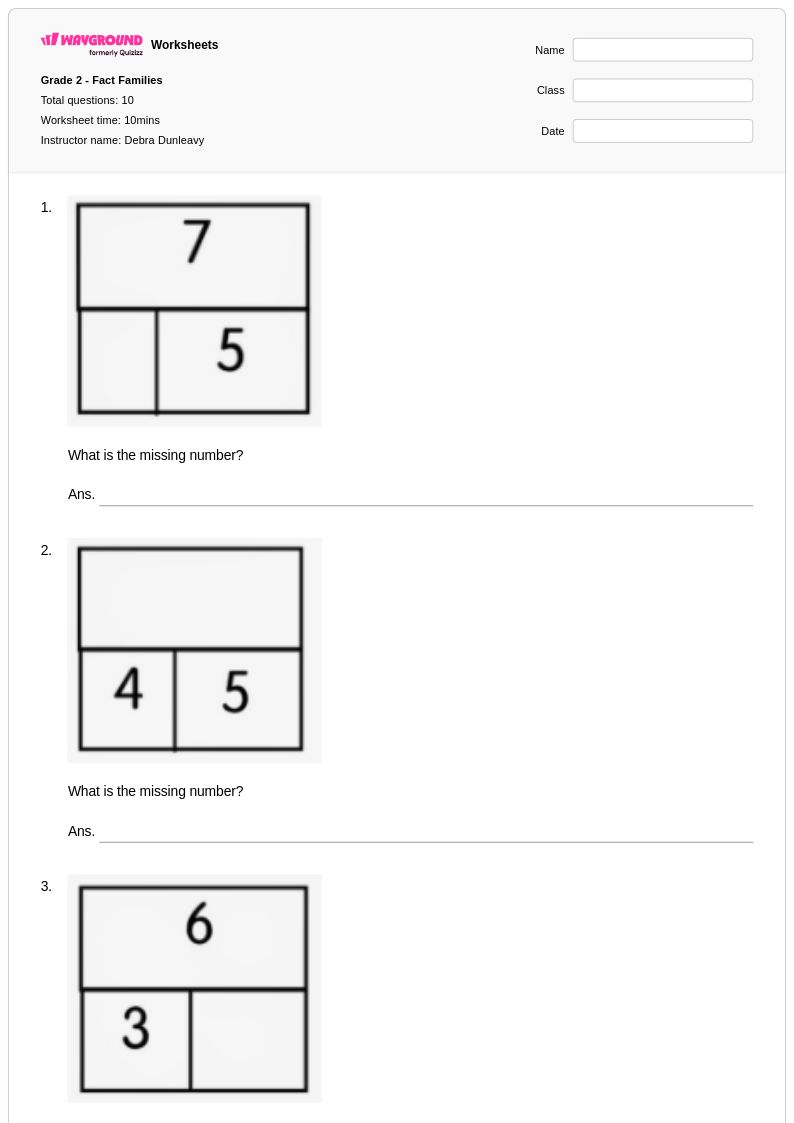
The most common second-grade error is reverting to counting strategies for subtraction instead of using the known addition fact. A student who knows 8 + 6 = 14 but still counts back from 14 to solve 14 - 6 hasn't internalized the inverse relationship yet — they've memorized two separate facts rather than one family. A second error: with larger numbers, students sometimes misidentify the whole, placing a part at the top of the triangle and generating incorrect equations from there.
How do I use Wayground's Grade 2 fact families worksheets?
The worksheets are available as printable PDFs with a complete answer key included — print and distribute for independent practice or homework, then grade submissions using the Wayground for Teachers app, which lets you scan student work directly. For a digital session, host the same worksheet as a quiz on Wayground so students get immediate feedback on each answer. The digital format works particularly well for fact family practice because students find out right away whether their inverse-operation reasoning was correct.
Are fact families still part of the Common Core standards in second grade?
Yes. Common Core's second-grade math standards expect students to fluently add and subtract within 20 using mental strategies, and understanding fact families is one of those strategies. The progression from first grade is clear: first graders use fact families to solve unknown-addend problems; second graders are expected to have internalized those relationships well enough to recall sums and differences within 20 from memory. Fact family practice in second grade is consolidation work, not new learning — the goal is speed and automaticity, not just accuracy.
How can I use fact family worksheets to support struggling second graders?
For students who are still shaky on the concept, reduce the number range to trios within 10 and use Wayground's reduced answer choices accommodation to limit options on any multiple-choice items — fewer choices means they can focus on the relationship rather than the process of elimination. A larger font version of the worksheet (available through Wayground's formatting options) also helps students who lose their place when numbers are crowded together. Once they're solid within 10, move them to the same worksheet the rest of the class is using.