Free Printable Filling Out Forms Worksheets for Kindergarten
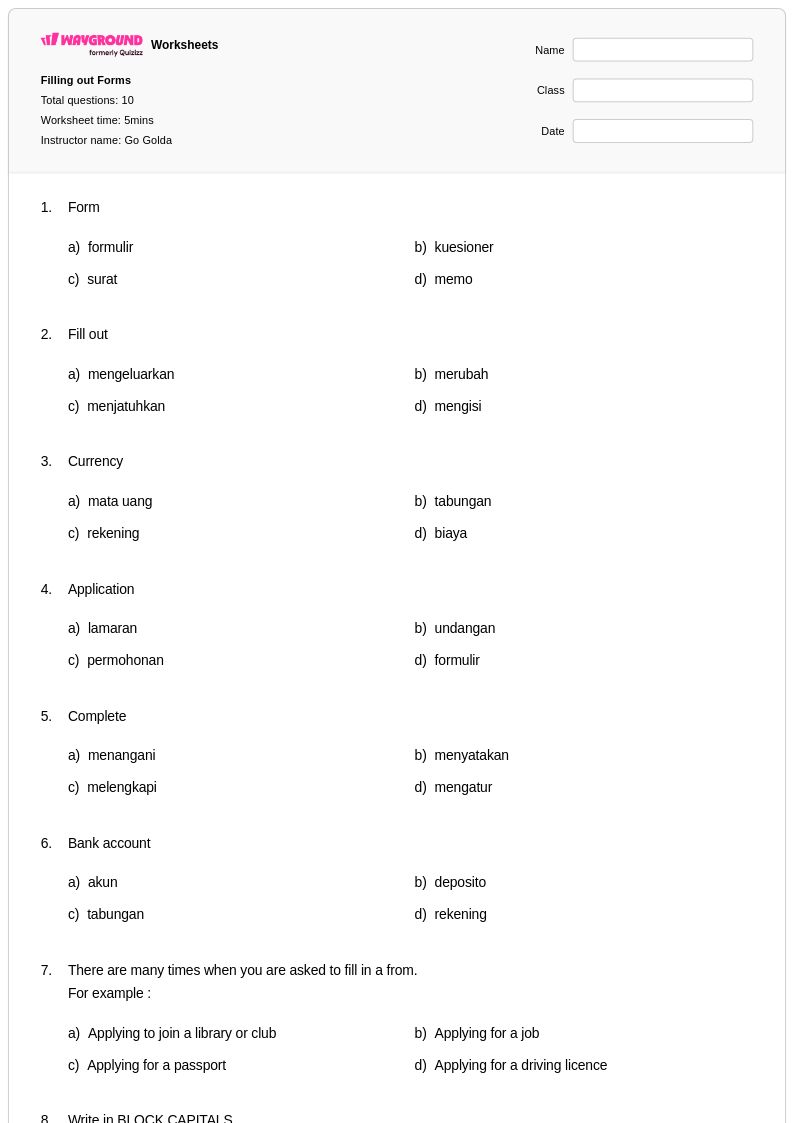
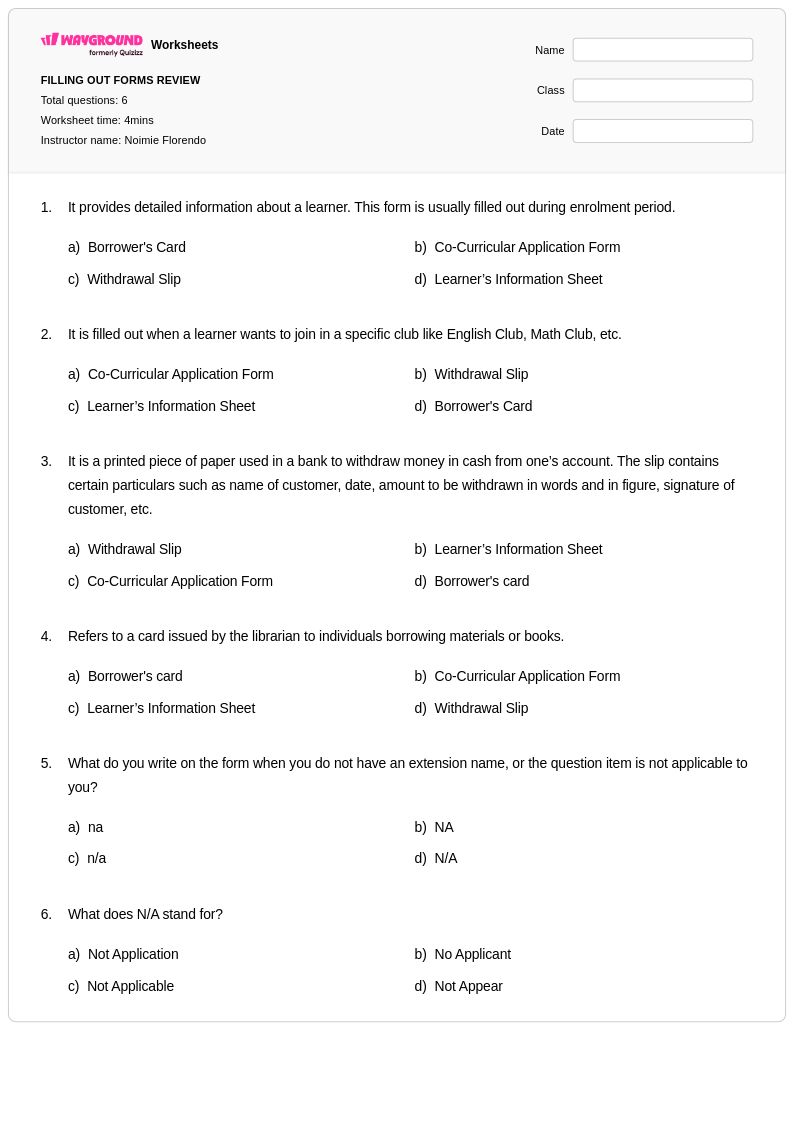
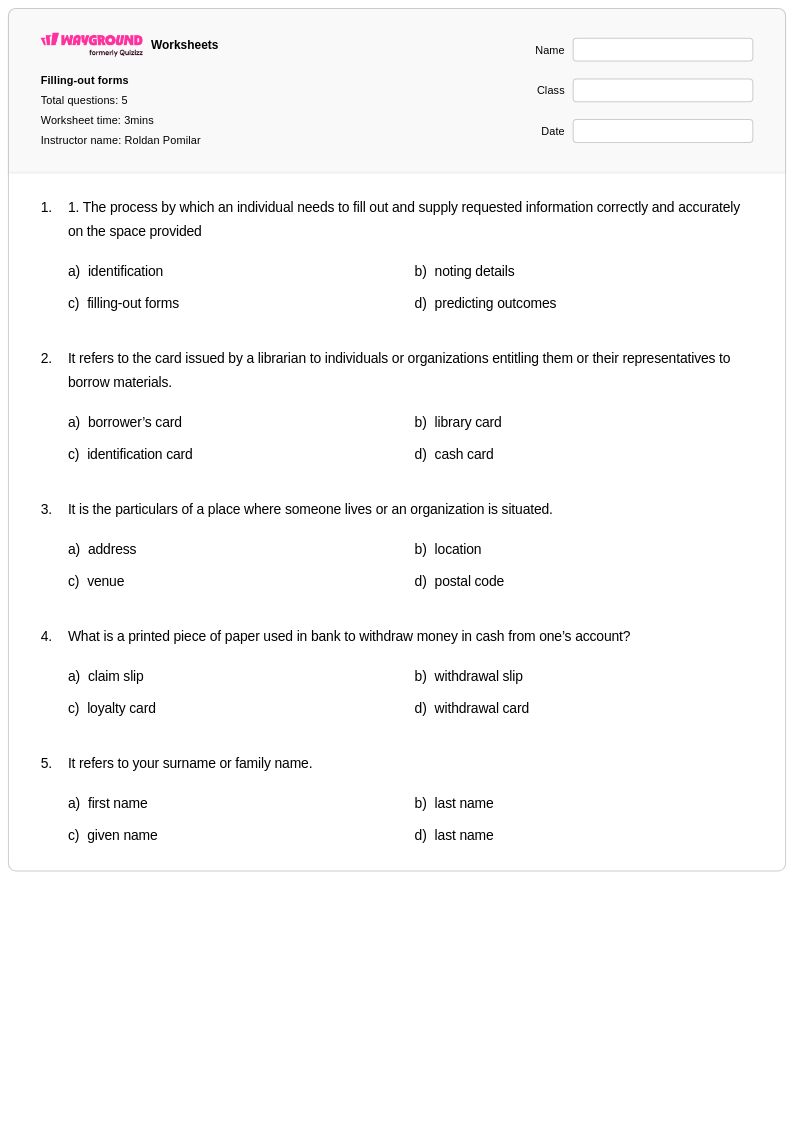
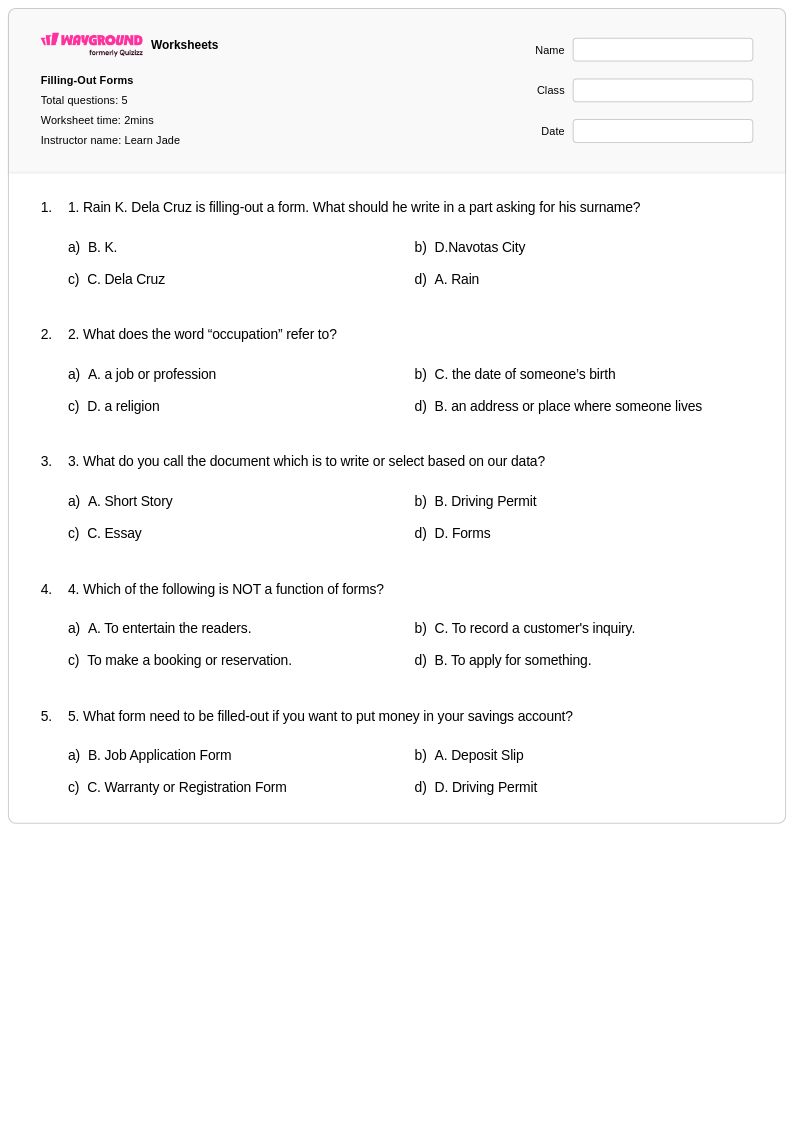
Wayground's free kindergarten filling out forms worksheets and printables help young learners practice essential nonfiction writing skills through engaging activities, complete with answer keys and downloadable PDFs.
Explore printable Filling Out Forms worksheets for Kindergarten
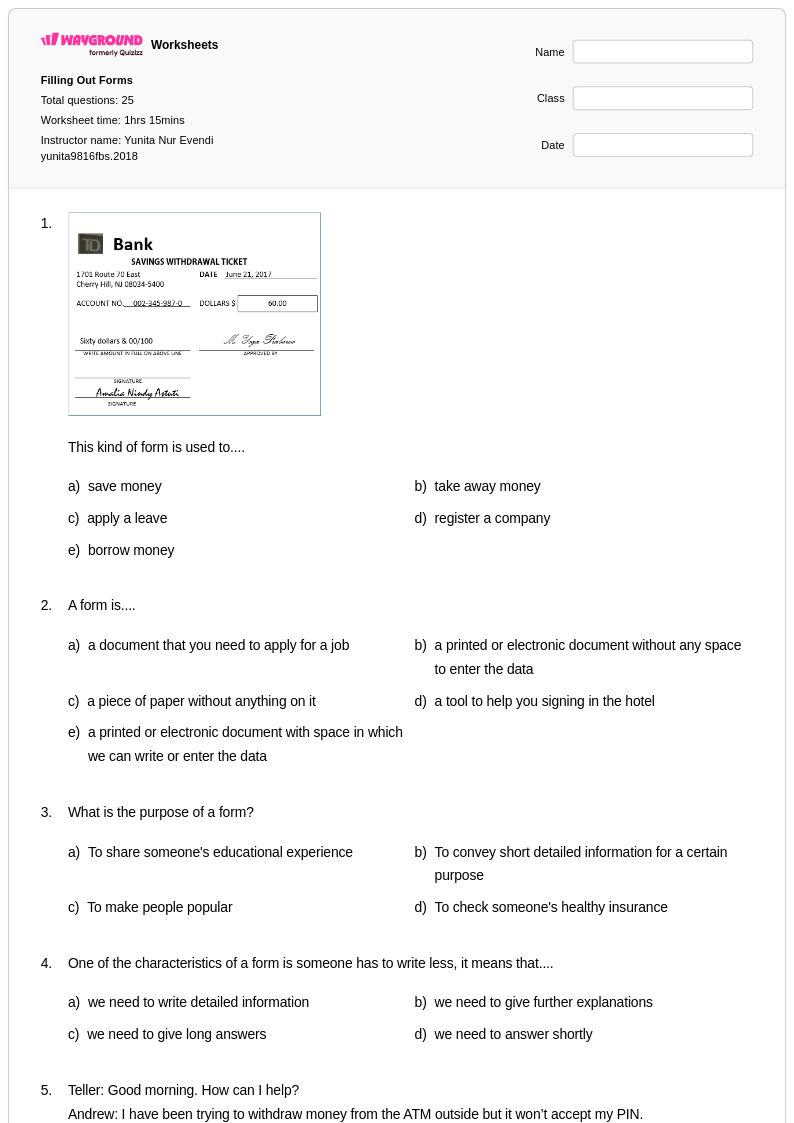
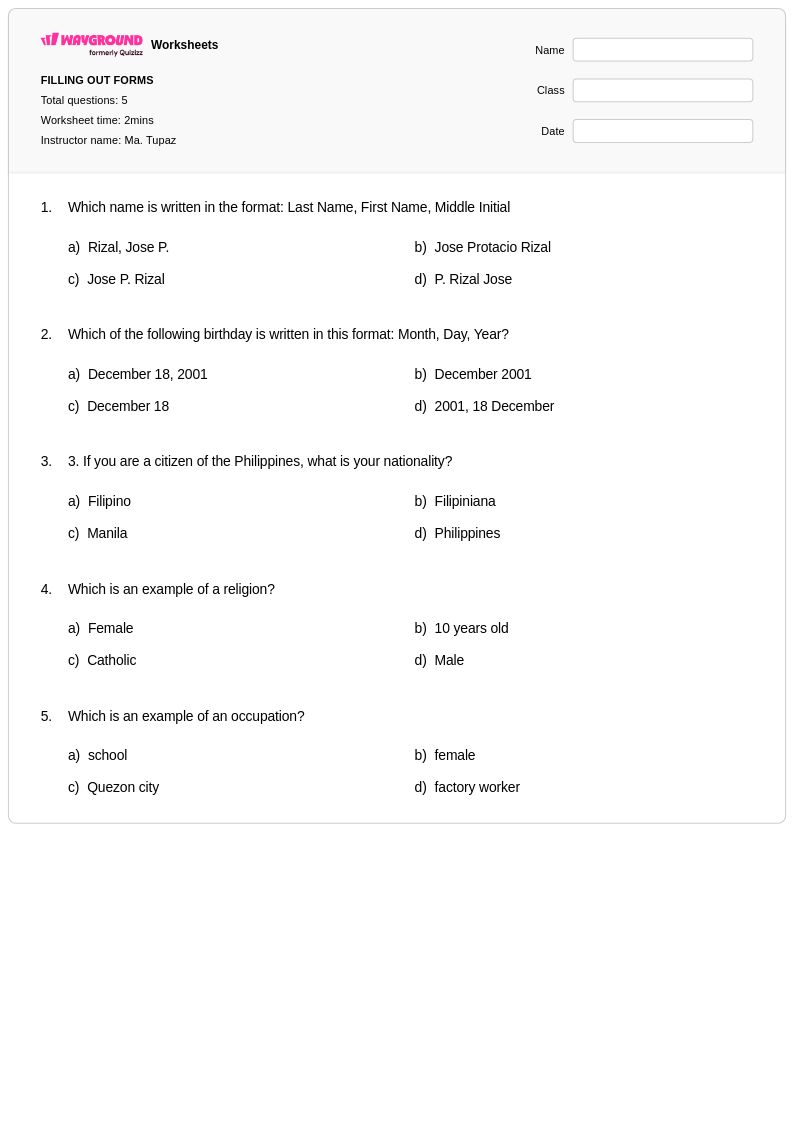
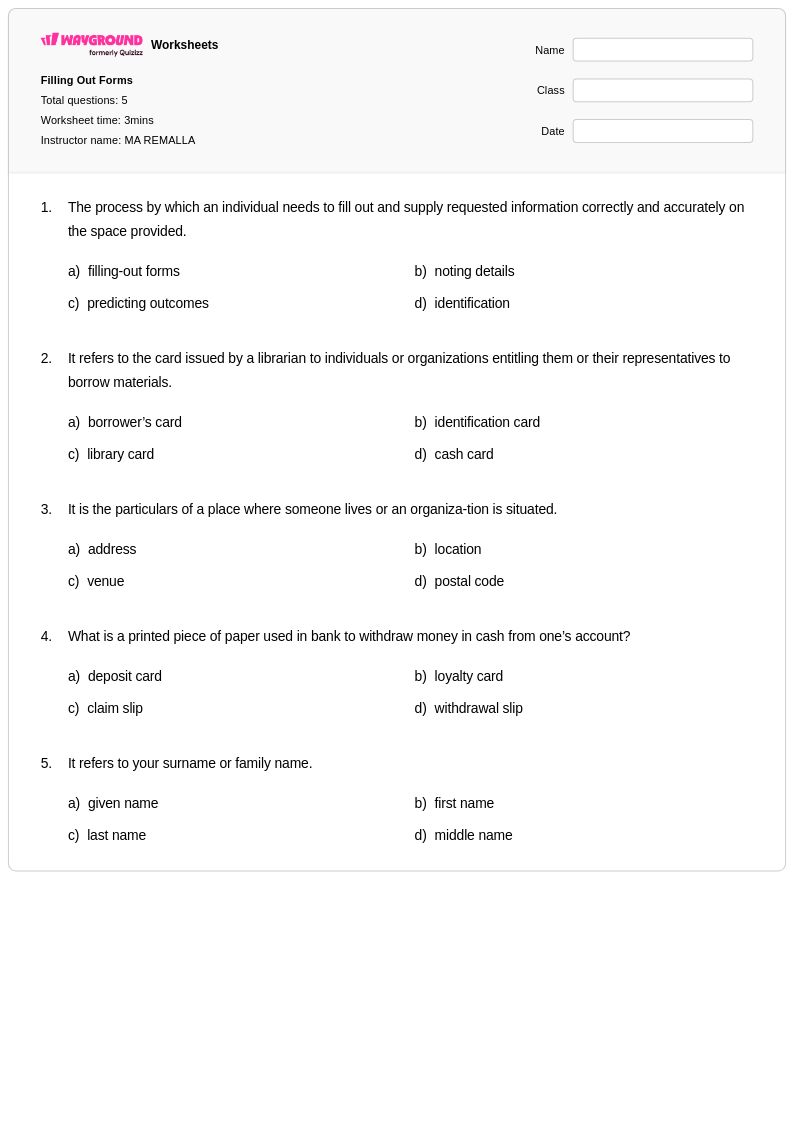
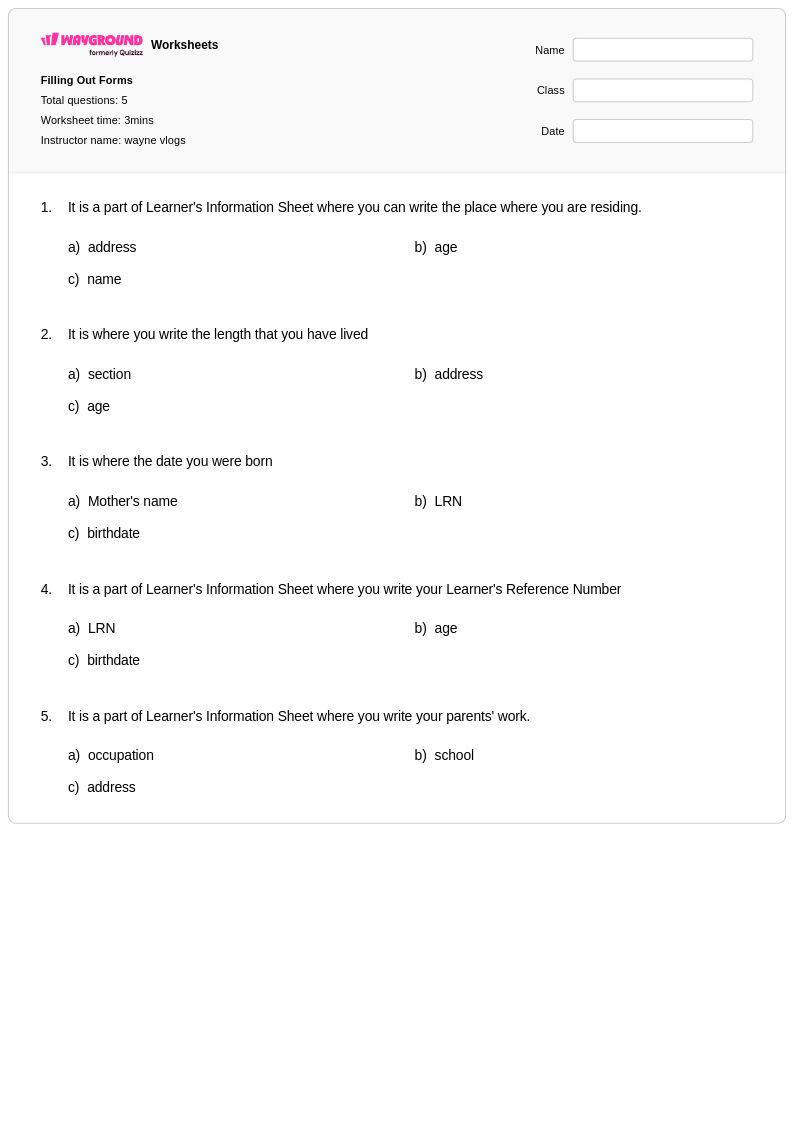
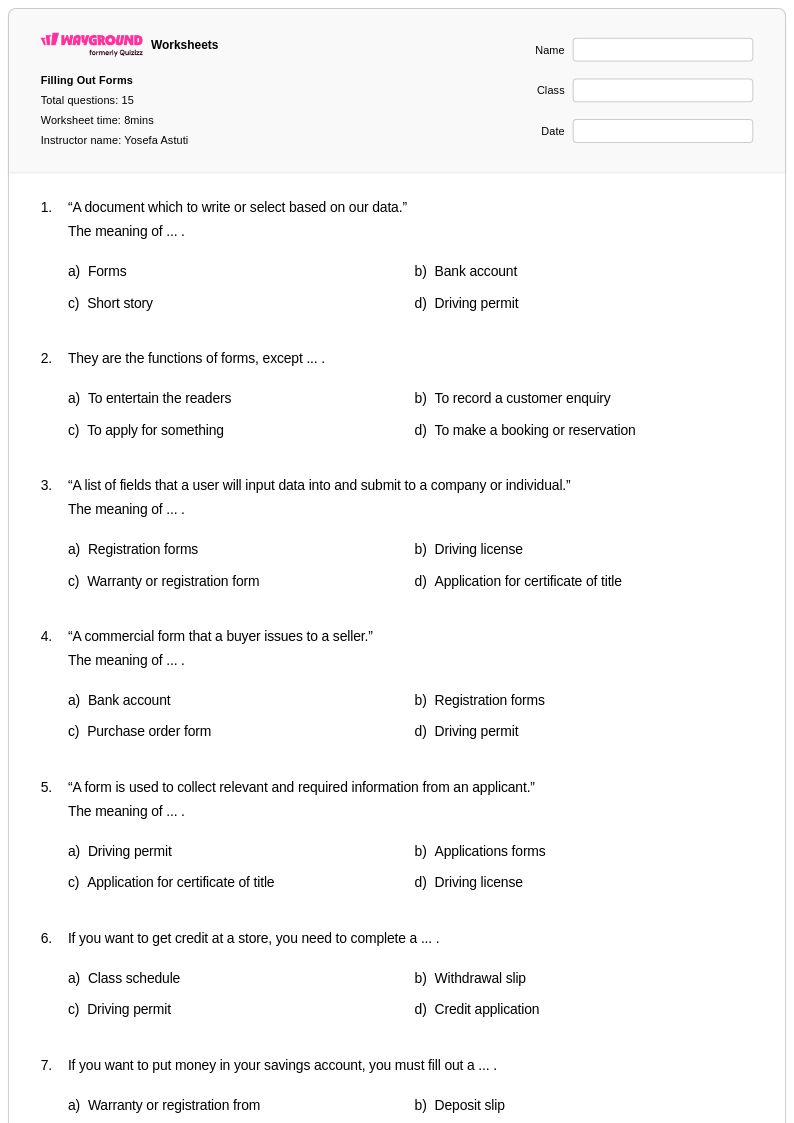
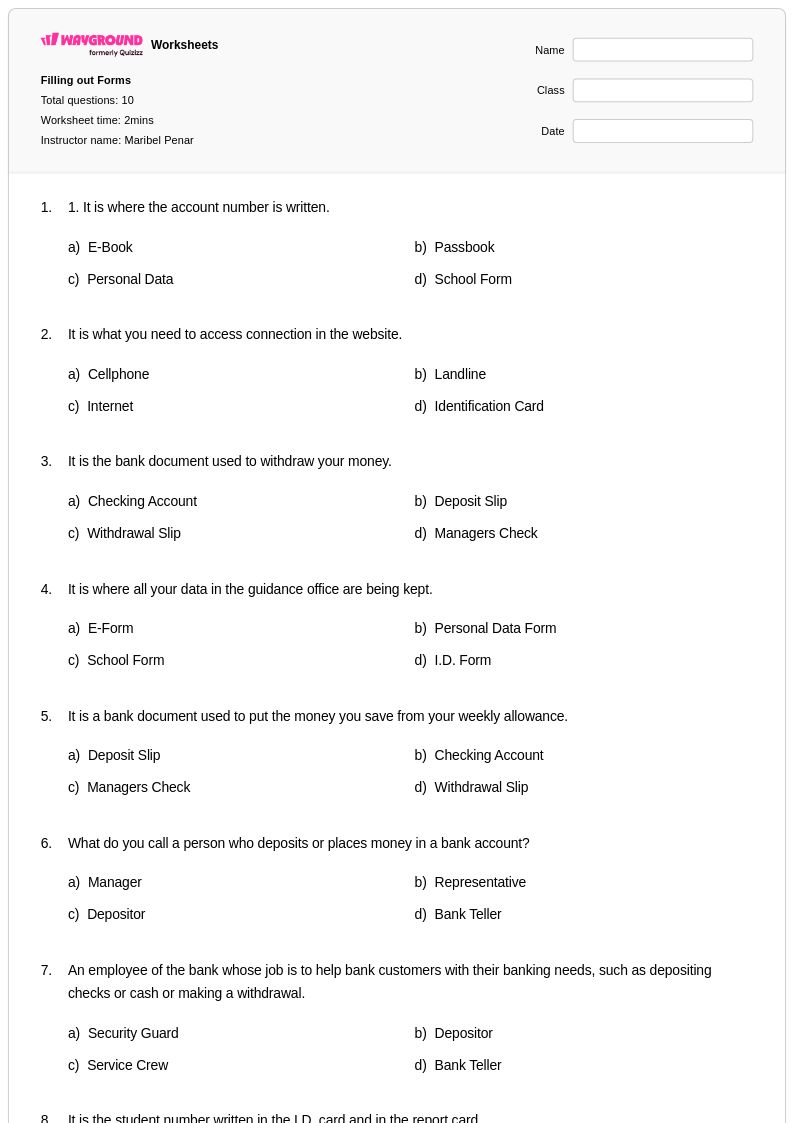
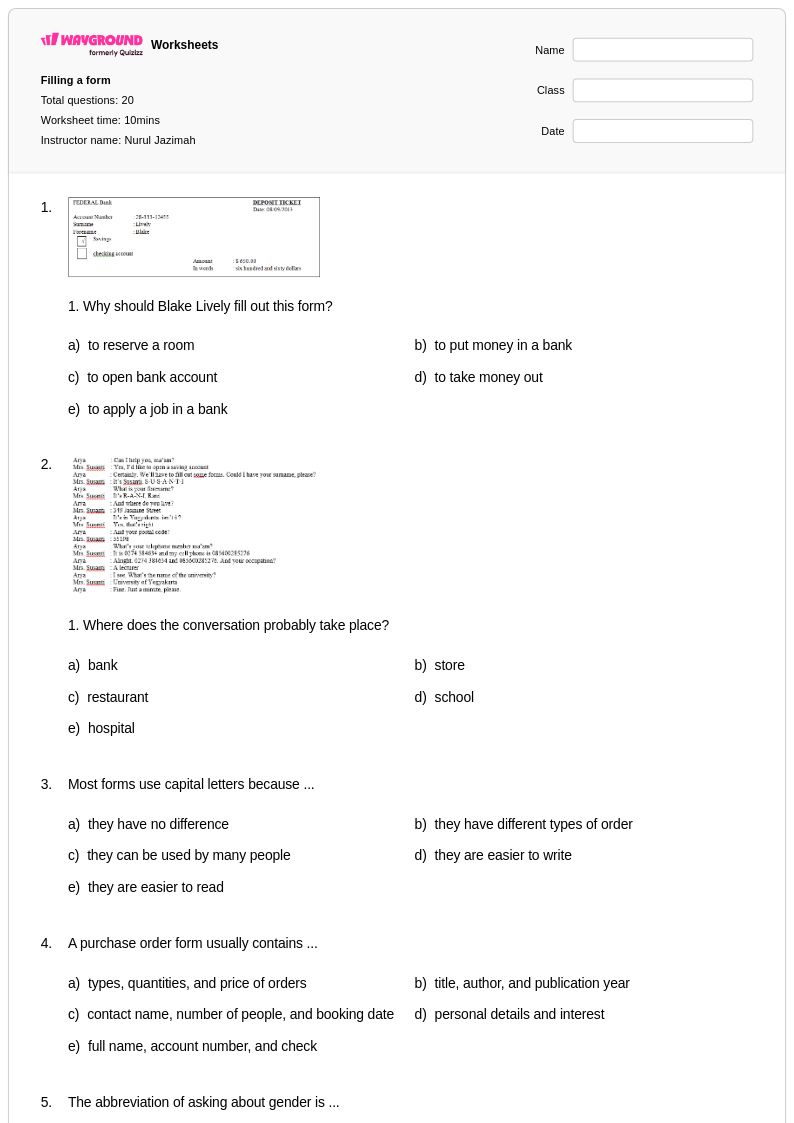
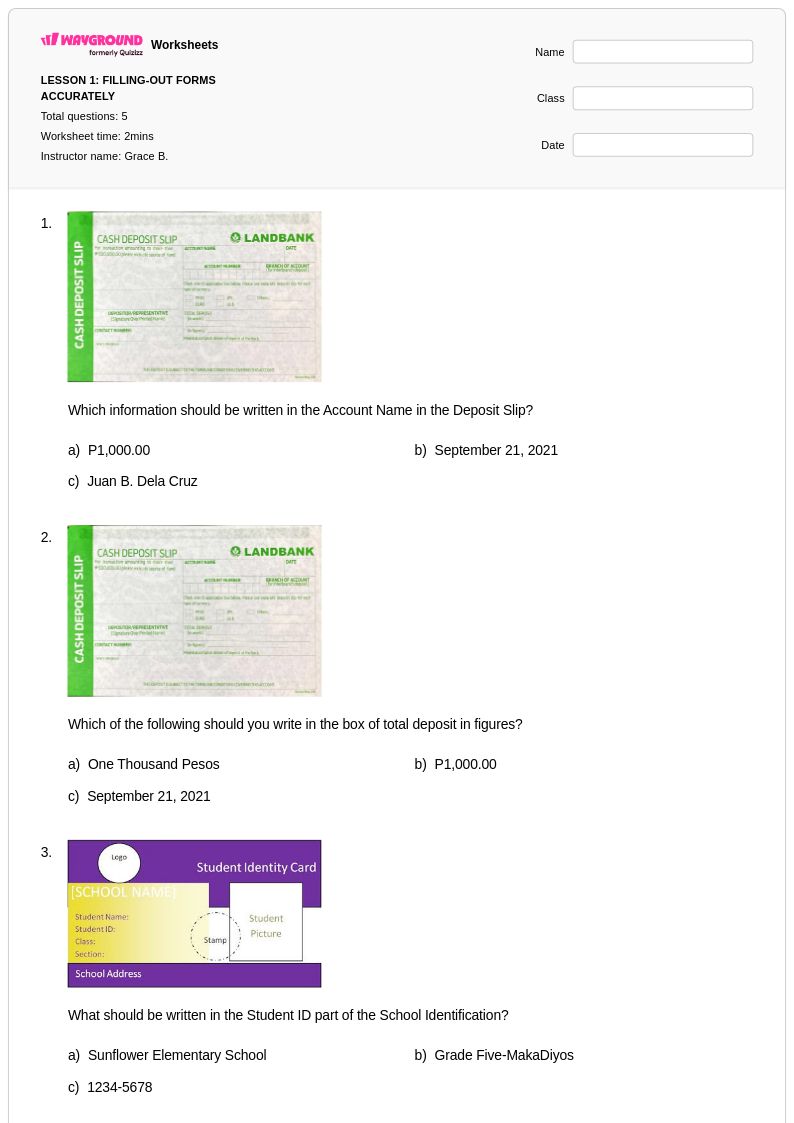
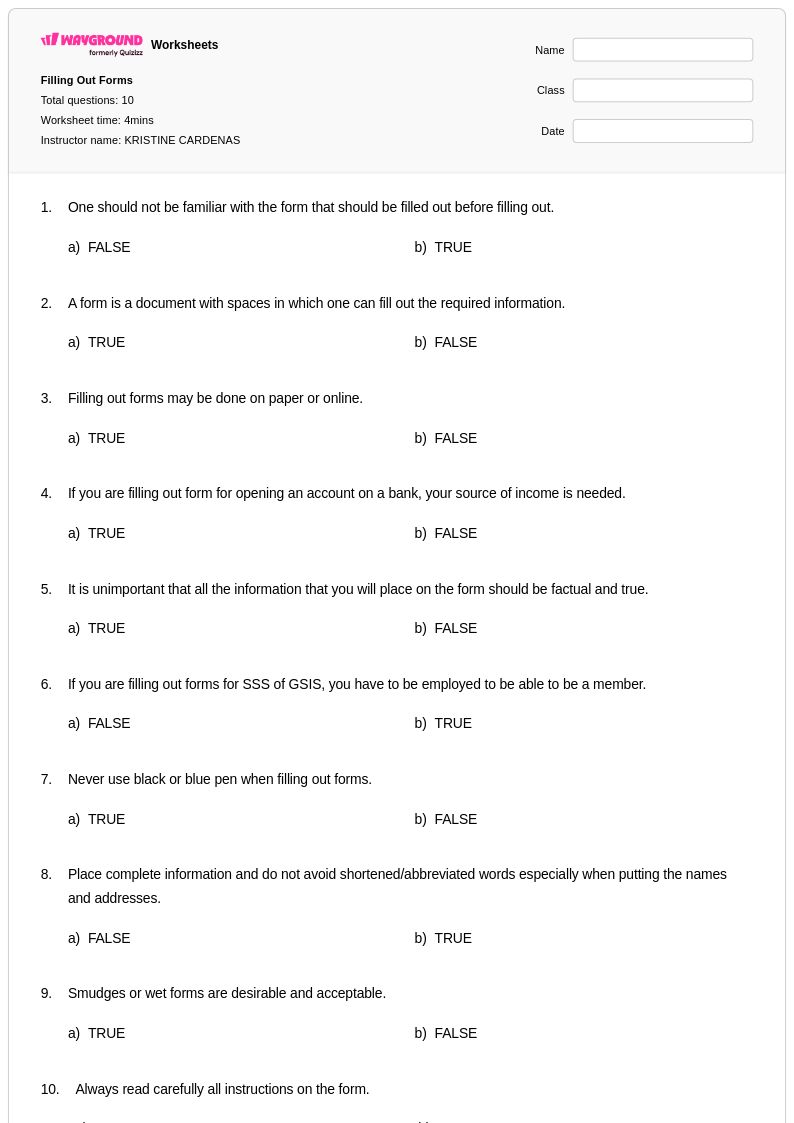
Filling out forms represents a foundational nonfiction writing skill that kindergarten students must master as they begin their academic journey. Wayground's comprehensive collection of form-filling worksheets provides young learners with structured practice opportunities to develop essential real-world literacy skills through age-appropriate exercises. These carefully designed printables focus on helping kindergarten students understand how to locate and complete basic information fields, recognize common form elements like name lines and checkbox options, and practice writing personal details in designated spaces. Each worksheet includes clear visual cues and simple instructions that support emergent writers, while the accompanying answer key enables teachers and parents to provide immediate feedback and assess student progress effectively.
Wayground's extensive library, featuring millions of teacher-created resources, offers educators unparalleled access to diverse form-filling practice materials specifically tailored for kindergarten learners. The platform's robust search and filtering capabilities allow teachers to quickly locate worksheets that align with curriculum standards and match individual student needs, whether for initial skill introduction, targeted remediation, or enrichment activities. These versatile resources are available in both printable pdf format and interactive digital versions, enabling seamless integration into various instructional settings and learning environments. Teachers can customize worksheets to differentiate instruction, modify complexity levels, and create personalized practice sets that support each student's developmental stage in mastering this crucial nonfiction writing competency.
FAQs
How do I teach students to fill out forms for the first time?
Start by modeling the process with a simple, familiar form — such as a library card or school registration form — projecting it and thinking aloud as you complete each field. Teach students to read all instructions before writing, identify required versus optional fields, and match the format requested (e.g., last name first, date in MM/DD/YYYY format). Scaffolded practice with progressively complex forms helps students internalize the process before encountering high-stakes documents independently.
What types of forms should students practice completing in school?
Students benefit most from practicing a range of real-world form types, including registration forms, survey questionnaires, job applications, permission slips, and basic government documents. Exposure to varied formats builds flexibility — students learn to interpret different field labels, response formats, and instruction styles. Beginning with familiar contexts like school forms and progressing toward professional documents prepares students for the documentation tasks they will encounter throughout their academic and adult lives.
What mistakes do students commonly make when filling out forms?
The most common errors include skipping fields entirely, misreading field labels (e.g., writing a first name where a full legal name is required), ignoring formatting instructions such as date format or capitalization, and providing more or less information than requested. Students also frequently fail to re-read completed forms to check for omissions or inconsistencies. Targeted practice that requires students to self-review before submitting helps build the proofreading habit essential for accurate form completion.
How can I use form-filling practice to build reading comprehension skills?
Filling out forms is an applied reading comprehension task — students must decode field labels, follow sequential directions, and infer what information is being requested from context. Pairing form-completion exercises with explicit instruction in reading for purpose and following multi-step directions strengthens both skills simultaneously. Teachers can debrief after practice activities by asking students to explain why they wrote what they did in specific fields, reinforcing close reading as a functional literacy strategy.
How do I differentiate form-filling practice for students at different skill levels?
For students who struggle with reading or processing demands, begin with forms that have fewer fields, clearer labels, and no formatting constraints. More advanced learners can be challenged with multi-page documents, conditional fields (e.g., 'If yes, complete Section B'), or forms written in formal or legal language. On Wayground, teachers can also enable individual accommodations such as Read Aloud support for students who need questions and instructions read to them, or reduced answer choices to lower cognitive load for specific learners.
How do I use Wayground's filling out forms worksheets in my classroom?
Wayground's filling out forms worksheets are available as printable PDFs for traditional pen-and-paper classroom use and in digital formats for technology-integrated environments, including the option to host them as an interactive quiz on Wayground. Each worksheet includes an answer key, allowing students to work independently and check their own accuracy. Teachers can filter resources by form type or complexity to find materials that align with their current lesson objectives and student readiness levels.