Wayground's Year 4 Floss Rule phonics worksheets provide free printables and practice problems with answer keys to help students master when to double consonants after short vowels in spelling patterns.
Explore printable Floss Rule worksheets for Year 4
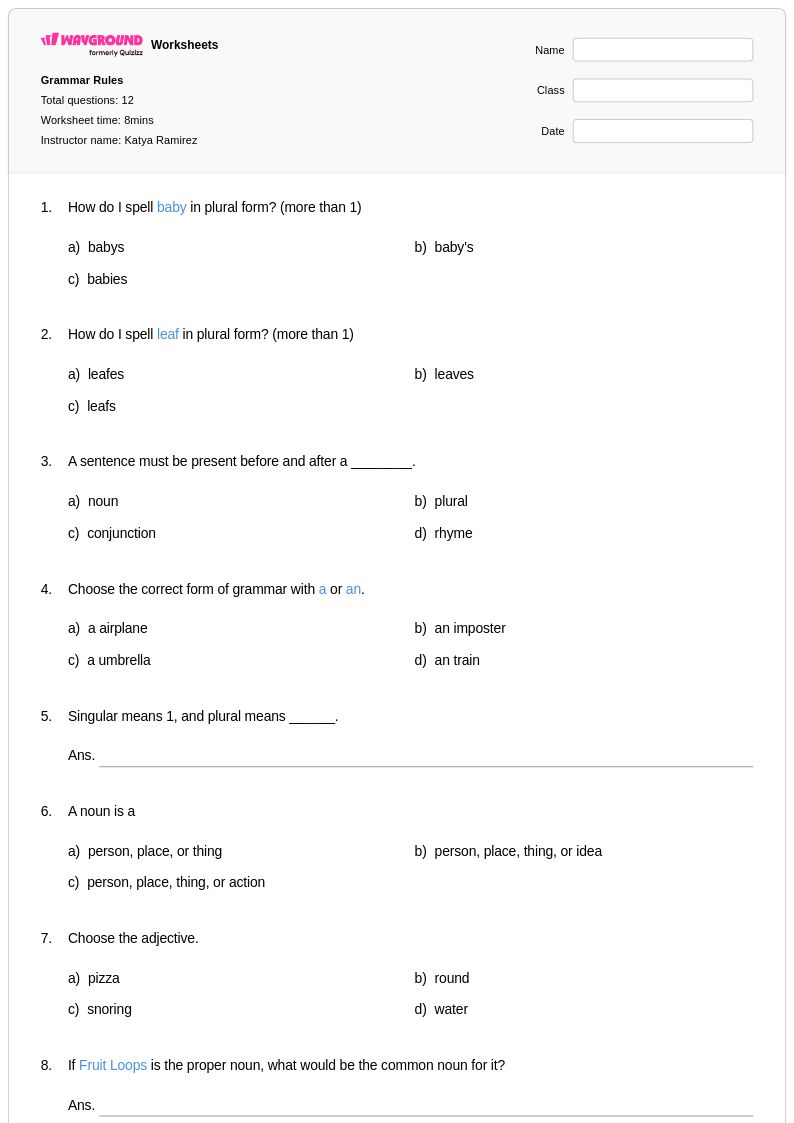
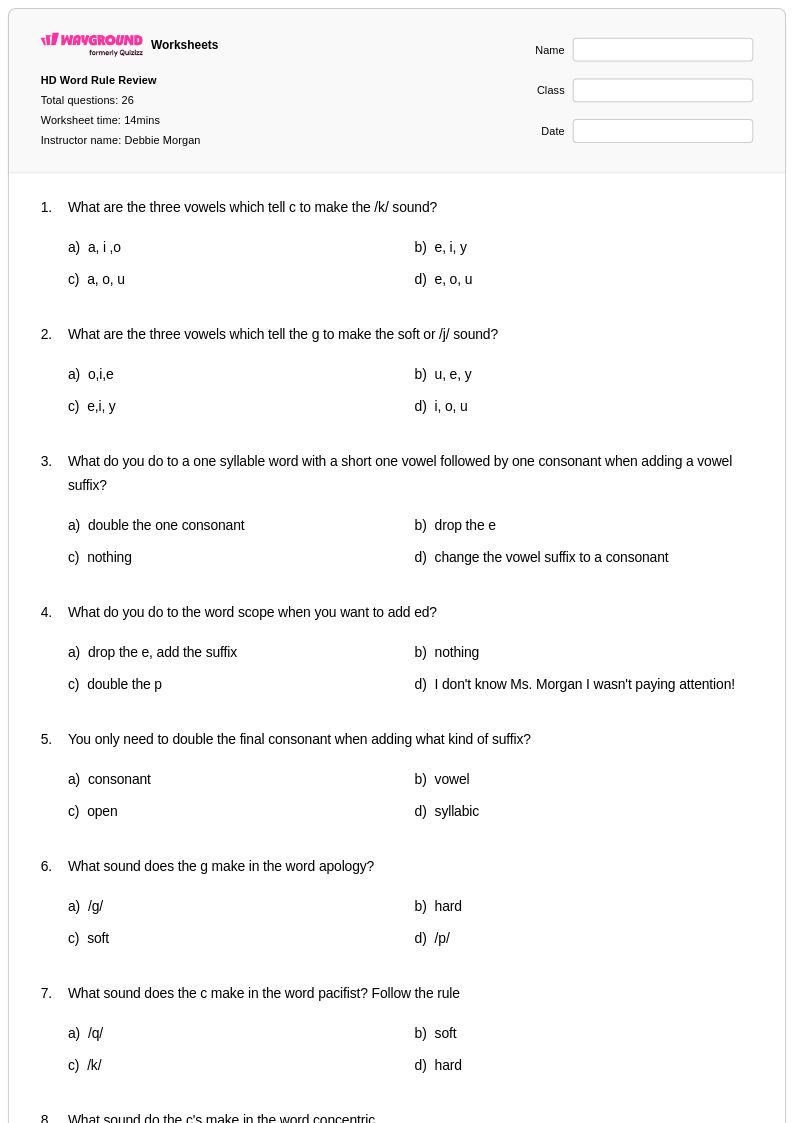
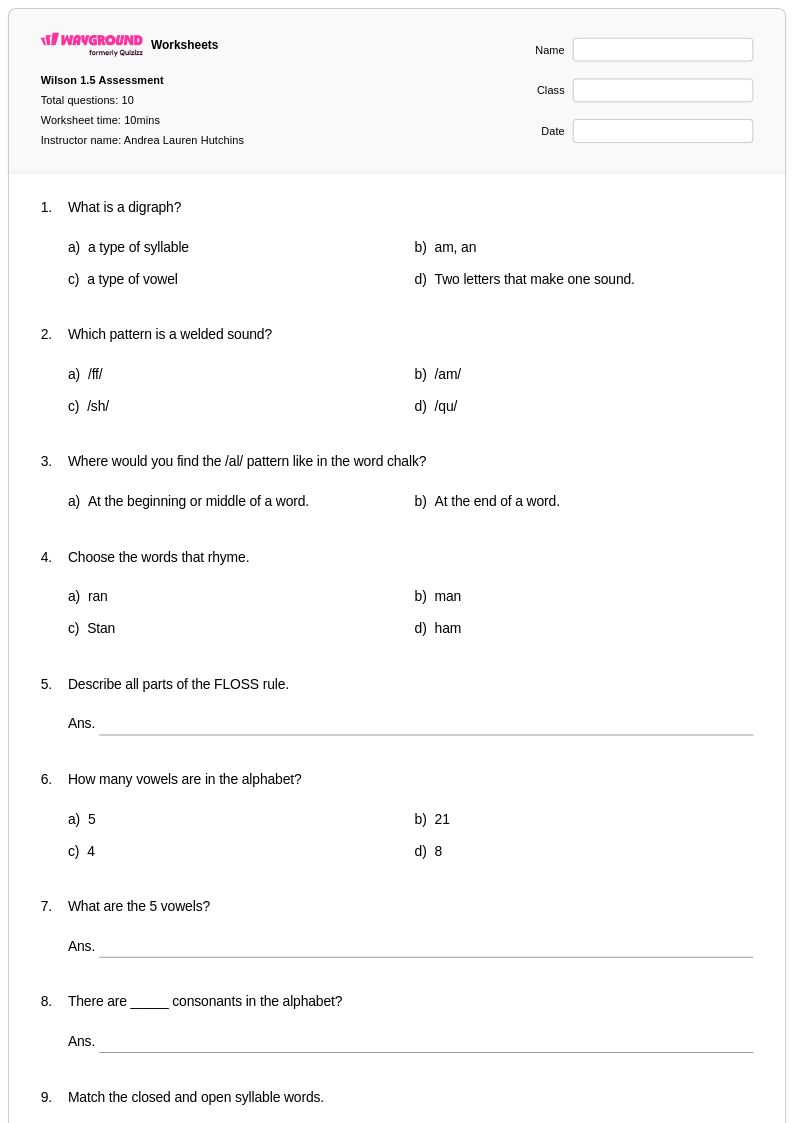
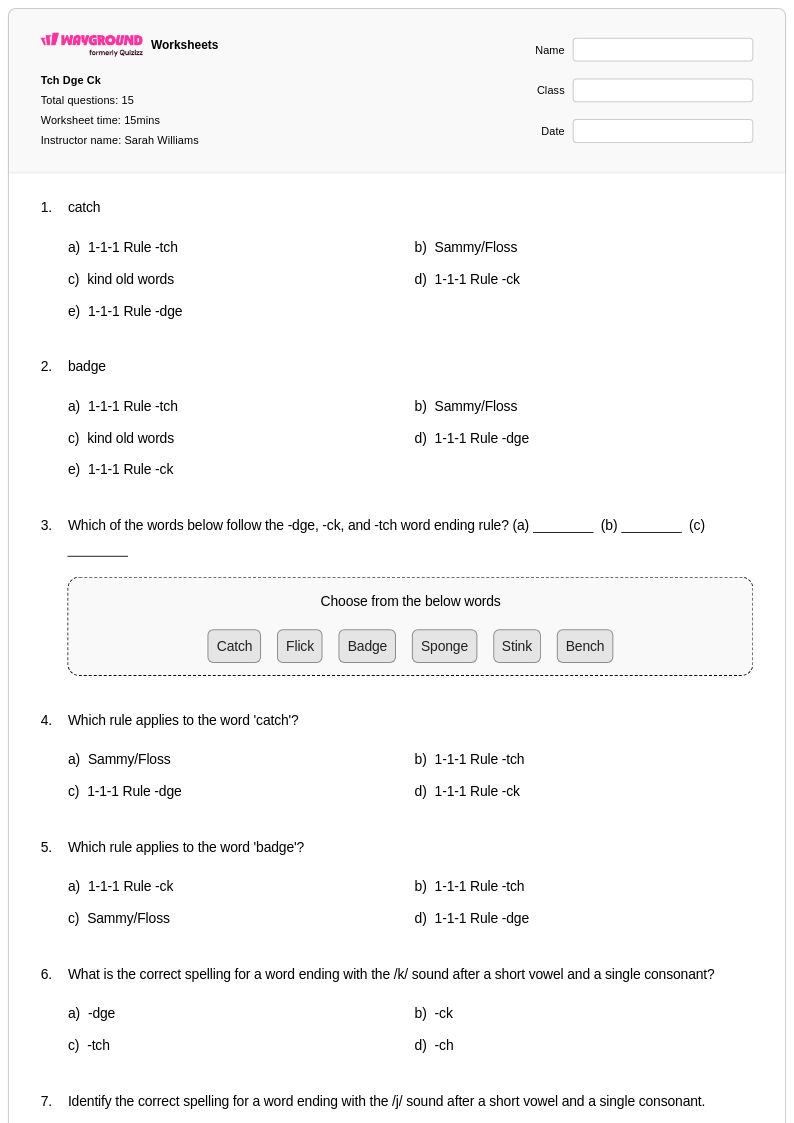
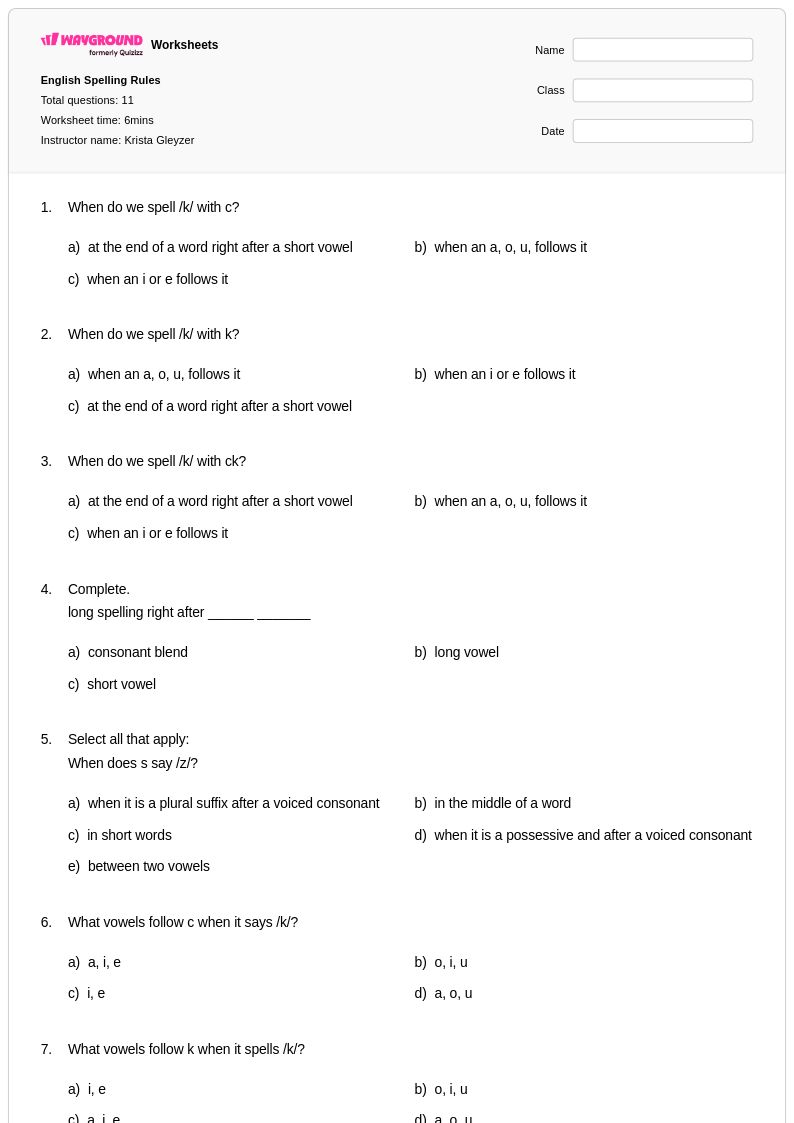
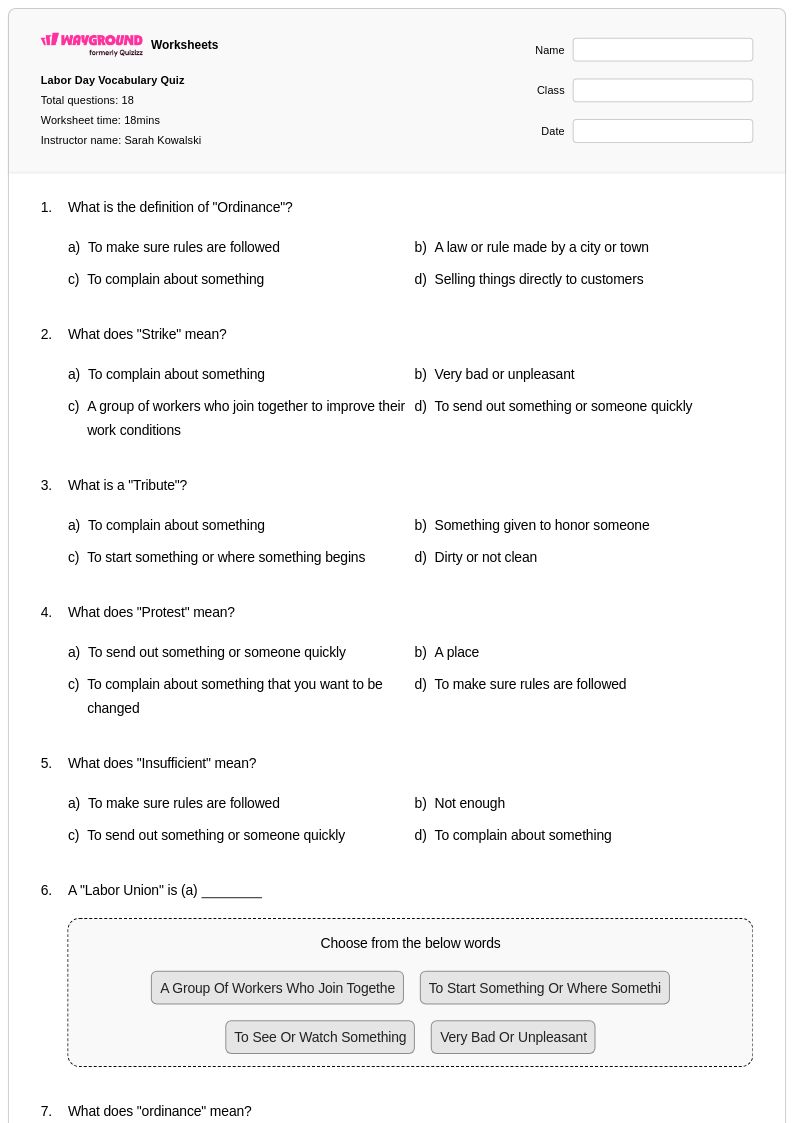
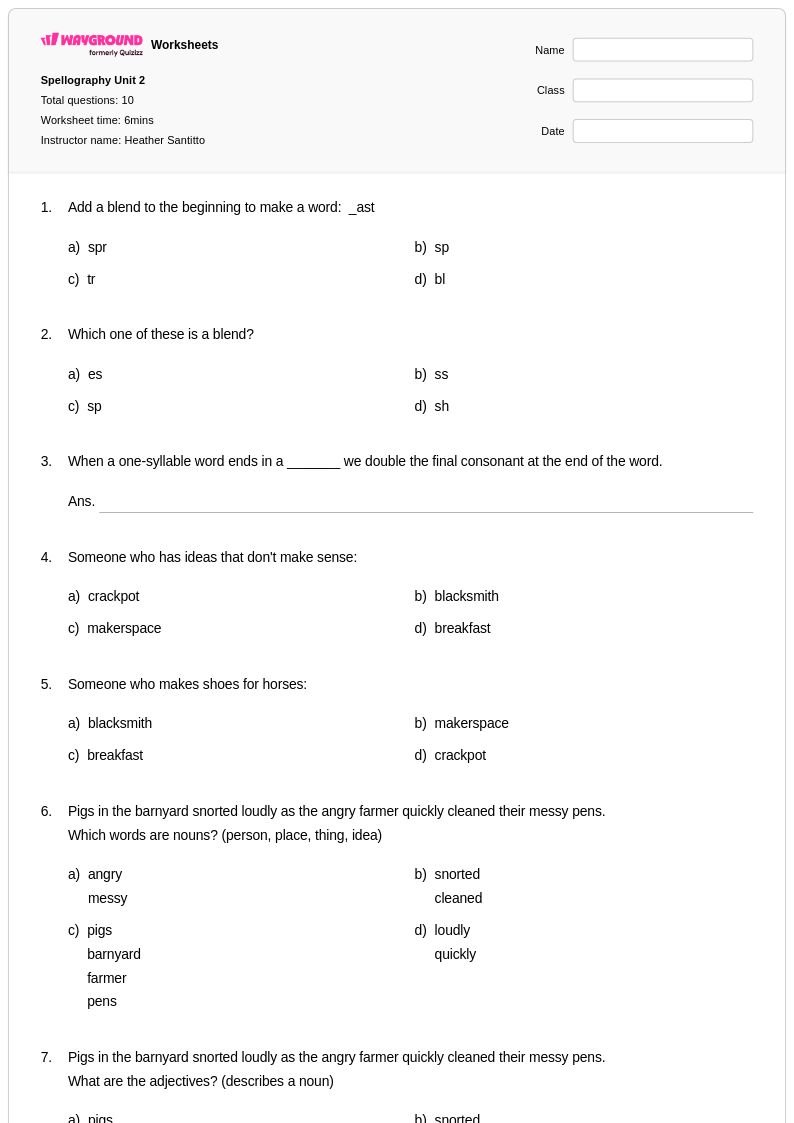
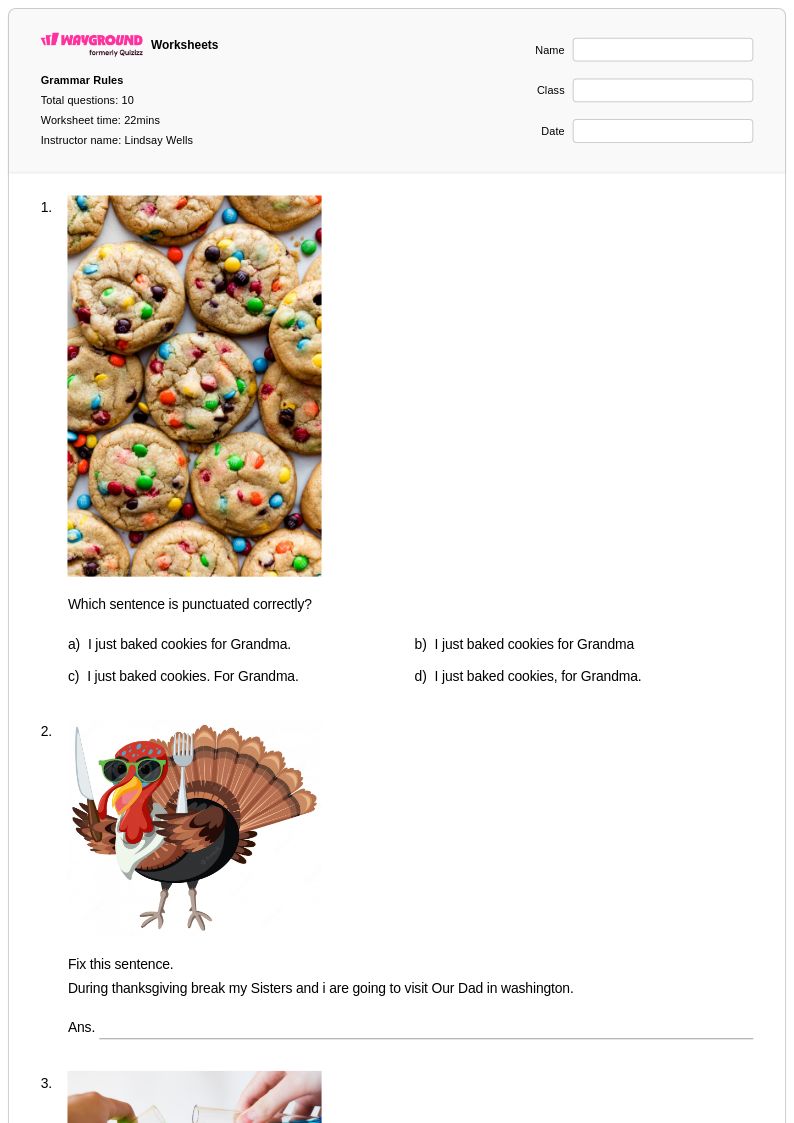
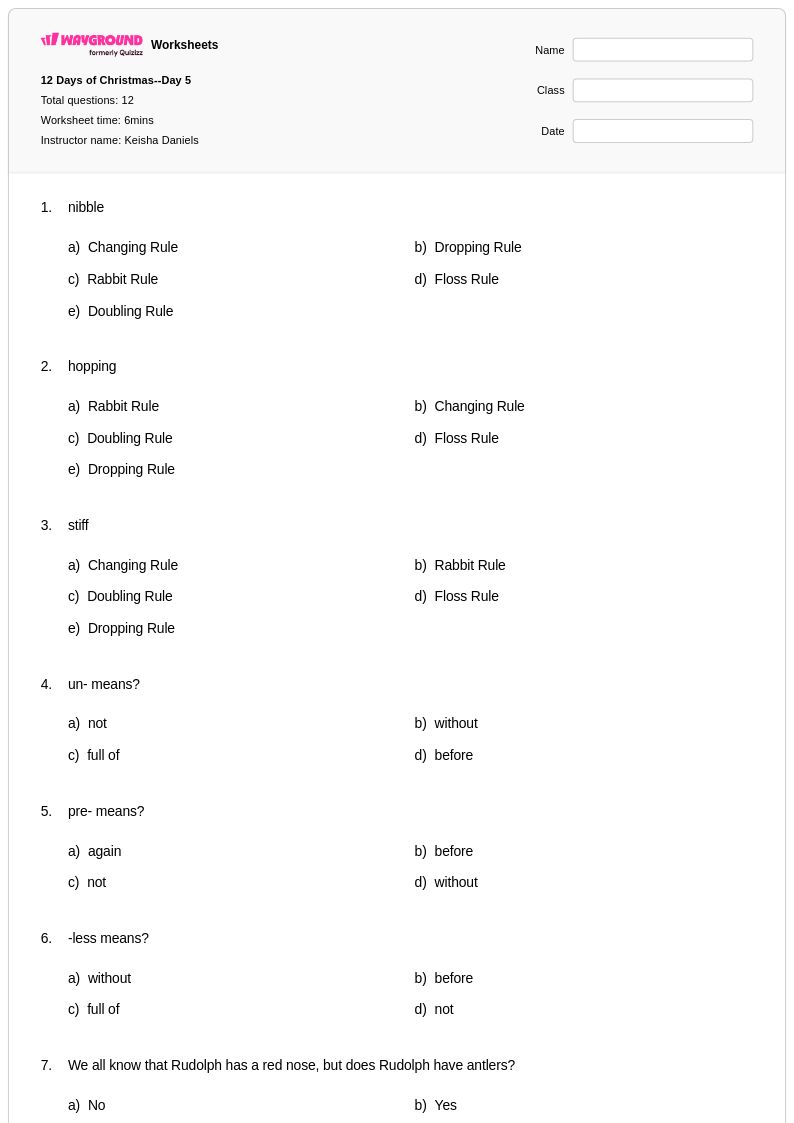
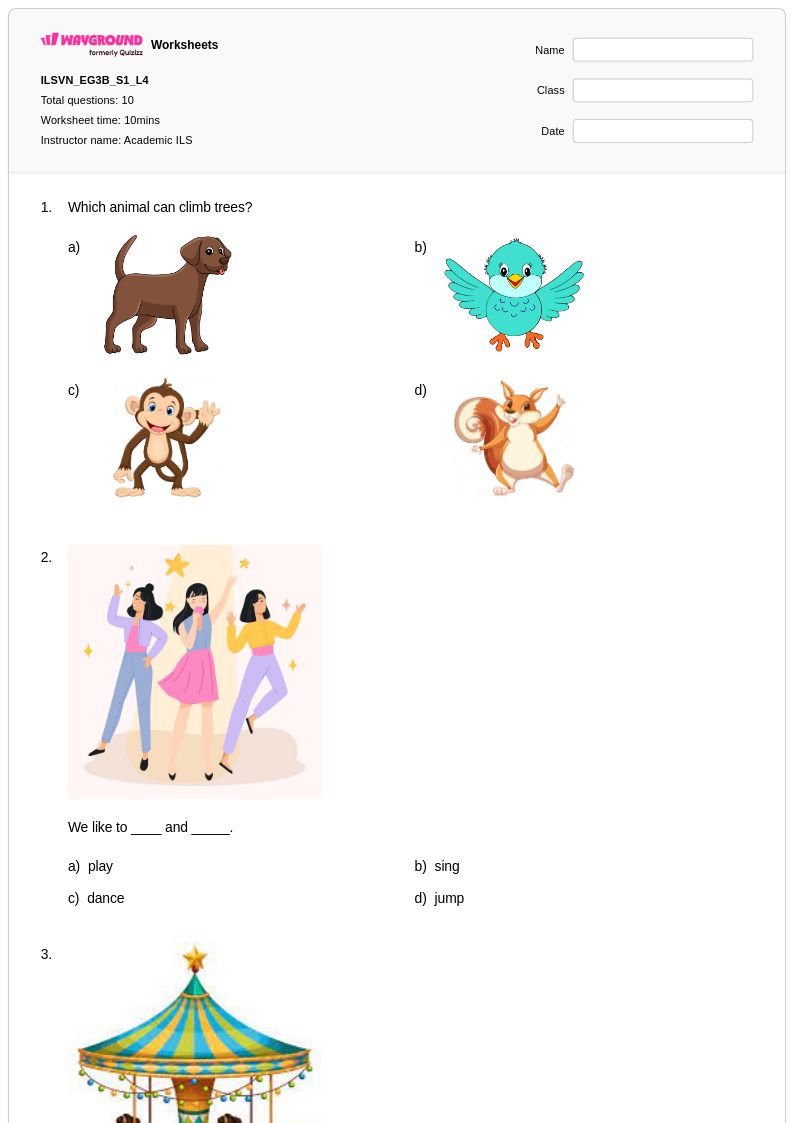
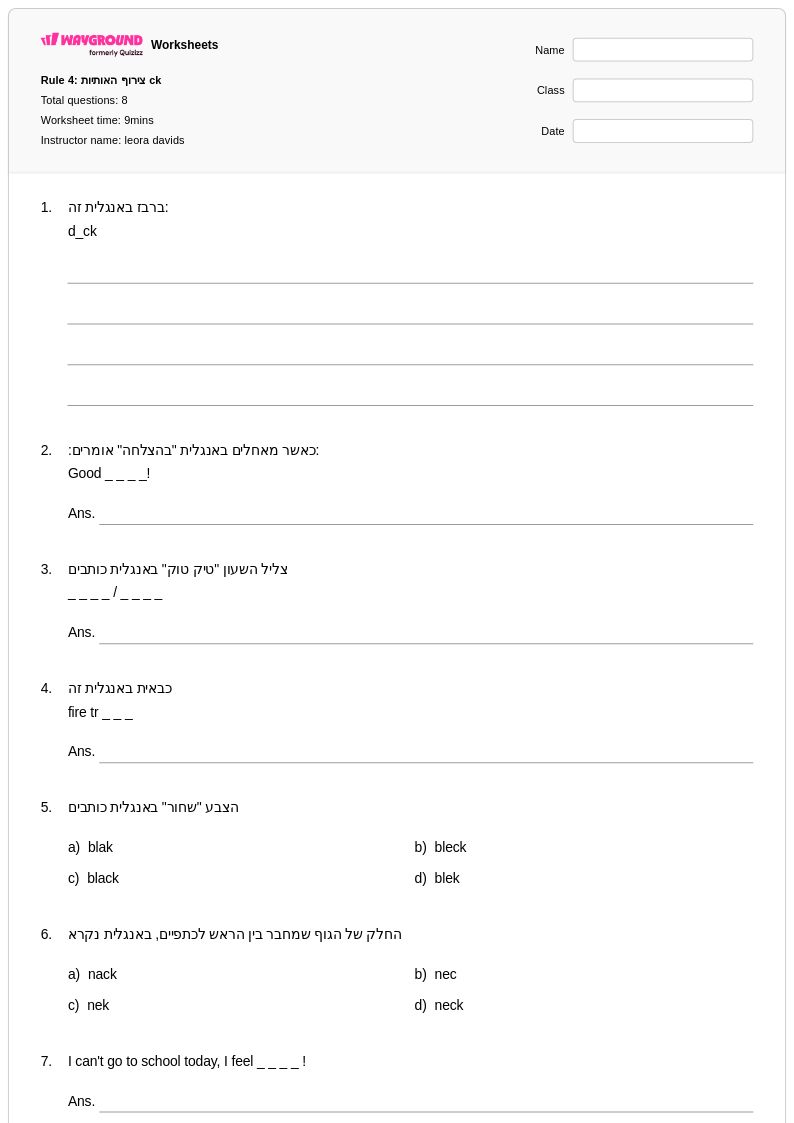
Floss Rule worksheets for Year 4 students available through Wayground (formerly Quizizz) provide comprehensive practice with this fundamental phonics concept that governs when to double consonants at the end of single-syllable words. These carefully designed worksheets help fourth-grade learners master the principle that words ending in f, l, or s sounds after a short vowel typically require doubled consonants, such as in "buff," "bell," and "kiss." Students develop essential spelling accuracy and phonetic awareness through systematic practice problems that reinforce pattern recognition and application of the floss rule in both isolated words and contextual sentences. Each worksheet includes an answer key to support independent learning and self-correction, while the free printables offer teachers flexible options for classroom instruction, homework assignments, and targeted skill reinforcement in pdf format.
Wayground's extensive collection of teacher-created floss rule resources empowers educators with millions of high-quality materials that align with phonics standards and support differentiated instruction for Year 4 classrooms. The platform's robust search and filtering capabilities enable teachers to quickly locate worksheets that match specific learning objectives, student ability levels, and curriculum requirements, while customization tools allow for easy modification of existing materials to meet individual classroom needs. These versatile resources are available in both printable and digital formats, making them ideal for traditional classroom settings, distance learning environments, and blended instructional approaches. Teachers can seamlessly integrate these worksheets into lesson planning for initial instruction, use them for remediation with struggling spellers, provide enrichment opportunities for advanced learners, or assign them as targeted practice to reinforce the floss rule concept across various learning contexts.
FAQs
How do I teach the floss rule to early readers?
Introduce the floss rule by anchoring it to a simple, memorable pattern: when a one-syllable word ends in f, l, or s after a short vowel, double the final consonant. Use high-frequency anchor words like 'fluff,' 'hill,' and 'pass' to make the pattern concrete before moving to unfamiliar words. Word sorting activities, where students categorize words that follow the rule versus those that don't, help students internalize the pattern rather than just memorize it.
What exercises help students practice the floss rule?
Effective floss rule practice includes word sorting activities, fill-in-the-blank sentences where students choose between single and doubled consonant spellings, and dictation exercises using controlled vocabulary. Spelling assessments that mix floss rule words with non-examples push students to apply the rule rather than pattern-match by sight. Repeated exposure across multiple exercise types builds automaticity, which is the goal before students encounter these patterns in independent writing.
What spelling mistakes do students commonly make with the floss rule?
The most common error is applying the floss rule to words with long vowels or blends, such as writing 'graff' instead of 'graph' or 'stilll' instead of 'still.' Students also frequently forget to double the consonant entirely in unfamiliar floss rule words because they rely on visual memory rather than phonetic reasoning. A targeted misconception to address early is the assumption that any word ending in f, l, or s requires doubling, regardless of the vowel sound that precedes it.
How do I use floss rule worksheets in my classroom?
Floss rule worksheets on Wayground are available as printable PDFs for traditional classroom use and in digital formats for technology-integrated learning environments, including the option to host them as a quiz directly on Wayground. Printable versions work well for guided small-group instruction, spelling centers, and homework reinforcement, while digital formats allow for immediate feedback during independent practice. The included answer keys support both teacher-led correction and student self-assessment.
How do I differentiate floss rule instruction for students at different levels?
For students who are just developing phonemic awareness, begin with oral identification tasks before introducing written practice, and use reduced word lists focused on the most common floss rule words. For students who grasp the pattern quickly, extend practice to multi-syllable words and exceptions to build critical thinking about the rule. On Wayground, teachers can apply accommodations such as read aloud, reduced answer choices, and extended time to individual students, ensuring that differentiation is built into the digital activity itself without disrupting the rest of the class.
At what grade level should students learn the floss rule?
The floss rule is typically introduced in first or second grade as part of a structured phonics sequence, after students have a solid understanding of short vowel sounds and basic CVC word patterns. It is considered a foundational spelling generalization, meaning early mastery supports spelling accuracy across a wide range of common words students will encounter and write throughout elementary school. Students who miss this instruction often need targeted remediation in later grades when their spelling errors reveal gaps in phonics-based reasoning.