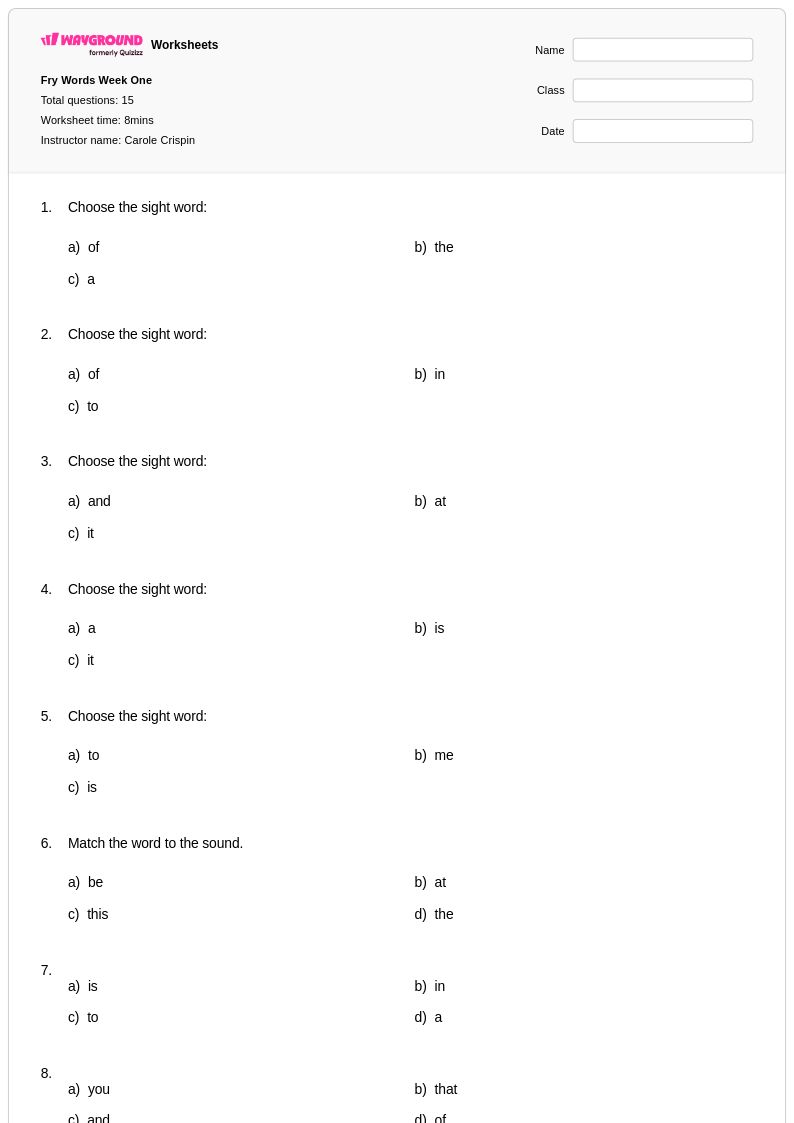
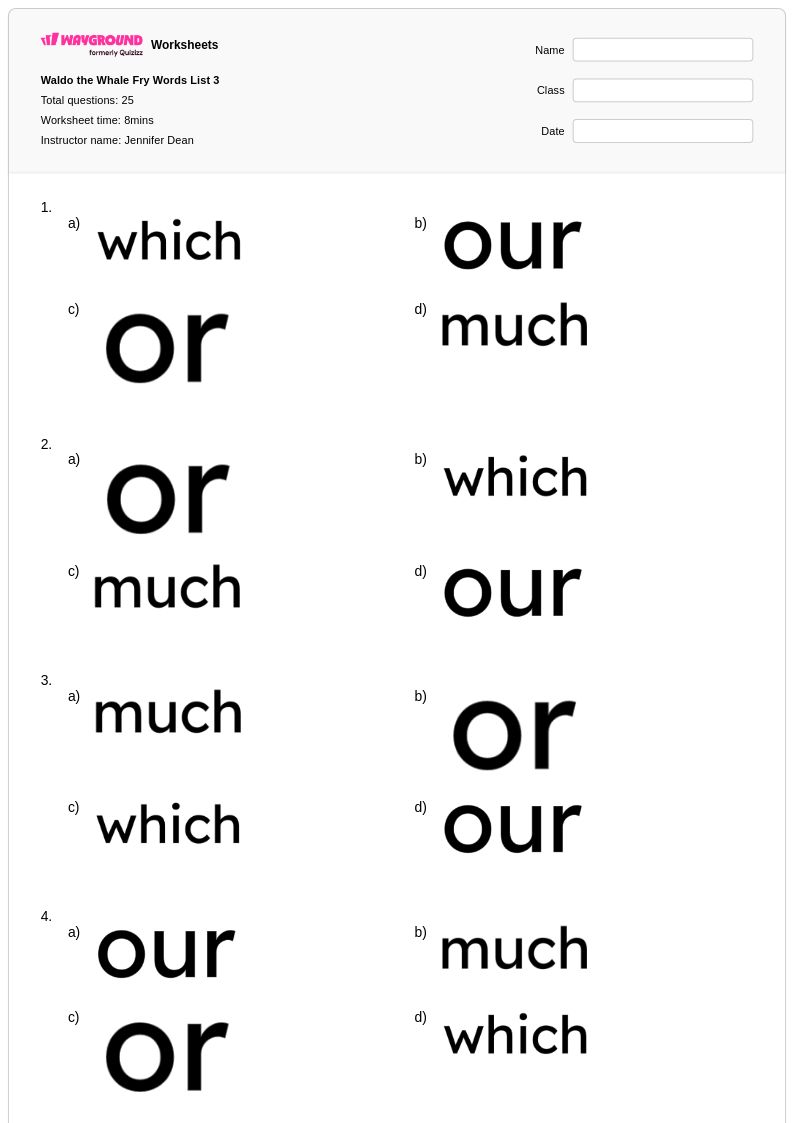
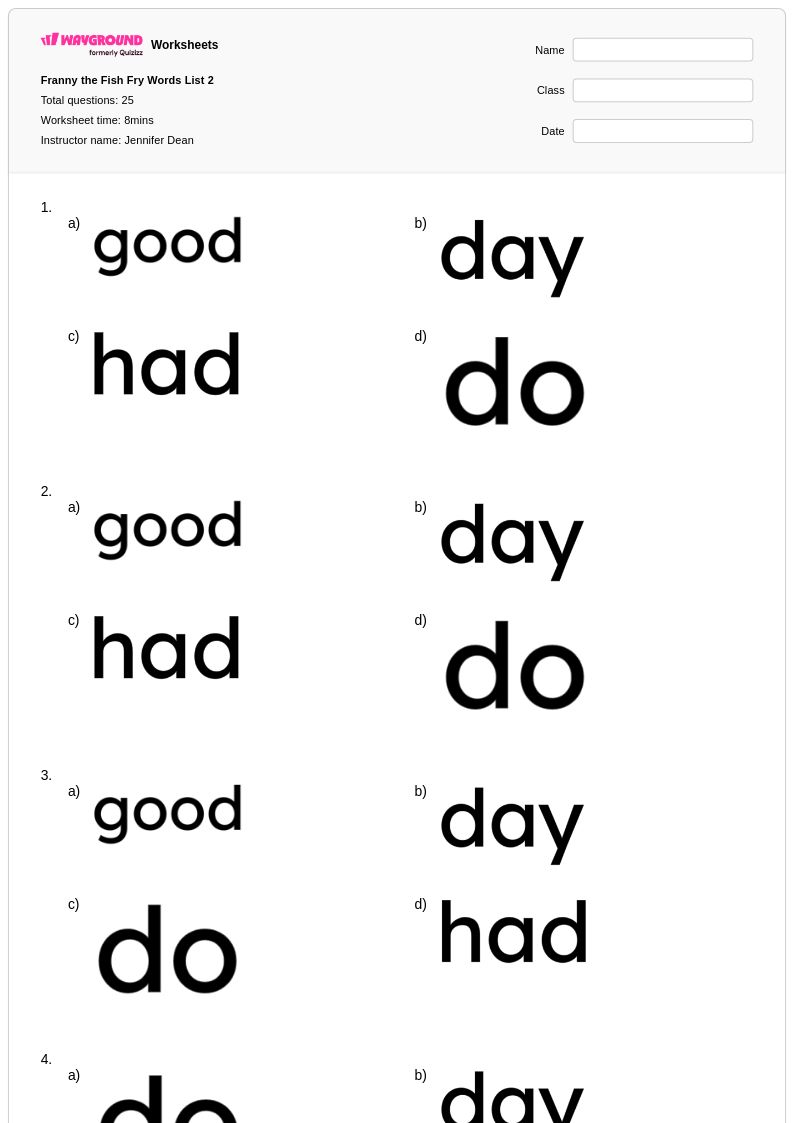
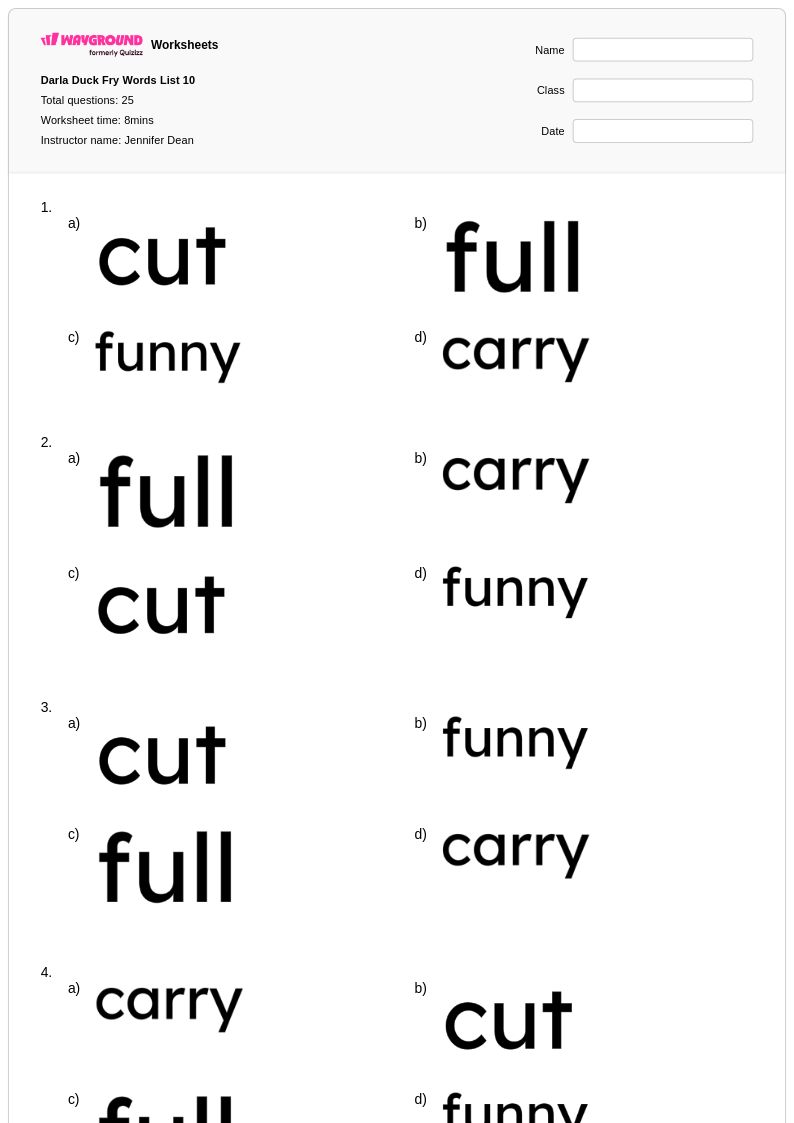
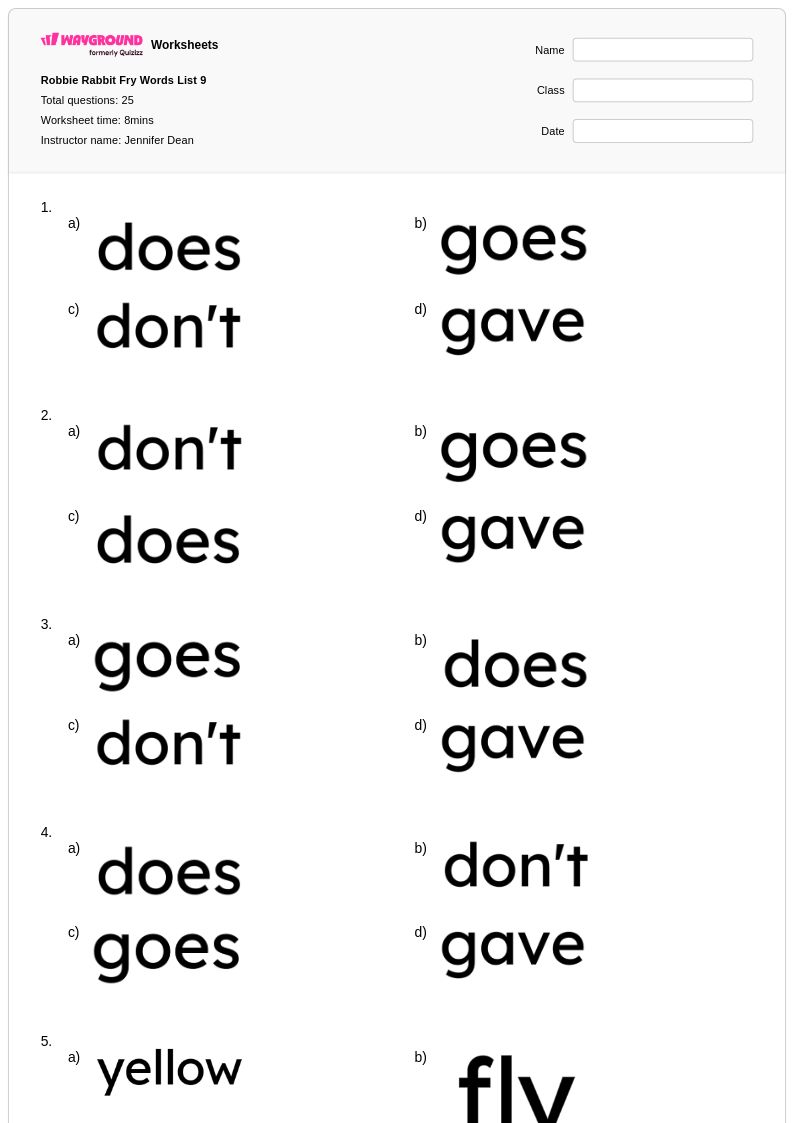
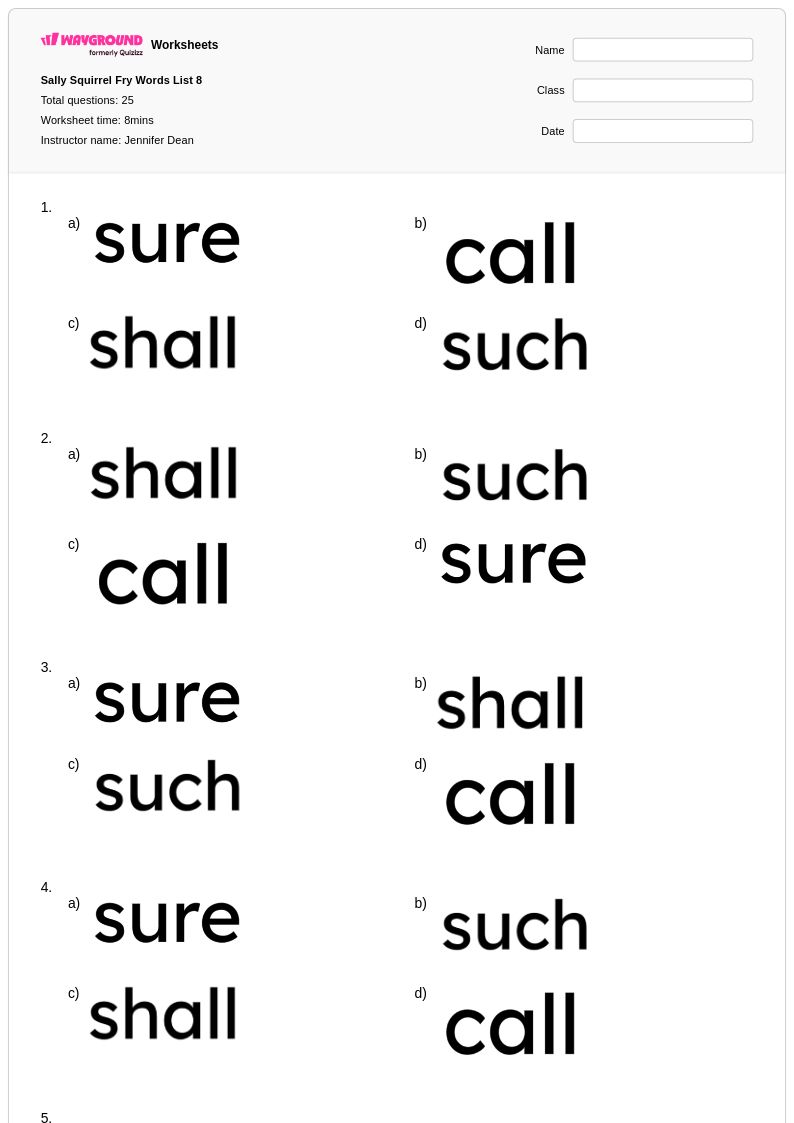
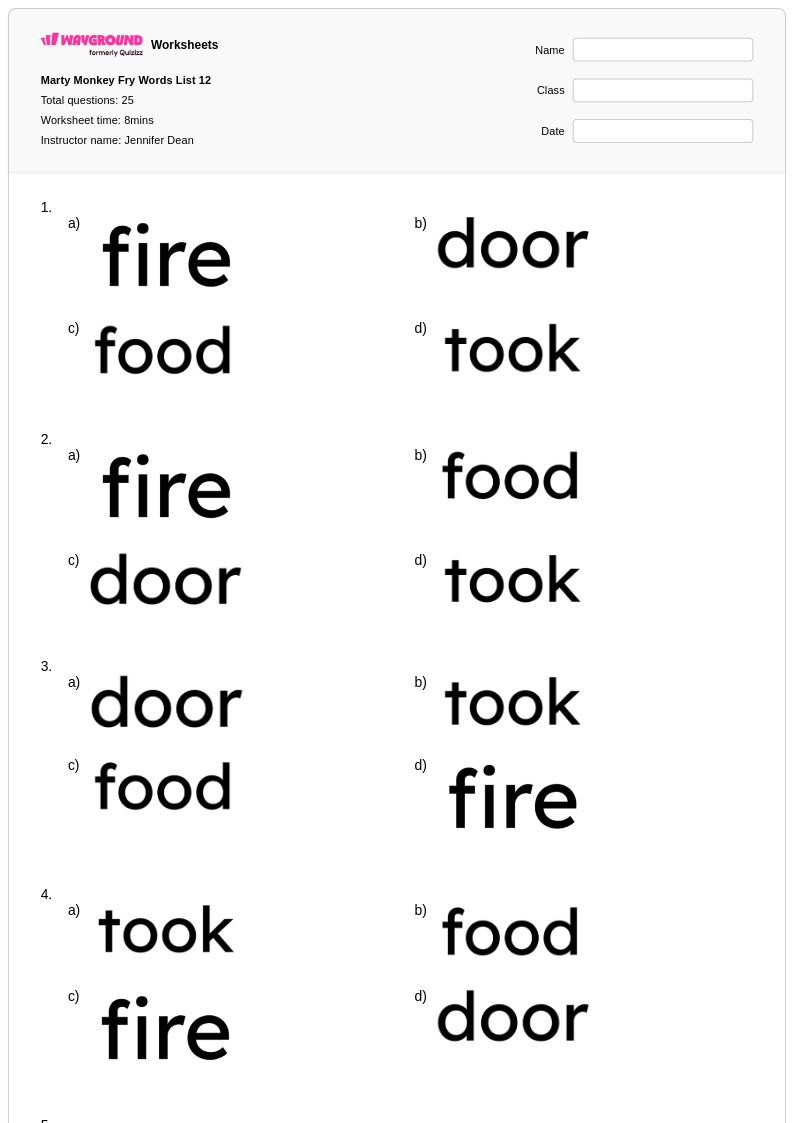
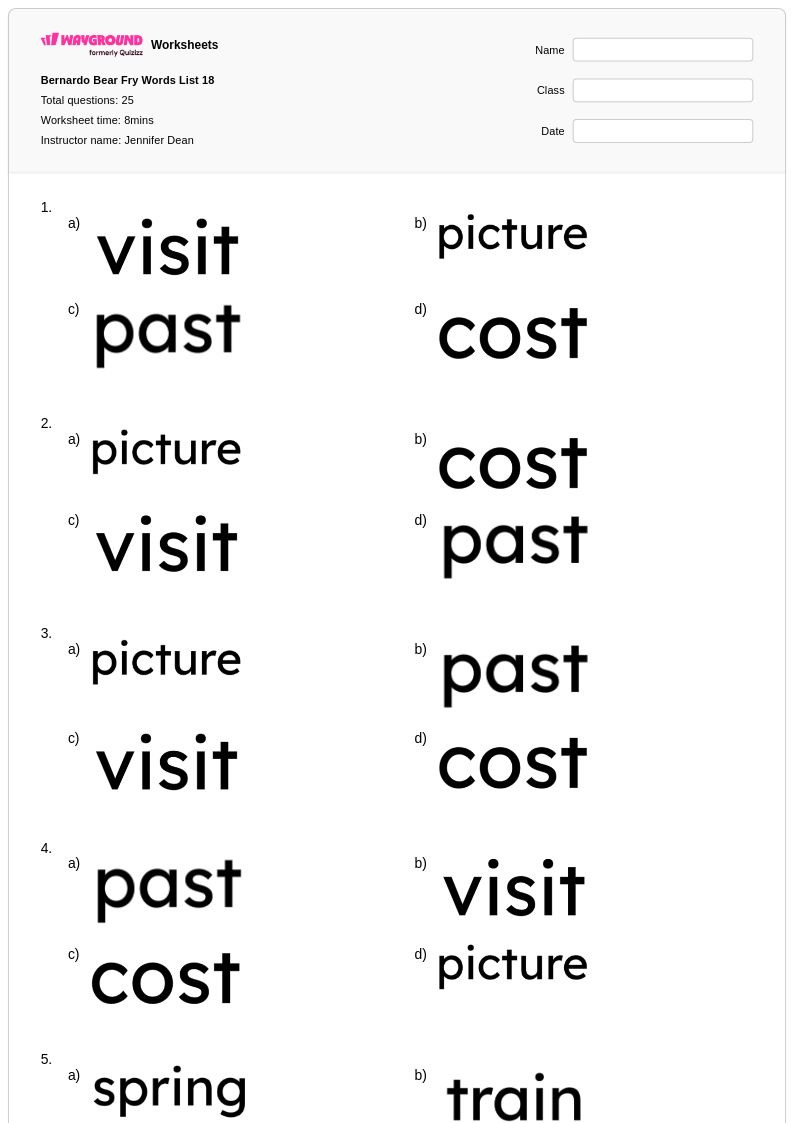
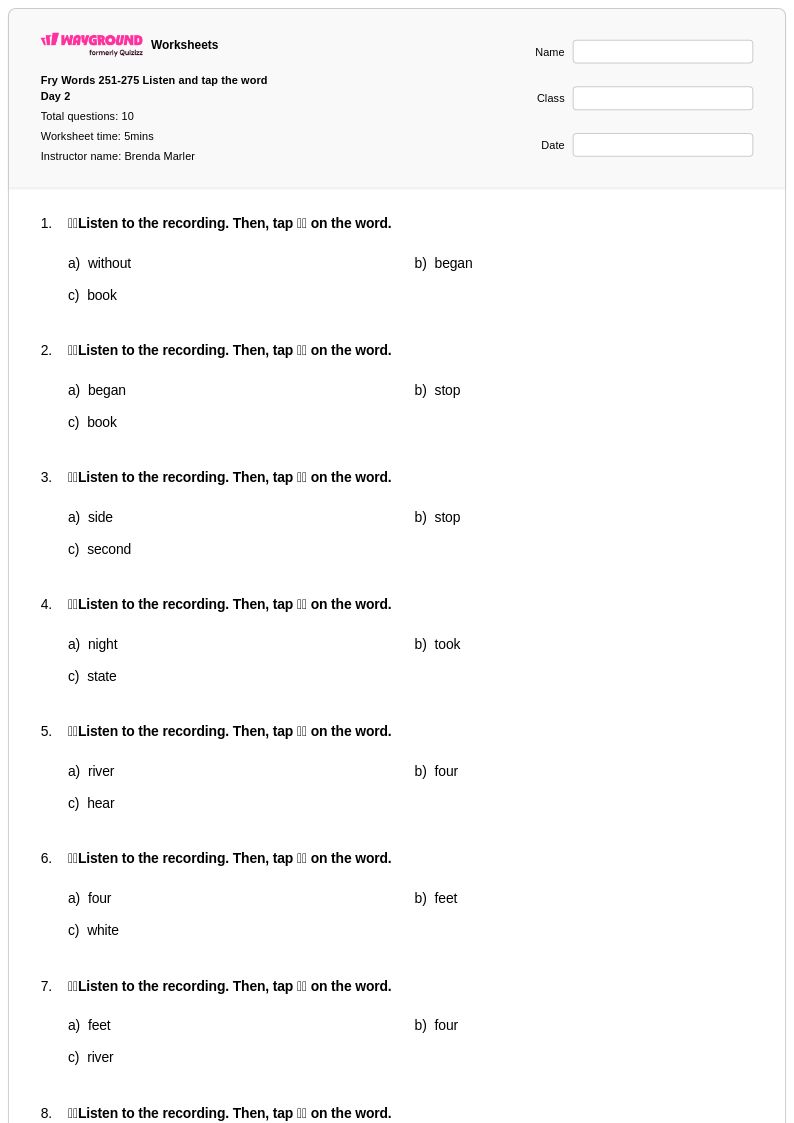
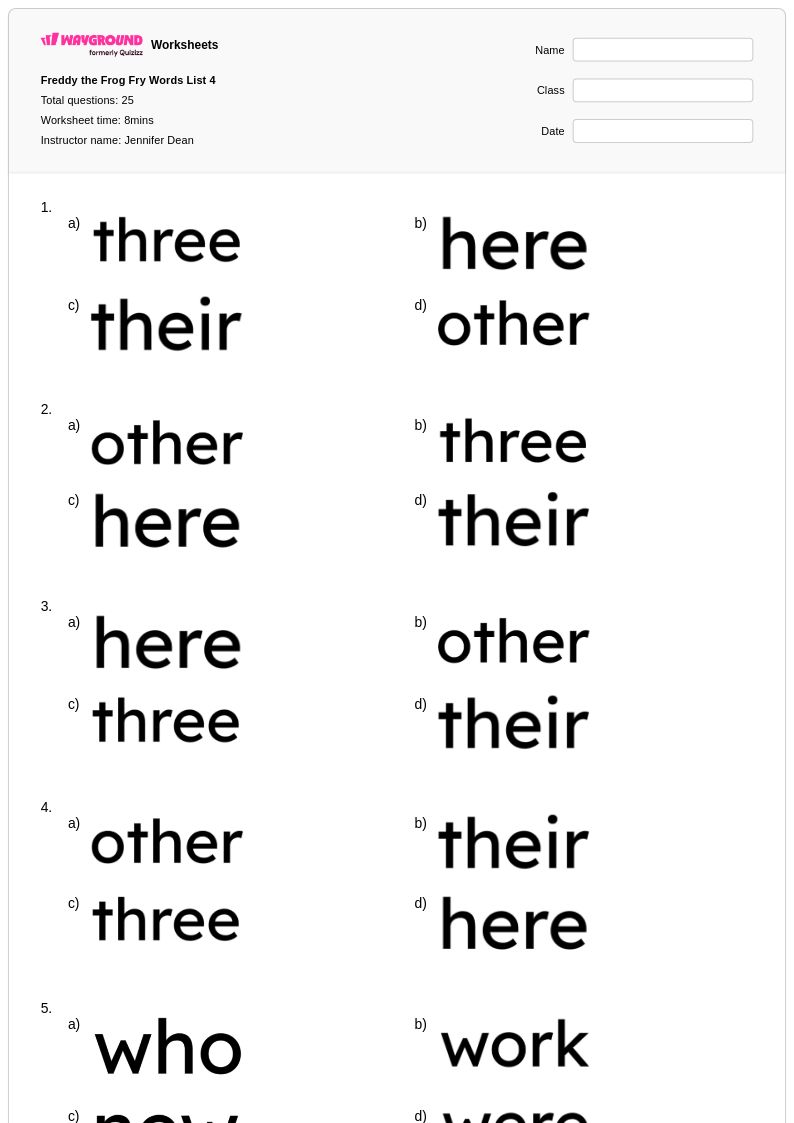
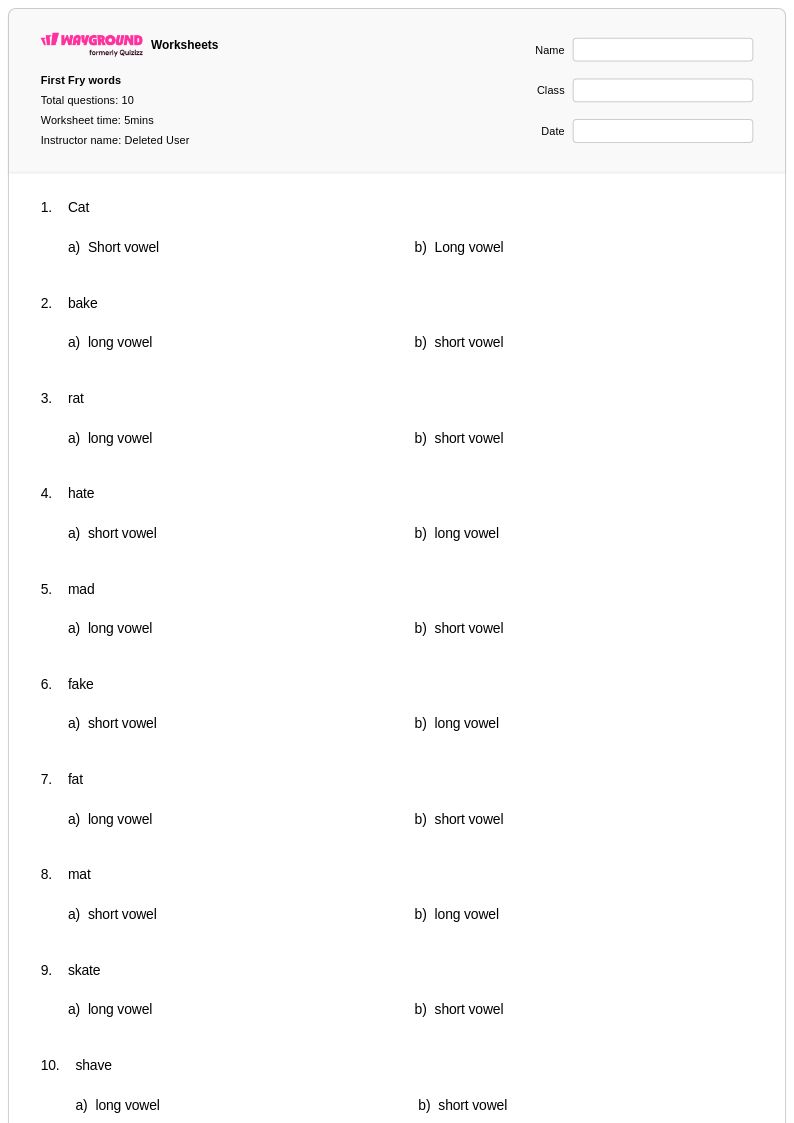
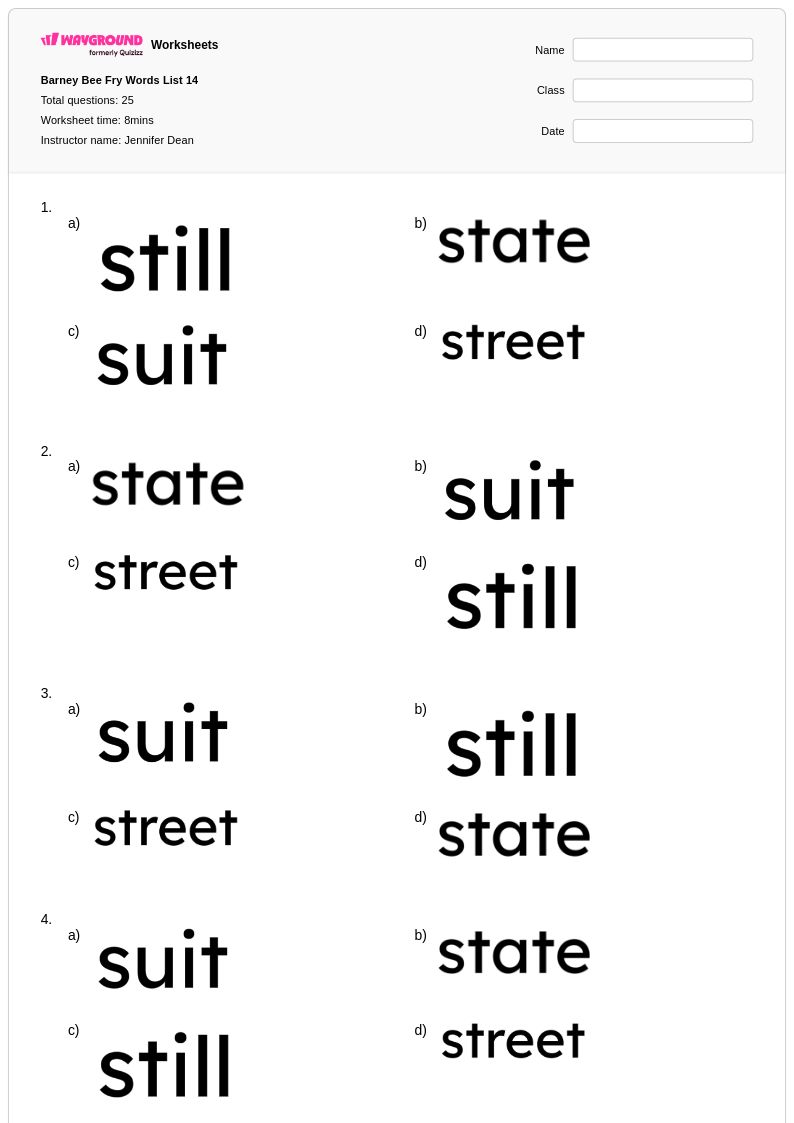
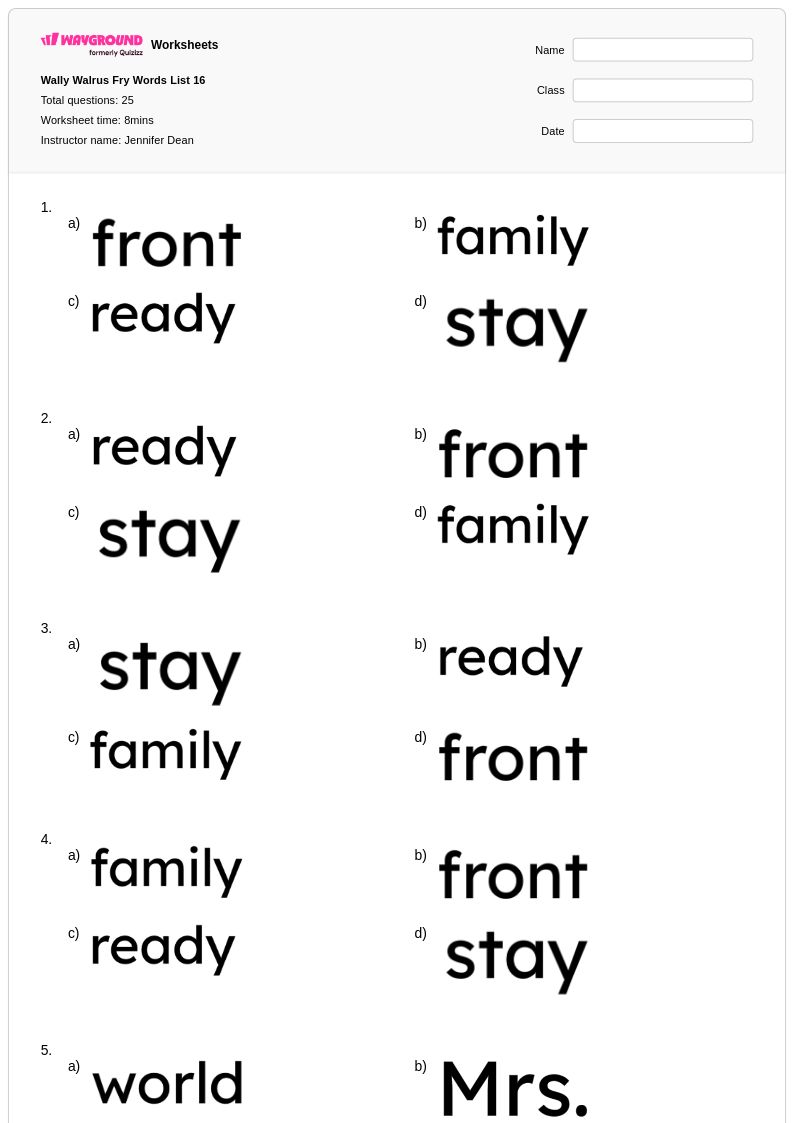
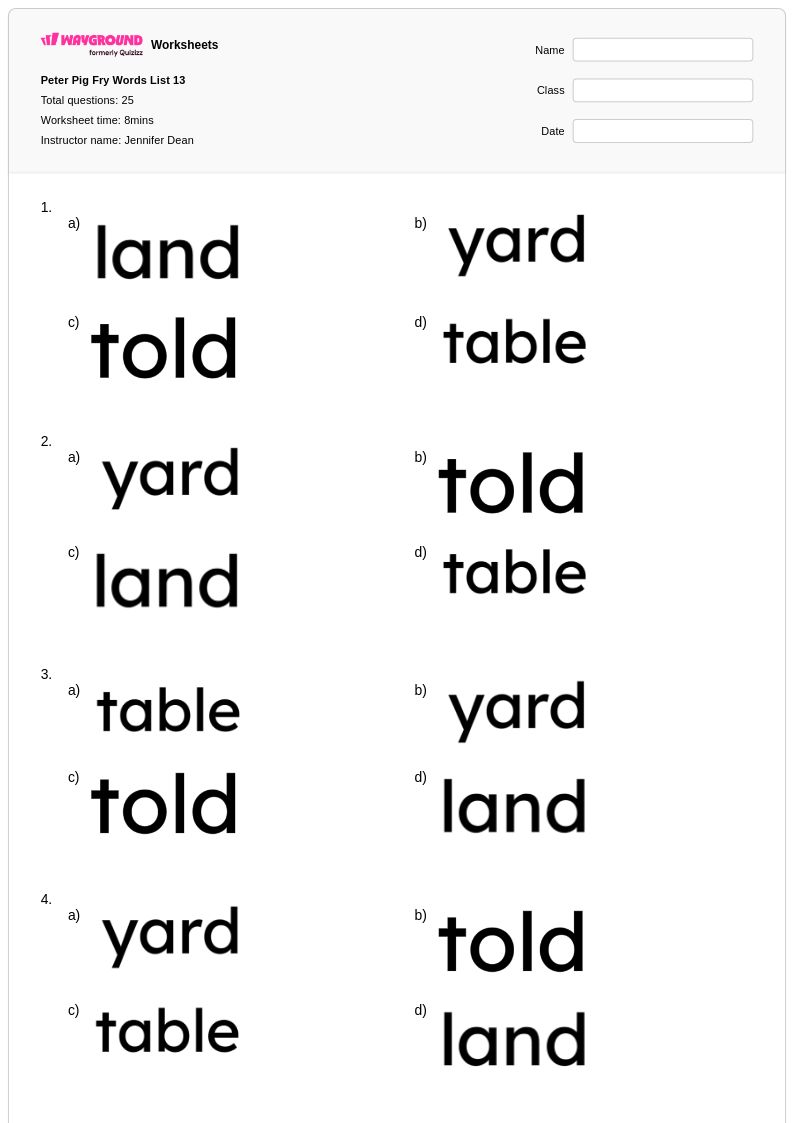
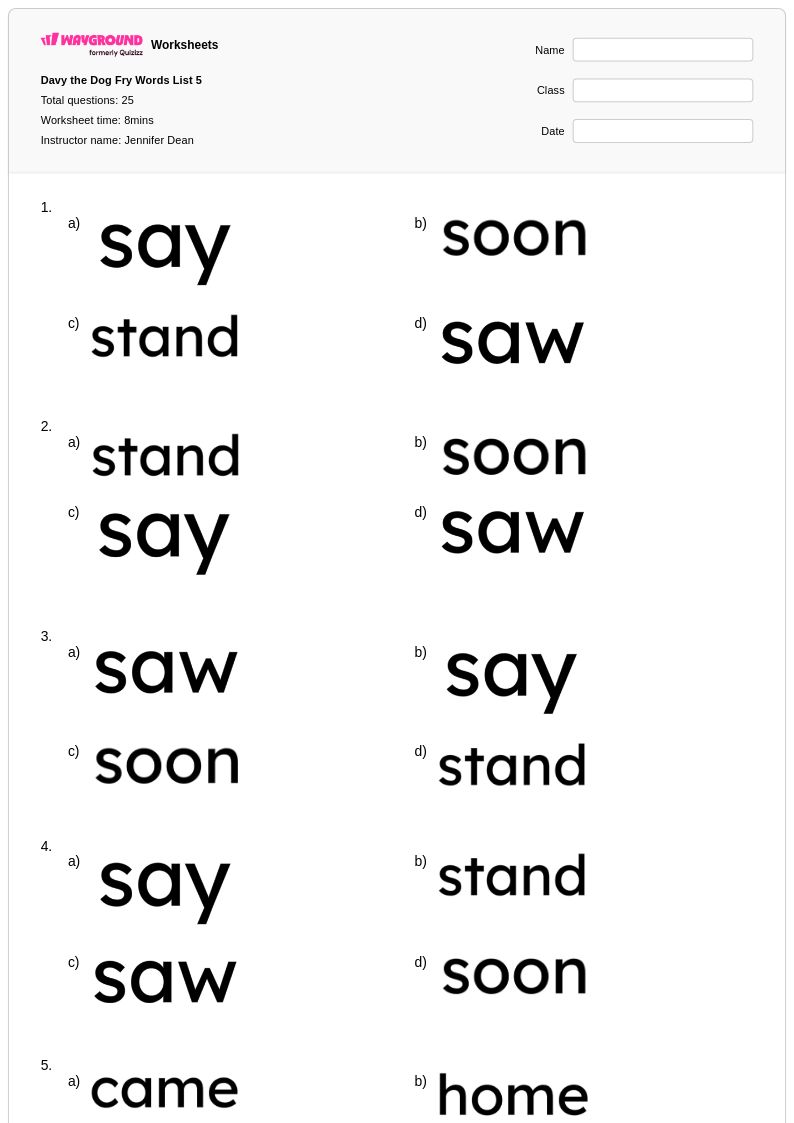
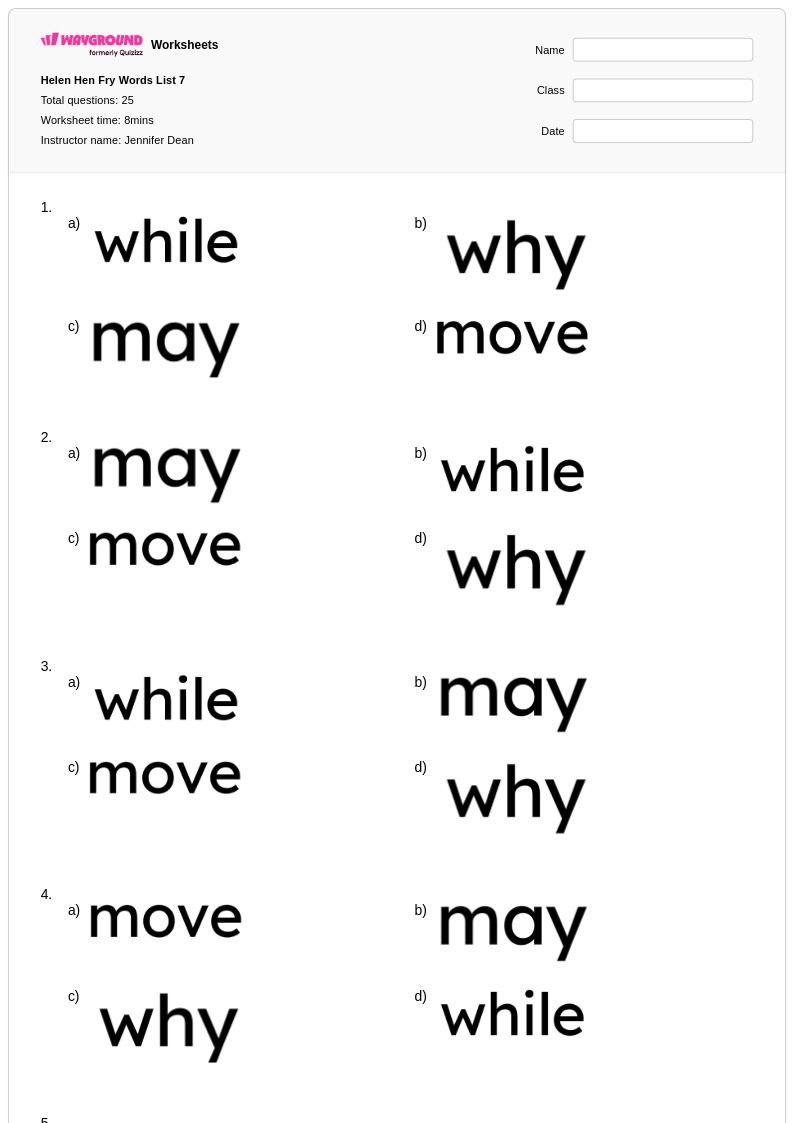
Enhance Year 2 students' reading foundation with our free Fry Words spelling worksheets and printables, featuring practice problems and answer keys to build essential sight word recognition skills.
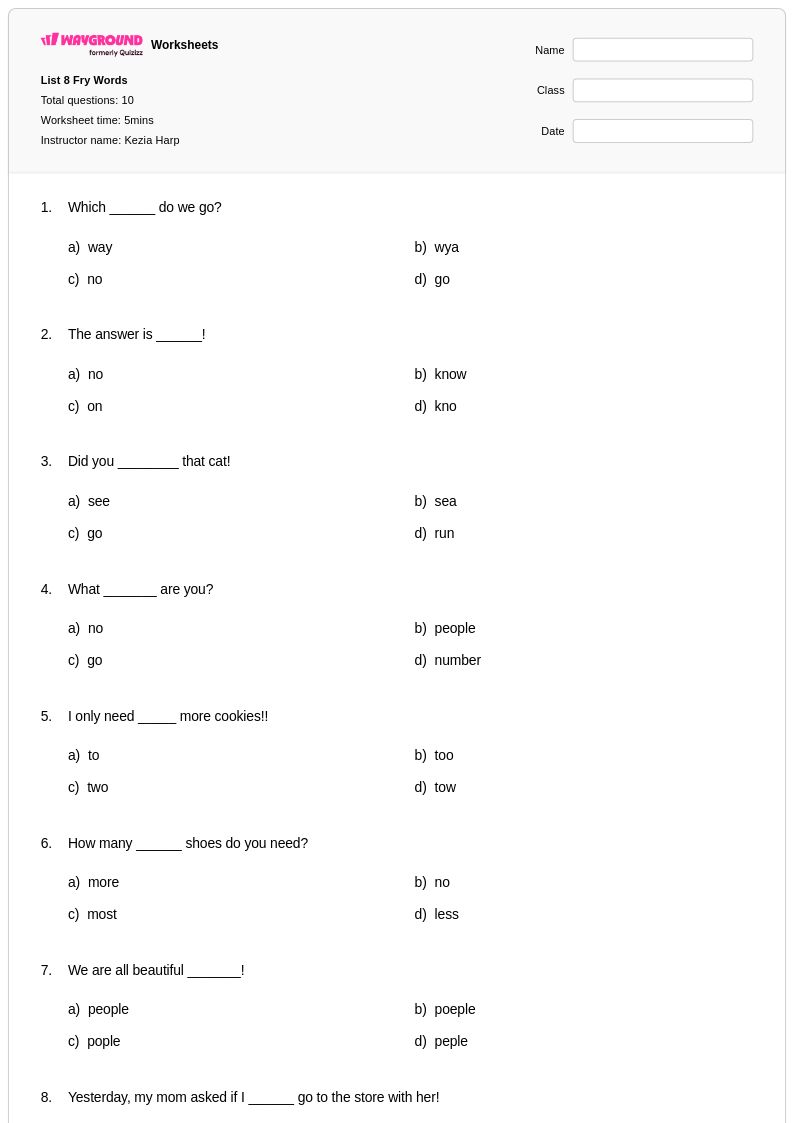
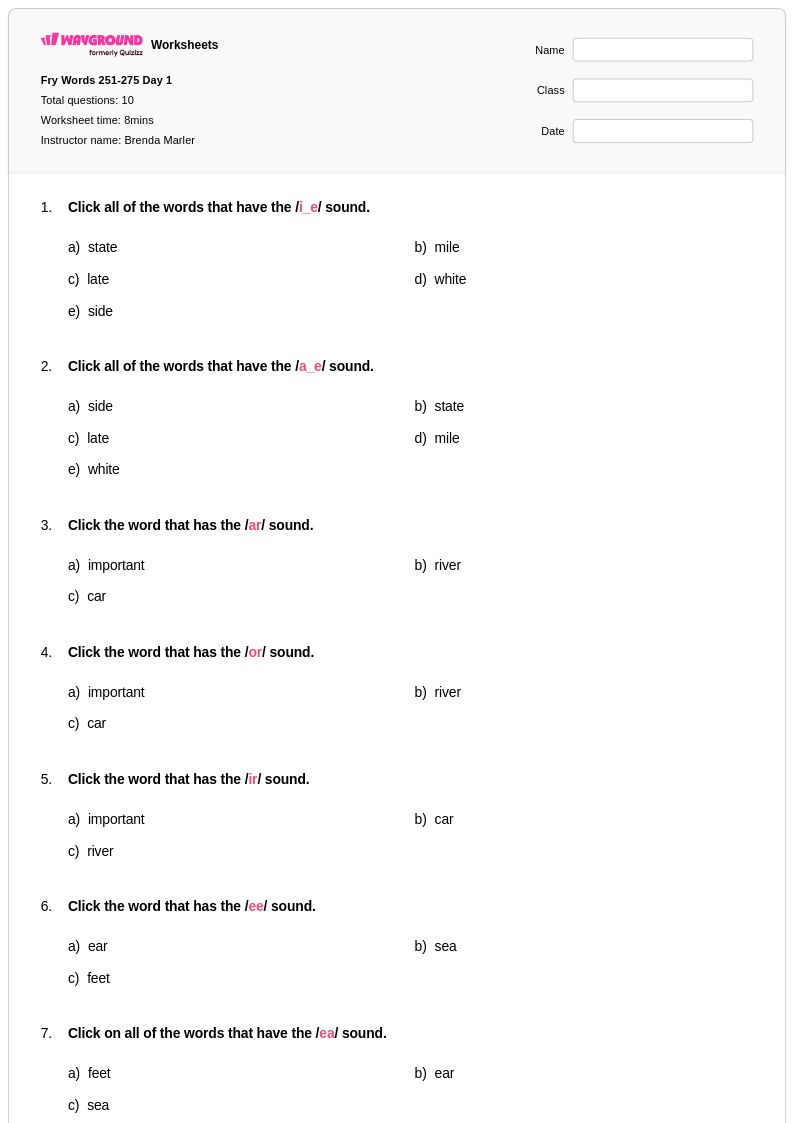
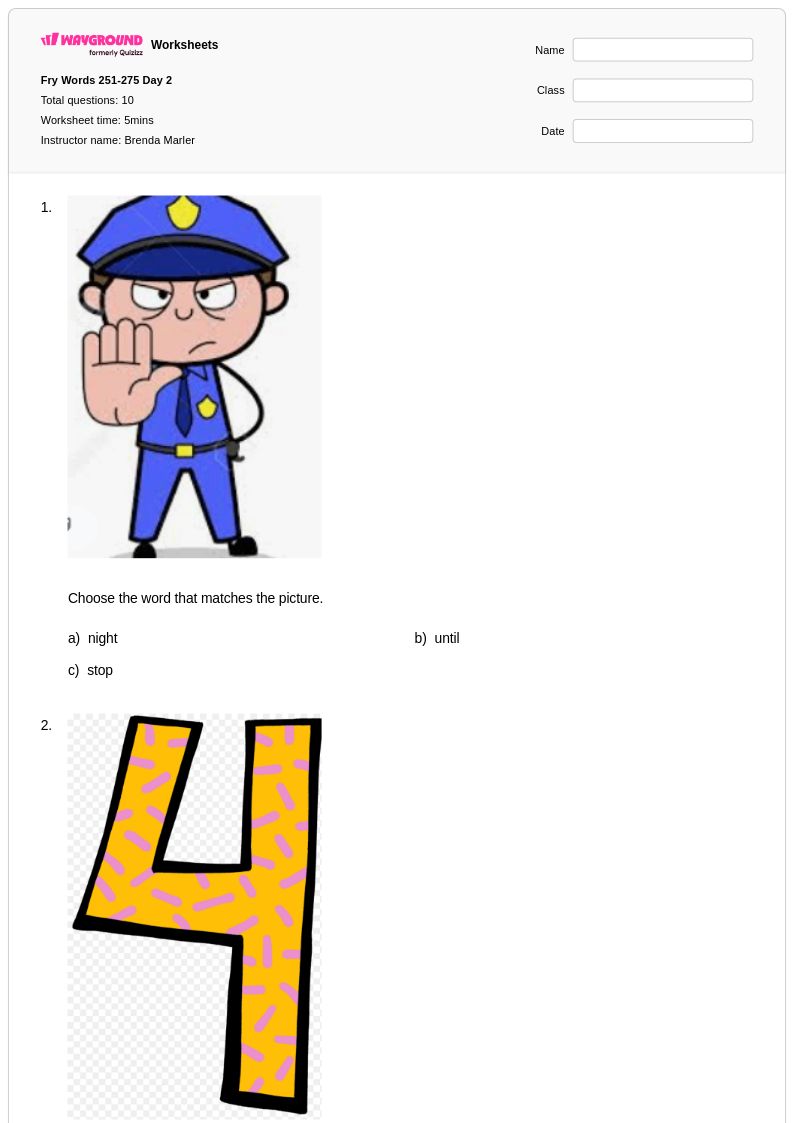
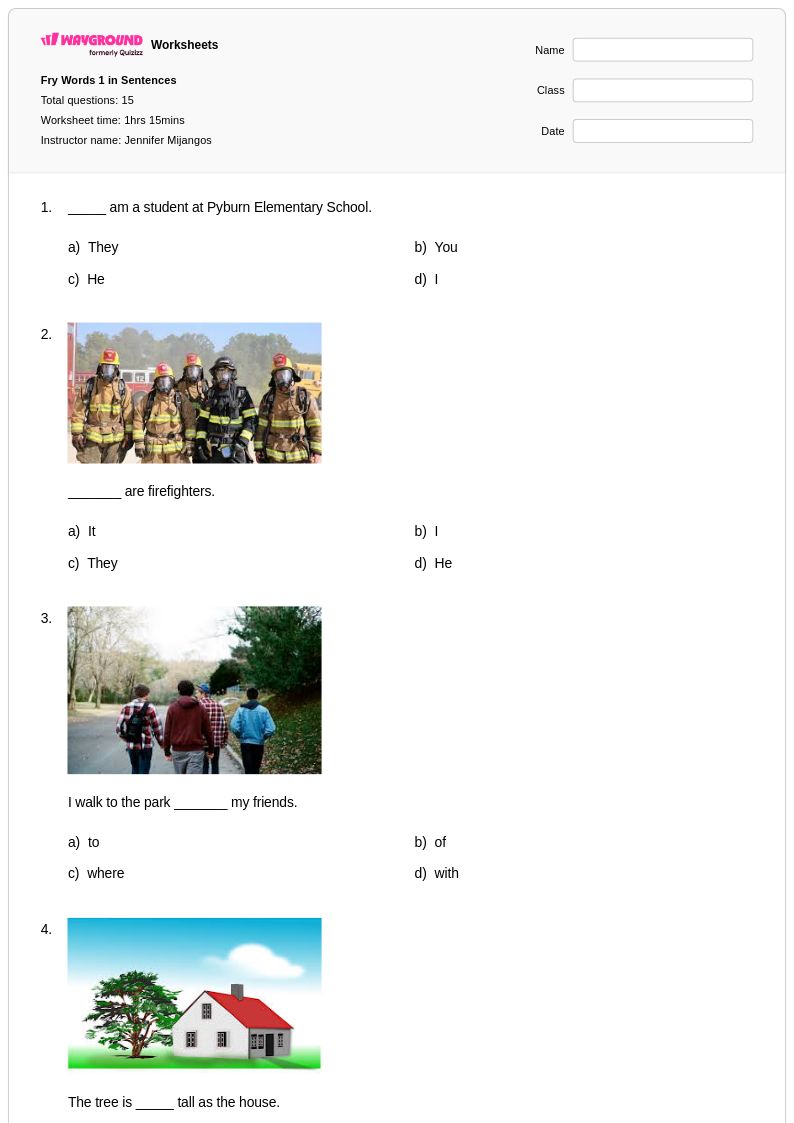
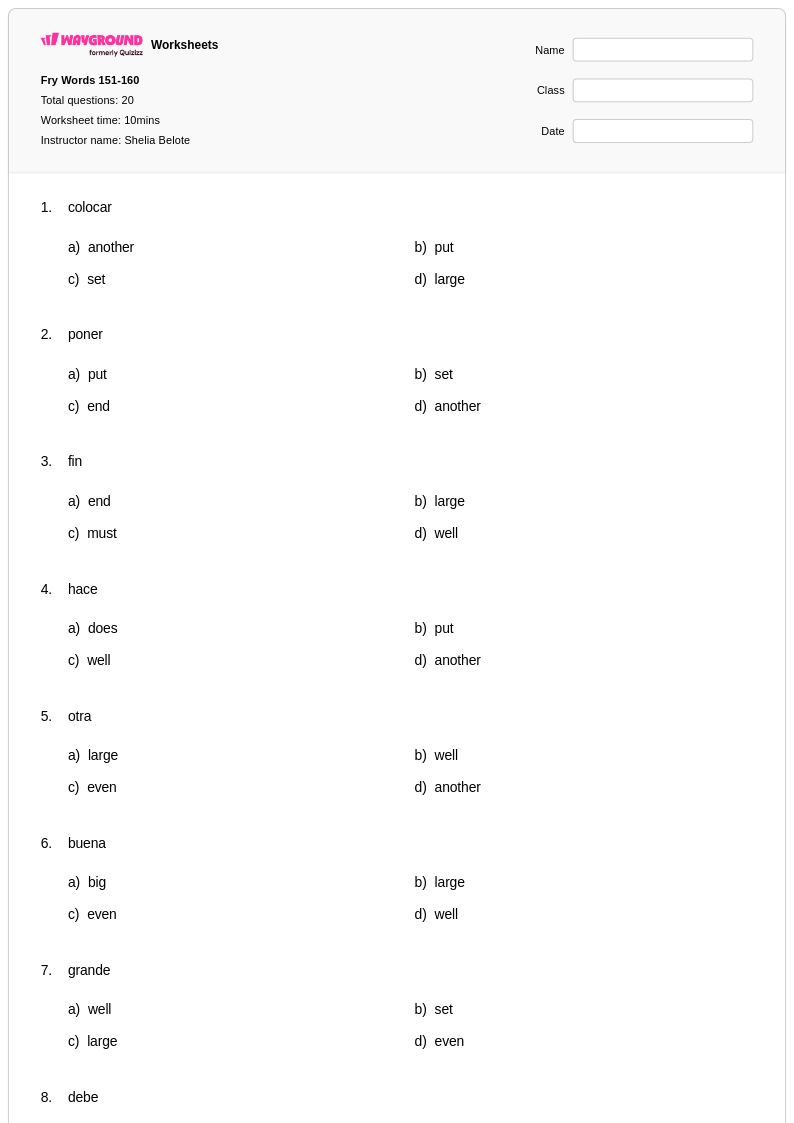
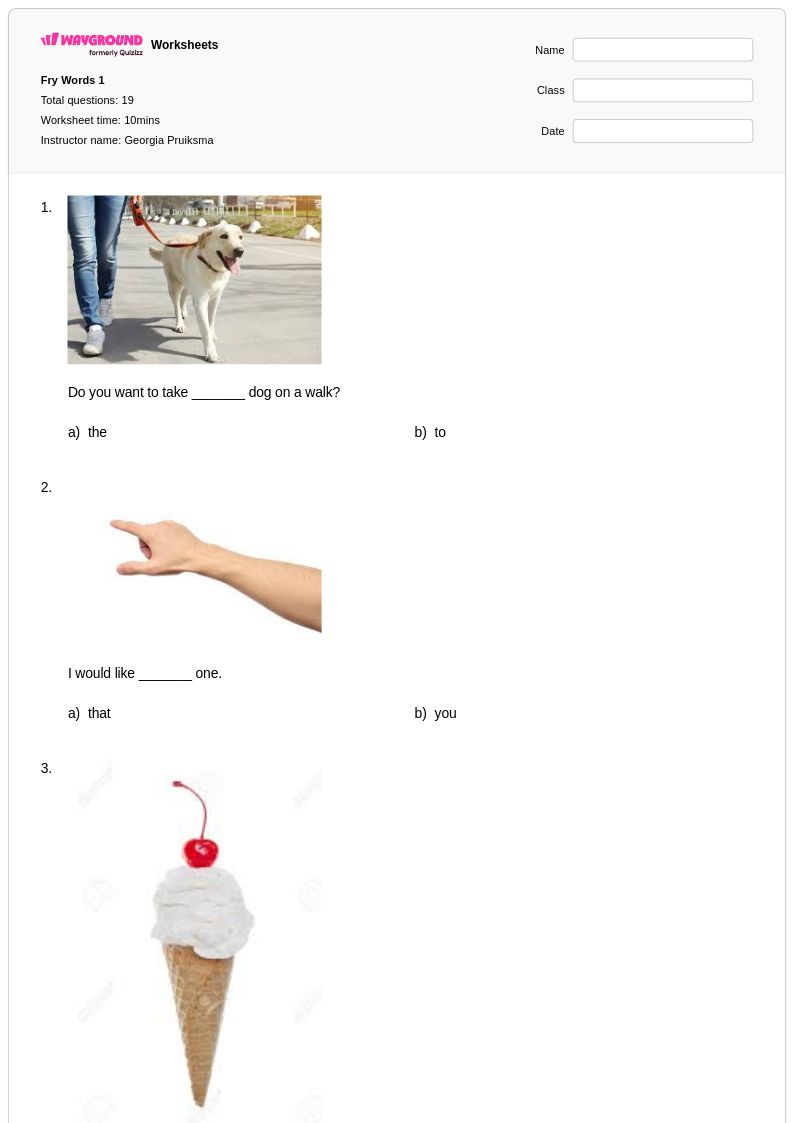
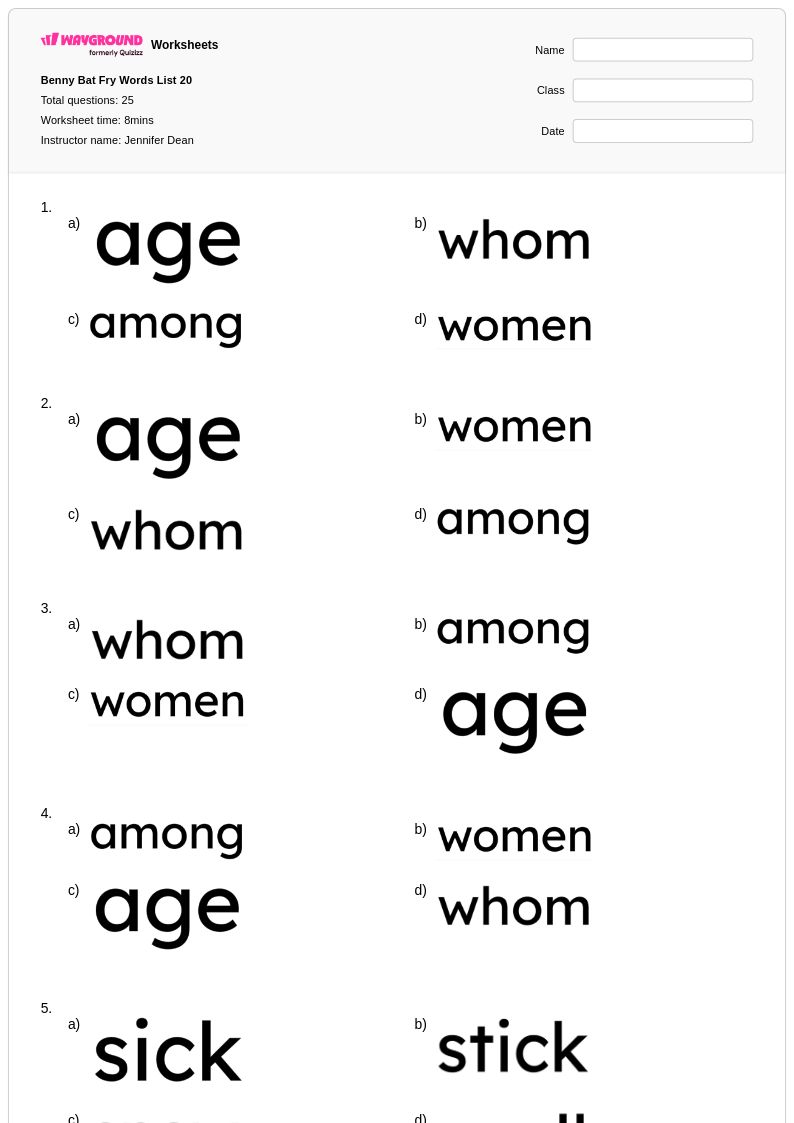
Fry Words worksheets for Year 2 students available through Wayground (formerly Quizizz) provide systematic practice with the most frequently used words in English reading and writing. These essential sight word resources focus on the second hundred Fry words, helping young learners develop automatic recognition of high-frequency vocabulary that forms the foundation of reading fluency. Each worksheet targets specific word sets through engaging activities including word recognition exercises, spelling practice, sentence completion tasks, and contextual reading passages. Teachers can access comprehensive materials that include answer keys for efficient grading, free printable pdf formats for classroom distribution, and varied practice problems designed to reinforce memorization and proper spelling of these critical vocabulary words.
Wayground (formerly Quizizz) empowers educators with millions of teacher-created Fry Words resources specifically designed for Year 2 instruction, featuring robust search and filtering capabilities that allow quick identification of materials targeting specific word lists or difficulty levels. The platform's standards-aligned content supports systematic vocabulary development while offering differentiation tools that accommodate diverse learning needs within the classroom. Teachers benefit from flexible customization options that enable modification of existing worksheets to match individual student requirements, whether for remediation of struggling readers or enrichment activities for advanced learners. Available in both printable and digital formats including downloadable pdfs, these comprehensive worksheet collections streamline lesson planning while providing consistent, research-based practice opportunities that build the sight word recognition essential for Year 2 reading success.
FAQs
How do I teach Fry words to early readers?
Fry words are best taught through repeated, distributed exposure rather than isolated memorization drills. Introduce new words in small sets of five to ten, using multisensory strategies such as tracing, oral repetition, and reading words in context. Embedding Fry words into sentence-level and passage-level activities helps students move from recognition to automaticity, which is the ultimate goal of sight word instruction.
What exercises help students practice Fry words effectively?
Effective Fry word practice combines recognition drills with contextual application. Exercises such as word matching, sentence completion, and fill-in-the-blank activities reinforce both spelling accuracy and meaning. Moving students from isolated word recognition toward reading Fry words fluently within sentences mirrors real reading demands and accelerates automaticity.
What mistakes do students commonly make when learning Fry words?
Students frequently confuse visually similar Fry words such as 'where' and 'were', 'then' and 'than', or 'this' and 'these' because they rely on partial visual cues rather than full word recognition. Another common error is decoding Fry words letter-by-letter instead of recognizing them as whole units, which slows reading fluency. Targeted practice with easily confused word pairs and timed recognition activities can help address both patterns.
How do Fry words differ from Dolch words, and which should I teach?
Fry words and Dolch words are both high-frequency word lists, but Fry words extend to 1,000 of the most common words in English text, while the Dolch list contains 220 service words plus 95 nouns. Fry words are organized by frequency in groups of 100, making it easy to sequence instruction from most to least common. Most reading programs use one or the other, and either list provides a strong foundation, but Fry words offer broader coverage for advancing readers.
How can I use Fry Words worksheets from Wayground in my classroom?
Fry Words worksheets on Wayground are available as printable PDFs for traditional classroom use and in digital formats for technology-integrated learning environments, including the option to host them as a quiz directly on Wayground. Printable versions work well for independent seatwork, homework, or small-group instruction, while digital formats allow for self-paced practice and immediate feedback. Each worksheet includes a complete answer key, making grading fast and efficient. Wayground also supports student-level accommodations such as read aloud, extended time, and reduced answer choices, which can be assigned to individual students without disrupting the rest of the class.
How do I differentiate Fry word instruction for students at different reading levels?
Differentiation with Fry words typically means varying which word list students are working on, since the words are sequenced by frequency across ten groups of 100. Struggling readers may need to consolidate the first 100 Fry words before advancing, while stronger readers can work through higher-frequency groups and apply words in more complex sentence contexts. On Wayground, teachers can apply individual accommodations such as read aloud support or reduced answer choices to specific students, allowing the same worksheet to serve multiple proficiency levels within one class.