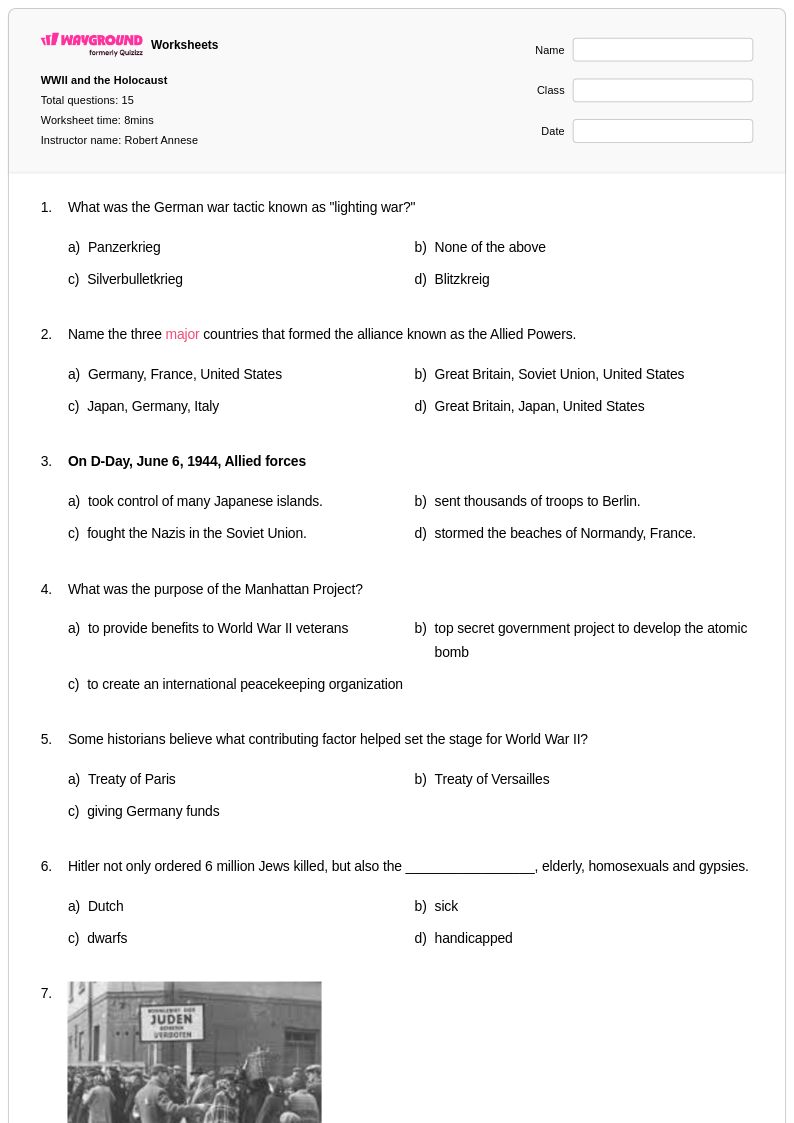
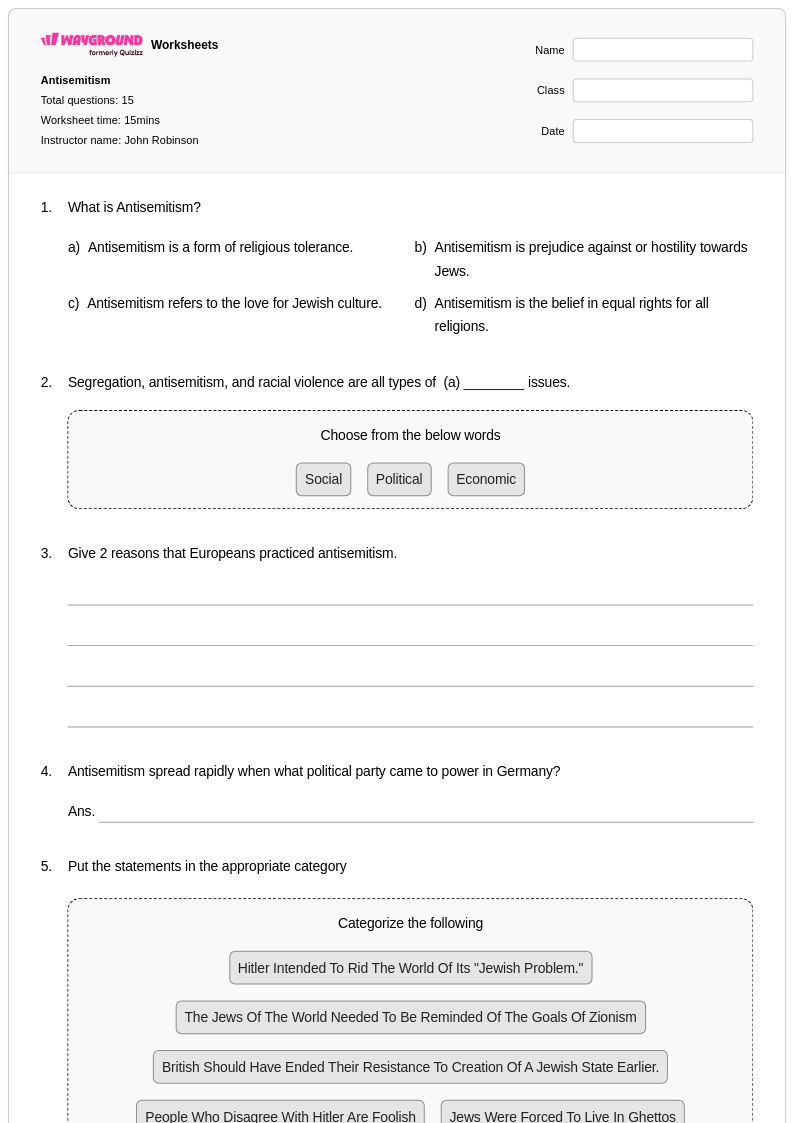
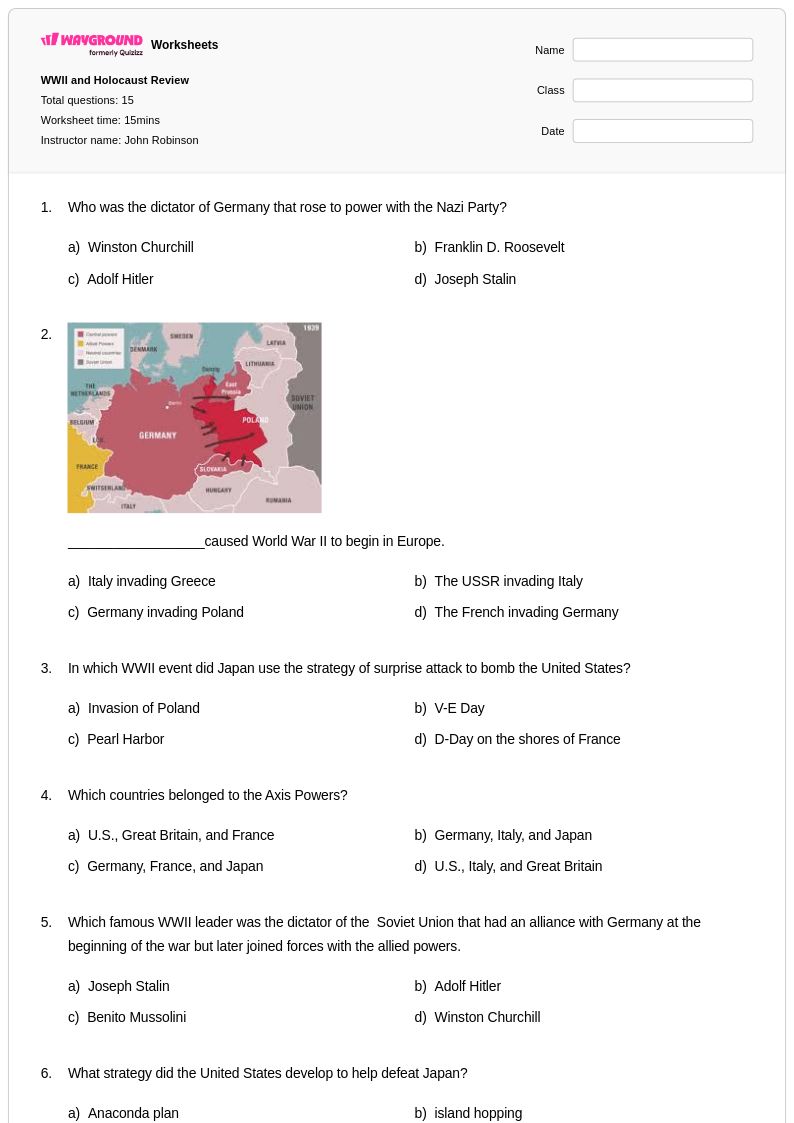
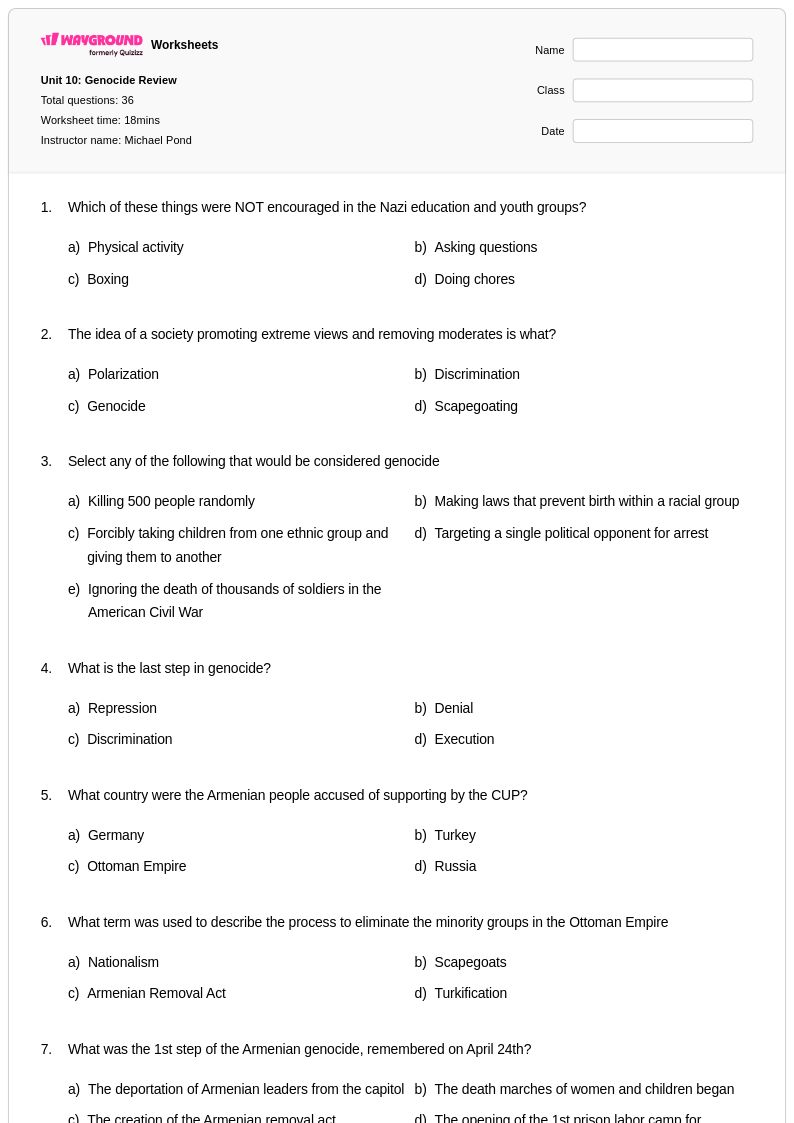
Explore Wayground's comprehensive collection of Year 12 Holocaust worksheets and printables that help students examine this pivotal World History period through engaging practice problems, free PDF resources, and detailed answer keys.
Explore printable Holocaust worksheets for Year 12
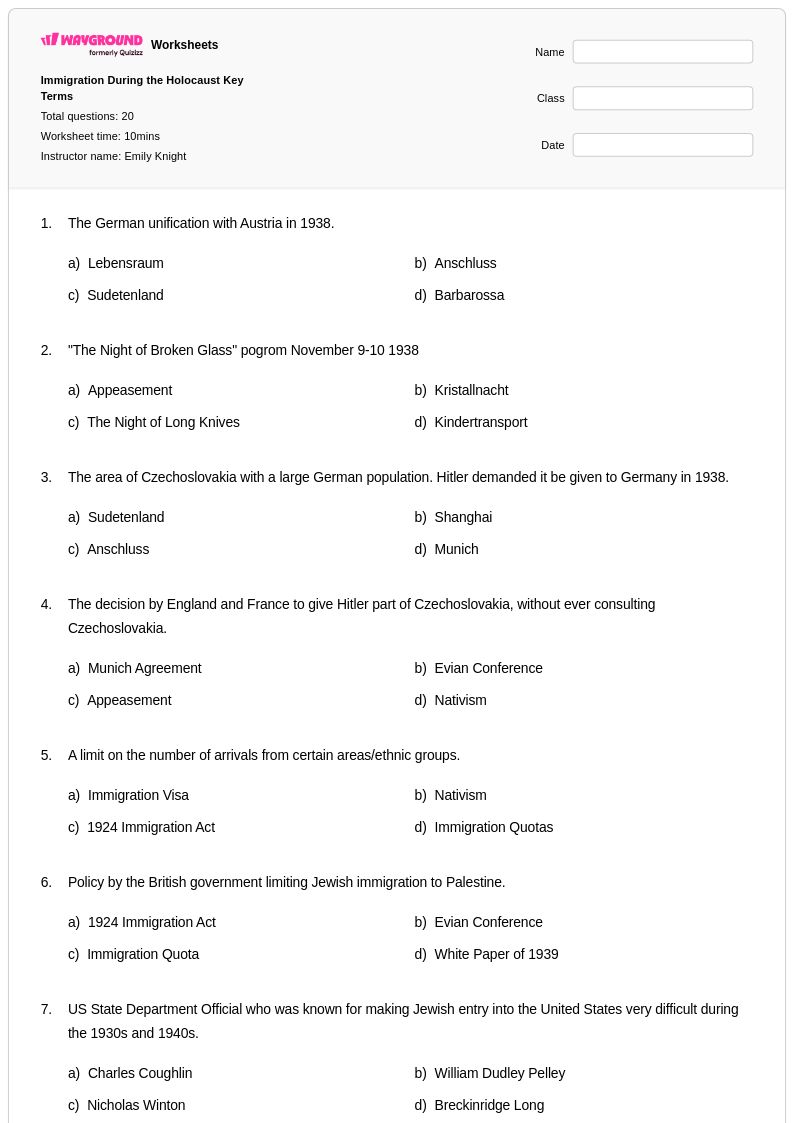
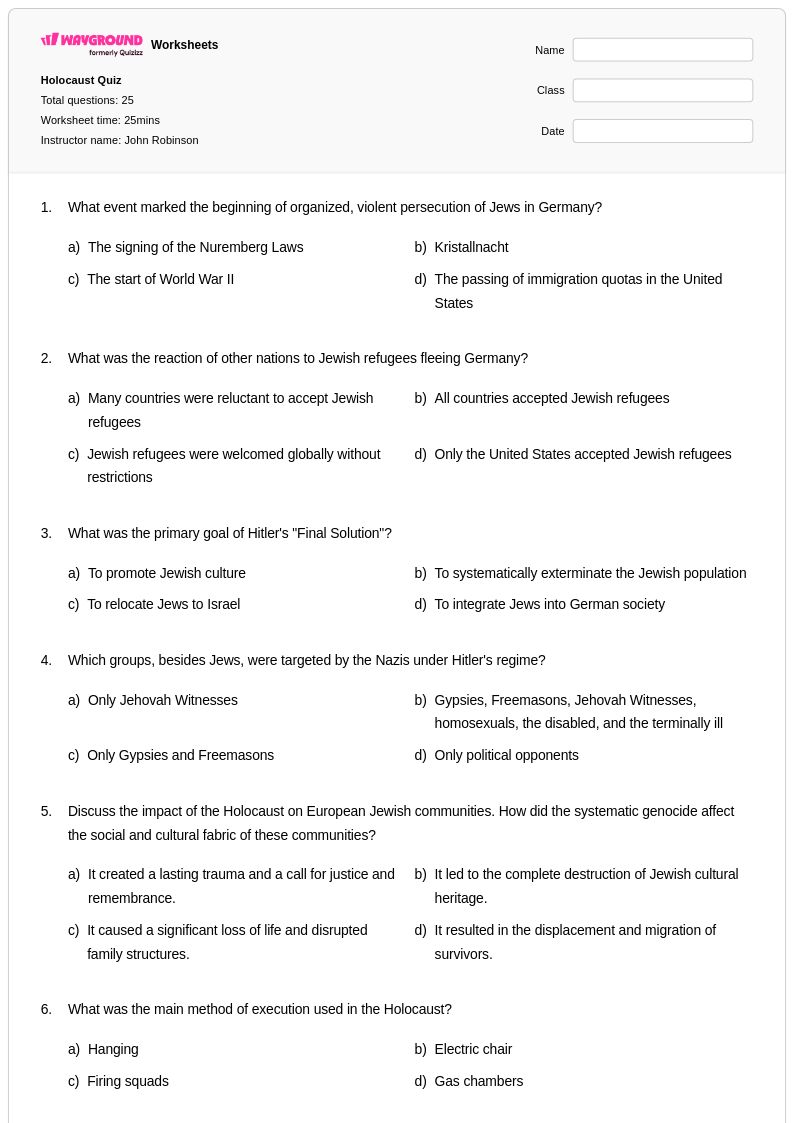
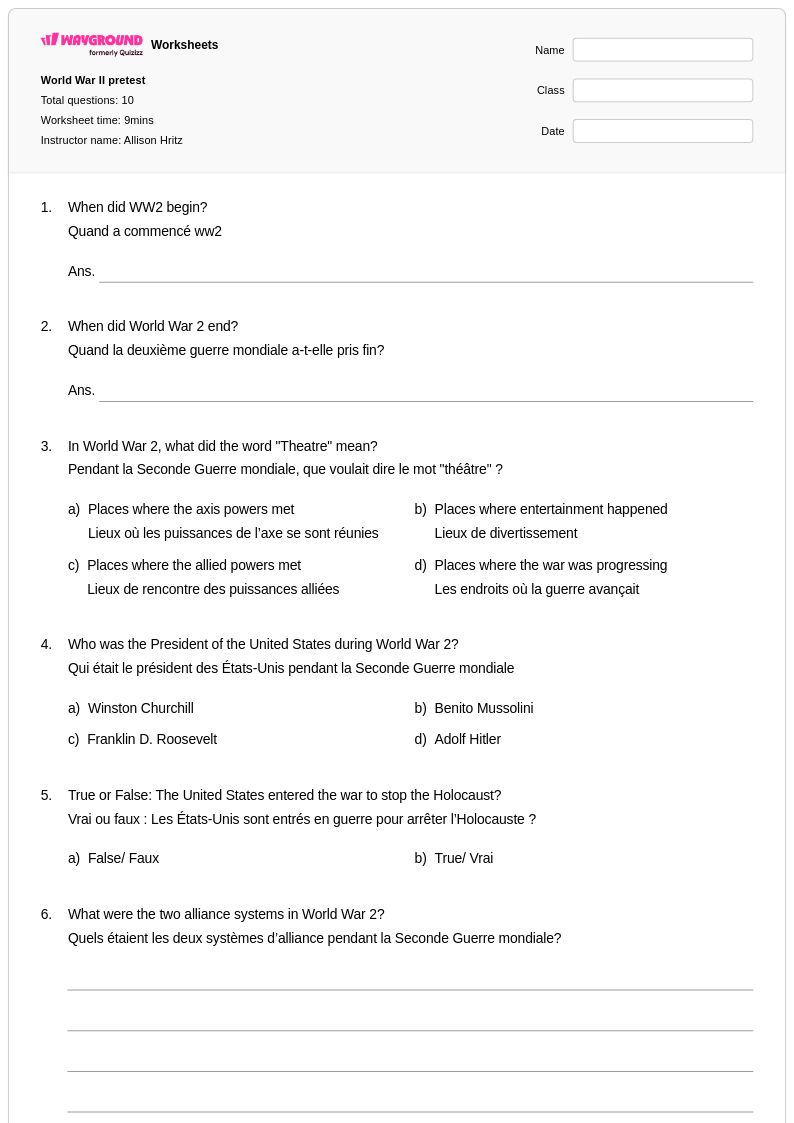
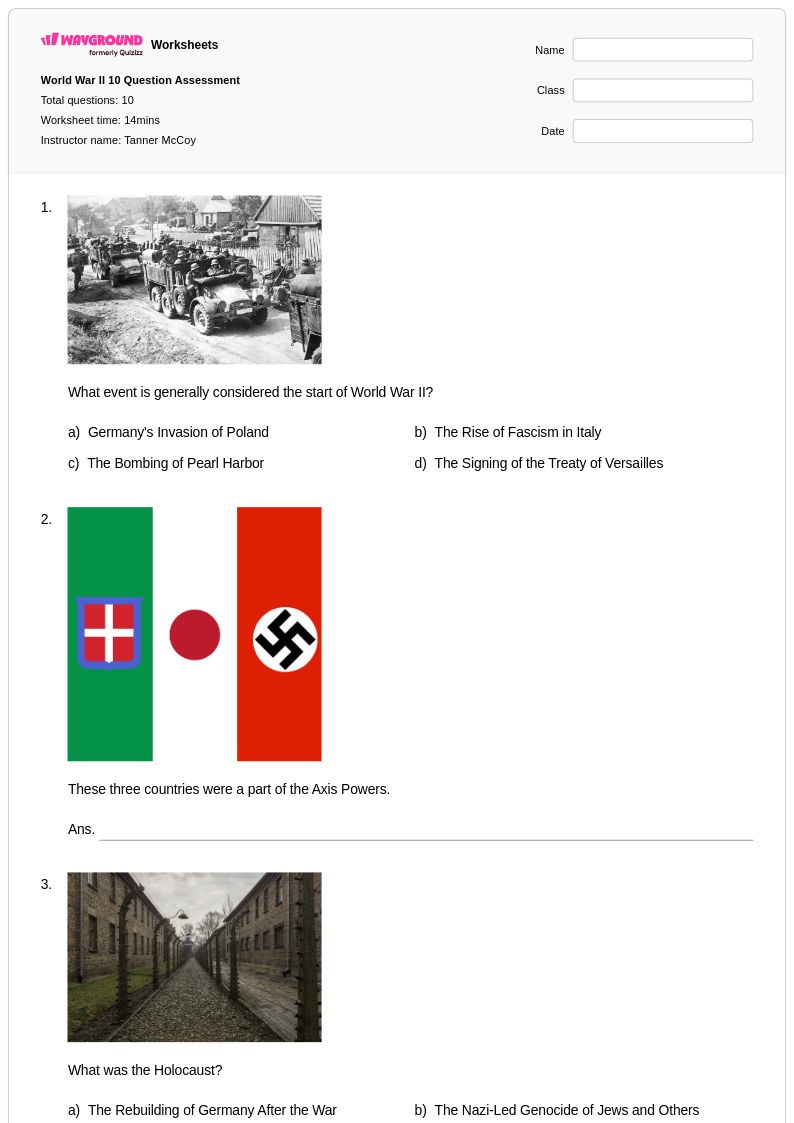
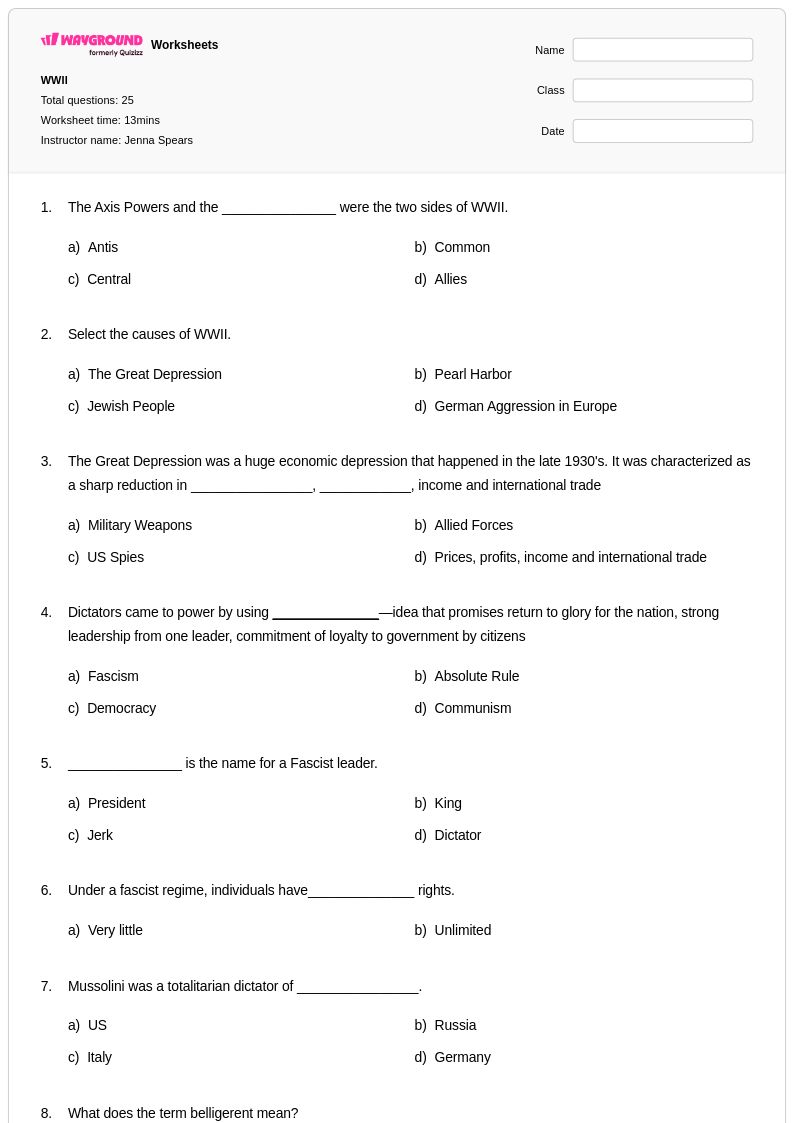
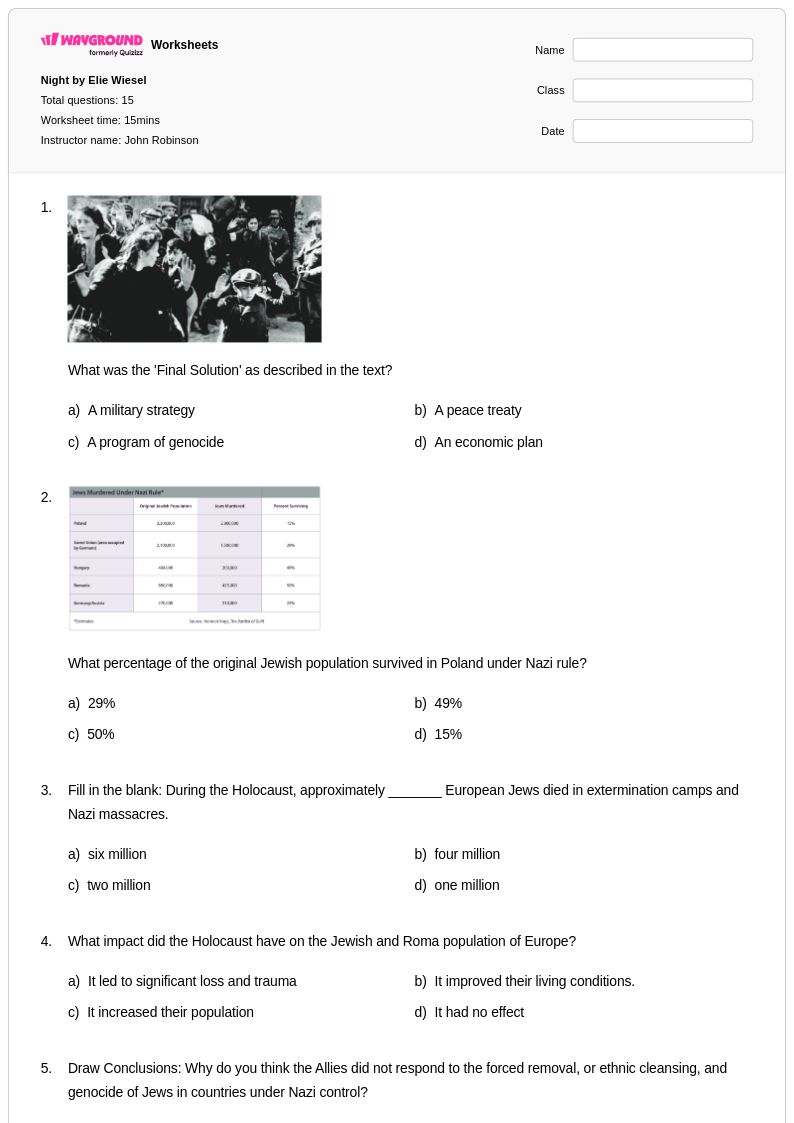
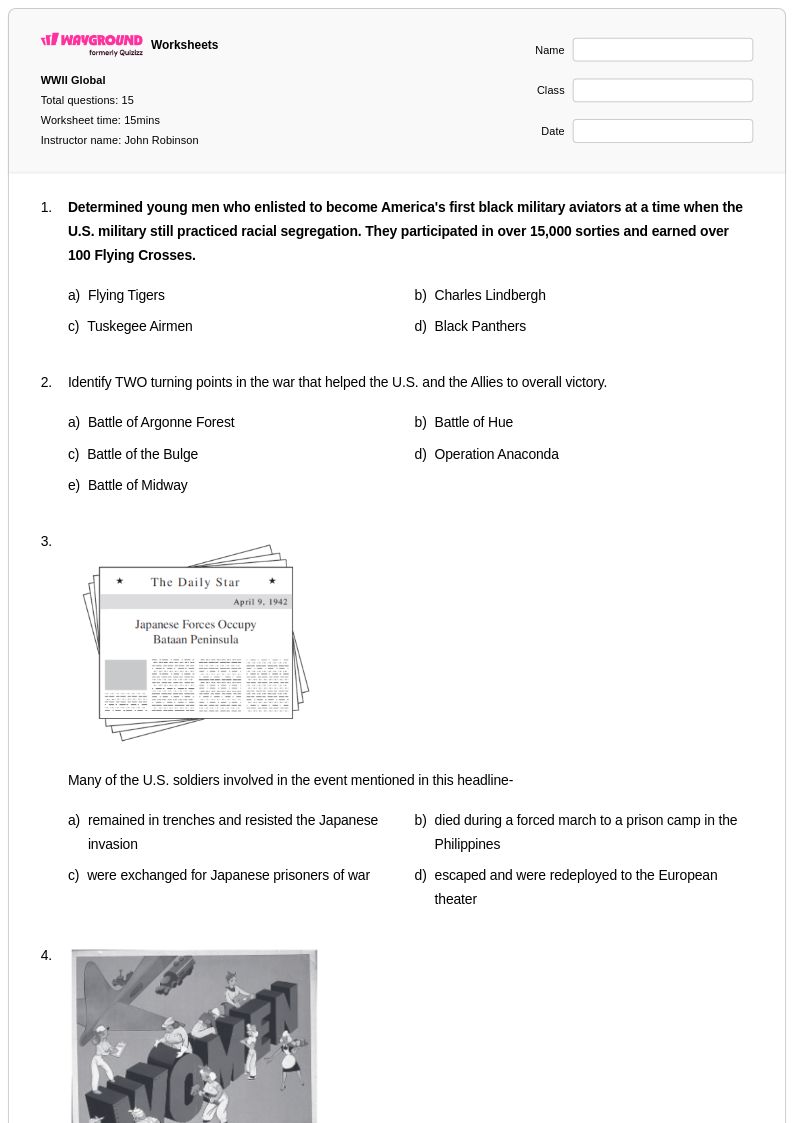
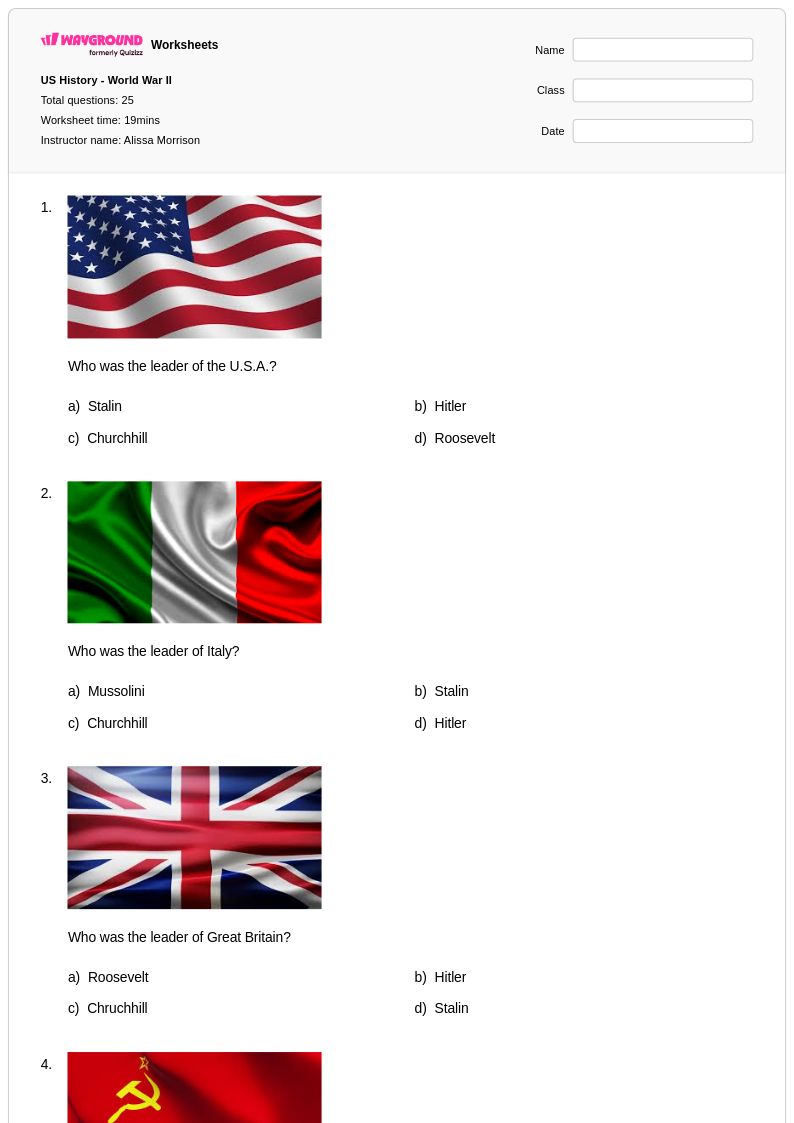
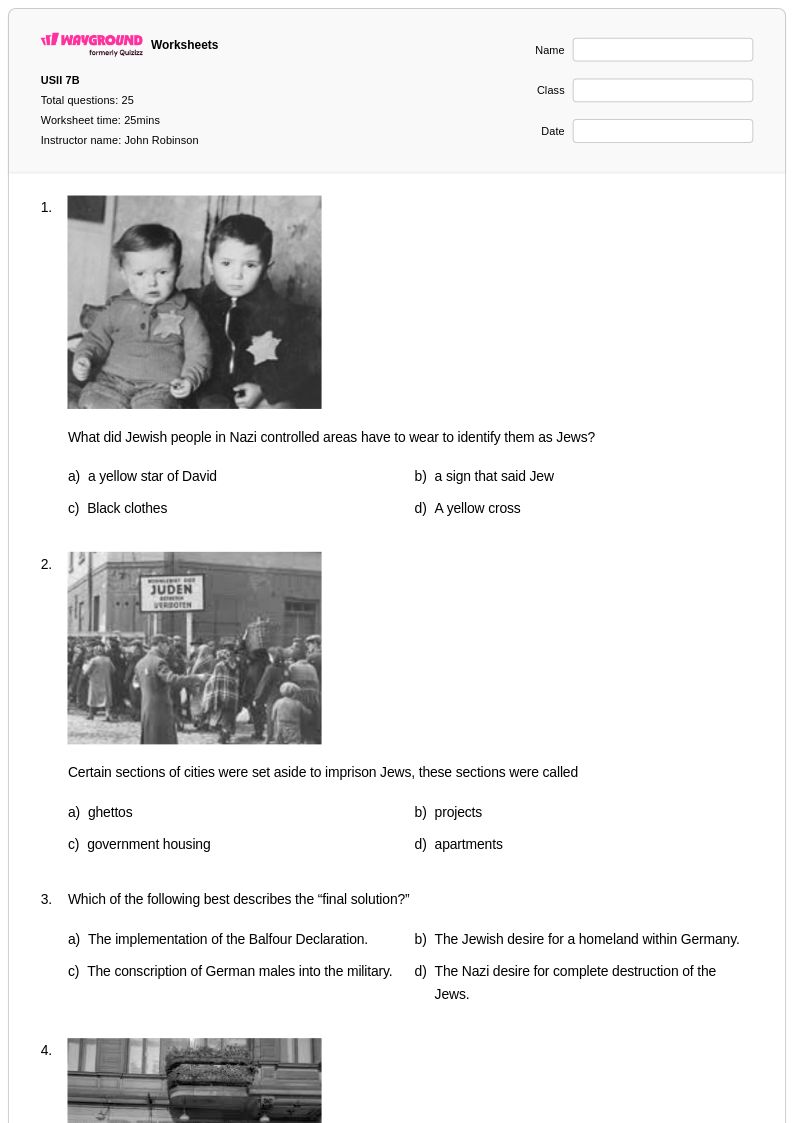
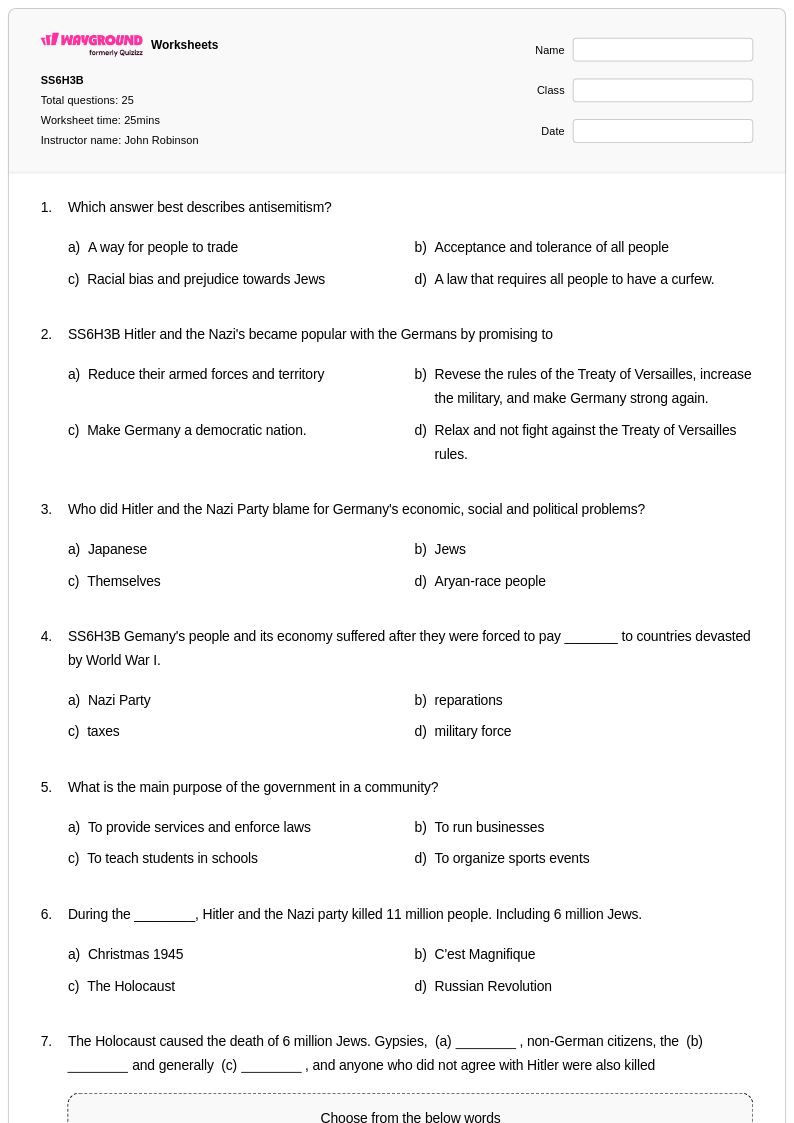
Holocaust worksheets for Year 12 students available through Wayground (formerly Quizizz) provide comprehensive resources for examining one of history's most significant and tragic events. These educational materials guide senior-level students through critical analysis of the systematic persecution and genocide of six million Jews and millions of other victims by Nazi Germany and its collaborators between 1933 and 1945. The worksheets strengthen essential skills including primary source analysis, historical interpretation, cause-and-effect reasoning, and ethical reflection while covering key aspects such as the rise of antisemitism, the implementation of discriminatory laws, the establishment of ghettos and concentration camps, resistance movements, liberation, and the lasting impact on survivors and society. Each resource includes comprehensive answer keys and is available as free printables in pdf format, featuring practice problems that challenge students to evaluate historical evidence, analyze testimonies, and connect Holocaust history to contemporary issues of human rights and social justice.
Wayground (formerly Quizizz) supports educators teaching this sensitive and crucial topic through an extensive collection of millions of teacher-created Holocaust resources specifically designed for Year 12 World History curricula. The platform's robust search and filtering capabilities enable teachers to locate materials aligned with educational standards and appropriate for their students' academic level, while differentiation tools allow for customization based on individual learning needs and classroom requirements. These Holocaust worksheets are available in both printable pdf formats for traditional classroom use and digital formats for online learning environments, providing flexibility for various teaching situations. Teachers can utilize these resources for comprehensive lesson planning, targeted remediation for students requiring additional support, enrichment activities for advanced learners, and focused skill practice in historical analysis, making it easier to address the complex pedagogical challenges involved in teaching about genocide, human rights violations, and the importance of remembrance in preventing future atrocities.
FAQs
How do I teach the Holocaust in a way that is historically accurate and age-appropriate?
Teaching the Holocaust effectively requires grounding instruction in primary sources, survivor testimonies, and chronological context so students understand how systematic persecution escalated over time. Begin with the historical conditions that enabled the rise of Nazi ideology before moving into the mechanics of discrimination, ghettoization, and genocide. Age-appropriate scaffolding matters: middle school students often benefit from personal narratives and guided analysis, while high school students can engage with policy documents, photographs, and comparative genocide frameworks. Framing lessons around both historical facts and human impact helps students develop empathy alongside analytical thinking.
What exercises help students practice analyzing Holocaust primary sources?
Document analysis activities that ask students to identify author, audience, purpose, and historical context are among the most effective exercises for Holocaust primary source work. Structured worksheets that pair a primary source — such as a deportation order, a ghetto diary entry, or a liberation photograph — with guiding questions help students move from observation to interpretation. Cause-and-effect organizers and perspective-taking writing prompts further reinforce the skill of reading historical documents critically rather than passively.
What common mistakes do students make when learning about the Holocaust?
One of the most common misconceptions is that the Holocaust was a sudden event rather than a gradual escalation of discriminatory policies that unfolded over more than a decade. Students also tend to view victims as a monolithic group rather than recognizing the distinct experiences of Jewish communities, Roma, people with disabilities, political prisoners, and others targeted by Nazi ideology. Another frequent error is treating bystanders as passive and inevitable rather than analyzing the specific choices individuals and institutions made. Worksheets that address these misconceptions explicitly — through timeline activities, identity-focused readings, and bystander case studies — help correct these patterns.
How do I help students connect Holocaust history to contemporary issues without trivializing it?
Drawing connections between Holocaust history and contemporary issues is academically valuable but requires careful framing so comparisons are historically grounded rather than rhetorical. Teachers can use structured discussion protocols that ask students to identify specific parallels in mechanisms — such as propaganda, scapegoating, or legal discrimination — rather than making sweeping comparisons. Primary source analysis activities that examine how prejudice becomes policy are particularly effective because they give students an analytical vocabulary for recognizing warning signs in historical and current contexts alike.
How can I use Holocaust worksheets from Wayground in my classroom?
Wayground's Holocaust worksheets are available as printable PDFs for traditional classroom use and in digital formats for technology-integrated learning environments, including the option to host them as a quiz directly on Wayground. Teachers can use these materials for introducing new content, guiding document analysis discussions, or assigning independent practice. For students who need additional support, Wayground's accommodation tools — including read aloud, extended time, and reduced answer choices — can be applied individually so all learners engage meaningfully with this sensitive historical content.